Home Blog Page 638

Unveiling the Splendor of Rajasthan’s Ancient Forts: Sentinels of Time and Legacy

0

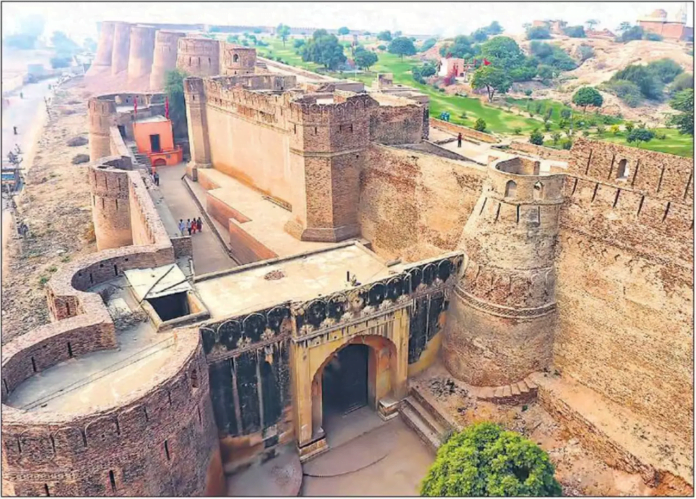
Rajasthan, a realm resplendent with tales of valor and grandeur, cradles within its heart a treasury of ancient forts, each an enduring testament to the journey of time. Among these awe-evoking structures, the Bhatner Fort emerges as an artifact of unparalleled antiquity, its origins stretching back a staggering 1800 years. This venerable stronghold not only showcases the architectural finesse of its era but also commands reverence as one of India’s most impregnable fortresses. 

Woven intricately into the rich tapestry of Rajasthan’s history, the towering walls of the Bhatner Fort resound with narratives of courage, tenacity, and the silent march of epochs. It stands as a sentinel from an era long past, a guardian of whispered secrets and stories that have melded seamlessly into the very stones that constitute its formidable ramparts. 

Mirroring the Bhatner Fort’s historical prominence, the Chittorgarh Fort emerges from the annals of time as another august guardian of Rajasthan’s past. Dating back to the 7th century, this majestic citadel has earned its place among the revered UNESCO World Heritage Sites. Its towering walls and majestic architecture chronicle an era where valor was etched into the very essence of its fortifications. The sun, casting its luminous glow upon Chittorgarh Fort, illuminates a saga that stretches across its vast expanse, with each stone echoing stories of conquest and unwavering bravery. 

Jaisalmer Fort, a gilded marvel shimmering like a mirage in the desert, is yet another bastion of history that Rajasthan presents with pride to the world. Conceived in 1156 AD by Rawal Jaisal, this fortress emerges like a phoenix from the dunes, a tribute to the visionary craftsmanship of its architects and the unyielding spirit of the generations that called it home. The golden elegance of Jaisalmer Fort stands as a living monument to the fusion of artistic brilliance and purpose, a steadfast beacon amid the ever-shifting sands of time. 

Rajasthan, a realm that has borne witness to the undulating currents of centuries, cradles a plethora of these ancient forts, each bearing a unique narrative. The sands of history have etched intricate patterns into the stone walls, and as visitors tread their passages, they become voyagers through time, retracing the footfalls of those who once roamed. From the resounding echoes of the Bhatner Fort’s creation to the UNESCO-adorned grandeur of Chittorgarh and the timeless allure of Jaisalmer, these forts encapsulate the very essence of Rajasthan’s storied heritage. 

Undoubtedly, Rajasthan’s ancient forts stand not merely as architectural wonders, but as custodians of heritage—remnants of valor, cultural richness, and architectural brilliance. Each fort weaves a vivid tableau of lives lived and battles fought within their protective confines. Unyielding against the currents of change, these forts serve as poignant reminders that history is not a distant murmur, but a pulsating and living entity. Their legacy is a bridge from the past to the present, ensuring that the stories they hold are immortalized against the sands of time.

Rajasthan’s Magnificent Hawa Mahal: A Crown of Architectural Marvels

0

Rajasthan, often referred to as the land of palaces and forts, boasts a rich heritage that is embodied in its awe-inspiring architectural wonders. Among these, the Hawa Mahal stands as a testament to the grandeur and history of this captivating region. This iconic palace, situated in the heart of Jaipur, tells a story of devotion, innovation, and timeless elegance.

A Royal Devotion to Lord Krishna

Built in 1799 by Rajput Sawai Pratap Singh, the Hawa Mahal is a masterpiece that exudes architectural brilliance. What sets it apart from the rest is not just its intricate design, but the unique shape it bears. The Hawa Mahal is fashioned like a crown, an homage to Sawai Pratap Singh’s deep devotion to Lord Krishna. This regal connection with Lord Krishna’s crown is a testament to the profound spirituality that infused the construction of this palace.

The Palace of Winds

The very name, “Hawa Mahal,” translates to the “Palace of Winds” or the “Wind Palace.” This name captures the essence of the palace’s purpose. With its 953 small windows, or Jharokas, strategically placed to catch the breeze, the Hawa Mahal served as a summer retreat for Rajput families during bygone eras. Its design ensured that cool, refreshing winds would constantly flow through its chambers, offering respite from the scorching Rajasthan heat.

A Heaven for Royal Women

The Hawa Mahal was more than just an architectural marvel; it was a sanctuary for the royal women of Rajasthan. Constructed as a separate complex within the city, it allowed these women to observe the daily life of the city without being visible to the public. It was a place where they could enjoy the vibrancy of Jaipur from behind the intricately designed latticed windows, maintaining their privacy while being part of the city’s pulse.

A Hive of Architectural Beauty

The facade of the Hawa Mahal resembles a bee hive, with its delicately designed windows creating an exquisite pattern. These windows allowed the royal women to watch the bustling city without exposing themselves to the public eye. This architectural ingenuity made Hawa Mahal not only a functional retreat but also a breathtaking work of art.

Unique Architectural Features

Hawa Mahal has several distinctive features that make it a must-visit landmark. Unlike most palaces and forts, it lacks a front entrance. Instead, visitors enter from the side of the City Palace, highlighting its seamless integration with the city’s layout. Moreover, Hawa Mahal’s five floors are not connected by stairs but by ramps, a unique architectural choice that adds to its mystique.

The Hawa Mandir Connection

The name “Hawa Mahal” is derived from its fifth floor, known as Hawa Mandir. This uppermost level offers panoramic views of Jaipur, making it a prominent attraction within the palace. The grandeur of Hawa Mahal in the cityscape is unmatched and a sight to behold.

A Landmark Worth Exploring

Hawa Mahal is a jewel in the crown of Rajasthan’s architectural wonders. Its fusion of Mughal and Rajasthani architectural styles, its unique design, and its rich history make it an irresistible destination for travelers and history enthusiasts alike.

An Architectural Marvel in Jaipur

The Hawa Mahal is not just a palace; it’s a testament to the artistry, devotion, and innovation of the people of Rajasthan. Its intricate design, rich history, and unique features make it a must-visit landmark in the Pink City of Jaipur. As you explore this regal palace, you’ll witness a fusion of Hindu Rajput and Islamic Mughal influences, from arches and stone inlay filigree work to fluted pillars and floral patterns.

A Five-Story Wonder

This five-story architectural marvel, built without solid foundations, leans at an angle of 87 degrees, giving it its distinctive appearance. The use of red and pink sandstone in its construction not only adds to its beauty but also gave Jaipur its nickname, the “Pink City.”

Windows to the World

Hawa Mahal’s most enchanting feature is its 953 windows, which adorn its lace-like walls. These windows, known as Jharokhas, were ingeniously designed to allow royal ladies to observe the daily life of the city below while remaining hidden from public view. The street-level view of Hawa Mahal is like a massive screened porch, showcasing the best of Rajput architecture in India.

A Unique Entry and Access

Unlike other palaces and forts, Hawa Mahal doesn’t have a traditional front entrance. Visitors must enter from the side of the City Palace, emphasizing its integral connection to the city. Additionally, the palace’s five floors are not connected by stairs; instead, ramps provide access to the upper levels.

A Jewel in Rajasthan’s Crown

Hawa Mahal is a treasure trove of history and architectural marvels. Its fusion of Rajput and Mughal styles, its unique design elements, and its rich historical significance make it a must-visit destination in Jaipur.

The Heritage of Hawa Mahal

Constructed in 1799 by Maharaja Sawai Pratap Singh, Hawa Mahal served as a secluded retreat for royal women to witness processions and street life. Its intricate design, featuring 953 windows and a distinctive honeycomb facade, makes it an architectural wonder. The fusion of Hindu Rajput and Islamic Mughal styles is evident in its arches, stone inlays, fluted pillars, and floral patterns.

Exploring the Palace

Hawa Mahal also houses a small museum that offers insight into its history. Visitors can admire miniature paintings and ceremonial relics that showcase Rajasthan’s royal heritage. From its vantage point, you can enjoy breathtaking views of Jantar Mantar, the City Palace, and the Sireh Deori Bazaar.

A Regal Stay Near Hawa Mahal

If you’re planning to visit Jaipur and explore the wonders of Hawa Mahal, consider booking a luxurious room at Hotel Clarks Amer. This opulent property offers club rooms and penthouse suites, ensuring a memorable stay in the Pink City.

Hawa Mahal is not just a palace; it’s a living testament to Rajasthan’s rich heritage, blending devotion, innovation, and architectural elegance into a magnificent crown jewel. Its history, unique features, and intricate design make it an unmissable destination in Jaipur, inviting visitors to step back in time and immerse themselves in the royal splendor of Rajasthan.

Dhanora village: First smart village of Rajasthan

0

Dhanora village, located in the Dholpur district of Rajasthan, underwent a remarkable transformation over the course of a decade, evolving from a neglected and underdeveloped area into a model smart village. A decade ago, Dhanora faced challenges such as inadequate infrastructure, poor sanitation, lack of proper housing, and limited access to basic amenities like clean water and electricity. However, through the efforts of the Eco Needs Foundation and collaboration with the local community and the Rajasthan government, Dhanora’s story took a positive turn.

The village’s journey towards becoming a smart village involved several key aspects:

1. Infrastructure Development: The foundation prioritized the improvement of roads, which were once in poor condition and hindered connectivity. Better roads facilitated access to the village and enabled subsequent development efforts. The construction of proper housing, community halls, recreational areas, and schools followed, transforming the physical landscape of the village.

2. Greenfield Initiatives:Efforts were made to enhance environmental sustainability. Waste management systems were established, including waste disposal and wastewater treatment plants. Tree plantation projects were undertaken, contributing to a greener environment and better air quality.

3. Technological Advancements: The implementation of e-Pan (electronic planning) brought technological connectivity to the village. Solar power was harnessed, providing uninterrupted electricity, and the village gained access to the internet. Schools were equipped with computers, and public libraries were established, promoting education and knowledge-sharing.

4. Sanitation and Hygiene: One of the primary goals was to eliminate open defecation. To achieve this, the foundation worked on constructing toilets in every household, with support from the community and local authorities. The village was declared open defecation-free (ODF) by the state government.

5. Community Engagement: Overcoming initial skepticism, the foundation engaged with the villagers through extensive meetings and open discussions. Community participation was essential for the success of various projects, from building toilets to constructing infrastructure.

6. Water Conservation: Water conservation structures, including percolation tanks and a canal system, were built to recharge groundwater and improve water availability for farming. This initiative significantly benefited local farmers, leading to improved agricultural practices.

7. Skill Development and Livelihood: Skill development centers were established to offer vocational training, enabling residents to enhance their livelihood opportunities. Educational programs and coaching centers were set up to prepare students for competitive examinations and government jobs.

8. Social Impact: The village’s transformation extended beyond infrastructure. The community adopted environmentally friendly practices, such as using cremation ashes as fertilizer and contributing to a fund for newborn girls. These practices promoted sustainability and social responsibility.

9. Funding and Support: The transformation was made possible through a combination of government funds, private donations, and contributions from the villagers themselves. Collaboration with organizations, government bodies, and individuals played a crucial role in funding various projects.

The success of Dhanora village’s transformation into a smart village has attracted attention from governments, corporations, and individuals alike. It has become a beacon of sustainable development and an inspiration for other villages across different states in India. The case of Dhanora underscores the potential of grassroots efforts, community engagement, and innovative approaches in bringing about positive change in rural areas and fostering self-sufficiency and sustainable living.

Chandramoleshwar Temple: A Timeless Odyssey of Architecture and Devotion

0

Step into the heart of history and spirituality as you journey to the Chandramoleshwar Temple at Jhalrapatan. This magnificent temple stands as a testament to the past, with its ancient roots embedded in the Pratihara period. What sets it apart, beyond its sheer age, is the remarkable inscription of the date it was built, a rarity that instantly captivates the curious minds of history enthusiasts.

Crafted in the year 746 Samvat, the Chandramoleshwar Temple is a living testament to the architectural marvels of its time. As you approach its entrance, you’re greeted by an artistic echo from the Gupta period, an intriguing juxtaposition that speaks volumes about the temple’s historical journey. It’s like walking through a time portal, where the echoes of different eras resonate in harmony.

Dedicated to Lord Shiva’s Ekamat Pashumat form, the temple’s unique focus earns it the respect and recognition it truly deserves. Bhochak, the skilled minister of King Durggan, brought this sacred edifice into existence, a legacy that continues to inspire awe. Standing tall amidst its surroundings, the temple proudly displays 24 pillars, each adorned with distinct artwork. These pillars are a canvas of artistry, bearing witness to North Gupta carpet art, Pratihara art, Parmar art, and many more. The stones speak of eras long gone, but their stories remain vivid.

Marvel at the rooftop, where two exquisite stone blocks command attention. These blocks, reminiscent of the architectural grandeur found at Ajanta and Ellora, offer a tangible link to the past, a tactile connection with history itself. The temple is not just a relic; it’s a living connection to the craftsmanship and aesthetic sensibilities of its creators.

Legend has it that the temple was bestowed the name Chandramoleshwar because it portrays Lord Shiva wearing the moon itself as an ornament. This celestial connection is imprinted in the temple’s very form, etching it into the annals of sacred history.

As you explore the Chandramoleshwar temple complex, the spiritual panorama unfolds before you. A Shivling takes center stage, an embodiment of divinity that has witnessed centuries of devotion. Alongside it stands the Devi Mandir, a 10th-century marvel adorned with idols depicting Shivtandava, fierce goddesses, and the divine embrace of Shiva and Vishnu. Nearby, another temple houses idols of Shivalinga, Brahma, Vishnu, and Mahesh, a congregation of gods that echo through time.

And let’s not forget the enchanting Chandrabhaga river that flows nearby, a silent witness to countless pilgrimages and sacred rituals. On the auspicious occasion of Mahashivaratri, thousands converge at this sacred abode, seeking blessings and solace.

Intricately woven with history, spirituality, and art, the Chandramoleshwar Temple stands as a sentinel of time, beckoning us to unravel its mysteries and bask in its divine aura. The temple isn’t just a structure; it’s a tapestry of human endeavor, devotion, and the timeless pursuit of the divine.

Exploring Khimsar Village: Most beautiful village of Rajasthan

0

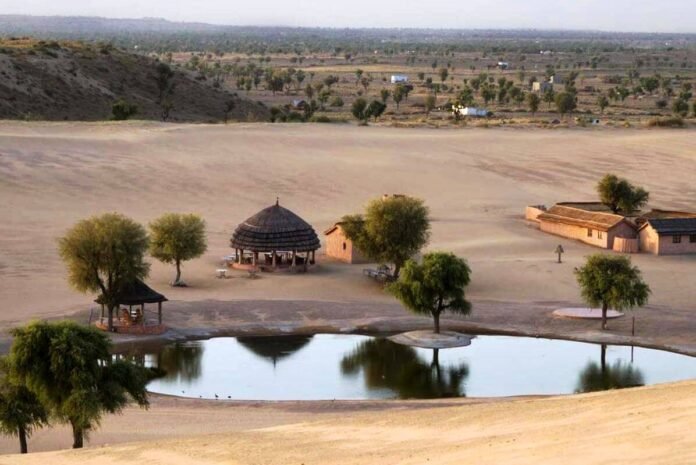
Discover the allure of Khimsar Village, nestled in the heart of Rajasthan. This charming village offers a captivating fusion of history, culture, and rural allure. With your own vehicle, you can seamlessly uncover the wonders of Khimsar, from the majestic Khimsar Fort to ancient temples and breathtaking desert panoramas. Embark on an unforgettable journey through Khimsar Village’s rustic charm and vibrant heritage at your own pace. The Khimsar desert boasts extensive dunes, providing an ideal setting for desert safaris, sunsets, and more – making it an oasis for relaxation and nature enthusiasts alike.

Exciting Activities

Beyond the well-known attractions, add some fun to your trip with these activities:

– Experience the Nagaur Festival: This annual local event celebrates Khimsar’s culture. The festival features cattle trading, camel racing, red chili sales, and handcrafted goods from local artisans.

– Khimsar Dunes Village: Spend a day at the oasis hub of desert adventures, offering ATV rides, wildlife safaris, camel rides, and stunning sunsets. Consider a night safari for stargazing and bonfires.

Must-Visit Places

Embrace nature, culture, and history with these popular attractions:

1. Khimsar Fort: Marvel at this historical gem that stands at the village’s heart, showcasing a blend of Mughal and Rajputana architectural styles.

2. Panchala Black Buck Reserve: Embark on a journey through this natural reserve, just a short drive from the fort, to witness the thriving black buck population.

3. The Village and Oasis: Explore the oasis located a short distance from the fort, offering desert adventures and stunning sunset views.

4. Nagaur Fort: Venture to Nagaur to witness the historical Nagaur Fort, rich with tales of the past.

Nearby Attractions

Expand your itinerary to include these nearby gems:

1. Dhawa Doli Wildlife Sanctuary:  Embark on a wildlife adventure at this reserve located southwest of Jodhpur, offering glimpses of diverse flora and fauna.

2.  Osian Mata Temple:  Visit this iconic temple located just a short drive away from Khimsar, presenting intricate architecture and serene surroundings.

3. Junagarh Fort: Plan a weekend trip to Bikaner to explore this renowned fortress, showcasing stunning architecture and captivating history.

Planning Your Visit

– How to Reach: Access Khimsar via road from various cities, or fly to Jodhpur Airport and arrange transportation from there.

– Best Time to Visit: Explore Khimsar during the winter months for pleasant weather and cultural festivals.

Hotels and Accommodation

Choose from well-rated accommodations, including:

– Khimsar Sand Dunes Resort

– Welcomhotel By ITC Hotels, Fort & Dunes, Khimsar

– Abhay Resort and Camp

– Inani Brothers

– Hotel Riddhima

Khimsar Fort’s Rich History

Built in 1523, Khimsar Fort exudes historical significance with its exquisite architecture. Once a temporary residence for Mughal Emperor Aurangzeb, it now serves as a luxury hotel, blending original interiors with modern amenities.

Exploring Khimsar

Experience the magic of Khimsar Village – a hidden gem offering history, culture, and natural beauty. Whether you’re admiring the Khimsar Fort, engaging in desert adventures, or immersing yourself in local festivities, Khimsar promises an unforgettable journey.

Celebrating Balarama Jayanti: A Grand Occasion at Shri Krishna Balarama Mandir

0

On the auspicious occasion of Balarama Jayanti, a grand celebration will take place at Shri Krishna Balarama Mandir, located on Hare Krishna Marg in Jagatpura. Balarama Jayanti, the appearance day of Lord Balarama, the elder brother of Lord Krishna, is being commemorated with fervor at the only temple where Lord Balarama resides alongside Lord Krishna.

The festivities are set to begin with numerous programs, culminating in a grand mahaaarti in the presence of thousands of devotees. A special attraction of the event will be the sacred abhishek (ritualistic bathing) of the divine deities Shri Krishna Balarama with 108 kalashas (water-filled pots), which includes a mixture of panchamrit (a mixture of milk, yogurt, ghee, honey, and sugar), panchagavya (a mixture of cow products), and various fruit juices blended with medicinal herbs.

Amitasan Das, the head of the temple, mentioned that Shri Krishna Balarama Mandir hosts several events throughout the year. The most significant of these is the celebration of Shri Krishna Janmashtami, which is scheduled for September 7. Prior to this, the grand Balarama Jayanti celebration is to be held on Shravan Purnima evening. The festivities will commence with a grand abhishek ceremony, where the deities of Lord Krishna and Lord Balarama will be bathed with various auspicious substances.

The magnificent celebration will also include a vibrant chariot procession of the deities, chanting of the Hare Krishna Mahamantra, and a grand arati ceremony. The archavigraha (divine form) of Lord Krishna Balarama will be adorned with exquisite attire and jewelry, captivating the hearts of the devotees. The event will witness a splendid mahaaarti, soul-stirring Krishna kirtan (devotional chanting), and melodious Krishna music, creating a spiritually immersive environment for the devotees.

Following the abhishek ceremony, there will be a colourful and fragrant flower shower on Lord Balaram, signifying a shower of divine blessings. The occasion will also involve offering a special selection of 108 bhog (food offerings) to Lord Shri Krishna Balarama.

Live Broadcast on YouTube and Facebook:
The temple authorities have arranged for a live broadcast of all the programs on the YouTube channel ‘Hare Krishna Jaipur.’ This initiative aims to allow individuals, including the elderly and those unable to visit the temple, to partake in the joyous celebrations from the comfort of their homes. Additionally, captivating photographs and comprehensive coverage of the entire event will be available on the official Facebook page ‘Hare Krishna Jaipur.’

Balarama Jayanti holds immense significance in Hindu tradition, symbolizing devotion, brotherhood, and the auspicious bond between Lord Krishna and Lord Balarama. Devotees are eagerly looking forward to this grand celebration, where they can immerse themselves in the divine atmosphere and seek blessings from Lord Balarama for a harmonious and joyous life.

Aviator Game APK for Android

0

Description: Aviator App – India’s Most Popular Crash Game. In this review, you will learn about the rules of the Aviator game. Where and how you can play it, how to download and install the APK file. The game also has system requirements, learn more about them in the review.

Aviator Game App Review

The Aviator game is one of a kind, a perfect method to cheer yourself up. Aviator is a multiplayer game that has found a great response in the hearts of fans in India. The game has simple rules, you just need to follow the airplane on a curved trajectory, which rises higher and higher, and accordingly the income that you put on the bet, also grows. Bets are accepted in advance, when the round starts, the multiplier scale starts to grow. The point is to guess correctly and manage to cash out before the plane leaves. It is worth noting that the Aviator game is not like other casino games. This gives a special charm to this game. Millions of fans all over the world play it, applying tactics and strategies, developing new ones, getting profitability and additional bonuses for playing the game.

The popularity of Aviator game gameplay in India

This video game format, born in the video game industry, has grown very popular due to its simple, thrilling effects and addictive gameplay. At the moment – it is the only airplanes game of its type, which enables you to maximize the multiplier by X times. The game has provided players with a totally new experience of gameplay. Indeed, when you observe your flight increasing 10 or 100 times every second, and your task is only to press a button or wait for an even bigger increase, it tickles your nerves greatly and awakens a whole new emotion! That’s why it has so quickly gained its reputation and entered the tops of players’ choices. You may want to try out the demo version of Aviator and then register. And already fully enjoy your flight in Aviator.

Aviator Game Rules

If you’ve tried the game, at least in the beta version, you already know that the rules are pretty simple. You have to wait for a new round and pre-deposit, or have to deposit both rounds at the same time. Then the plane takes off and begins to climb. Sometimes the beatings lasted at least 300 or 1000 times, and sometimes they stopped almost immediately. Your task is to press the button to make the plane take off to claim your prize. For example, Aviator allows you to make 2 payments at once and receive the first part of your earnings when the plane hits 2 o’clock. After the plane reaches 7, the second batch can double 7 and cash out. You can download it to test everything on your own and get lots of feedback.

Slots app Aviator for Android, iOS and PC

This game can be found on many online sites of the most famous bookmakers that sell their services in India. The game has a minimum of requirements and functions on all modern smartphones. A huge plus in using the application is access to the game at any time of the day or night, the ability to contact support in case of emergency, make a quick deposit, and withdraw money without any questions. The Aviator app is currently available for the following operating systems:

  • Android;
  • iOS;
  • Windows;
  • MacOS.

In turn, applications for playing Aviator can be found a lot. As it is a mass of licensed online bookmakers, which have their developed software available officially for download, and where there is quick access to the game Aviator and many other entertainments. There is no separate app that includes the Aviator game at the moment. Below, we offer you the procedure for downloading the Aviator game application for Indian users from the leading online casinos and bookmakers in India.

Aviator APK Download for Android

You may download the Aviator game APK for free. In order to do so, perform a few simple steps:

  1. Download the APK file. Choose the required file in the list below and click on the “Download” button;
  2. Modify your settings on your smartphone. Under “Settings”, give permission to install apps from unknown locations;
  3. Install the APK file. In the browser, go to the “Downloads” section and tap on the recently downloaded file. Approve the installation of the app on your smartphone;
  4. Run the app. Launch the application from the desktop of your smartphone.

How to install Aviator APK file?

After you have successfully completed the first stage of downloading this file and expanding the settings, the last step is to install the file. For this you need:

  1. Go to the folder with recently downloaded files and find the APK file;
  2. Make sure that it has downloaded to the end, and only after that double-click on it;
  3. Installation is done as quickly as possible in a matter of seconds, and the betting company logo will appear on the screen of your device.

System Requirements

For the stable performance of APK, be sure that you have a smartphone which meets the standard table of system requirements:

Operating systemAndroid, iOS, Windows, MacOS
Processor1.2 GHz
RAM4 GB or more
Memory capacity100 MB

For comfortable work of Aviator game application your smartphone must meet the minimum system requirements.

Aviator App – India’s Most Popular Crash Game

The app is India’s most popular instant game for smartphones. This game is built into a popular online casino application. Games on the Aviator app feature easy navigation, beautiful design, and the ability to play with real people. Key benefits of the Aviator app are:

  • Low system requirements;
  • Unique design and gameplay;
  • Ability to play with other players;
  • This application is available for Android and iOS;
  • Hindi support.

FAQ

Can I download the Aviator app for free?

Yes, the Aviator APK can be downloaded for free from official online casino sites.

Is the Aviator app safe from break-ins?

Yes, the Aviator app is safe, which is hosted online by official casino bookmakers. Player data is securely encrypted. The safety of the game in Aviator is also evidenced by the presence of an office license issued to the bookmaker.

How to download the Aviator app?

Go to the online casino website, select the Mob apps section, select the version you want to download (Android or iOS), download the APK file, and then install it.

Raksha Bandhan 2023: Date, Timings, Shubh Muhurat and More

0

Raksha Bandhan is a Hindu festival that celebrates the bond of love and protection between brothers and sisters. It is also known as Rakhi, and it is observed on the full moon day of the month of Shraavana, which usually falls in August.

This year, however, there is some confusion about the date of Raksha Bandhan. Is it on August 30 or 31? And what is the best time to tie the sacred thread of Rakhi on your brother’s wrist? Read on to find out the answers to these questions and more.

Raksha Bandhan 2023: Date

According to Drik Panchang, a website that provides Hindu calendar and almanac information, Raksha Bandhan 2023 will be celebrated on Wednesday, August 30. However, due to an inauspicious period called Bhadra, some people may prefer to celebrate it on August 31.

Bhadra is a time frame that is considered unfavorable for any auspicious or sacred activities. It is also known as Vishti Karana or Bhadra Karana. According to Hindu astrology, Bhadra occurs when the moon is in conjunction with or aspected by Saturn or Rahu.

This year, Bhadra will begin on August 30 at 5:30 pm and end at 9:01 pm. During this time, it is advised to avoid tying Rakhi or performing any rituals related to Raksha Bandhan. Therefore, those who want to follow this rule can celebrate Raksha Bandhan after 9:01 pm on August 30 or on August 31.

Raksha Bandhan 2023: Timings and Shubh Muhurat

The best time to tie Rakhi on your brother’s wrist is during the Shubh Muhurat, which is an auspicious time period based on the position of the moon and other planets. The Shubh Muhurat for Raksha Bandhan 2023 is as follows:

Event Date & Time Purnima Tithi or Full Moon Begins August 30, 2023 at 10:58 PM Purnima Tithi or Full Moon Ends August 31, 2023 at 7:05 AM Raksha Bandhan Bhadra Begins August 30, 2023 at 5:30 PM Raksha Bandhan Bhadra Ends August 30, 2023 at 9:01 PM Raksha Bandhan Shubh Muhurat August 30, 2023 after 9:01 PM or August 31, 2023 anytime

Note that these timings are based on the Indian Standard Time (IST) and may vary slightly depending on your location.

Raksha Bandhan 2023: Significance and Rituals

Raksha Bandhan is a festival that symbolizes the love and duty between brothers and sisters. The word Raksha means protection, and the word Bandhan means bond. On this day, sisters tie a colorful thread called Rakhi on their brothers’ wrists, and pray for their well-being and happiness. In return, brothers promise to protect and support their sisters in all circumstances.

The origin of Raksha Bandhan can be traced back to various legends and stories in Hindu mythology. One of them is about the goddess Lakshmi tying a Rakhi on King Bali’s wrist to free her husband Vishnu from his obligation as his guard. Another one is about Draupadi tying a piece of cloth on Krishna’s finger to stop his bleeding wound during the Mahabharata war.

The rituals of Raksha Bandhan vary from region to region, but they generally involve the following steps:

  • Sisters prepare a thali or a plate with Rakhi, sweets, rice grains, vermilion powder, incense sticks, and a lamp.
  • Brothers sit in front of their sisters and apply a tilak or a mark on their forehead with vermilion powder and rice grains.
  • Sisters tie Rakhi on their brothers’ wrists and chant a mantra or a prayer for their protection and prosperity.
  • Brothers give gifts or money to their sisters and pledge to safeguard them from any harm.
  • Sisters feed sweets to their brothers and receive their blessings.

Raksha Bandhan is a festival that strengthens the bond of affection between siblings. It also promotes harmony and peace among different communities and religions. It is a day to express gratitude and love for your brother or sister, and wish them a long and happy life.

Rana Kumbha Palace: A Tapestry of History and Haunting Echoes 

0


Nestled within the formidable embrace of Chittorgarh Fort, near the resplendent Vijaya Stambha, stands the venerable Rana Kumbha Palace, an architectural marvel steeped in the annals of time. This historical monument, a testament to the prowess of its creators and the tales it silently holds, has seen epochs rise and fall, making it a captivating destination for history enthusiasts and curious wanderers alike. 

Originally conceived by the visionary Bappa Rawal in the year 734 AD, the palace found its true renaissance under the watchful eye of Maharana Kumbha I, who meticulously rebuilt it, infusing his grandeur and aspiration into every stone. Such is the heritage that whispers in the wind, weaving tales of valor, royalty, and devotion. The palace’s storied corridors have been privy to momentous junctures that have shaped the very fabric of Rajasthan’s narrative. It was within these walls that the echoes of a fragile yet unbreakable bond between history and destiny reverberated. Here, the cradle of Maharana Udai Singh, the visionary founder of Udaipur, was rocked. It was in this place of refuge that his infant life was ingeniously concealed by a quick-thinking nurse, sheltering him within a simple fruit basket, preserving a lineage that would sculpt the future. 

As daylight softly cascades over the palace’s intricate architecture, the ethereal presence of the revered poetess Mirabai is palpable. This sanctuary of creativity embraced her spirit, becoming a dwelling where her poetic verses could dance freely amidst the stones and shadows. However, amid the ornate beauty and revered history, there lies a shroud of melancholy that clings to the corridors—the melancholy borne from the unfathomable anguish of a tragic past. This place, where Rajput honor was etched in fire and sacrifice, is a testament to the heart-wrenching custom of Jauhar. In 1303 AD, as the marauding Ala-ud-din Khilji besieged the palace, the valiant women led by Rani Padmini chose to embrace self-immolation, an act of defiance against subjugation, casting themselves into the embrace of flames rather than compromise their honor. 

It’s this very sacrifice that whispers through the palace’s chambers, giving rise to tales of specters and echoes of a poignant past. It’s said that more than a thousand souls, trapped in a time when destiny was sealed in fire, still haunt the depths of Rana Kumbha Palace, their ethereal presence lending an eerie dimension to its hallowed halls. 

The architecture of the palace stands as an ode to the confluence of Rajputana and Rajasthani styles, a harmonious blend of architectural language that speaks volumes of the eras it traversed. With its walls adorned with intricately crafted turrets and battlements, the palace emanates an air of regality and valor. Canopied balconies and the imposing Tripolia gate beckon visitors, leading them into a sprawling courtyard, where the whispers of history find their echo. Within its precincts lie not only the grandeur of Rana Kumbha Palace itself but also a constellation of satellite wonders that add depth to its allure. The Kanwar Pada Palace, Zenana

Mahal, the venerable Shiva Temple, the enigmatic Suraj Ghokra, and the resplendent Diwan-i-am stand as witnesses to time’s unfolding tapestry. 

Rana Kumbha Palace, nestled within the embrace of the venerable Chittorgarh Fort, stands as a sentinel to the legacy of Maharana Kumbha and Maharana Udai Singh. Every nook and cranny of this timeless edifice breathes the life and valor of a bygone era, beckoning visitors to traverse its corridors and embrace its poignant narratives. Yet, in its beauty and grandeur lies a chilling reminder—a reminder that the palace’s history is not merely etched in stone, but also in the souls that may forever linger, whispering tales of courage, sacrifice, and the haunting echo of a flame-lit past.

Devnarayan ji: A folk deity and a warrior from Rajasthan

0

Devnarayan ji was a folk deity, a ruler and a great warrior from Rajasthan. He is mainly worshipped by the Gurjar community in Rajasthan, Haryana and Madhya Pradesh. He is considered to be an incarnation of Vishnu and his birth anniversary is celebrated as Devnarayan Jayanti.

Avatar

Devnarayan ji was born in the 10th century AD to Sri Savai Bhoj Gurjar and Sadu Mata Gurjari in Malaseri, near Ajmer. His father was a descendant of King Bisal Dev Gurjar (Vishal Dev Chauhan) of Ajmer, who resisted the Arab invasions and helped the Tomara rulers to gain control of Delhi. His Grandfather was Mandalji Gurjar, who established the famous Mandal lake near Bhilwara district in Mewar.

Devnarayan ji was a mighty warrior who fought many battles and wars against tyrannical rulers. He also performed many miracles and attained many achievements. He had three queens – Pipalde Parmar (daughter of the king of Dhara), Nagkanya and Daityakanya and two children- Bila(son) and Bili( daughter).

Bagdawat Bharat

The oral epic of Devnarayan ji is one of the longest and most popular religious oral narratives of Rajasthan. It is sung by the Bhopas, the traditional priest-singers of Devnarayan ji during the nights of the months, November to July in the villages of Rajasthan and Malwa. The epic consists of two parts- Bagdawat Bharat and Devnarayan Bharat.

The Bagdawat Bharat is about the heroic deeds of 24 Gurjar brothers, who are born as the sons of the man-lion, Baghji Gurjar. The 24 brothers die after a preordained period of 12 years in a battle against King Durjansal of Ran city, who had abducted Queen Jayamati (Jaymati). The second part is about Devnarayan ji’s incarnation as the son of Savai Bhoj, the most courageous of the 24 Bagdawats. He avenges his father’s death by killing Durjansal and establishes his image among his followers.

Worship

Devnarayan ji is worshipped as a folk deity by the people of Rajasthan and his followers are spread across the country. He is revered especially for his work towards public service. His grand temple is in Asind, where his annual fair is held on Makar Sankranti. His other temples are in Nag Pahar near Ajmer, where he was born, and in Gogunda near Udaipur, where he died. His devotees also worship his phads, which are painted cloth scrolls depicting his life story and miracles.

On 27 January 2023, Ashok Gehlot, the Chief Minister of Rajasthan, declared Devnarayan Jayanti as a state holiday. He also announced that a museum dedicated to Devnarayan ji will be set up in Asind. He said that Devnarayan ji’s teachings are relevant for today’s society and his legacy should be preserved for future generations.

Prime Minister Narendra Modi also addressed a ceremony commemorating the 1111th ‘Avataran Mahotsav’ of Devnarayan ji in Bhilwara on 28 January 2023. He praised Devnarayan ji for his bravery, compassion and devotion. He said that Devnarayan ji’s life is an inspiration for all Indians and his message of unity and harmony should be followed by everyone. He also inaugurated various development projects related to water supply, health care and education in Bhilwara district.