

Home Blog Page 630

Kirtidan Gadhvi: The Maestro of Gujarati Music

0

Kirtidan Gadhvi is a name that resonates throughout the vibrant world of Gujarati music, and his melodious voice has captivated audiences not only in Gujarat but across the entire country. With a voice that soothes the soul, Gadhvi has risen to fame, enthralling music lovers with numerous hits like ‘Laadki,’ ‘Gori Radha Ne Kaalo Kaan,’ and ‘Nagar Me Jogi Aaya,’ among other popular tracks. His versatility extends to traditional numbers, which he has skillfully performed at countless live concerts, earning him resounding applause. However, during the joyous days of Navratri, Kirtidan Gadhvi truly shines, becoming a beloved figure among revellers.

Born and raised in Valvod, Kheda district, in the heart of Madhya Gujarat, Kirtidan Gadhvi’s musical journey has been nothing short of remarkable. He honed his craft and pursued higher education in music, earning a BPA and an MPA from the Faculty of Performing Arts at M. S. University, Vadodara, under the guidance of esteemed mentors like B. I. Mahant and Rajesh Kelka.

Gadhvi made his debut at a cow protection rally in Jamnagar, Gujarat, in 2015, where his performance helped raise a staggering Rs 45 million for the cause. His soul-stirring rendition of the song “Laadki” on the TV show MTV Coke Studio, alongside acclaimed artists like Sachin–Jigar, Tanishka, and Rekha Bhardwaj, further catapulted him into the national spotlight, leaving audiences mesmerized.

Known for his prowess in dayras, folk songs, and classical nuances, Gadhvi’s musical journey led him to Bhavnagar, where he became a revered music teacher at Bhavnagar University. It’s here that he continued to nurture his passion for music, sharing his knowledge and inspiring budding musicians.

Gadhvi’s popular tracks like “Laadki,” “Nagar Me Jogi Aaya,” and “Gori Radha Ne Kaalo Kaan” continue to enchant music enthusiasts. Currently residing in Rajkot, his strategic location facilitates his participation in musical events across the Kutch district and Kathiawar region.

The accolades and recognition bestowed upon Kirtidan Gadhvi are a testament to his extraordinary talent. He was honoured with the prestigious “World Amazing Talent” Award in the United States, an acknowledgement of his global appeal. Additionally, Gadhvi’s contribution to the world of music earned him the title of the World Talent Organization brand ambassador.

In 2019, he received the esteemed Kavi Kag Award, presented by the revered Murari Bapu, further solidifying his place in the pantheon of musical legends. Kirtidan Gadhvi’s musical journey continues to inspire and enchant audiences, cementing his status as a maestro of Gujarati music, whose melodies touch the hearts of millions.
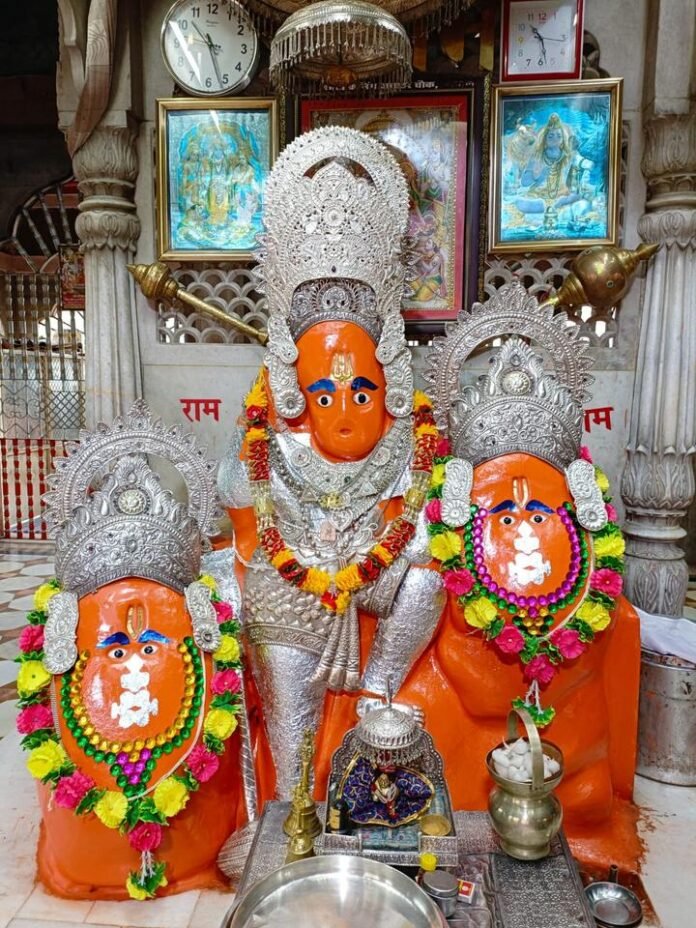
Kamkheda Balaji Temple: A Divine Oasis in Rajasthan

0

Nestled on the tranquil Aklera-Manoharthana road, approximately 15 kilometers away from Aklera town in Rajasthan’s Jhalawar district, lies a sacred heaven that has captured the hearts and faith of countless devotees. The Kamkheda Balaji Temple, dedicated to Lord Hanuman, stands as a testament to unwavering belief and the miraculous.

A Center of Miracles and Faith

This temple, perched on the banks of the Parwan River, has a rich history spanning over a century. Devotees from various states, especially on Tuesdays and Saturdays, flock to its premises seeking solace, blessings, and miracles. The temple is not just a religious sanctuary but a place of profound significance.

A Place of Miraculous Beliefs

The Kamkheda Balaji Temple is believed to possess miraculous powers, where the devout believe their wishes are granted by the benevolence of Lord Hanuman. Amidst lush greenery and rolling hills, the temple houses a significant statue of Lord Ganesh and an ancient Shivlinga, creating a serene atmosphere for worship.

A Hub of Devotion and Festivity

According to the temple’s website, it opens its doors for darshan from 6:00 AM to 9:00 PM every day of the week. Special aartis and pujas are conducted on Tuesdays and Saturdays, considered auspicious for Lord Hanuman. Additionally, the temple hosts an annual fair during the month of Vaishakh (April-May), attracting devotees from diverse states.

An Enigmatic History

While the precise history of the Kamkheda Balaji Temple remains somewhat elusive, it is said to be over a century old. Devotees dedicated to Lord Hanuman, also known as Balaji in Rajasthan, erected this temple on the banks of the Parwan River, creating a space where miracles and blessings are believed to occur.

A Temple of Miracles

The temple’s aura is enhanced by several enigmatic occurrences. A never-drying well, regardless of droughts, is deemed sacred and healing. A tree that bears fruits year-round, a bell that rings spontaneously when Lord Hanuman is pleased, and a self-moving vehicle in a separate room, all add to the mystique. There is also a stone that changes color in tandem with Lord Hanuman’s mood, reflecting his divine presence.

A Sacred Journey

The Kamkheda Balaji Temple is not merely a place of worship but a hub of culture, faith, and harmony. Devotees, especially on Saturdays and Tuesdays, often embark on foot pilgrimages, chanting Lord Hanuman’s name along the way. The temple hosts a myriad of religious and cultural events throughout the year, fostering a spirit of unity and devotion.

A Divine Oasis

In the heart of Rajasthan, the Kamkheda Balaji Temple beckons all who seek solace, blessings, and the touch of the divine. It is a testament to the enduring connection between devotees and their beloved Lord Hanuman, a place where faith and miracles intertwine, creating an oasis of spirituality in the desert state of Rajasthan.

Temjen Imna Along: Nagaland’s Social Media Sensation

0

Nagaland Minister Temjen Imna Along is making waves on the internet once again, thanks to his witty and humorous social media presence. The Bharatiya Janata Party (BJP) leader, known for his engaging posts, recently shared a delightful photo on Twitter that showcases his love for food.

In the photo, Minister Temjen Imna Along is seen relishing a meal while a group of girls poses for a picture with him. While the girls strike a pose for the camera, Along playfully confessed his fondness for food with a clever caption.

Temjen Imna Along, who serves as the president of the BJP in Nagaland, has gained considerable popularity on social media platforms due to his wit, humor, and his ability to connect with users. His daily posts, often accompanied by self-deprecating humor, showcase his fluent Hindi and his engagement with social media users.

With a Twitter following of over 232,000, Along’s humorous take on life has resonated with people across the country. His posts cover a wide range of topics, from humorous disclaimers about his actions to comical observations about Google search suggestions related to him.

In a recent post, he humorously encouraged cleanliness, stating that taking photos while cleaning can help keep the environment clean. Prime Minister Narendra Modi himself has acknowledged Temjen Imna Along’s social media sensation status during a campaign in Nagaland, further cementing his online popularity.

Temjen Imna Along’s unique blend of humor and relatability continues to win hearts on the internet, making him a beloved figure not only in Nagaland but also among netizens nationwide.

Empowering Through Education and Environmental Responsibility: The Akshar Foundation’s Inspiring Journey

0

In a world grappling with the escalating environmental crisis and the persistent challenge of providing quality education to underprivileged communities, one organization stands as a beacon of hope. The Akshar Foundation, headquartered in Guwahati, Assam, is leading a remarkable crusade for change. Founded by Parmita Sarma, this NGO is not only transforming the lives of young students but also combating plastic pollution through its innovative approach.

Turning Plastic Waste into Educational Opportunity

Akshar Foundation’s groundbreaking initiative is the establishment of a school in Pamohi, Guwahati, which accepts plastic waste as student fees. This unique concept not only promotes education but also tackles the pressing issue of plastic pollution. Parmita Sarma, the visionary behind this endeavor, saw education as the key to breaking the cycle of poverty and raising environmental consciousness.

The school takes a holistic approach to education, focusing on practical skills alongside academics. This approach allows students to explore a wide range of disciplines, from carpentry and solar technology to tailoring and recycling, fostering a well-rounded skill set.

A Pathway to Independence

One distinctive feature of Akshar’s approach is the way students earn points within the school. They contribute to the school community by tutoring younger students, gardening, serving school lunches, and even healing minor injuries. This approach empowers students to take an active role in their education and develop a sense of responsibility.

Beyond academics, the school instills values of environmental stewardship. Every student contributes to plastic recycling efforts by paying their weekly “school fees” with plastic waste from their homes. Additionally, teens are employed to collect plastic waste from the surrounding area, providing them with practical lessons in recycling and entrepreneurship.

A Model for Change

Parmita Sarma and her husband, Mazin Mukhtar, have set an inspiring example by collecting and recycling approximately 1,200 bottles and 6,43,600 plastic wrappers from the school’s students. Furthermore, the school’s unique approach to education, where students are placed in grades based on their academic aptitude rather than age, breaks away from traditional norms.

The school’s commitment extends beyond its walls. It offers vocational training to students, teaching them skills such as solar panel installation, carpentry, and electronics. This holistic approach prepares students not only for successful careers but also for responsible citizenship.

A Global Vision

Akshar Foundation’s mission goes beyond its immediate impact. It aims to spread the Indian Education Model worldwide, a model deeply rooted in ancient Indian knowledge systems. This holistic approach emphasizes experiential learning, skills development, and physical conditioning—a model that has stood the test of time.

The Indian Education Model’s significance isn’t limited to its impact on education but extends to contributions in various fields, including mathematics, physics, medicine, and even quantum physics. Scholars like Schrödinger, Heisenberg, Bohr, and Oppenheimer drew inspiration from Indian philosophy and knowledge.

A Paradigm Shift

Akshar Foundation’s journey underscores the transformative power of education and innovative thinking. It serves as a testament to the potential of grassroots initiatives in addressing complex challenges like plastic pollution while empowering marginalized communities.

As the Indian Education Model gains recognition and support on national and international levels, it signals a paradigm shift in education, emphasizing holistic development and experiential learning. Akshar Foundation’s impact resonates far beyond its immediate community, inspiring change on a global scale.

Unveiling the Magnificent Statue of Adi Shankaracharya: A Tribute to Spiritual Legacy

0

In a momentous ceremony, Madhya Pradesh Chief Minister Shivraj Singh Chouhan unveiled a colossal 108-foot statue of the 8th-century Hindu philosopher and saint, Adi Shankaracharya. This monumental sculpture, named “Ekatmata Ki Pratima” or the “Statue of Oneness,” stands as a remarkable tribute to the enduring legacy and profound teachings of one of India’s greatest spiritual luminaries.

Situated on the picturesque banks of the Narmada River in Omkareshwar, approximately 80 kilometers away from the bustling city of Indore, the awe-inspiring multi-metal sculpture rests on a majestic 54-foot-high pedestal. Its towering presence against the backdrop of the tranquil riverbanks is nothing short of awe-inspiring.

During the inauguration, Chouhan shared a video of himself offering prayers at the site. In his message, he expressed the spiritual significance of the occasion, saying, “There is auspiciousness and auspiciousness only in the feet of Acharya Shankar, animated with spiritual energy. The sun of welfare for the entire world lies in the auspicious thoughts of Advaita.”

Adi Shankaracharya’s teachings, centered around Advaita Vedanta, emphasized the existence of only one Brahma in every living being. His profound philosophy served as a cultural foundation that united India, which was in a state of cultural disintegration at the time. Shankaracharya’s journey from his birthplace in Kerala to Omkareshwar, where he gained knowledge at the age of 12, spans over 1,600 kilometers through dense forests. His quest for knowledge and spiritual awakening led him to a Guru in Omkareshwar, and from there, he continued his journey to Kashi (Varanasi in Uttar Pradesh).

The Madhya Pradesh BJP government’s ambitious project allocated a budget of Rs 2,141.85 crores for the construction of the Adi Shankaracharya statue and the establishment of a museum in Omkareshwar. This significant investment reflects the state’s deep commitment to preserving and showcasing its rich cultural and spiritual heritage.

The “Ekatmata Ki Pratima” not only stands as a towering monument but also serves as a symbol of unity, spirituality, and reverence for the teachings of Adi Shankaracharya. It reminds us of the profound impact of his philosophy in uniting a culturally diverse nation and continues to inspire generations with its message of oneness and spiritual enlightenment.

Exploring Todabhim: A Glimpse into Rajasthan’s Historical Heart

0

Todabhim, a city and municipality nestled in the Gangapur City district of  Rajasthan, India, may not be as widely renowned as some of the state’s iconic cities like Jaipur or Udaipur, but it holds a unique place in Rajasthan’s historical tapestry. With a rich past, cultural significance, and accessibility through road and rail, Todabhim offers a delightful journey into Rajasthan’s lesser-known treasures.

Historical Significance

Todabhim’s historical prominence is evident through its association with Shri Jagannath Singh Ji’s family, who are believed to have ruled this city for more than five centuries. Additionally, the region was also under the rule of the Meena Kings. These historical connections provide a glimpse into the region’s regal past and the dynasties that once thrived here.

In ancient times, Todabhim fell under the dominion of the Matsya Kingdom, adding another layer of historical depth to its heritage.

Access and Connectivity

Todabhim is easily accessible by road and rail. The Balaji Mod Bus Stop on National Expressway 21, just 7 kilometers away, serves as a major transit point for various bus services traveling to Agra and Jaipur. The city also boasts frequent taxi and auto-rickshaw services for convenient local transportation.

For those arriving by train, both Bandikui Junction on the Delhi-Jaipur section and Hindaun City on the Delhi-Kota section of the Indian Railways are major railheads, situated approximately 45 kilometers from Todabhim. Additionally, the Jaipur International Airport serves as the nearest air travel option for those coming from afar.

Climate

Todabhim experiences a climate typical of Rajasthan. Summers are characterized by sweltering temperatures ranging between 25°C and 45°C, while winters are milder, with temperatures falling between 2°C and 23°C. Travelers are advised to plan their visits accordingly, keeping the weather conditions in mind.

Intriguing and steeped in history, Todabhim is a hidden gem in Rajasthan waiting to be explored. Its historical heritage, combined with its accessibility, makes it an ideal destination for those seeking to delve into the lesser-known wonders of this culturally rich state. So, if you’re planning a trip to Rajasthan, consider adding Todabhim to your itinerary for a truly immersive experience in the heart of Indian history and culture.

Shubman Gill: A Century-Maker in Love and Cricket

0

In the electric atmosphere of the 2023 IPL season, Gujarat Titans’ opening batsman, Shubman Gill, emerged as an unparalleled force to be reckoned with. With a flurry of centuries to his name, Gill not only etched his name into the annals of cricketing history but also captivated the hearts of fans worldwide. However, amidst the whirlwind of excitement surrounding his extraordinary run rate, it wasn’t just his on-field prowess that drew attention; it was the mysterious allure of his romantic life, one that seemed to be flourishing with a touch of “Sara” Pyaar (pun intended).

Initial speculation concerning Shubman Gill’s dating life primarily centred on the legendary Sachin Tendulkar’s daughter, Sara Tendulkar. Yet, the cricketing world was sent into a state of bewilderment when Gill was spotted on a dinner date with the Bollywood sensation, Sara Ali Khan. This unexpected twist sparked a frenzy of conjecture, leaving everyone pondering which Sara had truly captured the heart of this rising cricketing star. Adding to the intrigue, Indian cricket captain Virat Kohli playfully encouraged the audience to tease Gill using Sara’s name during a thrilling cricket match. But amidst all the playful banter, the burning question remained – which Sara had become the apple of Shubman Gill’s eye?

After a thorough investigation and meticulous scrutiny of internet sources, it appears that Shubman Gill’s heart has consistently beat for Sara Tendulkar. To further substantiate this claim, we’ve unearthed some of the most heartwarming exchanges between the two on Instagram, offering an intimate glimpse into a budding romance that has been quietly blossoming behind the scenes.

In the world of cricket, where the spotlight often fixates solely on performance statistics and on-field heroics, it’s heartening to witness the human side of our favourite players. Shubman Gill’s love story with Sara Tendulkar adds a dash of romance and intrigue to his already incredible cricketing journey, reminding us that even amidst the roaring crowds and electrifying matches, love has a way of scoring its own centuries. As the whispers of this enchanting romance continue to circulate, fans await the official confirmation from the couple themselves, eagerly anticipating the day when this heartwarming love story reaches its full potential, both on and off the field.

Palitana Temples: A Tirtha Sthal for Jains

0

Priyanshi Pareek reports on the Palitana Temples..

The Palitana temples of Jainism are located on Shatrunjaya by the city of Palitana in Bhavnagar district, Gujarat, India. It is a major pilgrimage centre for Jains and is home to many temples. Also called the ‘Jain Temple Town’, Palitana consists of as many as 823 temples dedicated to the 24 Tirthankaras or holy saints of the Jain community. 

Along with Shikharji in the state of Jharkhand, the two sites are considered the holiest of all pilgrimage places by the Jain community. Every Jain believes that a visit to these temples is essential as a once in a lifetime chance to achieve salvation. 

The town is flooded with pilgrims and visitors during the Kartik Purnima festival.

Temples in Palitana

There are as many as 850 temples in Palitana. Few of them are:

  • Adishwar Temple – This Tirth Sthal for Jains is made out of marble. The structure is like a typical Hindu temple, with tall and heavy pillars and several openings on all sides of the structure. 

There are approx. 3500 stairs in the temple. For those who find difficulty in climbing, sling chairs have been made available. 

  • Chaumukh Temple – The Chaumukh temple or four-faced temple, built in 1618. Each of the four sides of the temple has openings, so that the idols in the temple are visible from all directions. Marble is used here as well, as a pedestal on which the idol of Adinath is placed.

Architecture and Culture 

The architecture of Palitana was built in the 11th century by the Solanki dynasty, which later on was destroyed by Muslim invaders.

Later the structures were added in the 16th century by the wealthy merchants of that region during that time. 

The architecture of the Jain temple Palitana includes very rich and heavy ornamentation. The use of materials such as marble has been well thought out; when the sunlight falls on the marble, the structure transforms its appearance as an ivory shield. 

It is also believed that the temple town is an abode for the divine and because of this reason, no one is allowed to stay overnight, including the priests. Some temples remain closed during the four months of monsoon as well. 

Prime Minister Narendra Modi Unveils India’s Grand Convention and Expo Marvel ‘Yashobhoomi’

0

Amidst nationwide celebrations on his birthday, Prime Minister Narendra Modi bestowed a remarkable gift upon the nation by inaugurating the first phase of the India International Convention and Expo Centre, christened ‘Yashobhoomi,’ on a sunny Sunday, September 17. This colossal project, with a jaw-dropping price tag of approximately Rs 5,400 crore, spans an expansive area of over 8.9 lakh square meters, promising to redefine New Delhi’s urban landscape.

A Hub of Extravagance and Excellence

Yashobhoomi Convention Centre stands as a testament to India’s commitment to grandeur and excellence. With a rich tapestry of features that includes 15 convention rooms, a majestic grand ballroom, and 13 state-of-the-art meeting rooms, this convention and expo center is poised to be the nucleus of grand-scale events and gatherings.

The crown jewel of Yashobhoomi is its colossal exhibition halls, covering an awe-inspiring 1.07 lakh square meters. These expansive halls are destined to play host to exhibitions, trade fairs, and a spectrum of business events, further cementing Yashobhoomi’s reputation as a global stage.

Inside the main auditorium, seating for 6,000 guests has been meticulously designed, boasting an automated seating system that seamlessly transitions between a flat floor and an auditorium-style tiered seating arrangement. The interiors exude opulence, with premium wooden floors and acoustic wall panels, ensuring an unparalleled experience for every guest.

The Grand Ballroom, another gem of Yashobhoomi, features an enchanting petal ceiling and can comfortably accommodate around 2,500 delegates. An extended open area offers additional space for approximately 500 more guests. Spread across eight floors, the 13 meeting rooms are strategically located to become the preferred choice for a diverse range of meetings and gatherings, enhancing the center’s adaptability.

Connecting the Dots: Delhi Airport Metro Express Line

To ensure seamless access to this mammoth convention center, the government is undertaking an ambitious plan to connect it to the Delhi Airport Metro Express Line. In a groundbreaking announcement, the Delhi Metro Rail Corporation (DMRC) revealed that the Airport Express Line will operate at a remarkable speed of 120 kilometers per hour (KMPH), a significant leap from its previous speed of 90 KMPH. This achievement is hailed as a historic milestone and a testament to the precision planning and timely execution by DMRC engineers in collaboration with various government bodies and domain experts.

According to DMRC, this achievement is the outcome of meticulous planning and execution. It marks a substantial advancement in the development of India’s fastest metro corridor.

A Glimpse into the Future

This milestone sets the stage for the anticipated extension of high-speed operations across all Delhi Metro lines, positioning Delhi as the home to the fastest metro system in the nation. It solidifies the city’s stature as a trailblazer in modern transportation infrastructure.

Prime Minister Narendra Modi’s inauguration of Yashobhoomi and the transformative improvements in the Delhi Metro underscore the Indian government’s unwavering commitment to modernize and expand the nation’s infrastructure. This move enhances connectivity and positions India as a global hub for conventions, exhibitions, and trade events. The future of India’s convention and transportation landscape shines brighter than ever before.

Mandana Paintings: A Tale of Traditional Artistry and Cultural Significance

0

Mandana paintings emerging from tribal belt of Rajasthan has made a mark across the world for its distinguished style.

This is an art which can be seen decorating the tribal wall and floor paintings in Rajasthan and Madhya Pradesh. The word mandana is derived from the word ‘Mandan’ referring to decoration and beautification and comprises simple geometric forms like triangles, squares and circles to decorate houses

You will be surprised to know that clay and the mixture of water and cow dung are first used to  plaster the traditional pattern of the floor. The brush is made of twigs, cotton and a small portion of squirrel hair are the paintings tools. The colors used are red and white, as these are the only ones easily available in abundance in the area. Brick and chalk are the sources of red and white colors.

The making of Mandana paintings is an art in itself as it inculcates the traditions and cultures of its people into a simple, yet attractive painting. The

The females of the house make most of the Mandana paintings. There are special occasions and auspicious days are when Mandana is painted. It is a symbol of the presence of good and to ward off evil. Festival of Navratri and Diwali are especially important occasions to draw new Mandana paintings. This adds value to the house after the place is thoroughly cleaned.

The designs of the Mandana paintings are quite simple, which include cultural deities, altars of Vedic yajna, plants, animals, and birds that are considered auspicious, mostly peacocks are the most sought-after designs that are found in these paintings.