Home Blog Page 623

Navratri 2023 special: Two pillars of this temple hanging in air since 60 years in Jodhpur

0

While there are many temples of Goddesses in Jodhpur, however, a temple situated about 20 kilometers away from Jodhpur city, is a place where science loses in front of faith.

This is because two pillars of the temple can be seen hanging in air. Locals say that these two pillar suddenly rose into the air. Even after 60 years these pillars are still seen being raised from the ground.

How this happened remains a mystery even today. The main temple of Tanot Mata is in Jaisalmer. On the lines of the same temple, the temple of Tanot Rai Mata was built in Jodhpur also. This temple has become the center of faith of the devotees.

It is believed that the devotees who are unable to go to Jaisalmer for the darshan of Tanot Mata, come here and bow their heads and their wishes are fulfilled.

There are total 8 pillars in the temple. Out of which two are not connected to land. These pillars are mysteriously raised in the air. Many people fold a cloth under this pillar and keep it in their worship room. No one has the answer to how these pillars are standing without land. The presence of heavy pillars hanging in the air creates surprise.

From the scientific point of view, there may be many reasons for this, but the deep faith of the villagers here towards the temple is not ready to accept this. Villagers said – Earlier many engineers had also come here to inspect, but it could not be proved as to how both the pillars rose in the air.

Priest Amit says- I have been doing puja for almost 22 years. Ever since I came here, I have seen the pillars rising in the air. When I asked the villagers who came here at that time, they told that this happened due to the miracle of Goddess. Shivram Tak, a great devotee of Maa Jagdamba, had established this temple. At that time, he had a doubt whether the Goddess was present here or not. To remove this doubt, he had a dream that next day, he would find this proof in the temple. When they reached the temple in the morning, they found two pillars hanging in the air. They believed that Mother Goddess resided here.

This temple was established by contractor Shivram Natthu Tak. Tak was a Class A contractor in PWD. He had bought a farm house for farming in 1971. Due to faith in Tanot Mata, a temple was built here. At that time, the flame was brought from the main temple of Tanot Mata and the idol was installed here. Shortly after the establishment of the temple, two pillars suddenly rose into the air. People also consider this as a miracle of Mother. In 2017, there was a sudden fire in this temple, after which the original statue got disintegrated. Later, his family members got a new statue made and consecrated.

In those days, in the year 1962-63, he had the contract to build about 100 km of road out of 120 km from Jaisalmer to Tanot for the Tanot Mata temple situated on the Indo-Pak border. During this period, the road was built in difficult conditions with less resources. The work in this contract ended due to cost overruns. By then Tak’s financial condition had become so bad that many vehicles and properties had to be mortgaged. After this, when I prayed to Tanot Mata of Jaisalmer, gradually everything started getting better than before. This was the reason why his faith in his mother kept increasing day by day. His resolution was that he would definitely build a grand temple of Mata in Jodhpur.

Navratri 2023 Day 3: Date, Maa Chandraghanta Puja, Colour, Timings, Mantra, and Bhog

0

Navratri has commenced, filling the air with devotion and festive fervor. This nine-day festival is a tribute to Maa Durga in her various forms, and Day 3, known as Tritiya, is dedicated to Goddess Chandraghanta, representing beauty and courage. She emerges from a tigress and is often depicted with a crescent moon on her forehead resembling a bell. The color associated with her is red, symbolizing vitality, fervor, courage, and strength.

Navratri Day 3: Date
The third day of Shardiya Navratri falls on Tuesday, October 17, marking the Tritiya tithi of the Shukla Paksha, according to the Panchang.

Navratri Day 3: Puja Vidhi, Mantra, Shubh Muhurat
On Day 3, it is recommended that devotees wake up early, take a bath, and wear clean attire. Place the goddess’s idol in your puja room, cleanse it with Kesar, Ganga Jal, and Kewra. Adorn the goddess with yellow flowers, jasmine, panchamrit, and mishri. Check the auspicious muhurats for the day before starting any ritual:

  • Brahma Muhurat: 4:42 AM to 5:33 AM.
  • Abhijit Muhurat: Around 11:43 AM to 12:29 PM.
  • Pratah Sandhya: 5:08 AM to 6:23 AM.
  • Amrit Kalam: 11:23 AM to 1:02 PM

Navratri Day 3 Colour
The color associated with Goddess Chandraghanta is red. She is often depicted as a warrior goddess riding a tiger with ten arms and various weapons. Red symbolizes energy, vitality, and strength, inspiring individuals to take action and achieve their goals. Wearing red on Navratri Day 3 is believed to invoke the blessings of Goddess Chandraghanta, bringing good fortune and success.

Navratri Day 3 Mantras

  • Om Devi Chandraghantayai Namah॥
  • Pindaja Pravararudha Chandakopastrakairyuta। Prasadam Tanute Mahyam Chandraghanteti Vishruta॥
  • Ya Devi Sarvabhuteshu Maa Chandraghanta Rupena Samsthita।Namastasyai Namastasyai Namastasyai Namo Namah॥

Navratri Day 3: Bhog
During Navratri, Bhog refers to the food offerings made to the Goddess and later distributed as prasad among devotees. The type of Bhog offered on Day 3 may vary from region to region, but it typically consists of vegetarian dishes, often prepared without onion and garlic, as it is considered pure and sattvic (pure and balanced). Common Bhog items on this day include:

  1. Kheer: A sweet rice pudding made with rice, milk, sugar, and flavored with cardamom and saffron.
  2. Puri: Fried bread made from wheat flour, usually served with a potato curry (aloo sabzi).
  3. Sabudana Khichdi: A dish made from soaked and cooked tapioca pearls, often seasoned with cumin and other spices.
  4. Paneer Dishes: Many people prepare dishes with paneer (cottage cheese) to offer as Bhog.
  5. Fruits: Even red fruits like pomegranates are offered.

Navratri Day 3: Significance
In Hinduism, Chandraghanta is the third form of goddess Mahadevi, worshipped on the third day of Navaratri. Her name, Chandra-Ghanta, means “one who has a half-moon shaped like a bell.” She signifies perpetual readiness for battle against evil, with her third eye always open. Chandraghanta is also known as Chandrakhanda, Vrikahvahini, or Chandrika, and she is believed to bless devotees with grace, bravery, and courage. Through her grace, devotees are relieved of sins, distress, physical and mental sufferings, and obstacles.

Legend
According to the Shiva Purana, Chandraghanta is the “Shakti” of Lord Shiva in the form of Chandrashekhara. Each aspect of Shiva is accompanied by Shakti, creating Ardhanarishvara, a balanced entity. The story tells of Chandraghanta’s battle against the demon Jatukasura, sent by the demon king Tarkasura to disrupt her peaceful life.
Goddess Chandraghanta is revered for her beauty, grace, and bravery. Her significance lies in her readiness to battle evil and bestow blessings on devotees. As Navratri continues, devotees across the world seek her divine grace and celebrate her power and benevolence.

The Enlightened Journey of Sri Madhvacharya: Celebrating Dashami Tithi of Ashwin Shukla Paksha

0

In the vast tapestry of human history, certain individuals emerge as luminaries, illuminating our understanding of the universe and our place within it. One such radiant figure is Sri Madhvacharya, whose birth anniversary, celebrated on the Dashami Tithi of Ashwin Shukla Paksha, is known as Sri Madhva Jayanti. This day holds profound significance for followers of Madhvacharya, as it marks the birth of a remarkable philosopher who championed Dvaita Vedanta, a school of thought that stands in contrast to the more prevalent Advaita Vedanta.

Sri Madhvacharya was born in the year 1238 C.E. in the idyllic village of Pajaka, nestled near Udupi. His father, Madhyageha Bhatta, was a devout Brahmin belonging to the Bhagavata Sampradaya, and his yearning for a child was answered through unwavering devotion. The child was christened Vasudeva, and little did they know that he would later ascend to the grandeur of Madhvacharya, a name destined for greatness.

As a young Vasudeva, under the tutelage of his guru Achutaprekshacharya, embraced the life of a renunciant, seeking spiritual enlightenment. However, the prevailing Advaita school of thought did not resonate with his soul. Madhvacharya was known for his earnestness and scholarly pursuits, qualities that would shape his remarkable life’s work. His guru conferred upon him the name Purnaprajna, a name that would etch itself in the annals of history.

Purnaprajna embarked on a pilgrimage, visiting sacred shrines in South India, all the while sharing his unique philosophical insights. His philosophy posited that the world is real, individual souls are distinct from Brahman, and Vishnu is the supreme entity in the cosmos. Upon his return, he composed a commentary on the Bhagavad Gita, known as the Gita Bhashya, thereby igniting the flames of his prolific literary journey.

Madhvacharya’s thirst for knowledge transcended geographical boundaries. He embarked on a journey to the North, visiting Benares, Allahabad, Dwaraka, Delhi, and Badrikshetra. It was in the hallowed precincts of Badrikshetra that he penned the Brahmasutra Bhashya, deep within the Himalayas, where the revered sage Sri Vedavyasa was believed to reside.

Upon returning to Udupi, Madhvacharya’s prolific pen embarked on a journey of its own. He authored numerous works, laying the foundation for what would become known as Dvaita Siddhanta. His enduring legacy is also characterized by the establishment of the iconic Sri Krishna temple in Udupi and the founding of eight mutts, each a bastion of spiritual learning and devotion.

During his second pilgrimage to North India, Madhvacharya’s encounter with Jalaluddin Khilji in Delhi, conversing fluently in Urdu, added another layer to his enigmatic persona. Miracles were often associated with his presence, including the legendary act of walking on the sacred waters of the River Ganges. His life was punctuated by incidents that defied conventional understanding, underlining his intellectual and spiritual eminence.

Madhvacharya’s literary opus includes thirty-seven works, comprising commentaries on all Upanishads, the Bhagavad Gita, the Brahmasutras, and the Dvadasastotra, among others. His philosophy, Dvaita Vedanta, stands in stark contrast to the prevailing Advaita Vedanta, championing the eternal and distinct nature of both Brahman and individual souls.

While followers of Madhvacharya do not document his earthly departure, it is believed that, in 1317 C.E., at the age of 79, he embarked on his final journey to Badrikshetra on Madhva Navami, also referred to as the disappearance day of Madhva Acharya. According to their belief, he perceived that his work was complete and mysteriously vanished while imparting wisdom on the Attareya Upanishad to his disciples, leaving a bed of fragrant flowers in his stead.

Sri Madhvacharya’s legacy continues to resonate through his teachings and the enduring reverence of his followers. His profound philosophy, known as Dvaita Vedanta, remains a fundamental pillar of Indian philosophy and spirituality, accentuating the dual nature of the universe and the timeless essence of the soul. His life and teachings continue to inspire countless individuals on their spiritual odysseys, serving as a testament to the profound impact one visionary can have on the world.

Shila Mata temple in Jaipur’s Amer: Goddess wears golden dress gifted by erstwhile king here…

0

Shila Mata situated in Jaipur’s Amer district appeared in gold dress on Sunday on the first day of Navratri. This dress is decorated with jewels,

As per Chief priest of Shila Mata temple located in Amer, Banwari Lal Sharma said, “Abhijeet Muhurat of ‘ghat sthapna’ was done at 11:55 pm. After Ghat Sthapana, devotees started darshan. The goddess here is adorned with gold jewellery during Navratri. On the remaining days, the Mother Goddess is made to wear silver jewellery. Members of the former royal family also come to the temple to have darshan of the Mother Goddess.”

Priest Banwari Lal Sharma said – “Mata has been decorated with gold studded dress which came from the former royal family. The idol will be decorated with special flowers along with almost 100 years old traditional ‘Jari’ attire for 10 days. This costume was made by Maharaja Man Singh II. The entire work in this has been done with gold. Apart from Navratri, this dress is also worn on Diwali and Holi.”

During this period, a fair will be held in Amer Palace. Special preparations have been made in the temple for Navratri. Thousands of devotees are reaching inside the Amer Palace complex for darshan. 

UNCTAD’s Report 2023

0

Priyanshi Pareek reports on the UNCTAD Report 2023..

The UNCTAD (United Nations Conference on Trade and Development) report is an important document that provides insights into global economic trends and challenges. It focuses on trends in foreign direct investment (FDI) worldwide, at the regional and country levels and emerging measures to improve its contribution to development.

To start with, it is useful to understand the key highlights and findings of the report. This may include statistics on global trade volumes, economic growth rates, and trends in foreign direct investment. The report also sheds light on regional disparities, including trade imbalances and economic inequality.

Investment Report:

UNCTAD’s World Investment Report 2023 reveals a widening annual investment deficit that developing countries face as they work to achieve the Sustainable Development Goals (SDGs) by 2030. 

The gap is now about $4 trillion per year – up from $2.5 trillion in 2015 when the SDGs were adopted. The report shows that global foreign direct investment (FDI) fell 12% in 2022 and analyses how investment policy and capital market trends impact investment in the SDGs, particularly in clean energy. 

The report calls for urgent support to developing countries to enable them to attract significantly more investment for their transition to clean energy. 

Trade and Development Report:
UNCTAD’s Trade and Development Report 2023 warns that the global economy is stalling, with growth slowing in most regions compared with last year and only a few countries bucking the trend.
It says the global economy is at a crossroads, where divergent growth paths, widening inequalities, growing market concentration and mounting debt burdens cast shadows on the future.
The report calls for a change in policy direction – including by leading central banks – and accompanying institutional reforms promised during the COVID-19 crisis to avert a lost decade.

Technology and Investment Report:

The report analyses the market size of 17 green and frontier technologies, such as artificial intelligence, the Internet of Things and electric vehicles, and their potential to create jobs.

Now is the time for developing countries to capture more of the value being created in this green tech revolution.

UNCTAD calls on their governments and business communities to invest in more complex and greener sectors, boost technical skills and scale up investments in the technology infrastructure needed to grow green industries.

Commodities and Development Report:
UNCTAD’s Commodities and Development Report 2023 outlines how commodity-dependent developing countries could pursue inclusive economic diversification in the context of the global energy transition.
Decades of overreliance on exporting a few raw materials, such as oil, copper, cacao and wheat, has hindered these nations’ growth and undermined their people’s well-being.
The shift to renewables could leave these countries with vast fossil fuel reserves stranded – including abandoned oil fields, plants and equipment – and this will affect the communities and people that depend on industries like gas and oil.
The report outlines actions to avoid past commodity traps. It offers a blueprint for tailored green industrial policies to ensure a fair low-carbon transition that benefits everyone, striking the right balance between the right to development and the need to protect the environment.

The UNCTAD report for 2023 presents a comprehensive analysis of the global investment landscape, highlighting key trends and predicting shifts in FDI patterns. It emphasizes the significance of emerging technologies and sustainable development in shaping the future of international investments.

Celebrating Navratri: Unveiling the Divine Energy of Maa Brahmacharini on Day 2

0

Navratri, a vibrant and joyous festival, is celebrated with immense enthusiasm across India. It marks the triumph of good over evil and the worship of the divine feminine energy, often referred to as Shakti. Each day of Navratri is dedicated to a different form of the Goddess, and on Day 2, we invoke Maa Brahmacharini.

The Significance of Maa Brahmacharini:
Maa Brahmacharini, the second incarnation of Goddess Durga, signifies self-control, purity, and austerity. Her name ‘Brahmacharini’ means one who practices devout penance. She is depicted as walking barefoot, holding a Rudraksha mala and a Kamandal . Her serene aura represents unwavering determination on the path of truth and righteousness.

The Legend:
According to Hindu mythology, Maa Parvati, in her previous birth, performed intense penance to attain Lord Shiva as her consort. She renounced all worldly comforts, remaining steadfast in her devotion to Lord Shiva. This embodiment of dedication and spiritual strength became known as Brahmacharini.

Rituals and Celebrations:
Devotees celebrate the second day of Navratri by offering flowers, incense, and prayers to Maa Brahmacharini. Fasting and meditation are common practices on this day. White is considered an auspicious color, and many people dress in white attire. The color symbolizes purity and tranquillity, aligning with the essence of Maa Brahmacharini.

The Blessings of Maa Brahmacharini:
Maa Brahmacharini blesses her devotees with unwavering determination, courage, and inner strength. Her divine energy helps seekers overcome challenges and maintain their focus on the path of righteousness.

The Spiritual Essence:
On the second day of Navratri, devotees remember the significance of self-control and penance. It is a reminder that our spiritual journey often requires discipline and dedication to achieve our goals and connect with the divine.
Maa Brahmacharini’s embodiment of self-control and purity inspires us to remain steadfast on our spiritual and life journeys. Her blessings help us stay focused, disciplined, and resolute, which are essential qualities in our pursuit of truth and righteousness. As we celebrate the second day of Navratri, we seek to embrace these virtues and draw strength from Maa Brahmacharini’s divine grace.

Siachen Glacier Marks Milestone with the Installation of its First Mobile Tower

0

In a historic moment, the Siachen Glacier, known as the world’s highest battlefield, now stands witness to a remarkable development—the installation of its first-ever mobile tower. This monumental achievement, accomplished in partnership with the Indian Army and Bharat Sanchar Nigam Limited (BSNL), involves the establishment of a Base Transceiver Station (BTS) at a forward post, extending mobile communication to the brave soldiers stationed in one of the world’s most challenging terrains.

Situated at an altitude of over 15,500 feet, the Siachen Glacier has long been an emblem of valor and fortitude, as Indian soldiers protect the nation’s interests in this unforgiving environment. With the introduction of the mobile tower, these troops can now bridge the gap between duty and home, connecting with their families and loved ones, thereby easing the challenges of isolation in this remote region.

On October 6, the Indian Army, in partnership with BSNL, successfully brought mobile connectivity to the Siachen Glacier—a development that Union Minister Devusinh Chauhan and prominent business magnate Anand Mahindra enthusiastically commended.

Extending a Lifeline in the Frozen Wilderness

This remarkable feat comes as a lifeline to the soldiers serving in one of the harshest environments on Earth. The Siachen Glacier is not only the world’s highest battlefield but also one of the coldest, with temperatures plunging well below freezing. The isolation and extreme conditions have always presented unique challenges for the soldiers stationed here.

However, the installation of the mobile tower ushers in a new era, offering vital communication capabilities for the troops. They can now stay connected with their families, receive updates, and, most importantly, maintain morale and emotional well-being even in the face of adversity. This is not merely a technological advance; it’s a lifeline connecting those who serve on the frontline with their loved ones, providing them a sense of normalcy in an otherwise extreme setting.

Anand Mahindra’s Viral Tribute

The significance of this achievement has resonated far beyond the snowy peaks of the Siachen Glacier. The mobile tower’s inauguration has drawn attention and praise from people across the nation. Notably, Anand Mahindra, a renowned business tycoon and philanthropist, shared pictures of the mobile tower on social media, commending the soldiers and their unwavering dedication.

In his heartfelt post, Mahindra highlighted the vital role these brave soldiers play in national defense and the incredible resilience they demonstrate while serving in such harsh conditions. His post quickly went viral, signifying the widespread admiration and support for the troops.

A Testament to Resilience and Innovation

The Siachen Glacier mobile tower serves as a testament to human resilience and the power of innovation. In one of the most extreme environments on Earth, the Indian Army and BSNL have succeeded in bringing connectivity to the remotest corners of the nation. This historic moment not only showcases technological prowess but also underscores the government’s commitment to the well-being of the soldiers who dedicate their lives to safeguarding the nation’s borders.

As the Siachen Glacier welcomes its first-ever mobile tower, it is a significant step towards improving the lives of the soldiers who serve under extreme conditions and a powerful reminder of the unwavering spirit of India’s armed forces. The journey to bring connectivity to such challenging terrains is a remarkable stride in the path of progress, extending a much-needed link to the heroes who guard our nation’s frontiers.

Maa Shailputri: Navratri first day Goddess

0

Maa Shailputri, the first form of Goddess Durga, marks the commencement of Navratri, the nine-day festival celebrating the divine feminine. Her name is derived from the Sanskrit words ‘Shail,’ meaning mountains, and ‘Putri,’ meaning daughter. Thus, she is often referred to as the ‘Daughter of the Mountains.’ Maa Shailputri is also known as Maa Sati Bhavani, Maa Hemavati, and Goddess Parvati.

The Tale of Maa Shailputri
In Hindu mythology, Maa Shailputri is the daughter of King Daksha. She was originally named Sati and was married to Lord Shiva, despite her father’s disapproval. King Daksha’s resentment and anger towards Lord Shiva and Sati’s union ultimately led to a tragic event.

King Daksha held a grand Yagna and invited all the gods and goddesses except Lord Shiva and Sati. Sati, still yearning to reunite with her parents, insisted on attending the Yagna. Reluctantly, Lord Shiva accompanied her. However, the event took a disastrous turn when King Daksha insulted Lord Shiva in front of the assembled guests, leading Sati to immolate herself in the Yagna’s fire.

In her next birth, Sati reincarnated as the daughter of Himavat, the ruler of the Himalayas, and was named Himavati or Parvati. She once again married Lord Shiva and continued her divine journey.

The Iconography of Maa Shailputri
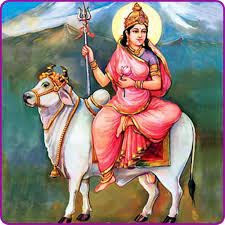
Maa Shailputri is often depicted with a tranquil face, sitting on Nandi, Lord Shiva’s sacred bull. She bears a crescent moon on her forehead, signifying her connection to the lunar cycle. In her right hand, she holds a trident (Trishul), while her left hand carries a lotus flower.

Planetary Significance
Maa Shailputri governs the Moon, and worshipping her is believed to counteract the ill effects of the Moon, bringing peace, harmony, and happiness.

Chakra Association
She is associated with the Muladhara Chakra, symbolizing the commencement of the spiritual journey. This Chakra, the Root Chakra, is crucial for initiating one’s spiritual awakening.

Worshipping Maa Shailputri
On the first day of Navratri, devotees perform the ritual of ‘Ghatasthapana’ to honor Maa Shailputri. This involves placing seven types of soil, followed by seven types of food grains and barley seeds, into an earthen pot. The devotees offer water to the sown seeds until the soil is moist. A Kalash (pot) filled with holy water, Akshat (rice grains), and coins is prepared, topped with a coconut. This Kalash is placed in the center of the earthen pot.

Devotees recite the Pratham Shailputri Mantra to invoke Maa Shailputri and conduct various rituals and Aarti. This sacred worship not only bestows spiritual strength and enlightenment but also brings stability, prosperity, and love into the devotee’s life.

Benefits of Maa Shailputri Puja

  • Mitigates malefic effects of the Moon
  • Brings peace, happiness, and harmony
  • Ward off diseases and negative energies
  • Strengthens the bond between married couples
  • Bestows stability, career success, and business prosperit

Maa Shailputri, the embodiment of divine grace, sets the tone for the auspicious nine days of Navratri. Her story signifies the unwavering devotion and sacrifices made for love. As devotees seek her blessings during these sacred days, they embark on a spiritual journey of self-realization and balance, guided by the powerful Muladhara Chakra. Maa Shailputri’s worship not only cleanses the soul but also fills life with love, success, and joy.

India vs Pakistan: A Look at the Lowest Scores in ODI History

0

In the history of One Day International (ODI) cricket, the matches between India and Pakistan have always been
high-voltage encounters. However, there have been instances where both teams have been bowled out for low
scores, creating records for the lowest totals in their head-to-head matches.

According to the records, the lowest score by the Indian team against Pakistan in an ODI is 79 runs. This
unfortunate event took place in Sialkot on October 13, 1978. The Indian team was bowled out in 34.2 overs with a
run rate of 2.3.

On the other hand, Pakistan’s lowest score against India in an ODI is 87 runs. This occurred in Sharjah on March
22, 1985. The Pakistani team was bowled out in 32.5 overs with a run rate of 2.64.

These matches serve as a reminder of how unpredictable cricket can be and that even the best teams can have off
days. Despite these low-scoring games, both India and Pakistan have had numerous high-scoring and thrilling
encounters that have kept cricket fans on the edge of their seats.

As both teams continue to face each other in future matches, fans around the world will be eagerly watching to see
what new records will be set.

Dandiya Nights – A Fusion of Culture and Fun

0

Priyanshi Pareek reports on Dandiya Nights of Jaipur..

Dandiya, this popular dance is performed during the time of Navaratri festival. 

We know that Dandiya is performed during Navratri festival, but have you ever wondered why it is performed??

It is believed to be performed in memory of Goddess Durga’s victory over Mahishasura.

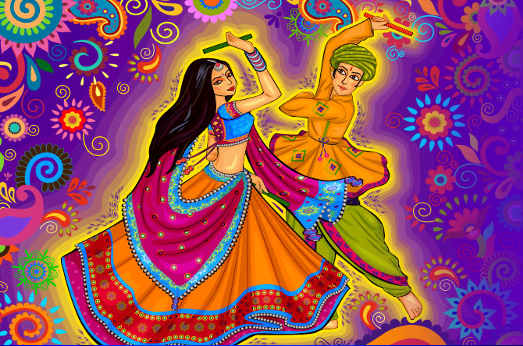
They strike a decorated bamboo stick with energy and enthusiasm and the stick represents the sword of Goddess Durga and is also known as the “Sword Dance”.

Women get dressed up in ghagra-choli, and odhni, whereas men wear traditional costumes like dhotis and kurtas. The dance includes complex circular movements.

The whole year we wait for these 9 days and here it is, starting from 15th October, 2023 till 24th October, 2023.

Performing dandiya and garba in a group is fun but how can we make it happen?

No worries, we have a list of places in your city JAIPUR, where you can go with your group of friends/family and show your dance moves.

  • Dandiya Dhamaal Night 2023

Date: 22nd Oct. 2023

Venue: Brij Vatika Resort, 80 Feet Road, Mahesh Nagar Phatak, Jaipur

Organised by: Shubharambh Events

SPECIAL HIGHLIGHTS:-

  • Lucky Draw Prizes.
  • Food stalls
  • Gifts and tokens of love.
  • Selfie booth

Ticket Prices:

Stag Entry – Rs. 300

Couple Entry – Rs. 550

Group of 3 or more – Rs. 220 (each)

Kids Entry (Ages 5 to 12)Rs. 150 (each)

FOR QUERIES: 9549532280, 8946938683

  • IMF Dandiya Carnival 2023

Date – 21st October 2023 to 22nd October 2023  –  5:00 pm onwards 

Venue – Treebo Trend Hotel New Rockwell, Hem Marg, Roop Vihar, Ganesh Nagar, Ramnagar, Jaipur

SPECIAL ATTRACTION:-

  • Food stalls in Dandiya Carnival
  • Live DJs
  • Fireworks
  • Massive Musicstage
  • Gift Hampers
  • Dhol

Ticket Prices:

Stage – Rs. 300 (per day)

Couple – Rs. 500 (per day)

Family – Rs. 700 (per day)

  • Dandiya Party 2023

Celebrate the Spirit of Navratri for all 9 days  

Date – 15th October to 23rd October 

Time – 7pm onwards 

Venue – Entertainment Paradise Jaipur (Jalsa lawn)

Dress Code – Traditional Indian Attire

SPECIAL ATTRACTIONS:-

  • Daily Garba & Dandiya Raas
  • Traditional Pooja Ceremonies
  • Live Singers and Musicians
  • Live Dj
  • Special Food 
  • Exciting Prizes and Contests

Ticket Price:

Stage Entry – Rs. 700

Couple Entry – Rs. 1000

Family Entry – Rs. 1500 (2 Adults, 2 kids)

  • Sanedo Garba Night

Date: 21st October 2023

Venue: Shree Van Marriage Garden Sirsi Road Jaipur

Managed By: Marcella Hospitality Pvt Limited (Catering Clap)

HIGHLIGHTS OF SANEDO GARBA NIGHT:-

  • Enthralling performances
  • Traditional attires
  • Prizes and svouniers
  • Folk music 

Ticket Prices:

Individual Pass – Rs. 500

Student Pass – Rs. 300

Group Pass (for 10)Rs. 3,800

Family Pass – Rs. 1,200

  • Dandiya Garba Mahotsav

Date: October 15 2023

Time: 06:00 pm

Venue: East Lawn Entertainment Paradise Jaipur Marriage Garden, Jaipur

EVENT HIGHLIGHTS:-

  • Traditional Indian attire 
  • Biggest garba dance
  • fun-filled games and competitions
  • Exciting prizes and gifts
  • Authentic indian food
  • Celebrity guests
  • Full base music and live musical band

Ticket Price: 

For all – Rs. 400

Contact: 9828016129, 9414071078, 9414241679