Home Blog Page 619

Embracing the Warrior Goddess: Navaratri Day 6 Honours Goddess Katyayani Maa

0

Navaratri, the nine-night Hindu festival, is an ode to the divine feminine, celebrating the eternal triumph of good over evil. Each day of Navaratri is dedicated to a distinct manifestation of Goddess Durga, marked by unique rituals, colors, and profound significance. On the sixth day of Navaratri, devotees pay their respects to Goddess Katyayani, the fierce warrior form of Durga. They seek her blessings for courage, strength, and protection in their lives.

The Legend of Goddess Katyayani

The legend of Goddess Katyayani originates from the ancient scriptures, particularly the Devi Bhagavata Purana. According to this myth, she was born from the collective energy (shakti) of the gods in response to the earnest prayers of the sage Katyayana. Her divine birth had a singular purpose: to vanquish the formidable demon, Mahishasura, who remained invincible to any individual god’s efforts. Katyayani is often portrayed as a warrior goddess, mounted on a lion, and armed with a variety of weapons, symbolizing her indomitable resolve and bravery.

The sixth day of Navaratri is dedicated to the veneration of Goddess Katyayani. This day serves as a powerful reminder of the strength and valor embodied by the divine feminine. Devotees invoke her blessings to overcome obstacles, confront challenges, and conquer their fears. It is a profound belief that worshipping Katyayani can instill in individuals the inner strength and courage required to confront life’s adversities.

Navaratri Day 6, which reveres Goddess Katyayani, is a celebration of feminine strength and valor. Devotees seek her blessings to overcome obstacles and challenges, drawing inspiration from her unyielding and resolute nature. This day serves as a poignant reminder that the divine feminine encompasses a wide spectrum of qualities, including courage, determination, and the ability to surmount adversity. As Navaratri unfolds, it continues to inspire millions to forge a profound connection with the divine and embrace these very qualities in their own lives.

Navratri 2023 Day 5: Embracing the Divine Grace of Goddess Skanda Mata

0

As the fourth day of Navratri draws to a close, devotees eagerly prepare to usher in the fifth day of this profoundly auspicious festival. Day 5 of Navratri is dedicated to the veneration of Goddess Skanda Mata, a time when devotees observe fasting and offer heartfelt prayers in her honor. According to the Drik Panchang, Navratri Day 5 is set to grace us on the Panchami Tithi of Shukla Paksha in the month of Ashwina, with October 18, 2023, marking a day of profound significance for worshippers.

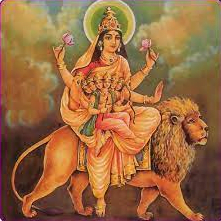
The fifth day of Navratri holds a special place in the hearts of Hindus, as it is a day dedicated to the worship of Goddess Skanda Mata. This divine form is beautifully depicted with four hands, tenderly cradling a lotus flower in her upper hands, while gracefully riding atop a lion, with infant Kartikeya nestled on her lap. Radiant with a pure white complexion, she reigns supreme over the Vishuddha Chakra. In her motherly form, she embodies qualities of kindness, compassion, humility, and showers her devotees with boundless happiness, ensuring they never return empty-handed. Those who wholeheartedly worship this aspect of Maa Durga find solace from negative thoughts, stress, and the worldly tensions that often plague their minds, gradually guiding them toward purer, undiluted spiritual thoughts.

Intriguingly, Hindu scriptures unravel an enthralling tale associated with Goddess Skanda Mata. The narrative unfolds with the existence of a demon named Tarkasur, who, in his relentless pursuit of immortality, engaged in deep penance to seek a boon from Lord Brahma. However, the creator of the universe, Lord Brahma, declined Tarkasur’s request, emphasizing the inevitability of death for all living beings. Undaunted, Tarkasur resorted to Lord Shiva, the detached deity, and cunningly sought a boon from Lord Shiva and Goddess Parvati’s son, Kartikeya, believing that Lord Shiva’s detachment would preclude him from marriage and producing an heir. He craftily asked for his death to be at the hands of Lord Kartikeya.

To Tarkasur’s astonishment, Lord Brahma’s blessing of invincibility did not extend to Lord Shiva’s family, and this revelation was a glimmer of hope for the demon, who saw an opportunity for immortality. Believing himself to be invincible, Tarkasur unleashed havoc upon the universe. Distressed and unable to vanquish him, the deities turned to Lord Vishnu for guidance. In his infinite wisdom, Lord Vishnu revealed a profound truth: Parvati, the incarnation of Goddess Sati, was destined to wed Lord Shiva. He foretold that Lord Shiva would indeed marry Parvati, and from their divine union, Lord Kartikeya was born.

Acknowledging Lord Kartikeya’s extraordinary prowess and valor in combating demons, Lord Brahma appointed him as the Commander-in-Chief of the gods. In this esteemed role, Lord Kartikeya confronted and ultimately defeated the formidable demon Tarkasur, thereby restoring peace and harmony to the universe. In honor of this momentous victory and the motherly aspect of Goddess Parvati, she came to be revered as Skanda Mata, bestowing her blessings and maternal grace upon her devotees during Navratri.

The worship of Goddess Skanda Mata on the fifth day of Navratri is a celebration of her maternal benevolence, her unwavering protection, and her profound ability to guide her followers toward spiritual enlightenment and inner peace. This day is an occasion for deep devotion and reflection, where devotees express their heartfelt gratitude for the divine grace they receive.

9Winz Apk in India: Main Information About the Casino App

0

This article provides a qualitative description of 9Winz and its features. You will get information on how to properly use its mobile app, how you can get and install it and much more.

9Winz Casino Apk in India

9Winz is actively gaining popularity as a bookmaker in India. The platform has more and more active players every day. The company itself has been offering its betting services since 2020. It is at 9Winz that the best gambling environment in India awaits players. There is a really great selection of online casino games as well as live dealer games. Moreover, the platform operates in a completely legal manner as it has a license issued by the government of Curacao, which means that all your personal data is completely safe. Various bonuses and promotional offers are also available to users, including a generous welcome bonus for new players. Here is the basic information about the platform and 9Winz apk that a punter needs to know before they start betting:

Foundation Year2020
LicenseCuracao
ServicesSlots, Live Casino, Table Games, Crash Games
Payment MethodsPaytm, UPI, Google Pay, RuPay, Visa, Mastercard, Yes Bank, Cryptocurrency and others
Mobile appiOS and Android (in development)
Customer SupportEmail, live chat

9Winz mobile app has not been officially released yet, it is currently under development. If you want to comfortably play casino games and win wherever you are, players can use the mobile version of 9Winz, which has the same features as the app.

The mobile web version of the site is perfectly optimized, has a mobile-friendly interface and offers full access to all site features after registering or logging into your platform account. With the mobile version of the site, you will be able to manage your balance, play slots and live casino games. And the main advantage of the 9Winz mobile version is that there are no system requirements. You can play on any device that has internet access.

9Winz Apk Pros and Cons

9Winz is a truly unique betting platform. Hundreds of thousands of users deeply appreciate this platform and trust it. Despite the fact that the platform has its disadvantages, the pros of using the application are much more. Here are the main pros and cons of 9Winz that we would like to point out in this article:

ProsCons
Generous welcome bonus;The support service is not very well developed;
Fast payouts;Works only with a stable internet connection.
Various payment methods;
Exciting casino.

The advantages of using the app are clearly more than the cons, so be sure to try playing the 9Winz app and start earning real money on your favorite hobby!

9Winz APK Download

As we mentioned earlier, the official 9Winz mobile app for Android and iOS devices has not been released yet. However, you can use the mobile version of the online casino site through any browser on your smartphone. The mobile version in terms of functionality is no different from the app, but in terms of convenience, perhaps some players will be more convenient to use the web version. You don’t need to download the web version, you just need to go to the official 9Winz website using a browser on your mobile device, and the size of the site will adapt to the size of your gadget’s screen. So, you don’t have to worry about the space on your device. 

If you are an active user of iOS devices, you can use Safari browser to find the web version of 9Winz. Navigation in the mobile version is more than convenient, all the buttons are placed in the right places. You will have no problem finding everything you need on the site. You can also register, make a deposit, start playing and win at 9Winz casino games.

9Winz Mobile Version Registration

To play slots and live casino for real money, every 9Winz user needs to go through a quick and uncomplicated registration process. Any user over the age of 18 can register. If you are under 18, you will not be able to register on the platform. Come back when you reach the age of majority. In order to register on the platform, you need to take the following steps:

  1. Open the 9Winz mobile online casino site via any browser on your device;
  2. In the registration form that opens, enter all the necessary personal data (full name, date of birth, country of residence, phone number, email address, login and password);
  3. Read the terms of use and agree to them.

After passing these steps, your personal gaming account will be successfully created and you will be automatically logged in.

9Winz Mobile Version Login

If you already have a personal account on the 9Winz platform, you can easily log in via the mobile version of the website to the platform. Here is what you need to do to log in to your account:

  1. Open the 9Winz mobile website and click the “Log In” button at the very top of the screen;
  2. Enter your account username and password;
  3. Click the “Log in” button.

This will take you to your personal account on the mobile web version of 9Winz and you will be able to use all the features of the site and win real money on gambling!

9Winz Mobile App Features

The mobile version of 9Winz has many advantages that set it apart from other betting platforms. We have compiled a list of the most important features that will leave only a pleasant experience when using the mobile web version of 9Winz:

  1. There are no system requirements. The mobile version of 9Winz is accessible to players via any browser;
  2. Easy to navigate, pleasant interface and attractive design;
  3. You can manage your account, get bonuses and play casino games anytime and anywhere;
  4. The web version features a variety of slots, Live games and TV games, which are perfectly optimized for mobile browser play;
  5. You can make deposits or withdrawals at any time in a short period of time;
  6. The mobile site is constantly updated and new features are added.

The mobile version of the site is as fast as possible and has a great set of tools for playing for real money.

9Winz App Customer Support

The 9Winz support team is as customer-orientated as possible, which means that no user will be left without attention in case of any difficulties. If you have any questions about logging into your account, bonuses, withdrawals or other features of 9Winz, you can contact the online casino support team at any time, as the support team works 24 hours a day, which means that the experts will be able to quickly answer any questions you may have. Contact the experts can be done in several ways:

  • Online chat – available in a special window on the mobile site. This is the fastest way to contact a support specialist. The maximum response time is only a few minutes;
  • E-mail – perhaps the slowest way to contact a specialist. It may take up to 24 hours to reply. Use this method of communication if you are ready to wait for a response for some time. But you can also attach any files or photos to the email so that your problem can be solved even faster;
  • There is also a FAQ section on the platform, where answers to the most popular user questions are collected. So before writing your question to a specialist, read the FAQ section, in case your question has already been answered earlier.

Crickex betting options for bettors in Bangladesh

0

Crickex is a legal bookmaker offering users sports betting and online betting in games. Crickex is popular all across the world, including Bangladesh. The bookmaker provides its users with a large range of the most popular sports disciplines for betting, as well as fantastic bonus offers that begin as soon as you register. Because the bookmaker is fully registered and has a Curacao gaming licence, all of your actions inside the bookmaker are completely legal and safe.

Crickex registration

In order to get all the benefits of the bookmaker and start betting, you need to register with Crickex. You can do so by following these steps:

  1. Log in to the company’s website or app.
  2. Fill in the fields with the required information;
  3. Select your language and country of residence;
  4. Provide a secure password;
  5. Accept the terms of use;
  6. Confirm your actions and complete your registration.

After logging in to Crickex Bangladesh we recommend you to go through the authentication procedure. This will facilitate subsequent withdrawals and protect you from fraudsters and unintentional blocking.

Sport Betting in Crickex

You may wager on a broad variety of athletic events and tournaments with Crickex betting. Everyone will find an entertaining event to attend and will earn money by rooting for their favourite team. Crickex gives access to 15 sports disciplines, each of which has a diverse market. There is a distinct page for each sport on the Crickex official website, where you can gain useful information about forthcoming matches and tournaments, accessible markets, and odds analysis. Betting is offered on the following sports:

  • Cricket;
  • Hockey;
  • Figure skating;
  • American Football;
  • Tennis;
  • Handball;
  • Cybersport and much more!

Crickex offers plenty of betting opportunities on dozens of sports disciplines and hundreds of rigs. Also Watch live games and bet in real time. You can also use Crickex bonuses to bet on sports.

How Does Crickex Work for Sports Betting?

You must be a registered user and pass verification to place your first bet. We discussed how to go through all of these stages rapidly above. You may place bets using both the Crickex mobile app. To avoid making a mistake and doing everything perfectly, you must: 

  1. Sign in to Crickex;
  2. Reload your account in any method that is convenient for you;
  3. Select a sport on which you wish to wager; 
  4. Choose the game and the odds;
  5. Enter the bet amount and remember to confirm it.

Your bet will be processed by the programme and displayed in your personal cabinet. The rewards will be credited to your balance immediately following the conclusion of the tournament. Remember that the ideal approach to play is to bet on a sport in which you have a lot of confidence; you can also look at Crickex bet prediction. Crickex can help you place more bets and make more money!

Different kinds of bets

You may place bets in a variety of methods at Crickex bet: 

  • Single (just one wager on one event);
  • Express (a collection of wagers on many matches);
  • Series (a wager on the player’s preferred winning streak). 

Combining many sorts of bets at once, experimenting with odds, and not being afraid to take chances will result in win and money in your pocket.

How to get a sports betting bonus at Crickex

There are plenty of bonuses for players to use for sports betting. Some offer to get cashback, while others give a freebet. There is also a welcome bonus, and to use it you need to: 

  1. Go to the Crickex website; 
  2. Go through the registration process; 
  3. Select a bonus during the registration process; 
  4. Deposit the minimum amount described in the terms and conditions; 
  5. Take the bonus. 

Also the money received from the bonus can be withdrawn, but before that you need to fulfil the wagering requirements.

Valmiki Jayanti: Celebrating the Sage Behind Ramayana

0

Valmiki Jayanti, also known as Pragat Diwas, is an auspicious day celebrated in honor of Maharishi Valmiki, the revered sage who authored the epic Hindu scripture, the Ramayana. Falling on the full moon day of the Hindu month of Ashwin, which typically aligns with September-October in the Gregorian calendar, Valmiki Jayanti for the year 2023 is observed on October 28th, a Saturday.

Understanding Pragat Diwas:
Valmiki Jayanti is also referred to as “Pargat Diwas,” where “Pargat” signifies birth. This occasion is dedicated to paying homage to Maharishi Valmiki and his teachings on values and social justice. While the exact date of Valmiki’s birth remains unknown, he is believed to have lived around 500 BC.

History and Significance:
The history of Valmiki Jayanti is intertwined with the legendary sage’s significant contributions to Hindu mythology. According to folklore, Maharishi Valmiki had a profound connection with Lord Rama. During Rama’s exile, Valmiki met him and later provided shelter to Sita, who was banished from the kingdom of Ayodhya. It was within Valmiki’s ashram that Sita gave birth to her twin sons, Luv and Kush. Maharishi Valmiki played a pivotal role in their upbringing, imparting the teachings of the Ramayana, which consists of 24,000 verses (shlokas) and seven cantos (kandas).

An alternative belief regarding Valmiki’s early life suggests that he was a highway dacoit named Ratnakar. Engaged in robbing and killing, his life took a transformative turn when he encountered Narad Muni. Narad Muni’s influence converted him into a devoted follower of Lord Rama. After years of meditation, Valmiki’s penance was acknowledged by a divine voice, and he was bestowed with the name “Valmiki.” He earned the title of “Adi Kavi,” signifying the first poet of Sanskrit Literature. His works, especially the monumental Ramayana, continue to be recited by Hindu devotees.

Valmiki’s contributions to Indian literature extend to both the Ramayana and the Mahabharata. In the Ramayana, Valmiki’s account features the triumph of Lord Rama over Ravana, celebrated as Dussehra, as well as Lord Rama’s return from exile, marked by Diwali. Valmiki also figures in the Mahabharata, where he imparts wisdom to Yudhishthira, highlighting the benefits of praying to Lord Shiva, which include the expiation of sins.

One of Valmiki’s notable distinctions is being acknowledged as “Adi Kavi” or the first poet. He authored the first-ever shloka and poem, “Ramayana,” containing 24,000 verses. His initial shloka, written in grief and anger upon witnessing a hunter kill a crane couple, is famous:
“मा निषाद प्रतिष्ठां त्वमगमः शाश्वतीः सम

Navratri continues: The Fourth Day with the Worship of Maa Kushmanda

0

Navratri, a vibrant and spiritually significant Hindu festival spanning nine nights and ten days, reveres the diverse forms of Goddess Durga. Each day of Navratri holds profound importance, dedicated to a distinct manifestation of the divine feminine. On the fourth day, devotees fervently worship Maa Kushmanda, the radiant creator of the universe. This article ventures into the profound significance, enchanting mythology, and intricate rituals entwined with the fourth day of Navratri.

Maa Kushmanda – The Luminous Creator:

Maa Kushmanda, the fourth manifestation of Goddess Durga, is believed to reside at the core of the sun. The name ‘Kushmanda’ originates from three elements: ‘Ku’ signifying ‘a little,’ ‘Ushma’ for ‘warmth,’ and ‘Anda’ denoting ‘egg.’ Thus, she is often venerated as the Goddess who brought the universe into existence with her divine smile. Maa Kushmanda is depicted with eight arms and a face aglow with resplendence. In her hands, she gracefully holds a rosary, a kalash (a pot), a bow, an arrow, a lotus, a chakra (discus), a mace, and a kamandalu (water pot).

Significance of the Fourth Day:

The fourth day of Navratri is synonymous with the color ‘Red,’ symbolizing vitality and energy. It holds profound spiritual importance, as it is believed that worshipping Maa Kushmanda on this day can dispel sorrows and diseases. Devotees ardently seek her blessings for robust health and unbridled happiness. Her radiant smile is believed to dissipate the veil of ignorance, illuminating the world with wisdom.

The Mythological Tale:

Hindu scriptures recount the myth of Maa Kushmanda, the architect of the universe. It is said that she brought the world into being through her laughter, infusing the cosmos with light and dispelling the darkness. She is also revered as the Goddess of vegetation, ensuring the harmonious balance of nature.

Rituals and Worship:

Devotees observe a rigorous fast on the fourth day of Navratri, subsisting solely on milk or fruits during daylight hours. The evening puja is the pinnacle of devotion, encompassing the following rituals:

Kalash Sthapana:A pot filled with water is ceremoniously placed on the altar to symbolize Maa Kushmanda’s divine presence.

Mantra Chanting: Devotees chant the Maa Kushmanda mantra, invoking her blessings for strength and well-being.

An aarti, a ceremonial prayer, is performed to honor the goddess.

Prasad: Special offerings are prepared and distributed as prasad, blessed food, to family and friends.

The fourth day of Navratri celebrates the creative brilliance of Maa Kushmanda, who, it is believed, shaped the universe with her enchanting smile. This day prompts introspection, fasting, and heartfelt worship as devotees seek her blessings for robust health and enduring happiness. Maa Kushmanda’s story underscores the transformative influence of positivity and laughter and the significance of preserving the delicate equilibrium of nature in our lives.

Dussehra: A Triumph of Good Over Evil

0

Priyanshi Pareek writes on the Dussehra festival..

Dussehra, also known as Vijayadashami or Dashain, is a significant Hindu festival celebrated in India and other parts of South Asia.

Dussehra, which is celebrated every year at the end of Navratri. It is observed on the tenth day of the month of Ashwin in Hindu calendar, typically in September or October, is a time of great joy and festivity. This festival holds a special place in the hearts of millions, as it marks the triumph of good over evil.

Story behind the festival dussehra:

According to Hindu mythology, Ravana was a demon king of Lanka, a territory to the south of India. Ravana desired Lord Rama’s wife Sita; kidnapped her and took her to his kingdom Lanka where he held her captive. 

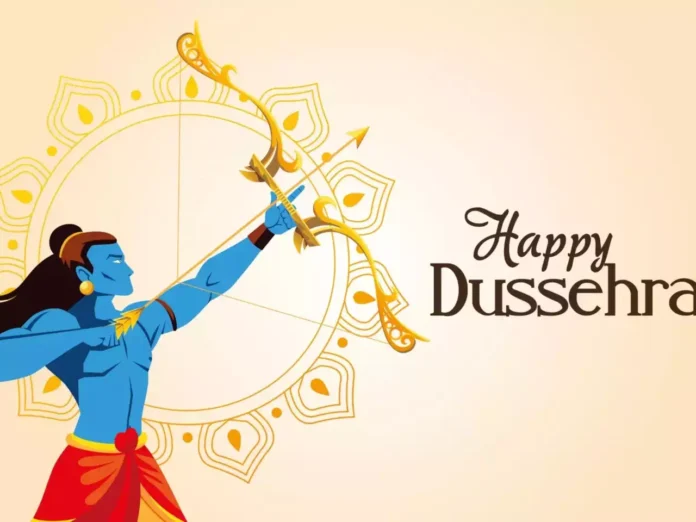
Lord Rama travelled to Lanka with an army of monkeys and with the support of his brother Lakshman and Lord Hanuman he killed Ravana on the tenth day of the battle. The first nine days are celebrated as Navratri and the tenth day when Ravana was killed is celebrated as Dussehra. 

The Navratri festival is concluded by burning huge and gigantic effigies of the demon Ravana. The killing of Ravana signifies the triumph of good over evil.

Do you know, beside the story of Ramayana there is one more story for dussehra of Maa Durga.

Another mythology which is prevalent in the eastern and northern states of India, Goddess Durga kills the demon Mahishasura to bring peace to Earth. The festival of Navratri is celebrated because here also the battle between the Goddess and the demon spans ten days. On the tenth day, the Goddess Durga kills Mahishasura and the day is celebrated as Vijayadashmi meaning the ‘victory that was attained on the tenth day’. 

Each of the preceding nine days of Vijayadashami is dedicated to a specific powerful manifestation of Goddess Durga and people in Northern and Western parts of the region fast while worshipping the nine forms of the Goddess. Goddess Durga is worshipped for nine days in the country and on the tenth day, the idol is immersed in water bodies marking the end of festivities.

Significance:

Dussehra signifies the triumph of good over evil. It serves as a reminder that righteousness, truth, and virtue ultimately prevail over malevolence, falsehood, and wickedness. This festival embodies the victory of positive qualities and values in life and the necessity of upholding them, as exemplified in various mythological stories and legends associated with Dussehra. It is a time for reflection and recommitment to the path of righteousness.

“Dussehra is a reminder that no matter how powerful evil may seem, in the end, goodness shall always triumph. Happy Dussehra!”

Navratri 2023 special: Two pillars of this temple hanging in air since 60 years in Jodhpur

0

While there are many temples of Goddesses in Jodhpur, however, a temple situated about 20 kilometers away from Jodhpur city, is a place where science loses in front of faith.

This is because two pillars of the temple can be seen hanging in air. Locals say that these two pillar suddenly rose into the air. Even after 60 years these pillars are still seen being raised from the ground.

How this happened remains a mystery even today. The main temple of Tanot Mata is in Jaisalmer. On the lines of the same temple, the temple of Tanot Rai Mata was built in Jodhpur also. This temple has become the center of faith of the devotees.

It is believed that the devotees who are unable to go to Jaisalmer for the darshan of Tanot Mata, come here and bow their heads and their wishes are fulfilled.

There are total 8 pillars in the temple. Out of which two are not connected to land. These pillars are mysteriously raised in the air. Many people fold a cloth under this pillar and keep it in their worship room. No one has the answer to how these pillars are standing without land. The presence of heavy pillars hanging in the air creates surprise.

From the scientific point of view, there may be many reasons for this, but the deep faith of the villagers here towards the temple is not ready to accept this. Villagers said – Earlier many engineers had also come here to inspect, but it could not be proved as to how both the pillars rose in the air.

Priest Amit says- I have been doing puja for almost 22 years. Ever since I came here, I have seen the pillars rising in the air. When I asked the villagers who came here at that time, they told that this happened due to the miracle of Goddess. Shivram Tak, a great devotee of Maa Jagdamba, had established this temple. At that time, he had a doubt whether the Goddess was present here or not. To remove this doubt, he had a dream that next day, he would find this proof in the temple. When they reached the temple in the morning, they found two pillars hanging in the air. They believed that Mother Goddess resided here.

This temple was established by contractor Shivram Natthu Tak. Tak was a Class A contractor in PWD. He had bought a farm house for farming in 1971. Due to faith in Tanot Mata, a temple was built here. At that time, the flame was brought from the main temple of Tanot Mata and the idol was installed here. Shortly after the establishment of the temple, two pillars suddenly rose into the air. People also consider this as a miracle of Mother. In 2017, there was a sudden fire in this temple, after which the original statue got disintegrated. Later, his family members got a new statue made and consecrated.

In those days, in the year 1962-63, he had the contract to build about 100 km of road out of 120 km from Jaisalmer to Tanot for the Tanot Mata temple situated on the Indo-Pak border. During this period, the road was built in difficult conditions with less resources. The work in this contract ended due to cost overruns. By then Tak’s financial condition had become so bad that many vehicles and properties had to be mortgaged. After this, when I prayed to Tanot Mata of Jaisalmer, gradually everything started getting better than before. This was the reason why his faith in his mother kept increasing day by day. His resolution was that he would definitely build a grand temple of Mata in Jodhpur.

Navratri 2023 Day 3: Date, Maa Chandraghanta Puja, Colour, Timings, Mantra, and Bhog

0

Navratri has commenced, filling the air with devotion and festive fervor. This nine-day festival is a tribute to Maa Durga in her various forms, and Day 3, known as Tritiya, is dedicated to Goddess Chandraghanta, representing beauty and courage. She emerges from a tigress and is often depicted with a crescent moon on her forehead resembling a bell. The color associated with her is red, symbolizing vitality, fervor, courage, and strength.

Navratri Day 3: Date
The third day of Shardiya Navratri falls on Tuesday, October 17, marking the Tritiya tithi of the Shukla Paksha, according to the Panchang.

Navratri Day 3: Puja Vidhi, Mantra, Shubh Muhurat
On Day 3, it is recommended that devotees wake up early, take a bath, and wear clean attire. Place the goddess’s idol in your puja room, cleanse it with Kesar, Ganga Jal, and Kewra. Adorn the goddess with yellow flowers, jasmine, panchamrit, and mishri. Check the auspicious muhurats for the day before starting any ritual:

  • Brahma Muhurat: 4:42 AM to 5:33 AM.
  • Abhijit Muhurat: Around 11:43 AM to 12:29 PM.
  • Pratah Sandhya: 5:08 AM to 6:23 AM.
  • Amrit Kalam: 11:23 AM to 1:02 PM

Navratri Day 3 Colour
The color associated with Goddess Chandraghanta is red. She is often depicted as a warrior goddess riding a tiger with ten arms and various weapons. Red symbolizes energy, vitality, and strength, inspiring individuals to take action and achieve their goals. Wearing red on Navratri Day 3 is believed to invoke the blessings of Goddess Chandraghanta, bringing good fortune and success.

Navratri Day 3 Mantras

  • Om Devi Chandraghantayai Namah॥
  • Pindaja Pravararudha Chandakopastrakairyuta। Prasadam Tanute Mahyam Chandraghanteti Vishruta॥
  • Ya Devi Sarvabhuteshu Maa Chandraghanta Rupena Samsthita।Namastasyai Namastasyai Namastasyai Namo Namah॥

Navratri Day 3: Bhog
During Navratri, Bhog refers to the food offerings made to the Goddess and later distributed as prasad among devotees. The type of Bhog offered on Day 3 may vary from region to region, but it typically consists of vegetarian dishes, often prepared without onion and garlic, as it is considered pure and sattvic (pure and balanced). Common Bhog items on this day include:

  1. Kheer: A sweet rice pudding made with rice, milk, sugar, and flavored with cardamom and saffron.
  2. Puri: Fried bread made from wheat flour, usually served with a potato curry (aloo sabzi).
  3. Sabudana Khichdi: A dish made from soaked and cooked tapioca pearls, often seasoned with cumin and other spices.
  4. Paneer Dishes: Many people prepare dishes with paneer (cottage cheese) to offer as Bhog.
  5. Fruits: Even red fruits like pomegranates are offered.

Navratri Day 3: Significance
In Hinduism, Chandraghanta is the third form of goddess Mahadevi, worshipped on the third day of Navaratri. Her name, Chandra-Ghanta, means “one who has a half-moon shaped like a bell.” She signifies perpetual readiness for battle against evil, with her third eye always open. Chandraghanta is also known as Chandrakhanda, Vrikahvahini, or Chandrika, and she is believed to bless devotees with grace, bravery, and courage. Through her grace, devotees are relieved of sins, distress, physical and mental sufferings, and obstacles.

Legend
According to the Shiva Purana, Chandraghanta is the “Shakti” of Lord Shiva in the form of Chandrashekhara. Each aspect of Shiva is accompanied by Shakti, creating Ardhanarishvara, a balanced entity. The story tells of Chandraghanta’s battle against the demon Jatukasura, sent by the demon king Tarkasura to disrupt her peaceful life.
Goddess Chandraghanta is revered for her beauty, grace, and bravery. Her significance lies in her readiness to battle evil and bestow blessings on devotees. As Navratri continues, devotees across the world seek her divine grace and celebrate her power and benevolence.

The Enlightened Journey of Sri Madhvacharya: Celebrating Dashami Tithi of Ashwin Shukla Paksha

0

In the vast tapestry of human history, certain individuals emerge as luminaries, illuminating our understanding of the universe and our place within it. One such radiant figure is Sri Madhvacharya, whose birth anniversary, celebrated on the Dashami Tithi of Ashwin Shukla Paksha, is known as Sri Madhva Jayanti. This day holds profound significance for followers of Madhvacharya, as it marks the birth of a remarkable philosopher who championed Dvaita Vedanta, a school of thought that stands in contrast to the more prevalent Advaita Vedanta.

Sri Madhvacharya was born in the year 1238 C.E. in the idyllic village of Pajaka, nestled near Udupi. His father, Madhyageha Bhatta, was a devout Brahmin belonging to the Bhagavata Sampradaya, and his yearning for a child was answered through unwavering devotion. The child was christened Vasudeva, and little did they know that he would later ascend to the grandeur of Madhvacharya, a name destined for greatness.

As a young Vasudeva, under the tutelage of his guru Achutaprekshacharya, embraced the life of a renunciant, seeking spiritual enlightenment. However, the prevailing Advaita school of thought did not resonate with his soul. Madhvacharya was known for his earnestness and scholarly pursuits, qualities that would shape his remarkable life’s work. His guru conferred upon him the name Purnaprajna, a name that would etch itself in the annals of history.

Purnaprajna embarked on a pilgrimage, visiting sacred shrines in South India, all the while sharing his unique philosophical insights. His philosophy posited that the world is real, individual souls are distinct from Brahman, and Vishnu is the supreme entity in the cosmos. Upon his return, he composed a commentary on the Bhagavad Gita, known as the Gita Bhashya, thereby igniting the flames of his prolific literary journey.

Madhvacharya’s thirst for knowledge transcended geographical boundaries. He embarked on a journey to the North, visiting Benares, Allahabad, Dwaraka, Delhi, and Badrikshetra. It was in the hallowed precincts of Badrikshetra that he penned the Brahmasutra Bhashya, deep within the Himalayas, where the revered sage Sri Vedavyasa was believed to reside.

Upon returning to Udupi, Madhvacharya’s prolific pen embarked on a journey of its own. He authored numerous works, laying the foundation for what would become known as Dvaita Siddhanta. His enduring legacy is also characterized by the establishment of the iconic Sri Krishna temple in Udupi and the founding of eight mutts, each a bastion of spiritual learning and devotion.

During his second pilgrimage to North India, Madhvacharya’s encounter with Jalaluddin Khilji in Delhi, conversing fluently in Urdu, added another layer to his enigmatic persona. Miracles were often associated with his presence, including the legendary act of walking on the sacred waters of the River Ganges. His life was punctuated by incidents that defied conventional understanding, underlining his intellectual and spiritual eminence.

Madhvacharya’s literary opus includes thirty-seven works, comprising commentaries on all Upanishads, the Bhagavad Gita, the Brahmasutras, and the Dvadasastotra, among others. His philosophy, Dvaita Vedanta, stands in stark contrast to the prevailing Advaita Vedanta, championing the eternal and distinct nature of both Brahman and individual souls.

While followers of Madhvacharya do not document his earthly departure, it is believed that, in 1317 C.E., at the age of 79, he embarked on his final journey to Badrikshetra on Madhva Navami, also referred to as the disappearance day of Madhva Acharya. According to their belief, he perceived that his work was complete and mysteriously vanished while imparting wisdom on the Attareya Upanishad to his disciples, leaving a bed of fragrant flowers in his stead.

Sri Madhvacharya’s legacy continues to resonate through his teachings and the enduring reverence of his followers. His profound philosophy, known as Dvaita Vedanta, remains a fundamental pillar of Indian philosophy and spirituality, accentuating the dual nature of the universe and the timeless essence of the soul. His life and teachings continue to inspire countless individuals on their spiritual odysseys, serving as a testament to the profound impact one visionary can have on the world.