Home Blog Page 602

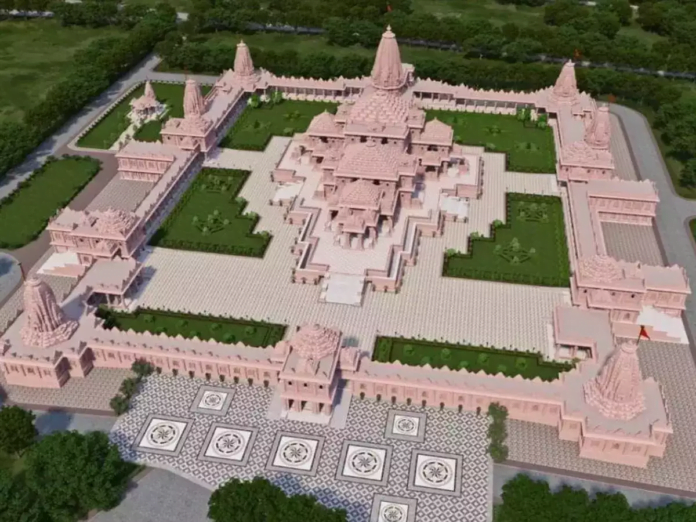
Mayapur Chandrodaya Mandir of West Bengal

0

Priyanshi Pareek

The Mayapur Chandrodaya Mandir in West Bengal, India, is an awe-inspiring Hindu temple complex dedicated to the Pancha-Tattva deities, Radha Madhava, Nrisimhadeva, and Chaitanya Mahaprabhu. Once completed, it will stand as the largest religious monument globally, holding immense significance for the Vaishnavism followers and serving as the central tourist attraction in Mayapur. Additionally, this temple serves as the headquarters for the International Society for Krishna Consciousness (ISKCON).

Location and Architecture 

The Mayapur Chandrodaya Mandir is situated at the confluence of the Ganges and Jalangi rivers within the Ganges Delta region in West Bengal’s Nadia district, perched 36 feet (11 m) above sea level. The temple enjoys a location where the Ganges flows on its western flank, and the Jalangi river graces its southern side.

Established by A. C. Bhaktivedanta Swami Prabhupada in the 20th century, Mayapur was envisioned as a sacred pilgrimage site. The temple complex encompasses various structures, including the Sri Sri Radha Madhava Mandir, Srila Prabhupada’s Pushpa Samadhi Mandir, and Srila Prabhupada’s Bhajan Kutir. Additionally, the ongoing construction of the Temple of Vedic Planetarium, a significant addition to the Mayapur Chandrodaya Mandir premises, is underway.

The central altar at Sri Sri Radha Madhav Mandir showcases life-sized representations of Radha Madhav, accompanied by the Ashta-sakhis, the eight principal gopi friends. Madhava (Krishna) stands in a flute-playing posture, while Radha stands gracefully on his left. At the heart of this temple lies the merciful deity of Nrisimhadeva, installed after a dacoit attack in 1986. The Pushpa Samadhi Mandir reveres a large brass idol of Srila Prabhupada, set amidst extensive gardens. Within this mausoleum, a detailed diorama portrays Srila Prabhupada’s life and his challenging journey in establishing ISKCON. Terra-cotta art graces the outer walls, narrating various excerpts from the Srimad-Bhagavatam.

Bhajan Kutir comprises thatched huts, serving as the dwelling where Srila Prabhupada resided from 1972 to 1976, prior to the construction of the first main building, the Lotus Building. Within the Kutir, an idol of Nitai Gaurasundar, crafted from neemwood, is worshipped. The Temple of Vedic Planetarium shelters the deity of Radhakrishna, representing the combined form of Hindu god Krishna with his primary consort and shakti, Radha.

Construction Details 

The ambitious project commenced in 2010 with an initial target completion of 2016, yet subsequent adjustments extended the timeline. Further setbacks arose due to the Covid-19 pandemic, prompting additional delays, consequently pushing the opening date to the following year.

Envisioned as part of the Vedic Planetarium, the Institute of Vedic Cosmology will serve as a hub for researching and delving into Vedic narratives about the cosmos. Additionally, it will facilitate tours exploring segments of cosmic creation, offering visitors an immersive experience into Vedic cosmological concepts.

The construction of the temple unfolds with a projected cost of $100 million, designed to accommodate approximately 10,000 devotees on each floor. Within these spaces, devotees will engage in singing, praying, and dancing in the divine presence of Lord Krishna.

Alfred Ford, the great-grandson of the renowned businessman Henry Ford and the prospective owner of Ford Motor Company, assumed the name Ambarish Das upon joining ISKCON in 1975. His generous contribution of $30 million significantly supported the temple’s infrastructure development. As a patron and contributor, he plays a crucial role in the temple’s realization and future endeavors.

Scientists Captured Rare Half male Half female bird on camera

0

In a groundbreaking discovery, scientists have recently captured on camera an incredibly rare bird exhibiting bilateral gynandromorphism – a phenomenon where the creature displays male colors on one half of its body and female plumage on the other. This extraordinary find sheds new light on the intricacies of androgyny within the animal kingdom.

The rare green honeycreeper bird, adorned with aqua-blue feathers on one side and yellow-green plumage on the other, was observed on a farm in a nature reserve near Manizales, Colombia. Unlike the typical male and female members of its species, this avian anomaly featured a clear boundary down its middle, presenting a striking visual representation of bilateral gynandromorphism.

Researchers from Whitehawk Birding and Conservation in Panama meticulously studied the bird for an extended period of 21 months as it frequented a Colombian farm, returning to feed on fresh fruit and sugar water provided daily by the farm’s owners. The avian anomaly’s external appearance indicated typical male plumage on its right side and female plumage on the left, a distinctive characteristic of bilateral gynandromorphism. However, confirmation regarding the internal organs of the bird remained elusive through visual observation alone.

The unique coloration is believed to result from a rare cell division error known as bilateral gynandromorphism, wherein an egg allows fertilization by two different sperm. The bird’s internal organs were hypothesized to be divided down the middle into both male and female components, yet this could not be definitively confirmed.

Despite the opportunity for in-depth observation, the scientists noted the bird’s elusive behavior, appearing in the vicinity for approximately 4–6 weeks before disappearing for around 8 weeks. The bird seemed to avoid interactions with others of its species, and, interestingly, fellow birds also avoided it. This behavior led researchers to surmise that the unique avian specimen likely had limited opportunities for reproduction.

The documented case in Colombia is only the second report of a bird with bilateral gynandromorphism, with the previous instance occurring over a century ago. What makes this discovery particularly significant is that it is the first time such a phenomenon has been captured on camera, providing valuable visual evidence of this rare occurrence in the wild.

While bilateral gynandromorphism has been observed in various animals, including chickens, songbirds, spiders, and lobsters, the Colombian green honeycreeper distinguishes itself by presenting a unique reversal of plumage compared to the only other documented case from over a century ago.

The discovery of this extraordinary bird serves as a testament to the wonders of the natural world, offering scientists a rare glimpse into the complexities of biological anomalies and the intricate dance of nature’s patterns. As researchers continue to delve into the mysteries of bilateral gynandromorphism, this avian oddity stands as a symbol of the diverse and unexpected marvels that await discovery in the animal kingdom.

Vrindavan Chandrodaya Mandir: The Rising Moon of Vrindavan

0

Priyanshi Pareek

Under early stages of construction in Vrindavan, Mathura, India, the Vrindavan Chandrodaya Mandir is set to become the world’s tallest religious monument. Planned and executed by ISKCON Bangalore, this ambitious project, with an estimated cost of ₹700 crore (US$88 million), is poised to rank among the most expensive temples globally.

Envisioned to soar to a towering height of about 700 feet (equivalent to 70 floors) and encompassing a substantial built-up area of 540,000 sq. ft. (~50,000 sq. m.), the temple is nestled within a sprawling 62-acre expanse, including 12 acres allocated for parking facilities and a helipad.

Temple Hall

The Main Temple Hall will serve as the revered abode for the Deities of Sri Radha Vrindavan Chandra. Designed to accommodate a sizable gathering, this spacious hall includes dedicated spaces for creating garlands and conducting various preparations for puja rituals. The day will commence with Mangal Aarti, followed by Darshan Aarti, Bhog Aarti, and Sandhya Aarti, offering devotees multiple opportunities for spiritual connection throughout the day.

Adorned in exquisite garments, embellished with jewels, and adorned with fresh, fragrant flowers daily, the Deities will be a sight to behold. As night falls, Shayana Aarti will be performed, gently rocking the Deities in a palaki before they are put to rest. Devotees will engage in continuous kirtans and bhajans, resonating the halls with devotion, while the constant chanting of the Hare Krishna Maha Mantra will infuse the atmosphere with spiritual energy.

During festivals, the hall will witness grand celebrations, including elaborate abhishek rituals followed by aarti, accompanied by heartfelt devotional renditions. In the auspicious month of Kartik, the Deepotsava festivities will adorn the hall with the radiance of lamps, creating a mesmerizing ambiance for devotees. Ultimately, the main temple hall will serve as a haven of devotional fervor, transcending devotees to a realm of profound bliss.

Srila Prabhupada Museum And Expo

The proposed museum in Vrindavan pays homage to His Divine Grace A.C Bhaktivedanta Swami Prabhupada, the esteemed Founder-Acharya of ISKCON, known for introducing India’s cultural richness to the western world. This museum will exhibit items gifted to Srila Prabhupada, offering insight into his compassionate nature and profound spiritual impact. It aims to highlight Srila Prabhupada’s monumental contributions and their enduring significance in spirituality and humanity.

Vrindavan, with its spiritual significance, hosts a museum honoring Srila Prabhupada, allowing millions of pilgrims to explore his legacy. The museum meticulously showcases his belongings and includes a collection warehouse, exhibition halls, a gallery with engaging dioramas, a film center, and a gift shop offering related souvenirs. The Srila Prabhupada Expo will globally promote his teachings through lectures, seminars, and exhibitions in multiple languages. Vrindavan Chandrodaya Mandir’s initiative strives to honor and perpetuate Srila Prabhupada’s legacy, inviting enthusiastic participation to spread awareness about his teachings.

Gaushala

Cow protection, revered in Vedic heritage, is central to our ethos, considering cows as not just safeguarded beings but divine entities embodying all devatas. Our spacious Gaushala, named after Krishna’s Surabhi cows, shelters around 200 native breed cows and calves like Gir, Sahewal, and Gangatiri. Combining traditional wisdom with modern methods, our dedicated team ensures their welfare. Cows enjoy three nutritious meals daily and free grazing in designated areas. Milk is prioritized for calves, while surplus production is used for dairy products, enriching offerings to the temple Deities. Our vision includes expanding shelter and grazing areas to welcome more cows seeking a peaceful life at Surabhi Gaushala.

GIFT City getting Ferris Wheel bigger than the London Eye

0

Gujarat International Finance Tech City (GIFT City) is poised to become the epitome of a modern, developed India, offering a lifestyle reminiscent of Singapore and New York. With its ambitious plans, including the construction of the awe-inspiring “Gift Eye” – surpassing the London Eye – and a sprawling landscape covering 3300 acres, GIFT City is on track to be a beacon of progress and luxury in the region.

Development Phases and Expansion:

The ambitious GIFT City project is scheduled to evolve through three comprehensive phases, shaping a planned city that mirrors the success of Chandigarh and Gandhinagar. The recent approval to expand the city’s footprint from 886 acres to an extensive 3300 acres reflects the grand vision behind this groundbreaking initiative. Land acquisition from villages like Shahpur, Ratanpur, Lavadpur, and Valad has paved the way for the establishment of the country’s third planned city and Gujarat’s second.

State-of-the-Art Facilities:

GIFT City envisions a smart and sustainable future, with facilities designed to meet the highest global standards. Electric vehicles will dominate the city’s transportation landscape, providing quick and efficient connectivity, and green parks and gardens will be a mere five minutes away for residents to enjoy. Waste disposal will occur seamlessly through an underground tunnel system. Additionally, the city’s public transport will be entirely electric, and roads will range from 18 to 45 meters wide, contributing to a zero-discharge environment.

Private Sector-Led Development:

A distinctive feature of GIFT City’s development model is the significant role played by the private sector. The private sector will be responsible for developing 67% of the area for commercial purposes, 22% for residential use, and 11% for social activities. The city’s authority will primarily focus on approving plans, fostering a dynamic environment where the private sector drives innovation and development.

Diverse Offerings for Residents:

GIFT City aims to accommodate a population of 8 lakh people, offering a blend of ultra-modern offices, 8-storey apartments, prestigious school brands, renowned hotel chains, upscale restaurants, hospital facilities, and entertainment zones. The city’s planning revolves around a “walk-to-work” theme, creating a seamless integration of work and lifestyle. Currently, 18-20 buildings are operational, with an additional 30 under construction. By 2030, GIFT City envisions the completion of 125 buildings.

Investment and Vibrancy:

To support the extensive development, an investment of Rs 835 crore is earmarked for the current phase, with Rs 2900 crore and Rs 2600 crore allocated for phases two and three, respectively. GIFT City will also play a pivotal role in the upcoming Vibrant Summit starting from January 10, attracting big investors from around the world.

Landmarks and Attractions:

Among the noteworthy attractions, the “Gift Eye” stands out, with a planned height of 158 meters, surpassing the London Eye by 23 meters. Furthermore, GIFT City will boast a Dubai-like shopping mall, akin to the 26th largest mall globally. Negotiations are underway with prominent hotel brands like Marriott International, Hilton, Taj, and others, underscoring the city’s commitment to offering world-class amenities.

As GIFT City unfolds its grand vision, it is not merely creating a city; it is crafting an experience, a lifestyle, and a future that sets the standard for urban development in India. With its commitment to sustainability, innovation, and private-sector-led growth, GIFT City is well on its way to becoming a global benchmark for integrated, smart, and luxurious urban living.

Cultural Gem: The Tirupati Balaji Temple Enchantment in Jammu

0

Priyanshi Pareek

The newly inaugurated temple of Sri Venkateshwara (Tirupati Balaji) in northern India, nestled amidst the picturesque Shivalik forests in the Majeen area of Sidhra on the outskirts of Jammu city, was opened to the public on Thursday. 

The temple, constructed at a cost of Rs 33.22 crore over 62 acres of land, emulates the renowned Tirupati Balaji temple in Tirumala, Andhra Pradesh. This temple marks the sixth establishment by the Tirumala Tirupati Devasthanams (TTD) outside of the southern state, joining the ranks of temples in Hyderabad, Chennai, Bhubaneswar, Kanyakumari, and Delhi. Notably, it stands as one of the largest temples in Jammu.

In a ceremonial dedication, Lt Governor Manoj Sinha, joined by Union Minister of State in the PMO Dr Jitendra Singh, officially opened the temple to the public amidst the serene chants of religious mantras and the resonating beats of nagaras in the morning.

“The dedication of Lord Venkateswara temple will strengthen religious tourism circuit in J&K, give a boost to spiritual tourism and a major fillip to the economic development and employment opportunities in the Union Territory,” L-G Sinha said.

“Shri Mata Vaishno Devi Shrine Board, Shri Kailakh Jyotish & Vedic Sansthan and many other organizations are making immense contribution to promote Vedic culture & traditions. I am confident Tirumala Tirupati Devasthanams will develop a Ved Pathshala & health Centre on priority,” he added.

In addition to various pilgrimage facilities such as an amenities complex and a kalyana mandapam (wedding stage), the project encompasses educational and developmental infrastructure, including veda pathshala (Vedic teaching classrooms), a hostel building, and staff quarters.

From the entry gate to the sanctum sanctorum and its gold-plated tower, the temple faithfully replicates the original Tirupati Balaji temple in Tirumala, adhering to the Dravidian style of architecture. Nevertheless, certain ongoing works are still underway within the temple premises.

The inauguration of the Tirupati Balaji temple sparked joy among the local community, particularly among traders and individuals involved in the tourism sector, who had faced challenging times in recent years. Previously, a significant portion of the over one crore Mata Vaishno Devi pilgrims used to spend a day or two in Majeen before continuing to Katra by road, contributing to the livelihoods of local shopkeepers and taxi operators. However, since the establishment of a railway line connecting Katra to the rest of the country in 2014, most pilgrims began traveling directly there, impacting the flow of visitors and earnings for those in Majeen.

As the 62-day Amarnath yatra embarks on its journey to the South Kashmir Himalayas from both Pahalgam and Baltal routes starting July 1, Arun Gupta, the president of the Jammu Chamber of Commerce and Industry, expressed optimism that the Tirupati Balaji temple would introduce religious tourism to the scenic and previously unexplored areas of Jammu. He highlighted the potential for increased tourism, especially in the transportation sector, which is expected to benefit from new routes.

However, the Chamber president urged the administration to establish Amarnath yatra counters in Jammu city to encourage pilgrims to explore the old city, renowned for its ancient temples, shrines, and various other tourist attractions. This move aims to draw footfall to these historically significant sites.

Divine Delight: Journeying Through Krishna Leela Park

0

Priyanshi Pareek

Sanatan culture emphasizes righteous living (Dharma), performing duties selflessly (Karma), seeking spiritual liberation (Moksha), practicing non-violence (Ahimsa), embracing diversity, respecting nature, and pursuing inner peace through practices like yoga and meditation.

ISKCON, having acquired a 28-acre hillock through a public auction for Rs 23 crore, is in the process of constructing a Krishna Lila Park. This park, envisioned as a 4D technology-driven attraction, draws parallels to Disneyland. It aims to harness the tourist potential of Bangalore, Karnataka, and India, presenting a transformative and immersive experience centered around Krishna’s divine pastimes.

The Krishna Lila Theme Park, situated on Vaikuntha Hill, a 28-acre hillock along Kanakapura Road in Bengaluru, is a sprawling cultural complex dedicated to showcasing the rich heritage and narratives from India’s great epics. Expected to become a prominent religious and cultural tourism spot, this project in Bengaluru holds immense societal and cultural significance.

Proposed and spearheaded by ISKCON Bangalore devotees, this grand-scale project is an unprecedented and historic endeavor in India, with an estimated cost of Rs. 700 crores, marking a unique and pioneering initiative in the country.

The project seeks to captivate the minds of today’s children, often enamored by Western characters like Superman and Spiderman, by redirecting their focus towards the remarkable tales of our Vedic heroes such as Krishna, Rama, and Hanuman. Its core mission is to imbue the younger generation with the profound values embodied by these revered figures.

This cultural complex seamlessly blends traditional temple aesthetics with contemporary architecture. It features two ground-level temples: the Sri Puri Jagannath Mandir and the Sri Radha Krishna Mandir.

Srila Prabhupada, the Founder-Acharya of the International Society for Krishna Consciousness, advocated the principles of yukta vairagya. This philosophy emphasizes not outrightly dismissing worldly things as material but rather channeling everything towards serving Lord Sri Krishna for the betterment of humanity. These foundational principles of yukta vairagya form the bedrock of the Krishna Lila Theme Park project. Here, the synergy between modern technology and efficient management practices converges to execute this monumental endeavor, dedicated to serving God and uplifting mankind.

In January 2013, the Deities of Sri Jagannatha, Baladeva, Subhadra, and Sri Sudarshana Narasimha were ceremoniously installed.

Within this complex, a dedicated shrine will honor Srila Prabhupada’s profound contributions to modern society. It will vividly portray his life and impactful works through intricate dioramas set within thematic settings, narrating a compelling story of sacrifice and compassion.

Additionally, the complex will house multiple classrooms, audio-visual halls, a Vedic library, staff rooms, administrative offices, and various facilities. These spaces are intended to facilitate the dissemination of Vedic wisdom and knowledge to visitors and enthusiasts alike.

The First Of Its Kind Hindu Temple In Abu Dhabi Is Nothing Less Than A Gem

0

In a significant milestone for the Hindu community in Abu Dhabi, the inauguration of the first-ever Hindu temple in the capital city has brought forth joy and celebration. This architectural marvel is not just a place of worship but a symbol of cultural richness, embodying the spirit of unity and diversity that the United Arab Emirates (UAE) stands for.

The temple’s striking architecture bears a remarkable resemblance to the renowned Akshardham temple in Delhi, showcasing the craftsmanship of Indian artisans. Adorned with pink stones from Rajasthan and marble imported from Macedonia, the temple is a testament to the dedication and artistic skills of those who contributed to its creation.

The journey toward the establishment of this sacred place began in 1997 when Pramukh Swami Maharaj, the president of BAPS Swaminarayan Sanstha, expressed his desire for a Hindu temple in Abu Dhabi during a visit to the desert in Sharjah. Over the years, numerous attempts were made to secure land permission, culminating in the generous donation of 13.5 acres of land by the Crown Prince of Abu Dhabi in 2015.

The foundation stone was laid by Prime Minister Narendra Modi during his visit to Abu Dhabi in 2018, marking a historic moment for the Hindu community in the UAE. The temple’s design, rooted in ancient Shilpashastras or Sanskrit scriptures of architecture, includes seven spires representing the seven emirates of the UAE and five ornate domes.

What sets this temple apart is its commitment to traditional construction methods. Unlike modern structures, the temple is being built without the use of steel or iron, adhering to the principles of traditional Indian temple architecture. The foundation, made with fly ash concrete, witnessed the UAE’s largest single pouring of fly ash concrete, totaling 3,000 cubic meters.

The grandeur of the temple extends beyond its religious significance. The complex features beautiful gardens, gift stores, a library, and a dedicated area for children to play. With 6-7 prayer rooms, an exhibition hall, and vegetarian food courts, the temple is designed to cater to the diverse needs of its visitors.

The inauguration ceremony, held on April 20, 2019, saw a massive turnout from the Indian diaspora, with India’s UAE Ambassador Pavan Kapoor and Dubai Consul General Vipul among the dignitaries present. Special prayers were offered for the temple and the UAE during the ceremony, emphasizing the temple’s role as a symbol of unity transcending borders.

Brahmavihari Das, the seniormost priest of the BAPS Swaminarayan Temple Sanstha, led the ceremony, expressing the temple’s significance as a place beyond limits, fostering a sense of unity and belonging among the diverse community in the UAE.

As the first-of-its-kind Hindu temple in Abu Dhabi, this architectural masterpiece not only provides a sacred space for worship but also serves as a bridge between cultures, fostering harmony and understanding in the heart of the UAE. The temple stands as a testament to the country’s commitment to inclusivity and respect for diverse faiths, making it a true gem in the cultural landscape of Abu Dhabi.

Journeying Through India’s New Temple Constructions: Ram Janmabhoomi, Ayodhya 

0

Priyanshi Pareek

The wait is over, the wait of New temples of India in making, Hindu temples which are going to open in 2024 is over as the new year is here. 

Those who have no idea regarding this, don’t worry we will provide you, what you have to do is just read out the article.

You might not know about other temples but Ram Janmabhoomi, you all must know, the most awaited temple, is opening on January 22, 2024.

Ram Janmabhoomi, Ayodhya

The site of Ram Janmabhoomi is believed to be the birthplace of Rama, the seventh avatar of the Hindu deity Vishnu, according to the Ramayana. The sacred location is said to be situated on the banks of the Sarayu river within the present-day city of Ayodhya, located in the northern Indian state of Uttar Pradesh.

Hindu scriptures connect the Babri Masjid site in Ayodhya, Uttar Pradesh, to Rama’s birthplace. ASI’s findings reveal a pre-existing Hindu temple beneath the Babri Masjid, including 12 pillars and 263 terracotta idols portraying deities and human figures. These discoveries challenge Islamic non-idolatry practices, creating complexity in the site’s historical narrative.

The demolition of the Babri Masjid in 1992 intensified Hindu-Muslim tensions. The legal dispute reached the Indian Supreme Court, which held hearings from August to October 2019. Ultimately, on November 9, 2019, the Supreme Court mandated the land’s transfer to a trust for constructing a Hindu temple.

History of Ayodhya

Ayodhya, formerly Saketa, boasts a heritage dating back to the 5th or 6th century BC. Nestled along the Sarayu River, it magnetizes pilgrims, history enthusiasts, and tourists alike, drawn by its blend of mythology and historical depth.

According to Hindu lore, Ayodhya served as the capital of the ancient Kosala Kingdom and was revered as Lord Rama’s birthplace. King Dasharatha reigned over this prosperous and harmonious city, succeeding a line of illustrious rulers such as Ikshvaku, Prithu, and Bhagirath.

During the Buddhist era (6th-5th centuries BCE), Shravasti briefly held the kingdom’s capital status, with some scholars linking Ayodhya to Saketa, where Buddha reportedly resided. Over time, Ayodhya evolved into a significant Buddhist hub under the Maurya and Gupta dynasties, witnessing the construction of monasteries and stupas.

Construction

The construction of the Ram Mandir commenced its initial phase under the Shri Ram Janmabhoomi Teerth Kshetra trust in March 2020.Prime Minister Narendra Modi conducted the Bhoomi Pujan ceremony and laid the foundation stone for the Ram Temple in Ayodhya on August 5, 2020.

A segment of the Ram Mandir is scheduled for inauguration and opening in January 2024. The comprehensive project aims to be fully completed by the official deadline of December 2024.

Temple Design

  • Total Area: 2.7 acres
  • Total Built Up Area: 57,400 sq.ft.
  • Length: 360 feet
  • Width: 235 feet
  • Height: 161 feet
  • Number of Floors: 3
  • Number of Columns in ground floor: 160
  • Number of columns in first floor: 132
  • Number of columns in second loor: 74
  • Number of Gates: 12

Status Update

A section of the Ram Mandir will be inaugurated and opened to the public in December 2023. It is planned to be completed in December 2023, the official deadline.

Kalpana Saroj: Slumgirl to India’s top business icon

0

In the heart of the Vidarbha region in Maharashtra, where dreams often succumb to the harsh realities of poverty, emerged an extraordinary tale of resilience and triumph. Kalpana Saroj, once an illiterate girl relegated to spreading cow dung, defied destiny to become the proud owner of a conglomerate worth Rs 700 crore.

At the tender age of 12, Kalpana’s life took an unexpected turn when she was married off to a man ten years her senior in Mumbai. Within two years, she found herself abandoned and returned to her maternal home, where her only occupation was menial tasks like applying cow dung. Overwhelmed by despair, she contemplated suicide but, guided by a close relative, resolved to turn her life around.

By the age of 15, Kalpana relocated to a distant relative’s house in Mumbai, where she started sewing clothes. As her venture gained traction, she expanded, employing more women and establishing a successful boutique. Buoyed by her daring spirit, she ventured into the beauty and restaurant industries, transforming her life and comfortably supporting her family back in Vidarbha.

However, the turning point came when Kamani Tube, an old company shuttered by a Supreme Court order, sought revival. Displaying unwavering courage, Kalpana stepped forward, declaring her intention to lead the charge in resurrecting the company. With the collective support of the employees, she tirelessly immersed herself in understanding every facet of the business over 8-10 years, steering it towards success.

Kalpana Saroj, now the proud owner of a business group comprising eight enterprises with an impressive turnover of Rs 700 crore, epitomizes the triumphant fusion of courage, hard work, and dedication. Her remarkable journey, from the struggle of applying cow dung to receiving accolades such as the Rajiv Gandhi Award and Padmashree, stands as a beacon of inspiration for those seeking to transcend adversities and carve their path to success. Kalpana Saroj’s narrative is a testament to the indomitable human spirit and the transformative power of unwavering determination.

Bhuvnesh Mishra: A Visionary Engineer’s Robotic Revolution

0

In a remarkable feat of innovation, Bhuvnesh Mishra, a student of Adarsh Vidya Mandir in Jaipur, has etched his name in the Guinness Book of World Records by founding a groundbreaking robot manufacturing company. Hailing from the Pink City, Bhuvnesh has not only made a mark on the global stage but has also become a symbol of India’s technological prowess and self-reliance.

What sets Bhuvnesh apart is his commitment to harnessing indigenous technology, a departure from the earlier trend where young Indian engineers often sold their inventions to foreign companies. With a steadfast determination to build and expand on his own terms, Bhuvnesh established his company in Jaipur, showcasing the potential of Indian youth to take charge of their innovations.

The crown jewel of Bhuvnesh’s accomplishments is the Club First, an Rs 18 crore venture entirely self-funded through his hard-earned money. His company has not only triumphed over foreign competition but also secured a coveted spot in the Guinness Book of World Records, a testament to the ingenuity and resourcefulness of the Indian youth.

One of the standout achievements of Bhuvnesh’s company is the development of robots tailored for diverse applications. From robots that operate in sewerage systems to those providing medication to COVID-19 victims and functioning in hotels, his creations are nothing short of revolutionary. The highlight is a firefighter robot designed to navigate through fires without being hindered by smoke or other obstacles, marking a pioneering step in ensuring safety in hazardous situations.

Speaking about his products during the Self-reliant India campaign, Bhuvnesh proudly stated, “95 percent of our products are made in India.” He unveiled the world’s first robot based on spine technology, enabling it to handle diverse tasks without following a predetermined path. This robot, equipped with GPS, cameras, and 19 gas detection sensors, has been instrumental in health care settings, even verifying whether individuals are wearing masks.

His commitment to societal welfare is evident in the development of a solar-equipped robot designed to clean sewers, eliminating the need for manual scavenging and preventing the loss of life and property. This innovative solution showcases the transformative power of technology in addressing longstanding social challenges.

The robotics revolution spearheaded by Bhuvnesh does not stop there. In collaboration with Neelima Mishra and Mayank Meharchandani, Bhuvnesh has introduced ‘Sona.5’ and ‘Sona 1.5,’ two robots designed to serve food in hotels and restaurants in Jaipur. These robots, costing Rs 9 lakh after three years of research, operate with artificial intelligence, enabling customers to interact and place orders via their smartphones.

What makes these robots truly remarkable is their ability to navigate autonomously, adapt to any floor, and change their path when faced with obstacles. With the capacity to create maps and take the shortest route, these robots redefine automation in the hospitality industry. Moreover, their wireless auto-docking program ensures seamless charging, making them efficient and sustainable.

Bhuvnesh Mishra’s journey from Adarsh Vidya Mandir to founding Club First exemplifies the transformative power of education, innovation, and self-reliance. His achievements not only mark a paradigm shift in India’s approach to technology but also inspire a new generation of engineers to dream big, work hard, and contribute to building a self-reliant and technologically advanced nation.