Home Blog Page 601

VVIP Guest List of Ram Mandir Inauguration

0

In a historic moment that resonates with the collective spirit of millions, the inauguration of the Ram Mandir, scheduled for January 22, 2024, is set to be a spectacular event. The Shri Ram Janmabhoomi Teerth Kshetra Trust is leaving no stone unturned as it meticulously plans the consecration ceremony of Ram Lalla. The guest list for this monumental occasion is equally awe-inspiring, with approximately 7,000 invitees, including some of the most notable figures from various walks of life.

Leading the VVIP lineup is none other than Prime Minister Narendra Modi, who is expected to grace the ceremony as the chief guest. The trust anticipates the attendance of around 3,000 VVIPs, a gathering that reflects the diverse tapestry of Indian society.

Among the distinguished guests are saints and religious leaders representing different traditions, artists, litterateurs, sports personalities, judges, and industrialists. The blend of spiritual leaders and influencers from the fields of art, literature, and sports underscores the inclusive nature of this historic event.

The Shri Ram Janmabhoomi Teerth Kshetra Trust has extended invitations to iconic personalities such as cricket legends Sachin Tendulkar and Virat Kohli, and Bollywood stalwarts including Amitabh Bachchan, Kangana Ranaut, Deepika Chikhalia, and Akshay Kumar. The presence of these luminaries adds a touch of glamour and cultural richness to the ceremony.

In a nod to industrial prowess, invitations have also been sent to leading industrialists like Mukesh Ambani, Gautam Adani, and Ratan Tata, emphasizing the collective support for this momentous occasion. The trust has also extended invitations to retired military officers, scientists, and distinguished awardees, honoring their contributions to the nation.

The ceremonial proceedings will commence with Prime Minister Narendra Modi performing the first aarti of the new idol of Ramlala in the newly-constructed Ram temple within the Shri Ram Janmabhoomi complex. A group of 150 Vedic Acharyas, led by chief acharya Laxmikant Dixit of Kashi, will be engaged in the ritual of Pran Pratistha, ensuring the sanctity of the consecration.

On January 17, a grand procession will mark the transportation and installation of the immovable idol of Ramlala in the Ram Janmabhoomi complex. Subsequently, worship rituals will commence from January 18, building up to the main event on January 22.

Upon reaching the Ram Janmabhoomi complex, Prime Minister Modi will pay tribute to Jatayu at the Jatayu temple, symbolizing the sacrifice of kar sevaks who dedicated their lives to the divine cause. Following this, he will actively participate in the consecration ceremony, delivering the inaugural address, and seeking blessings from the revered saints.

The event will culminate with guests from India and abroad having the opportunity to witness the divine presence of Ram Lalla. As the nation eagerly awaits this historic moment, the Ram Mandir Inauguration promises to be a unifying celebration, blending spirituality, culture, and national pride.

In Motion with Earth: Celebrating Rotation Awareness Day

0

Priyanshi Pareek

Each year, Earth’s Rotations Day is commemorated on January 8. This year, this special day coincides with a Monday.

The Earth’s rotation on its axis indeed creates day and night, influencing our sleep-wake cycle and impacting seasons. Scientists have proposed various theories about this rotational mechanism. The imaginary line passing through the Earth’s poles defines its axis, dictating the rotational pivot. However, the duration of day and night isn’t solely determined by the Earth’s rotation.

Each year, Earth’s Rotations Day commemorates the groundbreaking discovery made by French physicist Léon Foucault concerning the Earth’s rotation. As we prepare to celebrate Earth’s Rotations Day this year, it’s worth keeping a few things in mind.

History

In 470 BC, the Greeks asserted that the Earth rotates on its own axis. However, it wasn’t until 1851 that French physicist Léon Foucault showcased this rotation through a pendulum experiment. This demonstration gained prominence, exhibited at both the Pantheon in Greece and the Paris Observatory. Earth’s Rotations Day pays homage to Foucault’s experiment, which took precedence over other attempts to demonstrate the Earth’s rotation.

Significance

On Earth’s Rotations Day, individuals delve deeper into Léon Foucault’s groundbreaking discovery and the experiment that simplified our understanding of this phenomenon. It’s an opportunity for children to explore and celebrate how the Earth’s rotation functions. Gathering together to nurture curiosity and delve into learning more about this phenomenon is one of the finest ways to celebrate this day, fostering a spirit of inquiry and discovery.

Rotation of Earth

The Earth rotates on its axis in an eastward direction, while the apparent movement of the Sun and the Moon is from east to west across the sky. This spinning motion of the Earth around its axis is termed ‘rotation’. A full rotation of the Earth completes a single day, encompassing a duration of 24 hours.

Importance of Earth’s Rotation

The Earth’s rotation generates the daily cycle of light and darkness, influencing temperature and humidity fluctuations. Additionally, this rotation is responsible for the occurrence of tides in the oceans and seas.

NASA announces 13 Great winning ideas under NIAC Program

0

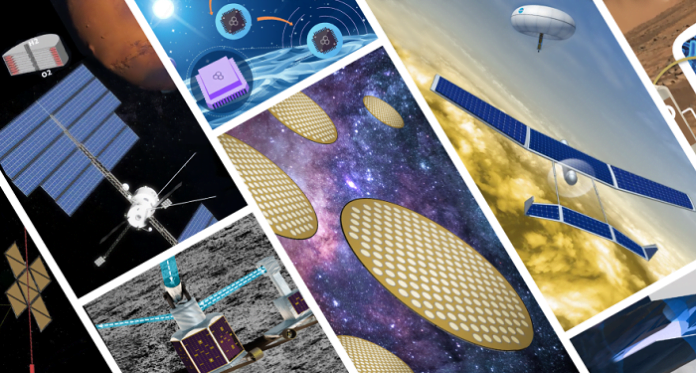
NASA’s commitment to pushing the boundaries of space exploration has once again been highlighted through the recent announcement of 13 winning ideas in Phase 1 of its NASA Innovative Advanced Concepts (NIAC) program. Aimed at fostering groundbreaking space technology concepts, the NIAC program plays a pivotal role in shaping the future of NASA missions over the next few decades. This article delves into the program’s objectives, past successes, and the transformative ideas selected in its latest phase.

Program Objective:

NASA’s NIAC program is designed to nurture pioneering concepts by providing early-stage funding for concept studies that could potentially revolutionize space exploration. The ultimate goal is to encourage innovative ideas that may lead to breakthrough innovations, transforming NASA’s capabilities over the next 20-30 years. The program not only supports cutting-edge research but also lays the groundwork for potential commercialization of these concepts.

Past NIAC-funded Ideas Realized:

The success stories of past NIAC-funded projects serve as a testament to the program’s effectiveness. Notable achievements include the Mars helicopter Ingenuity and the deep space MarCO cubesats, both of which originated from early NIAC research grants. These projects exemplify the program’s ability to transform initial sketches into successful missions, showcasing the tangible impact of nurturing innovative ideas.

Details of Current NIAC Phase:

In its latest Phase 1 selection, NASA has allocated funding to 13 futuristic concepts proposed by research teams across America. Each selected idea is granted $175,000 for initial prototyping, demonstrating NASA’s commitment to supporting the early development stages of groundbreaking space technologies.

Transformative Concepts Picked:

The diverse array of concepts chosen in the latest phase reflects the program’s commitment to exploring unconventional ideas. Some notable concepts include the development of an intelligent drone named MAGGIE for aerial-ground Mars exploration, studying animal hibernation to induce torpor in astronauts during lengthy space travel, and using Mars water mining data to search for signatures of alien life. Other concepts involve swarms of tiny spacecraft propelled by lasers for interstellar travel, innovative approaches to sample return from extreme environments of Venus, and autonomous sensors powered by tritium.

Evaluation Criteria:

To ensure the success and feasibility of the proposed concepts, NASA employs a rigorous evaluation process. The criteria include transformative potential, technical credibility, and creative origination. By focusing on these key aspects, the program aims to identify concepts that not only push the boundaries of current space exploration capabilities but also have the potential for real-world application.

NASA’s NIAC program continues to be a driving force behind the exploration of innovative and unconventional ideas in space technology. The 13 winning concepts from the latest phase showcase the program’s commitment to fostering groundbreaking advancements. As these ideas progress from the conceptual stage to prototyping, the future of space exploration appears more promising than ever, with NASA leading the way in shaping the next frontier of human exploration beyond our planet.

4 Popular Folktales of Rajasthan

0

When we think of Rajasthan, the image of majestic forts, expansive deserts, and a tapestry woven with rich culture and history instantly comes to mind. Deeply embedded within this vibrant culture are folktales that narrate the tales of brave kings and queens, animals, farmers, nobles, sacrifice, and love. These stories illuminate the day-to-day struggles of the Rajasthani people, who face challenges amidst the vast sand dunes of the desert. Exploring these folktales becomes increasingly relevant in today’s world, serving as a window into a unique culture and providing valuable moral lessons for growing children.

  1. Panna Dhai – The Ultimate Sacrifice:
    The tale of Panna Dhai revolves around a maidservant entrusted with the upbringing of Rani Karnavati’s sons, Vikramaditya and Uday Singh. Faced with the arrogance of King Vikramaditya and the betrayal of the valiant soldier Banvir, Panna Dhai’s ultimate sacrifice saved the only living heir to the throne, Uday Singh. Through her bravery and selflessness, Panna Dhai secured the future of Mewar, showcasing the unwavering spirit of sacrifice in Rajasthani folklore.
  2. Dhola Maru – Undying Love and Loyalty:
    The Dhola-Maroo tale epitomizes loyalty, patience, and undying love. Dhola, the prince of Narvar, forgets about his childhood marriage to Maroo and marries another princess, Malwani. However, divine intervention, magical abilities, and the loyalty between Dhola and Maroo prevail, leading to a tale of love that transcends obstacles and trials. This timeless story reflects the cultural practice of childhood marriages and the enduring power of true love in Rajasthani folklore.
  3. Hadi Rani – Sacrifice and Valor:
    The saga of Hadi Rani and Rao Chundawat Ratan Singh is a testament to sacrifice and valor in the face of Aurangzeb’s army. Hadi Rani’s bravery and determination in annihilating the enemy forces and attaining the Zenith of Immortality hold a special place in Rajasthan’s golden history, especially in the region of Mewar. This tale pays homage to the indomitable spirit of the Handa Rajput Clan.
  4. The Wishing Tree – Lessons in Caution:
    The story of the Wishing Tree revolves around a traveler passing through the Thar Desert. Seeking shelter under a tree’s cool shade, the traveler discovers the tree’s magical ability to grant wishes. However, the tale takes a turn as the traveler learns the importance of being careful about what one wishes for, as wishes have the power to come true. This popular folktale imparts a valuable lesson in caution and critical thinking.


These four popular folktales of Rajasthan offer a glimpse into the heart and soul of Rajasthani culture. Through narratives of sacrifice, love, loyalty, and caution, these tales have been passed down through generations, continuing to shape the moral fabric of the region. Today, as we navigate a globalized world, exploring these folktales provides a bridge between cultures and offers timeless wisdom that transcends geographical boundaries.

Jagannath Puri Heritage Corridor Project Set to Welcome Public on January 17, 2024

0

Priyanshi Pareek

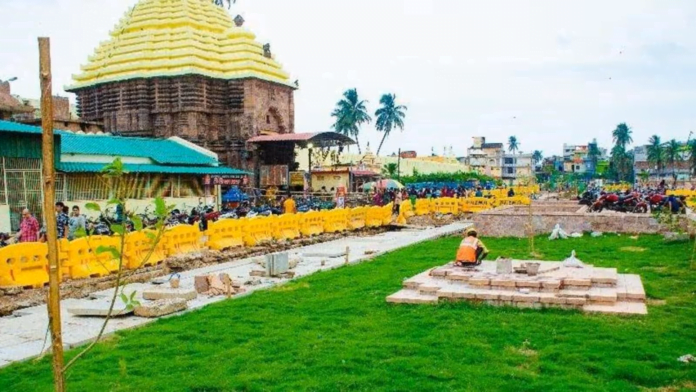
The highly anticipated Srimandir Parikrama project, aimed at enhancing the surroundings of the iconic Jagannath temple in Puri, is underway with an investment of Rs. 943 crore.

The Parikrama project is nearing its final stages and is set to be unveiled to the public on January 17, 2024. A special puja and havan will mark the inauguration on that day.

Shree Jagannath Temple administration chief administrator Ranjan Kumar Das said the inauguration ceremony on January 17 would be on a massive scale with devotees from India and abroad thronging the event.

“The people who had visited Puri ten years back will notice a huge difference now. I am sure the devotees will get a cosmopolitan feeling while visiting Puri after the project’s inauguration,” said Das.

The officials mentioned that the Shree Setu, a pioneering 1.5 km long and 60-metre wide trumpet bridge in Odisha, intended to facilitate vehicle access from Bhubaneswar and Brahmagiri to the Jagannath Vallabh parking near the temple, won’t be completed until February of the following year. Land acquisition commenced in November 2019, involving more than 600 residents around the temple who willingly surrendered 15.64 acres crucial for establishing the security zone and enabling the project’s development.

Following a three-bench judgement in November 2019, led by Justice Arun Mishra, the Supreme Court mandated the clearance of all structures within a 75-metre radius around the temple for safety, security, and the temple’s enhancement.

In November 2021, Chief Minister Naveen Patnaik initiated the project by laying the foundation stone for the development within the 75-metre corridor along the boundary wall of the Jagannath temple, aiming to convert it into a significant pilgrim centre.

The project faced setbacks due to the COVID-19 pandemic and the issuance of draft by-laws by the National Monuments Authority (NMA) in January 2021, which initially prohibited construction within a 100-metre radius of the temple and restricted further construction within an additional 200-metre radius without NMA approval. However, following a request from the chief minister, these by-laws were withdrawn.

In June of the same year, the Supreme Court dismissed two PILs challenging the renovation project, deeming them as “frivolous litigation.” In February, the Archaeological Survey of India in Puri intervened, instructing the state government to halt digging, citing potential violations of the Ancient Monuments and Archaeological Sites and Remains Act.

The case reached the Orissa High Court, with the ASI submitting in an affidavit that the excavation might have led to the destruction of archaeological remains due to the absence of heritage impact assessment studies before the digging commenced.

However, in September of the same year, all obstacles were resolved as the NMA granted a “no-objection certificate” for the construction of the reception centre – a pivotal element of the project – located just outside the restricted zone.

Once finalised, the centre will boast modern amenities, catering to 6,000 devotees with a queue management system, baggage screening, a cloakroom for nearly 4,000 families, water and toilet facilities, hand/feet washing areas, information-cum-donation kiosks, shade pavilions, multi-level car parking, emergency lanes for police and emergency vehicles, an integrated command centre, and a souvenir shop, among other facilities.

State government officials highlighted the significance of the Parikrama project, stating that unlike the other three major Dhams, Puri lacked a designated parikrama marg. Given Puri’s status as the religious capital of Odisha and its daily footfall of nearly 40,000 visitors, there was a pressing need to revitalise the surrounding area. Earlier, the temple periphery suffered from clutter due to illegal constructions and mutts, as mentioned by Das.

Alongside the temple project, the state government is investing an additional Rs. 3,300 crore to overhaul Puri’s infrastructure through the Augmentation of Basic Amenities and Development of Heritage and Architecture (ABADHA) scheme.

For the ruling Biju Janata Dal (BJD), the unveiling of the Parikrama project before the upcoming assembly elections holds significant weight, alleviating many of their concerns.

Political analyst SP Das remarked that the inauguration of the temple project would strongly resonate with the people, as Lord Jagannath holds immense significance as the greatest symbol of identity for the Odia community. The state’s history, culture, traditions, and belief systems are deeply rooted in the temple, further solidifying Chief Minister Patnaik’s connection with the populace.

Deity of  Kadava Patidars – Umiya Mata Temple

0

Priyanshi Pareek

The Umiya Mata Temple stands as a sacred place dedicated to Goddess Umiya, revered as the clan-deity of the Kadava Patidars. According to myth, Maa Umiya was established by Lord Shankar at Unjha. The temple’s origins trace back to the year 156 BC Vikram Samvat- 212, credited to King Vrajpal Sinhji. It’s believed that fifty-one Shakipeeth emanated from Maa Umiya’s body. Shiva’s second incarnation established the temple at Unjha as her unbroken incarnation, differing from the Shakipeeth linked to body parts. Situated at the heart of Unjha in the Mehsana district of Gujarat, India, the temple draws thousands of visitors daily.

In ancient mythological accounts, it’s believed that Lord Shankar established the Maa Umiya Temple in Unjha. King Vrajpal Sinhji is credited with constructing the temple in the year 156 BC Vikram Samvat- 212. Additionally, King Avnipat conducted an extensive yagna, offering one lakh twenty-five thousand coconuts and a well filled with ghee.

During November 2009, the temple commemorated its Silver Jubilee. Renovation funds were sourced from donations by affluent industrialists and farmers. A significant gathering of Kadava Patidars participated in the pilgrimage, necessitating the establishment of tents and guesthouses to accommodate the multitude of visitors. The then Chief Minister of Gujarat, Narendra Modi, delivered a speech at the commencement of the vegetarian sacrifice, expressing his devotion to his clan’s kuldevi.

Umiya Dham, Ahemdabad

The Kadava Patidar community in Ahmedabad, Gujarat, is constructing the Umiya Dham complex, envisaged to encompass a temple, an NRI guest house, a convention hall, boys’ and girls’ hostels, senior citizen care facilities, medical services, recreational areas, sports facilities, and career/business development spaces. By 2018, Prime Minister Narendra Modi was scheduled to lay the foundation stone. This initiative stemmed from the growing discontent of Kadava Patidars towards Modi’s Bharatiya Janata Party, catalyzed by Gujarati politician Hardik Patel’s Patidar Anamat Andolan Samiti leading the Patidar reservation agitation. The BJP aimed to rekindle the Kadava Patidars’ support through this symbolic gesture by Prime Minister Modi.

Umiya Dham, US

In 2013, the Kadva Patidar Samaj commissioned an Umiya Mata temple in Macon, Georgia, followed by plans for two more temples in New Jersey and Boston, Massachusetts by 2014.

The Umiya Mataji Sanstha in Chicago Midwest observes the Holi festival in Joliet, attracting over 500 participants annually. This vibrant celebration symbolizes the triumph of good over evil and is divided into two parts: Holika Dahan and color Holi. Holika Dahan involves the burning of wood and cow dung in a symbolic pyre representing the victory of good forces. The following morning, the Rangwali Holi takes place at the temple grounds, where people joyfully apply colored powders (gulal) and colored water to each other in celebration of spring. The event in Chicago includes complimentary snacks and dinner while children and families engage in these festivities. Alongside these colorful rituals, devotees also engage in prayers, dancing, and singing devotional songs.

Tirupati Balaji Temple’s net worth reaches Rs 3 Lakh crore:’Richer’ than top Indian brands 

0

Apeksha Agarwal

The Tirupati balaji temple of India which is also known as Srinivasa, Venkateswara or Tirumala Venkateswara temple which is situated in town of Tirumala of Andhra Pradhesh. The temple is considered as the most visited and the richest temple in the world. This temple marked its landmark and the history for all the hindu’s as they belive in hindu mythology, which says that the temple is built to worship lord Vishnu who resides here in his age of Kali. Also, people from all over the world come to visit the temple and donate money as the contribution for temple or as a part of their devotion. The temple is also called as TTD (Tirumala Tirupathi Devasthanams).

The sources of temple’s net worth 

This temple of Andhra Pradesh, India come on the top of the list of most richest temples in the world, which also tells the net worth of the temple. According to the 2022 when white paper released (an authorized document which gives an information about the specific topic) the net worth may reached upto 3 lakh crore of the temple which is compared to the biggest cricketers of all time like Sachin Tendulkar earned 1,300 Crore, Virat Kohli earned Rs 1,000 crore, also the big marketing companies like TATA Motors, Nestle and Balaji Finserve etc valued as 2.6 lakh crore. 

The temple’s executive officer, Dharma Reddy announced the turn over of the temple besides the contribution of devotees, he said 11,225 kg of gold deposits from the devotees in form of devotion in various banks, the temple deity is adorned by 1.2 tons of gold and 10 tons of silver ornaments. Beside this the contribution of devotees from all over the world, various trust and NGO’s run by the temple authority.

Apart from this, the temple has 6,000 acres of land of forest and 7,636 acres limit of land on 75 different locations which consist of 1,023acres agricultural land and 6,409 acres non- agricultural land which produces the handsome amount of money.    

Moreover, 71 other temples of country run in the association of with the temple and it also had other 535 other assets, where 159 are under lease whose turn over is around 4 crore. The temple owns the Kalyan and mandapamas at 307 places over the country, from which 29 are under endowment department in lease and other 166 are on lease. It also run 97 mandapamas and collect the turn over of 1,021 crore from the devotion of Srivani trust.

The more temple collects the more temple donates, Tirupati Balaji Temple runs many associations and trust all over the country and the temple become the highest visited places and worship center for Hindu’s nowadays. 

Unveiling the Majestic Features of Shri Ram Janmabhoomi Temple

0

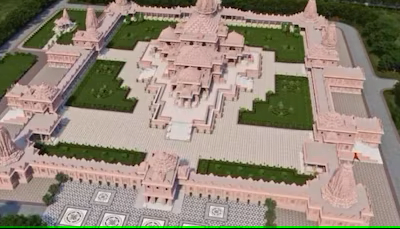
In the heart of Ayodhya, a monumental structure is emerging, destined to stand as a symbol of faith, tradition, and architectural brilliance—the Shri Ram Janmabhoomi Temple. As the construction progresses, the temple unveils a tapestry of features that blend traditional Nagar style, intricate craftsmanship, and modern amenities. Let’s delve into the remarkable elements that define this sacred edifice.

  1. Traditional Nagar Style Architecture:

The Shri Ram Janmabhoomi Temple stands tall in the traditional Nagar style, reflecting the timeless architectural heritage of India. The design pays homage to the rich cultural history of Ayodhya, the birthplace of Lord Shri Ram.

  1. Dimensions and Structure:

Spanning an impressive 380 feet in length from east to west, 250 feet in width, and towering at a height of 161 feet, the temple is a three-storeyed marvel. Each floor stands at 20 feet in height, supported by 392 pillars and adorned with 44 gates, creating an awe-inspiring visual spectacle.

  1. Divine Presence:

The main sanctum will house the child form of Lord Shri Ram, known as Shri Ram Lalla Sarkar, while the first floor will host the divine Shri Ram Darbar. The spiritual essence of the temple is amplified by the statues of various Gods and Goddesses intricately carved into pillars and walls.

  1. Pavilions of Splendor:

The temple boasts five distinct pavilions—Dance, Color, Sabha, Prayer, and Kirtan, each contributing to the immersive and vibrant spiritual experience for devotees.

  1. Accessible for All:

In a gesture of inclusivity, the temple provides an entry point on the east side with 32 stairs and a Singhdwar. Additionally, ramps and lifts are incorporated to ensure accessibility for the disabled and elderly, promoting an environment of universal devotion.

  1. Protective Enclave:

Surrounding the temple is a rectangular wall, stretching 732 meters in all directions and standing at a width of 14 feet. This protective enclosure not only symbolizes sanctity but also preserves the temple from external influences.

  1. Temples within a Temple:

At the four corners of the park, four temples dedicated to Sun God, Mother Bhagwati, Ganapati, and Lord Shiva will be erected. Maa Annapurna’s temple graces the northern arm, while Hanuman ji’s temple adorns the southern arm, enhancing the spiritual ambiance.

  1. Renovations and Homage:

The temple complex pays homage to mythological history with the presence of Sitakoop and the renovation of the ancient Lord Shiva temple on Navratna Kuber Tila. A statue of Jatayu, the legendary bird from the Ramayana, has been installed, adding a touch of mythical reverence.

  1. Technological Marvels:

Strikingly, the temple avoids the use of iron and concrete on the ground. Instead, a 14-meter thick Roller Compacted Concrete (RCC), resembling an artificial rock, forms the foundation. A 21-feet high plinth made of granite safeguards the temple from soil moisture.

  1. Self-Sufficiency and Sustainability:

With a forward-thinking approach, the temple complex incorporates a sewer treatment plant, water treatment plant, firefighting water system, and an independent power station. This self-sufficiency minimizes reliance on external resources, ensuring the temple’s operational autonomy.

  1. Pilgrims Facility Center:

Catering to the needs of pilgrims, a state-of-the-art Pilgrims Facility Center with a capacity of 25,000 is under construction. This center will provide lockers, medical facilities, bathrooms, toilets, washbasins, and open taps, enhancing the overall pilgrimage experience.

  1. Environmental Consciousness:

In its entirety, the Shri Ram Janmabhoomi Temple is a testament to indigenous technology and environmental conservation. A sprawling 70% of the 70-acre area will remain green, emphasizing the commitment to sustainability and harmony with nature.

As the Shri Ram Janmabhoomi Temple takes shape, it weaves together the threads of tradition, innovation, and sustainability. This monumental edifice not only stands as a beacon of faith for millions but also exemplifies the harmonious coexistence of ancient wisdom and modern pragmatism. The temple, with its grandeur and purpose, beckons believers and admirers alike to witness the synthesis of spirituality and architectural marvel unfold in Ayodhya.

Journey to Spiritual Bliss: Om Ashram

0

Priyanshi Pareek

Many years ago, a prophecy foretold the emergence of a great OM in the western region of India, destined to illuminate the essence of Vedic culture and yoga across the globe. After over two decades of construction, this monumental project nears its completion by the end of 2023. This extraordinary structure, shaped in the form of an ‘OM,’ stands as the world’s largest building, housing 108 residential rooms, libraries, shops, and a conference centre. Embracing intricate carvings and constructed from pink sandstone, the magnificent temple within is a tribute to Lord Shiva.

The central structure of this expansive complex takes the form of the ancient Sanskrit symbol OM, resonating with the cosmic essence represented by its three letters: A, U, and M. Symbolizing the eternal cosmic vibration, OM stands as the primordial source of creation—an ever-present reality encompassing past, present, and future. It embodies completeness and unity, encapsulating Brahma (the Creator), Vishnu (the Sustainer), and Shiva (the Liberator)—the fundamental aspects of God.

The 108 residential units within this magnificent OM-shaped layout harness profound cosmic energy, mirroring the significance of the 108 beads on a Japa Mala. Adjacent to these compartments, a lake symbolizes the crescent Moon of the OM sign, while at its central point, known as bindu, a 108-foot tower adorned with 12 temples rises. Above, at 90 feet, a grand overhead water tank stands, crowned by a Surya temple paying homage to the Sun God.

Holy Guruji’s Mahasamadhi

At the core of this expansive creation lies the Samadhi of Hindu Dharma Samraat Paramhans Shree Swami Madhavanandpuriji—a magnificent mausoleum erected by our Revered Gurudev in honor of His master.

For the multitude of spiritual seekers finding solace within the illustrious lineage of Yoga in Daily Life, the Om Ashram stands as a sacred pilgrimage site.

Surrounded by an array of unique architectural marvels meticulously crafted in alignment with the ancient science of Vastu Shastra, these edifices collectively foster a serene, divine ambiance—offering tranquility, calmness, and spiritual bliss.

Unveiling the Hidden Gem Amidst Lush Greenery: Hadshi Temple

0

Apeksha Agarwal

Nestled among the lush green mountains, 50 km away from Pune city, lies the serene Hadshi Temple. This hidden gem, popular for the Shri Satya Sai Baba temple, is a perfect weekend getaway or a family outing destination. Managed by the Sathya Sai Trust, the Hadshi Temple provides a unique blend of spirituality, nature, adventure, and relaxation.

Getting There – A Journey Through Nature’s Beauty

Reaching Hadshi Temple might be a bit tricky, as Google Maps doesn’t directly identify it. For those traveling from Pune, the route is straightforward:

  • Start from Pune and head towards Chandni Chowk.
  • Continue on to Pirangut and then Paud.
  • Proceed on the Tamhini/Mulshi route.
  • After reaching Paud, take a right turn just after the Bus Stand.
  • Follow the road towards Pavana Dam/Tikona.
  • Look for signposts, and after around 15 kilometers, you’ll arrive at Hadshi Temple.

A narrow road will lead to the temple’s parking, where charges are Rs 10 for two-wheelers and Rs 20 for cars.

Temple Overview – A Spiritual Oasis

Built in 2009 by Shri Satya Sai Baba, Hadshi Temple spans an area of 300 acres, with a sprawling lawn covering 4 acres. The temple, a two-storied structure, is surrounded by lush green mountains, offering a picturesque setting. The lower level is dedicated to Shirdi Sai Baba and Satya Sai Baba, while the upper level houses idols of Lord Vitthal, Rukmini, and Shri Ganesh.

Facilities for Visitors – Catering to All Ages

The temple ensures accessibility for senior citizens with a levitator to assist them in reaching the upper shrine. A convenient parking area and a dedicated play area for children add to the visitor-friendly features. The temple also provides a delightful canteen offering local delicacies like poha, bhel, Sabudana khichdi, and pakodas.

Beyond the Temple – Exploring Hadshi’s Bounty

Hadshi offers more than just the temple experience:

  1. Hadshi Lake: Just 3.6 km from the temple, the lake offers boating opportunities and breathtaking views of the historical Tikona fort.
  2. Camping Experience: Private groups offer camping options at Hadshi and Pawna Lake, providing a peaceful retreat amidst nature’s beauty.
  3. Adventure Awaits: The temple premises host various adventure activities, offering an exciting experience for both adults and children.

Sant Darshan Museum – A Spiritual Odyssey

A fascinating addition to the Hadshi experience is the Sant Darshan Museum, shaped like ॐ. This unique museum showcases lifelike sculptures of deities and saints, including Sai Baba, Krishna, Shiv Parvati, Sant Namdev, Sant Tukaram, and Nandi. The museum’s entry fee is Rs 200 for individuals over 10 years old and Rs 100 for children between 3 to 10 years.

Hadshi Temple is a holistic destination that caters to the spiritual, adventurous, and recreational needs of its visitors. Whether you seek tranquility, adventure, or a blend of both, Hadshi promises a memorable and fulfilling experience. Plan your visit, connect with the divine, and immerse yourself in the natural beauty of this enchanting spot near Pune.