Home Blog Page 590

Why Jaipur is known as “Chhoti Kashi”?

0
Why Jaipur is known as "Choti Kashi"?

Jaipur (Monalika Medatwal), the capital city of the Indian state of Rajasthan, is not only renowned for its vibrant culture, majestic forts, and palaces but also for its spiritual significance. Often referred to as the “Pink City” due to the distinct color of its buildings, Jaipur has another moniker that highlights its religious importance “Choti Kashi,” which translates to “Mini Kashi” or “Little Kashi.” The City got this name in relation with the ancient Shiva temple located here.

History

The nickname “Choti Kashi” draws parallels between Jaipur and the ancient city of Kashi, also known as Varanasi, one of the oldest continuously inhabited cities in the world and a major religious hub in Hinduism. Kashi is revered for its ghats along the sacred Ganges River, its numerous temples, and its significance as a center for spirituality, learning, and culture.

Religious Significance

1. Abundance of Temples- Jaipur boasts a plethora of temples dedicated to various Hindu deities. From the iconic Govind Dev Ji Temple in the City Palace complex to the intricate architecture of the Birla Mandir and the historic Galta Ji Temple, the city is dotted with places of worship that attract devotees and tourists alike.

2. Spiritual Atmosphere – Just like Kashi, Jaipur exudes a spiritual ambiance that resonates with visitors. The chanting of hymns, the fragrance of incense, and the sound of bells create an atmosphere of devotion and tranquility, making it a sanctuary for spiritual seekers.

3. Religious Festivals- The city celebrates religious festivals with  fervor, further emphasizing its cultural and spiritual heritage. Events like Diwali, Navratri, and Teej are observed with traditional rituals, processions, and elaborate decorations, reinforcing the city’s connection to its religious roots.

Cultural Parallels

1. Art and Architecture – Both Jaipur and Kashi boast splendid examples of traditional Indian art and architecture. While Kashi is known for its intricate stone carvings and ancient temples, Jaipur showcases exquisite craftsmanship in its palaces, forts, and havelis, reflecting the rich cultural heritage of Rajasthan.

2. Traditional Practices – From the performance of daily rituals to the observance of religious customs, Jaipur shares many cultural practices with Kashi. The reverence for sacred sites, the importance of pilgrimage, and the preservation of age-old traditions contribute to the city’s reputation as a spiritual center.

Educational and Cultural Hub

1. Learning Centers – Like Kashi, Jaipur has been a hub of education and intellectual discourse for centuries. The city is home to prestigious institutions such as the University of Rajasthan and the Rajasthan University of Health Sciences, fostering academic excellence and cultural exchange.

2. Artistic Expression –  Jaipur’s vibrant arts and crafts scene mirrors the creative spirit of Kashi. From traditional Rajasthani paintings and handcrafted textiles to folk music and dance performances, the city is a melting pot of artistic expression, nurturing talent and preserving cultural heritage.

The epithet “Choti Kashi” encapsulates Jaipur’s multifaceted identity as a city of historical significance, cultural vibrancy, and spiritual resonance. Just as Kashi has served as a beacon of spirituality and enlightenment for millennia, Jaipur continues to inspire awe and reverence, earning its place as a “Mini Kashi” where tradition meets modernity, and spirituality thrives amidst architectural splendor.

Through its temples, festivals, and cultural traditions, Jaipur beckons visitors to embark on a spiritual journey, immersing themselves in the timeless charm of “Choti Kashi” – a city that echoes the soul of India’s rich heritage and timeless wisdom.

Who is Devnarayan? Know all about Devnarayan Jayanti!

0
Devnarayan Jayanti

Shri Devnarayan, the venerable Gurjar warrior hailed as the incarnation of Bhagavan Vishnu, is deeply revered in the heartlands of Rajasthan and Madhya Pradesh. As the auspicious Devnarayan Jayanti of 2024 approaches on February 16, it marks the 1112th anniversary of his birth, a celebration held with great devotion and festivity. In Rajasthan, 16th February has been declared a pubic holiday since last year.

Devnarayan, a valiant defender of justice, rose against the injustices perpetrated upon his family and followers, leaving an indelible mark on the annals of folklore. The annual observance of his birth anniversary aligns with Magh Shukla Paksha Saptami Tithi, the seventh day of the waxing moon in the month of Magh.

The epic tale of Devnarayan, rooted in the vibrant tapestry of Rajasthan’s folk traditions, unfolds in two captivating parts. The saga begins with the heroic exploits of the 24 Gurjar brothers, born to the formidable man-lion, Baghji Gurjar. Their destined journey leads them to a formidable battle against the powerful chieftain of Ran city, resulting in a tragic end after 12 years of unrelenting conflict.

The narrative takes a poignant turn in the second part, focusing on the divine incarnation of Bhagavan as Devnarayan. Miraculous feats and profound revenge against the chieftain of Ran city characterize this phase. Devnarayan’s lineage, traced to Sadu Mata and Savai Bhoj, unfolds a story of resilience and bravery, with Savai Bhoj recognized as the bravest among the 24 Bagaravats.

The first part, marked by suffering and mortality, gives way to a thematic reversal in the second phase. Birth and creation emerge from the ashes of defeat, ushering in a narrative shift towards reunion, miracles, and divine testimony. This transformative journey establishes Devnarayan’s revered image among his ardent followers, showcasing the triumph of good over adversity.

The overarching narrative structure of Bagaravat Bharat encapsulates the cyclical nature of life, weaving together themes of resilience, divine intervention, and the ultimate victory of good in the folklore surrounding Devnarayan in Rajasthan. As the 1112th birth anniversary unfolds, it serves as a reminder of the enduring legacy and spiritual significance associated with the divine warrior.

Buddhist Art: Northern, Southern, History

0

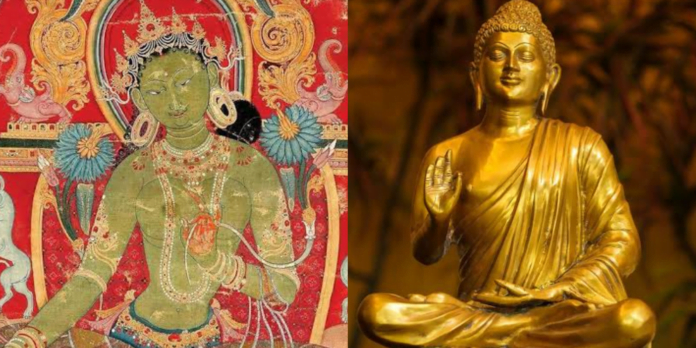
Buddhist art encompasses visual representations linked to Buddhism, featuring depictions of Gautama Buddha, bodhisattvas, historical and mythical figures, narrative scenes from their lives, mandalas, and objects tied to Buddhist practice like vajras, bells, stupas, and temple architecture. Its roots trace back to the northern Indian subcontinent, particularly in modern-day India, Pakistan, and Afghanistan, with surviving artefacts dating from a few centuries after Siddhartha Gautama’s historical existence in the 6th to 5th century BCE.

As Buddhism spread and adapted in various host countries, Buddhist art evolved alongside it. The Northern branch of Buddhist art emerged as it extended through Central Asia into Eastern Asia, while the Southern branch reached as far as Southeast Asia. In India, Buddhist art thrived, coexisting and influencing Hindu and Jain art within shared cave temple complexes. Initially centered on devotional statues and detailed reliefs depicting the life of the historical Buddha, the focus shifted over time. The Buddhist pantheon expanded, leading to devotional images of bodhisattvas and other figures becoming primary subjects in Northern Buddhist art by the late first millennium, rather than mere attendants of the Buddha.

History

Pre-iconic Phase (5th – 1st century BCE)

Between the 2nd and 1st century BCE, explicit sculptures illustrating episodes from the Buddha’s life emerged, mainly as votive tablets or friezes on stupas. Despite India’s sculptural tradition, artists hesitated to portray the Buddha anthropomorphically, relying on aniconic symbols until the 2nd century CE, notably in the Amaravati School. Speculation surrounds earlier human representations, possibly in wood, but lacks archaeological support.

Buddhist art in India originated in the 1st century BCE, exemplified by the Mahabodhi Temple in Bodh Gaya, influencing structures in Burma and Indonesia. Notably, Sigiriya’s frescoes are considered older than those at the Ajanta Caves.

Iconic phase (1st century BCE – present)

The historical narrative traces back to Zhang Qian’s 130 BCE travels and Emperor Han Wudi’s 2nd century BCE worship of Buddha statues, suggesting their existence in the 2nd century BCE. Anthropomorphic Buddha representations emerged in Northern India from the 1st century CE, with key centers in Gandhara, Amaravati, and Mathura. The Indo-Greek and Greco-Bactrian Kingdoms propagated Greco-Buddhist art in north-western India, with King Menander I as a notable Buddhist patron.

Persecution under Pushyamitra Shunga led to the decline of Buddhist art east of Mathura. Gandharan Buddhist sculpture, influenced by Hellenistic art, featured larger and more naturalistic figures. Mathura’s art, rooted in Indian tradition, introduced distinctive features.

Mathura and Gandhara influenced each other during the Kushan Empire, and the origin of anthropomorphic Buddha representations is debated between local evolution in Mathura and Greco-Buddhist syncretism in Gandhara.

Early iconic Buddhist art set a standard portraying the Buddha with realistic human features. Surviving paintings, mainly from Ajanta Caves, showcased sophistication until around 480 CE. Gupta period sculptures in Mathura influenced Asia. By the 12th century CE, Buddhism thrived in the Himalayan regions, with influences from Tibet and China evident in Ladakh’s art. As Buddhism spread beyond India from the 1st century CE, its artistic expressions blended with diverse influences, resulting in a gradual divergence among adopting countries.

Northern Buddhist Art

The transmission of Buddhism along the Silk Road began in the 1st century CE, with an embassy sent by the Chinese Emperor Ming. However, significant contacts started in the 2nd century CE due to the expansion of the Kushan Empire into the Chinese Tarim Basin. Central Asian Buddhist monks, including Parthian, Kushan, Sogdian, and Kuchean, played a pivotal role as missionaries and translators, with figures like Lokaksema.

This cultural exchange also influenced Serindian art in the Tarim Basin, reflecting Greco-Buddhist styles from the Gandhara district, combining Indian, Greek, and Roman elements. The northern route’s art, shaped by Mahāyāna Buddhism, embraced a broader perspective, emphasizing the bodhisattva path and featuring a diverse pantheon devoted to ultimate knowledge, enlightenment, and the liberation of all sentient beings.

Northern Buddhist art is characterized by a rich and syncretic pantheon, showcasing various buddhas, bodhisattvas, and heavenly beings, reflecting the Mahāyāna emphasis on transcendent and infinite aspects of Buddhism. This artistic and cultural interchange along the Silk Road left a lasting impact, with potential influences on the Japanese god Fūjin.

Southern Buddhist Art

Over a millennium, Southern Buddhism, practiced in Sri Lanka, Myanmar, Thailand, Laos, and Cambodia, flourished through Indian influence. The overland Silk Road faced constraints due to the Parthian Empire’s rise, prompting a shift to sea connections, driven by Rome’s increasing demand for Asian luxuries. India played a crucial role in transmitting languages, Buddhism, Brahmanism, and Hinduism to Southeast Asia, shaping the region’s cultural unity and artistic evolution.

Between the 1st and 8th centuries, various kingdoms, like Cambodian Funan and Burmese Mon, competed, contributing diverse artistic features rooted in the Indian Gupta style. Under the Pala dynasty (8th-12th century), Buddhism and Hinduism intertwined. The Muslim invasion led by the 14th century contributed to the decline of Buddhism in India.

In the 8th-9th centuries, Shailendran Buddhist art thrived in Central Java, Indonesia, with monuments like Borobudur. From the 9th-13th centuries, powerful Southeast Asian empires, Sri Vijaya and Khmer, competed, expressing Mahayana Buddhism’s pantheon. Theravada Buddhism was introduced in the 13th century, influencing the Thai kingdom of Sukhothai. Temple complexes played a vital role in artistic expression.

By the 14th century, Islam spread in maritime Southeast Asia, impacting Malaysia and Indonesia. In continental areas, Theravada Buddhism expanded into Burma, Laos, and Cambodia.

Popular Paintings of Rajasthan

0
9 Popular Paintings of Rajasthan

Rajasthan, a vibrant state known for its rich culture, has given birth to a myriad of painting styles over the centuries. Each style reflects the unique artistic heritage and stories deeply rooted in the traditions of the region. Let’s delve into the tapestry of colors that defines the nine popular painting styles of Rajasthan!

Nine Popular Painting Styles of Rajasthan

  1. Phad Paintings: Rooted in Bhilwara, Rajasthan, Phad paintings are an ancient technique dating back seven centuries. These scroll paintings serve as mobile temples, narrating intricate tales of religious significance. Artists, often referred to as storytellers, travel with their Phad paintings, presenting stories through vibrant visuals accompanied by traditional singing and dancing.
  2. Miniature Paintings: Originating in the 16th century, Miniature paintings showcase exquisite detailing and captivating narratives. Passed down through generations, artists often learned this style from family members who served as painters for royalty. These small-scale masterpieces, sometimes crafted on ivory, utilize fine brushes made from squirrel tails or bird feathers, with only natural colors being employed.
  3. Gemstone Paintings: A relatively recent addition, Gemstone paintings emerged in the last two centuries. Utilizing semi-precious stones like agate, bloodstone, and jade instead of traditional paint, this style creates colorful masterpieces on marble, acrylic, or glass sheets. The abundance of semi-precious gemstones in Rajasthan led to the development of this unique and visually striking painting style.
  4. Kajali Paintings: Hailing from the eastern parts of Rajasthan, Kajali paintings are an ancient and lesser-known style. Derived from ‘kajal’ or carbon black, these paintings use only shades of grey. The distinctive feature of this style is the absence of paintbrushes; instead, artists employ hands and cloth. Soot from burning oil lamps provides the Kajali, creating monochromatic marvels on cream-laminated paper.
  5. Pichwai Paintings: Focused on Krishna deities, Pichwai paintings grace the walls of temples or adorn the space behind the deity. Originating from Rajasthan, these paintings maintain the tradition of using natural colors. While wealthier families invest in large backdrops, others opt for smaller versions, creating a visual spectacle in their homes.
  6. Bhitti Chitra Paintings: Dating back 200 years, Bhitti Chitra paintings utilized mineral-based paints and were known for their crowded depictions of religious themes. Some argue that this style influenced gemstone paintings. The use of the Usta technique, embellishing paintings with gold and silver, added a touch of opulence to these elaborate artworks.
  7. Kishangarh Paintings: Originating in the 18th century from the princely state of Kishangarh, this painting style is characterized by its distinctive portrayal of faces. Sensitive and refined features, with sharply drawn chins, eyebrows, and noses, create a unique aesthetic. Serpentine locks of hair and large panoramic backgrounds further distinguish Kishangarh paintings.
  8. Sanjhi Paintings: Deeply rooted in folk culture and originating from Krishna devotees, Sanjhi paintings were once exclusive to the priestly upper caste. Today, this art form is nearly extinct and practiced by a select few. Creating intricate designs using handcrafted stencils, Sanjhi paintings replicate divine imagery on paper.
  9. Bani Thani Paintings: Dedicated to the widely loved singer and poet Bani Thani, this school of paintings emerged in Kishangarh. Featuring the King and Bani Thani instead of Radha and Krishna, these paintings share similarities with the Kishangarh school. One of Bani Thani’s portraits even found its way onto an Indian postal stamp, immortalizing the rich cultural legacy of Rajasthan.

The diverse and vibrant state of Rajasthan stands as a testament to a rich cultural heritage, expressed through a kaleidoscope of painting styles that have evolved over the centuries. As we explore the nine popular painting styles of Rajasthan, we unravel a cultural treasure trove that immortalizes the stories and traditions deeply ingrained in the colorful fabric of this enchanting region.

Nagaur Fair is the second largest cattle fair in India

0
Nagaur Fair 2024

Monalika Medatwal

The Nagaur Fair, also known as the Cattle Fair of Nagaur, is one of the largest and most renowned cattle fairs in India. It takes place in the town of Nagaur, located in the state of Rajasthan. The fair is believed to have a history dating back several centuries, with its origins rooted in the trading of animals, particularly cattle.

History of Nagaur Fair

The Nagaur Fair is an annual event that typically comes in the months of January or February. It attracts thousands of traders, farmers, and tourists from various parts of India and abroad. The main highlight of the fair is the buying and selling of livestock, including camels, horses, bullocks, and oxen.

 Activities in Fair

Apart from trading activities, the Nagaur Fair also features various cultural events and entertainment activities, such as folk music and dance performances, puppet shows, camel races, and other traditional Rajasthani festivities. The fair provides a platform for people to come together, socialize, and celebrate the rich cultural heritage of Rajasthan.

Over the years, the Nagaur Fair has evolved into a significant tourist attraction, drawing visitors not only for its commercial aspects but also for its vibrant atmosphere and cultural experiences. It continues to be an integral part of Rajasthan’s cultural calendar, showcasing the state’s rural life, traditions, and customs.

Nagaur Cattle Fair 2024

A Nagaur cattle Fair is an annual festival, which is celebrated in the historic town of Nagaur, which is located between Bikaner and Jodhpur. This fair is also called as the Ramdeoji cattle fair. Every year more than 75,000 camels, horses and bullocks are traded in this fair. Apart from traders and buyers, a large number of tourists visit to enjoy this sheer cultural beauty.

This second-largest cattle fair of the country lasts for four to ten days.

Each day, the fair begins with cattle activities and attractions to make the sellers show off their cattle. Each dealer will have his own shed or camp where he stores his animals. The buyers walk through the sheds to choose and bargain. By sunset, most of the buyers would leave the place and the sellers will stay back with their animals. After sunset, the cultural programs and celebration starts. The games and markets will be open during the day time.

How to reach Nagaur?

The nearest railway station to Nagaur is located in Merta, which is 80km away from the town. The nearest airport to Nagaur is located in Jodhpur, which is 140 km away. Once you reach Jodhpur airport, you can find cabs and buses from Jodhpur to Nagaur. If you are flying from international destinations, you can enter India via Delhi, Jaipur or Mumbai airports and find connecting flights to Jodhpur.

If you are choosing road transportation, you can find buses and private cabs from many parts of Rajasthan and surrounding regions to Jodhpur. You can find direct buses to Nagaur from Pushkar, Jodhpur, Jaisalmer, Udaipur, Bikaner and others.

India’ first woman Hindi journalist started her career from Ratlam & ‘connected’ the city with Lahore. Know how…?

0
Hemant Kumari Devi

Anjali Solanki

Journalism is called as the fourth pillar of democracy, and today we will discuss the first Hindi woman journalist who started her career from Madhya Pradesh’ Ratlam city and in fact, unaffected by the challenge of unavailability of printing press, also came out with a solution and connected the city with Lahore.

Now, let’s read this interesting story of the first Hindi female journalist Hemant Kumari Devi who edited the first woman magazine Sugrahini.

Ratlam: A city which paved way for women journalists

This woman journalist started her journalist career from Madhya Pradesh’s Ratlam which presently is famous across the country for its three S i.e. Sev (Namkeen), Sona (gold) and saree. Every city has its own history and that is what makes that city special , so our Ratlam has also made a big contribution in Hindi journalism. So let’s read how? 

When Hemant Kumari Devi lived in Ratlam, there was not much spread of education. Also, there was no facility of Hindi printing. To get the magazine printed, it had to be sent out of the state. Firstly the magazine has to be sent to Sukh Samvad Press, Lucknow and later to Lahore to get published. The magazine had carved a special place for itself in expressing its opinion on issues related to women. Hemant Kumari Devi wrote major articles in the magazine on “Pardah system”, women education, health and physical autonomy. A message was always published on the front page of her magazine to inspire women towards education. In the fourth year of publication, this magazine was closed due to financial reasons.

Hemant Kumari Devi: Birth, Education and Marriage

Hemant Kumari Devi was born in the year 1868 in a Bengali family. Her father’s name was Navinchand Rai. Her mother had died in her childhood days. Hemant’s father was the principal of Oriental College, Lahore. He was a Social Activist and reformer. He was a strong supporter of women’s education and widow remarriage. On 2 November 1885, Hemant got married to Rajchandra Chaudhary of Sylhet with proper rituals. After marriage she went to her husband’s house.

Even after visiting her in-laws, she continued her work for women’s education. In Sylhet, she opened two schools for the education of girls. Besides, keeping in mind the health of women, arrangements were also made for a female doctor there. In the year 1887, in connection with her husband’s job, Hemant Kumari Devi came to live with him in Ratlam, Madhya Pradesh. Here she started editing work in the magazines. She in fact also taught the queen of Ratlam. In 1906, she went to Patiala where she stayed till 1924 and after that she was posted as Municipal Corporation Commissioner in Dehradun, where she died in 1953 .

The Largest Tribal Fair Taking Place From 20th Feb

0

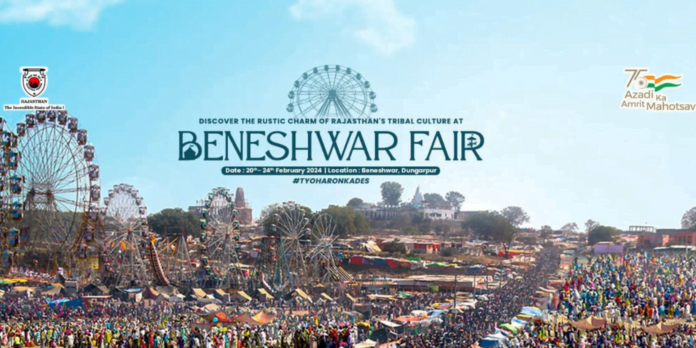
The Baneshwar Fair spans five days, commencing on Shukla Ekadashi of the Magh month in the Hindu calendar. This year it is taking place from 20th Feb – 24th Feb, 2024.

This distinctive and largest tribal fair in the country, held annually in Dungarpur, Rajasthan, draws in numerous devotees.

The fair derives its name from the sacred Shiva Linga situated in the Shiv temple of Dungarpur. In the local Vagdi language, ‘Baneshwar’ translates to ‘master of delta.’Located at the delta formed by the rivers Mahi and Som, the fair extends until Shukla Purnima of the Magh month. Baneshwar is located 24 kilometres away from Aspur, within the Dungarpur district.

The Baneshwar Fair intertwines two distinct events. One fair is dedicated to honouring Lord Shiva, referred to as Baneshwar Mahadev. Simultaneously, another fair marks the completion of the Vishnu temple construction, undertaken by Jankunwar, the daughter-in-law of Saint Mavji.The Mathadish, or head priest, arrives at the fair site in a grand procession from Sabha, taking a ceremonial dip in the river. Subsequently, an aarti ceremony is conducted for the Mathadish, followed by the reenactment of Raslila during the night at the Lakshmi Narayana temple.

The predominant assembly at the fair comprises Bhils and tribal communities from Dungarpur, Udaipur, and Banswara. Renowned for its widespread popularity, the fair is organised on a grand scale. The idols’ pran-pratishtha ceremony at the temple occurred on Magh Shukla Ekadashi, and since then, an annual fair has been held to commemorate this auspicious event.

Overview and History

Initially, two separate fairs were conducted—one venerating Lord Shiva and the other Saint Mavji, perceived as an incarnation of Lord Vishnu. Presently, a unified fair prevails, where tribal communities, especially the Bhils, pay homage to both deities. This popular event unfolds at the delta formed by the confluence of the Som and Mahi rivers, occurring every February and spanning five days annually.

Celebration

During the festival, ritualistic practices involve applying saffron to the Shiv Linga in the morning and Bhabhut (Ash) in the evening at the Baneshwar Mahadev temple. Aarti ceremonies are conducted at both intervals, accompanied by the resonating sound of a brass gong. Devotees present offerings such as flour, wheat, salt, chillies, coconut, and other auspicious items for prayer. Additionally, a highly revered priest known as the Mathadhish bathes in the holy water, and it is believed that the touch of Mathadhish purifies the water, prompting commoners to take a dip with profound faith.

Trilok Teerth Dham- A Jewel of Jain Architecture

0
Trilok Teerth Dham

Apeksha Agarwal

Uttar Pradesh, known for its rich cultural heritage and architectural wonders, boasts one of the nation’s most renowned Jain temples, Trilok Teerth Dham. Situated in the quaint village of Bada Gaon, Baghpat, this temple stands as a testament to the intricate craftsmanship and spiritual significance embedded in Jain architecture.

Trilok Teerth Dham, a sanctuary for followers of Jainism, captivates visitors with its distinctive architectural style and serene ambiance. Nestled amidst the verdant landscapes of Uttar Pradesh, this temple serves as a spiritual oasis for devotees seeking solace and enlightenment.

Architecture

The architecture of Trilok Teerth Dham is a captivating blend of influences from the Mughal and Sultanate eras, reflecting the diverse cultural landscape of India’s history. Rising majestically to a height of 317 feet, the temple commands attention with its imposing presence. At its pinnacle sits the idol of Rishabhnath, a revered figure in Jainism, crafted from ashtadhatu and seated in a meditative lotus position.

This unique temple embodies the essence of Jain beliefs, with its design intricately fashioned in the shape of the Jain emblem. Its structure, mirroring the concept of Trilok – the three realms of existence according to Jain philosophy (Adholok, Madhyalok, and Urdhvalok), offers a spiritual journey through its architectural symbolism.

Trilok Teerth Dham is not merely a temple; it is a multi-faceted complex designed to cater to the diverse needs of its visitors. With its 16 stories, it offers a myriad of facilities within its sprawling campus, including a library, hospital, mess, goshala (cow shelter), and more. The temple’s commitment to holistic well-being extends to the presence of a meditation center, providing seekers with a tranquil space for introspection and spiritual growth.

Within the temple premises, several sacred sites beckon devotees and tourists alike. The Samavasarana, Nandishwar Dweep, Trikaal Chaubisi, Meru Temple, Lotus Temple, Parshvanath Temple, and Jambudweep each hold their own significance, adding layers of spiritual depth to the experience. To enhance the allure of Trilok Teerth Dham, light and sound shows are organized, drawing in crowds to witness the temple’s magnificence illuminated in a mesmerizing spectacle.

Jaisalmer Desert Festival 2024 from February 22nd to February 24th

0
Jaisalmer Desert Festival

Jaisalmer Desert Festival, also known as Maru Mahotsav, stands as a vibrant testament to the rich cultural tapestry of Rajasthan, the land of kings and queens. Celebrated annually in the mesmerizing Thar Desert, this three-day extravaganza known as Jaisalmer Winter Festival takes place on the glittery sands of the Sam Sand Dunes, just 42 kilometers from the majestic city of Jaisalmer.

The festival, typically held in February, transforms the desert into a cultural spectacle, showcasing traditional Rajasthani performances, competitions, and activities. Turban-tying contests, puppet shows, fire dances, camel beauty contests, and thrilling camel races are just a glimpse of the diverse events that unfold during this celebration. The Jaisalmer Mela also features a traditional fair where visitors can immerse themselves in the allure of handicrafts, textiles, and ornaments.

The heartbeat of the festival is the enchanting local folk music and dances, a kaleidoscope of colors and rhythms that encapsulate the essence of Rajasthan’s cultural richness. The Jaisalmer Rann Utsav, with its blend of local customs and contemporary performances, offers a unique and unforgettable experience that attracts visitors from all corners of the globe.

The roots of the Jaisalmer Desert Festival trace back to 1156 AD when Raja Jaisal, a Rajput king from the Bhati dynasty, initiated the celebration. Today, the Rajasthan Tourism Department organizes the festival, drawing in crowds from across the world. Held in February around the full moon day of the Hindu calendar month of Magh, the Maru Mahotsav has evolved into one of Rajasthan’s most cherished cultural events.

The festival’s celebrations are a dynamic mix of traditional music and dance performances, camel races, turban-tying competitions, puppet shows, and even paragliding. The festival’s hallmark remains the camel race, a thrilling spectacle of these majestic creatures sprinting across the desert landscape. The turban-tying competition adds a touch of cultural flair, with participants competing to create the most exquisite turbans within a set timeframe.

The Maru Mahotsav also offers a plethora of attractions, from heritage walks and Deepdaan ceremonies to Rangoli & Mandna wall paintings. Visitors can relish the desert symphony, a mesmerizing display of local artists and musical evenings, culminating in a breathtaking fireworks display.

Beyond the festival grounds, visitors can indulge in various activities during their stay in Jaisalmer. Camel polo matches, cultural performances, and the exploration of local delicacies such as dal bati churma, ker sangri, and lassi are must-try experiences. The festival also features an array of handicraft stalls, allowing visitors to purchase traditional Rajasthani souvenirs.

Jaisalmer, with its iconic attractions like Jaisalmer Fort, Nathmal Ji Ki Haveli, and Gadisar Lake, provides a picturesque backdrop to the festival. Travel to Jaisalmer is accessible by air, with the nearest airport in Jodhpur, approximately 300 km away. The city also boasts its own well-connected railway station and a robust road network linking it to major cities in Rajasthan.

In 2024, the Maru Mahotsav is scheduled from February 22nd to February 24th, taking place at the Sam Sand Dunes, just 42 km from Jaisalmer. This edition promises to be a captivating celebration of Rajasthan’s cultural heritage, inviting visitors to immerse themselves in the grandeur of the desert landscape and the vibrant traditions of the region. In conclusion, the Jaisalmer Desert Festival is not just an event; it’s an invitation to witness the soul-stirring essence of Rajasthan, where history, culture, and festivities converge in a mesmerizing display.

Full Story of Sandipani Ashram- Ujjain Visit

0
Sandipani Ashram

Aishwarya Chouhan

Sandipani Ashram holds an important place in Indian culture and spirituality. Located in Ujjain, Madhya Pradesh, it is believed to be the place where Lord Krishna along with his childhood friend Sudama received education from Guru Sandipani. The Ashram stands as a symbol of traditional Indian education and spiritual learning. Established thousands of years ago, it still attracts devotees and seekers from all over the world who come to immerse themselves in its serene atmosphere and teachings.

During Lord Krishna’s education at Sandipani Ashram, he and his friend Sudama were taught various subjects by Guru Sandipani. These topics include a wide range of traditional Indian knowledge and skills:

Education at Sandipani Ashram was holistic, aiming to develop not only intellectual abilities but also the spiritual, moral and practical skills necessary to live a fulfilling life according to Hindu principles.

14 types of knowledge were taught in Sandipani Ashram. Which included Vedas and Vedangas. Vedas include 4 types of Vedas like Rigveda, Yajurveda, Samaveda, Atharvaveda.

Vedanga means “parts of the Veda”, which are as follows:-

1) Teaching:- Sandipani shows the pronunciation points of throat, nose, mouth etc. using his finger.

2. Chandashastra:- Sandipani explains by carving small Guru symbols on clay in front of Shri Krishna, Sudama, Balram.

3. Grammar:- Explaining Vyakaran Sutra and Maheshwar Sutra by Sandipani.

4. Nirukta (Etymology): Sandipani teaches invocation from the symbols of sky and sky deities, water, fire, air, sun.

5) Astronomy:- Showing new planets with one hand and counting them with the other hand.

6) Kalpa:- Method of ritual: Preparing the altar for Yagya.

Similarly, explaining the details of Manusmriti through Dharmashastra, mythological stories, logic, and review etc. are said to be the parts of Vedas, which were taught in the Ashram.

Ayurveda is called Ashtanga – eight limbs. If we talk in today’s language, then Pediatrics, Surgery, Toxicology, General Practice, Ophthalmology, Rasayan Tantra, Vajikaran (special field of reproductive system), Graha Chikitsa (how the invisible forces of the planets affect the body).

Apart from this, there is also a description of 64 skills in Sandipani Ashram which were included in the curriculum of that time.

Art means skill and attributes. A normal person has 5 skills. Shri Krishna had 16 skills.

Shri Krishna learned 64 skills in 64 days from his guru Maharishi Sandipani. Apart from this, he had acquired the knowledge of 4 Vedas in 4 days, 6 Shastras in 6 days, 16 Vidhyas in 16 days, 18 Puranas in 18 days and Geeta in 20 days.

Along with this, Lord Shri Krishna studied 64 arts, which include dance, theater arts, singing, playing musical instruments, painting, making puja gifts from vines, rice and flowers, making flower beds, making clothes and courtyards. Painting, making floors of gems, making beds, taming water, making clothes and jewellery, decorating with flower ornaments, making fragrances, perfumes, oils, magic, making desired disguises.

Apart from this, showing strange achievements, making necklaces, making ear and pointed flower ornaments, making various dishes, making beverages, making puppets, making puzzles, making sculptures, diplomacy, teaching strategies, drama composition, problem solving, bandage, bell. , arrow making, carpet making, carpentry workmanship, examining metals like gold and silver and gems like diamonds and emeralds, making gold and silver, recognizing the colors of gems.

Also, method of fighting with sheep, cock, quail etc., identification of mines, treatment of trees, speaking dialects of parrot-myna etc., method of pronunciation, skill of cleaning hair, knowing the mind, recognizing bad omens, answering questions. Telling good fortune by giving answers, making various types of Matrikantra, carving gems, making sign language, knowledge of all the treasures, deceitful work, gambling, attracting people or things from far away, method to control Betal. Is.

In the ashram of Maharishi Sandipani in Avantikapuri, where Shri Krishna got acquainted with the deep secrets of life, he also received education in politics and the state religion of monarchy. He did world welfare by using the knowledge gained from Mahakaleshwar city. The fragrance of rare memories of Yogeshwar Shri Krishna is present in every corner of Ujjain city situated on the banks of Punyasalila Shipra.

India was so civilized 5500 years ago and even before that that even today’s technology cannot compete with the instruments and knowledge of that time.

If we talk about India of 602-664 AD, then in Nalanda alone there were 10000 students and more than 3000 professors. Apart from his residence, the complex contained 10 temples, meditation halls, gardens, small lakes, and several ponds. 64 subjects were taught in Nalanda. Students go to distant countries like Iran, Turkey, Greece, Japan, Korea, Thailand, Indonesia, China and Tibet to gain knowledge of various subjects like Astronomy, Medicine, Surgery, Maths, Metallurgy, War Science, Language, Grammar, Music, Yoga, Spirituality, Politics etc. Came from. There were 90 lakh manuscripts.

There were many world class education centers spread all over India. Vikram Sheela of Magadha, Vallabhi of Saurashtra, Pushpagiri of Kalinga, Sharad Peeth of Kashmir, Nagarjunkonda of Andhra, Kanchipuram of Tamil Nadu, Manikhet of Karnataka etc. which are lost in time.