Home Blog Page 555

VNIT Nagpur Associates with the MMGEIS Program to Empower Students in Geospatial Innovation

0

The Master Mentors Geo-enabling Indian Scholars (MMGEIS) program, which is the brainchild of Esri India, and the Centre for Knowledge Sovereignty (CKS) was launched in December 2023. On 9th May, Visvesvaraya National Institute of Technology (VNIT) Nagpur became a part of this unique initiative.

Under the purview of the MMGEIS Program, VNIT hosted a series of activities aimed at fostering understanding and collaboration in the realm of geospatial technology. The various activities saw a convergence of academic leaders, industry experts, representatives from prestigious institutions, and students for knowledge exchange on geospatial technology, its applicability, and its significance in contemporary times.

Over 250 students from VNIT and various other schools in Nagpur participated in the activities, where they got the opportunity to interact with Shri AS Kiran Kumar, Former Chairman of ISRO, and Chair of the MMGEIS Board. Shri AS Kiran Kumar delivered an enlightening address on the applicability of geospatial technology and its significance in contemporary times. 

As part of the MMGEIS Program, VNIT Nagpur students will have access to multiple resources and opportunities to explore geospatial technology and its applications. Under the mentorship of experts in the field, students will gain practical skills and insights that can be applied across various fields, from urban planning to environmental management.

Agendra Kumar, Managing Director, Esri India, said, “VNIT Nagpur’s collaboration with MMGEIS Program is geared towards empowering students to spearhead geospatial innovation. Through this program, students will have the opportunity to explore the practical applications of geospatial data across various domains. As they learn from academic and industry experts, they will emerge as leaders who can harness geospatial insights to address real-world challenges and drive positive change.

Vinit Goenka, Secretary, Center of Knowledge Sovereignty, said, “We believe in harnessing spatial thinking to empower individuals and nations. Through initiatives like MMGEIS, we strive to democratize access to geospatial knowledge, enabling every scholar to become a catalyst for positive change in their communities and beyond.”

Dr. P M Padole, Director of VNIT Nagpur, said, “VNIT is at the forefront of technology innovation, and initiatives like MMGEIS hold immense potential to empower our students and serve as a force multiplier, significantly boosting capacity building and fostering a culture of excellence in geospatial technology.

The MMGEIS program aims to engage up to 5,00,000 students over the next five years and thus will be rolled out in multiple schools and educational institutions in the near future. It aims to foster a strong IP framework to enable more patents from India in its journey towards becoming a global geospatial innovation hub.

Cleaner Hills, Happy Pune: RIA Makes a Difference

0

Recognize, Innovate, and Accelerate – that is the ultimate motto of RIA Advisory LLP, a Pune-based Business and Technology Advisory Consulting firm. Last Tuesday, RIA traded in their briefcases for garbage bags and headlamps for a different kind of acceleration – a climb up the scenic slopes of Hanuman Tekdi alongside Youth Talent Development Society (YTDS NGO).

This wasn’t your typical team-building exercise. RIA, known for their sharp minds and strategic solutions, joined forces with YTDS, a successful non-profit organisation that has championed the Four E’s – Environment, Education, Employment, and Empowerment – focused on the “E for Environment” for a unique initiative: the Hill Cleaning Activity.

With the rising sun casting a warm glow over the famous Hanuman Tekdi, the enthusiastic team at RIA assembled at the base of the Tekdi and divided into mighty teams, armed with the ultimate weapons against waste – hefty garbage bags and a healthy dose of environmental spirit.

Gloves, face masks, and a shared determination to make a difference were the order of the day. The initial assessment was clear – Hanuman Tekdi, despite its natural beauty, had become a silent victim of littering. Undeterred, team RIA rolled up their sleeves, their competitive spirit igniting as they raced (in a friendly way, of course!) to fill their designated bags with plastic bottles, food wrappers, and other discarded items.

It was truly heartening to see the dedication of the Team RIA,” said Mr. Ameet Bhinganiya, Founder and President of YTDS. “This was the first time we conducted a Hill Cleaning Activity, and the enthusiasm from RIA was truly infectious.”

As the hours progressed, the teams transformed into a mighty garbage-collecting force. Bag after bag was filled, and the once-polluted landscape began to show signs of beauty and rejuvenation. The collective effort not only cleaned the hill but also fostered a sense of camaraderie between the two organizations.

But the real win goes beyond the collected waste. This collaborative clean-up served as a powerful reminder: protecting our environment requires all hands on deck. From financial advisors to social workers, every individual can play a part in nurturing the natural world.

This initiative perfectly exemplifies the synergy between RIA and YTDS. While RIA brings their expertise in strategy and innovation, YTDS provides the local knowledge and dedication to community improvement. Together, they demonstrate how seemingly different organizations can come together for a common cause – a cleaner, greener future for Pune.

It is deeply satisfying that our young and bright engineers at RIA are so passionate about their social responsibilities,” said Mr. Sameer Deo, Head of India Operations, RIA Advisory. “via its RIA-Cares initiatives, RIA takes pride in being socially responsible and contributing directly to worthy causes RIA takes
 
RIA and YTDS hope to inspire others to take action, be it organizing a clean-up drive in your own neighborhood, switching to reusable bags, or simply disposing of waste responsibly. Every small step counts when it comes to protecting our environment.

In conclusion, this was not just a cleaning drive; it was a statement – a statement of intent, a statement of unity, and a statement of hope for a cleaner and more sustainable future. Remember – a little initiative can go a long way in preserving the beauty of our natural spaces.

A First in India: Kody Technolab’s Surveillance Robot “Athena” Safeguards 35,000 Attendees at Tuneland Music Festival

0

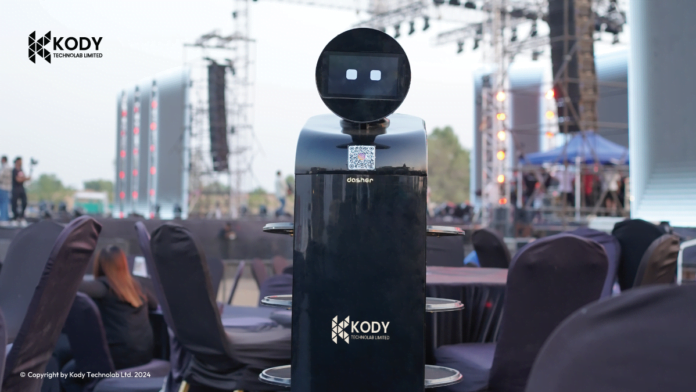
At this year’s Tuneland Music Festival, held in GIFT City, Gandhinagar, Kody Technolab Limited introduced a groundbreaking approach to event security and service, marking a first in India with its autonomous surveillance robot – Athena, and serving robot – Dasher. The event, attracting over 35,000 attendees, showcased unprecedented integration of robotics into public safety and service delivery, setting a new standard for technology in entertainment. You can view Athena in action here.

The festival not only featured performances from renowned artists B Praak and Vishal Mishra but also demonstrated advanced robotic capabilities with Athena, Kody Technolab’s state-of-the-art surveillance robot. For the first time in India, a music festival leveraged robotic technology for full-scale security and surveillance, with Athena equipped with 360-degree cameras and intelligent threat detection systems. Athena’s capabilities included people detection, threat assessment, and monitoring of unattended objects, ensuring a safe environment throughout the festival grounds.

Additionally, Dasher, Kody Technolab’s serving robot, enhanced the experience for VIP guests by managing food and beverage services with its bionic design and seamless navigation. The robot’s efficiency and innovative features not only improved service delivery but also captivated the attendees, further illustrating the potential of robotics in enhancing customer service.

Manav Patel, Founder of Kody Technolab Limited, remarked, “The deployment of Athena and Dasher at the Tuneland Music Festival is a testament to the vast possibilities that robotics holds for improving both security and service in public spaces. Athena’s successful operation across the festival is a proud moment for us and a landmark in India’s technological progress in public safety.

Event Highlights Include:

Revolutionary Security: Athena’s deployment provided a comprehensive surveillance solution, handling large-scale crowd monitoring with cutting-edge technology.

Exceptional Service: Dasher offered a unique service experience to VIP attendees, showcasing the integration of robotics in traditional service sectors.

This historic event not only signifies a milestone for Kody Technolab and Tuneland but also paves the way for future advancements in robotic applications in entertainment and public safety sectors.

About Kody Technolab Limited

Kody Technolab Limited is a leader in software and robotics development, dedicated to delivering enterprise-level projects and mobile application solutions worldwide. With a portfolio that includes pioneering surveillance and service robots, Kody Technolab continues to lead the technological revolution, striving to make advanced technology accessible for everyone.

Rajmata Madhavi Raje Scindia takes her last breath at AIIMS, Delhi

0
'Rajmata' of Gwalior

In the early hours of today, the nation awoke to the news of the passing of Rajmata Madhavi Raje Scindia, a revered figure in Gwalior and a stalwart in social and cultural spheres. She breathed her last at 9:28 am at the All India Institute of Medical Sciences (AIIMS) in Delhi, where she had been receiving treatment for pneumonia and sepsis over the past three months. Her demise marks the end of an era for the Scindia family and the broader community they have served for generations.

Madhavi Raje Scindia was not just a member of the illustrious Scindia dynasty; she was its heart and soul, deeply involved in philanthropic activities that have transformed countless lives in Gwalior and beyond. As the chairperson of 24 trusts, her efforts spanned across critical sectors such as education and healthcare. Her leadership and vision were instrumental in driving initiatives that aimed to uplift and empower the underprivileged.

Among her many contributions, she was the head of the board of governors at Scindias Kanya Vidyalaya, a premier institution dedicated to the education of girls. Her commitment to this cause reflected her broader belief in the transformative power of education, especially for young women. Under her stewardship, the school not only flourished but also became a beacon of hope and opportunity for many.

The loss of her husband, Madhavrao Scindia, a prominent politician and former Union minister, in a tragic plane crash on September 30, 2001, was a pivotal moment in her life. Yet, she channeled her grief into furthering his legacy. In his honor, she established the Maharaja Madhavrao Scindia II gallery within the palace museum, ensuring that his contributions and memories were preserved for future generations.

Known affectionately as the ‘Rajmata’ of Gwalior, Madhavi Raje Scindia was more than a figurehead; she was a guiding force in both her family and the community. Her son, Jyotiraditya Scindia, currently serving as the Union Minister of Civil Aviation, has often spoken about the profound influence his mother had on his life and career. As he campaigns for re-election in the Lok Sabha from Guna, Madhya Pradesh, her legacy continues to inspire his public service.

The announcement of her passing elicited a wave of condolences and tributes from across the political spectrum. BJP state president VD Sharma took to social media to express his sorrow and extend his sympathies to the Scindia family, acknowledging the significant void her absence leaves.

The impact of Rajmata Madhavi Raje Scindia’s work is immeasurable. Her dedication to philanthropy and cultural preservation has left an indelible mark on Gwalior. The trusts she chaired and the initiatives she championed will continue to benefit society, serving as a testament to her life’s work.

As the community mourns the loss of a distinguished leader, they also celebrate a life well-lived—a life that exemplified the values of service, compassion, and leadership. Rajmata Madhavi Raje Scindia’s legacy will undoubtedly endure, continuing to inspire and guide future generations.

In remembering Rajmata Madhavi Raje Scindia, we honor not just the matriarch of a royal family, but a woman whose contributions transcended her title. Her life’s work in education, healthcare, and cultural preservation has enriched the fabric of society, leaving a legacy that will be cherished and built upon. As we bid her farewell, we carry forward her vision of a better, more compassionate world.

Journey of Baiga Tribes of Madhya Pradesh

0
Journey of Baiga Tribes

The Baiga tribes, dwelling on the fringes of Madhya Pradesh and Chhattisgarh in central India, epitomize the harsh realities of isolation and deprivation. Classified under the Particularly Vulnerable Tribal Groups (PVTGs), the Baigas lead a life marked by extreme poverty and alienation from mainstream society, struggling to adapt to the world beyond their ancestral forests.

A Glimpse into the Baiga World

The Baigas are semi-nomadic people historically untouched by education and development. Their original language has faded, replaced by the local dialect. First documented by the British in Dindori district, the Baigas were found living in remote, dense jungles. Over the past two centuries, their migration to village fringes has been a tale of cultural erosion and neglect.

Social Structure and Subcastes

The Baiga community is divided into several subcastes: the Binjhwars (Gond Baigas), the Bharotiyas, the Nahads (Langotias or Narotiyas), Rai Bhaina, and Kadh Bhaina. Each subcaste has unique characteristics and socio-economic conditions. The Nahads, for instance, remain semi-nomadic and the most isolated, while the Bharotiyas are more integrated, showcasing their culture to tourists at the Kanha National Park. The Binjhwars, meanwhile, have assimilated with the Gond tribe.

Cultural Richness Amidst Struggle

Despite their hardships, the Baigas maintain a rich cultural heritage. Their traditional dances and colorful attire captivate onlookers. However, this cultural display often serves as mere entertainment for outsiders rather than a genuine appreciation of their heritage.

Government Schemes and Their Pitfalls

Numerous government schemes aim to uplift the Baiga community, yet many fail to address their actual needs. For example, a sewing machine given to a Baiga youth was practically useless in a community that barely requires tailored clothing. This misalignment highlights a broader issue: while significant funds are allocated, the impact remains minimal due to mismatched priorities and corruption.

Agricultural Practices and Challenges

Traditionally, the Baigas practiced bewar (slash and burn agriculture), avoiding plowing the earth, which they considered akin to plowing the breast of Mother Earth. Nowadays, their semi-nomadic lifestyle and lack of land make farming challenging. Many Baigas, particularly the Nahads, rely on bamboo crafting and forest produce for survival.

Community Dynamics and Alcoholism

The Baiga community faces social challenges, including widespread alcoholism and polygamy. Their villages, often located in inaccessible areas without roads or electricity, further isolate them from developmental opportunities. The Baigas’ hand-to-mouth existence is compounded by their marginalized status within the broader societal hierarchy, often looked down upon by more dominant tribes like the Gonds.

The Demographic Reality

According to the 1981 Census, the Baiga population stood at approximately 248,949, though inaccuracies likely persist due to their classification issues. The community prefers nuclear families, and children marry early, moving out soon after. Despite high mortality rates, it’s not uncommon to find elderly Baiga couples living alone in remote corners of villages.

Religious Beliefs and Festivals

The Baigas worship Bada Deo and Mara Deo, gods believed to reside in trees and outside homes, respectively. These deities are central to their spiritual life, with specific rituals and prohibitions surrounding their worship. Traditional festivals like Holi, Diwali, and Pola play significant roles, blending indigenous practices with adopted customs.

Grassroots Mobilization Efforts

Efforts to mobilize the Baiga community for better living conditions and rights have seen mixed success. Initiatives like Community Based Theatre (CBT) aimed to empower them through creative expression. However, persistent issues like alcoholism and disinterest often hinder progress. Noteworthy successes include the construction of houses under the Indira Awas Yojana and agricultural interventions that have provided some relief.

A Path Forward

The journey of the Baiga tribes is emblematic of the struggles faced by many indigenous communities in India. While their rich cultural heritage offers a glimmer of hope, significant challenges remain. To truly uplift the Baigas, a nuanced understanding of their needs and a committed, empathetic approach are essential. The path forward lies in genuine community engagement, tailored development programs, and the preservation of their unique cultural identity.

Singapore’s Temasek Polytechnic Students Embark on Cross-Cultural Exchange at Galgotias University

0

In a remarkable display of international collaboration and cultural exchange, students from Temasek Polytechnic, Singapore students, have embarked on a visit to Galgotias University one of India’s premier educational institutions. The initiative, part of a broader effort to foster global connections and mutual learning, involves a series of interactive sessions, workshops, and cultural events aimed at enhancing the educational experience of students from both institutions.

The exchange program allowed students from Temasek Polytechnic to immerse themselves in the rich cultural heritage of India while participating in academic activities that promote a deeper understanding of each other’s educational methodologies and societal contributions. Conversely, Galgotias University students will gain insights into Singapore’s advanced educational systems and technological prowess, encouraging a global perspective in their studies.
 
“Such initiatives are vital in today’s globalized world,” stated Dr. Dhruv Galgotia, CEO of Galgotias University. “They not only provide a platform for academic exchange but also help students develop a broader, more inclusive view of the world.”
 
Activities during the visit included visiting of the Apple iOS developement centre, seminars on technological advancements, and active learning discussions on sustainable development, all designed to encourage critical thinking and innovation.
 
Both institutions hope that this exchange will pave the way for future collaborations and continuous engagement, benefiting their educational communities and beyond. As the program unfolds, students and faculty alike are enthusiastic about the potential outcomes and lasting friendships forged through this cross-cultural rendezvous.

Grand Launch of Remax Furniture’s New Store, Redefining the Luxurious Experience

0

Remax Furnitures, India’s most reliable luxury Furniture Brand, is proud to announce the grand opening of its flagship furniture store, offering a curated selection of premium furniture pieces designed to elevate the ambiance of every home. This store launch is a significant milestone for Remax Furnitures as the Brand will showcase its expertise in crafting innovative and customized Interior Design and home decor solutions. People will get to witness the Interior masterpieces, interact with Design Experts, and explore endless possibilities around Interior Design and Home decor.

“With the opening of our new Furniture store, we are redefining the landscape of interior design and home decor by creating spaces that mirror the unique personality and aspirations of individuals. Grand launch of Remax Furnitures signifies not just the opening of a store, but the dawn of a new chapter in the way people envision their living spaces,” says Mr. Mehul Sethi, Principal Designer at Remax Furnitures“We are committed to offering our customers not just furniture, but a journey towards creating homes that reflect their unique personalities and lifestyles,” he added.
 
The brand is committed to transforming the traditional ways people adopt to conceptualize and design their living homes. Brand’s approaches to Interior design center around utilizing innovative concepts and unmatchable craftsmanship that will turn customers’ design dreams into reality.

“We are excited to revolutionize the visitors’ experiences as our store is introducing them to designs and aesthetics that go beyond traditional styles and will offer them unique perspectives to bring their vision of having customized spaces to life,” remarked Mr. Mehul Sethi. This store will provide people with a sense of warmth, comfort, and authenticity and will foster their sense of belonging to their envisioned living spaces. Remax Furnitures design philosophy lies in building spaces that celebrate the unique essence of individuals and will provide them with a personalized touch and immersive experience. “We delightfully invite people to join us at our new store to get a firsthand experience of our craftsmanship in crafting unique Furniture Products,” says the esteemed designer of Remax Furnitures.

This store is about celebrating creativity, innovation, quality, and style with the freedom to customize our designs as per your personal space which will show the Brand’s dedication to enhancing every customer’s living style and bolstering their unique connection with their living spaces. Remax Furnitures commitment to prioritizing customization and quality in building spaces sets it apart from other brands in the realm of Interior Design and Home Decor.

At Remax Furnitures, we understand that a house is something other than a residing space – it’s an impression of one’s character and style. That is the reason we offer customized plan meetings to assist our clients while rejuvenating their vision. Whether you’re outfitting a comfortable loft or a rambling manor, our group of experienced plan specialists is committed to helping you make a space that oozes tastefulness and solace.
 
Attendees at the store can expect loaded up with motivation, as they investigate the store’s fastidiously planned display areas and cooperate with industry specialists. From lavish couches to exquisite feasting sets, each thing recounts an account of craftsmanship and tastefulness, welcoming guests to rethink their living spaces.

Whether one is trying to change a solitary room or revive a whole home, Remax Furnitures means to be the final location for knowing property holders. With a guarantee of quality, development, and customized administration, the store sets another norm for extravagant living.

“We are excited to unveil Remax Furnitures and present our cautiously arranged range of 100% customizable furniture to the New Delhi people group,” said Mr. Mehul Sethi, Principal Designer at Remax Furnitures“We want to give our clients unrivaled quality, style, and administration, guaranteeing that each visit to our display area is a moving and pleasant experience.”

International Day of Families 2024

0

The International Day of Families is observed annually to celebrate the importance of families and their role in society.

The UN adopted a resolution in 1994, the resolution was made to make people more aware about the importance of family, to encourage unity, show the problems family can face and recognize the work done to support families all around the world.

In 2024, as we mark the 30th anniversary of International Day of Family, let us know about the day, its origin, significance, the theme for 2024 and many more.

Date
The International Day of Families is observed on 15th of May every year and in 2024 it occurs on Wednesday. The UN will celebrate the 30th anniversary.

Theme
The theme for 2024 is ‘Families and Climate Change’.
The aim is to help families understand how climate change affects them and to encourage them to do something about it. Families and communities working together are really important in fighting climate change. They can teach each other, share information, and work together. It’s really important to help families become strong and able to fight climate change. If families learn about how to live sustainably and understand climate change, we can move towards an economy where we reuse things more.

Origin
The United Nations started paying more attention to family issues in the 1980s. Then, in 1993, they decided that May 15th would be celebrated as The International Day of Families every year.

Since then, every May 15th is a chance for governments, groups, and communities to talk about how important families are and how we can help them with their problems. This year is the 30th anniversary of the International Day of Families.

Significance
The International Day of Families is important for many reasons. It helps people understand how climate change affects families and encourages them to do things that help the environment. It also reminds us how important it is for families to stick together and be close with their communities. This day shows that families come in all different shapes and sizes, and it’s important to accept and include everyone.

It’s a special day to think about the good things happening for families, but also to see where we need to do more to make sure families everywhere are doing well.


Indian Cricket Star Surya Kumar Yadav Becomes the New Face of moha:, Leading Ayurvedic Wellness Brand

0

moha:, a leading skincare brand renowned for its natural formulations, is thrilled to announce its association with the dynamic cricket star, Surya Kumar Yadav. Fondly known as SKY, Surya Kumar Yadav’s meteoric rise in cricket has captured the hearts of millions, making him a perfect match for moha:’s ethos of excellence and innovation in personal care.

Surya’s journey to and stature as an international cricket star while staying true to his roots makes him the perfect fit for our moha: which shares the same core belief. His dedication to peak performance on the cricket field resonates with moha:’s mission to provide high-performance standards in personal care.

Expressing his excitement about this partnership, Surya Kumar Yadav remarked, “I am happy to join forces with moha:, known for its wide range of ayurvedic offerings. As an athlete, prioritizing sun protection and foot care are integral components of my regimen, and their products excel as the go-to solution for fulfilling these vital needs.”

Dr. Ram H. Shroff, Director of Charak Pharma, the parent company of moha:, shared his enthusiasm, stating, “We are delighted to join forces with SKY as we share common values of trust, reliability, and excellence. moha: Sunscreen Spray, a first-of-its-kind Indian Sunscreen Spray is a testament to our commitment to innovation and quality.” 

moha: has carved a niche for itself in the skincare industry by blending traditional Ayurvedic wisdom with modern scientific advancements. Their range of products, from face washes to moisturizers and hair care essentials, is designed to promote overall skin health and wellness.

This exciting partnership between moha: and Surya Kumar Yadav heralds a new era of innovation and performance in personal care, promising consumers top-notch products backed by SKY’s endorsement of excellence and moha:’s legacy of quality.

Exploring the Traditions and Lifestyle of the Kol Tribe

0
Kol Tribes of Madhya Pradesh

Nestled within the heartlands of Madhya Pradesh, amidst verdant landscapes and ancient traditions, resides the Kol tribe, a vibrant community steeped in history and culture. As the second-largest tribe in Madhya Pradesh, following the Gonds, the Kols’ presence extends beyond state borders, with communities also found in Uttar Pradesh, Bihar, Odisha, and Maharashtra. However, it’s in the regions of Rewa, Sidhi, Satna, Shahdol, Jabalpur, Umaria, Anuppur, and Mandla in Madhya Pradesh where the Kol tribe flourishes, particularly in the villages of Pharenda and Kurali in the Rewa district.

The rich tapestry of Kol heritage finds mention in ancient texts like the Rigveda, weaving a narrative of resilience and continuity through the annals of time. Anthropologically classified under the Kolarian or Munda group, the term “Kol” itself denotes humanity, reflecting the essence of their identity. Despite the passage of centuries, the Kols’ connection to their ancestral roots remains steadfast, evident in their language, customs, and collective memory.

Legends shroud the origins of the Kol tribe, with myths intertwining with the fabric of their existence. Whether born from the celestial touch of Kamdhenu, the heavenly cow, or emerging from the body of King Vena, the Kols’ genesis reflects a synthesis of myth and reality, echoing the cyclical nature of life itself.

Central to Kol societal structure is the village panchayat, governed by traditional posts such as Mahto, Barua, Bhuihar, Ojha, Panda, Dewar, and Niutiya. The Mahto, or Chaudhary, assumes leadership roles, overseeing communal affairs and dispute resolution. Meanwhile, the Niutiya fulfills the vital role of communication, ensuring the cohesion of the community through shared joys and sorrows.

Architecture mirrors the Kol tribe’s intimate relationship with nature, with houses crafted from mud, grass, and straw. The layout of Kolhin Tola, where houses face each other, fosters a sense of kinship and camaraderie. Cattle, revered as integral members of the household, find sanctuary in dedicated spaces within Kol dwellings, underscoring the symbiotic bond between humans and animals.

Despite the winds of change, the Kol tribe’s customs and rituals endure, albeit influenced by the cultural mosaic of their surroundings. While festivals and marriages may bear the imprint of local traditions, the adornments worn by Kol women serve as poignant reminders of their tribal heritage, preserving a link to their ancestral past amidst a rapidly evolving world.

In the realm of artistry, names like Budhsen, Shivprasad, and Ramgarib stand as custodians of Kol creativity, their works reflecting the essence of Sidhi’s cultural landscape. Through their art, they channel the spirit of their ancestors, infusing contemporary life with echoes of bygone eras.

As the world marches forward, the Kol tribe stands as a testament to the enduring legacy of indigenous cultures. Their stories, woven into the fabric of Madhya Pradesh’s history, serve as a beacon of resilience and cultural richness, inviting all to marvel at the timeless tapestry of Kol heritage.