Home Blog Page 55

US Congress Approves Security Funds For Baltic States

0

The United States Congress has approved a $200 million security assistance package for the Baltic nations as Russian military activity intensifies along NATO’s eastern flank. The move signals continued American commitment to regional deterrence amid growing concerns over security in Eastern Europe and the Baltic Sea region.

Funding Under Defence Appropriations Act

The assistance was cleared as part of the Fiscal Year 2026 Defence Appropriations Act, which forms a component of the $838.7 billion US defence budget. The legislation ensures continued funding under the Baltic Security Initiative for EstoniaLatvia, and Lithuania. The bill was signed into law by US President Donald Trump on February 3, 2026, despite earlier internal proposals within the Pentagon to discontinue the programme.

Additional Military Financing For Estonia

Apart from the core allocation, an additional $10 million was approved for Estonia through the Foreign Military Financing programme. Tallinn has previously used such funding to procure US-made defence equipment, including HIMARS ammunition, Javelin anti-tank missiles, and large-calibre artillery shells. US lawmakers have described the funding as critical for reinforcing frontline allies against potential aggression.

Important Facts

  • The Baltic states are members of NATO and lie on its eastern flank.
  • The Baltic Security Initiative supports defence cooperation with Estonia, Latvia, and Lithuania.
  • Article 4 of the NATO Treaty allows consultations when a member feels threatened.
  • Foreign Military Financing enables allies to purchase US defence equipment.

Strategic Significance For NATO And Regional Security

Republican Congressman Don Bacon, co-chair of the House Baltic Caucus, said the funding strengthens deterrence for NATO allies and reflects bipartisan commitment to the alliance. Tensions in the region have risen following incidents such as Russian fighter jets entering Estonian airspace and increased hybrid activities attributed to Russia and Belarus. Baltic leaders have welcomed the US decision, calling it a strong political signal of transatlantic unity and continued support for regional security amid an evolving threat environment.

Bharat Taxi Launches Cooperative Cab Service In Delhi

0

India’s ride-hailing market is set for a significant shift with the launch of Bharat Taxi, a government-backed cooperative cab service, in New Delhi on February 5. Designed as an alternative to private aggregators, the initiative aims to empower drivers through collective ownership and fairer earnings, positioning itself as a challenger to established platforms such as Uber and Ola.

Government Support And Official Launch

The Bharat Taxi app will be formally launched by Union Minister of Cooperation Amit Shah. Describing the initiative as a milestone for driver welfare, the minister stated that the cooperative model enables drivers to pool resources, become owners, and earn with dignity. The launch reflects the government’s broader push to strengthen cooperative enterprises in new-age service sectors.

Cooperative Ownership Model Explained

Bharat Taxi operates on a cooperative framework, placing drivers at the centre of ownership, operations, and value creation. The service is being run by Sahakar Taxi Cooperative Limited, with support from professionals associated with successful cooperative models such as Amul. Each driver, referred to as a ‘Sarathi’, holds five shares in the cooperative, ensuring collective decision-making and shared benefits.

How Bharat Taxi Differs From Private Aggregators

Unlike private cab aggregators, Bharat Taxi does not deduct commission from each ride. Instead, drivers pay a fixed daily fee of ₹30 to access the app. This model seeks to address long-standing grievances of drivers regarding high commission rates and income instability. By eliminating per-ride commissions, the platform aims to improve driver earnings and financial security.

Important Facts

  • Bharat Taxi is India’s first cooperative-based taxi service.
  • It operates under a driver-owned cooperative model.
  • No per-ride commission is charged from drivers.
  • The initiative aligns with the Ministry of Cooperation’s objectives

The launch of Bharat Taxi is expected to benefit thousands of taxi drivers by offering ownership rights and predictable costs. For commuters, the service promises transparent pricing and a socially driven alternative in urban mobility. If scaled successfully, the cooperative cab model could introduce greater competition and reshape India’s app-based transport ecosystem.

Rouble Negi: Meet This Teacher Who won Global Teacher Prize for Teaching Via Murals

0

Indian teacher and social activist Rouble Nagi has won the prestigious Global Teacher Prize, earning international recognition for transforming education access among children living in urban slums. The award was presented in Dubai on February 5, honouring her efforts to bring structured learning to children who had never attended school and to support those at risk of dropping out.

Rouble Negi: Meet This Teacher Who won Global Teacher Prize for Teaching Via Murals

Innovative Learning Through Murals And Centres

Rouble Nagi has pioneered an unconventional yet impactful approach to education by setting up over 800 learning centres across India. Alongside these centres, she has painted educational murals in slum settlements, turning walls into classrooms. These murals cover literacy, mathematics, science, and history, making learning visually engaging and accessible to children from underserved communities.

Grassroots Teaching And Teacher Mentorship

Nagi travels extensively to work directly with children at these centres and mentors the teachers who manage daily instruction. She has recruited and trained more than 600 volunteer and paid educators. Her teaching model adapts to the realities of poverty, child labour, early marriage, and irregular attendance by offering flexible schedules, practical lessons using recycled materials, and skill-based learning relevant to family livelihoods.

Global Teacher Prize And Future Plans

Rouble Nagi is the 10th recipient of the Global Teacher Prize, which was launched in 2015 to recognise exceptional educators worldwide. The award carries a prize money of $1 million, which Nagi plans to use to establish an institute providing free vocational training for students, extending her impact beyond foundational education.

Important Facts

  • The Global Teacher Prize was launched in 2015.
  • The award carries a prize money of $1 million.
  • It recognises innovative teaching and social impact in education.
  • Past winners include educators from Kenya, Palestine, Canada, and Saudi Arabia.

Recognition Of Inclusive Education Efforts

Previous winners of the Global Teacher Prize include teachers working with marginalised and remote communities worldwide. Nagi’s selection highlights India’s grassroots education initiatives and reinforces the global importance of inclusive, community-based learning models that address social and economic barriers to education.

Dubai To Launch Underground Dubai Loop Transport

0

Dubai is set to become the second city in the world after Las Vegas to introduce the Dubai Loop, an underground high-speed transport system developed by The Boring Company. The project, announced at the World Government Summit, marks a major step in Dubai’s efforts to modernise urban mobility and reduce congestion in high-density corridors.

Project Announcement And Vision

The Dubai Loop was unveiled by the Roads and Transport Authority at the World Government Summit. RTA Director General Matar Al Tayer described the project as an iconic initiative designed to connect densely populated and high-traffic areas through one-directional underground tunnels, enabling faster and more efficient city travel.

Route, Cost And Implementation Phases

The full Dubai Loop network will span 22.2 kilometres and include 19 stations, with an estimated total cost of around $681 million. The first phase will connect the Dubai International Financial Centre and Dubai Mall, covering 6.4 kilometres with four stations. This phase is expected to cost about $163 million and is projected to be completed within one to two years.

Capacity And Speed Features

The initial phase of the Dubai Loop is expected to serve approximately 13,000 passengers per day. Once fully operational, the system’s total capacity is projected to reach up to 30,000 passengers daily. The electric vehicle-based system will offer point-to-point travel without intermediate stops and is designed to achieve speeds of up to 160 kilometres per hour.

Important Facts

  • Dubai Loop is an underground transport system based on tunnel technology.
  • The project is developed using technology from The Boring Company.
  • The full network will span 22.2 km with 19 stations.
  • Electric vehicles will operate at speeds up to 160 km/h.

Technology And Global Significance

The Dubai Loop is based on tunnelling technology developed by The Boring Company, founded by Elon Musk. Similar systems have already been deployed in Las Vegas. With this project, Dubai reinforces its position as a global leader in adopting futuristic, sustainable transport solutions aimed at easing urban congestion and improving travel efficiency.

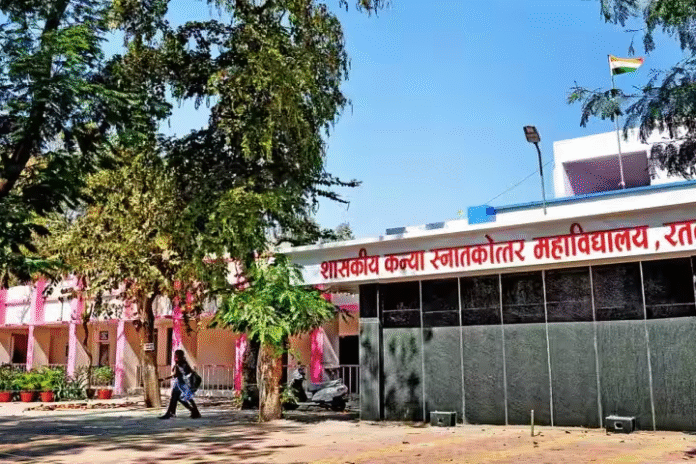
Govt. Girls’ P.G. College Ratlam to Host Two-Day International Seminar on Indian Knowledge System in Globalization Context

0

Govt. Girls’ P.G. College, Ratlam (M.P.) will host a Two-Day International Seminar on February 20–21, 2026, centred on the theme “The Role of Indian Knowledge System in the Context of Globalization.” The event aims to explore the relevance of India’s ancient wisdom, traditional practices, and value-based systems in addressing modern global challenges.

The seminar is being organized under the guidance of Dr. H. L. Anijwal, Additional Director, Ujjain Division; Dr. Y. K. Mishra, Principal PMCOE Ratlam; and Dr. Mangleshwari Joshi, Principal of the host institution. The organizing committee includes Convenor Dr. Manik Dange, Co-Convenor Dr. Tabassum Patel, Organising Secretary Dr. Suresh Chouhan, and Co-Organising Secretary Dr. V.S. Bamaniya.

Eminent Speakers from India & Abroad to Participate

A distinguished panel of national and international experts will address the participants. Key speakers include:

  • Dr. Sushma Yadav, Chairperson, UGC Steering Committee, Delhi
  • Dr. Chand Kiran Saluja, Scholar and Educator, Delhi
  • Dr. Reeta Sonawat, Former Dean, SNDT University, Mumbai
  • Dr. Kalpana Singh, Principal, PMCOE Govt. Madhav Science College, Ujjain
  • Dr. Pavan Mishra, Professor, Barkatullah University, Bhopal
  • Dr. Anshul Gupte, VP, PCI Pharma Services, USA
  • Dr. Meenal Buddhiraja, Stockholm University, Sweden
  • Dr. Pradeep K. Khare, Professor, Sarojini Naidu College, Bhopal
  • Dr. Pradnya Karandikar, Sports Officer, Vidisha
    Additionally, Collector Misha Singh and DRM Ratlam Ashwini Kumar will attend as chief guests.

Seminar Focus & Sub-Themes

The seminar will examine how the Indian Knowledge System (IKS) continues to shape contemporary thinking on ethics, sustainability, health, culture, and education. Key sub-themes include:

  • IKS & National Education Policy (NEP) 2020
  • Vasudhaiva Kutumbakam & globalization
  • IKS in Make in India and Atmanirbhar Bharat
  • Intellectual Property Rights
  • Technological development and environmental consciousness
  • Role of Yoga, Ayurveda, philosophy, literature, folk art, and modern dietary practices
  • Child-rearing traditions and cultural harmony

Participation & Research Paper Submission

Researchers, academicians, and students are invited to submit papers (2,500–3,000 words) by February 18. Selected papers will be published in a seminar proceeding book with ISSN. Each paper presenter will get 5 minutes for presentation, and all registered participants will receive certificates upon attending and submitting feedback. BROUCHER GDC

Registration links and a WhatsApp group link have been provided for participants, with fees set at Rs 600 for academicians and Rs 300 for students and research scholars. Payment can be made via the shared contact number.

About Ratlam & the Host Institution

Ratlam—a historic city known for its rich cultural heritage, famed Sev, gold craftsmanship, and traditional sarees—serves as a vibrant backdrop for this academic gathering. The host, Govt. Girls’ P.G. College Ratlam, established in 1971, is a NAAC A-Grade institution dedicated to women’s education, academic excellence, and nation-building

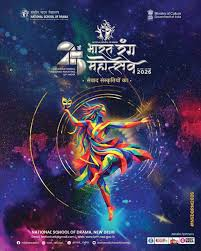
Bharat Rang Mahotsav 25th Edition: Know Dates, Location and Other Related Facts

0

The world’s largest international theatre festival, Bharat Rang Mahotsav, is set to hold its 25th edition at Rohtak from February 9 to 12, marking a major cultural milestone for Haryana. The festival will be hosted at the Dada Lakhmi Chand State University of Performing and Visual Arts, positioning Rohtak firmly on India’s national theatre map. Theatre groups from India and abroad will present acclaimed productions spanning diverse styles, languages, and performance traditions.

National And International Theatre On One Stage

Organised by the National School of Drama in collaboration with Dada Lakhmi Chand State University of Performing and Visual Arts, the festival will showcase nationally and internationally recognised plays. The Rohtak leg is part of a larger nationwide celebration of theatre, aimed at decentralising cultural access and bringing high-quality performances beyond metropolitan centres.

Four Days Of Curated Performances In Rohtak

According to Vice-Chancellor Amit Arya, the festival will open on February 9 with “Umeed – Manushya Zinda Hai” by Pragya Arts Theatre Group, Delhi. On February 10, Manch Rangmanch from Amritsar will stage “Sandal Baar”. February 11 will feature “Umar Ka Parwana” by the Department of Fine Arts, Central University of Punjab, Bathinda. The festival concludes on February 12 with “Colombo Hathe Thorana” by Apoorva Theatre Group from Sri Lanka, adding a strong international presence to the programme.

Pan-India Reach Of Bharat Rang Mahotsav

The 25th edition of Bharat Rang Mahotsav is being held across 41 locations in India, with simultaneous performances in cities such as Varanasi, Kolkata, Imphal, Ranchi, Patna, and Bengaluru. Rohtak’s DLCSUPVA is the sole venue representing Haryana. The festival as a whole runs from January 27 to February 20, spanning 25 days of continuous theatrical activity across the country.

Important Facts

  • Bharat Rang Mahotsav is organised annually by the National School of Drama.
  • The 25th edition features over 277 performances nationwide.
  • Plays are staged in 228 Indian and international languages.
  • The festival includes participation from theatre groups of nine countries.

Focus On Inclusivity And Cultural Diversity

Professor Suman Vaidya of the National School of Drama highlighted that the festival reflects India’s theatrical diversity, with performances by children, tribal communities, and artists from marginalised sections. The initiative underscores NSD’s commitment to inclusivity and the universalisation of theatre, reinforcing Bharat Rang Mahotsav’s standing as a global cultural platform.

India Joins BRICS Industrial Competencies Centre

0

India has formally joined the BRICS Centre for Industrial Competencies (BCIC), marking a significant step in strengthening industrial cooperation among BRICS nations. The development was announced at an event organised by the Department for Promotion of Industry and Internal Trade (DPIIT), Ministry of Commerce and Industry, at Vanijya Bhavan, New Delhi. India’s participation aligns with its broader push to enhance manufacturing competitiveness and support MSMEs through advanced technologies.

About The BRICS Centre For Industrial Competencies

The BCIC has been launched in partnership with the United Nations Industrial Development Organization as a one-stop platform providing integrated support services to manufacturing enterprises and MSMEs across BRICS countries. The centre focuses on developing Industry 4.0 competencies, including smart manufacturing, digitalisation, productivity improvement, and skill upgradation, to help industries adapt to emerging global standards.

Trust Fund Agreement With UNIDO

On the occasion, a Trust Fund Agreement was signed between the Department for Promotion of Industry and Internal Trade and UNIDO, formalising India’s participation in the BCIC framework. The agreement was signed by Agrim Kaushal, Economic Adviser, DPIIT, and Dr. Cristiano Pasini, Director, UNIDO. This agreement provides the institutional and financial framework for India’s engagement with BCIC activities.

National Producitivity Centre’s India’s Nodal Centre

The National Productivity Council has been designated as the India Centre for BRICS Industrial Competencies. Under the policy guidance of DPIIT and with technical support from UNIDO, NPC will lead India’s engagement with BCIC. Its role will include capacity building, productivity enhancement, and promoting the adoption of advanced manufacturing practices among Indian industries, especially MSMEs.

Important Facts

  • BCIC is a BRICS initiative focused on Industry 4.0 and manufacturing competencies.
  • The centre operates in partnership with the United Nations Industrial Development Organization.
  • India’s participation is coordinated by DPIIT under the Ministry of Commerce and Industry.
  • The National Productivity Council is the designated India Centre for BCIC.

High-Level Participation And Strategic Significance

The event was presided over by DPIIT Secretary Amardeep Singh Bhatia and attended by Director General of NPC Neerja Sekhar, senior officials from DPIIT, the Ministry of MSME, the Ministry of External Affairs, representatives of UNIDO, and industry body Federation of Indian Chambers of Commerce and Industry. India’s entry into BCIC is expected to strengthen BRICS industrial collaboration and support the country’s manufacturing-led growth and productivity agenda.

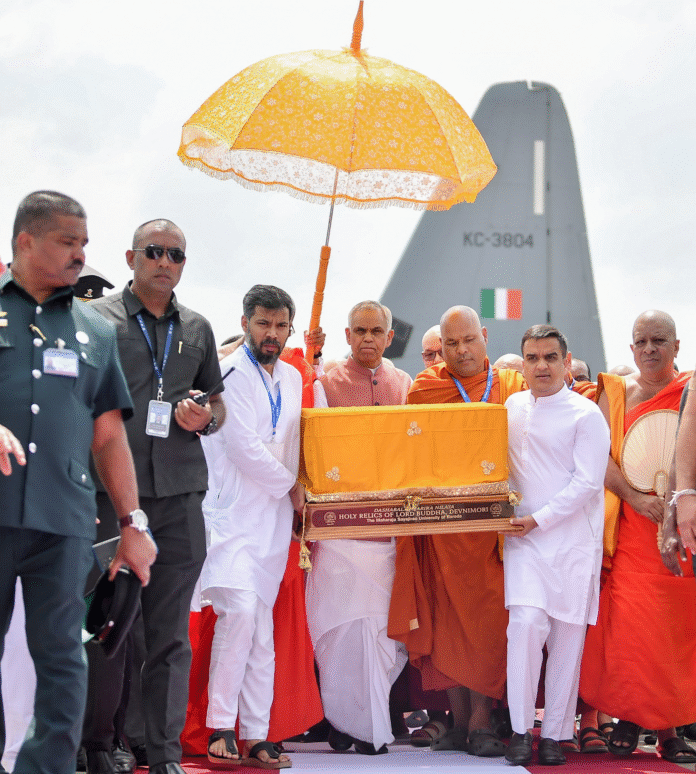
Devnimori Relics Reach Sri Lanka: Know its History, Origin and Significance..

0


President Anura Kumara Dissanayake opened the first international exposition of the Devnimori Relics at Gangaramaya Temple on Thursday, fulfilling a promise from Prime Minister Narendra Modi’s 2025 visit. The relics, unearthed from an ancient stupa in Gujarat and carried by a special Indian Air Force flight, will be available for public viewing around the clock until February 11. Leaders from both nations, including Gujarat’s Governor and Sri Lanka’s Prime Minister, attended, highlighting deepening ties through shared Buddhist heritage, booming trade at $5.8 billion, and India’s aid during crises.

The Devnimori Relics originate from the Devnimori archaeological site, located near Shamlaji in the Aravalli district of Gujarat.
It was first explored in 1957 by eminent archaeologist Prof. S. N. Chowdhry.The excavations revealed important Buddhist structures and relics that stand testimony to the flourishing of Buddhism in western India during the early centuries of the Common Era.The relic casket found within Devnimori Stupa, is made out of green schist.It is inscribed in Brahmi Script and Sanskrit language, it reads. “dashabala sharira nilay” – the abode of the Buddha’s bodily relic.It holds a copper box having organic matter with holy ashes, with silk cloth and beads.

Russia Rejects Trump’s Claim India Will End Oil Imports

0

Russia rejects US President Donald Trump’s claim: On February 2, 2026, Donald Trump revealed the deal after a call with Prime Minister Narendra Modi, slashing US tariffs on Indian goods from 50% to 18% and stating Modi pledged to shift oil purchases. Kremlin spokesperson Dmitry Peskov pushed back on February 4, noting India has always diversified suppliers and Russia got no word of a halt.

India ramped up discounted Russian crude after 2022 to control inflation—now over a third of its seaborne oil—and has stayed silent on the claim while hailing the tariff cuts as a boost for exports. The back-and-forth highlights India’s balancing act between US ties and affordable energy security.


“The US President trying to dictate who an independent nation like India can trade with is not new. Russia has no reason to believe our Indian friends have changed their approach,” says Russia after Trump claims India will stop buying their oil

ECI To Host National SEC Conference After 25 Years

0

The Election Commission of india (ECI) will host a National Conference of State Election Commissioners (SECs) on February 24, 2026, marking the first such national-level interaction in over 25 years. The conference will be held at Bharat Mandapam, New Delhi, and is expected to bring together election authorities from across the country to strengthen coordination in electoral administration.

Participation From States And Union Territories

State Election Commissioners from all States and Union Territories will attend the conference, along with their legal and technical experts. Chief Electoral Officers (CEOs) of the Election Commission of India from all 36 States and UTs will also participate. The last National Conference of SECs was held in 1999, making this a significant institutional milestone in India’s electoral governance framework.

Leadership And Inaugural Proceedings

The conference will be chaired by Chief Election Commissioner Gyanesh Kumar. He will be joined by Election Commissioners Dr. Sukhbir Singh Sandhu and Dr. Vivek Joshi. The leadership of the Election Commission will address the State Election Commissioners during the inaugural session, setting the agenda for deliberations over electoral processes and institutional cooperation.

Focus On Electoral Laws And Technology

The primary objective of the conference is to build synergy between the ECI and State Election Commissions within their respective constitutional and legal frameworks. Discussion sessions will focus on electoral laws relating to elector eligibility in States and UTs, logistical challenges, and best practices in election management. A key theme will be technological interventions led by the ECI, including the recently launched ECINET digital platform and the use of Electronic Voting Machines (EVMs). The ECI will also share its experience in the preparation of electoral rolls and conduct of elections under the Constitution of India.

Important Facts

  • State Election Commissions are constituted under the 73rd and 74th Constitutional Amendments.
  • SECs conduct elections to Panchayats and Municipal Bodies.
  • The last National SEC Conference was held in 1999.
  • ECINET is a digital platform launched by the Election Commission of India.

Role Of State Election Commissions

State Election Commissions are created by laws enacted by respective States under constitutional provisions. They are vested with the superintendence, direction, and control of electoral rolls and elections to local bodies. The upcoming conference is expected to enhance institutional cooperation, improve electoral logistics, and reinforce the integrity of grassroots democracy across India.