Home Blog Page 53

India Offers Safe Haven to Iranian Warship IRIS Lavan as US Sinks Sister Ship IRIS Dena in Indian Ocean

0

PC: (Jagran, Facebook)

Humanitarian Docking Approval for IRIS Lavan

    In a significant display of humanitarian maritime diplomacy, India has allowed the Iranian naval vessel IRIS Lavan to dock at Kochi port following an urgent request from Tehran, just days before the dramatic sinking of its sister ship, IRIS Dena, by a US Navy submarine in the Indian Ocean.

    Technical Emergency and Rapid Clearance

      According to government sources, Iran approached India on February 28, 2026, seeking permission for the IRIS Lavan to dock urgently at Kochi due to technical issues that had developed while the vessel was in the region. The ship had participated in the International Fleet Review (IFR) 2026 and related multilateral naval exercises hosted by the Indian Navy. Approval for the docking was granted on March 1, 2026, on humanitarian and operational grounds.

      Safe Arrival and Crew Accommodation

      The IRIS Lavan successfully docked at Kochi on March 4, 2026, and its crew of 183 personnel is currently safe and accommodated at Indian naval facilities in the port city.

      Simultaneous Tragedy: Sinking of IRIS Dena

        This development unfolded against the backdrop of heightened tensions in the ongoing US-Iran conflict. On the same day that IRIS Lavan docked -March 4, 2026-its sister frigate, IRIS Dena, was torpedoed and sunk by a US submarine (reportedly USS Charlotte) in international waters approximately 40 nautical miles south of Galle, Sri Lanka.

        India Offers Safe Haven to Iranian Warship IRIS Lavan as US Sinks Sister Ship IRIS Dena in Indian Ocean

        Heavy Casualties and Rescue Efforts

          The attack on IRIS Dena, which was returning from the same Indian-hosted naval events (including MILAN 2026 exercises in Visakhapatnam), resulted in heavy casualties. Reports indicate at least 87 sailors were killed, with 32 survivors rescued by the Sri Lankan Navy. The US Department of Defense confirmed the strike, describing it as a significant action in the broader conflict.

          India’s Immediate Humanitarian Response

            In response to the distress call from IRIS Dena, India promptly deployed assets including the INS Tarangini, INS Ikshak, and P-81 maritime patrol aircraft to support Sri Lanka-led search and rescue operations.

            Iran’s Position on the Incident

              Iran has maintained that the IRIS Dena was unarmed and in a non-combat configuration during its return journey, in line with protocols observed after participating in international exercises. Iranian officials have condemned the attack as an “atrocity” in international waters far from the main conflict zone.

              India’s Balanced Maritime Diplomacy

              While India has not issued a formal statement directly addressing the US military action against IRIS Dena, the decision to provide safe harbor to IRIS Lavan underscores New Delhi’s commitment to acting as a responsible maritime partner. The move highlights India’s balanced approach in the region-extending humanitarian assistance to vessels in distress while cooperating in rescue efforts following the tragic incident involving another Iranian ship.

              Geopolitical Implications in the Indian Ocean

                This sequence of events illustrates the complex interplay of diplomacy, humanitarian considerations, and geopolitical tensions in the Indian Ocean amid the escalating US-Israel-Iran conflict. The crew of IRIS Lavan remains secure under Indian protection as regional navies monitor the situation closely


                Russia Clams Up on Oil Exports to India: “Too Many III-Wishers” Amid Middle East Chaos and US Waiver

                0

                PC: (The Economic Times)

                Russia Keeps Indian Oil Export Figures Secret Citing “III-Wishers” as Geopolitical Tensions Surge

                In a move underscoring the shadowy dynamics of global energy trade amid escalating conflict in West Asia, Russia has refused to disclose specific data on its crude oil exports to India. Kremlin spokesperson Dmitry Peskov bluntly stated that Moscow will not provide quantitative details, citing “too many ill-wishers” who could exploit such information. Peskov’s comments came in response to Indian media reports suggesting Russia could deliver up to 22 million barrels of crude in a single week. He emphasized, “No, of course, we’re not going to provide any quantitative data for obvious reasons. That’s the first thing. There are too many ill-wishers.”

                The secrecy follows Russian state television broadcasting maps showing multiple tankers en route from the Arabian Sea to the Bay of Bengal, heading toward Indian refineries on the east coast. This surge in shipments aligns with Russia’s readiness to ramp up supplies to major buyers like India and China. Russian Deputy Prime Minister Alexander Novak recently affirmed that Moscow is prepared to increase crude deliveries to both nations, especially as the ongoing war disrupts traditional routes.

                The backdrop is a severe disruption in global oil flows triggered by the intensifying conflict involving Iran, Israel, and the United States. Iran’s retaliatory actions, including strikes and the virtual closure of the Strait of Hormuz – a critical chokepoint for about 20% of the world’s oil – have forced importers to seek alternatives. This has led to a notable redirection of Russian crude toward India, with reports indicating millions of barrels already en route or positioned nearby.

                Adding another layer, US Treasury Secretary Scott Bessent announced a temporary 30-day waiver allowing Indian refiners to purchase Russian oil currently stranded at sea or in transit. The measure aims to ease immediate supply pressures without providing “significant financial benefit” to Russia, according to US officials. It comes as a pragmatic stop-gap amid the chaos, even as broader Western sanctions and pressures on Russian energy have complicated trade in recent months.

                Meanwhile, the conflict shows no signs of abating. President Donald Trump has ruled out any negotiations with Iran absent its “unconditional surrender,” as Israeli strikes continue to target Tehran and Beirut. Iran has responded with missile barrages and attacks on regional assets, heightening fears of prolonged energy market volatility.
                Russia’s decision to withhold export figures highlights the strategic sensitivities in play: protecting trade partnerships from external interference while capitalizing on the opportunity to fill the supply gap left by Middle Eastern disruptions.

                As India navigates its energy security in this turbulent landscape, the quiet but significant flow of Russian tankers underscores shifting alliances and the enduring pragmatism driving global oil markets.

                Imanage Cloud Connector Search vs Traditional Search Tools: Which Is the Smarter Choice

                0

                Choosing between iManage Cloud Connector Search and traditional search tools in legal practice management is a decision that can significantly impact workflow and productivity. As cloud technologies become more prevalent, many firms are examining the benefits and limitations of transitioning to cloud-based solutions for their search needs. Below, we delve into the specifics of both approaches to help inform this important decision.

                While traditional search tools have been staples in legal document management for years, the sophistication of cloud-based search technology claims to offer a multitude of advancements, promising more seamless and efficient workflows. In this article, we compare the two, dissecting their features, efficiencies, and overall impact on legal documentation processes.

                Exploring IManage Cloud Connector Search Capabilities

                The iManage Cloud Connector Search is designed to streamline the legal document retrieval process by offering advanced search capabilities. Capitalizing on intelligent algorithms, it not only searches by keywords but also understands the context, relevance, and relationships between documents.

                This cloud-based tool allows legal professionals to conduct searches across different repositories and formats, effectively eliminating data silos. Customizable search options enable users to narrow down results based on specific criteria, enhancing precision and saving time. It’s designed for the growing complexity and volume of legal data, ensuring critical information is accessible.

                imanage cloud connector search For firms considering a transition to iManage, it’s advisable to evaluate their current data structure. Understanding how existing documents and communication channels can be integrated into the iManage ecosystem will be paramount for seamless adoption and maximizing the benefits of cloud-based search technology.

                Traditional Search Tools in the Legal Industry: How They Work

                Traditional search tools have long been the foundation of legal document management. They rely on basic keyword searches within localized databases, requiring accurate and precise input to find relevant documents. This often necessitates a strict filing and naming convention for efficient retrieval.

                Such tools, while straightforward, frequently fall short when dealing with complex queries or vast quantities of data. Their simplicity can lead to significant amounts of time spent sifting through irrelevant results or, worse, missing crucial documents due to overly restrictive search parameters. In addition, the lack of remote accessibility is a drawback for professionals on the move.

                To optimize traditional search methods, legal teams should regularly audit and clean their document databases. Implementing consistent naming conventions and regular training on best practices can also mitigate some of the limitations of these tools, although they will always have inherent efficiency ceilings.

                Analyzing the Efficiency of Cloud-Based vs Traditional Searches

                Efficiency is a critical factor when comparing cloud-based searches, like iManage, against traditional tools. Cloud searches stand out for their swift indexing and retrieval of data across multiple platforms — often in real time. This can substantially reduce the time attorneys spend searching for information.

                The integrated nature of cloud-based systems also means updates are reflected instantaneously across all connected devices, a feature traditional tools cannot match. Moreover, cloud searches typically offer better security measures with encryption and refined access controls, which are essential for confidential legal documents. Insights from industry analysts further support the advantages of cloud infrastructure for data management and searchability.

                When assessing efficiency, firms should conduct a thorough comparison of the time and resources spent on search-related tasks using their current methods versus the estimated improvements with cloud-based solutions. The difference observed often justifies the investment in upgrading to a modern tool.

                Making the Smarter Choice for Legal Document Management

                The smarter choice between iManage Cloud Connector Search and traditional search tools hinges on several factors, including the size of the firm, the volume of data, and the need for remote access and collaborative features. Cloud-based solutions are generally seen as the future-forward option, fostering collaboration and accessibility.

                In contrast, traditional search tools might suffice for smaller firms with less data and complexity. These tools are familiar and sometimes preferred for their simplicity and existing infrastructure. However, for a firm focused on scalability and security, the trend leans heavily towards cloud-based technologies.

                Ultimately, the smarter choice may involve a hybrid approach, combining the reliability of traditional tools with the innovative features of cloud searches. This would ensure a seamless transition while accommodating diverse needs within a legal practice.

                Overall, embracing iManage Cloud Connector Search presents a wealth of benefits when weighed against traditional search tools, particularly for law firms that prioritize efficiency, data security, and adaptability. While the latter may maintain a niche in certain settings, the trends in legal document management signal a shift towards a cloud-based future. The choice essentially boils down to a firm’s willingness to innovate and adapt to the evolving landscape of legal technology.

                From Aspirants to Administrators: Inside the Journey of UPSC 2025 Toppers

                0

                The results of the prestigious UPSC Civil Services Examination have been declared by the Union Public Service Commission, marking a life-changing moment for hundreds of aspirants across India. The final result of the 2025 examination cycle, announced on 6 March 2026, recommended 958 candidates for appointment to various services including the Indian Administrative Service, Indian Police Service, and Indian Foreign Service.

                Topping the examination this year is Anuj Agnihotri, who secured All India Rank (AIR) 1. A medical graduate from AIIMS Jodhpur and a native of Rajasthan, Agnihotri’s achievement reflects an inspiring transition from medicine to public service. His remarkable score and disciplined preparation have made him a role model for thousands of UPSC aspirants.

                The AIR 2 position was secured by Rajeshwari Suve M, a Deputy Collector trainee from Tamil Nadu who chose Sociology as her optional subject. Known for her determination and administrative experience, her journey highlights the importance of persistence and practical exposure in cracking one of India’s toughest exams.

                At AIR 3, Akansh Dhull secured a top position after multiple attempts, demonstrating resilience and consistency. The list of top rankers also includes Raghav Jhunjhunwala (AIR 4) and Ishan Bhatnagar (AIR 5) among the leading performers in the final merit list.

                The Civil Services Examination remains one of the most competitive in the country, involving three stages- Prelims, Mains, and the Personality Test, conducted over nearly a year. For these successful candidates, the journey from aspirants to administrators has just begun, as they prepare to take on roles that will shape governance and impact millions of lives across India.

                Women’s Day: Watch Top 50 Women Scripting Success Stories on Global Map in IT, Politics, Social Work and Everywhere…

                0

                Drawing inspiration from the 2025 Forbes Power Women list, The EBNW Story highlights the remarkable journeys of women who are redefining leadership and shaping the future across sectors. From politics and technology to philanthropy, business and culture, these women are scripting powerful success stories through resilience, innovation and influence. Their achievements demonstrate how determination and vision can break barriers and create lasting global impact. By spotlighting such inspiring figures, EBNW aims to celebrate the spirit of women who are not only excelling in their fields but also paving the way for the next generation of leaders around the world.

                Tan Su Shan

                • Title: CEO
                • Company: DBS
                • Location: Singapore

                Tan Su Shan became the Group CEO DBS, Southeast Asia’s largest bank with $637 billion in assets, in March 2025. She first joined the bank in 2010, spending three years building its wealth management business before going on to run DBS’ consumer banking and institutional banking businesses, units that drive some 90% of DBS’ income. Tan is also the founder and president of the Financial Women’s Association in Singapore.

                Colette Kress

                Women's Day: Watch Top 50 Women Scripting Success Stories on Global Map in IT, Politics, Social Work and Everywhere...
                • Title: CFO and EVP
                • Company: Nvidia
                • Location: United States

                As executive vice president and chief financial officer of Nvidia, Colette Kress has helped oversee one of the greatest revenue growth stories in tech history: In its 2025 fiscal year, the chip making giant recorded $130.5 billion in revenue, more than double what it’d been just one year before. Kress was named to her position in 2013; she’d previously held senior finance roles at Cisco and Microsoft.

                Hana al Rostamani

                Women's Day: Watch Top 50 Women Scripting Success Stories on Global Map in IT, Politics, Social Work and Everywhere...
                • Title: Group CEO
                • Company: First Abu Dhabi Bank
                • Location: United Arab Emirates

                One of the most powerful executives in the Middle East, Hana al Rostamani has been the Group CEO of First Abu Bank since 2021. She is the first woman to run the bank, which reported $365 billion in assets at the end of the first half of its fiscal 2025. al Rostamani also sits on several boards, including the executive board of the U.S.-U.A.E. Business Council.

                Gwynne Shotwell

                Women's Day: Watch Top 50 Women Scripting Success Stories on Global Map in IT, Politics, Social Work and Everywhere...
                • Title: President & COO
                • Company: SpaceX
                • Location: United States

                A mechanical engineer by training, Gwynne Shotwell joined SpaceX in 2002 as employee No. 11. Today she is the company’s president and chief operating officer, responsible for scaling it into the globe’s dominant rocket company. By early December 2025, SpaceX had deployed its 3,000th satellite and Shotwell, with an estimated 0.3% stake in the company, had joined the ranks of the world’s billionaires.

                Here is the information organized into a clean table format:

                RankNameTitleOrganizationCategoryLocation
                1Ursula von der LeyenPresident, European CommissionEuropean UnionPolitics & PolicyBelgium
                2Christine LagardePresidentEuropean Central BankPolitics & PolicyGermany
                3Sanae TakaichiPrime MinisterJapanPolitics & PolicyJapan
                4Giorgia MeloniPrime MinisterItalyPolitics & PolicyItaly
                5Claudia SheinbaumPresidentMexicoPolitics & PolicyMexico
                6Julie SweetChair & CEOAccentureBusinessUnited States
                7Mary BarraCEOGeneral MotorsBusinessUnited States
                8Jane FraserChair & CEOCitiFinanceUnited States
                9Abigail JohnsonChairman & CEOFidelity InvestmentsFinanceUnited States
                10Lisa SuCEOAMDTechnologyUnited States
                11MacKenzie ScottPhilanthropistYield GivingPhilanthropyUnited States
                12Ruth PoratPresident & CIOAlphabetTechnologyUnited States
                13Melinda French GatesFounderPivotal Philanthropies FoundationPhilanthropyUnited States
                14Gail BoudreauxCEOElevanceBusinessUnited States
                15Ana Patricia BotínExecutive ChairmanSantanderFinanceSpain
                16Amy HoodExecutive Vice President & CFOMicrosoftTechnologyUnited States
                17Kristalina GeorgievaManaging DirectorIMFPolitics & PolicyUnited States
                18Tarciana Paula Gomes MedeirosPresident and CEOBanco de BrasilFinanceBrazil
                19Catherine MacGregorCEOENGIEBusinessFrance
                20Gwynne ShotwellPresident & COOSpaceXTechnologyUnited States
                21Taylor SwiftArtistMedia & EntertainmentUnited States
                22Laurene Powell JobsFounderEmerson CollectivePhilanthropyUnited States
                23Gunjan KediaPresident & CEOU.S. BankFinanceUnited States
                24Nirmala SitharamanMinister of Finance and Corporate AffairsGovernment of IndiaPolitics & PolicyIndia
                25Kathryn McLayCEOWalmart InternationalBusinessUnited States
                26Carol ToméCEOUPSBusinessUnited States
                27Phebe NovakovicCEOGeneral DynamicsBusinessUnited States
                28Marianne LakeCEO, Consumer & Community BankingJPMorgan ChaseFinanceUnited States
                29Tan Su ShanCEODBSFinanceSingapore
                30Oprah WinfreyEntrepreneur, Personality, PhilanthropistMedia & EntertainmentUnited States
                31Sarah LondonCEOCenteneBusinessUnited States
                32Sandy Ran XuCEOJD.comBusinessChina
                33Beyoncé Knowles-CarterArtistMedia & EntertainmentUnited States
                34Ho ChingChairTemasek TrustFinanceSingapore
                35Dana WaldenCo-Chairman, Disney EntertainmentThe Walt Disney CompanyMedia & EntertainmentUnited States
                36Thasunda Brown DuckettCEOTIAAFinanceUnited States
                37Colette KressExecutive Vice President & CFONVIDIATechnologyUnited States
                38Kathy WardenChairman, President & CEONorthrop GrummanBusinessUnited States
                39Rachel ReevesChancellor of the ExchequerUnited Kingdom GovernmentPolitics & PolicyUnited Kingdom
                40Mary Callahan ErdoesCEO, Asset & Wealth ManagementJPMorgan ChaseFinanceUnited States
                41Susan LiCFOMetaTechnologyUnited States
                42Estelle BrachlianoffCEOVeoliaBusinessFrance
                43Jennifer PiepszakCOOJPMorgan ChaseFinanceUnited States
                44Janet TruncaleGlobal CEOEYBusinessUnited States
                45Adena FriedmanChair & CEONasdaqFinanceUnited States
                46Lynn MartinPresident, NYSE GroupNew York Stock ExchangeFinanceUnited States
                47Julie GaoCFOByteDanceTechnologyChina
                48Amanda BlancCEOAvivaBusinessUnited Kingdom
                49Margherita Della ValleCEOVodafoneBusinessUnited Kingdom
                50Sarah FriarCFOOpenAITechnologyUnited States

                Smriti Mandhana Becomes the World’s First Cricketer Honoured with a Barbie Doll!

                0

                PC: (GNT, X)

                Historic Barbie Dream Team Honour

                Smriti Mandana has created history by becoming the first cricketer in the world – male or female -to be immortalized as a one-of-a-kind Barbie doll. This special tribute is part of Mattel’s brand-new “Barbie Dream Team” initiative, launched ahead of International Women’s Day on March 8, 2026.

                A Custom Doll That Captures Her Magic

                The exclusive Barbie doll is inspired by Smriti’s iconic style and achievements. Dressed in the Indian women’s cricket team jersey, the doll comes with her personalized bat and gloves – a perfect miniature tribute to one of the game’s most elegant stroke-makers. Importantly, this is a one-of-a-kind creation, not available for commercial sale.

                Breaking Barriers & Inspiring the Next Generation

                The Barbie Dream Team celebrates women who have shattered ceilings and paved the way for others. Smriti joins an elite global list of trailblazers (including past honourees like Serena Williams), but she proudly stands as the first-ever cricketer to receive this honour – a massive moment for women’s cricket worldwide.

                Smriti Mandhana Becomes the World's First Cricketer Honoured with a Barbie Doll!

                Smriti’s Heartfelt Reaction

                Taking to Instagram, Smriti expressed her joy: “This feels like a dream come true for a cricketer like me. I hope seeing this inspires thousands of young girls to pick up a bat and chase their dreams in sport without any limits.”

                The Queen of Indian Cricket – Her Legendary Journey

                Widely regarded as one of the greatest batters in women’s cricket history, Smriti Mandhana has been the heartbeat of the Indian team since her international debut in 2013. As star opener and vice-captain, her graceful batting and consistency have earned her the affectionate title – Queen of Indian Cricket.

                Major Milestones That Define Her Greatness

                Key member and vice-captain of India’s victorious 2025 ICC Women’s ODI World Cup campaign. Captain of Royal Challengers Bengaluru (RCB), winning Women’s Premier League titles in 2024 and 2026. Twice ICC Women’s Cricketer of the Year (2018 & 2021). Wisden’s Leading Women’s Cricketer of the Year 2024. First Indian woman to score centuries in all three international formats (Test, ODI, T201). Fastest woman ever to reach 10,000 international runs (in just 281 matches). Reclaimed the No. 1 spot in ICC Women’s ODI Batting Rankings (March 2026)

                A Legacy Beyond the Boundary

                From record-breaking centuries to global cultural recognition, Smriti Mandhana continues to redefine what’s possible in women’s cricket. This unique Barbie honour is not just a personal milestone – it’s a powerful symbol of representation, empowerment, and inspiration for millions of girls dreaming big on and off the field.

                Kota–Bundi Greenfield Airport: Know Its Five Proposed Features…

                0

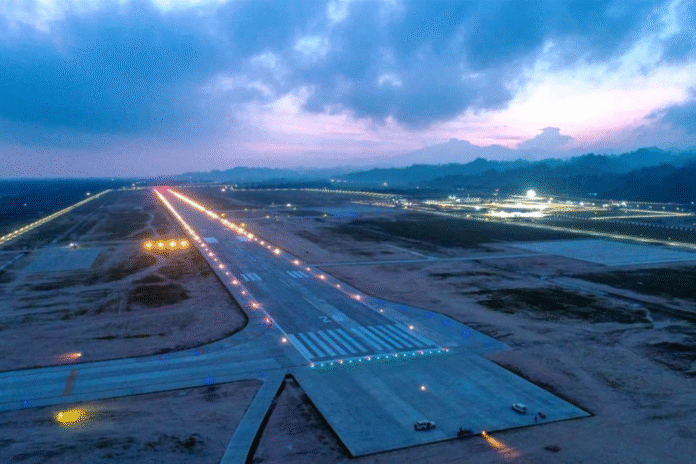
                The foundation stone for the Kota–Bundi Greenfield Airport will be laid on Saturday, marking a major step toward improving air connectivity in the Hadoti region of Rajasthan. The airport, to be built at an estimated cost of ₹1,507 crore, will feature a modern terminal, a long runway capable of handling large aircraft, and facilities designed to handle around 1,000 passengers during peak hours, giving a significant boost to connectivity, tourism, and economic growth in Kota and nearby areas.

                Here are five key unique features of the new Kota–Bundi Greenfield Airport project based on the details:

                1. ₹1,507 Crore Greenfield Project
                  The Kota–Bundi Greenfield Airport is being developed at an estimated cost of ₹1,507 crore, making it one of the largest upcoming infrastructure projects in the Hadoti region of Rajasthan.
                2. Long Runway for Large Aircraft
                  The airport will feature a 3,200-metre-long and 45-metre-wide runway, capable of handling larger aircraft and ensuring better connectivity for the region.
                3. Modern 20,000 sq m Terminal Building
                  A 20,000 square metre passenger terminal will be constructed with modern facilities to handle passengers comfortably and support future expansion.
                4. Capacity for 1,000 Passengers at Peak Hour
                  The airport is designed to manage around 1,000 passengers during peak hours, significantly improving air travel access for people in Kota, Bundi and nearby districts.
                5. Parking and Apron Facilities for Multiple Aircraft
                  The airport will include parking space for Airbus A321 aircraft and seven apron bays, allowing multiple aircraft operations simultaneously.

                Why it matters:
                The airport is expected to boost tourism, business, and connectivity in the Hadoti region, especially for the city of Kota, which is known as a major education hub.

                International Women’s Day 2026. Know Significance, Theme and History

                0

                Across India and the world, Sunday 8 March marks International Women’s Day 2026. This global event is a time to celebrate the achievements of women and to call for faster progress toward gender equality.

                What is the theme for 2026?

                The United Nations has announced the official theme for 2026 as “Rights. Justice. Action. For ALL Women and Girls.”

                This year focuses on the legal gaps that still exist worldwide. Data shows that women currently hold only about 64% of the legal rights that men do globally. 

                The 2026 campaign aims to move beyond “rights on paper” to ensure that laws are actually enforced in daily life. In India, this includes discussions on safety, equal pay, and better access to justice for women in both rural and urban areas.

                Why does 8 March matter?

                The date is not just a calendar fixture but a symbol of protest and change. While it is now a day of celebration, its roots are firmly planted in the soil of labour movements and political struggle.
                 

                • 1908: 15,000 women marched through New York City demanding shorter hours, better pay, and the right to vote.
                •  1910: A woman named Clara Zetkin proposed the idea of an international day at a conference in Copenhagen. The 100 women present from 17 countries agreed unanimously.
                •  1917: During World War I, women in Russia went on strike for “Bread and Peace.” This strike began on 8 March and eventually led to the Tsar abdication and women gaining the right to vote.

                The United Nations officially recognised the day in 1975, and it has since become a public holiday in many countries.

                How is India marking the day?

                In India, the day is marked by a blend of government initiatives and community events. Large-scale runs like the Pinkathon are scheduled in Delhi and other major cities to promote women’s health. 

                The government often uses the occasion to announce updates to schemes like Beti Bachao Beti Padhao or to expand healthcare coverage for women under Ayushman Bharat.

                From corporate boardrooms in Mumbai to village panchayats in Rajasthan, the day serves as a reminder that while much has been achieved, the journey toward true equality continues.

                Childhood Obesity in India Reach Alarming Levels, Says World Obesity Atlas 2026

                0

                Childhood obesity in India has reached alarming levels, according to the World Obesity Atlas 2026 released on March 4 to mark World Obesity Day. The report estimates that nearly 15 million children aged five to nine and over 26 million adolescents aged 10 to 19 in India were overweight or obese in 2025. The findings highlight a growing public health challenge and indicate that global efforts to curb childhood obesity are falling short of targets.

                India Among Countries With Highest Childhood Obesity

                The report, published by the World Obesity Federation, shows that more than 200 million school-age children worldwide aged five to 19 living with overweight or obesity are concentrated in just ten countries. India ranks second globally after China in the number of children with high Body Mass Index (BMI).

                China leads with around 62 million children with high BMI and 33 million living with obesity. India follows with about 41 million children with high BMI, including 14 million classified as obese. The United States ranks third, with approximately 27 million children with high BMI and 13 million with obesity.

                Global Targets to Reduce Obesity Likely to be Missed

                The World Obesity Federation warned that the world is likely to miss the global target of halving the rise in childhood obesity by 2025. The deadline has now been extended to 2030, but most countries, including India, remain off track.

                The report also projects that by 2040 the number of children globally living with overweight or obesity could reach 507 million. Such trends are expected to increase the burden of non-communicable diseases linked to obesity.

                Important Facts

                • World Obesity Day is observed globally on 4 March each year.
                • The World Obesity Atlas is published by the World Obesity Federation.
                • Body Mass Index (BMI) is a widely used indicator to measure overweight and obesity.
                • India ranks second globally in the number of children with high BMI.

                Risk Factors and Preventive Measures

                The report highlights several risk factors contributing to rising obesity levels in India. Around 74 percent of adolescents aged 11 to 17 do not meet recommended physical activity levels. Only about 35.5 percent of school-age children receive school meals regularly. In addition, nearly 32.6 percent of infants aged one to five months experience sub-optimal breastfeeding.

                Dietary patterns also play a role, with children aged six to ten consuming sugary drinks averaging around 50 millilitres per day. Among women aged 15 to 49, about 13.4 percent have high BMI and 4.2 percent live with Type 2 diabetes. Experts have called for stronger government action, including taxes on sugar-sweetened beverages and restrictions on marketing unhealthy foods to children.

                Tourism Booms in 2026 But Not Where You Think…

                0

                As global travel rebounds strongly after the pandemic years, tourism is growing fastest in destinations that were once considered off the mainstream travel map. Countries such as Brazil, Egypt, Ethiopia, Bhutan and the Seychelles are witnessing a surge in international visitors.

                More than 1.5 billion international tourists travelled abroad in 2025, setting the stage for what could become a record-breaking year for global tourism in 2026. According to the latest World Tourism Barometer published by UN Tourism, international arrivals increased by 4% globally, approaching the pre-pandemic growth average of around 5% annually between 2009 and 2019.

                While Europe remained the world’s most visited region, welcoming nearly 800 million travellers and posting a 6% growth over 2024, the fastest growth rates were recorded elsewhere.

                Among the standout performers, Brazil saw arrivals jump by 37%, Bhutan by 30%, Egypt by 20%, Ethiopia by 15%, and the Seychelles by 13%.

                Steven Vigor, CEO of travel advisory firm Revigorate, says these destinations are part of a growing category of “high-identity emerging travel destinations.”

                “More travellers are now drawn to distinctive culture, dramatic landscapes and the thrill of discovery,” Vigor explains. “Countries with strong cultural identities and improving accessibility are becoming clear winners.”

                Egypt: Ancient Wonders Meet New Attractions

                Tourism in Egypt has surged by 20%, largely driven by the long-awaited opening of the Grand Egyptian Museum near the Pyramids of Giza.

                After more than two decades of delays, the museum’s launch has reignited interest among travellers eager to explore Egypt’s ancient heritage. Tour operators report a sharp increase in bookings, including families and solo female travellers.

                To avoid overcrowding, travel companies are also promoting slower and more immersive travel experiences, including traditional dahabiya sailboat journeys along the Nile.

                Brazil: Policy and Culture Fuel Growth

                Brazil recorded the largest increase in tourism globally, with a 37% surge in arrivals. Industry experts attribute this to improved international air connectivity, supported by initiatives from the Brazilian Agency for International Tourism Promotion.

                Major events such as the FIFA World Cup, the Olympic Games in Rio, and upcoming tournaments have also boosted global awareness.

                Beyond iconic cities like Rio de Janeiro and São Paulo, travellers are increasingly exploring lesser-known destinations and culinary scenes influenced by Amazonian ingredients.

                Ethiopia: A Strong Comeback

                Tourism in Ethiopia grew by 15% in 2025, contributing to Africa’s strongest regional tourism recovery. The rebound follows improved stability and investments in tourism infrastructure after the conflict in the Tigray Region.

                Travellers are once again exploring historical landmarks such as the Rock-Hewn Churches of Lalibela, medieval castles in Gondar, and the dramatic landscapes of the Simien Mountains.

                Seychelles: Beyond Honeymoons

                The island nation of the Seychelles saw a 13% rise in tourist arrivals. While traditionally known as a honeymoon destination, the country is now attracting families, wellness travellers and adventure seekers.

                Visitors are increasingly exploring hiking trails, waterfalls, Creole cuisine and cultural experiences like the traditional Moutya dance.

                Bhutan: Sustainable Tourism Model

                The Himalayan kingdom of Bhutan recorded a 30% rise in visitors, while maintaining its unique “high value, low volume” tourism policy.

                Travellers pay a nightly Sustainable Development Fee, currently around $100, which helps fund infrastructure and conservation efforts.

                Bhutan’s tourism philosophy is deeply connected to its famous development concept of Gross National Happiness, prioritising wellbeing and cultural preservation over mass tourism