Home Blog Page 517

Assam’s Charaideo Maidams Joins the Prestigious UNESCO World Heritage List

0

In a significant recognition of India’s rich cultural heritage, the ancient mound-burial system known as the Charaideo Maidams in Assam has been included in the UNESCO World Heritage List under the cultural property category. This inclusion highlights the historical and cultural importance of the 700-year-old site, which serves as a testament to the Tai-Ahom dynasty’s legacy.

The decision to include the Charaideo Maidams in the UNESCO World Heritage List was made during the 46th session of the World Heritage Committee held in New Delhi. India’s nomination of the site for the 2023-2024 cycle underscores its cultural significance and the historical depth it represents. These burial mounds, resembling pyramid-like structures, have been in use since 1228 and house the mortal remains of Ahom royalty. Initially, the deceased were buried with their belongings, but this practice shifted to cremation following Hindu customs in the 18th century.

Chosen by the Government of India from a pool of 52 potential sites, the Charaideo Maidams were announced as a UNESCO World Heritage Site by Union Minister for Culture and Tourism, Gajendra Singh Shekhawat, in Delhi. This announcement sparked widespread celebrations across Assam, marking a moment of pride for the state and its people.

On July 21, Prime Minister Narendra Modi officially declared the Charaideo Maidams as India’s 43rd UNESCO World Heritage Site. This milestone is particularly significant as it is the first site from the northeastern region to be recognized in the cultural property category. Assam’s Chief Minister, Himanta Biswa Sarma, expressed his gratitude on social media, thanking the Prime Minister, UNESCO, and the people of Assam. “This is huge. The Maidams make it to the UNESCO World Heritage list under the Cultural Property category — a great win for Assam,” he said.

Chief Minister Sarma further acknowledged the dedication of the officials who worked tirelessly to meet all compliance requirements for the UNESCO recognition. He emphasized the site’s importance in a letter to Prime Minister Modi, highlighting that out of 386 explored Maidams, the 90 royal burials at Charaideo are the best preserved and most representative of this tradition.

The Charaideo Maidams’ inclusion in the UNESCO World Heritage List is a momentous achievement, marking Assam’s third World Heritage Site alongside the Kaziranga and Manas National Parks. This recognition not only honors the historical and cultural heritage of the Tai-Ahom dynasty but also brings global attention to the rich traditions of northeastern India. As Chief Minister Sarma stated, “The Maidams are highly venerated, and this recognition is a tribute to the unique burial architecture and tradition of the Tai Ahoms.”

This milestone reinforces the significance of preserving and celebrating India’s diverse cultural heritage, ensuring that the legacy of the Charaideo Maidams is honored and remembered for generations to come.

RBI Grants Cross-border Payment License to Fintech Firms BillDesk, Amazon Pay, and Adyen

0

In a significant move to enhance cross-border financial transactions, the Reserve Bank of India (RBI) has granted cross-border payment licenses to fintech firms BillDesk, Amazon Pay India, and Adyen. This development enables these companies to operate as cross-border payment aggregators, further expanding their reach and service capabilities.

BillDesk received its license for both exports and imports on July 29, while Amazon Pay India and Adyen were granted licenses for imports only on July 25. This strategic approval allows these fintech firms to offer comprehensive payment services for users engaged in international trade, facilitating smoother transactions for both imports and exports.

The trio now joins a growing list of companies, including Cashfree Payments, which secured its license earlier this month. This trend underscores the RBI’s proactive stance in approving aggregator licenses, reflecting a broader initiative to streamline and enhance the financial ecosystem for cross-border transactions.

“The granting of these licenses is a testament to the RBI’s commitment to fostering innovation and efficiency in the financial sector,” said an industry expert. “It opens up new avenues for businesses and consumers, making international trade more accessible and efficient.”

In addition to BillDesk, Amazon Pay India, and Adyen, the RBI has reportedly approved payment aggregator licenses for over 20 fintech startups, including Groww, Juspay, Decentro, CRED, and others. This wave of approvals aligns with the central bank’s directive for fintech firms to secure PA licenses for handling cross-border transactions of goods and services.

To qualify for the PA license, fintech firms must register under the Financial Intelligence Unit-India (FIU–IND) and maintain a minimum net worth of Rs 15 crore, which will be increased to Rs 25 crore post-March 2026. Failure to meet this financial requirement will result in the discontinuation of services by July 31, as mandated by the RBI.

The approval of cross-border payment licenses marks a pivotal moment for the fintech industry in India, promising enhanced capabilities and a more robust framework for international trade. As these firms begin to leverage their new licenses, the impact on the financial landscape is expected to be substantial, fostering greater global integration and economic growth.

India’s First Sunken Museum at Humayun’s Tomb Site, New Delhi

0

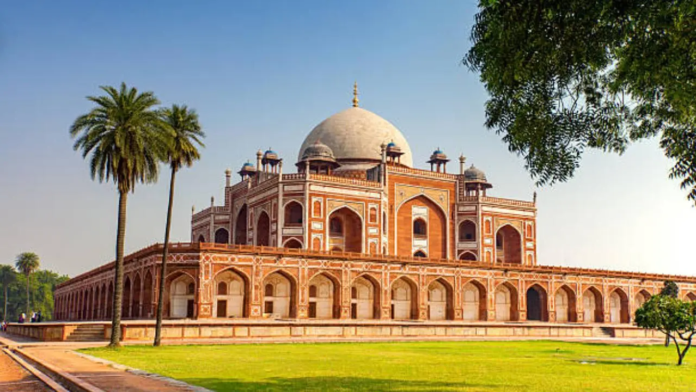
Delhi witnessed a historic moment as the country’s first sunken museum was inaugurated at the Humayun’s Tomb complex, a UNESCO World Heritage Site. The Union Culture and Tourism Minister, Gajendra Singh Shekhawat, and Prince Rahim Aga Khan graced the event with their presence, celebrating the intersection of cultural heritage and modern preservation.

In his address, Minister Shekhawat emphasized the importance of India’s cultural heritage, stating, “Our cultural heritage is one of our greatest assets.” His words resonated deeply with the audience, comprising delegates from the 46th session of the UNESCO World Heritage Committee (WHC), scholars, architects, and diplomats.

The museum’s design draws inspiration from medieval ‘baolis’ or traditional water tanks, blending seamlessly into the historic landscape of the Humayun’s Tomb complex. This innovative layout not only honors ancient architectural practices but also provides a unique, immersive experience for visitors.

Inside, the museum brings to life the legacy of Mughal emperor Humayun, unveiling lesser-known aspects of his life and reign. The exhibits also chronicle the rich heritage of the Nizamuddin area, spanning over seven centuries. A striking feature of the museum is the finial of Humayun’s Tomb, which had been knocked off during a storm in 2014 and has now been restored as a centerpiece.

The inauguration of this sunken museum marks a significant step in preserving and showcasing India’s rich historical tapestry. It serves as a testament to the country’s dedication to celebrating and preserving its cultural heritage for future generations.

Laos Unveils World’s First Stamp of Lord Rama: A Symbol of Cultural Unity with India

0

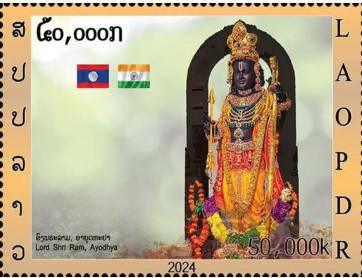
In July 2024, Laos made history by introducing a special set of commemorative stamps featuring Lord Rama and Lord Buddha. This groundbreaking initiative highlights the deep cultural connections between Laos and India and was marked by the presence of India’s External Affairs Minister, S. Jaishankar, and his Lao counterpart, Saleumxay Kommasith.

Significance of the Stamp Set

The newly unveiled stamp set proudly features the world’s first depiction of ‘Ram Lalla of Ayodhya’. This unique portrayal underscores the rich historical and cultural ties between the two nations. The inclusion of such revered figures in this commemorative series reflects the enduring bonds and shared heritage between India and Laos.

Cultural Heritage

Buddhism has historically connected India and Laos for millennia, fostering a profound cultural relationship. The Ramayana, known as the Ramakien in Laos, remains a significant cultural narrative, often performed during major events and festivities. This shared heritage underscores the importance of the newly issued stamps in celebrating and preserving these ancient traditions.

MoUs and Development Projects

During the visit, several Memoranda of Understanding (MoUs) were signed, focusing on 10 Quick Impact Projects (QIPs) under the Mekong Ganga Cooperation framework. These agreements are designed to enhance collaboration and development between the two countries. Jaishankar’s visit also aligned with crucial ASEAN meetings, as Laos, serving as the ASEAN Chair for 2024, showcased its active role in regional diplomacy. Following his visit to Laos, Jaishankar was set to attend the Quad Foreign Ministers’ Meeting in Japan, further advancing international relations and collaborative initiatives.

About Laos

Location and Borders: Laos, officially the Lao People’s Democratic Republic, is the only landlocked country in Southeast Asia. It shares borders with China, Vietnam, Thailand, Myanmar, and Cambodia.

Capital and Landmarks: The capital city, Vientiane, is renowned for its iconic landmark, That Luang, the world’s largest stupa. Additionally, Laos is home to the Plain of Jars, an archaeological site featuring ancient stone jars.

Natural Features and Culture: The Mekong River flows over 1,800 kilometers through Laos, contributing to its rich biodiversity. The country is known for its diverse wildlife, including endangered species like the Indochinese tiger. Laos is also celebrated for its culinary staple, sticky rice, which is a central component of its traditional cuisine.

The introduction of these commemorative stamps serves as a powerful symbol of the deep-rooted cultural and historical connections between Laos and India, highlighting their shared heritage and commitment to strengthening bilateral ties.

Who Is Sarabjot Singh? Ambala’s Shooting Prodigy Shines With Bronze At Paris Olympics 2024

0

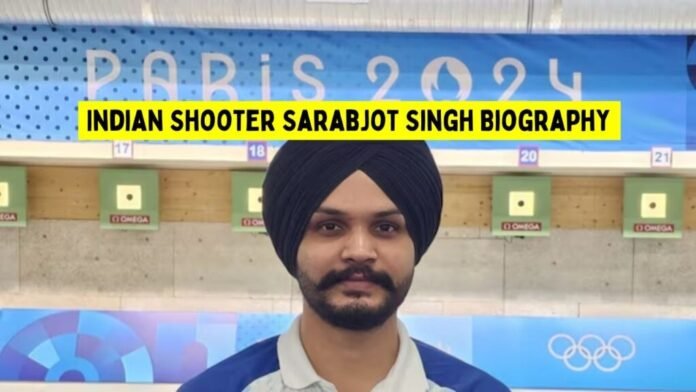
Sarabjot Singh, an accomplished 10m air pistol shooter from Ambala, Punjab, has achieved global recognition with medals at the Junior World Championship, Asian Games, and 2024 Olympics. Despite his success, he remains grounded, inspiring many aspiring athletes in India.

Born on 30 September 2001, Sarabjot Singh is a distinguished Indian sport shooter specializing in the 10m air pistol discipline. A native of Ambala, Punjab, he hails from a humble farmer’s family. Despite his impressive achievements, Sarabjot remains grounded and mature, qualities that have earned him respect in the sporting community.

Sarabjot’s journey to prominence began with a gold medal at the 2019 Junior World Championship, signaling his potential on the global stage. He further solidified his reputation with a team gold at the 2022 Asian Games in Hangzhou and an individual bronze at the 2023 Asian Championships. These accomplishments set the stage for his participation in the 2024 Summer Olympics in Paris.

At the 2024 Olympics, Sarabjot teamed up with Manu Bhaker to win a bronze medal in the 10m Air Pistol Mixed Team event, securing India’s second medal of the games. His self-confidence and composure have led many experts to regard him as a strong contender for Olympic success.

The Indian shooting team, which did not secure any medals at the 2020 Tokyo Olympics, placed significant hopes on Sarabjot and his fellow shooters. The 21-member squad is set to compete in the shooting events starting on July 27 in Paris. Sarabjot will showcase his skills in both the 10m air pistol individual event and the 10m air pistol mixed team competition. His first appearance will be in the men’s qualification round on July 27.

Sarabjot Singh’s journey from a small-town background to the Olympic podium is a testament to his dedication, talent, and resilience. As he continues to make strides in his shooting career, he remains a beacon of inspiration for aspiring athletes across India.

Indore’s Moonwalk Dancing Cop Goes Viral again as Anand Mahindra Shares Video: ‘No Such Thing as Boring Work’

0

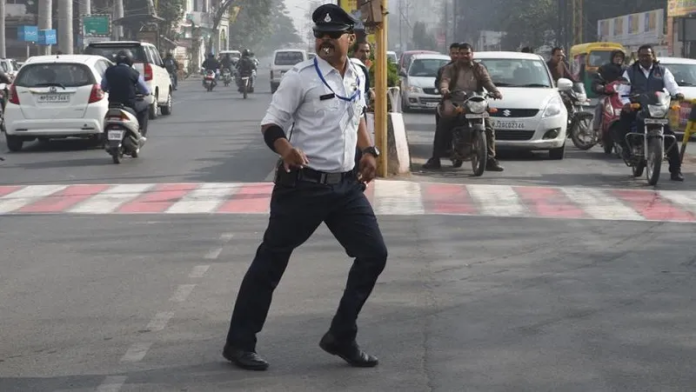
Indore’s renowned dancing traffic cop, Ranjeet Singh, has once again captured the public’s attention, becoming a source of Monday motivation for industrialist Anand Mahindra. Mahindra shared a video of Singh on social media, praising the constable’s unique approach to traffic management. For the past 16 years, Singh has been incorporating Michael Jackson’s iconic ‘moonwalk’ dance moves into his traffic control routine, making him a local sensation and an internet star.

In the clip shared by Mahindra, Singh can be seen enthusiastically managing traffic on a busy Indore road, captivating onlookers with his dance steps. Mahindra, inspired by Singh’s energy and innovative style, remarked, “This cop proves that there is NO such thing as boring work.” The video has garnered significant attention online, showcasing Singh’s dedication and creativity in his job.

Ranjeet Singh’s innovative approach to traffic management has made him an internet sensation, with over 300,000 followers on Instagram, where he regularly shares videos of his unique techniques. His popularity continues to grow as he brings a touch of joy and entertainment to his work, breaking the monotony of everyday traffic duties.

Anand Mahindra, who has a substantial following of over 11 million on X (formerly Twitter), often shares motivational messages and videos to inspire his audience. In a recent post, Mahindra highlighted the importance of developing problem-solving skills, urging his followers to adopt a positive and proactive approach to life. His support for Singh underscores the value of passion and creativity in any profession, encouraging people to find joy and purpose in their work.

The video not only highlights Singh’s extraordinary talent but also serves as a reminder that innovation and enthusiasm can transform even the most routine tasks into something remarkable. Ranjeet Singh’s story is a testament to the idea that with passion and creativity, one can make a significant impact and bring a smile to the faces of many.

As Singh continues to moonwalk his way through traffic, he remains a symbol of dedication and innovation, proving that there truly is no such thing as boring work.

The World’s First Billionaire: From John D. Rockefeller to the Trillionaire Race

0

Wealth has always been a relative concept. Generations ago, everyday Americans fantasized about becoming millionaires. Today, millionaires are practically everyday Americans—in 2023, there were close to 22 million of them in the U.S. alone. Now, you need to be a billionaire to garner some real attention.

The Legacy of John D. Rockefeller

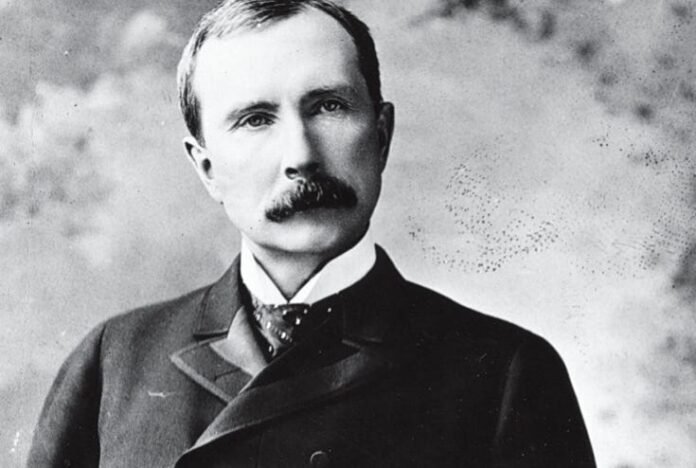
John D. Rockefeller is often cited as the world’s first billionaire, achieving that status in 1916 through his ownership of Standard Oil. This milestone, reached over a century ago, marked the beginning of an era where wealth multiplied exponentially. Today, the richest individuals in the world boast fortunes nearing $150 billion each. This prompts the intriguing question: how long will it take before the world sees its first trillionaire?

The Scale of Wealth Today

The world today has a large supply of millionaires and more than 1,000 billionaires, but the first trillionaire has yet to emerge. This elusive title could be claimed by someone from today’s wealthiest ranks or by an unknown innovator with a trillion-dollar idea. A trillion dollars is a staggering sum, surpassing the gross domestic product of many nations.

The Wealth Multiplication Challenge

Wealth begets wealth, with rich individuals having access to lucrative investment opportunities often unavailable to the general public. However, there comes a point where the sheer volume of one’s wealth becomes a hindrance to achieving high returns. Doubling a $100 billion stake requires opportunities on the scale of entire nations, which are rare. When investors like Warren Buffett speak of difficulty finding suitable opportunities for their cash, it’s a reflection of the immense challenge posed by managing vast fortunes.

Government policies also play a significant role. The monopolistic and “robber baron” activities that created the world’s first self-made multimillionaires in the 1800s are now largely illegal. Additionally, higher taxes and fewer loopholes make the path to becoming hyper-rich more arduous than ever before.

The Appetite for Risk

Psychology also influences the pursuit of extreme wealth. Wealthy individuals often find it challenging to remain as hungry and aggressive as they were when they had less to lose. Consider billionaires like John Paulson, George Soros, and Jim Simons, who have shown comfort with high leverage in investing. However, it’s hard to imagine any of them taking on the risk required to become a trillionaire today. The question arises: what could someone buy with $1 trillion that isn’t already accessible at $1 billion, and is it worth risking it all?

Potential Candidates for the Trillionaire Club

The first trillionaire may or may not come from the current ranks of the world’s richest people, although younger billionaires have better odds. Jeff Bezos, at 60, has a net worth of $194 billion. Elon Musk, age 52, is worth $221 billion. Mark Zuckerberg, founder of Meta (formerly Facebook), is only 39 and reportedly worth around $177 billion. If Zuckerberg can grow his wealth by 10% annually, excluding taxes, he could be a trillionaire before his 65th birthday. However, Meta would need to grow to 10 times the current size of ExxonMobil to achieve this.

An off-the-board candidate could be Craig Venter, the founder of Celera Genomics. Venter’s work in synthetic biology and clean fuels could potentially lead to breakthroughs worth trillions, though this remains speculative.

Government Leaders and Petrostate Rulers

For this discussion, government leaders and dictators are excluded, though it’s not unthinkable that an individual or family ruling a petrostate could amass a trillion-dollar fortune based on their nation’s natural resources.

The Magnitude of a Trillion Dollars

A trillion dollars equals 1,000 billion dollars or 1,000,000 million dollars. It’s a mind-boggling amount, roughly equivalent to the GDP of nations like the Netherlands or Indonesia. With a trillion dollars, one could buy all the shares of ExxonMobil, McDonald’s, and Coca-Cola—and still have billions left over.

The Path Forward

Beyond the handful of individuals mentioned here, it is anyone’s guess who will be the first to amass $1 trillion in wealth or how soon that might happen. Inflation might make the goal slightly easier, but it remains a distant and monumental achievement.

Summing Up

The journey from the world’s first billionaire, John D. Rockefeller, to the potential first trillionaire is a testament to the ever-evolving landscape of wealth. While the race to $1 trillion continues, it highlights the extraordinary scale of modern fortunes and the relentless pursuit of new frontiers in wealth creation.

Smallest Golden Lock In The World, a Tiny Marvel of Craftsmanship

0

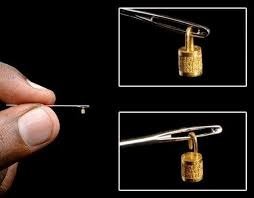
We often marvel at the biggest, largest, and longest things around us, but sometimes it’s the tiniest creations that capture our imagination. Today, we’re turning our attention to something incredibly small yet meticulously crafted—the Smallest Golden Lock In The World. Yes, you heard that right! This lock is so tiny that if you don’t keep your eyes on it, you might just lose it.

You might be wondering what practical use such a minuscule lock could have. Honestly, it’s hard to think of anything that small to lock. Despite its size, the lock is fully functional, featuring a combination code mechanism with three lines of numbers from 0 to 9.

The Creator Behind the Marvel

This incredible piece of craftsmanship is the creation of Mr. Ganesh Subramaniyam from Thiruvananthapuram, Kerala, India. He dedicated three months, from September to December 2011, to meticulously crafting this tiny wonder.

Specifications and Recognition

Weighing a mere 41 milligrams, with a height of 3 millimeters and a circumference of 1 centimeter, this tiny gold lock earned a world record certificate from the World Record Association. Its minuscule size and intricate details have not only impressed the judges but also sparked amusing discussions online.

Online Reactions

The internet, known for its humor, didn’t disappoint. Comments ranged from practical jokes to humorous takes on the lock’s potential uses. One user quipped, “Finally! An answer to all my stolen sewing needles,” while another responded, “It was probably stolen from the world’s smallest bike chain.” Despite the jokes, the dedication and skill required to create this lock are no laughing matter.

A Testament to Precision and Dedication

Imagine the level of precision and steady hands needed to hold, let alone work on, something so small. Crafting the smallest golden lock in the world, with all its functional details, is a testament to Mr. Subramaniyam’s skill and patience.

A Work of Art

While the Smallest Golden Lock In The World may be impractical in everyday use, it stands as a remarkable piece of art. It’s a reminder that dedication and craftsmanship can turn even the tiniest of objects into something extraordinary.

What do you think about this small golden lock? Does it inspire you or make you smile? Let us know your thoughts on this tiny marvel!

Another Bronze for India: Manu Bhaker Creates History, Wins Second Medal with Sarabjot Singh in Shooting at Paris Olympics

0

In a thrilling display of skill and determination, Indian shooters Manu Bhaker and Sarabjot Singh clinched India’s second bronze medal in the 10 metre Air Pistol Mixed Team match at the Paris Olympics 2024 on Day 4 of the event. This victory has not only added to India’s medal tally but has also etched Manu Bhaker’s name in history as the first Indian woman to win two medals in a single Olympic Games.

Historic Achievement

Manu Bhaker and Sarabjot Singh’s dynamic partnership showcased exceptional teamwork and precision, earning applause from both home fans and the international audience. Their performance has further solidified India’s growing reputation in the shooting arena.

Upon winning the match, Bhaker expressed her pride and gratitude, stating, “I feel really proud and a lot of gratitude… It is just blessings. Thanks for all the blessings and love. We can only control what is in our hands. I had a chat with my father regarding this and decided we keep fighting till the last shot.”

Sarabjot Singh echoed her sentiments, saying, “It feels great. The game was tough, but glad we could do it.”

The Match Breakdown

After the third series, India was up 4–2, and in the fifth series, their advantage increased to 8–2. Despite a challenge from South Korea, who narrowed the score to 10-6 after the eighth series, the Indian pair kept their cool and secured a comfortable victory.

Individual Milestones

This bronze medal is Sarabjot’s first Olympic medal. Meanwhile, Manu Bhaker’s historic achievement of winning multiple medals at a single Olympic Games includes a previous bronze in the women’s 10m air pistol event, marking India’s first medal at the 2024 Paris Olympics.

Bhaker has joined the elite ranks of just three other Indians—Norman Pritchard (athletics), Sushil Kumar (wrestling), and PV Sindhu (badminton)—who have won multiple medals for India at the Summer Games. Notably, Bhaker is the first Indian to achieve this feat in a single edition of the Olympics.

Qualification and Competition

In the qualification round for the 10m Air Pistol Mixed Team event, Manu and Sarabjot secured third place with a total of 580 points and 20 perfect shots. They triumphed over the South Korean duo of Xue Li and Wonho Lee, who finished fourth with 579 points and 18 perfect shots, in the bronze medal match with a score of 16-8.

The Turkish pair of Sevval Ilayda Tarhan and Yusuf Dikec, who matched the Olympic qualification record with 582 points, will compete against Zorana Arunovic and Damir Mikec from Serbia for the gold medal. Meanwhile, India’s Rhythm Sangwan and Arjun Singh Cheema finished 10th with a score of 576, missing out on a chance to contend for a medal.

Summing Up

Manu Bhaker and Sarabjot Singh’s bronze medal victory is a testament to their hard work, resilience, and exceptional talent. Their achievement not only brings pride to the nation but also inspires countless young athletes in India to pursue their dreams with determination and dedication. As the Paris Olympics 2024 continues, the nation eagerly awaits more such moments of glory.

Miss Australia Stuns Everyone in Saree at Miss World 2024

0

At the grand Miss World 2024 event held at the Jio World Convention Centre in Mumbai, the spotlight was on Czech Republic’s Krystyna Pyszkova, who lifted the coveted Miss World title, replacing the outgoing Miss World 2023, Karolina Bielawska of Poland. However, it was Miss Australia Kristen Wright who stole the hearts of millions online with her breathtaking appearance in an Indian saree.

Kristen Wright’s Viral Saree Moment

A video of Kristen Wright stunning in a traditional Indian saree has taken social media by storm. While most participants opted for Western attire, Kristen chose to embrace Indian culture, captivating everyone with her simplicity and natural beauty. Her radiant smile lit up the ramp, showcasing love, happiness, and simplicity, earning her immense admiration from fans worldwide.

Social Media Reactions

Desi fans were particularly thrilled to see Kristen represent Indian traditions on the global platform. An X user shared the video of Kristen’s ramp walk, stating, “Miss Australia stole the show wearing Bharatiya saree and walking with such great confidence in Miss World 2024, held in Bharat 🧡.” The video has since garnered over 454.4K views, 18K likes, and thousands of retweets, with social media users flooding the comments section with praise.

Celebrity Applause

Even Nita Ambani, Reliance Foundation Chairperson, couldn’t help but applaud and cheer for Kristen’s natural beauty. The admiration extended beyond social media, with several notable personalities lauding her for embracing the Indian saree with such grace and confidence.

Heartfelt Comments

Social media users were quick to express their admiration:

  • “Really cute! And that big vivacious joyous smile she is wearing along with the saree simply stole the show!” commented a user.
  • “Australia in Indian costume did a traditional Namaste too and stole the show with her beautiful smile,” wrote another.
  • “Absolutely stunning! It’s beautiful to see cultures intertwine on such a global stage. Miss Australia’s grace and confidence in embracing the Bharatiya saree is truly remarkable. #MissWorld2024,” commented another user.

Indian Beauty Sini Shetty’s Stunning Lehenga

Meanwhile, Indian beauty Sini Shetty also turned heads in a beautiful lehenga, complementing the evening’s celebration of cultural diversity and elegance. Her stunning appearance added to the event’s charm, showcasing India’s rich heritage and fashion.

Miss Australia Stuns Everyone in Saree at Miss World 2024

A Celebration of Cultural Diversity

The Miss World 2024 event was a testament to the beauty of cultural exchange, with Kristen Wright’s viral saree moment highlighting the elegance and timeless appeal of Indian attire. As social media continues to buzz with admiration, Kristen’s choice to wear a saree has undoubtedly left a lasting impression, celebrating the fusion of cultures on a global stage.