Home Blog Page 515

Stree 2 Box Office Report: Is it the Biggest Bollywood Opener Ever?

0

The much-anticipated sequel to the 2018 horror-comedy Stree, Stree 2, has made a spectacular debut at the box office. Directed by Amar Kaushik and released on Independence Day, the film stars Rajkummar Rao, Shraddha Kapoor, Pankaj Tripathi, Abhishek Banerjee, and Aparshakti Khurana. As the fifth installment in the Maddock Supernatural Universe, the movie had already generated considerable buzz prior to its release, but the actual box office numbers have exceeded all expectations.

Record-Breaking Opening

According to Maddock Films, Stree 2 has set a new benchmark for Bollywood openings. The production house announced that the film grossed an unprecedented ₹76.5 crore in India on its opening day, which includes earnings from paid previews held a day before the official release. Maddock Films celebrated the milestone on X (formerly Twitter), stating, “Stree 2 creates HISTORY! India’s highest Day 1 Box office ever! Thank you, audience, for all the love.” They also shared a promotional poster with the film’s cast, proclaiming, “India’s highest day 1 box office ever!”

However, independent box office tracking site Sacnilk.com reported a slightly lower figure. According to their estimates, Stree 2 earned ₹60.3 crore net in India, with ₹8.5 crore coming from the paid previews and ₹51.8 crore from the opening day itself. Despite the discrepancy, both figures confirm Stree 2 as one of the biggest openers in Bollywood history.

The Maddock Supernatural Universe

Stree 2 is part of the expanding Maddock Supernatural Universe, which began with the original Stree in 2018. Directed by Amar Kaushik and written by Raj and DK, the first film was a massive success, blending horror and comedy in a novel way. This universe continued with Roohi in 2021, directed by Hardik Mehta and starring Janhvi Kapoor and Rajkummar Rao. It was followed by Bhediya in 2022, directed by Amar Kaushik and featuring Varun Dhawan and Kriti Sanon. The most recent addition before Stree 2 was Munjya, directed by Aditya Sarpotdar and starring Abhay Verma, Sharvari, Mona Singh, and Sathyaraj.

About Stree 2

Stree 2 continues the story of the fictional town of Chanderi, now plagued by a new terror known as Sarkata. The townspeople look to the legendary Stree for protection. The film is packed with surprises, including star-studded cameos kept under wraps by the makers. Varun Dhawan returns as Bhediya, even featuring in a song with Shraddha Kapoor. Additionally, Tamannaah Bhatia makes a special appearance in the song “Aaj Ki Raat.”

With its thrilling storyline, star power, and a successful cinematic universe backing it, Stree 2 has captivated audiences and critics alike. Its record-breaking opening day collections are a testament to its appeal and the strong hold of the Maddock Supernatural Universe on Indian cinema.

As Stree 2 continues to draw audiences to theatres, it will be interesting to see how the film fares in the coming weeks and whether it can sustain its momentum to become one of the highest-grossing films in Bollywood history.

Best Thali Decor Ideas for Rakhi 2024

0

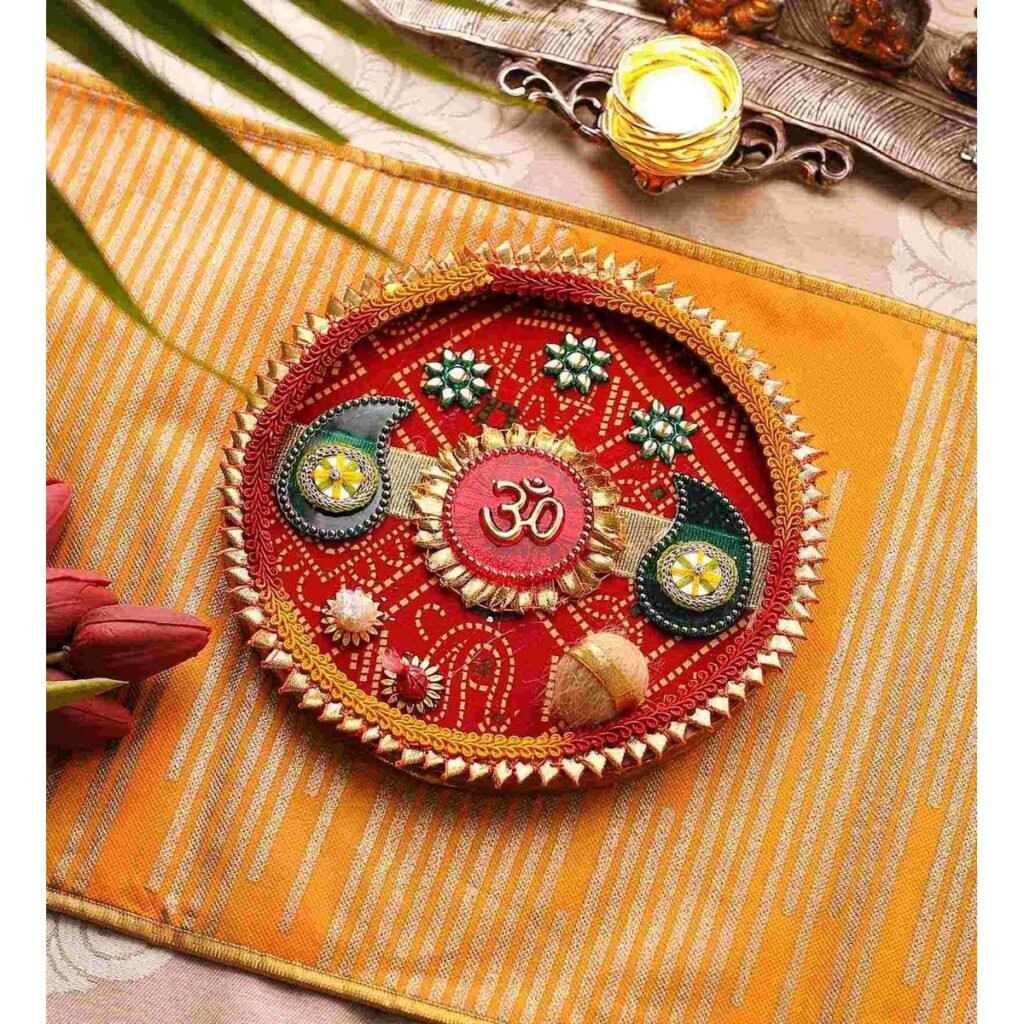
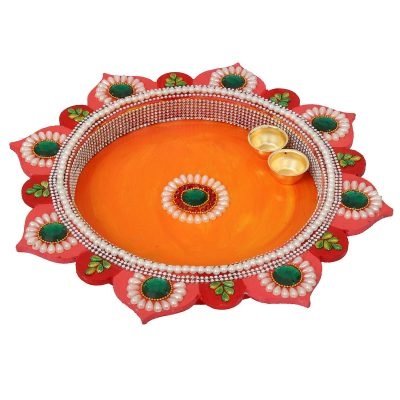
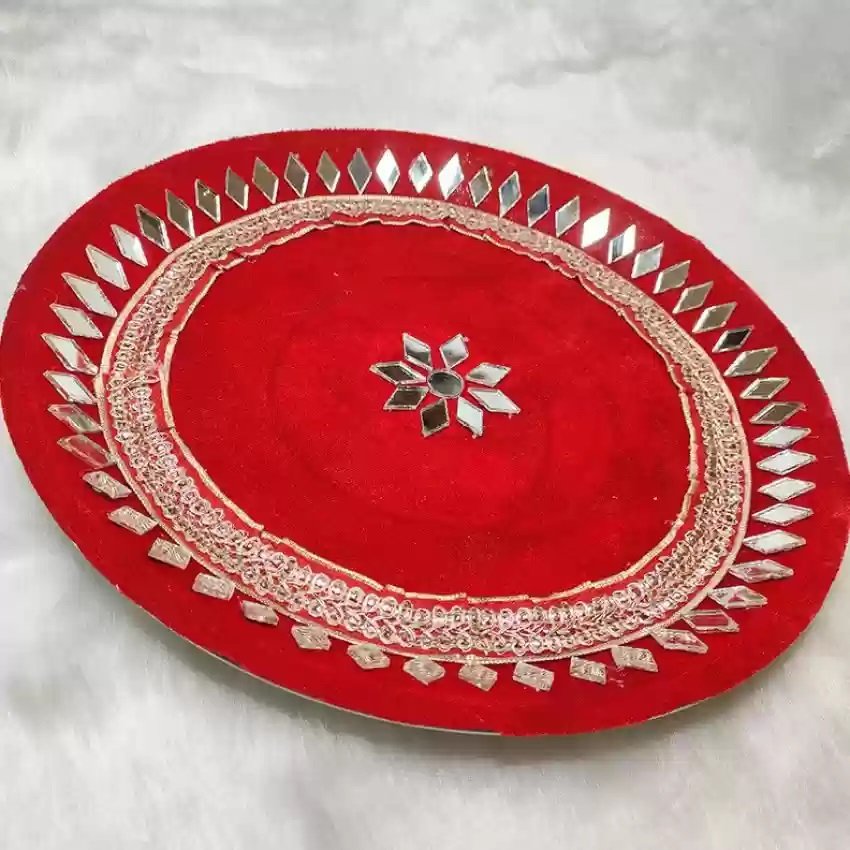
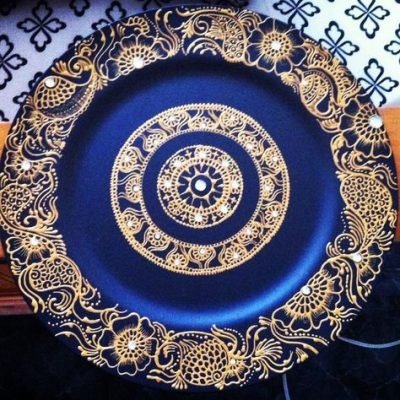
India is a land of festivals, each celebrated with great vigour and enthusiasm. One such festival is Raksha Bandhan, which signifies the strong and beautiful bond between brothers and sisters. On this day, sisters tie a sacred Rakhi on their brothers’ wrists, and in return, brothers vow to protect them. Nowadays, sisters also tie Rakhis to each other, sharing the same spirit of togetherness. Apart from exchanging gifts and sweets, a major aspect of this festival is the decorated Rakhi thali (plate), which holds all the necessary items for the Tilak ceremony and tying the Rakhi, such as roli, unbroken rice, Rakhi, sweets, and more. Here are ten incredible plate decoration ideas for Rakhi to make your celebrations even more special.

1. Silver Thali Decoration

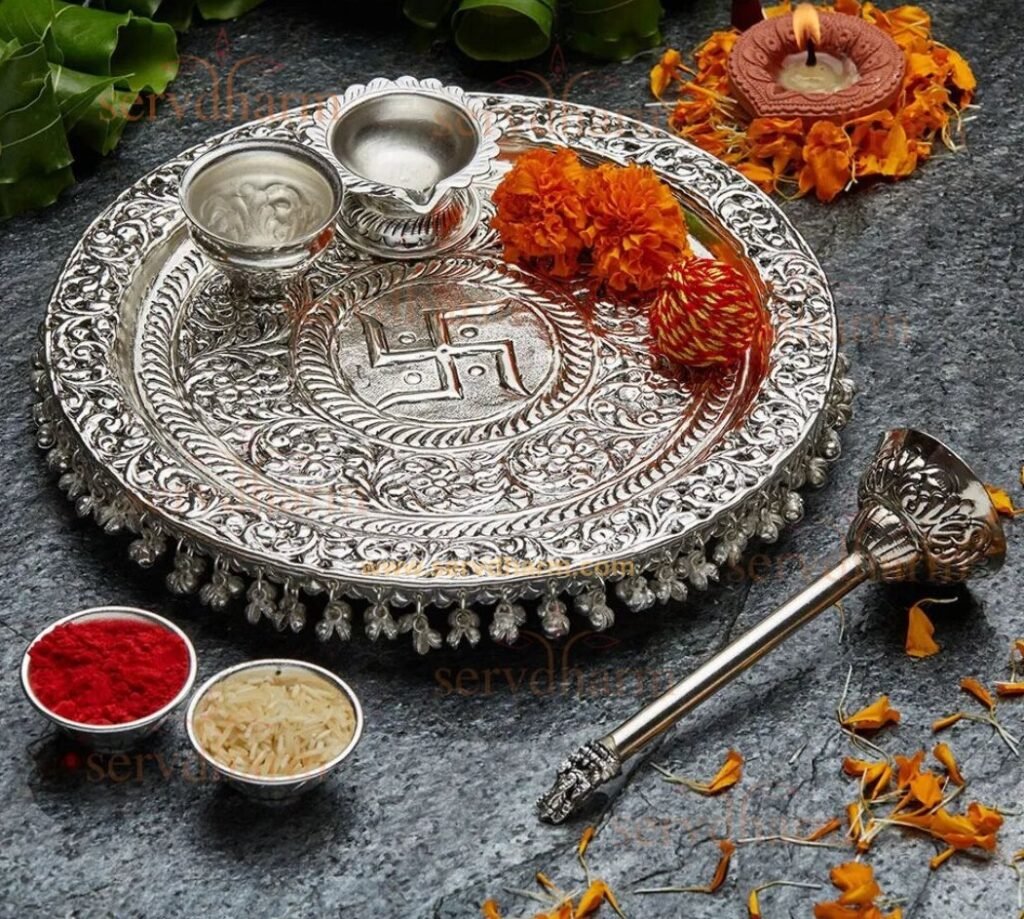
Silver has great significance in Hindu culture, making a silver thali an excellent choice for Rakhi 2024. You can find many designer silver thalis in the market, or you can decorate a simple silver thali yourself. Here are some ideas:

  • Draw a beautiful Swastika with roli at the center of the silver thali.
  • Place accompanying items like roli, chawal, moli, and turmeric in silver bowls of different shapes.
  • Place a beautiful diya exactly on the Swastika at the center of the thali.
  • Add idols of Lord Ganesha or Goddess Lakshmi along with beautiful flowers.
  • Place some delicious sweets on your beautifully decorated silver thali for a royal touch.
Best Thali Decor Ideas for Rakhi 2024

2. Flower Thali Decoration

Decorating your thali with flowers is both unique and traditional. Flowers have always been used to adorn various items, and they can bring a vibrant, joyful look to your Rakhi thali.

  • Choose beautiful flowers and floral designs.
  • Place all the essential pooja ingredients like roli, chawal, mori, sweets, and diya on the thali.
  • You are all set to tie Rakhi to your brother with a fresh and fragrant thali.
Best Thali Decor Ideas for Rakhi 2024

3. Bandhani Cloth Thali Decoration

Bandhani is a type of fabric design popular in Rajasthan and Gujarat. Its colorful and intricate patterns can transform the vibe of your Rakhi thali.

  • Cut the cloth as per the size and shape of your thali and paste it on with durable adhesive.
  • Let it dry, then place roli, chawal, rakhi, diya, flower petals, and sweets on the thali.
  • Enhance the design with mirrors, colorful sequins, and shiny lace for a vibrant look.
Best Thali Decor Ideas for Rakhi 2024

4. Sandalwood Thali Decoration

Sandalwood, or chandan, is considered very auspicious in Hindu tradition. It has a unique fragrance and soothing effect.

  • Prepare a thick paste from sandalwood powder or grind a sandalwood block on stone.
  • Cover the base of the thali with the paste, ensuring it is evenly spread.
  • Draw a beautiful Swastika with kumkum in the middle of the thali.
  • Enhance the contrast with rose and marigold petals.
  • Place roli, chawal, rakhi, diya, and sweets on the thali for a traditional and elegant look.
Best Thali Decor Ideas for Rakhi 2024

5. Mirror Work Thali Decoration

Mirror work adds glitter and glamour to your Raksha Bandhan celebration. It works best on a white ceramic thali.

  • Paint the ceramic thali with vibrant colors like red, maroon, green, yellow, or orange.
  • Once dry, unleash your creativity and decorate the thali with pretty mirrors.
  • Decorate small containers of roli, chawal, and the diya with mirror work.
  • Place rakhi, sweets, and idols of gods and goddesses on the shiny and glittery thali.
Best Thali Decor Ideas for Rakhi 2024

6. Mehendi Thali Decoration

Using mehendi to decorate your Rakhi thali is a unique and traditional idea.

  • Paint a simple steel thali with golden or silver fabric color.
  • Use bright-colored oil paints or glitter tubes to draw intricate mehendi designs on the thali.
  • Enhance the beauty of mehendi designs with glitters, shiny lace, mirrors, or kundan.
  • Draw designs like peacocks, Swastikas, or intricate mandalas for a stunning look.
Best Thali Decor Ideas for Rakhi 2024

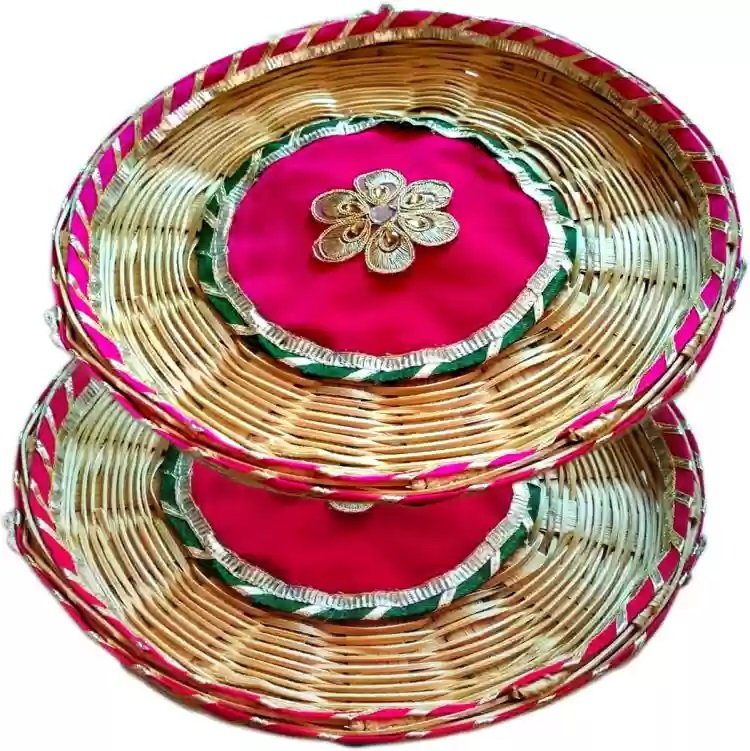
7. Bamboo Thali Decoration

Bamboo is considered a lucky plant and can be used to create a unique and eco-friendly Rakhi thali.

  • Choose a bamboo plate of your preferred shape and size.
  • Cover the plate with a bright-colored designer fabric, like bandhani cloth.
  • Decorate the edges with designer lace, moli, or pearl chains.
  • Add mirrors or flowers for additional decoration.
  • Place roli, chawal, rakhi, and sweets on the beautifully decorated bamboo thali.
Best Thali Decor Ideas for Rakhi 2024

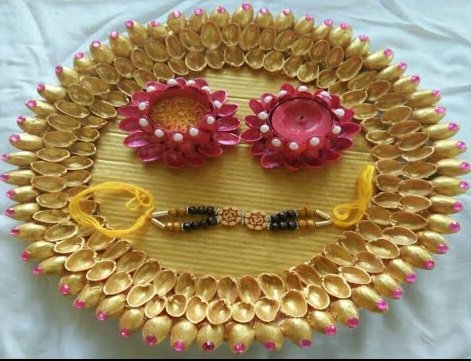
8. Pista Shell Thali Decoration

Using pistachio shells to decorate your Rakhi thali is a wise and eco-friendly choice.

  • Stick bright-colored velvet paper, like red or maroon, on your plate.
  • Create various designs with half pista shells, such as floral patterns or mandalas.
  • Enhance the beauty of the design with roli, chawal, rakhi, and sweets.
Best Thali Decor Ideas for Rakhi 2024

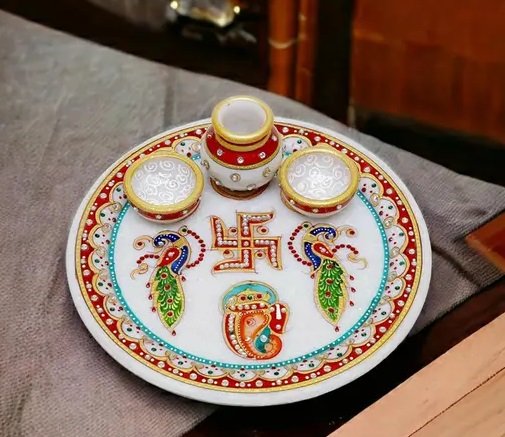
9. Marble Thali Decoration

Marble thalis offer a timeless and elegant look for your Rakhi celebration.

  • Use glass paints, sparkles, stones, beads, mirrors, and sequins to decorate a simple marble plate.
  • Place roli, chawal, rakhi, and sweets on the beautifully designed marble thali.
Best Thali Decor Ideas for Rakhi 2024

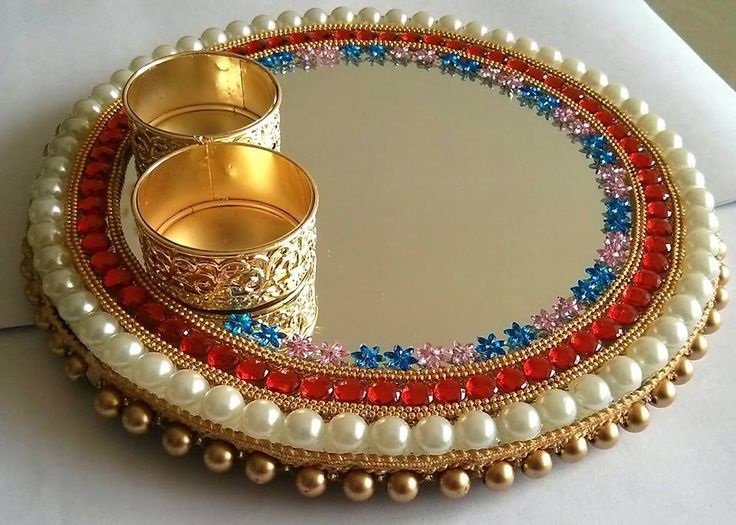
10. Thali Decoration with Bangles, Pearls, and Other Embellishments

Decorating your Rakhi thali with bangles, pearls, and other embellishments is a creative and colorful idea.

  • Use various types of bangles in different colors, like red, maroon, or green.
  • Add pom-poms, pearls, gota patti, and candles to enhance the decoration.
Best Thali Decor Ideas for Rakhi 2024

These Rakhi thali decoration ideas will help you celebrate Raksha Bandhan 2024 with creativity and elegance. Whether you are with your sibling or celebrating from afar, these ideas will make your festival special. Share these ideas with your family and friends to make your Rakhi celebration even more memorable.

For all your home décor needs, visit us at vaaree.com and explore a wide array of lovely home décor items. Shop for whimsical showpieces to complement your home interiors, divine pooja essentials to add spiritual vibes to your home, and everything else to embellish your sweet dwelling!

Raksha Bandhan 2024, Celebrate with Warm Wishes and Heartfelt Quotes

0

As Raksha Bandhan 2024 approaches on Monday, it’s the perfect time to celebrate the cherished bond between siblings. This auspicious day brings family and friends together, highlighting the love, protection, and lifelong commitment that define sibling relationships. Whether you’re near or far from your loved ones, sharing heartfelt wishes, quotes, and messages can make this special day even more memorable. Here’s a collection of the best Raksha Bandhan wishes, messages, quotes, and WhatsApp status ideas to help you express your feelings.

Raksha Bandhan Wishes

  1. “Dear Brother, on this Raksha Bandhan, I wish you all the success, happiness, and good health. Thank you for always being my protector and confidant. Happy Rakhi!”
  2. “To my amazing sister, thank you for always being there for me, in good times and bad. May our bond grow stronger with each passing year. Happy Raksha Bandhan!”
  3. “Wishing my wonderful brother a very Happy Raksha Bandhan! May you be blessed with happiness, prosperity, and success.”
  4. “No matter how far we are, our bond remains unbreakable. Sending you lots of love on this Raksha Bandhan!”
  5. “This Rakhi, I pray for your long life and good health. May our bond remain strong forever. Happy Raksha Bandhan, dear sister!”

Raksha Bandhan Quotes

  1. “Brothers and sisters are as close as hands and feet.” – Vietnamese Proverb
  2. “Having a sister is like having a best friend you can’t get rid of. You know whatever you do, they’ll still be there.” – Amy Li
  3. “The bond between a brother and sister is sometimes tightly woven, sometimes loosely held, but never broken.”
  4. “A brother is a friend given by nature.” – Jean Baptiste Legouve
  5. “A sister is both your mirror – and your opposite.” – Elizabeth Fishel

Raksha Bandhan Messages and Statuses

  1. “This Raksha Bandhan, I would like to tell you that your presence in my life is the biggest blessing. You are not just my brother but also my friend, who stood by me through thick and thin. Happy Raksha Bandhan!”
  2. “Happy Raksha Bandhan! As I celebrate our bond, I thank you for the love and support. You are more than my sister—truly, you are my best friend.”
  3. “A happy Raksha Bandhan to someone who is not just my sibling but my biggest ally. Your love and support are my pillars, strengthening me from within.”
  4. “May the threads of Rakhi strengthen the bond we share. A very happy Raksha Bandhan to my brother, my protector, and my friend.”
  5. “Raksha Bandhan Mubarak Ho. Power, joy, and unshakeable support—a day full of these. Thank you for always being there.”
  6. “On this day, I want to tell you that it’s actually a great thing to be blessed with a brother like you. Your presence has just added thousands of happinesses to my life. Happy Raksha Bandhan!”
  7. “Dear super, super brother, with a tender note when words are just not good enough: Do stay happy forever. I wish you a happy Raksha Bandhan, partner-in-mischief, because you never leave my back. May the bond that we share stay as unbreakable as the thread we share today.”
  8. “Rakhi, I just want to thank you this day for being the shining light that guides me through life. Your love and care have become my shield through any storm. Happy Raksha Bandhan!”
  9. “I wish you a Raksha Bandhan full of giggling, loving moments with a lot of sweet memories. More than a brother is what you are; you will always be a friend.”

Summing Up

Raksha Bandhan is a beautiful celebration of the bond between siblings. Whether you’re close to your loved ones or miles apart, expressing your love and appreciation through heartfelt wishes, quotes, and messages can make this Raksha Bandhan unforgettable. So, take a moment to reach out to your siblings and celebrate the joy of this special day together. Happy Raksha Bandhan!

Birsa Munda, the Heroic Tribal Leader and Freedom Fighter

0

The slogan “Abua raj seter jana, maharani raj tundu jana,” meaning “Let the kingdom of the queen be ended and our kingdom be established,” echoes the revolutionary spirit of Birsa Munda, one of India’s greatest tribal heroes, revered as ‘Bhagwan’ by many Indian tribal communities. Born on November 15, 1875, in the village of Ulihatu in the Khunti district of present-day Jharkhand, Birsa Munda was not only an Indian freedom fighter and tribal leader but also a religious reformer. His legacy is honored annually on November 15, celebrated as ‘Janjatiya Gaurav Diwas’ (Tribal Pride Day), a date which also commemorates the formation of the state of Jharkhand.

Early Life and Awakening

Birsa Munda’s early life was marked by various shifts. He received his formal education in Salga under Jaipal Nag’s guidance and later converted to Christianity to attend the German Mission School. However, Birsa soon realized that the British were using education as a tool to convert tribals to Christianity. This realization led him to withdraw from the school and found a new faith named ‘Birsa Faith,’ attracting many followers from the Munda community who declared themselves as ‘Birsaits,’ openly opposing British rule.

The Munda Rebellion, a Struggle for Land and Freedom

The historical backdrop of Birsa’s rebellion was the British introduction of new land settlement systems like the zamindari system, replacing the tribal ‘Khuntkatti’ system, which allowed communal land ownership. This change led to widespread displacement of tribals, who were reduced to landless laborers under oppressive landlords. The new landlords imposed ‘Bandhua Majdoori’ (forced labor) and subjected tribals to harsh working conditions without fair compensation. High rental rates and exorbitant interest rates further exacerbated their plight.

The Munda Rebellion, also known as ‘Ulgulan’ or ‘The Great Tumult Movement,’ emerged in response to these injustices. Birsa Munda began mobilizing the Munda tribals against the colonizers and outsiders, called ‘Dikus,’ starting in 1894. By 1895, he had established an independent ‘Munda Raj,’ adopting a white flag as its symbol. Under his leadership, the rebels used guerrilla tactics to launch a series of armed attacks on British establishments, disrupting their operations and asserting their resistance.

Birsa Munda’s Leadership and Legacy

Birsa Munda’s organizational and oratory skills were instrumental in uniting various tribal communities across Chotanagpur, Bengal, and Odisha. He brought together the Oraons and Kharias to form a common front against the British-Thekedar alliance. Despite facing overwhelming odds, Birsa’s resolve remained unbroken.

In March 1900, the British arrested Birsa Munda while he and his followers were sleeping in a forest. He was imprisoned and died a few months later due to cholera. His death dealt a severe blow to the rebellion, and the British swiftly moved to suppress the uprising. Despite this, Birsa Munda’s movement succeeded in highlighting the capacity of tribal communities to resist oppression and fight for their rights.

The Chotanagpur Tenancy Act

The British response to the uprising was the implementation of the Chotanagpur Tenancy (CNT) Act of 1908. The CNT Act aimed to safeguard tribal land rights by restricting the transfer of tribal land to non-tribals. It also recognized customary community rights related to water, forest, and land, ensuring protection for the tribal way of life. This act marked a significant step in addressing the grievances of the tribal communities.

Birsa Munda’s Enduring Impact

Birsa Munda’s struggle and sacrifice have left an indelible mark on Indian history. His fight for political justice, cultural preservation, and economic empowerment resonates even today. Along with political justice, he fought to preserve and revive the spiritual, economic, and cultural heritage of indigenous tribes. He mobilized the tribal communities to resist the imposition of external cultural practices, preached against animal sacrifice, and encouraged cleanliness and self-reliance.

In 2021, the Prime Minister inaugurated a museum in Ranchi in Birsa Munda’s honor, located at the Old Central Jail where he took his last breath. The museum commemorates other tribal freedom fighters and showcases Birsa’s story as a symbol of rebellion and resilience. The Prime Minister also launched the ‘PM Janjati Adivasi Nyaya Maha Abhiyan (PM-JANMAN)’ initiative to empower Particularly Vulnerable Tribal Groups (PVTGs), further extending Birsa Munda’s legacy.

Summing Up

As the nation celebrates Birsa Munda Jayanti, it is crucial to recognize this day not just as a tribute to a remarkable tribal leader but as a reminder of resistance, courage, and the spirit of freedom. Birsa Munda’s life and legacy continue to inspire the citizens of India to strive for a just and equal society, embodying the timeless values of bravery and resilience against oppression.

Rani Avantibai Lodhi, the Fearless Warrior Queen of Ramgarh

0

Rani Avantibai Lodhi stands as a symbol of courage, resilience, and unwavering determination in the annals of Indian history. Born into the Lodhi community, she was married to Raja Vikramaditya Singh, the ruler of Ramgarh state in present-day Madhya Pradesh. Little did she know that her life would be marked by extraordinary feats of bravery and leadership during one of the most tumultuous periods in Indian history—the Indian Rebellion of 1857.

The Early Life and Legacy of Rani Avantibai Lodhi

The Indian Rebellion of 1857, also known as the Sepoy Mutiny or the First War of Independence, was a watershed moment in India’s struggle against British colonial rule. It was a time of widespread discontent and simmering resentment against British imperialism, fueled by grievances over social, economic, and political injustices perpetrated by the British East India Company.

Amidst this backdrop of discontent, Rani Avantibai Lodhi emerged as a central figure in the resistance against British oppression. When the flames of rebellion engulfed India in 1857, she took up arms and rallied her people to join the fight for independence. Despite the challenges she faced as a woman in a patriarchal society, Rani Avantibai fearlessly led her troops into battle, inspiring both men and women to join her cause.

Rise to Leadership

One of the defining moments of Rani Avantibai’s leadership came with the tragic death of her husband, Raja Vikramaditya Singh. Following his demise, she took a resolute stand against the British, protesting the Doctrine of Lapse, which allowed the British to annex states with no direct male heir. Determined to protect her kingdom and her people’s honor, she decided to take up arms.

When the revolt of 1857 broke out, Rani Avantibai raised and led an army of 4,000. Her first battle against the British took place in the village of Kheri near Mandla, where she and her army successfully defeated the British forces. Stung by the defeat, the British retaliated with vengeance, attacking Ramgarh, setting it on fire, and following her to Devhairgarh. Despite the overwhelming odds, Rani Avantibai’s bravery and strategic acumen were evident in her military tactics and battlefield prowess.

Guerrilla Warfare and Final Stand

Rani Avantibai’s leadership inspired loyalty and devotion among her soldiers, who fought alongside her with unwavering dedication. She led numerous guerrilla attacks against British outposts and supply lines, disrupting their operations and striking fear into the hearts of their soldiers. Her guerrilla warfare tactics were instrumental in keeping the flame of rebellion alive in the face of British aggression.

However, the British East India Company, with its superior military might and resources, launched a relentless campaign to suppress the rebellion and crush all dissent. Despite her best efforts, Rani Avantibai found herself increasingly isolated and besieged by British forces. In 1858, after months of relentless pursuit by British troops, she was cornered in the jungles of Ramgarh. Facing almost certain defeat, she chose to take her own life rather than surrender, refusing to bow down to British rule.

Legacy and Honors

The sacrifice of Rani Avantibai reverberated throughout India, inspiring countless others to continue the struggle for independence. Her legacy lives on as a testament to the indomitable spirit of resistance and the enduring quest for freedom. In her honor, the Narmada Valley Development Authority named a part of the Bargi Dam project in Jabalpur after her. India Post has also issued two stamps commemorating Rani Avantibai, in 1988 and 2001.

Rani Avantibai Lodhi remains an icon of courage and defiance, her name forever etched in the annals of Indian history as a symbol of hope and inspiration for generations to come. Her story serves as a reminder of the power of resilience and the enduring spirit of those who fought for India’s freedom.

ISRO Successfully Launches EOS-08 Satellite, Completes SSLV Development

0

In a significant achievement, the Indian Space Research Organisation (ISRO) successfully launched the third developmental flight of the Small Satellite Launch Vehicle (SSLV) from the Satish Dhawan Space Centre in Sriharikota, Andhra Pradesh, on Friday, August 16. This mission marked a crucial milestone as it successfully placed the EOS-08 and SR-08 satellites into orbit. Following the successful satellite injection, ISRO Chairman S Somanath declared the SSLV development process complete, stating, “Everything is perfect.”

A Momentous Achievement

The third developmental flight, designated SSLV-D3/EOS-08, accomplished its mission with precision. ISRO Chief Somanath confirmed that the rocket placed the satellites into the exact orbit as planned without any deviations in the injection conditions. He stated, “The final orbit will be known after tracking, but the current indication is that everything is perfect. The EOS-08 satellite, as well as SR-08 satellite, has been injected successfully after manoeuvres. Congratulations to the SSLV-D3 team and the project team.”

Completion of SSLV Development

With this successful launch, ISRO has completed the development of the SSLV, a small-lift launch vehicle capable of carrying satellites weighing up to 500 kg and placing them in Low Earth Orbit (up to 500 km above Earth). Chairman Somanath announced, “With this third developmental flight of SSLV, we can declare the development process of SSLV is completed.” This achievement opens new avenues for Indian industries to use this rocket for future missions, supported by NewSpace India Limited, a government-owned company.

Praises and Future Prospects

Union Minister of State for Science & Technology Jitendra Singh lauded the ISRO team for the successful launch. In a post on X (formerly Twitter), Singh said, “Kudos team ISRO for the successful launch of SSLV-D3/EOS-08 Mission. With the personal intervention and patronage provided by PM Narendra Modi, Team ISRO has been able to achieve one success after another in a serial manner.”

ISRO’s Upcoming Missions

With the successful SSLV-D3/EOS-08 launch, ISRO has achieved a hat-trick of consecutive successful missions this year. Earlier, the space agency launched the PSLV-C58/XpoSat mission in January and the GSLV-F14/INSAT-3DS mission in February.

Looking ahead, ISRO’s upcoming missions include the NASA-ISRO SAR (NISAR), a Low Earth Orbit (LEO) observatory developed in collaboration with NASA. Another significant mission is Gaganyaan, which aims to demonstrate human spaceflight by sending a crew of three to a 400 km orbit for a three-day mission and safely returning them to Earth. The launch dates for these missions have yet to be announced.

The most anticipated event this year is Wing Commander Shubhanshu Shukla’s historic flight to the International Space Station (ISS) as part of the Axiom-4 mission. Shukla will be the first Indian astronaut to make this journey, alongside two other astronauts.

Summing Up

The successful launch of the EOS-08 satellite and the completion of the SSLV development underscore ISRO’s growing capabilities and ambitious future. With continued support from the government and collaboration with international space agencies, ISRO is poised to achieve even greater milestones, contributing to India’s position as a leader in space exploration and technology.

The Untold Love Story of Atal Bihari Vajpayee and Rajkumari Kaul

0

We are often captivated by the glamorous love stories of Bollywood and Hollywood celebrities, but the realm of politics also holds its share of poignant tales. One such story belongs to one of India’s most beloved politicians, Atal Bihari Vajpayee. Though he remained unmarried throughout his life, the perception that he never had a special someone is a myth. His love story, akin to a cinematic romance, began during his college days and endured quietly through the years.

The Beginnings of a Love Story

In the mid-1940s, Atal Bihari Vajpayee was a young man pursuing his graduation at the Maharani Laxmi Bai Government College of Excellence in Gwalior, known then as Victoria College. It was here that he met Rajkumari Kaul, a beautiful young woman from a prominent dynastic family. For Atal Ji, it was love at first sight. Summoning his courage, he penned a love letter and slipped it into a library book, hoping it would find its way to Rajkumari.

Fate, however, had other plans. Rajkumari did reply, but her response, hidden in another library book, never reached Atal Ji. Misunderstanding her silence as a lack of interest, he reluctantly moved on. Rajkumari, on her part, desired to marry Atal Ji, and the fact that they both belonged to the Brahmin caste seemed to favor their union. However, the disparity in their social standings—Rajkumari from a wealthy, elite family, and Atal Ji from a middle-class background—proved an insurmountable barrier. Dutifully, Rajkumari chose her family’s wishes over her love.

Paths Diverge and Converge

After the turmoil of the 1947 riots, Rajkumari’s family relocated to Delhi. Eventually, she married Brij Narain Kaul, a philosophy professor at Delhi University. Atal Ji, meanwhile, threw himself into his burgeoning political career, remaining unmarried.

Fate intervened again in the mid-1960s when Atal Ji, now a prominent leader of the Jana Sangh and a Rajya Sabha MP, reconnected with Rajkumari in Delhi. Rajkumari was living a content family life, yet the bond between her and Atal Ji rekindled. He became a frequent visitor to her home at Ramjas College’s warden’s quarters, where her husband worked. These visits often turned into social gatherings with hostel students, and eventually, Atal Ji started staying with the Kaul family.

A Controversial Arrangement

In the late 1970s, as Atal Ji served as the External Affairs Minister in Morarji Desai’s Janata Government, the Kaul family moved into his official residence in Lutyens’ Delhi. This unconventional living arrangement raised eyebrows and stirred mild controversy in political circles. Rajkumari Kaul unofficially assumed the role of Atal Ji’s secretary, managing his calls and assisting him in various capacities.

Speculations about their relationship persisted, particularly regarding Namita Bhattacharya, Rajkumari’s daughter, who is often considered Atal Ji’s foster daughter. Despite these speculations and the whispers in political corridors, Atal Ji and Rajkumari never publicly acknowledged or named their relationship.

A Love That Endured

Rajkumari Kaul passed away in 2014, four years before Atal Bihari Vajpayee’s death in 2018. Throughout their lives, their bond remained a testament to a love that transcended conventional definitions and societal expectations. Their story, filled with unspoken emotions and enduring companionship, is a poignant reminder that true love often thrives quietly, away from the public eye.

The love story of Atal Bihari Vajpayee and Rajkumari Kaul, though not widely known, adds a deeply human dimension to the life of a man celebrated for his political acumen and oratory. It reminds us that even the most public figures have private lives and personal histories that shape who they are.

Raksha Bandhan Mehndi Designs: Adorn Your Hands with Trendy Patterns This Raksha Bandhan

0

As Raksha Bandhan approaches on August 19th, many sisters are gearing up for the festivities. While some have already sent Rakhis to their brothers, others are contemplating the perfect gift for their siblings. The anticipation is palpable, and preparations are in full swing. Many sisters have decided on their traditional outfits and are now considering the Mehndi designs that will adorn their hands. Mehndi application is a long-standing tradition, considered auspicious for this special occasion. If you’re seeking trendy Mehndi designs for Raksha Bandhan, this article offers several beautiful options that will look stunning on your hands.

Traditional Indian Mehndi Designs

Indian Mehndi designs have been cherished by girls and women for years. These designs are characterized by intricate patterns, including flowers, leaves, and peacocks. They are perfect for Indian festivals and add an elegant touch to traditional attire. If you pair an Indian Mehndi design with your traditional outfit this Raksha Bandhan, it will enhance your overall look.

Raksha Bandhan Mehndi Designs: Adorn Your Hands with Trendy Patterns This Raksha Bandhan

Jewellery Style Mehndi Designs

Jewelry-style Mehndi designs are currently trending. These designs are inspired by various jewelry patterns, giving your hands a sophisticated and ornate look. As the name suggests, these Mehndi designs resemble intricate jewelry pieces, making them unique and eye-catching. They are not only beautiful but also relatively easy to apply and less time-consuming.

Raksha Bandhan Mehndi Designs: Adorn Your Hands with Trendy Patterns This Raksha Bandhan

Floral and Leafy Patterns

Floral and leafy patterns are timeless classics in Mehndi designs. These designs are simple yet elegant, often featuring flowers, vines, and leaves. They complement any outfit and are perfect for those who prefer a minimalist yet stylish look. Floral patterns can be easily customized to fit the wearer’s hand, making them a versatile choice for Raksha Bandhan.

Raksha Bandhan Mehndi Designs: Adorn Your Hands with Trendy Patterns This Raksha Bandhan

Modern Minimalist Mehndi Designs

If you want to try something different this Raksha Bandhan, modern minimalist Mehndi designs might be the perfect choice. These designs focus on simplicity and elegance, often featuring geometric shapes, lines, and dots. They are easy to apply, take less time, and look stunning. Minimalist designs are versatile and go well with both traditional and contemporary outfits.

Raksha Bandhan Mehndi Designs: Adorn Your Hands with Trendy Patterns This Raksha Bandhan

Arabic Mehndi Designs

Arabic Mehndi designs are known for their bold and flowing patterns. These designs typically cover the hand in a more scattered manner, with bold lines and floral motifs. Arabic Mehndi is perfect for those who want a dramatic and stylish look. The designs are relatively easy to apply and look beautiful with both traditional and modern attire.

Raksha Bandhan Mehndi Designs: Adorn Your Hands with Trendy Patterns This Raksha Bandhan

Peacock and Paisley Patterns

Peacock and paisley patterns are intricate and detailed, making them a popular choice for special occasions like Raksha Bandhan. These designs often feature the elegant shapes of peacocks and the classic paisley motif, adding a touch of traditional charm to your Mehndi. They require a bit more time to apply but the end result is worth the effort.

Raksha Bandhan Mehndi Designs: Adorn Your Hands with Trendy Patterns This Raksha Bandhan

Simple Bracelet Style Mehndi

For those who prefer a simpler yet chic look, bracelet-style Mehndi designs are a great option. These designs mimic the appearance of bracelets and bangles on the wrist, with delicate patterns extending up the hand. They are easy to apply and perfect for those who want a subtle and stylish Mehndi design.

Raksha Bandhan Mehndi Designs: Adorn Your Hands with Trendy Patterns This Raksha Bandhan

Summing Up

Raksha Bandhan is a time to celebrate the bond between brothers and sisters, and adorning your hands with beautiful Mehndi designs adds to the joy of the occasion. Whether you prefer traditional Indian patterns, modern minimalist designs, or trendy jewelry styles, there is a Mehndi design to suit every taste. Choose the one that best complements your outfit and style, and get ready to celebrate Raksha Bandhan with grace and elegance.

Why Raksha Bandhan is Celebrated? What is its significance?

0

Rakhi or Raksha Bandhan is a cherished Hindu festival celebrating the enduring bond between brothers and sisters. This year, Rakhi will be celebrated on August 19, 2024. Although it is a public holiday in some states, it is widely celebrated across the country, symbolizing the special connection between siblings.

Significance of Raksha Bandhan

Raksha Bandhan, or the Rakhi festival, is an ancient Hindu tradition. In 2024, it is a public holiday in Uttar Pradesh, Gujarat, Rajasthan, Madhya Pradesh, and Haryana. The festival highlights the universal concepts of duty and love between siblings. On the morning of Rakhi, brothers and sisters gather with their families. Sisters tie rakhis (threads) on their brothers’ wrists as a symbol of protection and love.

Raksha Bandhan – A Monsoon Festival

Raksha Bandhan is celebrated during the monsoon season, symbolizing renewal and prosperity. The rainy season washes away impurities and brings new life, making the Shravan month a holy time to celebrate the pure bond between siblings and the arrival of good fortune.

Historical and Mythological Stories Behind Raksha Bandhan

Raksha Bandhan, also known as Rakhi or Rakri, is celebrated by Hindus worldwide to honor the bond of love and responsibility between brothers and sisters. However, its significance goes beyond biological relationships, uniting people of all genders, religions, and ethnic backgrounds.

  • Sachi and Indra: In one story, Sachi, the wife of Indra, ties a thread around Indra’s wrist to protect him during a battle against the demon King Bali, suggesting that holy threads were used as amulets in ancient India.
  • Goddess Lakshmi and King Bali: Another legend from the Bhagavat Puran and Vishnu Puran tells how Goddess Lakshmi ties a Rakhi on King Bali, making him her brother. Touched by her gesture, King Bali grants her a wish, and Lakshmi asks for Vishnu’s return home.
  • Ganesh and Santoshi Maa: Ganesh’s sons, Shubh and Labh, felt left out during Raksha Bandhan. They persuaded Ganesh to grant them a sister, leading to the creation of Santoshi Maa. The three siblings celebrate Raksha Bandhan together each year.
  • Krishna and Draupadi: Known for their strong friendship, Krishna and Draupadi share a significant moment during Raksha Bandhan. Draupadi bandages Krishna’s injured finger with a piece of her sari. Touched by her act of love, Krishna promises to repay her kindness and later fulfills his promise by coming to her aid during a critical moment.

Importance of Raksha Bandhan for Farmers and Fishers

For farmers in states like Bihar, Madhya Pradesh, and Jharkhand, the Shravani ceremony during Rakhi Purnima is crucial for a prosperous harvest. The monsoon season brings essential rainwater for farming activities.

Similarly, the fishing communities in Maharashtra, Karnataka, Gujarat, and Goa celebrate the festival to honor God Varuna, seeking blessings for a bountiful catch and safe sea voyages during the monsoon.

Rakhi Purnima – A Celebration of New Beginnings

The monsoon season signifies the removal of impurities and the start of a new life. In Gujarat, Rakhi Purnima marks this renewal. The rainy season also symbolizes change, necessary for new beginnings, observed by Brahmins in Orissa, Kerala, Andhra Pradesh, and Tamil Nadu as Upakaram.

Pooja Vidhi of Raksha Bandhan

Raksha Bandhan includes a significant rite called the “pooja vidhi.” A pooja thali is prepared with a diya (oil light), roli (vermillion powder), rice, sweets, and Rakhi. Sisters perform Aarti, waving the lamp in a circular motion and applying roli on their brothers’ foreheads. They then tie the Rakhi, praying for their brothers’ health and success. In return, brothers give gifts and pledge to protect their sisters. This ritual deepens the sibling bond, emphasizing the significance of Raksha Bandhan as a celebration of love and protection.

Raksha Bandhan Celebrations Across India

During Raksha Bandhan, sisters adorn their brothers’ foreheads with tilak, perform aarti, and tie Rakhi, symbolizing their profound connection. Brothers reciprocate with gifts and a promise of protection.

In Rajasthani and Marwari societies, a ‘Lumba Rakhi’ is tied onto the brother’s spouse’s bangle, highlighting the wife’s role in ensuring the sister’s well-being. This tradition is gaining popularity in other Indian communities as well.

Raksha Bandhan, celebrated with rituals and heartfelt traditions, underscores the timeless bond of love, protection, and mutual respect between siblings.

Independence Day 2024: Upload a Selfie with the Tricolor to Receive the ‘Har Ghar Tiranga’ Certificate

0

The third phase of the ‘Har Ghar Tiranga’ campaign has commenced on August 9 and will continue until August 15. This initiative by the Government of India is an integral part of the celebrations for the country’s 78th Independence Day. The campaign aims to unite Indian citizens in paying tribute to the national flag. This year marks the third iteration of the campaign, which was first launched in 2022 as part of the Azadi Ka Amrit Mahotsav. The government encourages citizens to hoist the national flag at every home and offers a ‘Har Ghar Tiranga’ certificate through the Ministry of Culture.

To receive this certificate, you simply need to upload a selfie with the tricolor. The certificate is available online, and the process is straightforward. Here’s a step-by-step guide:

  1. Visit the Website: Go to the official ‘Har Ghar Tiranga’ campaign website https://harghartiranga.com/.
  2. Click on Upload Selfie: Find and click on the ‘Upload Selfie’ button.
  3. Provide Your Details: Enter your name, mobile number, and location details (country and state).
  4. Click a Photo: Take a selfie with the national flag.
  5. Upload the Photo: Upload your selfie on the website.
  6. Authorize and Submit: Read the authorization note regarding the use of your picture on the portal and submit it.
  7. Generate Certificate: Click on the ‘Generate Certificate’ option to obtain your certificate.
  8. Download and Share: You can download and share the certificate.

Guidelines for Proper Usage and Display of the National Flag

  1. Correct Order: The tricolor must have the saffron stripe on top, followed by white in the middle, and green at the bottom.
  2. Proper Handling: The flag should never be flown upside down.
  3. Flag Condition: Always use a flag in good condition; do not fly a torn or damaged flag.
  4. Display Protocol: The flag should always be displayed straight and should never be tilted or drooping.
  5. Respectful Use: The flag should not be used as decoration, clothing, uniform, or accessory.
  6. Size Ratio: The flag should always maintain a size ratio of 3:2.

By following these steps and guidelines, you can actively participate in the ‘Har Ghar Tiranga’ campaign and proudly celebrate Independence Day 2024 with the national flag.