Home Blog Page 508

Ladakh to Get 5 New Districts

0

In a significant development aimed at enhancing governance and accelerating development in Ladakh, Union Home Minister Amit Shah announced the creation of five new districts in the Union Territory on Monday. This move will increase the total number of districts in Ladakh from two to seven, marking a crucial step in the region’s administrative restructuring.

The five new districts—Zanskar, Drass, Sham, Nubra, and Changthang—are intended to improve governance and bring public services closer to the people. Prime Minister Narendra Modi described the decision as “a step towards better governance and prosperity” for the people of Ladakh.

A Vision for a Prosperous Ladakh

The creation of the new districts aligns with Prime Minister Modi’s vision of building a developed and prosperous Ladakh. In a post on X (formerly Twitter), Amit Shah emphasized that the new districts would ensure that the benefits of government schemes reach every corner of the Union Territory. “The Modi government is committed to creating abundant opportunities for the people of Ladakh,” Shah stated.

Congratulating the people of Ladakh, Prime Minister Modi reiterated the importance of this decision, saying it would bring services and opportunities closer to the residents of these newly formed districts. He highlighted that Zanskar, Drass, Sham, Nubra, and Changthang would now receive more focused attention from the government.

Addressing Governance Challenges

The decision to carve out new districts was driven by the unique challenges faced by Ladakh due to its vast geographical area and sparse population. Currently, the region has only two districts—Leh and Kargil. The challenging terrain and remote locations have made it difficult for district administrations to reach grassroots levels effectively.

The Ministry of Home Affairs (MHA) explained that the formation of new districts would enable the effective implementation of public welfare schemes, ensuring that more people can benefit from government initiatives. The MHA believes this move will be pivotal in Ladakh’s all-round development.

The Path Ahead

In addition to the “in-principle approval” for the new districts, the Home Ministry has instructed the Ladakh administration to establish a committee to evaluate key aspects such as headquarters, boundaries, administrative structure, and staffing requirements. The committee is expected to submit its report within three months, after which a final proposal will be sent to the ministry for further action.

The announcement has sparked discussions about the future governance structure in these new districts. The Congress party, through its General Secretary Jairam Ramesh, raised questions about whether elected Autonomous Hill Development Councils (AHDCs) will be established for each of the new districts. Currently, AHDCs exist for Leh and Kargil, established in 1995 and 2003, respectively.

Ladakh’s Strategic and Geopolitical Importance

Ladakh, a region of immense geopolitical and strategic significance, serves as a buffer zone between India and its neighbors, China and Pakistan. Since the 2020 Galwan clashes, where 20 Indian soldiers lost their lives, the Indian Army has maintained a strong presence in the area. The decision to create new districts could further bolster the administrative and defense framework in this critical region.

As Ladakh continues to navigate its unique challenges and opportunities, the creation of these new districts is expected to play a crucial role in shaping the future of this Union Territory. The Modi government’s commitment to Ladakh’s development is clear, and this move is seen as a significant step towards ensuring prosperity and better governance for its people.


Shraddha Kapoor becomes the 2nd Most Followed Indian Celebrity on Instagram Amid ‘Stree 2’ Success

0

Shraddha Kapoor is riding a wave of success with the release of her highly anticipated film, Stree 2. Not only is she captivating audiences and dominating the box office, but she’s also setting new milestones in the digital world. Shraddha has recently become the second most followed Indian celebrity on Instagram, trailing only behind cricket superstar Virat Kohli. With over 91.2 million followers, she has surpassed the social media presence of prominent figures like Prime Minister Narendra Modi and global icon Priyanka Chopra.

A Blockbuster Success

Stree 2 has marked a significant moment in Shraddha’s career. As the lead actress, she has achieved massive opening numbers at the box office, a feat that is rare for female leads in the Indian film industry. Her portrayal in the horror-comedy has won over audiences, making her a standout star in the genre.

A New Action Heroine Emerges

What has truly set Shraddha apart in Stree 2 is her unexpected, action-packed entry that left audiences in awe. Known for her versatility, Shraddha delivered a powerful action sequence that was both unexpected and electrifying, earning her loud cheers in theaters across the country. This move has solidified her status as a new-age action heroine, one who consistently pushes the envelope with each performance.

Shraddha’s flair for action is not new; she has previously showcased her intensity and physical prowess in films like Saaho and Baaghi 3. However, in Stree 2, she brought a unique charm to her action scenes, further establishing her as one of the top action stars in Bollywood.

Winning Hearts Across the Globe

With Stree 2, Shraddha Kapoor is not just winning at the box office; she is winning hearts. Her role in this horror-comedy has received widespread acclaim, with fans and critics alike praising her performance. The overwhelming love and support she is receiving is a testament to her growing influence in the industry.

As she continues to break barriers and set new standards, Shraddha Kapoor is proving that she is not just a social media sensation but a force to be reckoned with in Indian cinema. Whether it’s her record-breaking Instagram following or her dynamic performances on screen, Shraddha is undoubtedly at the top of her game, and her journey is only just beginning.

13 Years of Searching for His Wife Lost in the 2011 Japan Tsunami

0

Yasuo Takamatsu, a 67-year-old man from Japan, has spent the past 13 years on a deeply personal and emotional mission: to find the remains of his beloved wife, Yuko, who was swept away by the devastating 2011 earthquake and tsunami. His relentless search has led him to dive into the ocean more than 650 times, hoping to fulfill a promise inspired by Yuko’s final words to him, “I want to go home.”

The Day That Changed Everything

On March 11, 2011, a 9.0-magnitude earthquake struck northeastern Japan, triggering a massive tsunami that ravaged coastal towns. Yasuo Takamatsu was driving home after dropping his mother-in-law off at a hospital when the disaster struck. While he was out of immediate danger, his wife Yuko was not as fortunate.

Yuko was at work in the Onagawa branch of the 77 Bank, located in a two-story building in the coastal town of Onagawa, Miyagi prefecture, about 70 kilometers from Sendai. The branch manager, alerted to the impending tsunami, evacuated 13 employees to the rooftop, nearly 10 meters above ground. However, the tsunami that struck exceeded all expectations, with waves surpassing 15 meters, sweeping 12 people, including Yuko, away.

Eight of those swept away, including Yuko, were never found.

A Final Message and a Lifelong Mission

As the tsunami approached, Yuko sent her husband a final text message: “Are you all right? I want to go home.” Two years later, a rescue team recovered Yuko’s phone from the ruins, still functioning. On it, Takamatsu discovered another unsent message: “The tsunami is huge.” These final words revealed the fear and desperation Yuko must have felt in her last moments, driving Takamatsu to make a vow—to bring her home, even if only a part of her remains.

Determined to fulfill Yuko’s last wish, Takamatsu began taking scuba diving lessons, earning his license in 2014. Since then, he has spent his retirement diving in the ocean, searching for any trace of his wife.

An Endless Search

Takamatsu’s journey is one of love, loss, and unwavering dedication. He acknowledges that Yuko will not be found alive, but his goal is to bring her home, even if it means finding just a fragment of her body. “Let’s go home together,” he says in interviews, as if speaking directly to Yuko.

Despite the passage of time, Takamatsu remains resolute. As long as he is physically able, he vows to continue his search.

The 2011 Great Tohoku Earthquake: A Tragic Legacy

The 2011 Great Tohoku Earthquake was the most powerful ever recorded in Japan, resulting in 19,759 deaths. Even now, 2,553 bodies remain missing, according to Miyagi prefecture’s official records. Takamatsu’s story is a poignant reminder of the enduring pain and unresolved grief that many survivors of the disaster continue to face.

Yasuo Takamatsu’s quest is not just a search for his wife’s remains; it is a testament to the enduring power of love and the human spirit’s capacity for hope, even in the face of overwhelming loss. His story resonates with a universal message of devotion, perseverance, and the unbreakable bonds that tie us to those we love, even in their absence.

IISER Pune Breakthrough: Advancing Light-Sensitive Technologies with CsPbBr3 Nanoplatelets

0

A research team led by Dr. Atikur Rahman at the Indian Institute of Science Education and Research (IISER) in Pune has made significant strides in the field of materials science by developing a novel method to grow CsPbBr3 nanoplatelets, a type of tiny crystal. These nanoplatelets have immense potential in light-sensitive devices, such as solar panels and LEDs, due to their unique optical properties. The research, which has been published in the prestigious journal Advanced Materials, is garnering attention for its potential to revolutionize the technology used in electronic devices.

The Importance of CsPbBr3

CsPbBr3, a halide perovskite material, is highly valued for its exceptional interaction with light, making it ideal for applications in solar cells, LEDs, and other optoelectronic devices. One of its most significant advantages is its stability at high temperatures, which ensures that it can perform reliably in various environments without degrading or losing its efficiency. This property makes CsPbBr3 particularly suitable for advanced technological applications.

Overcoming Challenges in Crystal Growth

One of the primary challenges faced by scientists has been the difficulty in growing large, high-quality CsPbBr3 crystals with the desired properties, such as ferroelectricity and minimal dark current (unwanted electrical noise). These properties are crucial for the effective use of CsPbBr3 in next-generation technologies. Dr. Rahman’s team addressed these challenges by developing a new growth method called solvothermal synthesis. This process involves dissolving the necessary materials in a specialized solution at near-room temperature, allowing the crystals to form more easily and with higher quality than previous methods.

The Discovery of Ferroelectric Properties

A particularly exciting finding from this study is the confirmation that CsPbBr3 crystals exhibit ferroelectric properties. This means that the crystals can maintain and reverse their electric polarization, a feature that is vital for many advanced technology applications. The team used sophisticated techniques to validate these properties, demonstrating that the crystals can generate new light frequencies and respond to electric fields. These abilities make CsPbBr3 crystals highly sensitive to light and radiation, further enhancing their potential use in a wide range of technologies.

Understanding CsPbBr3 Nanoplatelets

  • Material Overview: CsPbBr3 nanoplatelets belong to the halide perovskite family, known for their strong photoluminescence and suitability for light-based devices.
  • Structure: These nanoplatelets are two-dimensional, thin, and flat, with quantum confinement effects that allow their light-emitting properties to be tuned by altering their size.
  • Stability: Thanks to their robust internal structure, CsPbBr3 nanoplatelets are highly stable, making them more reliable than other perovskite materials.
  • Synthesis: The nanoplatelets can be synthesized using simple, solution-based methods that typically result in uniform size and shape.
  • Applications: They are particularly promising for use in LEDs and solar cells, where they can significantly enhance device efficiency.
  • Doping Potential: The chemical composition of CsPbBr3 nanoplatelets allows for easy doping with other elements, which can enhance or modify their properties for various applications.

Summing Up

The work done by Dr. Rahman’s research group at IISER Pune marks a significant advancement in the field of materials science, with the development of CsPbBr3 nanoplatelets opening new avenues for the creation of more efficient, reliable, and versatile light-sensitive devices. As the research progresses, the potential applications of this breakthrough are vast, ranging from improved solar energy harvesting to the next generation of light-emitting technologies.

Lord Krishna Adorned in Golden Silk and Offered 108 Royal Bhogs at Shri Shri Krishna Balaram Temple on the occasion of Janmashtami

0

The enchanting and divine name of Krishna, which has captivated the hearts and minds of people for centuries, heralds the arrival of the playful and charming deity. Nature itself seems eager to welcome Nandalal, as the whole world rejoices in the celebration of his birth.

“Vasudeva Sutam Devam Kamsa Chanura Mardanam,
Devaki Paramanandam Krishnam Vande Jagadgurum.”

The incarnation of Jagadguru Krishna has arrived, and the entire hidden Vrindavan of Jaipur is echoing with the praises of his divine pastimes, filled with love and affection. At Shri Shri Krishna Balaram Temple, a grand celebration marked the arrival of Yashoda’s beloved child on the auspicious occasion of Janmashtami. The festivities began with the Mangala Aarti in the early hours and continued throughout the day, culminating in the grand Abhishek and Maha Aarti of Nandalal at midnight.

Lord Krishna Adorned in Golden Silk and Offered 108 Royal Bhogs at Shri Shri Krishna Balaram Temple on the occasion of Janmashtami

The temple’s president, Shri Amitasana Das, provided special insights into the Janmashtami celebrations. He shared that the welcoming of Lord Krishna at Shri Shri Krishna Balaram Temple was done with great pomp and grandeur. The Lord was adorned in golden silk garments and was offered 108 types of royal bhog. After every Abhishek (ritual bath), the Lord was presented with sweets and the traditional offering of butter and sugar. The Lord was bathed in Panchamrit, a mixture of sandalwood oil, and further consecrated with fruits, flowers, and herbs.

To enhance the Lord’s adornment, special flowers like jasmine, juhi, lotus, mogra, and marigold were sourced from South India and Bangalore. On this Janmashtami, Shri Shri Krishna Balaram was decked in unique jewelry, handcrafted by artisans from Maharashtra.

At midnight, the grand Abhishek of Yashodanandan took place, with thousands of devotees from all over Jaipur gathering to seek the blessings of the Lord. Shri Amitasana Das remarked that this festival is the largest and most historic celebration held at Shri Shri Krishna Balaram Temple each year, and this year too, it was celebrated with unparalleled grandeur. He extended his heartfelt gratitude to the people of Jaipur and wished everyone a joyous Janmashtami.

Lord Krishna Adorned in Golden Silk and Offered 108 Royal Bhogs at Shri Shri Krishna Balaram Temple on the occasion of Janmashtami

The festival not only deepened the love and devotion of the people of Jaipur for Lord Krishna but also united them in the joy of welcoming Nandalal.

Nagpur Researchers Unveil New Plant Species in Ambagad Forest

0

In a remarkable botanical discovery, researchers from Nagpur have identified a new plant species, Cleistanthus Deekshabhoomiana, in the Ambagad forest of Bhandara district, Maharashtra. This species adds a significant chapter to the global botanical landscape, becoming the 135th known species within the Cleistanthus genus, which already comprises 134 species worldwide.

A Serendipitous Discovery

The discovery of Cleistanthus Deekshabhoomiana was the result of a meticulous field exploration conducted by three dedicated botany teachers. Their mission was to catalog various plant species within the region when they stumbled upon a peculiar plant, locally known as ‘Garadi.’ Intrigued by its distinct characteristics, the researchers embarked on a detailed study of the plant. Their findings, which confirmed it as a new species, were later published in the esteemed journal Indian Forester, a leading publication in forestry research since 1875.

Honouring a Historic Site

The plant’s scientific name, Cleistanthus Deekshabhoomiana, pays tribute to Deekshabhoomi, a historically significant site in Nagpur, known for its cultural and spiritual importance. This discovery is particularly noteworthy as it marks the identification of the 9th Cleistanthus species in India and the 6th species endemic to this specific region, highlighting the unique biodiversity of Maharashtra’s forests.

Distinct Botanical Features

Cleistanthus Deekshabhoomiana is distinguished by its unique botanical features. Unlike the local Garadi species, which bears green, plum-sized fruits, this new species produces striking red fruits and has distinctive branches. The plant flowers between February and July, thriving in the hilly, dry deciduous forests of Ambagad. Its adaptation to this specific environment underscores the importance of preserving the delicate ecosystems where such unique species are found.

Conservation Efforts

Recognizing the importance of their discovery, the researchers have initiated efforts to conserve Cleistanthus Deekshabhoomiana. They have established a seed bank to safeguard the species and are conducting further surveys to locate it in other nearby regions, including Kanhargaon and Melghat. These efforts are crucial in ensuring that this newly discovered species is protected and its habitat preserved.

Research Methodology

The identification of Cleistanthus Deekshabhoomiana was the result of a rigorous research process that combined field observations with laboratory analysis. The researchers meticulously compared the new species with other members of the Cleistanthus genus, which belongs to the Phyllanthaceae family. To support ongoing and future research, specimens of the plant have been preserved at SN Mor College of Arts & Commerce and G D Saraf Science College.

This discovery not only enriches our understanding of the plant biodiversity in Maharashtra but also highlights the importance of preserving the unique ecosystems where such species thrive. The dedication of the Nagpur researchers serves as an inspiring reminder of the wonders that remain to be discovered in the natural world.

What is Jan Aushadhi Scheme?

0

The Pradhan Mantri Bhartiya Janaushadhi Pariyojana (PMBJP) is a flagship initiative by the Indian government aimed at making essential medicines affordable and accessible to all citizens. By providing high-quality medications at prices significantly lower than their branded counterparts—often between 50% to 90% cheaper—this program plays a crucial role in reducing healthcare costs and ensuring that essential treatments are within reach for everyone.

Expanding the Reach

Recognizing the impact of the PMBJP, Prime Minister Narendra Modi has announced a significant expansion of the Jan Aushadhi Kendras, the retail outlets that sell these affordable medicines. The goal is to increase the number of Kendras from the current 13,000 to 25,000 over the next three years. This expansion is set to further widen the reach of affordable healthcare, ensuring that more people across India can benefit from the program.

Manufacturing of Janaushadhi Medicines

The medicines sold through the PMBJP are manufactured by over 10,000 units across India, all of which are certified by WHO-GMP (World Health Organization – Good Manufacturing Practices). This certification ensures that the medicines are produced following stringent quality standards. Once manufactured, the medicines are sent to a central warehouse, where they undergo a rigorous quality assurance process before being distributed to the public.

A Rigorous Testing Process

Quality is a top priority in the PMBJP program. To ensure that the medicines distributed through Jan Aushadhi Kendras meet high standards, they undergo a strict quality assurance process. Upon arrival at the Janaushadhi warehouse, the medicines are randomly selected for retesting at NABL-accredited laboratories (National Accreditation Board for Testing and Calibration Laboratories). This additional layer of testing ensures that only the highest quality medicines reach consumers, reinforcing the program’s commitment to providing safe and effective treatments.

Efficient Distribution

The distribution network of the PMBJP is designed to cover a wide geographical area, ensuring that affordable medicines are accessible to people across the country. The central warehouse in Gurugram, supported by additional facilities in Guwahati, Chennai, Bangalore, and Surat, serves as the hub for distributing medicines. From these locations, the medicines are dispatched to over 13,000 Jan Aushadhi Kendras, creating a robust supply chain that reaches even the most remote regions of India.

Reducing the Financial Burden

One of the most significant advantages of the PMBJP program is its ability to reduce the financial burden of healthcare on citizens. By offering medicines at prices far below those of branded alternatives, the program ensures that more people can afford the treatments they need. This is especially important for individuals who might otherwise struggle to pay for essential medications, making the PMBJP a vital tool in promoting public health and well-being.

The Jan Aushadhi Scheme represents a critical step towards achieving affordable healthcare for all in India. With its commitment to quality, extensive distribution network, and ambitious expansion plans, the program is set to make a lasting impact on the lives of millions, ensuring that everyone has access to the medicines they need at prices they can afford.

IIM Bangalore Pioneers India’s First Global Centre for Private Equity and Venture Capital

0

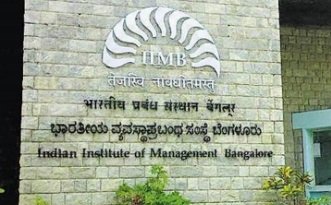
On August 25, 2024, the Indian Institute of Management Bangalore (IIM-B) made a groundbreaking move by launching India’s first Global Centre of Excellence dedicated to Private Equity (PE) and Venture Capital (VC). This initiative was set in motion through a significant partnership between IIM-B and Mathew Cyriac, an illustrious alumnus and the Executive Chairman of Florintree Advisors Pvt Ltd. This Centre marks a monumental leap forward in enhancing finance education and research in India, aligning the nation with global standards in these dynamic fields.

The formalization of this initiative came through a Memorandum of Understanding (MoU) between IIM-B and Mathew Cyriac. The agreement outlines the establishment of a state-of-the-art institution within the IIM-B campus, focusing exclusively on Private Equity and Venture Capital. In a tribute to the industry’s stalwarts, the Centre will be named after Tony James, a renowned investment banker whose contributions have profoundly shaped the global PE and VC landscape.

The primary goal of the Centre is to establish itself as a global leader in Private Equity and Venture Capital. It seeks to create a robust ecosystem that fosters cutting-edge research and sparks innovation in these sectors. Mathew Cyriac’s contribution to this endeavor is not just financial—it is the largest donation ever made by an alumnus to IIM-B—but also symbolic, as he has suggested naming four classrooms after the professors who shaped his academic journey. Additionally, Cyriac’s support extends to the creation of scholarships for students pursuing postgraduate and PhD programs, furthering the Centre’s mission of nurturing the next generation of financial leaders.

The Centre’s mission is to cultivate a collaborative environment that unites academics, industry experts, and regulatory bodies. Its vision is to develop world-class talent in Private Equity and Venture Capital by providing students with unparalleled access to industry leaders, enhancing their learning with practical, hands-on experience. The Centre will serve as a hub for advanced research and educational activities, offering students the opportunity to delve into the latest trends in PE and VC, engage in fieldwork, and receive mentorship from seasoned professionals.

Indian Institute of Management Bangalore (IIM-B), established in 1973, stands as one of India’s premier business schools, renowned for its academic rigor and innovation. IIM-B was the first among Indian Institutes of Management to receive international accreditation from the Association to Advance Collegiate Schools of Business (AACSB) in 2016, underscoring its commitment to excellence. The 100-acre campus, designed by the legendary architect B.V. Doshi, is home to Asia’s largest management library and boasts a strong startup ecosystem, bolstered by initiatives like the NS Raghavan Centre for Entrepreneurship.

IIM-B’s pioneering efforts, exemplified by the launch of this Global Centre for PE and VC, continue to set new benchmarks in business education. This Centre is not only a testament to the institute’s visionary approach but also a significant step toward positioning India as a leader in the global financial landscape. As the Centre begins its journey, it promises to play a crucial role in shaping the future of Private Equity and Venture Capital, both in India and beyond.

Mission Rhumi 2024, India’s Leap into Reusable Rocket Technology

0

On August 24, 2024, India marked a historic milestone in its space exploration journey with the launch of its first reusable hybrid rocket, Rhumi-1, from Thiruvidanthai, Chennai. This event, known as Mission Rhumi, symbolizes a significant advancement in the nation’s aerospace capabilities and aims to inspire the next generation of space enthusiasts.

The ‘Edutech for Space’ Programme

At the heart of Mission Rhumi is the ‘Edutech for Space’ program, an educational initiative designed to ignite curiosity and passion for aerospace in young minds. Among the key participants was 13-year-old Satrajit Samy, who, along with his peers, spent over a year preparing for this mission. The program’s mission is to make space technology education accessible, engaging, and inspiring, paving the way for a new generation of space scientists and engineers.

Rhumi-1 Takes Flight

Mission Rhumi was a collaborative effort between Space Zone India and the Martin Group. The centerpiece of this mission was the Rhumi-1 rocket, an 80-kilogram marvel of engineering standing 3.5 meters tall. In its maiden flight, Rhumi-1 successfully launched three cube satellites to monitor atmospheric conditions and deployed 50 Pico satellites for various scientific experiments. This achievement highlighted the rocket’s versatility and its potential to support a wide range of scientific endeavors.

Cutting-Edge Technology behind Rhumi-1

The Rhumi-1 rocket is powered by a hybrid propulsion system, combining a liquid oxidizer with solid fuel—a significant technological advancement in rocket science. This hybrid system not only provides greater flexibility and adaptability but also allows the rocket to be launched from a mobile launchpad, making it suitable for diverse launch scenarios. The technology behind Rhumi-1 represents a leap forward in India’s space capabilities, showcasing the nation’s growing prowess in space exploration.

Environmental and Economic Impact

One of the most remarkable aspects of Rhumi-1 is its reusability, which significantly reduces the cost of space missions. The rocket’s hybrid design is also environmentally friendly, minimizing the ecological footprint of space exploration. According to the CEO of Space Zone India, this innovation is a critical step toward making space exploration more sustainable, both economically and environmentally.

A broader mission of promoting space awareness

Mission Rhumi is not just about technological achievement; it is also about fostering a greater understanding and appreciation of space technology among the public. Through online classes and hands-on experiences, students like Satrajit are learning the basics of rocket science, laying the foundation for future rocket scientists trained in schools across India. This initiative is crucial in making space education more widespread and accessible, ensuring that the next generation is well-equipped to take India’s space program to new heights.

Mission Rhumi 2024 is a testament to India’s growing influence in the global space arena. With its successful launch of Rhumi-1 and the educational outreach through ‘Edutech for Space,’ India is not only advancing its technological frontiers but also investing in the future of space exploration by empowering young minds.

JRD Tata: His early fascination of flight helped him become the Father of Indian Civil Aviation

0

In the midst of World War I, while German zeppelins bombed Paris and French anti-aircraft guns fired from the Eiffel Tower, a ten-year-old JRD Tata gazed at the unfolding drama from his family’s Parisian terrace. His young mind, fueled by the thrill of aviation, yearned to be a fighter pilot, a dream he thought might come true if his mother had married his father earlier. This early fascination with flight was nurtured by his friendship with the son of Louis Bleriot, the pioneering aviator who crossed the English Channel in 1909. After a memorable joy ride at the age of 15, JRD resolved to make aviation his career.

By the time JRD Tata was granted his flying license by the Aero Club of India in 1929, he was not only the first Indian to achieve this feat but also set the stage for a transformative journey in Indian aviation. His early experiences, including a contest for the Aga Khan prize, showcased his competitive spirit and camaraderie. Despite losing the prize to Aspy Merwan Engineer, JRD’s friendship with Engineer became a treasured part of his life, underscoring the value he placed on relationships over competition.

The Dawn of Civil Aviation in India

The story of civil aviation in India began in earnest on February 18, 1911, when Henri Piquet flew a Humber Biplane across the Yamuna River carrying mail. This historic flight followed earlier milestones, including the Tyck brothers’ flights from Calcutta in 1910 and the establishment of key aviation infrastructure in the following decades. By 1927, the British Government had set up the Department of Civil Aviation in India, laying the groundwork for future advancements.

Tata Pioneers Civil Aviation

In 1929, JRD Tata, inspired by a proposal from retired RAF pilot Nevill Vintcent, set out to revolutionize Indian air travel. Vintcent’s idea was to create an air service between Karachi and Bombay, connecting major cities across India. Despite initial reluctance from Sir Dorab Tata, chairman of Tata Sons, JRD secured an investment of ₹200,000 and convinced the British Government to support the venture through a proposal to offer free air service.

JRD’s commitment to the project was evident in his efforts to procure two De Havilland Puss Moth aircraft from England. Although he fell ill during the journey and the planes arrived separately, his vision was clear. On April 15, 1932, Tata Airlines, initially known as Tata Air Services, was launched. JRD’s first official flight on October 15, 1932, from Karachi to Bombay marked the beginning of Indian commercial aviation. The journey, which included stops for refueling, carried 25 kg of airmail and was a historic moment in Indian aviation.

The Birth of Air India

In 1946, Tata Airlines transitioned into a public company, becoming Air India Ltd. The following year, Tata Sons proposed the creation of Air India International for overseas flights, with the Indian Government holding a 49% stake. The proposal was swiftly accepted, leading to Air India’s first international flight on June 8, 1948. The Malabar Princess, a Lockheed Constellation, carried JRD and other notable passengers from Bombay to London, marking a significant milestone in connecting India with the rest of the world.

JRD’s Legacy

JRD Tata’s influence on Indian aviation extended well beyond his initial achievements. His dedication and leadership were instrumental in shaping the industry. In 1982, at the age of 78, he recreated his historic flight from Karachi to Bombay to commemorate the 50th anniversary of Tata Airlines. Despite his age and health challenges, this flight symbolized his enduring passion and commitment to aviation. He carried a mailbag with messages between the presidents of India and Pakistan, showcasing his role as a goodwill ambassador.

JRD Tata’s legacy as the father of Indian civil aviation is marked by his pioneering spirit, innovative vision, and unwavering dedication. His contributions laid the foundation for a thriving aviation industry in India, and his story continues to inspire future generations.