
Home Blog Page 499

Story of Apple from Apple-1 to iPhone 16, Steve Jobs Didn’t Wanted to Make the iPhone

0

On the night of November 7, 2004, Steve Jobs, co-founder of Apple, received an email from Apple’s Vice President Mike Bell. The message read, “Steve, I know you don’t want to work on the smartphone project, but we have some compelling reasons to do it…”. This email sparked a heated debate between Jobs and Bell, lasting several hours. At that time, the market was dominated by phones like the Nokia 7610 and BlackBerry 7100t. For music, people relied on Walkmans and iPods. Jobs didn’t believe that smartphones could ever dominate the market. However, this email marked the beginning of a two-and-a-half-year journey that would eventually give the world the iPhone.

Fast forward to today, Apple has seven major product lineups, with nearly 50% of its revenue coming from the iPhone. But the journey to this success wasn’t easy, and it all started in a garage.

Apple’s Humble Beginnings

The origins of Apple trace back to a time when computers were as large as six refrigerators. Steve Jobs and Steve Wozniak, two friends, were bothered by this inconvenience. In Jobs’ garage, they began working on a compact computer that could easily fit in homes or offices. On April 1, 1976, the Apple-1 computer was launched, a breakthrough in its time, though it didn’t have a monitor or CPU. The real revolution came with the launch of Apple-2 in 1978, which drastically changed the computer industry, and over the next two years, Apple’s sales skyrocketed 16 times to reach $117 million.

The Birth of the iPhone Idea

The idea of the iPhone wasn’t initially embraced by Jobs. In 2004, mobile devices were defined by brands like Nokia, Palm, and BlackBerry. During this time, Steve Jobs and then Motorola CEO Ed Zander were good friends and discussed the possibility of a collaboration. This led to the release of the Motorola ROKR on September 7, 2005, the first phone to integrate Apple’s iTunes software. However, its slow software and limited storage disappointed users.

At Apple, voices started rising that the company should create its own smartphone. However, Jobs remained unconvinced, driven by two main reasons. Firstly, the dominance of telecom companies like Verizon and AT&T in the US made it difficult for him to see a seamless customer experience. Secondly, he didn’t want to divert focus from Apple’s core products, believing that a smartphone would only cater to a limited market.

The Email That Changed Everything

As revealed by senior iPhone engineer Andy Grignon in an interview with tech journalist Brian Merchant, the push to convince Jobs came from Mike Bell and former VP Steve Iskoman. Mike’s email suggested using one of Jony Ive’s innovative designs for future iPods to build Apple’s own phone instead of licensing its software to other manufacturers. Soon after, Jobs met with Bell, Ive, and Iskoman over lunch, and the iPhone project was born under the codename “Purple.”

The Secret Lab and Relentless Work

The iPhone project was so secretive that even many within Apple didn’t know about it. A special lab was set up in Cupertino, known as the Purple Dorm. Engineers worked tirelessly for two and a half years, often sleeping and eating at the lab. Posters from the movie Fight Club adorned the walls, reminding everyone of the first rule: don’t talk about the project. The team worked under immense pressure, producing hundreds of prototypes, many of which were rejected before the final design emerged.

The Historic Launch of the iPhone

On January 9, 2007, at San Francisco’s Macworld Center, Jobs unveiled the iPhone. In his iconic presentation, he introduced the device as a combination of three products: a touch-screen iPod, a communication device, and a phone—all in one. The iPhone’s groundbreaking features included a 3.5-inch touchscreen, 2 MP camera, and up to 8GB storage. When it hit the market on June 29, 2007, it sold 270,000 units in just two days.

Behind the Scenes

Although the iPhone was a massive success, the pressure to launch was intense. According to reports, Apple’s engineers and managers were so stressed during the launch event that many were drinking scotch and whiskey in the audience to calm their nerves. The first iPhone presented by Jobs had several flaws, and the software wasn’t fully developed. Engineers feared that the phone might crash during the demo, which thankfully, didn’t happen.

Personal Sacrifices of the iPhone Team

For some members of the iPhone team, like senior engineer Andy Grignon, the project came at a personal cost. Grignon revealed in an interview that the immense pressure to deliver the iPhone led to the breakdown of his marriage. He described the experience as one of the most challenging periods of his career, working under an “impossible” deadline, with the future of the company resting on their shoulders.

A Legacy of Innovation

The skepticism surrounding the iPhone was widespread. In an April 2007 interview, Microsoft’s then-CEO Steve Ballmer famously claimed there was “no chance” the iPhone would gain significant market share. Similarly, BlackBerry’s executives were shocked by the iPhone’s launch. However, the critics were soon proven wrong. By 2018, Apple became the first company to reach a market capitalization of $1 trillion, and in 2023, it surpassed $3 trillion.

As of 2023, Apple has sold over 1.5 billion iPhones globally, with 21.67 crore sold in that year alone. The iPhone, once doubted, now makes up 50% of Apple’s revenue and has revolutionized the smartphone industry.

Innovation in Every iPhone

Since its debut in 2007, every new iPhone has brought something innovative to the table, ensuring that it stays ahead of its competitors. The legacy of the iPhone is not just one of groundbreaking technology but also of the persistence and vision that turned Steve Jobs’ reluctance into one of the most successful products in history.

This story of the iPhone is a testament to the power of innovation, even when faced with uncertainty and doubt. Today, as Apple continues to dominate the global smartphone market, the journey that began with a reluctant Steve Jobs reminds us that sometimes, the biggest revolutions come from the smallest of ideas.
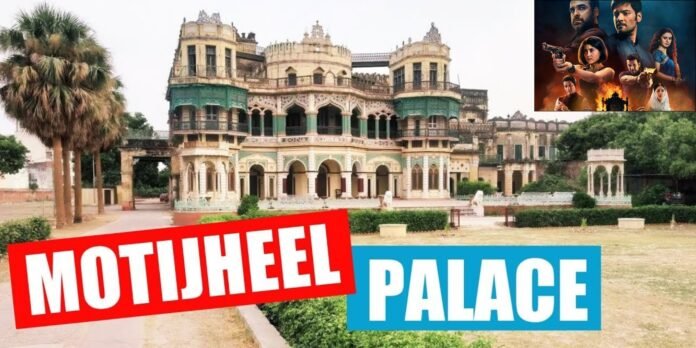
All About Mirzapur’s Haveli, the Moti Jheel Mahal in Varanasi

0

The world of Mirzapur, with its gripping storyline, intense characters, and thrilling action, is complemented by stunning real-world locations that give the show an authentic, raw appeal. Among these locations is the grand Tripathi Kothi, home to the notorious Kaleen Bhaiya in the series, which, in reality, is the historic Azmatgarh Palace, also known as Moti Jheel Mahal in Varanasi. This majestic palace, with its regal architecture and historical significance, has captured the attention of viewers just as much as the characters themselves.

Moti Jheel Mahal: A Historical Gem

Located in Mahmoorganj, Varanasi, the Moti Jheel Mahal was built between 1904 and 1908 by Raja Moti Chand, a prominent zamindar of Banaras. The palace reflects the architectural grandeur of its time, standing out with its distinctive design and strategic location. Raja Moti Chand was honored with the title ‘Rajaji’ by the British, further cementing his influential role in the region’s history. Today, the palace is privately owned and maintained by his grandson, Ashok Kumar Gupta, who resides there with his family.

While the mansion remains off-limits to the public, Gupta did allow the palace to be used for the shooting of Mirzapur, lending the series an air of authenticity. This decision has brought the palace into the spotlight, transforming it from a hidden historical treasure into a famous landmark among fans of the show.

Why the Name ‘Moti Jheel Mahal’?

The name of the palace, Moti Jheel, has an interesting origin. In 1913, Raja Moti Chand sought and received permission to construct a lake behind the palace, hence the word ‘Jheel’ (lake) was added to its name. This lake further enhanced the beauty of the palace, creating a serene backdrop that perfectly complements the grandeur of the building itself.

A Visual Delight

What sets Moti Jheel Mahal apart is its striking architectural design, which differs from most structures in the surrounding areas. The palace stands as an eye-catching monument that draws attention, whether you’re a fan of architecture or simply passing by. Located just 10 minutes from central Varanasi, the palace is also only 4 kilometers from Varanasi railway station, making it easily accessible.

The intricate architecture, combined with the scenic surroundings, made it the ideal choice for depicting the opulent life of Kaleen Bhaiya in Mirzapur. The scenes shot here are not enhanced or artificial; they showcase the true beauty of the palace, further immersing viewers in the show’s world.

A Popular Filming Location

Varanasi has long been a popular destination for filmmakers, known for its timeless ghats, spiritual aura, and historical significance. Films like Raanjhanaa (2013) and Masaan (2015) beautifully captured the essence of the city, while the Moti Jheel Mahal itself has been featured in movies such as Shubh Mangal Saavdhan, starring Ayushmann Khurrana.

Despite its newfound fame, Moti Jheel Mahal remains private property, and visitors are not allowed to tour the palace itself. However, the Moti Jheel Lake, adjacent to the palace, is accessible to the public, allowing people to explore and enjoy the scenic beauty that complements the grandeur of the Mahal.

The Intersection of History and Pop Culture

While Moti Jheel Mahal is steeped in history and tradition, its role in Mirzapur has brought it into the realm of modern pop culture. The palace now stands as a bridge between the past and present, a historical gem that has found new life in one of the most popular OTT series.

Though the palace remains private, its iconic role in Mirzapur has cemented its place in the hearts of fans and history enthusiasts alike. With its rich history, stunning architecture, and cinematic appeal, the Moti Jheel Mahal continues to be one of Varanasi’s most intriguing and visually captivating landmarks.

Kotilingeshwara Temple: Karnataka’s Sacred Site with 1 Crore Shiva Lingas

0

Karnataka, known for its rich cultural heritage and spirituality, is home to some of the most revered temples in India. Among these, the Kotilingeshwara Temple in Kammasandra village, Kolar district, stands out for its extraordinary devotion to Lord Shiva. What makes this temple truly unique is the presence of 1 crore (10 million) Shiva Lingas, making it one of the most awe-inspiring pilgrimage sites in the country.

The Temple of 1 Crore Shiva Lingas

The Kotilingeshwara Temple derives its name from its incredible collection of Shiva Lingas. In Kannada, “Koti” means crore, referring to the vast number of Lingas installed within the temple grounds. These Lingas range in size, varying from 1 to 3 feet, and are spread across an impressive 15 acres of land. Visitors are greeted by a spectacular sight—millions of sacred Lingas stretching as far as the eye can see, creating a spiritually charged atmosphere that attracts both devotees and tourists.

At the heart of this temple complex stands the towering main Shiva Linga, one of the tallest in the world, rising to a majestic 108 feet. This massive structure is a symbol of devotion and awe, drawing visitors from across the globe.

A Unique Spiritual Experience

One of the most distinctive aspects of Kotilingeshwara Temple is that devotees have the opportunity to install their own Shiva Linga. This act of devotion is believed to either fulfill a wish or serve as a gesture of gratitude after a wish has been granted. Pilgrims can personally participate in this ritual, which adds a deeply personal element to their spiritual journey.

Beyond the installation of Lingas, the temple also offers serene meditation halls where visitors can meditate in peace, further enhancing their connection with the divine.

Other Deities and Temples Within the Complex

In addition to its vast collection of Shiva Lingas, the Kotilingeshwara Temple complex is home to 11 smaller shrines dedicated to various deities, enriching the spiritual diversity of the site. These shrines are dedicated to:

  • Lord Panduranga
  • Lord Panchmukha Ganapathi
  • Lord Brahma
  • Lord Vishnu
  • Goddess Annapoorneshwari
  • Lord Venkataramani Swamy
  • Lord Rama, Sita, and Lakshmana
  • Goddess Kannika Parameshwari
  • Goddess Karumaari Amma
  • Lord Maheshwara
  • Lord Anjaneya

The temple also houses an impressive 35-foot-tall statue of Nandi, the sacred bull and vehicle of Lord Shiva, adding to the grandeur of the site.

Mass Marriages and Community Services

The Kotilingeshwara Temple is not only a place of worship but also a center for community service. Every year, the temple conducts free mass marriages, helping couples unite in holy matrimony without the burden of financial constraints. This tradition reflects the temple’s role in fostering social harmony and inclusivity.

History of Kotilingeshwara Temple

Founded in 1980 by Swami Sambha Shiva Murthy, the Kotilingeshwara Temple has grown into a major pilgrimage destination in Karnataka. Over the years, it has gained immense popularity, not only for its religious significance but also for its unique and inspiring display of devotion through the installation of millions of Shiva Lingas.

A Pilgrimage Unlike Any Other

For devotees of Lord Shiva, a visit to Kotilingeshwara Temple offers a once-in-a-lifetime spiritual experience. Whether it’s the sight of 1 crore Lingas, the towering main Linga, or the chance to install a personal Shiva Linga, the temple provides an unparalleled sense of divine connection.

Set in the tranquil surroundings of Kammasandra village, the Kotilingeshwara Temple invites pilgrims to immerse themselves in a profound spiritual journey, making it one of Karnataka’s most revered and unique religious sites.

Now, Jumping Spider Species Discovered in Tamil Nadu

0

In a remarkable discovery highlighting the rich biodiversity of Tamil Nadu, a new species of jumping spider, Carrhotus piperus, has been identified in the lower Palani Hills. This discovery brings the total number of Carrhotus species found in India to 10, with 37 known worldwide. The findings shed light on the region’s unique ecosystems and underscore the importance of continued research in India’s lesser-explored habitats.

Discovery Details

The spider was discovered in 2016 during a biodiversity survey in Thadiyankudisai, Dindigul district, nestled in the Palani Hills. A team of researchers led by John Caleb T.D. from Saveetha Institute of Medical and Technical Sciences and M. Sampathkumar from the ICAR-National Bureau of Agricultural Insect Resources played a key role in identifying and scientifically describing the new species. Their discovery has been published in the Journal of Insect Biodiversity and Systematics.

The name Carrhotus piperus was chosen to reflect the spider’s unique habitat—Piper nigrum, commonly known as the black pepper plant, where it was found living about two meters above ground. This species exhibits a close relationship with the plant, from which it draws its name, indicating a symbiotic connection between the spider and its environment.

Habitat and Physical Features

The discovery of Carrhotus piperus among black pepper plants adds a new dimension to the understanding of the ecological balance within the Palani Hills. The spider was observed residing on the plants, which are cultivated for their spices, suggesting that the spider might play a role in maintaining the health of these plants or the ecosystem around them.

The newly discovered spider stands out due to its distinct physical features. It has a prolateral protrusion—a unique bump on its body—and a beak-shaped embolus, part of its reproductive anatomy. These characteristics helped scientists classify it as part of the Carrhotus genus, a group of spiders known for their ability to leap and hunt without the use of webs.

Importance of the Discovery

This discovery expands the knowledge of the Carrhotus genus and provides further insight into the biodiversity of Tamil Nadu’s Palani Hills. The findings highlight the need for ongoing research into India’s rich ecosystems, particularly in under-explored areas like the Palani Hills, which serve as habitats for a range of undiscovered species.

John Caleb T.D. and M. Sampathkumar emphasize the importance of biodiversity conservation, stressing that new species discoveries contribute to a greater understanding of ecological health and the relationships between organisms and their habitats.

Facts About Jumping Spiders

Jumping spiders, belonging to the family Salticidae, are among the most fascinating members of the spider world:

  • Superior Vision: They have excellent vision and are capable of seeing in color, making them effective hunters that can detect and track prey with remarkable precision.
  • Incredible Leaping Ability: Jumping spiders can leap up to 50 times their body length using a hydraulic pressure system in their legs.
  • Active Hunters: Unlike most spiders, jumping spiders do not rely on webs to catch prey. They stalk and pounce on their targets.
  • Global Presence: There are over 6,000 species of jumping spiders, and they are found on every continent except Antarctica.
  • Courtship and Color: Many species have vibrant colors and complex courtship rituals, making them popular subjects for study.

The discovery of Carrhotus piperus adds to the wealth of knowledge about jumping spiders, which continue to intrigue scientists and arachnophiles alike.

Summing Up

The discovery of Carrhotus piperus in Tamil Nadu’s Palani Hills is a testament to the untapped biodiversity within India’s ecosystems. As scientists continue to explore these habitats, new species emerge, enhancing our understanding of the complex interactions between species and their environments. This find not only highlights the importance of biodiversity conservation but also contributes to global research on jumping spiders and their ecological significance.

India Successfully Launches Agni-4 Ballistic Missile in Odisha

0

India recently achieved a significant milestone in its defense capabilities with the successful test of the Agni-4 ballistic missile. The launch was conducted at the Integrated Test Range (ITR) in Chandipur, Odisha, by the Strategic Forces Command (SFC). This successful test underscores India’s progress in missile technology and reaffirms the reliability of the Agni-4 missile system.

What is Agni-4?

Agni-4 is an Intermediate Range Ballistic Missile (IRBM) developed indigenously as part of India’s Integrated Guided Missile Development Program. It plays a crucial role in India’s defense strategy, offering enhanced deterrence capabilities against potential threats. With a range of 3,000 to 4,000 kilometers, the Agni-4 can deliver nuclear warheads with high precision, making it a key asset in the country’s missile arsenal.

The missile’s two-stage, solid-propellant system allows for improved accuracy and effectiveness in delivering payloads, which can weigh up to 1,000 kg. Agni-4’s advanced guidance systems, including inertial navigation and GPS technology, ensure precise targeting, which is vital for India’s defense objectives. Moreover, its road-mobile platform enhances its survivability by allowing for easy relocation and deployment.

Key Features of Agni-4:

  1. Range: Between 3,000 to 4,000 kilometers, capable of reaching distant targets.
  2. Payload Capacity: Can carry nuclear warheads weighing up to 1,000 kg.
  3. Propellant System: Two-stage, solid propellant, ensuring stable and efficient flight.
  4. Mobility: Road-mobile, providing increased flexibility and security during deployment.
  5. Guidance Systems: Equipped with advanced inertial navigation and GPS for accurate strikes.
  6. Development Timeline: First tested in November 2011, Agni-4 has since become a crucial part of India’s strategic deterrence program.

Recent Developments in India’s Missile Testing

India’s defense sector has seen a string of successful missile tests, demonstrating the country’s commitment to modernizing its strategic deterrence capabilities. Prior to the Agni-4 launch, several key developments in missile testing were observed:

  • April 2024: India successfully tested the Agni-Prime missile, achieving all mission objectives and affirming its performance. Agni-Prime, a newer version of the Agni series, adds to India’s growing missile arsenal with enhanced reliability.
  • June 2023: India conducted its first-ever night launch of the Agni-Prime missile, showcasing the missile’s operational capability under varied conditions, further solidifying the nation’s defense preparedness.

These tests underscore India’s focus on enhancing its defense systems, ensuring that the country is well-equipped to face emerging threats and maintain stability in the region.

Strategic Importance of Agni-4

The successful launch of Agni-4 not only validates the missile’s technological prowess but also strengthens India’s strategic deterrence. As part of India’s broader defense strategy, the Agni series serves as a critical component in safeguarding the nation from potential threats. With a focus on accuracy, mobility, and survivability, Agni-4 offers India the capability to respond swiftly and effectively to any regional security challenges.

Furthermore, this successful launch reinforces India’s commitment to self-reliance in defense technology. By continuously advancing its missile systems, India ensures that it remains a key player in maintaining peace and security in the South Asian region.

Summing Up

The successful launch of the Agni-4 ballistic missile marks another step forward in India’s defense modernization efforts. With its impressive range, payload capacity, and advanced guidance systems, Agni-4 strengthens India’s ability to deter threats and protect its national security interests. As India continues to invest in and test advanced missile technology, its role as a regional power will only grow, contributing to greater stability and peace in the region.

Saturn’s Rings to Disappear Temporarily in March 2025

0

In an astronomical phenomenon set to occur in March 2025, Saturn’s iconic rings will appear to vanish from view when observed from Earth. This temporary disappearance is not an actual vanishing act but an optical illusion resulting from Saturn’s orbital dynamics and axial tilt. This rare event gives space enthusiasts an opportunity to witness a celestial occurrence that happens roughly every 13 to 15 years.

The Optical Illusion Explained

Saturn’s tilt, which is about 26.73 degrees, and its long orbital period of nearly 30 Earth years around the Sun, make its rings visible from different angles over time. For a brief moment in 2025, Earth will be in a position where we only see the thin edge of Saturn’s rings. Since the rings are remarkably thin—less than a mile thick—viewing them edge-on from such a distance makes them almost invisible. This phenomenon is akin to looking at the narrow edge of a sheet of paper from far away.

The last time this event occurred was in 2009, and it will continue to recur periodically, allowing future generations to observe the same effect. Though the optical illusion is fleeting, it reveals a fascinating aspect of Saturn’s complex relationship with its rings and the wider cosmos.

Saturn’s Rings: Temporary Illusion, Long-Term Loss

While Saturn’s ring “disappearance” in March 2025 is temporary, the planet is gradually losing its rings for real. NASA has discovered that Saturn’s gravity and magnetic field are pulling ring material toward the planet in a process known as “ring rain.” During this process, the planet sheds enough material to fill an Olympic-sized swimming pool every 30 minutes. Scientists predict that Saturn’s rings could completely disappear in about 300 million years—a timescale long enough to allow us and many future generations to continue enjoying the beauty of the ringed giant.

How Did Saturn’s Rings Form?

Saturn’s rings consist of billions of ice and rock particles, ranging in size from tiny grains of dust to objects as large as mountains. Scientists believe these rings formed about 100 million years ago, possibly the result of two icy moons colliding and shattering into countless fragments.

Fascinating Facts About Saturn’s Rings

  1. Composition: Saturn’s rings are primarily made of ice, with some rock and dust particles mixed in.
  2. Width vs. Thickness: While the rings span up to 175,000 miles in width, they are incredibly thin, measuring less than a mile thick.
  3. Sections: The rings are divided into distinct sections, including the A, B, and C rings, each containing different amounts of material.
  4. Moons Shaping Rings: Some of Saturn’s moons, such as Pan and Daphnis, create gaps within the rings and help shape them through gravitational forces.
  5. Age: Saturn’s rings are relatively young in astronomical terms, likely forming within the last 100 million years.
  6. Future Disappearance: Solar radiation and gravitational forces will eventually cause Saturn’s rings to dissipate over time, with ring material slowly being drawn into the planet.

Looking Ahead

The temporary disappearance of Saturn’s rings in March 2025 offers a glimpse into the intricate orbital mechanics of our solar system. Though the rings will not be gone for good, this event serves as a reminder of the dynamic nature of celestial objects and the fleeting moments in cosmic history that we are lucky enough to witness from our vantage point on Earth.

As Saturn slowly sheds its rings, the future generations may see a very different planet than the one we know today. But for now, the rings remain one of the most captivating features of our solar system’s sixth planet, and the upcoming “disappearance” in 2025 will only enhance the intrigue surrounding this majestic gas giant.

Hotel Association of Udaipur shares idea of building grand Maharana Pratap statue & floating Tourism Development Bonds to deputy CM Kumari

0

The Hotel Association of Udaipur presented an innovative idea of floating Tourism Development Bonds to deputy chief minister Diya Kumari on Friday which impressed her and she appreciated the novel idea, said Yashwardhan Ranawat, Vice President, Hotel Association Udaipur adding that the association members also extended the idea of building a grand statue of Maharana Pratap which they said should be named either as Statue of Sacrifice and Valour or Statue of Independence. The representatives from the Hotel Association Udaipur had an excellent meeting with the Deputy Chief Minister and Tourism Minister of Rajasthan at the Divisional Commissioner’s Office, said Ranawat. 

Hotel Association Udaipur Vice President gave Diya Kumari the following suggestions regarding the Maharana Pratap Tourist Circuit which included the construction of statue of Maharana Pratap.

He said, “Given the immense contribution of Maharana Pratap to Rajasthan’s history and his embodiment of sacrifice and valour, it would be befitting to honour him with a structure that symbolizes these virtues. A suitable name, such as the “Statue of Sacrifice and Valour,” or ‘Statue of Independence’ could encapsulate Maharana Pratap’s legacy and create a landmark of national pride, said Ranawat.

The key points and benefits to the Pratap Circuit are as following:

1. Tourism Growth: A grand statue on the Maharana Pratap Tourist Circuit would boost tourism, not only from domestic travelers but also international tourists who seek to experience India’s rich history. Maharana Pratap is not only revered across India but also holds deep admiration and respect in many parts of the world.

2. Cultural Heritage Promotion: The statue could become a focal point for festivals, events, and educational tours centered around Maharana Pratap’s life and sacrifice, making Rajasthan an even stronger cultural hub. Maharana Pratap’s fight for Independence is a benchmark in world history.

3.Economic Impact: The creation of such a statue would lead to job creation, development of local infrastructure, and increased revenue from tourists. This could further foster economic growth in the surrounding regions of Udaipur and its neighboring districts.

4. National and International Prestige: Much like the Statue of Unity, this statue could become a landmark of global significance, drawing attention to Rajasthan’s history and valor and contributing to the state’s identity on the world map.

5. Part of a Larger Heritage Trail:
Incorporating the statue into the Maharana Pratap Circuit could enhance the value of historical points such as Haldi Ghati and Kumbhalgarh Fort, creating a cohesive heritage trail that is unparalleled.

They further said that the creation of a grand Maharana Pratap Statue, akin to the Statue of Unity, will not only elevate the stature of Maharana Pratap’s legacy but also significantly enhance the prestige of the Double Engine Government in Rajasthan and the Central Government. “Such an iconic landmark would symbolise the strong leadership, vision, and commitment of both governments towards preserving and promoting India’s historical heritage, while also driving tourism and economic growth in Rajasthan. This initiative would stand as a monumental testament to the success of collaborative governance between the state and the center.”

Funding Suggestions Beyond Government Sources:

1. Public-Private Partnerships (PPP): Engaging the private sector, including industries and corporate houses with a strong connection to Rajasthan’s history, would allow the state to raise funds without overburdening government finances.

2. Crowdfunding and Public Donations: A well-structured donation campaign that resonates with citizens, Rajasthani diaspora, and history enthusiasts across India could generate significant funds. This would make the statue a project driven by public participation, symbolizing people’s respect for Maharana Pratap.

3. Tourism Development Bonds: The state could consider issuing bonds or similar financial instruments aimed at raising capital specifically for tourism and heritage projects like this, providing a secure return to investors.

4. International Aid and Cultural Funds: Approaching international cultural organizations, UNESCO, or foreign nations that have a historical or cultural relationship with India could open new funding avenues.

The association members further said that this project, when realized, will not only honor one of India’s greatest leaders but will also bring tremendous growth and visibility to Rajasthan’s already thriving tourism sector. 
They said that Kumari highly appreciated the idea of 

introducing ‘Tourism Development Bonds’ and said that this idea will be sent to the Central Government too.

Krishna Gaman Path to give big boost to religious tourism in Rajasthan

0

Even at time when the world seems witnessing ever big wars affecting the European nations and the Middle East and the political turmoil is further affecting the Asian countries too, the announcement of Krishna Gaman Path in Rajasthan gives big hopes to travel and tourism industry as it expects the new circuit will increase domestic tourists visiting the state.

The new circuit announced by Rajasthan CM Bhajan Lal Sharma will connect places connected with Lord Krishna’ life in two states namely MP and Rajasthan. Also these two state governments will develop the circuit jointly, said CM Sharma in his recent announcement. 

The new circuit, starting from Mathura in Uttar Pradesh where Krishna was born, will pass through Rajasthan to conclude in Ujjain in Madhya Pradesh where Krishna had his teachings in Sandipani Ashram.

Basically, it plans to connect Lord Krishna’ birth place to his Gurukul, Sandipani Ashram in Ujjain where Krishna went with his brother Balram to get his teachings while passing through Rajasthan. The new tourism circuit will stretch to about 800 km. Out of this, around 500 km of route will pass through six districts of Rajasthan and will include more than 30 big and small temples located in between Mathura to Ujjain.

Tourism industry hopes big from Krishna Gaman Path and says Rajasthan will see a turnaround like UP with new circuit.

Krishna Gaman Path to give big boost to religious tourism in Rajasthan

Welcoming the announcement, Prithvi Singh, a hotelier said, “The announcement sounds too good for the industry. We hope that religious tourism will prosper in the state. There will be more domestic tourists coming into the state creating more employment opportunities for people here.

Sanjay Kaushik, a tour operator from Rajasthan said that the industry is hoping big from this new circuit. “This can prove to be another ‘Ayodhya’ kind place and can also bring in tourism volumes like Kashi and Ram Lalla temple did in UP.”

Starting from Mathura in Uttar Pradesh, through Rajasthan, “Shri Krishna Gaman Path” will be built between Ujjain in Madhya Pradesh. With the construction of Shri Krishna Gaman Path, Rajasthan will get the most benefit in the field of religious tourism. From the tourism point of view, Jaipur, Delhi, Mathura-Agra are famous as the Golden Triangle where a large number of tourists from the country and abroad come. Now this circuit will increase the tourist inflow, said industry experts. 

Last year in 2023, 17.90 crore tourists visited Rajasthan. Among these, the number of foreigners was 16.99 lakh. “Similarly, in UP, around 10.50 crore tourists came to the Agra region in the year 2023. The number of foreign tourists among them was 11 lakh. With the construction of Shri Krishna Gaman Path, these tourists are expected to come to Rajasthan”, said officials.

Also read: https://ebnw.net/empowerment/inspirations/sandipani-ashram-a-sneak-peak-into-5000-year-old-education-system-where-krishna-balram-learnt-water-sports-fashion-and-communication/

Himachal CM launches cashless card to travel across nation

0

Chief Minister Sukhvinder Singh Sukhu has launched a common mobility card of the Himachal Road Transport Corporation that will promote cashless travel across the country.

The card will allow cashless travel in various public transports across the country and offers multiple payment options.

The Himachal Road Transport Corporation (HRTC) is already offering cashless payment options through UPI, debit and credit cards in the state-run buses, a statement issued here said.

He said that the HRTC has become the first State Transport Undertaking (STU) in the country to introduce this facility.

Marilyn Monroe love letters and outfits to be exhibited in UK for first time

0

Marilyn – The Exhibition will be organised in London in October, which will exhibit actor’s love letters with her satin robes and make-up on display to the public.

These things come from the private collection of Ted Stampfer, who owns more than 1,500 items owned by the al famous Hollywood star.

Marilyn Monroe love letters and outfits to be exhibited in UK for first time

Exhibition highlights include items from her production company, memorabilia from her shoots in London and images from her meeting with Queen Elizabeth II.

Some of her most famous outfits will be available to view and to take visitors through her origins as Norma Jeane Mortenson, to her life as a legendary public figure.

Make-up, shoes and beauty items will also make up part of the display, when the collection will go on show at Arches London Bridge on 18 October.