Home Blog Page 498

India Successfully Launches Agni-4 Ballistic Missile in Odisha

0

India recently achieved a significant milestone in its defense capabilities with the successful test of the Agni-4 ballistic missile. The launch was conducted at the Integrated Test Range (ITR) in Chandipur, Odisha, by the Strategic Forces Command (SFC). This successful test underscores India’s progress in missile technology and reaffirms the reliability of the Agni-4 missile system.

What is Agni-4?

Agni-4 is an Intermediate Range Ballistic Missile (IRBM) developed indigenously as part of India’s Integrated Guided Missile Development Program. It plays a crucial role in India’s defense strategy, offering enhanced deterrence capabilities against potential threats. With a range of 3,000 to 4,000 kilometers, the Agni-4 can deliver nuclear warheads with high precision, making it a key asset in the country’s missile arsenal.

The missile’s two-stage, solid-propellant system allows for improved accuracy and effectiveness in delivering payloads, which can weigh up to 1,000 kg. Agni-4’s advanced guidance systems, including inertial navigation and GPS technology, ensure precise targeting, which is vital for India’s defense objectives. Moreover, its road-mobile platform enhances its survivability by allowing for easy relocation and deployment.

Key Features of Agni-4:

  1. Range: Between 3,000 to 4,000 kilometers, capable of reaching distant targets.
  2. Payload Capacity: Can carry nuclear warheads weighing up to 1,000 kg.
  3. Propellant System: Two-stage, solid propellant, ensuring stable and efficient flight.
  4. Mobility: Road-mobile, providing increased flexibility and security during deployment.
  5. Guidance Systems: Equipped with advanced inertial navigation and GPS for accurate strikes.
  6. Development Timeline: First tested in November 2011, Agni-4 has since become a crucial part of India’s strategic deterrence program.

Recent Developments in India’s Missile Testing

India’s defense sector has seen a string of successful missile tests, demonstrating the country’s commitment to modernizing its strategic deterrence capabilities. Prior to the Agni-4 launch, several key developments in missile testing were observed:

  • April 2024: India successfully tested the Agni-Prime missile, achieving all mission objectives and affirming its performance. Agni-Prime, a newer version of the Agni series, adds to India’s growing missile arsenal with enhanced reliability.
  • June 2023: India conducted its first-ever night launch of the Agni-Prime missile, showcasing the missile’s operational capability under varied conditions, further solidifying the nation’s defense preparedness.

These tests underscore India’s focus on enhancing its defense systems, ensuring that the country is well-equipped to face emerging threats and maintain stability in the region.

Strategic Importance of Agni-4

The successful launch of Agni-4 not only validates the missile’s technological prowess but also strengthens India’s strategic deterrence. As part of India’s broader defense strategy, the Agni series serves as a critical component in safeguarding the nation from potential threats. With a focus on accuracy, mobility, and survivability, Agni-4 offers India the capability to respond swiftly and effectively to any regional security challenges.

Furthermore, this successful launch reinforces India’s commitment to self-reliance in defense technology. By continuously advancing its missile systems, India ensures that it remains a key player in maintaining peace and security in the South Asian region.

Summing Up

The successful launch of the Agni-4 ballistic missile marks another step forward in India’s defense modernization efforts. With its impressive range, payload capacity, and advanced guidance systems, Agni-4 strengthens India’s ability to deter threats and protect its national security interests. As India continues to invest in and test advanced missile technology, its role as a regional power will only grow, contributing to greater stability and peace in the region.

Saturn’s Rings to Disappear Temporarily in March 2025

0

In an astronomical phenomenon set to occur in March 2025, Saturn’s iconic rings will appear to vanish from view when observed from Earth. This temporary disappearance is not an actual vanishing act but an optical illusion resulting from Saturn’s orbital dynamics and axial tilt. This rare event gives space enthusiasts an opportunity to witness a celestial occurrence that happens roughly every 13 to 15 years.

The Optical Illusion Explained

Saturn’s tilt, which is about 26.73 degrees, and its long orbital period of nearly 30 Earth years around the Sun, make its rings visible from different angles over time. For a brief moment in 2025, Earth will be in a position where we only see the thin edge of Saturn’s rings. Since the rings are remarkably thin—less than a mile thick—viewing them edge-on from such a distance makes them almost invisible. This phenomenon is akin to looking at the narrow edge of a sheet of paper from far away.

The last time this event occurred was in 2009, and it will continue to recur periodically, allowing future generations to observe the same effect. Though the optical illusion is fleeting, it reveals a fascinating aspect of Saturn’s complex relationship with its rings and the wider cosmos.

Saturn’s Rings: Temporary Illusion, Long-Term Loss

While Saturn’s ring “disappearance” in March 2025 is temporary, the planet is gradually losing its rings for real. NASA has discovered that Saturn’s gravity and magnetic field are pulling ring material toward the planet in a process known as “ring rain.” During this process, the planet sheds enough material to fill an Olympic-sized swimming pool every 30 minutes. Scientists predict that Saturn’s rings could completely disappear in about 300 million years—a timescale long enough to allow us and many future generations to continue enjoying the beauty of the ringed giant.

How Did Saturn’s Rings Form?

Saturn’s rings consist of billions of ice and rock particles, ranging in size from tiny grains of dust to objects as large as mountains. Scientists believe these rings formed about 100 million years ago, possibly the result of two icy moons colliding and shattering into countless fragments.

Fascinating Facts About Saturn’s Rings

  1. Composition: Saturn’s rings are primarily made of ice, with some rock and dust particles mixed in.
  2. Width vs. Thickness: While the rings span up to 175,000 miles in width, they are incredibly thin, measuring less than a mile thick.
  3. Sections: The rings are divided into distinct sections, including the A, B, and C rings, each containing different amounts of material.
  4. Moons Shaping Rings: Some of Saturn’s moons, such as Pan and Daphnis, create gaps within the rings and help shape them through gravitational forces.
  5. Age: Saturn’s rings are relatively young in astronomical terms, likely forming within the last 100 million years.
  6. Future Disappearance: Solar radiation and gravitational forces will eventually cause Saturn’s rings to dissipate over time, with ring material slowly being drawn into the planet.

Looking Ahead

The temporary disappearance of Saturn’s rings in March 2025 offers a glimpse into the intricate orbital mechanics of our solar system. Though the rings will not be gone for good, this event serves as a reminder of the dynamic nature of celestial objects and the fleeting moments in cosmic history that we are lucky enough to witness from our vantage point on Earth.

As Saturn slowly sheds its rings, the future generations may see a very different planet than the one we know today. But for now, the rings remain one of the most captivating features of our solar system’s sixth planet, and the upcoming “disappearance” in 2025 will only enhance the intrigue surrounding this majestic gas giant.

Hotel Association of Udaipur shares idea of building grand Maharana Pratap statue & floating Tourism Development Bonds to deputy CM Kumari

0

The Hotel Association of Udaipur presented an innovative idea of floating Tourism Development Bonds to deputy chief minister Diya Kumari on Friday which impressed her and she appreciated the novel idea, said Yashwardhan Ranawat, Vice President, Hotel Association Udaipur adding that the association members also extended the idea of building a grand statue of Maharana Pratap which they said should be named either as Statue of Sacrifice and Valour or Statue of Independence. The representatives from the Hotel Association Udaipur had an excellent meeting with the Deputy Chief Minister and Tourism Minister of Rajasthan at the Divisional Commissioner’s Office, said Ranawat. 

Hotel Association Udaipur Vice President gave Diya Kumari the following suggestions regarding the Maharana Pratap Tourist Circuit which included the construction of statue of Maharana Pratap.

He said, “Given the immense contribution of Maharana Pratap to Rajasthan’s history and his embodiment of sacrifice and valour, it would be befitting to honour him with a structure that symbolizes these virtues. A suitable name, such as the “Statue of Sacrifice and Valour,” or ‘Statue of Independence’ could encapsulate Maharana Pratap’s legacy and create a landmark of national pride, said Ranawat.

The key points and benefits to the Pratap Circuit are as following:

1. Tourism Growth: A grand statue on the Maharana Pratap Tourist Circuit would boost tourism, not only from domestic travelers but also international tourists who seek to experience India’s rich history. Maharana Pratap is not only revered across India but also holds deep admiration and respect in many parts of the world.

2. Cultural Heritage Promotion: The statue could become a focal point for festivals, events, and educational tours centered around Maharana Pratap’s life and sacrifice, making Rajasthan an even stronger cultural hub. Maharana Pratap’s fight for Independence is a benchmark in world history.

3.Economic Impact: The creation of such a statue would lead to job creation, development of local infrastructure, and increased revenue from tourists. This could further foster economic growth in the surrounding regions of Udaipur and its neighboring districts.

4. National and International Prestige: Much like the Statue of Unity, this statue could become a landmark of global significance, drawing attention to Rajasthan’s history and valor and contributing to the state’s identity on the world map.

5. Part of a Larger Heritage Trail:
Incorporating the statue into the Maharana Pratap Circuit could enhance the value of historical points such as Haldi Ghati and Kumbhalgarh Fort, creating a cohesive heritage trail that is unparalleled.

They further said that the creation of a grand Maharana Pratap Statue, akin to the Statue of Unity, will not only elevate the stature of Maharana Pratap’s legacy but also significantly enhance the prestige of the Double Engine Government in Rajasthan and the Central Government. “Such an iconic landmark would symbolise the strong leadership, vision, and commitment of both governments towards preserving and promoting India’s historical heritage, while also driving tourism and economic growth in Rajasthan. This initiative would stand as a monumental testament to the success of collaborative governance between the state and the center.”

Funding Suggestions Beyond Government Sources:

1. Public-Private Partnerships (PPP): Engaging the private sector, including industries and corporate houses with a strong connection to Rajasthan’s history, would allow the state to raise funds without overburdening government finances.

2. Crowdfunding and Public Donations: A well-structured donation campaign that resonates with citizens, Rajasthani diaspora, and history enthusiasts across India could generate significant funds. This would make the statue a project driven by public participation, symbolizing people’s respect for Maharana Pratap.

3. Tourism Development Bonds: The state could consider issuing bonds or similar financial instruments aimed at raising capital specifically for tourism and heritage projects like this, providing a secure return to investors.

4. International Aid and Cultural Funds: Approaching international cultural organizations, UNESCO, or foreign nations that have a historical or cultural relationship with India could open new funding avenues.

The association members further said that this project, when realized, will not only honor one of India’s greatest leaders but will also bring tremendous growth and visibility to Rajasthan’s already thriving tourism sector. 
They said that Kumari highly appreciated the idea of 

introducing ‘Tourism Development Bonds’ and said that this idea will be sent to the Central Government too.

Krishna Gaman Path to give big boost to religious tourism in Rajasthan

0

Even at time when the world seems witnessing ever big wars affecting the European nations and the Middle East and the political turmoil is further affecting the Asian countries too, the announcement of Krishna Gaman Path in Rajasthan gives big hopes to travel and tourism industry as it expects the new circuit will increase domestic tourists visiting the state.

The new circuit announced by Rajasthan CM Bhajan Lal Sharma will connect places connected with Lord Krishna’ life in two states namely MP and Rajasthan. Also these two state governments will develop the circuit jointly, said CM Sharma in his recent announcement. 

The new circuit, starting from Mathura in Uttar Pradesh where Krishna was born, will pass through Rajasthan to conclude in Ujjain in Madhya Pradesh where Krishna had his teachings in Sandipani Ashram.

Basically, it plans to connect Lord Krishna’ birth place to his Gurukul, Sandipani Ashram in Ujjain where Krishna went with his brother Balram to get his teachings while passing through Rajasthan. The new tourism circuit will stretch to about 800 km. Out of this, around 500 km of route will pass through six districts of Rajasthan and will include more than 30 big and small temples located in between Mathura to Ujjain.

Tourism industry hopes big from Krishna Gaman Path and says Rajasthan will see a turnaround like UP with new circuit.

Krishna Gaman Path to give big boost to religious tourism in Rajasthan

Welcoming the announcement, Prithvi Singh, a hotelier said, “The announcement sounds too good for the industry. We hope that religious tourism will prosper in the state. There will be more domestic tourists coming into the state creating more employment opportunities for people here.

Sanjay Kaushik, a tour operator from Rajasthan said that the industry is hoping big from this new circuit. “This can prove to be another ‘Ayodhya’ kind place and can also bring in tourism volumes like Kashi and Ram Lalla temple did in UP.”

Starting from Mathura in Uttar Pradesh, through Rajasthan, “Shri Krishna Gaman Path” will be built between Ujjain in Madhya Pradesh. With the construction of Shri Krishna Gaman Path, Rajasthan will get the most benefit in the field of religious tourism. From the tourism point of view, Jaipur, Delhi, Mathura-Agra are famous as the Golden Triangle where a large number of tourists from the country and abroad come. Now this circuit will increase the tourist inflow, said industry experts. 

Last year in 2023, 17.90 crore tourists visited Rajasthan. Among these, the number of foreigners was 16.99 lakh. “Similarly, in UP, around 10.50 crore tourists came to the Agra region in the year 2023. The number of foreign tourists among them was 11 lakh. With the construction of Shri Krishna Gaman Path, these tourists are expected to come to Rajasthan”, said officials.

Also read: https://ebnw.net/empowerment/inspirations/sandipani-ashram-a-sneak-peak-into-5000-year-old-education-system-where-krishna-balram-learnt-water-sports-fashion-and-communication/

Himachal CM launches cashless card to travel across nation

0

Chief Minister Sukhvinder Singh Sukhu has launched a common mobility card of the Himachal Road Transport Corporation that will promote cashless travel across the country.

The card will allow cashless travel in various public transports across the country and offers multiple payment options.

The Himachal Road Transport Corporation (HRTC) is already offering cashless payment options through UPI, debit and credit cards in the state-run buses, a statement issued here said.

He said that the HRTC has become the first State Transport Undertaking (STU) in the country to introduce this facility.

Marilyn Monroe love letters and outfits to be exhibited in UK for first time

0

Marilyn – The Exhibition will be organised in London in October, which will exhibit actor’s love letters with her satin robes and make-up on display to the public.

These things come from the private collection of Ted Stampfer, who owns more than 1,500 items owned by the al famous Hollywood star.

Marilyn Monroe love letters and outfits to be exhibited in UK for first time

Exhibition highlights include items from her production company, memorabilia from her shoots in London and images from her meeting with Queen Elizabeth II.

Some of her most famous outfits will be available to view and to take visitors through her origins as Norma Jeane Mortenson, to her life as a legendary public figure.

Make-up, shoes and beauty items will also make up part of the display, when the collection will go on show at Arches London Bridge on 18 October.

Now, comes new technique to detect severity of triple-negative breast cancer (TNBC).

0

Researchers at the University of Utah Huntsman Cancer Institute, the Mountain West’s National, in the US have developed new insights in the prognostic prediction of triple-negative breast cancer (TNBC), which is known as an exceptionally aggressive form of the illness.

Now, comes new technique to detect severity of triple-negative breast cancer (TNBC).

The study, published in the journal JCO Precision Oncology, described that a new mechanism can predict TNBC’s aggressiveness with accuracy.

The researchers developed a patient-derived xenograft (PDX) model to assess the growth of someone’s tumour by placing it in a mouse, to assess the aggressiveness of TNBC.

The mechanism was more accurate than existing methods in predicting recurrence, allowing for an early and accurate assessment of the cancer’s aggressiveness.

The research could have a direct impact on patient care and create more personalised treatment plans for patients with recurrent TNBC.

Cindy Matsen, co-author of the study and head of Breast and Gynecologic Disease Center at Huntsman Cancer Institute, said that the study has potential to help create more customised treatment plans for individuals with recurrent triple-negative breast cancer.

The practical benefits include testing specific drugs on PDX models and providing valuable insights for physicians in treatment decisions.

“The study’s results are crucial, as tumour growth in the PDX model often indicates a highly aggressive cancer, making it harder to treat in most cases,” said the authors.


A team of researchers has made a major advancement in the severity prediction of triple-negative breast cancer (TNBC).

Researchers at the University of Utah Huntsman Cancer Institute, the Mountain West’s National, in the US found new insights in the prognostic prediction of triple-negative breast cancer (TNBC), an exceptionally aggressive form of the illness.

The study, published in the journal JCO Precision Oncology, described a new mechanism that can predict TNBC’s aggressiveness with accuracy.

The researchers developed a patient-derived xenograft (PDX) model to assess the growth of someone’s tumour by placing it in a mouse, to assess the aggressiveness of TNBC.

The mechanism was more accurate than existing methods in predicting recurrence, allowing for an early and accurate assessment of the cancer’s aggressiveness.

The research could have a direct impact on patient care and create more personalised treatment plans for patients with recurrent TNBC.

Cindy Matsen, co-author of the study and head of Breast and Gynecologic Disease Center at Huntsman Cancer Institute, said that the study has the potential to help create more customised treatment plans for individuals with recurrent triple-negative breast cancer.

The practical benefits include testing specific drugs on PDX models and providing valuable insights for physicians in treatment decisions.

“The study’s results are crucial, as tumour growth in the PDX model often indicates a highly aggressive cancer, making it harder to treat in most cases,” said the authors.

YouTube to limit some health and fitness videos for teenagers

0

YouTube is set to limit recommendations of certain health and fitness videos to teenagers, including those which “idealise” certain body types.

As per its latest ruling, around 13 to 17-year-old users will be able to search for and view fitness-related content – however will not be encouraged into repeated viewing of similar videos.

YouTube to limit some health and fitness videos for teenagers

YouTube says it is acting because of concerns that repeated exposure to such material can lead young people to develop “negative beliefs” about themselves.

YouTube’s algorithm will usually recommend similar content for users to watch once they have finished a particular video, as well as displaying related videos on a sidebar.

The platform says this will no longer be offered for teens when they view certain types of content, including:

  • videos that compare physical features and idealises some types over others
  • videos idealising specific fitness levels or body weights
  • videos displaying social aggression in the form of non-contact fights and intimidation

YouTube said the measures were being taken after its Youth and Familes Advisory Committee found that “teens are more likely than adults to form negative beliefs about themselves when seeing repeated messages about ideal standards in content they consume online.”

However, the restrictions on what videos are offered will only be possible if the user is logged in to a YouTube account – and if they have registered an accurate date of birth.

The platform has no means of verifying the age users claim to be.

IVCA’s Bharat Vapsi: Reverse Flipping Startups Take Centre Stage in India’s Innovation Ecosystem

0

The Indian Venture & Alternate Capital Association (IVCA), the apex industry body for the alternate capital ecosystem in India, successfully hosted the Bharat Vapsi: Navigating Regulatory and Investment Landscapes conference in Bengaluru. The conference, supported by Cyril Amarchand Mangaldas, Ernst & Young, and Goodwin, brought together key stakeholders to discuss the trend of reverse flipping and the potential impacts of returning entrepreneurs on India’s innovation ecosystem and economic growth.

According to industry estimates, non-Indian domicile unicorn startups and scaleups account for more than 50%. Rajat Tandon, President of IVCA, remarked, “The Bharat Vapsi trend marks the return of Indian startups to their homeland, driven by recent policy changes like the removal of Angel Tax and adjustments to Long-Term Capital Gains. These reforms offer investors greater flexibility, reinforcing India’s appeal as a global startup and fund management hub. This reinforces confidence in India’s economic potential, which is expanding at twice the rate of many emerging economies, positioning India as a premier global startup and investment destination.”

The conference featured insightful discussions on the challenges of operating startups abroad compared to the benefits of returning to India, where simplified regulations and cost efficiencies prevail. Speakers also highlighted the pivotal role of domestic capital in shaping the future of Indian startups, the impact of government policies in making India an attractive destination for startups, and strategies to unlock new sources of funding such as pension and insurance funds.

Harish S., Partner, Cyril Amarchand Mangaldas, commented on the significance of this trend, stating, “The return of businesses to India is an important indicator of the maturity of the eco-system, opportunities for growth, and most importantly access to capital through a vibrant capital market. As these businesses return, they bring with them valuable expertise and global perspectives that will further energize India’s evolution as a global economic powerhouse.”

KT Chandy, Partner & Co-Leader, EY Private Tax, EY India, added, “The recent surge in startups choosing to redomicile to India marks a transformative shift in the global entrepreneurial and fundraising landscape, signalling the country’s vast potential as a hub for innovation and business growth. This trend reflects the growing confidence of entrepreneurs in India’s economic policies and digital infrastructure and will usher in a new era of disruption.”

Abhishek Krishnan, Partner, Goodwin, noted, “The trend to redomicile back to India is testament to India’s vibrant domestic capital markets. These are exciting times for mature businesses that have previously pooled their capital raises outside India to set themselves up for a listing in India.”

The conference featured prominent speakers including Smt. Dr. Ekroop Caur, IAS, Government of Karnataka; Anjali Bansal, Founding Partner of Avaana Climate and Sustainability; and Karthik Prabhakar, Managing Partner, PeerCapital. The discussions were enriched by industry leaders such as Harish S., Partner, Cyril Amarchand Mangaldas; Manish Kheterpal, Co-founder & Partner, WaterBridge Ventures; Smita Goel, Director Finance, RTP Global; and Vishal Gupta, CEO, PhonePe Insurance, among others.

IVCA’s Bharat Vapsi served as a crucial platform for professionals operating in the Indian alternate capital ecosystem to connect, share insights, and drive forward the momentum of reverse flipping, emphasizing the immense opportunities in India’s evolving investment landscape.

Blood donation drive at the IIM Kashipur

0

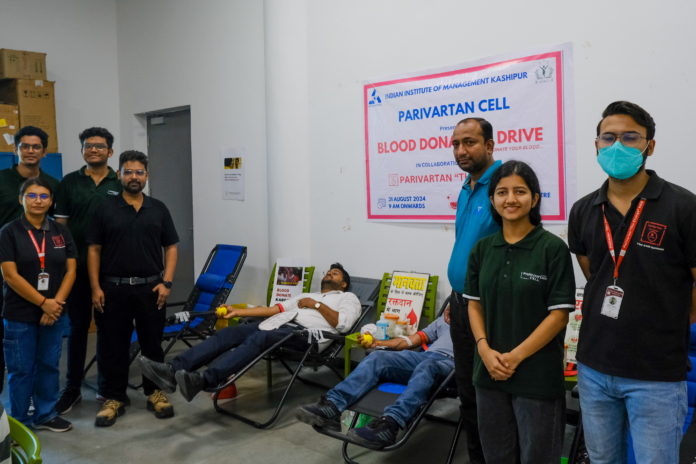
The IIM Kashipur’s social responsibility cell, Parivartan, successfully organised a blood donation drive on campus in collaboration with Parivartan “The Change” NGO. The event exemplified the cell’s ongoing commitment to fostering societal well-being through health, environmental, and educational initiatives. With a strong turnout of over 80 participants, including students, teaching staff, and non-teaching staff, the event underscored the importance of social responsibility within the IIM Kashipur community.

Blood donation drive at the IIM Kashipur

Parivartan, the social responsibility cell, known for its relentless efforts to improve societal conditions, once again highlighted the power of collaboration by partnering with Parivartan “The Change” NGO for this significant event. The drive was graced by the presence of Dr. Vivek Roy, Chairperson of Student Affairs, and Mr. Nitish Pant from the Student Affairs office, further emphasizing the institution’s dedication to social causes.

The participants, driven by a collective sense of purpose, contributed to the success of the drive, which aimed to raise awareness about the critical need for blood donations and the impact such initiatives can have on society.

The social responsibility cell has always believed in the concept of ‘sharing as giving’ and strives to instill this value within the campus community. Through this blood donation drive, they not only provided a platform for students and staff to contribute but also educated them on the importance of giving back to the community.

The success of the blood donation drive at IIM Kashipur reflects the strength of community spirit and the deep-rooted sense of social responsibility among its members. Parivartan’s ongoing initiatives continue to inspire and mobilize individuals towards meaningful action, demonstrating that through collaboration and shared effort, significant societal impact can be achieved. The drive serves as a reminder of the power of giving and the importance of contributing to the well-being of others.