Home Blog Page 491

Hurray! Devmali Village in Ajmer announced as the Best Tourist Village!

0

The Government of India’s Ministry of Tourism has announced Devmali village, located in the Masuda tehsil of Beawar district, as the country’s Best Tourist Village. This prestigious recognition will be awarded at a ceremony in New Delhi on November 27.

Ministry’s Statement on Devmali’s Selection

Arun Srivastava, Joint Director General of the Ministry of Tourism, stated, “The Best Tourist Village competition aims to identify and recognize villages that showcase the finest examples of tourist destinations while preserving their cultural and natural heritage. Devmali village has been selected as one of the best for its community-based values, unique lifestyle, and commitment to sustainability across economic, social, and environmental dimensions.”

Promotion Through Documentary

In an effort to boost tourism, District Collector Utsav Kaushal had launched a rural tourism documentary focused on Devmali. Created under the direction of the former Sub-Divisional Officer Bharat Raj Gurjar, the documentary highlights the authentic rural lifestyle of Devmali and its potential as a tourist destination. The short film introduces people to the real essence of the village, its traditions, local culture, and the untouched beauty that it offers.

A Village Rich in Tradition

Nestled in the Aravalli ranges, Devmali village is unique in many ways. All homes in the village are still made of traditional materials like mud, with roofs crafted from local kellu (tiles made of baked clay). The village has preserved its natural beauty and is home to the famous temple of Lord Devnarayan, a deity revered by the Gurjar community. Each year, millions of devotees visit this temple with their wishes and prayers.

The villagers of Devmali strictly adhere to their age-old customs and values, abstaining from alcohol and meat in honor of their devotion to Lord Devnarayan. The village even caught the attention of the film industry, as scenes for Jolly LLB 3 were shot here last month.

The Unique Heritage of Devmali

One of the most remarkable aspects of Devmali is the unwavering commitment of the villagers to an ancient vow made to Lord Devnarayan. According to local lore, when Lord Devnarayan arrived in the village centuries ago, he requested shelter. The villagers, in return, offered him their finest abode while pledging to live in simpler, unpaved homes. To this day, no family in Devmali builds concrete houses; instead, they continue to construct their homes using traditional materials like yellow clay and stone. The roofs are still made of kellu, and only the temple and government buildings in the village are made with modern construction methods.

This steadfast adherence to tradition, coupled with the village’s natural beauty and cultural significance, has earned Devmali the distinction of being India’s Best Tourist Village—a title that will surely bring even more attention to this hidden gem of Rajasthan.

Ms & Mrs: Bengaluru’s First Women-Only Club Opens on Brigade Road, Bengaluru

0

Bengaluru’s hospitality scene took a revolutionary turn earlier this year with the opening of Ms & Mrs, the city’s first women-only club. Launched on February 13, this exclusive space, envisioned by Panjury V. Shankar, offers women a safe and luxurious environment where they can relax, unwind, and connect. Located on the bustling Brigade Road, the 5,000-square-foot venue is a sanctuary for women, including trans women, offering a unique blend of dining, leisure, and empowerment.

Women-Only Spaces in Bengaluru

After successfully running her fine-dining South Indian restaurant Carnatic, Panjury, an engineering graduate, identified a gap in Bengaluru’s hospitality industry. “There were various interesting concepts in the food and beverage space but nothing that catered exclusively to women,” Panjury shared. Inspired by this observation, she launched Ms & Mrs, a club designed by women, for women.

Since its opening, Ms & Mrs has been warmly received by women seeking a place where they can feel safe, relaxed, and free from judgment. The club is more than just a venue—it is an inclusive space that celebrates women’s strength, individuality, and independence.

What Ms & Mrs Offers?

With the core concept of a restaurant and bar, Ms & Mrs goes beyond food and drink, offering a wide range of amenities. The club features a luxurious spa that provides foot reflexology, shoulder massages, manicures, and pedicures. It also has a boutique for those seeking a bit of retail therapy. From casual dining to pampering, Ms & Mrs offers something for every woman.

What sets the club apart is its all-female staff. “From the bartenders and bouncers to the marketing head and web designer, everyone involved in the venture is a woman,” Panjury said. The club has also given local housewives an opportunity to work as part-time chefs, helping them earn their own income. The space not only provides relaxation but also empowers women through employment and community.

A Celebration of Women

Since its launch, Ms & Mrs has become a favorite spot for women across Bengaluru. Whether it’s for a quiet day at the spa or a lively evening out with friends, the club provides a welcoming and inclusive environment for women of all backgrounds.

To celebrate the launch, Ms & Mrs hosted a special event in February, offering women two hours of unlimited wine and sangria along with a 50% discount on nail art services. The event was a hit, drawing in guests who enjoyed the relaxed and empowering vibe of the club.

The club’s popularity continues to grow, with members praising its thoughtfully curated services and the sense of community it fosters. For many, Ms & Mrs has become more than just a place to visit—it is a space where they feel truly at home.

India’s First Women-Only Lounge

Ms & Mrs joins the ranks of trailblazing women-only spaces in India. Another notable venue is Miss N Missus, India’s first women-only lounge, which launched on Bannerghatta Main Road in Bengaluru. This all-women-run establishment offers women an inclusive environment to unwind, party, and feel empowered. From bartenders to DJs, the entire team is female, reinforcing the message of women supporting women.

Miss N Missus quickly gained popularity for its exclusive offerings. For just INR 300, guests could enjoy unlimited wine and sangria for two hours, along with a selection of delicious snacks. The lounge has become a go-to spot for women seeking both fun and relaxation in a space designed specifically for them.

Looking Ahead

With the successful launch of Ms & Mrs, Panjury V. Shankar has set a new standard in Bengaluru’s hospitality industry. Her vision of creating a space that caters exclusively to women has filled a much-needed gap in the market, offering a haven where women can feel safe, valued, and empowered.

As Ms & Mrs continues to grow, it promises to become an integral part of Bengaluru’s social landscape, providing women with a unique venue to connect, unwind, and celebrate their individuality. From its luxurious amenities to its inclusive atmosphere, the club stands as a testament to what women can achieve when they come together.

For women seeking a space where they can feel comfortable, empowered, and free to be themselves, Ms & Mrs is the perfect destination.

Notable Fashion Moments from Milan Fashion Week SS25

0

Fashion month has moved to Italy, and Milan Fashion Week (MFW) has kicked off the Spring/Summer ’25 showcase with a bang. From September 17 to 23, the fashion capital is hosting 58 runway shows and three digital presentations, drawing global attention with some of the biggest names in the industry unveiling their new collections. After the successful editions of New York and London, Milan has stepped up to demonstrate that no one does fashion quite like the Italians.

This season’s MFW promises to be an unmissable event, with fashion giants like Fendi, Prada, Gucci, Versace, Bottega Veneta, and Dolce & Gabbana leading the charge. Traditionally focused on womenswear, more brands are now embracing unisex and co-ed collections, a trend gaining traction in recent years. Designers like Bottega Veneta and Ferragamo are pushing boundaries, joined by brands like Diesel, Jil Sander, and Marni. While Giorgio Armani has chosen to present in New York this year, Milan’s extended schedule has allowed emerging designers to make their mark. Here’s a roundup of the most notable fashion moments so far:

Day 1 Highlights

Fendi
Kim Jones opened Milan Fashion Week with a stunning Fendi SS25 collection. In anticipation of the Maison’s upcoming centennial celebrations, the collection paid homage to the year Fendi was founded, drawing inspiration from the Art Deco movement of the 1920s. The line seamlessly blended ready-to-wear and couture, bringing together machine-made and handcrafted elements, and celebrating both eveningwear and daywear.

The opening look—a sheer Art Deco-inspired shirtdress paired with rugged workwear boots—captured the collection’s essence. A delicate balance of transparency, embellishments, and retro silhouettes defined the show, with dropped waists, elongated shapes, and shimmering beading playing a prominent role. Drawing inspiration from the 1925 Paris Art Deco exhibition and F. Scott Fitzgerald’s The Great Gatsby, the collection radiated effortless elegance. One of the standout pieces, the Red Wing x Fendi collaboration boots, is sure to become a hit among fashion lovers.

Marni
Francesco Risso’s Marni show was fashion theater at its finest. Despite starting over an hour late, it was worth the wait. Models glided through a dimly lit room, where the audience was scattered across the space, creating a surreal, dreamlike atmosphere. Risso’s designs were pure fantasy—Napoleonic hats, arty prints on stiff fabrics, and oversized capes formed a procession of high-volume, exaggerated looks.

The collection was a visual feast of whimsical, distorted shapes, juxtaposed with more wearable pieces like boyish shorts and slip dresses. Statement accessories took center stage, with oversized sailor hats and dramatic necklines commanding attention. Risso cemented a new era of experimental fashion, one that embraces bold silhouettes, artistic flair, and statement-making accessories.

Day 2 Highlights

BOSS
BOSS stepped away from its usual corporate aesthetic to embrace a more relaxed, laid-back vibe with its “Out of Office” theme. The collection, presented at the stunning Palazzo del Senato, deconstructed traditional office wear to showcase a fresh perspective on everyday elegance.

Models donned relaxed silhouettes with loose, deconstructed silk coats, tailored shorts, and three-button suits, embracing a “clocked-out” approach to workwear. For women, flowing trench coats, draped blazers, and skirts that moved with ease underscored the collection’s emphasis on freedom and comfort. The shift in direction marks a new chapter for the brand, as it explores the delicate balance between sophistication and ease.

Roberto Cavalli
In an emotional tribute to Roberto Cavalli’s founder, Fausto Puglisi presented seven iconic pieces from the archives, worn by original models. These timeless designs included asymmetrical zebra dresses from the fall 2000 collection and a siren gown from fall 2003, alongside a selection of feathered gowns from the fall 2004 season. Puglisi’s new SS25 collection was equally dramatic, drawing inspiration from his hometown of Messina, Sicily.

The collection’s initial looks, characterized by nautical rope detailing and light, flowing white fabrics, evoked the sun-drenched beauty of the Sicilian coast. As the show progressed, vibrant photo prints of sunsets and crashing waves adorned slip dresses and pyjama sets. The standout moment came with the trio of mermaid dresses—stretchy, sensual, and perfect for the red carpet.

Etro
Marco de Vincenzo’s Etro show was a brilliant collaboration with Wolford, showcasing the brand’s signature prints on Wolford’s renowned fitted fabrics. The collection seamlessly combined Etro’s bohemian style with Wolford’s sleek garment craftsmanship. Bodysuits, jumpsuits, and dresses graced the runway, adorned with Etro’s iconic paisley motifs.

The standout pieces were the darker-toned looks, which contrasted beautifully with the vibrant prints, creating a captivating aesthetic. The collection drew inspiration from the theme of discovery, with each piece telling a story of exploration and chance encounters.

Summing Up

Milan Fashion Week SS25 has already delivered some of the season’s most iconic fashion moments. From Fendi’s Art Deco homage to Marni’s fantasy-filled runway, and BOSS’s redefined workwear to Roberto Cavalli’s tribute and Etro’s collaboration with Wolford, the event is living up to its reputation as one of the most exciting stops on the fashion calendar. As Milan continues to celebrate creativity and innovation, it’s clear that Italian fashion remains at the forefront of global style. Andiamo, Milano!

Gujarat Leads Awards at Global Renewable Energy Expo

0

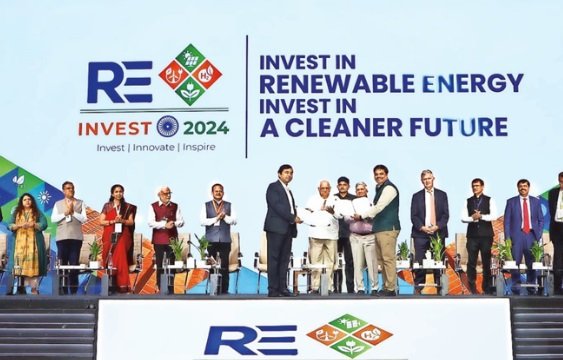
The 4th Global Renewable Energy Investors Meet and Expo marked a historic moment as it was held in Gujarat for the first time, departing from its usual location in Delhi. Gujarat emerged as the top-performing state, winning the most awards for its contributions to the renewable energy sector. The state’s achievements in wind and solar power, coupled with ambitious new initiatives, showcased its leadership in India’s green energy revolution.

Gujarat’s Success in Renewable Energy

Gujarat has consistently been at the forefront of renewable energy efforts, and this was clearly reflected at the expo. The state ranked among the top three in total renewable energy capacity in India and emerged as a leader in wind power generation. When it comes to solar power capacity, Gujarat took second place, only behind Rajasthan, which holds the top position.

The state’s robust renewable energy infrastructure has played a crucial role in its success, earning it recognition as a model for other states to follow. The awards at the expo further reinforced Gujarat’s status as a leader in the renewable energy sector.

Other Leading States in Renewable Energy

While Gujarat took the spotlight, other states were also recognized for their notable contributions to renewable energy. Rajasthan, Tamil Nadu, and Karnataka were honored for their progress in various renewable energy segments. Additionally, the states of Himachal Pradesh and Uttarakhand were commended for their advancements in hydropower development, showing that multiple regions across India are playing a role in the country’s transition to clean energy.

Gujarat’s Leadership and Vision

At the expo, Gujarat’s Chief Minister, Bhupendra Patel, emphasized the state’s commitment to renewable energy leadership and shared an ambitious vision for the future. He unveiled two key initiatives aimed at further expanding the state’s green energy potential: the “Mission 100 GW of Renewable Energy in Gujarat” and the “Gujarat Energy Vision 2047.”

These initiatives demonstrate the state’s long-term strategy to not only maintain its position as a renewable energy leader but to significantly increase its capacity. The “Gujarat Energy Vision 2047” outlines a comprehensive roadmap for transitioning to clean energy, ensuring energy security, and achieving net-zero carbon emissions in the coming decades.

Investments and Infrastructure Growth

The Global Renewable Energy Expo was also a platform for major investment announcements, with Memorandums of Understanding (MoUs) signed for projects worth over ₹500 billion. These investments are set to accelerate the growth of Gujarat’s renewable energy infrastructure, supporting the state’s ambitious goals and boosting its clean energy capacity.

Chief Minister Patel encouraged businesses and stakeholders to capitalize on Gujarat’s favorable renewable energy policies. The state’s proactive approach toward creating an investor-friendly environment has made it an attractive destination for renewable energy investments, further enhancing its growth trajectory in the sector.

Support from the Central Government

Union Minister Pralhad Joshi praised Gujarat’s leadership in renewable energy, noting that the state contributes approximately 53% of India’s solar generation capacity. This significant contribution underlines Gujarat’s pivotal role in driving the nation’s clean energy development.

One of the key initiatives supporting this growth is the PM Surya Ghar Muft Bijli Yojana, which has led to the installation of 350,000 rooftop solar systems across India. Gujarat has been a major participant in this program, promoting solar energy adoption at the household level. This initiative aims to reduce electricity costs for families while contributing to the country’s renewable energy goals.

Summing Up

The 4th Global Renewable Energy Investors Meet and Expo highlighted Gujarat’s exceptional contributions to renewable energy and positioned the state as a leader in India’s green energy transition. With ambitious initiatives like the “Mission 100 GW of Renewable Energy” and significant investments flowing into its renewable infrastructure, Gujarat is well on its way to achieving its energy vision for 2047. As the state continues to set benchmarks for clean energy production, it serves as an inspiration for the rest of India to follow in the journey toward a sustainable and carbon-neutral future.

India Seeks Modifications to the Indus Waters Treaty with Pakistan

0

In a significant move, India has officially notified Pakistan about its intention to modify the Indus Waters Treaty (IWT), citing new and unexpected challenges that require changes to the six-decade-old agreement. The notice, issued under Article XII(3) of the treaty, emphasizes the need for a new agreement between the two countries to address emerging concerns. This decision comes after India had already raised the issue in January 2023 due to ongoing disagreements over Indian hydropower projects.

What is the Indus Waters Treaty?

Signed in 1960, the Indus Waters Treaty was designed to regulate the sharing of water from the Indus River and its tributaries between India and Pakistan. According to the treaty, India has control over the Eastern Rivers—Beas, Ravi, and Sutlej—while Pakistan has rights over the Western Rivers—Indus, Chenab, and Jhelum. The World Bank played a crucial role in brokering the treaty, which also led to the creation of a Permanent Indus Commission to manage disputes.

Despite the tense relations between India and Pakistan over the decades, the IWT has stood as a rare example of successful water-sharing cooperation, surviving wars, political unrest, and numerous disagreements. However, recent disputes over hydropower projects have strained the treaty’s effectiveness in dealing with contemporary challenges.

The Dispute Over Hydroelectric Projects

India’s decision to seek changes stems from long-standing disputes with Pakistan over two Indian hydropower projects located on the Kishanganga and Chenab rivers. Pakistan has repeatedly raised concerns about these projects, questioning their compliance with the IWT. Over the years, both countries have attempted to resolve the issue through the treaty’s established mechanisms, but no final resolution has been reached. India’s notice to Pakistan signals its frustration over the slow and unresolved nature of these disputes.

How Are Disputes Resolved Under the Treaty?

The Indus Waters Treaty includes a three-step dispute resolution process under Article IX to resolve disagreements between the two nations:

  1. Indus Commissioners from both countries first attempt to resolve the issue through bilateral discussions.
  2. If these talks fail, a Neutral Expert is appointed to provide clarification.
  3. If the issue remains unresolved, it can be escalated to a Court of Arbitration for a final decision.

While this process has been instrumental in managing disputes, the current situation illustrates the limitations of the treaty in addressing complex issues like hydropower development.

Why Does India Want to Renegotiate?

India’s call for a renegotiation of the treaty reflects its concerns about a host of evolving challenges that were not considered when the IWT was originally framed in the 1960s. The country points to factors such as rapid population growth, environmental pressures, and the impact of cross-border terrorism as reasons why the treaty needs to be updated. Additionally, India highlights that the IWT does not adequately address modern threats like climate change, which has exacerbated water scarcity and altered river dynamics in the region.

India’s demand for modifications underscores its view that the treaty’s current provisions are outdated and insufficient to deal with today’s geopolitical and environmental realities.

Key Events Since January 2023

Several key developments have occurred since India’s initial notice to Pakistan earlier this year:

  • April 2023: India held a meeting to review the procedure for making changes to the treaty, signaling its commitment to updating the agreement.
  • July 2023: The Court of Arbitration declared that it had jurisdiction to handle the disputes over the Kishanganga and Ratle hydropower projects. However, India disagreed with this claim and expressed its reluctance to engage in the Court of Arbitration’s process.
  • September 2023: India participated in the Neutral Expert process to address the ongoing dispute but maintained its stance against joining the parallel Permanent Court of Arbitration (PCA) process.

These actions reflect India’s growing dissatisfaction with the existing treaty mechanisms and its desire for a more relevant and modernized agreement.

The Path Forward

India’s insistence on renegotiating the Indus Waters Treaty highlights a broader need to address the shifting landscape of water-sharing in the region. Climate change, technological advancements, and evolving geopolitical tensions are all factors pushing India to seek updates to the treaty. Through its recent actions, India is signaling that the original terms of the IWT, while successful in the past, must be revised to reflect the realities of the 21st century.

As discussions between the two nations continue, the future of the Indus Waters Treaty remains uncertain. Whether through bilateral talks, international mediation, or new agreements, both India and Pakistan will need to navigate these challenges to ensure the sustainable management of the vital water resources shared between them.

Exercise AIKYA: A Collaborative Approach to Disaster Preparedness

0

Exercise AIKYA, a two-day national event organized by the National Disaster Management Authority (NDMA) and the Army Southern Command in Chennai, is a vital step toward strengthening disaster management strategies in India. With an increasing number of natural disasters worldwide, the need for cohesive and efficient disaster response has never been more critical. Exercise AIKYA aims to improve coordination and preparedness between various organizations, ensuring that India is better equipped to handle future disasters.

Aims and Objectives

The primary focus of Exercise AIKYA is to foster improved collaboration and readiness among key stakeholders responsible for disaster management. Through a series of practical exercises, including simulations and interactive discussions, participants will explore ways to leverage technology for enhanced disaster management. The event provides an opportunity to assess the effectiveness of current protocols and devise new strategies to deal with disasters more efficiently.

Key Participants

The event has drawn participation from a diverse range of departments, highlighting the importance of an all-encompassing approach to disaster preparedness. Representatives from sectors such as Railways, Transport, Civil Aviation, Health, Environment and Climate Change, as well as State and National Disaster Management Authorities, have all come together. The Indian Army is also playing a significant role, demonstrating the necessity of military involvement in large-scale disaster response.

Additional contributors to the event include officials from key institutions like the Indian Meteorological Department (IMD), the National Remote Sensing Centre, the Central Water Commission, and the Forest Survey of India. Their expertise will be critical in addressing some of the major disaster-related challenges faced by the country today.

Focus Areas

The discussions at AIKYA will cover a range of pressing issues, including tsunamis, landslides, floods, forest fires, cyclones, and recent disasters that have impacted India and the world. The event will delve into the prevention of these disasters, focusing on both short-term preparedness and long-term management strategies. By examining recent events, participants can draw valuable lessons to implement more effective responses in the future.

Knowledge Sharing and Capacity Building

One of the key objectives of Exercise AIKYA is to promote knowledge sharing among participants. By learning from each other’s experiences, attendees will gain a deeper understanding of best practices in disaster management. This exchange of ideas is crucial for building capacity and skills that can be employed in future disaster preparedness initiatives.

Strategic planning will also play a significant role during the event, as participants work together to create actionable solutions to improve disaster management practices. The goal is to ensure that organizations are better equipped to respond to any disaster swiftly and effectively.

Understanding Disaster Management

Disaster management follows a structured approach that includes four essential steps: mitigation, preparedness, response, and recovery. Effective disaster management means planning ahead, and this is where the Sendai Framework comes into play. This global plan aims to reduce disaster risk by emphasizing proactive preparedness, especially in the face of climate change, which accounts for over 90% of disasters globally.

The U.S. Federal Emergency Management Agency (FEMA), established in 1979, offers a model for disaster management, particularly in how early warning systems can mitigate the impact of disasters by up to 30%. Local community involvement has also proven to enhance resilience, as these grassroots efforts lead to quicker and more effective responses during crises.

Disaster Risk Reduction (DRR) strategies are pivotal for ensuring long-term safety and sustainability, focusing on how to minimize the effects of disasters before they occur. Training exercises, like those conducted during Exercise AIKYA, are fundamental in improving disaster response readiness. These drills allow participants to practice and refine their skills, ensuring that all agencies involved can function as a cohesive unit during real emergencies.

The Role of Technology

Technology is a critical component of modern disaster management, offering real-time data, monitoring, and communication during disaster events. The use of advanced systems enables responders to assess situations quickly and accurately, helping to save lives and reduce damage. AIKYA’s focus on integrating technology into disaster response will ensure that India stays ahead in its disaster preparedness efforts.

Summing Up

Exercise AIKYA is not just a training event; it is a significant step toward building a more resilient nation in the face of disasters. By bringing together key agencies, encouraging the exchange of knowledge, and focusing on technological advancements, the event underscores the importance of collective responsibility in disaster management. As natural disasters continue to rise in frequency and intensity, initiatives like AIKYA will be instrumental in ensuring that India is prepared for any eventuality, safeguarding lives, property, and the environment.

Veterans to discuss literature, culture, poems & social issues in Shekhawati Sahitya Sangam 2024 from Sept 28 to Oct 2 in Sikar

0

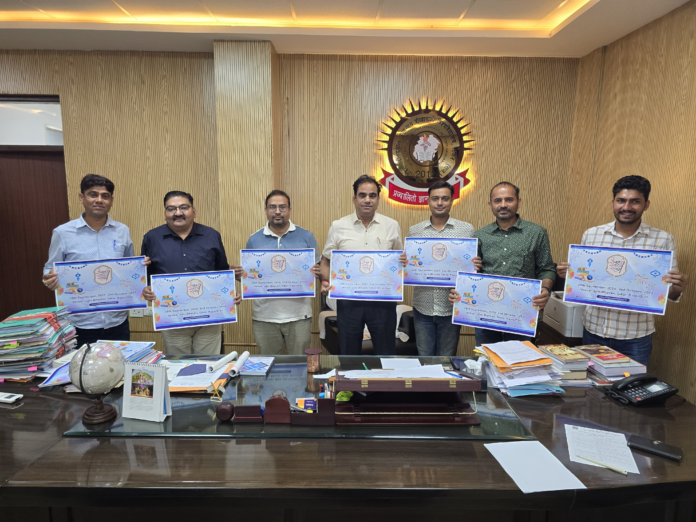
Shekhawati Sahitya Sangam 2024 is coming back with all its sheen and glitter in Sikar from September 28 to October 2 this year. A poster release programme was held recently in the esteemed presence of Vice Chancellor of Pandit Deendayal Upadhyaya Shekhawati University, Professor Anil Kumar Rai and Registrar Rakesh Kumar Gupta. Other dignitaries who marked their presence on this occasion included Sachin Sharma, Abhimanyu Singh Rathore, Dr. Ashok Mahala and Manoj Kumar.

In the same series, a poster release programme was also held at Government Arts College Katrathal, in the presence of Principal of Government Arts College, Professor Sawai Singh Dhayal and all other staff members and students of the college. 

The attraction of the programme will be Virat Kavi Sammelan and a musical evening in which world famous Kabir Cafe Band will perform. Also there will a folk drama. In this confluence, more than 25000 books from more than 25 publishers will also be available for sale. The literature will be related to social and national ideas. Knowledge-enhancing literature will also be available for children. This programme organised in Shekhawati has made a distinguished identity in a very short time. This five-day programme will be organised from 28 September to 02 October 2024 at Jain Bhawan, Bajaj Road, Sikar.

International Startup Festival 2024 from 26th to 28th September 2024

0

The International Start-up Foundation, a prominent not-for-profit organization supporting the growth and development of the start-up ecosystem, in association with International Startups Network Pvt Ltd (ISN) – a global incubation city that will serve as a physical incubation hub for startups around the world hosts the International Startup Festival (ISF) 2024. Themed ‘Innovation and Entrepreneurship in the AI Era’, ISF 2024 is scheduled from 26th to 28th September 2024 at the Engineering Staff College of India (ESCI), Gachibowli, Hyderabad. More than 15 countries including the USA, Canada, UK, Australia, New Zealand, Japan, UAE and 8 countries from Europe will participate in ISF 24. ISF 2024 will be a unique platform for startup founders to connect with peers and investors, collaborate on innovative projects, and outline a growth path for their ventures.

ISF 24 is set to be one of the largest and most influential events in the global startup ecosystem, designed to connect entrepreneurs with investors, industry leaders, and fellow innovators. The festival aims at hosting 250+ CXOs 300+ VCs, 800+ Global Angels, more than 5000 + delegates and 2000+ Exhibitors at the Expo from over 15 countries. The event will have startups from Fintech, AgriTech, Health Tech, EduTech, Defense and Space Tech, Cybersecurity etc. The conference will feature ISF talks by 9 top global speakerscurated Roundtables of industry experts on Rural Economic Forum, CXO’s, GCC, Fintech, Agritech, Health Tech, Women in Business, SET (Skill, Employability and Talent) and Junicorns (Next Generation of Innovators) besides 10 Investor connect sessions to benefit the Startups. The Goal of ISF 2024 is to provide a robust ecosystem of mentors, CXOs, and investors to help startups explore, scale, and bring their innovations to a broader audience. The event offers 3 days of Innovation, Inspiration and Networking with industry leaders, investors and policymakers ensuring broad industry representation.
 

Startups will have the chance to present their ideas to seasoned investors through ISF 24 Pitch Sessions, gaining valuable feedback and potential funding. The investor-startup matchmaking sessions offer one-on-one opportunities to foster relationships between entrepreneurs and investors. Moreover, it will provide a platform for startups to network and identify mentors to help them with insights into fundraising, product development, scaling, and global market access strategies.
 

Over 2000+ exhibitors will demonstrate their innovations at the startup exhibition. It is a dynamic space for showcasing cutting-edge products and solutions, attracting interest from investors, partners, and customers. The highlight of the Expo will be the Junicorn pavilion, where future entrepreneurs will get an opportunity to showcase their solutions at ISF 2024.
 

Speaking about the International Startup Festival 2024, Mr JA Chowdary, Key Architect of the Indian Tech Industry and Chairperson and Convenor of ISF, said, “It’s an exciting opportunity to bring the International Startup Festival to Hyderabad, fostering collaboration and innovation within the global startup ecosystem. With the theme Innovation and Entrepreneurship in the AI Era, we aim to empower startups by integrating AI technologies into their ventures, enabling them to solve real-world challenges and drive sustainable growth. Following the success of the Global CXO Summits in the USA and Jamaica, ISF 24 is set to be an extraordinary gathering of innovators, entrepreneurs, and investors from around the world, marking a pivotal moment for the future of entrepreneurship. At ISF we aim to address challenges faced by startups like moving them from the idea stage to execution, supporting them with mentorship, avenues for funding and fostering synergistic networks etc. We have also witnessed that startups face a challenge in finding the right kind of talent. To help this issue International Startup Foundation is planning to partner with Sri City to set up ISF Gurukul. It will be a platform to equip fresh engineering graduates and people employed with different organizations to upskill with real-time training using data science and prompt engineering tools. This will create a pool of employable manpower available for the robust startup ecosystem in the country. We will expand it further to other cities also.”
 

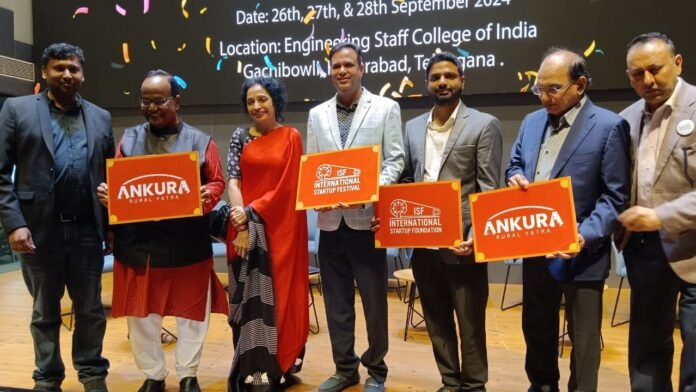
Adding to this Dr. Siva Mahesh Tangutooru, Director at ISF Network said, “ISF 2024 is set to attract participation from over 50,000 startups from India, the USA, and other countries, with the top 150 startups being selected as finalists. These finalists will have the unique opportunity to pitch their ideas onstage to secure funding, and mentoring from the industry experts. The selection process stems from the Investor Connect Workshops held across key locations, including Pune, Bengaluru, Andhra Pradesh, the USA, Europe, and Hyderabad. ISF distinguishes itself by offering the Junicorn Roundtable, a dedicated forum to inspire and support the next generation of innovators. ISF24 will be the only platform with a dedicated focus on Rural Innovation, ISF stands out by hosting the Rural Economic Forum, which aims to drive grassroots innovation and explore tech-enabled solutions for rural economies. To further inclusion of rural India, International Startup Foundation is pioneering Ankura Yatra an initiative where the mentors, investors and industry experts travel to the rural areas allowing the grass root innovators to display their ideas and secure guidance, investment and market access to reach out to a larger population. We are confident that this will help create an inclusive environment and propel increased participation of rural India’s in the growth of the country.”
 

ISF 24 will be graced by the Hon’ble Chief Minister of Telangana Sri A Revanth Reddy, Sri Bhatti Vikramarka Mallu, Deputy CM, Telangana, Sri D Sridhar Babu, Minister for ITE&C, Industries & Commerce, Legislative Affairs, Govt. of Telangana, Sri Uttam Kumar Reddy, Irrigation & CAD; Minister for Food & Civil Supplies, Govt of Telangana along with Kinjarapu Ram Mohan Naidu, Union Minister of Civil Aviation, Dr. Pemmasani Chandra Sekhar, Minister of State for Rural Development & Communications Govt. of India several policymakers, Industry Leaders, and successful startup founders sharing their insights to develop successful enterprises. The International Startup Festival 2024 is Powered by Vamsiram Builders and Co-Powered by NTT Data.
 

About International Start-Up Foundation

International Start-up Foundation was founded by a group of entrepreneurs who have built successful businesses themselves and walked the path. Having built start-ups from scratch, raised multi-million dollars as investments and built global businesses, distribution networks and strategic partnerships, the entrepreneurs understand what it takes practically for another first-time entrepreneur to build and scale a start-up.
 

International Start-up Foundation has been formed to support these first-time entrepreneurs, especially from smaller Tier II and Tier III towns. To successfully build & scale up their start-ups. This support is provided by arranging progressive and constructive start-up events where early-stage start-ups and those in the start-up ecosystem willing to support them can meet, interact, develop relationships and collaborate. Besides events, it focuses on reaching out to hundreds of incubators around the country and providing them the guidance, access to mentors and resources.
 

For more details please visit www.isfnetwork.org.

Tourism Malaysia Celebrates Air India’s Return with Direct Flights to Kuala Lumpur

0

Tourism Malaysia is excited to announce the reinstatement of Air India’s direct flights between New Delhi and Kuala Lumpur, starting from September 15, 2024. After a 16-year hiatus, this direct daily service marks a significant milestone in enhancing air connectivity between India and Malaysia, offering travelers more convenience and flexibility.

Along with the existing services operated by Malaysia Airlines, Air Asia, and Batik Air, Air India’s return adds another option for travelers, particularly those from northern and eastern India, to explore Malaysia’s diverse attractions. This development is expected to further strengthen the bilateral relations between India and Malaysia, especially following the recent visit by Prime Minister Dato’ Seri Anwar Ibrahim to India, which focused on multi-sectoral cooperation.

Datuk Manoharan Periasamy, Director General of Tourism Malaysia, expressed his excitement: “We are thrilled to welcome Air India back to Kuala Lumpur. This new route offers greater choice for travelers and enhances connectivity. Now, passengers can travel to Malaysia from 17 Indian cities, providing seamless travel options. With these additional flights, we also anticipate an increase in European and North American tourists who can now travel to Malaysia via one-stop connections through New Delhi.”

Flight Schedule Between New Delhi and Kuala Lumpur

Effective from 15th September 2024, Air India will operate daily flights:

FlightSectorDepartureArrivalDays of Operation
AI384DEL – KUL1300 Hrs2100 HrsDaily
AI385KUL – DEL0830 Hrs1125 HrsDaily

Boosting Tourism and Economic Ties

Tourism Malaysia is targeting to welcome 1 million Indian tourists by the end of 2024. As of July 2024, the country has already seen an 84.5% increase in Indian tourist arrivals compared to the same period in 2023, with a total of 625,000 travelers. Malaysia currently receives 219 weekly direct flights from various cities in India, with a combined seating capacity of up to 42,000 passengers.

With the relaunch of Air India’s flights, Malaysia’s tourism sector is expected to witness further growth, aligning with its goal to attract 35.6 million international tourists and generate RM147.1 billion in tourism revenue by Visit Malaysia 2026. These flights are expected to attract a surge of European and North American travelers using New Delhi as a transit hub to Malaysia.

A Warm Welcome

Air India’s return to Kuala Lumpur was marked with a symbolic water cannon salute, signifying the beginning of this new chapter in air travel between the two nations. This direct connection is expected to play a crucial role in driving tourism and fostering closer relations, not only between Malaysia and India but also with the broader global tourism community.

Visit Malaysia 2026: A Sustainability Focus

Looking ahead, Visit Malaysia 2026 will focus on the sustainability of Malaysia’s tourism industry, in alignment with the United Nations Sustainable Development Goals (UNSDG). Tourism Malaysia is committed to promoting eco-friendly travel experiences, and these new flights will provide more opportunities for tourists to discover the natural beauty and cultural heritage of the country.

Additionally, Tourism Malaysia is also part of the Indonesia-Malaysia-Thailand Growth Triangle (IMT-GT) initiative, promoting the region as a unified destination for international tourists. The IMT-GT Visiting Year 2023-2025 aims to showcase the growth and potential of these three nations as a collective tourism hub.

For more information on Air India’s direct flights and to plan your Malaysian adventure, visit www.airindia.com or contact your preferred travel agent.

About Tourism Malaysia

The Malaysia Tourism Promotion Board, also known as Tourism Malaysia, operates under the Ministry of Tourism, Arts & Culture Malaysia and is responsible for promoting Malaysia as a top-tier tourism destination. Since its inception, Tourism Malaysia has emerged as a leader in international tourism, contributing significantly to the country’s economic development.

Stay updated on all the latest tourism information by following Tourism Malaysia on Facebook, Instagram, Twitter, YouTube, and TikTok.

Chitkara University Launches Journal on Sustainability in Collaboration with Springer Nature

0

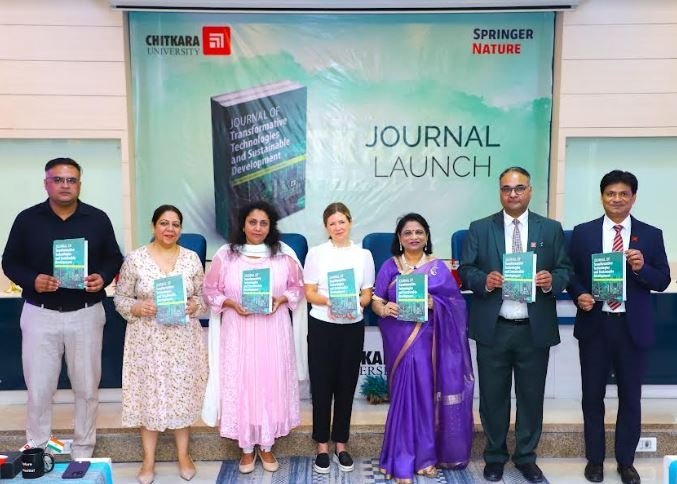
Springer Nature, a leading global research publisher, has launched the Journal of Transformative Technologies and Sustainable Development at Chitkara University. This new journal aims to be a premier platform for cutting-edge research at the intersection of technology and sustainability, addressing some of the most pressing challenges facing the world today.

The launch event featured prominent participants, including Dr. Madhu Chitkara, Hon’ble Pro Chancellor of Chitkara University; Dr. Fiona McKenzie, Vice President of Springer Journals; Ms. Suvira Srivastava and Ms. Teena Bedi from Springer Nature; Dr. Rajnish Sharma, Vice Chancellor of Chitkara University, Himachal Pradesh; Dr. Amit Mittal, Pro Vice Chancellor, Chitkara University, Punjab; and Dr. Sagar Juneja.

The journal will focus on high-quality, peer-reviewed research in areas such as renewable energy, climate change mitigation, circular economy, smart cities, and sustainable agriculture. “We are thrilled to introduce this journal, which will serve as a vital platform for advancing knowledge and driving progress toward a sustainable future,” said Dr. Fiona McKenzie.

Dr. Madhu Chitkara emphasised, “This journal is a reflection of Chitkara University’s dedication to research that not only advances academic knowledge but also drives practical solutions for global challenges. I commend Dr. Rajnish Sharma, our Editor-in-Chief, alongside Dr. Amit Mittal (Section Editor) and Dr. Sagar Juneja (Associate Editor), for their visionary leadership in shaping this initiative.”

The Journal of Transformative Technologies and Sustainable Development is now open for submissions, and researchers across disciplines are encouraged to contribute to this influential new publication, which promises to shape the future of sustainable innovation.

About Springer Nature: Springer Nature is a leading global research, educational, and professional publisher, providing quality content through a range of innovative platforms, products, and services. 

About Chitkara University

Chitkara University is a renowned institution committed to excellence in research, innovation, and education. With a strong focus on promoting interdisciplinary research and fostering industry collaborations, Chitkara University has established itself as a leader in driving impactful research initiatives. The University’s research credentials are further strengthened by its faculty’s extensive publications in high-impact journals and their active participation in international conferences and symposiums.

For more information, please visit www.chitkara.edu.in.