Home Blog Page 488

Kerala Tops 2024 State Food Safety Index

0

For the second consecutive year, Kerala has secured the top position in the 2024 State Food Safety Index (SFSI), affirming its dedication to maintaining the highest food safety standards in India. The Food Safety and Standards Authority of India (FSSAI) revealed these rankings at the Global Food Regulators Summit 2024, recognizing Kerala’s outstanding efforts in creating a robust food safety ecosystem.

Overview of the Rankings

Kerala’s consistent focus on food safety has placed it at the top of the 2024 SFSI rankings, followed closely by Tamil Nadu in second place, and Jammu and Kashmir in third. Gujarat, which had previously claimed the top position in 2021, dropped to fourth this year. These dynamic shifts in rankings underscore the evolving nature of food safety performance across Indian states, as each region continues to enhance its food safety measures and infrastructure.

What is the State Food Safety Index (SFSI)?

Launched in 2019, the State Food Safety Index (SFSI) was developed to assess how effectively Indian states and union territories ensure food safety for their citizens. The index evaluates performance across five core parameters:

  1. Human Resources and Institutional Data: This assesses the adequacy of food safety personnel and institutions in the state.
  2. Compliance: The state’s ability to follow food safety regulations and standards.
  3. Food Testing Infrastructure and Surveillance: The quality and reach of food testing labs, and the effectiveness of monitoring systems.
  4. Training and Capacity Building: Efforts to train food handlers and enhance food safety knowledge.
  5. Consumer Empowerment: Initiatives that raise awareness about food safety among the public.

These criteria form a comprehensive evaluation of a state’s ability to protect consumers from unsafe food practices while fostering an environment of compliance and awareness.

Kerala’s Achievements in Food Safety

Kerala’s top performance in the 2024 SFSI is the result of focused strategies and initiatives aimed at improving food safety in the state. Some of the key actions that have contributed to Kerala’s success include:

  • Exceeding inspection targets: Kerala conducted more food safety inspections than the set benchmarks, demonstrating its proactive approach.
  • Improving food testing infrastructure: Enhanced laboratories with modern equipment have been established to ensure more accurate and timely food testing.
  • Increasing licensed food operators: Targeted campaigns have led to a significant increase in the number of businesses operating with the correct food safety licenses, ensuring wider compliance.

Recognition and Impact

The FSSAI has specifically commended Kerala for surpassing its food safety inspection targets for 2023-24. The state’s commitment to strengthening its food safety infrastructure and running effective consumer awareness campaigns has set a benchmark for other states to follow. By focusing on both regulatory compliance and public education, Kerala has created a holistic model for food safety that others in the country can replicate.

Government Initiatives in Kerala

Kerala’s Health Minister, Veena George, has highlighted several critical initiatives that have propelled the state to the top of the SFSI rankings:

  • Regular food safety inspections: Frequent checks to ensure businesses meet food safety standards.
  • Food sample collection for testing: Rigorous testing of food products to identify and address potential safety concerns.
  • Legal action against violators: Strict enforcement of food safety regulations through legal channels.
  • Accrediting laboratories: Continuous improvements in the state’s food testing capabilities.
  • Training and public education: Ongoing efforts to train food handlers and raise public awareness about the importance of food safety.

These initiatives represent a concerted effort by Kerala to prioritize food safety, ensuring that both businesses and consumers understand their roles in maintaining high standards.

About the Food Safety and Standards Authority of India (FSSAI)

Established in 2006 under the Food Safety and Standards Act, the Food Safety and Standards Authority of India (FSSAI) is responsible for safeguarding the quality and safety of the food consumed by millions of Indians. The FSSAI sets rules regarding food labeling, packaging, additives, and contamination, and its certification ensures that a product adheres to stringent safety regulations. The authority also runs various training programs on food safety, working closely with international bodies such as Codex Alimentarius to align India’s standards with global benchmarks. FSSAI’s headquarters is located in New Delhi, and its logo serves as a mark of compliance with food safety standards.

Summing Up

Kerala’s continued success in the State Food Safety Index highlights the state’s leadership in ensuring food safety across India. By exceeding inspection goals, improving food testing infrastructure, and fostering consumer awareness, Kerala has created a model of excellence. As states like Tamil Nadu and Jammu and Kashmir follow closely behind, India’s collective commitment to food safety is becoming stronger. With the ongoing efforts of the FSSAI, and the leadership shown by states like Kerala, the future of food safety in India is headed in a positive direction, promising safer and healthier food for all citizens.

Cigarettes and Other Tobacco Products Act (COTPA), 2003: New Guidelines for Tobacco-Free Educational Institutions

0

In a decisive move to curb the rising tobacco use among young people, India’s Union Ministry of Education and the Ministry of Health & Family Welfare have issued new guidelines aimed at making educational institutions across the country tobacco-free. This initiative aligns with the provisions of the Cigarettes and Other Tobacco Products Act (COTPA), 2003, focusing on the protection of children and teenagers from the dangers of tobacco addiction.

The Growing Concern: Current Tobacco Use Among Youth

According to the Global Youth Tobacco Survey (GYTS) 2019, approximately 8.5% of school students aged 13 to 15 in India use tobacco products. Alarmingly, over 5,500 children start using tobacco every day, and 55% of lifelong tobacco users begin their habit before the age of 20. These figures underline the urgency of addressing tobacco use at a young age, as early exposure significantly increases the risk of long-term addiction and associated health issues.

Objectives of the Tobacco-Free Educational Institution (ToFEI) Manual

In response to these concerns, the government has introduced the Tobacco-Free Educational Institution (ToFEI) manual, a comprehensive guide for schools, colleges, and universities to create tobacco-free environments. The key objectives of the ToFEI manual include:

  • Raising awareness about the harmful effects of tobacco on students, teachers, and staff.
  • Providing information on how to quit tobacco use through counseling and support programs.
  • Creating healthy, tobacco-free environments within educational institutions to safeguard the well-being of the youth.
  • Enforcing tobacco regulations, particularly those that restrict the sale of tobacco products near educational institutions and prohibit the use of tobacco by minors.

The manual serves as a practical guide for both public and private educational institutions, aiming to foster a culture of health and prevention among young people. By integrating these guidelines, schools and colleges can play a pivotal role in reducing tobacco consumption and promoting healthier lifestyles.

Collaborative Efforts for Effective Implementation

To ensure the success of this initiative, the Ministries of Education and Health & Family Welfare are working in close collaboration with state and district authorities. This coordinated effort is designed to enforce tobacco-free guidelines effectively at the local level, ensuring educational institutions comply with COTPA regulations. By engaging local governments, school administrators, and health officials, the government hopes to drastically reduce tobacco use among young people and create a nationwide impact on public health.

Reducing Youth Tobacco Use

This initiative underscores the Indian government’s commitment to protecting the next generation from the dangers of tobacco. By raising awareness through educational programs and enforcing stricter regulations on tobacco sales near schools, the government aims to foster a tobacco-free culture among India’s youth. These measures are crucial for building a healthier future, where children are not exposed to the temptations and dangers of tobacco at a young age.

About the Cigarettes and Other Tobacco Products Act (COTPA), 2003

The Cigarettes and Other Tobacco Products Act (COTPA) was enacted in 2003 to regulate the use and sale of tobacco products in India. Under this law, smoking in public places is prohibited, and advertising tobacco products is banned. COTPA mandates that health warnings cover at least 85% of all tobacco product packaging, ensuring that consumers are made aware of the severe health risks associated with tobacco use.

A key aspect of the Act is the prohibition of tobacco sales to minors and the restriction of tobacco sales within 100 yards of educational institutions. These measures are critical in preventing easy access to tobacco products for children and teenagers, making it more difficult for them to develop tobacco habits. State governments are responsible for enforcing these rules, and periodic updates to the Act help strengthen its effectiveness. Public health campaigns are regularly conducted to encourage tobacco users to quit and to highlight the severe health risks of smoking and other forms of tobacco use.

Summing Up

The recent updates to the COTPA, 2003, along with the introduction of the ToFEI manual, reflect a bold step toward protecting India’s youth from tobacco addiction. By making educational institutions tobacco-free and fostering community awareness, the government aims to significantly reduce tobacco consumption among young people. These efforts are vital not only for improving public health but also for ensuring a healthier, smoke-free future for India’s next generation.

Nagar Van Yojana Surpasses Target with 111 Urban Forests: A Greener Future for India’s Cities

0

Launched in 2020, the Nagar Van Yojana (NVY) is a flagship initiative by the Government of India aimed at transforming urban landscapes through increased greenery and forestation. Originally set to create 100 urban forests in its first 100 days, the program exceeded expectations, with 111 Nagar Vans approved across six states and one union territory. This initiative marks a significant stride toward sustainable urban development and the enhancement of urban biodiversity.

Purpose of Nagar Van Yojana

At its core, the Nagar Van Yojana seeks to improve the quality of life in India’s cities by creating more green spaces. These urban forests—known as Nagar Vans—are designed not just for recreation but also for educational purposes and as a tool to mitigate climate change. They provide crucial environmental benefits such as improving air quality, reducing the urban heat island effect, and offering natural spaces where residents can relax and reconnect with nature amidst the concrete jungles of city life.

Financial Support and Scope

To ensure the success of the initiative, the government has allocated Rs. 4 lakh per hectare for the creation and maintenance of these forests. Each Nagar Van will cover an area ranging from 10 to 50 hectares, depending on the size and layout of the city. Cities governed by Municipal Corporations, Municipalities, and Urban Local Bodies will be part of this program, ensuring that even densely populated urban centers benefit from this green initiative.

Focus on Biodiversity

The NVY places a strong emphasis on biodiversity, focusing on planting a wide variety of tree species, including fruit-bearing, medicinal, and native varieties. This diversity not only enhances the visual appeal of the forests but also plays a critical role in attracting wildlife. By creating habitats for different species of plants, birds, and insects, the Nagar Vans act as ecological havens within the urban sprawl. These urban forests will foster a balanced environment, supporting biodiversity while providing a breath of fresh air to city dwellers.

Community Participation

One of the defining features of the Nagar Van Yojana is its focus on community involvement. Citizens are encouraged to participate in tree-planting activities, environmental education programs, and other community-driven initiatives. This engagement helps forge a deeper connection between people and their local environment, making them stakeholders in the preservation and growth of their urban green spaces. To maintain ecological balance, each Nagar Van must have at least two-thirds of its area covered with trees.

By involving local communities, the initiative also aims to raise awareness about the importance of environmental conservation and foster a culture of environmental stewardship.

Components of Nagar Vans

Each Nagar Van will feature various components designed to serve multiple functions, from biodiversity preservation to cultural and medicinal initiatives. These include:

  • Biodiversity Parks: Designed to protect and nurture a variety of plant and animal species, these parks will act as mini-reserves within cities.
  • Smriti Vans: These areas allow individuals to plant trees in memory of loved ones, creating a living legacy.
  • Butterfly Conservatories: These will serve as sanctuaries for butterflies, enhancing both the biodiversity and the aesthetic value of the urban forest.
  • Herbal Gardens: Dedicated to the growth of medicinal plants, these gardens promote traditional health practices and sustainable agriculture.
  • Matri Vans: Planted under the “Ek Ped Ma Ke Naam” (A Tree in Mother’s Name) initiative, these areas honor motherhood while promoting tree plantation.

Future Goals and Long-Term Vision

The Government of India has ambitious plans for the future of urban greenery through the Nagar Van Yojana. By 2027, the aim is to establish 1,000 Nagar Vans across the country. This expansion will be supported by the National Compensatory Afforestation Management and Planning Authority (CAMPA), ensuring that adequate resources are available for the creation, maintenance, and protection of these urban forests. The larger goal is to address key environmental challenges, such as air pollution, habitat loss, and climate change, while promoting urban biodiversity and ecological balance.

Summing Up

The Nagar Van Yojana is a landmark initiative that underscores India’s commitment to creating sustainable urban environments. By surpassing its initial target and continuing to expand, the program sets an inspiring example of how urban areas can be transformed into greener, more livable spaces. As cities grow, so does the need for thoughtful urban planning that prioritizes the well-being of both residents and the environment. Through the creation of 111—and soon 1,000—urban forests, the NVY is well on its way to ensuring that India’s cities remain verdant oases in the midst of rapid urbanization.

India Launches First Comprehensive Cancer Multi-Omics Data Portal

0

India has reached a significant milestone in cancer research with the introduction of its first comprehensive cancer multi-omics data portal, initiated by the Indian Cancer Genome Atlas (ICGA). This platform is a breakthrough, providing access to essential data gathered from Indian cancer patients. It aims to help doctors and researchers tailor treatments specifically for Indian patients by understanding the unique genetic and molecular characteristics of cancers found in the Indian population.

Challenges in Cancer Treatment

Historically, cancer treatments in India have been based on data and research derived from Western countries. However, cancers in Indian patients may exhibit different genetic and environmental factors compared to those studied in the West. Consequently, some treatment protocols might not work as effectively on Indian patients due to the lack of locally specific research data. This discrepancy has posed a significant challenge in developing precise and effective treatments.

ICGA’s Mission: Advancing Cancer Research in India

The Indian Cancer Genome Atlas (ICGA) was launched with the vision to bridge this gap by creating a repository of detailed genetic and molecular information from Indian cancer patients. The primary mission of ICGA is to understand the genetic makeup and molecular characteristics of various cancers in India. By analyzing the genomic and clinical data of cancer patients, ICGA hopes to enhance cancer treatment by offering personalized therapies that consider the unique biological makeup of Indian patients.

Key Features of the Multi-Omics Data Portal

The ICGA data portal stands as India’s first-ever initiative to combine different types of molecular data—such as DNA, RNA, and protein information—from Indian cancer patients. Currently, it focuses on breast cancer patients, providing vital data on how these individuals responded to various treatment protocols. With data from 50 breast cancer patients already available, ICGA plans to expand this pool to over 500 patients within the next year. This expansion will offer researchers an invaluable resource for studying cancer at a deeper, more localized level, enabling the discovery of trends and treatment efficacy in Indian patients.

One of the portal’s most remarkable features is its multi-dimensional approach to cancer data, combining molecular, clinical, and treatment response data in one platform. This level of detail allows for a more comprehensive understanding of the disease, aiding in the development of therapies that are both more targeted and effective for Indian patients.

Revolutionizing Cancer Research

The multi-omics data portal introduced by ICGA is expected to reshape how cancer is studied and treated in India. By providing researchers with localized, in-depth data on cancer, the portal paves the way for breakthroughs in personalized medicine—treatments designed specifically for the genetic and molecular characteristics of Indian patients. This is particularly important in India, where certain cancers like oral and breast cancer are prevalent, and where environmental and lifestyle factors differ significantly from those in Western countries.

With access to this platform, researchers can develop more effective treatment plans and conduct studies that are more representative of the Indian population. In turn, this could lead to improved outcomes for cancer patients in the country, saving lives through more accurate and personalized interventions.

About the Indian Cancer Genome Atlas (ICGA)

Launched in 2020, the ICGA has been a pioneer in Indian cancer genomics. It focuses on studying common cancers in India, such as oral, lung, and breast cancers, collaborating with research institutions and hospitals nationwide. The ICGA’s mission is to map the genetic differences in cancer patients across India, contributing to a deeper understanding of the disease and supporting the development of tailored treatments for diverse populations. By gathering and analyzing data from across the country, ICGA plays a crucial role in transforming India’s approach to cancer care.

In conclusion, the ICGA’s multi-omics data portal is not just a technological advancement—it represents a new hope for Indian cancer patients. By shifting the focus towards personalized treatments based on India-specific data, this initiative marks a turning point in the fight against cancer in the country, ensuring that future therapies will be more aligned with the genetic and environmental realities faced by Indian patients.

World Gorilla Day: Celebrating and Protecting Our Gentle Giants

0

Each year on September 24, World Gorilla Day serves as a reminder of the critical need to protect gorillas, our closest relatives after chimpanzees. This day calls upon individuals, governments, and organizations to unite in the effort to preserve these incredible creatures, with initiatives often driven by international agreements like the Convention on the Conservation of Migratory Species of Wild Animals. While gorillas have long been misunderstood and misrepresented, especially in popular culture, today we are learning to appreciate their true nature—peaceful, intelligent, and deeply interconnected with their environments.

Shifting the Narrative: From Villains to Gentle Giants

For decades, gorillas were depicted as dangerous and violent in Western media, with one of the most notable examples being the 1933 film King Kong. The movie created a fearful image of gorillas as savage beasts, an image that took root in the public imagination. However, this portrayal couldn’t be further from the truth. In reality, gorillas are gentle and social animals, similar to bonobos and smaller chimpanzees. They live in close-knit family groups, exhibit deep emotional intelligence, and play a crucial role in maintaining the balance of their ecosystems.

The Origins of the Name ‘Gorilla’

The name “gorilla” has a rich and somewhat mysterious history. It was first coined in 1847 by Thomas Staughton Savage, a physician, and Jeffries Wyman, a naturalist, after they studied a gorilla specimen in Liberia. They derived the name from the ancient writings of Hanno the Navigator, a Carthaginian explorer from the 5th century BC. In his travelogue, Periplus of Hanno, he described encountering “wild men” with hairy bodies along the West African coast. He referred to these creatures as ‘gorillai’. Although scholars are still unsure whether Hanno encountered actual gorillas or simply misunderstood what he saw, his account laid the foundation for the term we use today.

Hanno’s Expedition: Fact or Fiction?

Hanno’s journey remains shrouded in mystery. As a military commander, he led an expedition along the West African coast and wrote about his findings. One of his most intriguing discoveries was an island where he claimed to see creatures called ‘gorillai’. Some historians speculate that he may have been describing either gorillas or even early human tribes. However, modern researchers remain divided on the authenticity of his accounts, with many debating whether his descriptions reflect reality or are embellished tales.

Understanding Our Shared History with Gorillas

Regardless of whether Hanno encountered actual gorillas, his writings highlight the long history of human-animal interactions and the ways we have often misunderstood the natural world. Misconceptions like those in King Kong stem from these historical misunderstandings, but we now have the opportunity to correct these narratives. World Gorilla Day provides a platform for spreading awareness about the true nature of these magnificent creatures.

Why World Gorilla Day Matters

World Gorilla Day encourages people to learn more about gorillas, not just as animals but as complex beings with emotional and social bonds. It aims to overturn outdated myths, celebrate their intelligence, and highlight the ongoing efforts to conserve them. Gorillas face severe threats from habitat loss, poaching, and disease, making it crucial for global communities to come together in support of conservation efforts. Protecting gorillas isn’t just about safeguarding a species; it’s about recognizing their place in our shared ecosystem and history.

By fostering a deeper understanding of gorillas and their cultural significance, World Gorilla Day helps pave the way for a future where these peaceful creatures are no longer at risk but can thrive alongside humans in a world that values and respects all forms of life.

PariPesa India opens up new horizons for winnings

0

Description: Register with PariPesa India to get many bonuses and unique offers from the best bookmakers in the world. The biggest bets, the best odds, only at Paripesa.

Find Out About All The Opportunities That PariPesa India Offers You

PariPesa is the most famous betting site that offers generous bonuses and high sports betting to its Indian players. PariPesa India allows you to experience all the vivid emotions of winnings, bonuses, and unique offers while playing. The design of the platform is attractive, and you won’t have any questions about registration.

Pick How to Play and Win with PariPesa India

Are you passionate about football matches or a dynamic game of tennis? PariPesa India will give you access to live-streaming of all sports and a unique opportunity to bet on your favorite team or player.

On the website, you can watch:

  • football: bet on the winner of the game, the correct score, or the total number of goals;
  • basketball: guess the total number of points or bet on a team;
  • roller hockey: bet on the winner of the national championship;
  • tennis: follow the Estoril Open in India and place bets on the tournament champion, set winner, and final result of the match;
  • volleyball: watch the FIVB World Volleyball League and identify your leader in the game to place a winning bet;
  • UFC: bet on the fighter, the method, and the round where he or she will win to get all the winnings.

In addition to a variety of sports, PariPesa India offers many betting options. Choose the one that will maximize your reward.

Types of Bets at PariPesa

To make you feel the real excitement of the game, the bookmaker offers a unique bet during or before the match.

And the selection of bets at PariPesa will definitely surprise you:

  • simple;
  • accumulative;
  • system bets;
  • chain bets;
  • multiple and other types.

In total, there are more than 50 types on the website. Check them out while watching or before the match and learn about the possible odds and winning options.

PariPesa India Holds Your Cards Close to Your Chest

With PariPesa, you can not only watch sports matches but also try your hand at poker or other tabletop games. The website has more than 100 live tables dedicated to Blackjack, Roulette, and Baccarat. Everyone can find their favorite online game here:

  • a wide range of slot games, including timeless classics and the latest video slots;
  • slot machines with different themes;
  • popular games, such as classic American and European roulette;
  • a variety of card games with real dealers in real-time;
  • online lotteries where you can choose your lucky number.

The site offers more than 4000 different online games, so every Indian player will find something interesting for themselves. Play and win with Paripesa India.

Big Bonuses on the PariPesa India Platform

For new players in India, PariPesa has prepared a bonus of 10,000 rupees after registering on the site. Take advantage of this unique opportunity to start playing without any additional payments.

In addition to the welcome bonus, PariPesa offers a number of other bonuses:

  • Friday Bonus: deposit on Friday, get 100% up to INR 12,000;
  • special weekly races: the opportunity to win a share of €5,000 every week;
  • birthday bonus;
  • a bonus for a losing streak.

Bet on success, or try your luck at a casino with PariPesa!

The Use of Space Agencies in FIFA for Enhanced Weather Prediction

0

In a historic development, FIFA has joined hands with the most prestigious space organizations to apply sophisticated meteorological tools to soccer. This partnership will help improve the accuracy of the game day forecast, which can affect players’ performance, match time, etc. Such innovations could redefine the future of the sport, introducing a new facet to the strategic thinking and application of soccer at the elite level.

Background of the Collaboration

The partnership between FIFA and space agencies is a step up in the advancement of innovation in sports. Using satellite information and complex numerical weather prediction systems, the partnership is aimed at introducing the highest level of precision to the process of weather prediction in soccer. It is important not only for the welfare of the players and for their effectiveness on the field but also for the overall game plan of the coaches and managers. For instance, similar to how NBA betting odds involve the assessment of different factors, weather forecasting has become a crucial factor that can help teams get an edge. The application of space technology in soccer shows that soccer is no longer a mere game, but a science that is gradually taking the game to higher levels of sophistication.

Purpose of Weather Forecasting in Soccer

The collaboration aims to achieve several key objectives:

  • Enhancing Player Safety: Reducing risks associated with weather conditions.
  • Optimizing Match Scheduling: Protecting games so that they may be played under the best conditions possible.
  • Improving Tactical Decisions: Making data available to teams in order to fine-tune their strategies.

These objectives show the increasing role of weather prediction in the overall management and organization of soccer games at the international level.

Implementation of Advanced Technologies

FIFA’s partnership with space agencies has led to the dawn of accurate weather predictions. These efforts are like the strategic management of MelBet Mongoila FB using advanced satellite technology, which involves understanding sophisticated data to yield the best results. This integration of space-based insights is changing the ways soccer is played and administered.

Satellite Data Utilization

The use of satellite data in soccer is a revolution in the way that environmental conditions are tracked and forecasted. Satellites give real-time information on the atmospheric conditions that may affect matches by capturing detailed data. This information is then passed to the teams and organizers so they can be prepared for conditions that may hinder play. For instance, changes in temperature or wind that may impact the path of a ball are now almost perfectly calculable.

Effect on Design of Stadium and Location

The use of satellite data for weather prediction impacts not only game day decisions but also strategic planning in stadium construction and location. Current architects and planners work with climate data of an unprecedented level of detail so that new stadiums are constructed to be able to stand up to the local climate and provide optimal comfort for the players and the spectators. 

For instance, in areas where there is high temperature, the stadiums are constructed with good ventilation and roofing to reduce the effects of heat. Likewise, the location of stadiums considers wind direction as well as other factors that impact the conditions that are favorable to both the players and the fans. The result of this approach is more intelligent and sustainable infrastructures, which is in line with global sustainability and performance enhancement in sports.

Benefits and Achievements

The collaboration between FIFA and space agencies has yielded significant benefits:

  • Enhanced Match Safety: Real-time weather data can be used to make real-time changes to prevent harm to players and fans.
  • Strategic Optimization: The use of accurate forecasts helps the teams fine-tune their strategies and preparations.
  • Infrastructure Resilience: Modern stadiums are built with climate factors in mind and are therefore built to last and are environmentally friendly.

These achievements show the extent of the change brought about by the incorporation of advanced technology in sports.

The Use of Space Agencies in FIFA for Enhanced Weather Prediction

Challenges and Limitations

Nevertheless, the use of advanced weather forecasting in soccer has some challenges. The accuracy of the predictions has been enhanced, but they are still not free from the natural changes that occur. Even with the most elaborate models, there are always some factors that are unpredictable because of the nature of weather patterns. Furthermore, the use of such technology entails a huge capital outlay as well as the training of personnel in the use of the technology. Some of these developments may not be easily implemented by smaller clubs and regions, possibly leading to the expansion of the gap between the Premier League clubs and the lower divisions.

Future Prospects

As for the future, the connection between meteorological science and soccer is only going to become more entwined, pushing the sport into a realm where every factor of the environment is quantified. This continuous advancement is likely to enhance not only safety and performance but also the experience for all the stakeholders, making soccer one of the most technologically advanced sports.

Meet Pesto: The Viral Superstar Penguin Taking the Internet by Storm

0

Among the flocks of sleek, black-and-white penguins at Melbourne’s Sea Life Aquarium, one fluffy little fellow stands out – quite literally. Meet Pesto, a chubby, chocolate-brown baby penguin who has captured the hearts of millions and skyrocketed to viral fame.

Towering over his foster parents and weighing more than both combined, Pesto is no ordinary penguin chick. Affectionately dubbed an “absolute unit” and a “linebacker,” this king penguin’s charm has swept across social media platforms, appearing on breakfast TV in the US and UK, and even drawing the attention of pop star Katy Perry.

Born in January weighing just 200 grams (7 ounces), Pesto has grown into an impressively rotund nine-month-old, now tipping the scales at 22.5 kg (50 lbs)—the largest chick ever recorded at the aquarium. His incredible growth is a product of both nature and nurture, says Jacinta Early, a marine biologist at the aquarium.

“His biological father is quite tall,” Early explains, “but he’s also been very well cared for by his foster parents, Tango and Hudson. He eclipses them now, which just adds to the comic effect.”

Pesto’s massive size is partly due to his voracious appetite. The hefty chick devours up to 30 fish a day and has built up a thick layer of fluffy down feathers, making him appear even larger. “If I poked him,” Early says, laughing, “my entire finger would disappear into his feathers.” But despite his size, she reassures everyone that Pesto is perfectly healthy and will naturally slim down as he sheds his baby fluff and matures.

Beyond his cuddly, pom-pom-like appearance, Pesto has a charming personality to match. Described as a social butterfly, he’s often the first to greet aquarium keepers with his distinctive “whistle tone” and has a habit of playfully pestering the adult penguins. “Like any typical toddler,” says Early. “He definitely seems to have a soft spot for all the keepers as well.”

Meet Pesto: The Viral Superstar Penguin Taking the Internet by Storm

Although Pesto has long been a staff favorite, his rapid rise to internet fame has surprised even those who care for him daily. From local visitors to international fans, people have been flocking to the aquarium to catch a glimpse of the adorable chick.

One such fan is Millie Jacoby, a Brit living in Melbourne, who proudly proclaims that she was a Pesto admirer before he became an online sensation. “We walked in, and there was this big, fluffy penguin… and we just kind of fell in love. He deserves to be famous,” she beams.

Handling Pesto’s meteoric rise to stardom has been a unique experience for Olivia Wilson, the aquarium’s media manager. “He’s been mentioned all over the world,” Wilson notes. “People are trading him as Bitcoin, which is just unbelievable.” By her count, Pesto’s story has reached an audience of around 5 billion people, outshining even Thailand’s previously adored baby pygmy hippo, Moo Deng.

In a weekend where Melbourne’s residents are divided between the Australian Football League grand final and a public holiday, Pesto might just be the city’s biggest attraction. Whether it’s football or fluffy penguins, it seems that everyone, both in Australia and across the globe, has fallen for Pesto’s irresistible charm.

As Pesto continues to grow and shed his downy feathers, he’s sure to remain a viral sensation for years to come, proving that sometimes, even in the world of sleek, sophisticated penguins, it’s the cuddly, quirky ones that steal the spotlight.

Bird on a Wire and Other Winning Photos from the Bird Photographer of the Year 2024

0

The Bird Photographer of the Year award has once again spotlighted the beauty and fragility of the avian world, with Canadian photographer Patricia Homonylo taking home the top prize. Her thought-provoking image, When Worlds Collide, captivated judges and viewers alike. Captured in Toronto, the photo starkly depicts over 4,000 birds that tragically died after colliding with windows and other reflective surfaces in the city. Homonylo’s powerful work beat more than 23,000 entries to claim the prestigious title.

Homonylo, a conservation photojournalist, has long been involved with the Fatal Light Awareness Program (FLAP), an initiative dedicated to preventing bird-window collisions. “Each year, more than one billion birds die in North America alone due to collisions with windows,” she explains. While her work with FLAP aims to rescue surviving birds, most are not as fortunate. The grim display of collected bird bodies serves as a stark reminder of the unseen dangers urban environments pose to wildlife. Through this haunting visual, Homonylo hopes to raise public awareness about this ongoing crisis and inspire change.

Her winning entry also earned accolades in the Conservation (Single Image) category, emphasizing her commitment to using photography as a tool for environmental advocacy.

In the Young Bird Photographer of the Year 2024 category, 14-year-old Spanish photographer Andrés Luis Domínguez Blanco stood out for his stunning portrayal of a nuthatch clambering down an oak tree. His creative angle and expert timing gave the image an energetic and playful feel, impressing the judges with his skill at such a young age.

Bird on a Wire and Other Winning Photos from the Bird Photographer of the Year 2024

Photographers competed across eight categories in the adult competition, including Conservation, Portfolio, and Video Awards. Here are some highlights from the awarded images, each accompanied by the photographers’ own reflections:

Playful Fledgling, Southern California, United States – Jack Zhi

Bird on a Wire and Other Winning Photos from the Bird Photographer of the Year 2024

“This Peregrine Falcon fledgling had been flying for over a week, and his hunting skills were improving daily. He wasn’t ready to catch live birds just yet, so he entertained himself by chasing a fluttering butterfly. I’ve spent years photographing peregrines, but this was the first time I saw a fledgling play with a butterfly. It was a moment of pure joy and innocence.”

Black Grouse, Kuusamo, Finland – Markus Varesvuo

Bird on a Wire and Other Winning Photos from the Bird Photographer of the Year 2024

“For several weeks every spring, Black Grouse gather at their leks in the early morning to engage in courtship displays. The males square off, claim their patches, and participate in mock battles, occasionally escalating into real fights. I captured this image of a solitary fighter, his heated breath steaming in the cold air, from the safety of a photography hide.”

Heavenly Elegant Flight, France – Nicolas Groffal

Bird on a Wire and Other Winning Photos from the Bird Photographer of the Year 2024

“Winter brings magic to the garden, where birds come to visit and feast on the seeds I leave out. I set out to capture their flight in an artistic way, using a flash and rear curtain mode on my camera. After hundreds of attempts, I finally captured this perfect moment, where the elegance of nature is fleeting yet unforgettable.”

Immersion, Shetland, UK – Kat Zhou

Bird on a Wire and Other Winning Photos from the Bird Photographer of the Year 2024

“Scotland’s largest seabird, the northern gannet, is an expert diver, able to plunge into the sea and reach depths of up to 22 meters. While scuba diving near Noss, home to one of the UK’s largest gannet colonies, I took this shot of three gannets diving into the ocean. Their population was significantly affected by the avian flu outbreak, and it’s unclear when, or if, they will fully recover.”

Hippo Impression, Sydney, Australia – David Stowe

Bird on a Wire and Other Winning Photos from the Bird Photographer of the Year 2024

“This photo shows a hoary-headed grebe diving into the water with its powerful, paddle-like feet. From my elevated vantage point, the bird’s ripples in the water and its silhouette reminded me of a hippo surfacing.”

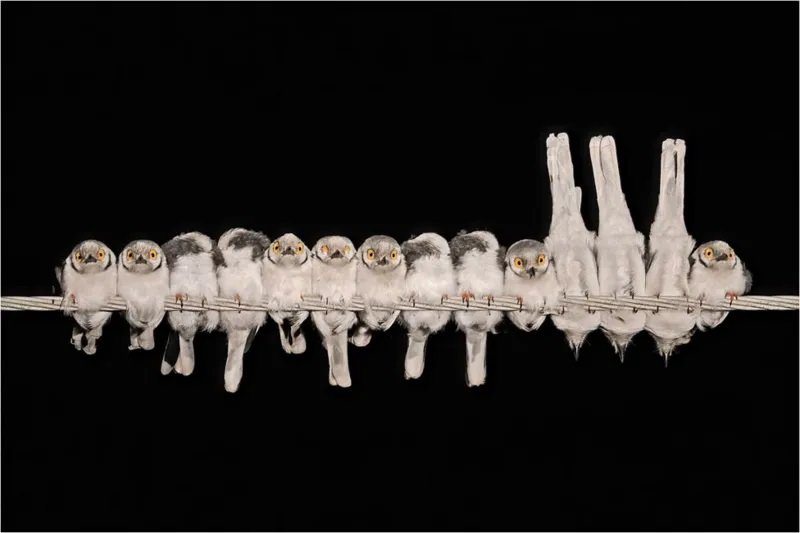
Helmetshrikes Preparing to Sleep, Sabi Sands Nature Reserve, South Africa – Gary Collyer

Bird on a Wire and Other Winning Photos from the Bird Photographer of the Year 2024

“On a dark March evening during a safari in Sabi Sands, we stopped after hearing unusual sounds. High in the trees, a group of helmetshrikes was huddled together, ready to settle for the night. The birds were chattering softly, creating a scene of warmth as they prepared for the cold night ahead.”

Treacherous Journey, Warsaw, Poland – Grzegorz Długosz

Bird on a Wire and Other Winning Photos from the Bird Photographer of the Year 2024

“Each year, mother goosanders in Poland guide their broods to the River Vistula, crossing dangerous highways along the way. Volunteers often stop traffic to help these birds safely cross roads. This particular mother chose a smaller road, avoiding the underground passages that likely seemed too dark and intimidating.”

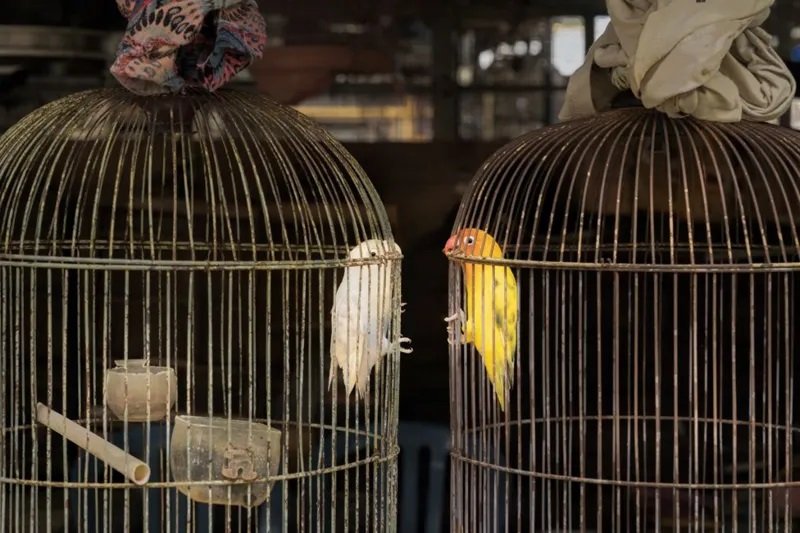
Inmates, Bali, Indonesia – Cheng Kang

Bird on a Wire and Other Winning Photos from the Bird Photographer of the Year 2024

“At a bird market in Bali, I captured the moment two lovebirds, each in separate cages, seemed to say their final goodbyes. The cages and the birds’ yearning expressions offer a poignant reminder of the impact of captivity on wild creatures.”

Human and Nature (and dog), Mecklenburg-Western Pomerania, Germany – Emil Wagner

Bird on a Wire and Other Winning Photos from the Bird Photographer of the Year 2024

“This image was taken on a beautiful Baltic Sea beach. A grey plover flew away after noticing a nearby dog that initially hadn’t seen it. The interaction highlights the delicate balance between human presence and the wildlife we unknowingly disrupt.”

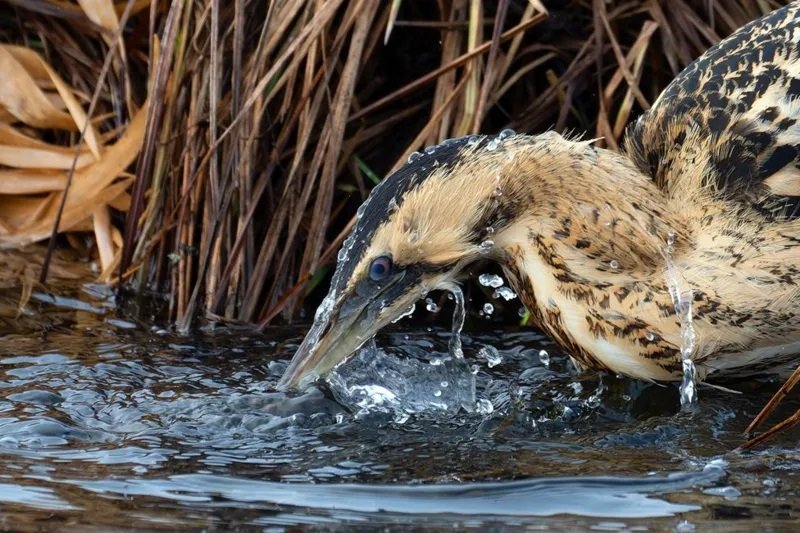
Turbulent Fish Hunt, Lake Federsee, Bad Buchau, Germany – Julian Mendla

Bird on a Wire and Other Winning Photos from the Bird Photographer of the Year 2024

“Winter at Lake Federsee attracts migratory birds, including the Eurasian bittern, which often retreats to the reeds as the lake freezes over. This particular bird was fishing close to the boardwalk, allowing me to capture its determined efforts in detail.”

The Bird Photographer of the Year competition showcases not only the beauty of birdlife but also the ongoing threats to their survival. From conservation efforts to the everyday moments of avian behavior, these images remind us of the delicate balance between nature and human activity. Each photograph offers a unique perspective, highlighting the need to protect and appreciate our feathered friends before it’s too late.

All photographs courtesy of Bird Photographer of the Year.

On This Day in 2007: MS Dhoni-Led Team India Clinched Inaugural T20 World Cup, Defeating Pakistan in a Thrilling Final

0

Seventeen years ago, on September 24, 2007, Indian cricket witnessed a historic moment that changed its trajectory forever. Under the calm and sharp leadership of MS Dhoni, India won the inaugural ICC T20 World Cup, ending a 24-year ICC trophy drought and setting the stage for a new era in Indian cricket. The men in blue emerged victorious in a nerve-wracking final against arch-rivals Pakistan, winning by a narrow margin of five runs in what remains one of the most iconic moments in cricket history.

The match, held at Johannesburg’s Wanderers Stadium, was nothing short of a last-over thriller, with emotions running high and the stakes even higher. Dhoni’s young squad, composed of both seasoned players and fresh talent, defied expectations to lift the coveted trophy. This victory not only secured India’s first T20 World Cup but also paved the way for the birth of the Indian Premier League (IPL) the following year, revolutionizing the cricketing landscape.

A Historic Win That Changed Indian Cricket

Before the T20 World Cup, the Board of Control for Cricket in India (BCCI) was not entirely convinced about the shortest format of the game. However, the 2007 win, with its intense drama and thrilling moments, changed their perception forever. It was a catalyst for the IPL’s launch, which has since become the most lucrative and competitive T20 league globally. Indian cricket, already a dominant force, found new ways to engage fans and nurture talent in the T20 era.

The Road to Victory: A Last-Over Thriller

The journey to glory was not without challenges. Ahead of the final, India suffered a significant setback with star opener Virender Sehwag ruled out due to injury. Yusuf Pathan, making his debut, was thrust into the pressure-packed situation, opening alongside Gautam Gambhir. India opted to bat first after winning the toss but struggled initially as Pathan departed after a quickfire 15 off Mohammad Asif’s bowling.

While Robin Uthappa followed soon after, the experienced Gautam Gambhir stood firm, scoring a match-defining 75 off 54 balls. Gambhir’s efforts were supported by Yuvraj Singh, fresh off his heroics in the semi-final against Australia and the famous six-sixes over against England. Although Yuvraj struggled in the final, his crucial 63-run partnership with Gambhir steadied the ship.

However, India found themselves at 130/5 in the 18th over, with MS Dhoni and Gambhir back in the pavilion. The team seemed to be falling short of a competitive score until a young Rohit Sharma rose to the occasion. Rohit’s unbeaten 30 helped push India to a respectable total of 157/5 in 20 overs.

Pakistan’s Fiery Response and India’s Comeback

Pakistan, in pursuit of 158, got off to a fiery start, with Imran Nazir smashing 33 off just 14 balls. However, RP Singh, who had already claimed Mohammad Hafeez’s wicket, disrupted Pakistan’s momentum by dismissing Kamran Akmal and allowing India to regroup. Nazir’s dangerous knock was cut short by a brilliant direct hit from Uthappa, sparking a dramatic collapse as Pakistan lost four wickets for just 24 runs, slumping to 77/6.

But the contest was far from over. Pakistan’s Misbah-ul-Haq, known for his composure under pressure, kept his team in the hunt, aided by lower-order contributions from Yasir Arafat and Sohail Tanvir. As Misbah struck key boundaries, the equation boiled down to 13 runs needed off the last over with Pakistan down to their final wicket.

Dhoni’s Bold Gamble: Joginder Sharma to Bowl the Final Over

In a move that would define his captaincy legacy, MS Dhoni made a bold decision to hand the ball to Joginder Sharma for the final over, despite Harbhajan Singh still having an over left. Joginder’s first ball was a wide, followed by a six off the next delivery, bringing Pakistan within striking distance of victory. With only six runs needed off four balls, Misbah seemed on the verge of taking Pakistan to victory.

Then came the moment that has since become part of Indian cricket folklore. Misbah, attempting an audacious scoop shot, mistimed the delivery, sending the ball high into the air. Sreesanth, stationed at short fine-leg, kept his nerve and held onto the catch, sealing India’s victory and sparking euphoric celebrations across the nation.

A Win That Defined a Generation

The significance of that 2007 T20 World Cup win cannot be overstated. It marked the beginning of MS Dhoni’s remarkable captaincy era, during which India reached the pinnacle of world cricket. Under Dhoni’s leadership, India became the No.1 ranked Test team for the first time, won the 2011 ODI World Cup on home soil, and clinched the ICC Champions Trophy in 2013.

Seventeen years later, while India has added another T20 World Cup title to their tally, the triumph in 2007 holds a special place in the hearts of Indian fans. It was a victory that not only redefined the team’s approach to cricket but also showcased the grit, resilience, and brilliance of a young team led by one of the greatest captains the sport has ever seen.

As the cricketing world remembers that unforgettable night in Johannesburg, it’s clear that the legacy of India’s first T20 World Cup win will endure for generations to come.