Home Blog Page 477

Digital Arrest: Tips and tricks to avoid falling victim

0

‘Digital Arrest’ is a type of online scam where fraudsters impersonate law enforcement officers or government officials to extort money from victims. They contact people via video calls, claiming that the person is involved in a crime or legal trouble. To protect ourselves from falling victim to the “Digital Arrest” scam, we can follow some steps.

  1. Stay Calm: If you receive a call claiming you are involved in a legal case, don’t panic. Scammers rely on fear to pressure their victims.
  2. Verify the Caller: Always verify the identity of the caller. Do not trust a person simply because they claim to be an official. Contact the concerned authority directly using verified contact information.
  3. Do Not Share Personal Information: Never provide sensitive information like bank details, identification numbers, or addresses over the phone, especially to unknown callers.
  4. Ignore Financial Demands: Real authorities will never ask for money transfers over a call to resolve legal matters. Avoid making any payments or transactions as demanded by the caller.
  5. Look for Red Flags: Watch out for calls with foreign or unusual country codes, fake official photos, or excessive pressure to act quickly.
  6. Report Suspicious Calls: If you suspect a scam, immediately report the incident to the police or cybercrime cell. The faster the report, the better the chances of stopping the scam.
  7. Keep Family Informed: Share this information with family members, especially those who may be vulnerable to such fraud, like elderly relatives.

When is Diwali 2024? All You Need to Know About the 5-Day Festival of Lights

0

Diwali, also known as Deepawali, is one of the most widely celebrated festivals in India, symbolizing the victory of light over darkness, knowledge over ignorance, and good over evil. This grand event is marked by vibrant festivities, spiritual rituals, and social gatherings, bringing people together in a spirit of joy, devotion, and togetherness.

When is Diwali 2024?

In 2024, Diwali will be celebrated on Thursday, November 1st. The five-day festival will begin on October 28th with Dhanteras and conclude on November 2nd with Bhai Dooj. While the core of the celebrations falls on Diwali day (November 1st), traditions vary across regions. In Maharashtra, Diwali begins a day earlier with Govatsa Dwadashi, while in Gujarat, the celebrations start two days before with Agyaras and end with Labh Panchami.

Significance of Diwali: Light, Prosperity, and Victory

Diwali holds deep spiritual significance, with its name deriving from the Sanskrit word “Deepawali,” meaning “a row of lights.” Homes and surroundings are lit up to welcome happiness and prosperity, symbolizing the triumph of good over evil. The festival commemorates the return of Lord Rama to Ayodhya after defeating Ravana, where people lit oil lamps to celebrate his victory.

Additionally, Diwali is closely associated with the worship of Goddess Lakshmi, the goddess of wealth, and Lord Ganesh, the remover of obstacles. Their blessings are sought for prosperity and wisdom in the coming year.

The 5 Days of Diwali: A Complete Calendar

The festival extends over five days, each marked by unique rituals and traditions:

DateDayFestival Name
October 29, 2024TuesdayDhanteras
October 31, 2024ThursdayChoti Diwali
November 1, 2024FridayBadi Diwali
November 2, 2024SaturdayGovardhan Puja
November 3, 2024SundayBhai Dooj

Dhanteras (October 29, 2024)

The first day of Diwali is dedicated to Lord Dhanvantari, the god of health and healing. On this day, people traditionally purchase gold, silver, and new utensils to bring prosperity and good luck for the year ahead.

Choti Diwali (October 31, 2024)

The second day, Choti Diwali, celebrates the victory of Lord Krishna over the demon Narakasura. Houses are cleaned, and earthen lamps (diyas) are lit to dispel darkness and negativity. In many parts of India, this day is marked by bursting firecrackers.

Badi Diwali (November 1, 2024)

The main day of Diwali, known as Badi Diwali, is dedicated to Goddess Lakshmi. Families perform Lakshmi Puja in the evening, seeking her blessings for wealth, prosperity, and peace. Rows of diyas and decorative lights illuminate homes, while sweets and gifts are exchanged among family members and friends.

Govardhan Puja (November 2, 2024)

The fourth day is Govardhan Puja, which honors Lord Krishna’s protection of villagers from torrential rains by lifting the Govardhan Hill. Devotees prepare a variety of dishes as offerings to Lord Krishna, symbolizing the Annakut (mountain of food).

Bhai Dooj (November 3, 2024)

The final day of Diwali is Bhai Dooj, celebrating the bond between brothers and sisters. Sisters pray for their brothers’ long life, while brothers promise to protect their sisters. Gifts and sweets are exchanged, marking this day of sibling love and affection.

Key Diwali Rituals and Traditions

  • Lighting Diyas and Rangoli: The lighting of oil lamps is one of Diwali’s most recognizable customs. These lamps represent the triumph of light over darkness, and intricate rangoli designs adorn the entrances of homes to welcome guests and deities.
  • Fireworks and Crackers: Firecrackers are an integral part of Diwali celebrations, although the practice has become more eco-conscious with the rise of green crackers.
  • Exchanging Gifts and Sweets: Diwali is a time of love and gratitude, celebrated through the exchange of gifts, sweets, and dry fruits. Popular sweets include laddus, barfis, kaju katli, and gulab jamun.
  • Worship of Lakshmi and Ganesh: Lakshmi Puja is performed with great devotion, seeking her blessings for financial success, well-being, and peace. Lord Ganesh is also worshipped as the remover of obstacles and the bringer of wisdom.

Diwali 2024: A Celebration of Light, Life, and Togetherness

Diwali is more than just a festival of lights. It is a celebration of life, unity, and the enduring victory of good over evil. As people come together to celebrate, the spirit of Deepawali reminds us to spread joy, light up the world, and reflect on the blessings we share.

With its rich traditions, festive rituals, and timeless message, Diwali 2024 promises to be a time of celebration, joy, and hope for families across the world.

Bhool Bhulaiyaa 3 Trailer: Kartik Aaryan Returns as Rooh Baba to Battle Two Manjulikas | WATCH

0

The wait is finally over for fans of the Bhool Bhulaiyaa franchise. The much-anticipated trailer for Bhool Bhulaiyaa 3, starring Kartik Aaryan, Triptii Dimri, and Vidya Balan, has been unveiled. This horror-comedy, directed by Anees Bazmee, promises to deliver thrills, laughter, and a double dose of spookiness, as Rooh Baba (Kartik Aaryan) faces not one but two Manjulikas.

The trailer launch took place at the iconic Raj Mandir theatre in Jaipur, with the lead cast in attendance. Bhool Bhulaiyaa 3 is set to release this Diwali, making it one of the most eagerly awaited films of the year. The film will clash with Rohit Shetty’s action-packed Singham Again, setting up an exciting competition at the box office.

The Bhool Bhulaiyaa 3 Trailer: Double Trouble with Two Manjulikas

The trailer opens with the eerie narration of the ancient town of Rakhtghat, where deadly battles for the throne have taken place. Kartik Aaryan, returning as the beloved Rooh Baba, learns that he is the rightful ruler of this haunted town. However, his journey takes a terrifying turn when he’s pursued by two Manjulikas, played by Madhuri Dixit and Vidya Balan.

Fans will be thrilled to see Vidya Balan reprising her iconic role from the first Bhool Bhulaiyaa, but the real shocker is the introduction of Madhuri Dixit as the second Manjulika. In the climax of the trailer, both Vidya and Madhuri confront Rooh Baba, demanding to know which one is the real Manjulika, leaving the audience on the edge of their seats.

Clearing the Air: Madhuri Dixit’s Role Confirmed

One of the major talking points surrounding Bhool Bhulaiyaa 3 has been the rumors of Madhuri Dixit’s role. The trailer confirms her as one of the Manjulikas, creating a unique twist where Rooh Baba must figure out who the true antagonist is. Madhuri’s portrayal adds a new layer of horror to the film, with fans eagerly awaiting the face-off between her and Vidya Balan.

Teaser Highlights: Manjulika’s Return to Reclaim Her Throne

Last month, the teaser gave audiences a glimpse of what to expect, as Manjulika (Madhuri Dixit) was seen raging about reclaiming her throne. Her chilling scream sets the tone for the horror-comedy, as the story revolves around her battle to retain control of the qila where she once reigned.

An Epic Dance Battle: A Face-Off on ‘Aami Je Tomar’

Adding to the film’s allure is the much-anticipated face-off between Vidya Balan and Madhuri Dixit, set to the iconic song ‘Aami Je Tomar’ from the original film. According to reports, Kartik Aaryan will also be a part of this grand sequence, making it one of the most awaited moments in the movie. The song promises to be a visually stunning spectacle that ties together the film’s main characters and storyline.

Bhool Bhulaiyaa 3: A Diwali Release You Can’t Miss

Directed by Anees Bazmee, Bhool Bhulaiyaa 3 blends humor, suspense, and supernatural elements into a riveting narrative. The return of Vidya Balan and the introduction of Madhuri Dixit as dual antagonists has already created massive buzz, and Kartik Aaryan’s Rooh Baba seems set for another memorable performance.

With its release slated for Diwali 2024, Bhool Bhulaiyaa 3 promises to be an unforgettable cinematic experience, ready to deliver laughs, scares, and an epic showdown between two legendary Manjulikas.

Highlights from the 70th National Film Awards: Honoring Indian Cinema’s Finest

0

On October 8, 2024, the 70th National Film Awards ceremony was held at Vigyan Bhawan, New Delhi, with President Droupadi Murmu presenting the prestigious accolades to the winners. This ceremony celebrated the cinematic achievements of 2022, recognizing excellence, creativity, and the social impact of Indian films. The National Film Awards, along with the revered Dadasaheb Phalke Award, stand as the highest honors in Indian cinema, aimed at celebrating not only entertainment but also films that promote cultural unity, social understanding, and national values.

Established to foster the growth of cinema that reflects India’s diverse heritage and addresses socially relevant issues, the National Film Awards encourage filmmakers to push boundaries and explore the art form deeply. This year’s awards highlighted the importance of cinema in shaping conversations on national unity, environmental awareness, and artistic innovation.

Jury and Selection Process

The awards were decided by a distinguished jury composed of prominent filmmakers and film personalities. Rahul Rawail, Chairperson of the Feature Films Jury, along with Nila Madhab Panda, Chairperson of the Non-feature Films Jury, and Gangadhar Mudaliar, head of the Best Writing on Cinema Jury, announced the winners. The event was conducted in the presence of Vrunda Desai, Joint Secretary (Films), Ministry of Information and Broadcasting, who emphasized the importance of cinema in bringing diverse voices to the forefront.

Notable Awards and Winners

  1. Best Feature Film: Aattam (The Play)
    Aattam took home the top honor, standing out for its narrative depth and artistic execution, showcasing the power of cinema to transcend language and culture.
  2. Best Popular Film Providing Wholesome Entertainment: Kantara
    Kantara was celebrated for its ability to blend entertainment with folklore, providing a film that captivated audiences while reflecting regional pride and storytelling.
  3. Best Feature Film Promoting National, Social, and Environmental Values: Kutch Express
    A film that highlights environmental conservation and social responsibility, Kutch Express was awarded for its thoughtful portrayal of critical issues that resonate with audiences across the country.
  4. Best Film in AVGC (Animation, Visual Effects, Gaming, and Comics): Brahmastra Part 1: Shiva
    Brahmastra received recognition for its groundbreaking work in animation and visual effects, raising the bar for technical innovation in Indian cinema.
  5. Best Debut Film of a Director: Fouja
    With Fouja, the debut director demonstrated a fresh and compelling voice in Indian cinema, showcasing immense promise for the future of filmmaking in the country.
  6. Best Direction: Sooraj Barjatya for Unchai
    Veteran filmmaker Sooraj Barjatya was honored for his outstanding direction in Unchai, a film that touched hearts with its emotional depth and relatable storytelling.
  7. Best Actor in a Leading Role: Rishab Shetty for Kantara
    Rishab Shetty’s performance in Kantara was lauded for its intensity and authenticity, making him the standout performer of the year.
  8. Best Actress in a Leading Role: Mansi Parekh and Nithya Menen
    Both actresses shared the honor for their exceptional performances, bringing emotional nuance and depth to their respective roles, captivating audiences with their artistry.

Significance of the National Film Awards

Since their inception, the National Film Awards have played a pivotal role in recognizing films that go beyond mere entertainment. They spotlight the ability of cinema to influence cultural conversations, raise awareness about social and environmental issues, and preserve the rich diversity of Indian traditions. Each year, the awards bring attention to films that balance creative brilliance with social impact, showcasing the power of cinema to inspire change.

As India’s film industry continues to grow, the National Film Awards remain a guiding force, encouraging filmmakers to take bold steps in storytelling, technical innovation, and societal commentary. The 70th edition of these awards underscored the significance of cinema as a medium that not only entertains but also educates and unites, making Indian films a global phenomenon.

The 70th National Film Awards once again highlighted the exceptional talent and vision within the Indian film industry, paving the way for new narratives, voices, and perspectives. The honored films and filmmakers are not only celebrated for their creative achievements but also for their contribution to India’s rich cultural and cinematic legacy.

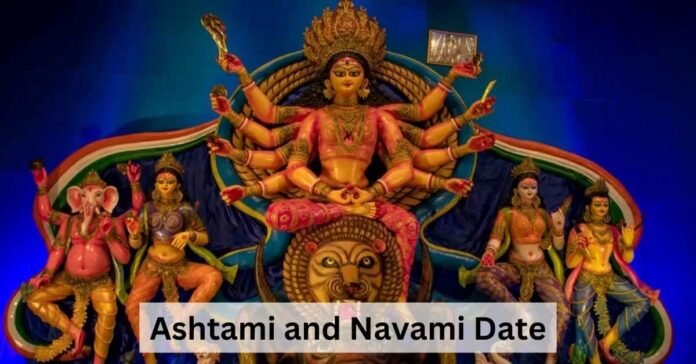
When is Navami and Ashtami 2024 in October? Check Correct Date and Significance

0

Durga Puja, one of India’s grandest and most cherished festivals, celebrates the triumph of good over evil, symbolized by Goddess Durga’s victory over the demon Mahishasura. While this vibrant festival spans several days, Maha Ashtami and Maha Navami stand out as two of the most significant days, celebrated with great enthusiasm, rituals, and reverence.

In 2024, the dates for these sacred Durga Puja days are:

  • Maha Ashtami: October 10, 2024
  • Maha Navami: October 11, 2024

These two days mark the peak of Durga Puja celebrations and are brimming with spiritual significance. Let’s explore their importance and the rituals that define them.

Maha Ashtami – The Eighth Day of Durga Puja

Maha Ashtami is celebrated on the eighth day of Durga Puja and holds immense religious significance. On this day, devotees pay homage to Goddess Durga and seek her blessings for strength and prosperity. The most significant ritual during Maha Ashtami is the Sandhi Puja, which takes place at the exact moment when Ashtami transitions into Navami. This marks a sacred time when devotees engage in intense worship and fervent prayer.

The Sandhi Puja is a powerful ceremony, performed with great devotion and precision. It commemorates the time when Goddess Durga fought the demon Mahishasura, marking the turning point in her battle for victory. During this ritual, offerings of flowers, fruits, and sweets are presented to the Goddess, accompanied by the chanting of sacred mantras.

Maha Navami – The Ninth Day of Durga Puja

Following the intensity of Ashtami, Maha Navami is observed on the ninth day of the festival and is considered the culmination of Durga Puja. This day is devoted to worshipping Goddess Durga’s power and seeking her blessings for protection, prosperity, and success. Devotees fast, chant mantras, and offer prayers to invoke the Goddess’s divine grace.

On Navami, Bhog (devotional food offerings) are prepared, and large gatherings of people come together to partake in these offerings, symbolizing unity and devotion. It is also a day of celebration as the victory of Goddess Durga over Mahishasura is commemorated once again, signifying the victory of righteousness over evil.

Navami is a day for reflection and renewal, where people participate in traditional dances, known as Dhunuchi Naach, and enjoy festive music. Many families and communities also perform Kumari Puja, worshipping young girls as embodiments of the Goddess Durga, marking the sacred feminine energy.

The Final Day – Dashami (Vijaya Dashami)

Both Ashtami and Navami build up to the grand finale of Durga Puja, known as Dashami or Vijaya Dashami. On this day, the Goddess is bid farewell as she returns to her celestial abode. The grand processions, complete with drums (Dhak), vibrant dances, and the immersion of idols in rivers and ponds, symbolize the end of the festivities.

In 2024, Vijaya Dashami will fall on October 12, marking the conclusion of the celebrations and the beginning of the post-festival season.

Spiritual and Cultural Significance

Both Ashtami and Navami are deeply spiritual days, but they also showcase the rich cultural fabric of India. Communities come together to honor the Goddess through various traditions—dressing up in festive attire, singing devotional songs, and preparing traditional foods. The pandals (temporary temples) are beautifully adorned with intricate art and decorations, and it’s an experience that transcends mere religious observance, becoming a celebration of unity, joy, and cultural pride.

Whether you’re attending the ceremonies, visiting the beautifully crafted pandals, or simply soaking in the festive atmosphere, Maha Ashtami and Maha Navami are days that elevate the entire Durga Puja experience. By understanding the importance of these sacred days, you can enrich your connection to the rich cultural traditions and spiritual significance of this revered festival.

In 2024, as you partake in the festivities, remember that these days are not just about rituals but about celebrating life, hope, and the enduring strength of Goddess Durga.


World Mental Health Day 2024: Meet These Bollywood Celebrities Who Combated the Mental Health and Emerged out Winner…

0

Mental health remains a sensitive topic in our society, despite claims of progressiveness. While physical health is openly discussed, mental health is often kept behind closed doors. However, emotional, psychological, and social well-being are just as vital, influencing how we think, feel, and act. Mental health affects every aspect of life, from handling stress and making decisions to interacting with others. It is crucial from childhood through adulthood, but unfortunately, it is still surrounded by stigma.

In recent years, Bollywood celebrities have played a significant role in breaking the silence around mental health. By sharing their personal struggles, they are helping normalize conversations about mental illness, proving that seeking help is not a sign of weakness but of strength. Here are some Bollywood stars who have spoken out about their battles with mental health and shared their journey to recovery.

1. Shraddha Kapoor

Shraddha Kapoor first opened up about her struggle with anxiety in 2018 while celebrating the success of her film Stree. She revealed that she had been coping with anxiety for three to four years without any physical explanation for her discomfort. The anxiety surfaced after the release of her 2013 film Aashiqui 2. Shraddha emphasized that anxiety is not something to “fight against” but to embrace. She believes in accepting anxiety as a part of oneself and approaching it with love. Her message is one of self-acceptance and perseverance in the face of mental health challenges.

2. Ileana D’Cruz

Actress Ileana D’Cruz has been candid about her battle with Body Dysmorphic Disorder, anxiety, and depression. She shared that there were moments when she would cry for hours. Her recovery was supported by her loved ones, and she has consistently urged others to seek help if they are struggling. Ileana advocates for breaking the stigma around mental health and believes that crying and asking for help are normal, human responses. Her openness about seeking therapy has inspired many to follow suit.

3. Hrithik Roshan

Hrithik Roshan has also spoken about the importance of addressing mental health. He shared that he has experienced periods of sadness, confusion, and low moments, emphasizing that these are universal experiences. Hrithik encourages open discussions about mental health and stresses the need to maintain clarity during tough times. He believes that external perspectives can help when one’s mind becomes overwhelmed by negative thoughts. His message is that mental health challenges should not be stigmatized—they are real and require support.

4. Sanjay Dutt

Sanjay Dutt has faced numerous personal challenges, from losing his mother and wife to cancer to battling rumors of his involvement in the 1993 Mumbai bombings. These events took a toll on his mental health, leading to depression. In 2020, he was diagnosed with stage 3 cancer, a diagnosis that devastated him. Sanjay admitted to breaking down and crying for hours but eventually resolved to fight back. After completing chemotherapy and staying physically active, he emerged victorious, a testament to his resilience in the face of adversity.

5. Deepika Padukone

Deepika Padukone has been one of Bollywood’s most vocal advocates for mental health awareness. After experiencing depression herself, she founded the Live Love Laugh Foundation to support others facing similar struggles. In interviews, Deepika has shared how she initially mistook her depression for stress, but as her symptoms worsened, she realized something was wrong. Her foundation now works to destigmatize mental health issues and offer help to those in need. Deepika’s message is one of hope: recovery is possible, and no one should have to suffer in silence.

6. Honey Singh

Rapper Yo Yo Honey Singh faced a severe battle with bipolar disorder and alcoholism. His career took a hiatus as he struggled with his mental health, but after months of treatment and reflection, Honey Singh returned, sharing his experiences to promote understanding of mental illness. He emphasized the importance of recognizing the signs early and getting help, encouraging others to take mental health seriously.

7. Karan Johar

Popular filmmaker Karan Johar has spoken openly about his experience with depression. He revealed that he struggled with anxiety and saw a psychologist to address unresolved internal issues. Karan’s candidness about his struggles and the importance of talking to friends and family has helped shift the narrative around mental health. He hopes that by sharing his story, others will feel less alone and more empowered to seek help.

8. Rubina Dilaik

Bigg Boss 14 winner Rubina Dilaik shared her experiences with anxiety, stress, and suicidal thoughts during the show. She attributed her mental health struggles to unresolved anger and emotional distress, which took a toll on her relationships. Rubina’s journey of self-discovery, aided by yoga and meditation, helped her regain balance. She advocates for more open discussions about mental health and encourages people to seek help without shame or fear.

Summing Up

These Bollywood celebrities are helping to break down the stigma around mental health by speaking openly about their experiences. Their stories of struggle and recovery are a reminder that mental health challenges are universal, and seeking help is a sign of strength, not weakness. As we observe World Mental Health Day 2024, let us be inspired by their bravery and commit to fostering a culture where mental well-being is discussed as openly as physical health. Let’s normalize conversations about mental health, encourage support systems, and, most importantly, remember that no one is alone in their journey.

World Post Day 2024: Celebrating 150 Years of Connecting People Globally

0

Do you remember the last time you have sent a post to someone? Ofcourse not, but that was an era we all had cherished. Waiting for the letters of closed ones to receiving every invite via post it was a custom. But do you know there in today we also celebrate World Post Day to remember that beautiful era of patience.

Every year on October 9, the world celebrates World Post Day, marking the anniversary of the Universal Postal Union (UPU), which was founded in 1874 in Bern, Switzerland. For nearly 150 years, the postal system has been the backbone of global communication, providing a vital lifeline for individuals, governments, and businesses. It has played a significant role in fostering social and economic development worldwide. World Post Day aims to raise awareness about the essential role of postal services in our everyday lives and their contribution to global development.

Theme of World Post Day 2024

In 2024, World Post Day holds special significance as it marks the 150th anniversary of the Universal Postal Union. This year’s theme, “150 years of enabling communication and empowering people across nations,” reflects the postal system’s enduring role in connecting people and empowering communities through the seamless exchange of information, goods, and services.

History of World Post Day

World Post Day commemorates the founding of the Universal Postal Union (UPU), established on October 9, 1874. The UPU was created to streamline and standardize international mail services, allowing countries to exchange mail more efficiently. This milestone laid the groundwork for the development of a modern, global postal network. The UPU’s establishment was a turning point in global communication, simplifying the process of sending and receiving mail internationally and promoting collaboration between postal administrations.

In 1969, during the UPU Congress in Tokyo, World Post Day was officially declared to highlight the crucial role of postal services in connecting people across borders. Since then, this day has been celebrated annually, with countries around the world recognizing the postal system’s contribution to economic growth, trade, and communication.

Significance of World Post Day

The significance of World Post Day lies in its focus on the vital role of postal services in facilitating communication, trade, and development. The postal system continues to evolve, supporting modern needs such as e-commerce, logistics, and financial inclusion. Today, it plays a critical role in ensuring access to essential goods and services, particularly in rural and remote areas where other infrastructure may be limited.

World Post Day also underscores the importance of postal services in promoting financial inclusion. Many postal networks offer banking and financial services, making them a lifeline for underserved populations who may not have access to traditional banking services.

How to Celebrate World Post Day

Each year, more than 150 countries around the world celebrate World Post Day in various ways. The celebrations often include:

  • Philatelic exhibitions: Countries display special collections of stamps, and some even issue new stamps or commemorative cancellations.
  • Open days at postal facilities: Postal services invite the public to tour their facilities, showcasing the inner workings of their mail systems.
  • Employee recognition: Many postal administrations take this day as an opportunity to honor their employees for their dedication and exceptional service.
  • Seminars and workshops: Educational and cultural events are organized to raise awareness of the importance of postal services.
  • National celebrations: In some countries, World Post Day is observed as a working holiday, with special events at post offices and other postal-related institutions.
  • UPU International Letter-Writing Competition: National winners of this competition are often recognized on October 9, adding an element of creativity and youth participation to the celebrations.

To further commemorate the day, some countries distribute special souvenirs, such as T-shirts, badges, and posters, to raise awareness of the importance of postal services in connecting communities.

Summing Up

World Post Day 2024 is not only a celebration of the 150-year journey of the Universal Postal Union but also a reminder of how integral postal services remain in the modern world. From delivering letters and parcels to enabling e-commerce and promoting financial inclusion, the postal network continues to empower people, connect communities, and drive global progress. As we celebrate this important milestone, World Post Day invites everyone to reflect on the enduring value of the postal system and its vital role in creating a connected, empowered world.

Assam Launches ‘Nijut Moina’ Scheme to Combat Child Marriage and Promote Girls’ Education

0

In a significant move to combat child marriage and encourage girls to continue their education, the Assam government has introduced the ‘Nijut Moina’ scheme. This initiative is part of the state’s broader efforts to eliminate child marriage, which has been a persistent issue in Assam, particularly in rural areas. With Chief Minister Himanta Biswa Sarma at the helm, the scheme seeks to empower young girls by providing financial support and promoting higher education as a means to improve their futures.

Key Features of the ‘Nijut Moina’ Scheme

The ‘Nijut Moina’ scheme offers monthly stipends to girl students, ensuring that they have the financial backing to pursue their education. The stipends are provided from Class 11 up to the postgraduate level, based on the student’s academic stage. Here’s a breakdown of the financial assistance:

  • Rs 1,000 for girls in Classes 11 and 12
  • Rs 1,250 for girls pursuing a degree
  • Rs 2,500 for girls enrolled in postgraduate studies

Conditions for Receiving the Stipends

To be eligible for the stipends under this scheme, students must adhere to two important conditions:

  1. Regular attendance and academic performance: Students are required to maintain consistent school attendance and perform well in their studies.
  2. Commitment to delay marriage: One of the core conditions is that girls must promise not to marry until they have completed their postgraduate education. This measure is aimed directly at reducing the incidence of child marriage by encouraging girls to prioritize their education over early marriage.

Additionally, it’s worth noting that daughters of government officials are excluded from benefiting under this scheme, ensuring that the support reaches the most vulnerable and deserving girls in the state.

Objective of the Initiative

The primary goal of the ‘Nijut Moina’ scheme is to completely eliminate child marriage in Assam by the year 2026. By offering financial incentives, the Assam government hopes to create an environment where girls are motivated to stay in school and complete their education, which in turn delays their marriage and opens up better opportunities for their future. The initiative aligns with the state’s broader commitment to uplift the socio-economic status of women and reduce the harmful effects of early marriage on maternal and infant health.

Impact and Expected Benefits

With an estimated budget of Rs 1,500 crore, the scheme is expected to benefit 10 lakh (1 million) girl students across Assam. The benefits of this initiative are expected to be far-reaching:

  • Increase in female education: The scheme will encourage more girls to pursue higher education, reducing dropout rates after high school.
  • Reduced financial burden on families: By offering stipends, the scheme lessens the economic strain on families, making education more accessible and reducing the need for early marriage due to financial pressures.
  • Curbing child marriage: By promoting education as a priority, the scheme directly targets the social practice of child marriage, which has been prevalent in parts of the state.

Evidence of Success

Assam’s previous efforts in tackling child marriage have already shown promising results. Between 2021-22 and 2023-24, child marriage cases saw an 81% decrease across 20 districts in Assam. This progress highlights the effectiveness of government-led interventions in promoting education and reducing child marriage. The ‘Nijut Moina’ scheme is seen as another critical step towards achieving long-term social change, improving health outcomes for women, and ensuring a brighter future for the next generation.

Summing Up

The launch of the ‘Nijut Moina’ scheme underscores the Assam government’s strong commitment to addressing the dual challenges of child marriage and girls’ education. By providing financial incentives, the scheme empowers girls to pursue higher education and make informed choices about their futures. This progressive initiative has the potential to transform the lives of millions of girls in Assam, paving the way for a more educated, empowered, and socially progressive state.

Rural Women of Nathdwara Set to Compete with Corporations: Bhainsakmed Becomes a Hub of Innovation

0

In the small village of Bhainsakmed, nestled near Nathdwara, a group of rural women is leading a remarkable initiative that is setting an example for the entire country. This effort is not just about empowering rural women to become self-reliant, but also about establishing their products in the broader market. As part of this endeavor, the women are producing healthy cookies made from coarse grains, which are not only delicious but also highly nutritious.

Innovative Approach to Healthy Cookies

Nathdwara MLA Vishvaraj Mewar recently visited the project and tasted the cookies, commending the effort. He remarked, “People love packaged products, and if they are healthy, even better. The women here in Bhainsakmed are doing something extraordinary. This pilot project is aimed at making rural women self-sufficient.”

The initiative is supported by the National Skill Development Corporation and the Sanskriti Vikas Kendra. The program provides training to rural women, enabling them to create healthy cookies using coarse grains like millets. These cookies are not only tasty but also beneficial for health.

A Step Towards Economic Independence for Women

The main objective of this project is to empower rural women economically. MLA Mewar emphasized, “This project will not only provide women with employment but will also make them financially independent. It’s a significant step towards enabling them to market their products and achieve economic freedom.”

One of the standout features of this initiative is the simplicity of the production process. No heavy machinery is required, as the cookies can be baked using a pressure cooker, making it easy for women to produce them from home. This project is offering employment opportunities while also strengthening the financial stability of their families.

A Business Model with Government Support

The project aims to expand on a larger scale, with support from local authorities and representatives to help these cookies gain market traction. The Akshaya Patra Foundation has also pledged its support, announcing that the cookies will be distributed alongside their meals, ensuring wider promotion and visibility.

MLA Mewar commented, “This initiative is not only providing employment to women but also has the potential to strengthen the rural economy in the future. A robust economic model will emerge from this project, allowing women to engage in business on a larger scale.”

The Road Ahead and Hopes for Further Innovation

Currently a pilot project in Bhainsakmed, there are plans to extend this initiative to other areas as well. Through this innovation, rural women are not only moving beyond traditional industries but are also working towards bringing modern products to the market. Given the rising popularity of cookies and biscuits, the future of this project looks promising.

In conclusion, this initiative is not only empowering rural women but is also improving the economic conditions of their families. It is providing them with a platform and paving the way for a new business model that could potentially transform the rural landscape in the coming years.

India Joins the 44th Codex Committee Meeting on Nutrition and Special Diets

0

India participated in the 44th session of the Codex Committee on Nutrition and Foods for Special Dietary Uses (CCNFSDU), held from October 2-6, 2024, in Dresden, Germany. The gathering brought together over 170 countries to update and refine global guidelines on food safety, nutrition, and dietary standards. During the event, India actively contributed to important discussions surrounding nutrient reference values and the revision of probiotics guidelines, strengthening its role in shaping global nutrition standards.

Key Contributions by India

One of India’s major contributions at the meeting was its proposal for Nutrient Reference Values (NRV-R) for children aged 6 to 36 months. India suggested an approach that averaged the nutrient requirements for two sub-groups, 6-12 months and 12-36 months, providing a more practical and holistic solution. This proposal was accepted by the committee, marking a significant step in setting global nutritional benchmarks for young children.

India also advocated for updating the outdated probiotic guidelines established by FAO/WHO in 2001 and 2002. The revisions were deemed necessary to align with contemporary scientific advancements and global trade demands. India’s efforts received strong support from countries like Canada, Chile, and New Zealand, underscoring the importance of revising international standards for probiotics.

International Collaboration and Debates

India’s position on various issues resonated with the global community. There was an extensive debate around the inclusion of sweetness in follow-up formulas for children. The European Union suggested sensory testing to determine the sweetness level, but India objected, citing insufficient scientific backing. The committee ultimately sided with India, deciding to postpone the matter for further review.

India’s delegation, comprised of officials from key ministries, played a vital role in ensuring that food safety and consumer health remained at the forefront of the discussions. Several of India’s recommendations were included in the final report, showcasing the country’s growing influence in global food safety dialogues.

FAO/WHO Announcements and Leadership

During the session, the FAO/WHO made significant announcements, including the release of a Joint Statement on Healthy Diet Principles and updates on Alternative Animal Source Foods (A-ASFs). These initiatives reflect the global commitment to enhancing food safety and nutrition, especially in the face of evolving dietary patterns and environmental challenges.

The session was chaired by Ms. Martine Püster and co-chaired by Dr. Carolin Bendadani, with Germany’s Federal Minister of Food and Agriculture, Mr. Cem Özdemir, emphasizing the critical role that food safety plays in maintaining global security. He reiterated that international collaboration is essential to ensuring high-quality, safe food for populations around the world.

Overview of the Codex Committee on Nutrition and Special Diets

The Codex Committee on Nutrition and Foods for Special Dietary Uses (CCNFSDU) was established in 1966 to develop global standards for nutrition labeling, food additives, and foods for special dietary needs. The committee plays a critical role in addressing the nutritional needs of vulnerable groups, such as infants, the elderly, and individuals with allergies. The CCNFSDU’s biannual meetings aim to refine food standards and create guidelines that ensure food safety, quality, and accessibility on a global scale.

Summing Up

India’s participation in the 44th Codex Committee Meeting not only highlights its commitment to improving food safety and nutrition but also positions the country as a leader in shaping international dietary standards. By advocating for updated guidelines on probiotics and contributing to discussions on nutrient reference values, India has reinforced its dedication to advancing global health. The meeting underscored the importance of international cooperation in tackling food security and nutrition challenges, ensuring a safer and healthier future for all.