Home Blog Page 475

Passage du Gois: The beautiful and mysterious road of France

0


Vaidehi Bhargava

France where culture and Beauty are so entwined that one cannot even perceived their boundaries. Every morning in France is a new poem and every evening is a musical melodious wave. France is a harmonious blend of its rich culture heritage, natural landscape and timeline elegance. France coastal regions, such as French Riviera,with its azure water and sun soaked beaches, add a touch of Mediterranean allure, while the snow – capped peaks of the French Alps offer a majestic contrast. Beyond the landscape, the language of France it’s cuisines and its fashion also embody a refined sense of elegance and sophistication that capivates the world.

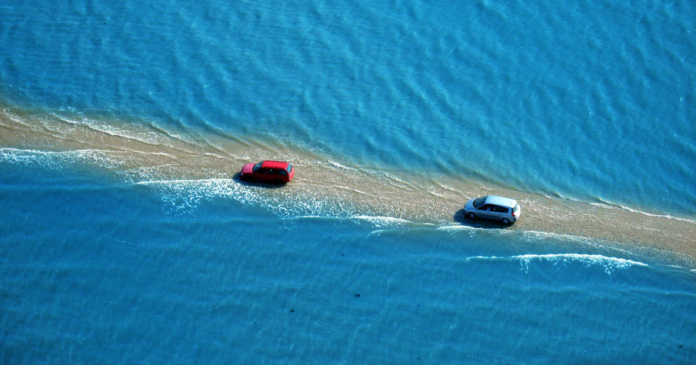
The Passage du Gois is a natural, occasionally submerged causeway located in western France. It connects the mainland to the island of Noirmoutier in the Bay of Biscay. The road, approximately 4.3 kilometers (2.7 miles) long, is unique because it is passable only during low tide. At high tide, the passage is completely covered by water, often up to 4 meters (13 feet), making it impassable.

The passage is a popular tourist attraction due to its unusual nature. It is also used during cycling events, such as the Tour de France. However, drivers and pedestrians need to be cautious and aware of the tides to avoid being trapped by the rising waters.The road is marked with signs and rescue towers for people who might get caught by the tide.The Passage du Gois was part of Stage 2 in the 1999 Tour de France. Its slippery surface caused a crash that split the main group of riders, creating a six-minute gap. This accident dashed the chances of several top contenders, including Alex Zülle, who still managed to finish second overall.
The Passage du Gois was used again in 2011, as the starting point of the first stage.

French Aerial Show ‘RoZéO’ Mesmerizes Jaipur Audience at Jaigarh Fort

0

For the first time in India, the renowned French company Gratte Ciel brought their breathtaking aerial show RoZéO to the majestic Jaigarh Fort in Jaipur. Organized by the French Institute in India in collaboration with the Alliance Française Network, the unique event enthralled the Jaipur audience with its spellbinding aerial stunts and poetic choreography. Known for blending aerobatic and meditative presentations, Gratte Ciel showcased a visually stunning performance that left spectators in awe.

Held in the historic Subhat Niwas courtyard, the performance featured artists gracefully soaring through the air atop a 6-meter-high metal pole, creating an ethereal display of movement. The choreography, combined with live music, electronic compositions, and field recordings, turned the 42-minute show into an immersive experience. The creative forces behind RoZéO—Stéphane Girard and Camille Beaumier—were complemented by musical compositions from Pauline Frémeau and costume designs by Anne Jonathan, blending art and storytelling in a seamless flow.

International Success Comes to India

RoZéO, which premiered in 2023, gained widespread acclaim for its dreamlike aerial choreography and spellbinding artistry. After captivating the world at the opening ceremony of the Paris 2024 Olympics, where the performance was part of the grand artistic vision of director Thomas Jolly, the company’s India tour marks its latest milestone. The Jaipur show is part of a wider Indian tour, which includes performances in Chandigarh, Ahmedabad, Pune, and Pondicherry.

French Ambassador to India, H.E. Mr. Thierry Mathou, emphasized the significance of this cultural exchange, stating: “With ‘RoZéO’ and other artistic collaborations, we are deepening the ties between our countries. This show reflects the creativity and vibrancy of France’s contemporary art scene, while fostering cultural exchanges that will benefit both France and India.”

A Historic Setting for a Contemporary Marvel

The majestic Jaigarh Fort, steeped in Rajasthan’s royal history, provided a stunning backdrop for RoZéO’s aerial display. HH Maharaja Sawai Padmanabh Singh, Chairman of the Jaigarh Public Charitable Trust, commented on the event: “Jaigarh Fort has long been a symbol of Rajasthan’s heritage, and we are thrilled to host this exceptional international collaboration. The unique setting enhanced the beauty of RoZéO, offering Jaipur’s audience a truly unforgettable experience. We are honored to participate in this cultural dialogue that bridges history and modern artistic expression.”

Strengthening Cultural Ties

The event is part of an ongoing cultural season curated by Alliance Française, featuring a series of performances that reflect the vibrant artistic collaborations between France and India. Beyond mesmerizing the audience, RoZéO’s India tour serves as an opportunity to foster further relationships in the arts, with workshops and artistic exchanges between French and Indian professionals.

As RoZéO continues its tour across India, it brings with it the spirit of cultural unity, showcasing the beauty of modern aerial art and reaffirming the shared cultural bond between the two nations. The performance at Jaigarh Fort, set against the backdrop of Jaipur’s rich history, marked a significant moment in the ongoing cultural exchange that continues to shape and inspire both countries.

Places where Ravana is worshipped

0


Vaidehi Bhargava

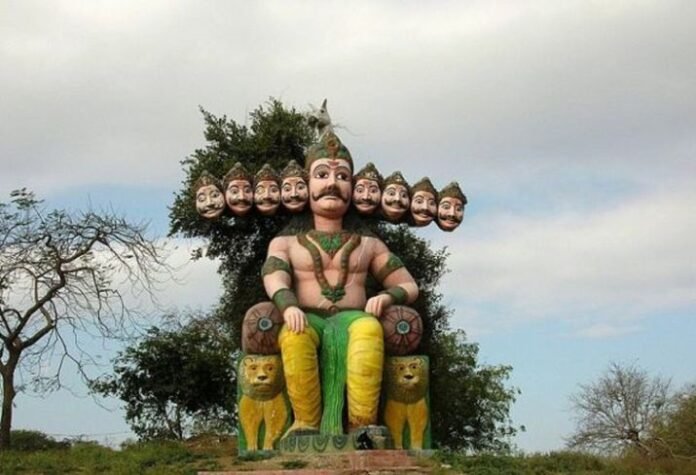
Ravana the king of Lanka ( modern day Sri Lanka) and often depicted as a powerful learned but malevolent ruler. Ravan was skilled scholar and great devotee of Lord Shiva . The demon king of Lanka is famously known as the antagonist in the epic Ramayana, having abducted Sita, the wife of Lord Rama, and ultimately facing defeat at the hands of the virtuous prince. While many across the country observe Dussehra by burning effigies of Ravana to signify the triumph of good over evil.


Do you know there are some places where Ravan is worshipped as deity.
1 ) Mandsaur , Madhya Pradesh
Mandsaur is a town located on the border of Madhya Pradesh and Rajasthan. It is the birthplace of Mandodari, who was the wife of Ravana. According to legend, Ravana came to this town to marry Mandodari and became the son-in-law of the area. In Mandsaur, there is a temple dedicated to Ravana, known as Ravana Rundi or Ravaneshwar Mahadev, which features a large idol of him.
2) Bisrakh, Uttar Pradesh
Bisrakh is a village near Greater Noida in Uttar Pradesh, believed to be the birthplace of Ravana, the demon king of Lanka. He was the son of sage Vishrava and the demoness Kaikesi. The name of the village comes from Vishrava, one of the ten Prajapatis created by the god Brahma. The people of Bisrakh consider Ravana their ancestor and respect him for his wisdom and devotion. They have built a temple in his honor, which is mostly closed throughout the year but opens on Dussehra, the day Lord Rama defeated Ravana. On this day, instead of burning his effigy like most places, the villagers perform a yajna, or fire sacrifice, to honor him as a symbol of their culture.
3) Ravangram, Madhya Pradesh
Ravangram is another village in Madhya Pradesh that honors Ravana as a deity. It is believed that Mandodari, Ravana’s wife, came from this village and was a daughter of the region. The villagers of Ravangram also consider Ravana their son-in-law and greet him with the phrase “Ravana Baba Namah,” meaning “Salutations to Ravana.” They have built a temple in his honor, which features a ten-foot-long idol of him lying down. The temple attracts many devotees who come to seek blessings from Ravana for their well-being and prosperity.
4) Kangra, Himachal Pradesh
According to legend, Ravana did intense penance at this location to please Lord Shiva and obtain the Atma Linga from him. Lord Shiva granted his request but warned Ravana not to place the linga on the ground until he reached Lanka. However, on his way back, he was tricked by Lord Ganesha and Lord Vishnu into setting the linga down at Gokarna in Karnataka, where it became fixed for eternity. Despite this story, the people of Kangra regard Ravana as the greatest devotee of Lord Shiva and believe that the Lord blessed him for his devotion.
5) Mandya and Kolar, Karnataka
Mandya and Kolar are two districts in Karnataka that celebrate the mythology of Ravana in their traditions. In Mandya, there is a beautiful temple called the Kailashapura Mahalingeshwara Temple, where Ravana is worshipped alongside Lord Shiva. This temple is home to a special Shiva linga that is believed to have been installed by Ravana after he received it from the gods. Devotees of Ravana strongly believe that praying to this sacred Shiva linga will help fulfill their deepest wishes and bring them blessings from the divine.In Kolar lies the temple of Ramalingeshwara, where Ravana is venerated as Ramappa or Ramalinga. This holy shrine houses four sacred Shiva lingams that are said to have been brought by the mighty Ravana all the way from the sacred Mount Kailash. The devout followers of Ravana believe that worshipping these Shivalingas will bring unparalleled peace and prosperity into their lives.
6) Jodhpur, Rajasthan
Jodhpur is a city in Rajasthan that has historical ties to Ravana. According to legends, Ravana married Mandodari in Mandore, which was the capital of her father’s kingdom. Mandore was also known as Mandavyapur or Mandavpur in ancient times. In this region, people respect Ravana as they would a son-in-law and admire his knowledge and strength. Instead of burning his effigy on Dussehra, they mourn his death. While the rest of the country celebrates the defeat of the king of Lanka as the “victory of good over evil,” the people of Jodhpur celebrate Ravana’s birth by offering prayers and sweets to him.

Maha Navami 2024: Date, History, Puja Timings, Significance, Celebration, and More

0

Maha Navami, the ninth day of Shardiya Navratri, is an auspicious Hindu festival that commemorates Goddess Durga’s triumph over the buffalo demon Mahishasura. It holds deep cultural and spiritual significance, marking the peak of the divine energy of the goddess and symbolizing the victory of good over evil.

Date and Timing:
Maha Navami falls on the ninth day of Ashwin’s Shukla paksha, during Shardiya Navratri. In 2024, Shardiya Navratri is observed in October with Maha Navami celebrated on October 11.

Historical Significance:
Maha Navami signifies the penultimate day of Goddess Durga’s battle with Mahishasura. It is believed that on this day, the goddess defeated the demon in her fierce form, symbolizing the victory of good over evil. Goddess Durga is worshipped as Mahishasuramardhini, meaning ‘She Who Killed Mahishasura,’ during these celebrations.

Significance and Rituals:
This day is a time for reflection, cultural festivities, and a culmination of the nine-day Navratri festival. Devotees seek Goddess Durga’s blessings for strength, protection, and prosperity, believing that her divine energy is at its peak.

Maha Navami Celebrations:
Maha Navami is marked by diverse celebrations and rituals across different regions of India. In some areas, Goddess Durga is worshipped in her Saraswati avatar, representing wisdom and education. In South India, Ayudh Puja is observed, involving the worship of Goddess Saraswati alongside musical instruments, books, and scriptures. North and East India celebrate Kanya Puja, honoring young girls who symbolize different forms of Durga with rituals and gifts. Homa rituals and the Batthukamna festival are also part of the celebrations, while West Bengal observes Maha Navami with special pujas and the grand Durga Puja festival, featuring traditional rituals, sindoor khela (vermilion play), and the exchange of sweets and gifts.

Maha Navami is a day when devotees come together to honor the divine feminine energy, reflect on the victory of good over evil, and celebrate the essence of righteousness as they prepare for Vijayadashami or Dussehra.

Come let’s take you the tour of Reverse zoo of China where animals are free to roam but humans are behind bars..

0


Vaidehi Bhargava

China has garnered attention for its innovative “reverse zoo” concept, a unique twist on traditional zoos that flips the roles of humans and animals. In these zoos, instead of animals being enclosed in cages or small spaces while people walk around freely, the animals roam in large open spaces, and humans are confined to secure, mobile enclosures, typically inside vehicles like buses or glass pods. This concept has been adopted in several wildlife parks across China, including places like Lehe Ledu Wildlife Zoo in Chongqing.

The reverse zoo concept aims to offer a more ethical approach to wildlife viewing. Unlike conventional zoos where animals are often kept in restricted environments, reverse zoos provide animals with vast natural habitats to roam. Predators like lions, tigers, and bears, as well as other animals, can move around more freely, allowing them to exhibit behaviors closer to what they would in the wild. In contrast, human visitors are enclosed in vehicles that are specially designed for safety and comfort, often with large glass windows that offer unobstructed views of the animals in their natural surroundings.

This method not only enhances the visitor experience by offering a thrilling, immersive encounter with wildlife but also serves as an educational tool. Visitors gain a better understanding of the natural behaviors of wild animals, which they can observe up close in a more humane setting. Additionally, the reverse zoo model aligns with a growing global consciousness about animal welfare, emphasizing the need to create spaces where animals can live with fewer restrictions and greater autonomy.

Critics of traditional zoos often highlight the stress and negative psychological effects that captivity has on animals. By providing animals with larger, less restrictive environments, reverse zoos present a compromise that prioritizes the well-being of animals while still maintaining the appeal of wildlife tourism. As awareness of animal rights continues to grow, the reverse zoo concept may inspire other countries to rethink how they approach animal captivity and welfare.

Do you know about the “Resturant of Mistaken orders” where you don’t know what will come in your plate..

0

Vaidehi Bhargava

In Japan, often referred to as a super-aging society, it is anticipated that by 2025, one in five individuals will be affected by dementia. In this context, an extraordinary social experiment has captured the imagination of both Japan and the global community.


Welcome to the “Restaurant of Mistaken Orders,” a dining experience where the waitstaff, all of whom live with varying degrees of cognitive impairment, sometimes deliver orders that don’t quite match what was requested. The inspiration for this unique pop-up restaurant arose from a meeting between its creator, Shiro Oguni, and residents of a group home for people with dementia. Oguni reflects, “Like many, my initial perception of dementia was dominated by negative stereotypes—images of individuals who were ‘hopelessly forgetful’ or ‘wandering aimlessly.’ But in reality, they can cook, clean, shop, and do many ‘normal’ tasks. Up close, they may occasionally veer off track, but…”


At lunchtime, Oguni ordered a hamburger steak but was instead served a plate of gyoza. “Seeing everyone around me eating with such enthusiasm, I felt unsure—was it I who had made the mistake?” Oguni recalls. “Why fuss over the difference between a sizzling steak and gyoza? ‘So it’s a mistake, well, that’s fine.’ With that kind of openness, the dining experience transforms into something relaxed and joyous.”


Thanks to the efforts of many, the “Restaurant of Mistaken Orders” has become a place where imperfections are expected and even embraced. An elderly woman might lead guests to a table, only to join them in their seats. Another might serve hot coffee with a straw. One struggles to twist a pepper mill, uncertain if the seasoning will land where intended. In each case, the diners eagerly lend a hand, and laughter follows each small success. However, as Oguni emphasizes, “The point isn’t whether the orders are right or wrong. What truly matters is the interaction with people living with dementia.”


Though initially concerned about potential backlash—criticisms such as, “Don’t turn dementia into a spectacle!”—Oguni was heartened to see how guests reacted. They weren’t laughing at the staff but with them. The joy and pride of the servers—who often say things like, “I’m still capable. This gave me confidence”—shift the negative narrative around dementia to one of warmth and possibility. Oguni notes, “Calling someone ‘the demented Mrs. Whozit’ is very different from ‘Mrs. Whozit, who has dementia.’ Dementia is just a part of who they are, not the whole person. The change must come from society, not from them.”

Oguni envisions not only a “Cool Japan” but also a “Warm Japan”—a nation that fosters kindness and inclusion, where people leave with both smiles on their faces and warmth in their hearts.

Do you know Aarya S. Gadiya? The 4-Year-Old Wonder Who Set a World Record for the Heaviest Deadlift

0

In a stunning display of strength and determination, Aarya S. Gadiya has made history by becoming the youngest girl to perform a deadlift of 30 kilograms. On her 4th birthday, she achieved a feat that not only broke records in India but also set new benchmarks across Asia and the world for children her age.

What began as a playful activity alongside her father when she was just 3 years and 2 months old soon turned into an extraordinary display of raw talent and strength. Aarya’s journey into weightlifting started casually, as she lifted small weights for fun under her father’s guidance. Little did anyone know that this seemingly innocuous pastime would lead her to break world records at such a tender age.

Her family and those around her were astounded by her natural ability and the ease with which she began lifting progressively heavier weights. By the time her 4th birthday approached, Aarya was already preparing for what would become her record-setting moment—a deadlift of 30 kilograms.

This accomplishment is nothing short of remarkable. At an age when most children are exploring playgrounds, Aarya has shown the world that strength, both physical and mental, can emerge at any stage of life. Her record-breaking lift has not only earned her recognition in India but also across the globe, as she now holds the title of the heaviest deadlift by a 4-year-old girl worldwide.

Aarya’s achievement is a testament to her dedication, the support of her family, and the limitless potential of young minds and bodies when given the right encouragement. While her journey in the world of weightlifting has just begun, her story is already inspiring countless people, proving that greatness knows no age.

As she continues to grow and push boundaries, Aarya is set to become a symbol of strength, resilience, and the power of pursuing one’s passion—even at the age of four.

What is Marburg Virus? Rwanda Faces First Outbreak

0

Rwanda is currently battling its first outbreak of the Marburg virus, a deadly disease with 46 confirmed cases and 12 fatalities so far. Alarming statistics show that healthcare workers make up 80% of the infected individuals, placing immense pressure on the country’s already strained healthcare system. With only about 1,500 doctors serving a population of over 13 million, Rwanda’s medical infrastructure is facing an enormous challenge.

Understanding the Marburg Virus

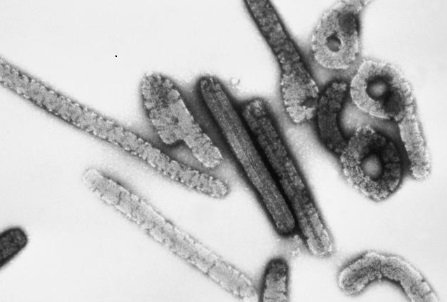
The Marburg virus is one of the most dangerous pathogens known to humankind, causing a disease known as Marburg Virus Disease (MVD). The fatality rate of MVD can range from 24% to 88%, depending on how effectively an outbreak is managed. First identified in 1967 in Marburg, Germany, the virus is closely related to Ebola, as both are filoviruses. While the initial discovery occurred in Europe, most subsequent outbreaks have been reported in Africa.

How MVD Spreads

The Marburg virus was first transmitted to humans through contact with fruit bats, specifically the Rousettus species, which live in caves and mines. Once a human is infected, the virus spreads through direct contact with bodily fluids such as blood, vomit, or urine, or through contaminated surfaces. Healthcare workers are particularly vulnerable due to their close interaction with infected patients.

Symptoms of Marburg Virus Disease (MVD)

Symptoms of MVD usually appear between 2 to 21 days after infection and include:

  • High fever
  • Severe headache
  • Muscle pain
  • Watery diarrhea
  • Abdominal pain
  • Vomiting

In severe cases, patients may experience hemorrhaging, leading to internal bleeding. Most deaths occur within 8 to 9 days after symptom onset due to severe blood loss and shock.

Prevention and Treatment

Currently, there are no approved vaccines or specific treatments for Marburg virus disease. Supportive care, including intravenous fluids and symptom management, is the primary method of treatment. Rwanda is working to protect healthcare workers and patients by exploring experimental vaccines and treatments. The Sabin Vaccine Institute has already provided 700 doses of an experimental vaccine to frontline medical staff in the country.

About the Marburg Virus

The Marburg virus was initially identified during outbreaks in Marburg and Frankfurt, Germany, and in Belgrade, Serbia, in 1967. It causes a form of hemorrhagic fever, characterized by severe bleeding and organ failure. The virus spreads between humans through contact with bodily fluids, and its natural host is believed to be fruit bats.

While Marburg outbreaks are rare, their effects are often devastating. Rwanda’s swift response, including the exploration of experimental vaccines, is crucial to containing this outbreak and protecting its healthcare system from further strain.

Looking Ahead

Rwanda’s first encounter with the Marburg virus highlights the ongoing global challenges posed by emerging infectious diseases. With healthcare workers at high risk and no specific treatment available, the country faces an uphill battle. However, the experimental vaccine and heightened awareness offer a glimmer of hope in controlling the outbreak and preventing further fatalities.

WHO Honors India for Eliminating Trachoma as Public Health Issue

0

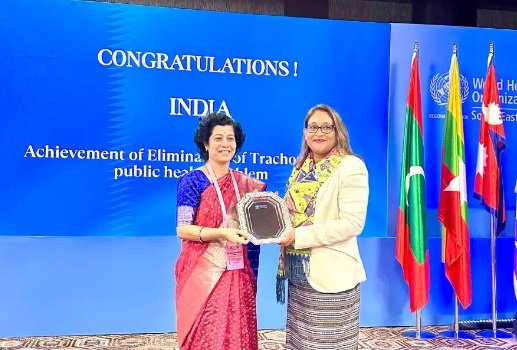
The World Health Organization (WHO) recently commended India for its remarkable achievement in eliminating trachoma as a public health problem. With this accomplishment, India joins Nepal and Myanmar as the third country in the WHO Southeast Asia Region to achieve this significant milestone.

The Significance of the Achievement

This recognition by the WHO underscores India’s dedicated efforts to enhance eye health and prevent diseases through its robust healthcare programs. Trachoma, once a leading cause of blindness globally, has now been successfully controlled in India. This victory reflects the country’s progress in improving public health and hygiene standards.

Understanding Trachoma

Trachoma is a bacterial infection that affects the inner lining of the eyelids, leading to painful inflammation and, if left untreated, blindness. The disease thrives in areas with poor hygiene and unsanitary living conditions. In the 1950s and 60s, trachoma was a major public health challenge in India, contributing significantly to the country’s blindness rates.

Government Initiatives to Combat Trachoma

India launched its National Trachoma Control Program in 1963, laying the foundation for the country’s fight against this debilitating disease. Over time, the program merged with the broader National Programme for Control of Blindness, further strengthening efforts to reduce trachoma-related blindness.

As a result of these concerted efforts, the percentage of blindness due to trachoma fell dramatically—from 5% in 1971 to less than 1% today. This significant reduction showcases India’s success in implementing effective public health measures and improving access to healthcare.

WHO’s SAFE Strategy: The Key to Success

India’s fight against trachoma was guided by the WHO’s SAFE strategy, a comprehensive approach designed to combat the disease at multiple levels. The acronym SAFE stands for:

  • Surgery to correct eyelid deformities caused by trachoma.
  • Antibiotics to treat active infections and prevent further spread.
  • Facial cleanliness to reduce transmission of the disease.
  • Environmental hygiene to improve living conditions and reduce the factors that contribute to the disease.

By employing this strategy, India was able to eliminate infective trachoma by 2017, a critical step in its journey toward eradicating the disease entirely.

Ongoing Surveillance and Research

Despite this success, India remains vigilant to ensure that trachoma does not resurface. Since 2019, the government has implemented ongoing surveillance measures, including the National Trachomatous Trichiasis Survey (2021-2024). This survey monitors the prevalence of trachoma and ensures that the disease remains under control across the country.

Health Outcomes and Future Impact

India’s efforts to eliminate trachoma have led to impressive health outcomes. In 2021 alone, more than 69,000 individuals received surgical treatment for trachoma-related complications, while around 64.6 million people were treated with antibiotics to prevent the disease from spreading. These measures have drastically reduced the number of people affected by trachoma, improving the overall quality of life and health across the country.

The elimination of trachoma in India represents a critical victory in the global fight against preventable blindness. Through sustained efforts and continued vigilance, India is leading the way in improving eye health and ensuring a brighter future for its citizens.

Good bye to man who introduced nationalism to business in India…Tata Motors acquired Jaguar Land Rover, Tata Steel took over Corus & Tata Tea bought Tetley under Ratan Tata’ tenure…

0

By Vaidehi Bhargava

Ratan Tata was an Indian industrialist, philanthropist, and former chairman of Tata Sons, the holding company of the Tata Group, India’s largest conglomerate. Born on December 28, 1937, he is known for transforming the Tata Group into a global powerhouse during his tenure from 1991 to 2012 and briefly in 2016-2017.

Under his leadership, Tata Motors acquired Jaguar Land Rover, Tata Steel took over Corus, and Tata Tea bought Tetley, making Tata Group internationally recognized.

Ratan Tata is highly respected for his integrity, business acumen, and philanthropic efforts. He contributed significantly to causes like education, healthcare, and rural development through the Tata Trusts, which control a majority of Tata Sons’ shares.

Despite his success, Tata has maintained a humble and down-to-earth persona. He has received several national and international honors, including the Padma Bhushan and Padma Vibhushan, two of India’s highest civilian awards. Ratan Tata, beloved industrialist and one of India’s most admired figures, passed away today at the age of 86. He had been admitted to a Mumbai hospital in critical condition.

N Chandrasekaran, Chairman of Tata Sons, confirmed this tragic news.

In a statement, Chandrasekaran expressed, “With deep sorrow, we say goodbye to Mr Ratan Naval Tata, an extraordinary leader whose invaluable contributions have not only transformed the Tata Group but also significantly influenced the essence of our nation.”

“We bid farewell to Mr. Ratan Naval Tata with a profound sense of loss. He was a truly exceptional leader whose immeasurable contributions have shaped both the Tata Group and the very fabric of our countryRatan Tata, the former chairman of Tata Sons, is renowned for his visionary leadership and philanthropic contributions and he has done many inspirational work .

  1. Tata Group’s Expansion: Under Ratan Tata’s leadership, the Tata Group expanded significantly, acquiring companies like Jaguar Land Rover and Corus Steel. His vision transformed Tata into a global powerhouse while retaining its commitment to ethical business practices.
  2. Tata Nano: Ratan Tata championed the development of the Tata Nano, aimed at providing an affordable car for the masses. This innovative approach addressed the needs of low-income families, demonstrating Tata’s commitment to social responsibility.
  3. Philanthropy and Education: Ratan Tata has been a strong advocate for education and healthcare. He has supported numerous initiatives, including the Tata Trusts, which fund various social causes, from healthcare to education and rural development.
  4. Social Initiatives: He has been instrumental in supporting projects like the Tata Institute of Social Sciences and the Tata Medical Center in Kolkata, which focus on education, healthcare, and community development.
  5. Mentorship and Leadership: Ratan Tata has inspired many young entrepreneurs and leaders through his mentorship. He emphasizes the importance of ethical leadership, innovation, and resilience in overcoming challenges.
  6. COVID-19 Response: During the COVID-19 pandemic, Ratan Tata made significant donations to help provide medical aid and support to frontline workers, showcasing his commitment to public welfare during crises.
  7. Sustainable Business Practices: He has been a proponent of sustainable and responsible business practices, focusing on environmental sustainability and social responsibility, ensuring that businesses contribute positively to society.”
    The world dimmed with sorrow as Ratan Tata, a beacon of compassion and vision, departed, leaving behind a legacy of hope and a heartache that echoes in the lives he touched.”