Home Blog Page 433

Meet Raja Elephant, Sri Lanka’s Adorable ‘Road Tax Collector’ Winning Hearts and Snacks!

0

Raja, the wild elephant from Sri Lanka, has charmed locals and travelers alike by his unusual behavior on the B35 highway near Udawalawe National Park. Nicknamed the “road tax collector,” Raja halts vehicles by standing in their path, expecting food as his toll. Drivers, aware of his routine, carry treats like bananas, bread, or other snacks to appease him and continue their journey. His peaceful yet firm approach adds a humorous touch to what might otherwise be a tense wildlife encounter.

This behavior is believed to have developed over years of observing human interaction. Elephants are known for their intelligence, and Raja’s ability to adapt to his surroundings showcases this trait vividly. His presence also serves as a reminder of the close proximity between human activities and wildlife in Sri Lanka, particularly around protected areas like Udawalawe, which is famous for its elephant population.

Raja’s antics have sparked discussions on the coexistence of humans and wildlife. While his behavior appears endearing, it underscores a larger issue: the disruption of natural habitats due to expanding human infrastructure. Elephants like Raja may turn to roads and human interaction for food due to diminishing resources in their forested homes.

Wildlife conservationists urge travelers not to feed animals like Raja, as it reinforces habits that can lead to dependency and risks for both elephants and humans. Close encounters with vehicles could lead to accidents, and such interactions may encourage other elephants to adopt similar practices, increasing potential conflicts.

Despite these concerns, Raja remains a beloved figure in the region. His story draws attention to the importance of preserving natural habitats and ensuring that tourism and human development align with conservation efforts. For many, meeting Raja is not just a delightful experience but also a poignant reminder of the delicate balance between humanity and nature in regions like Sri Lanka.

7 Hidden Villages in India You Must Explore

0

Here’s an exploration of seven fascinating Indian villages to visit . Starting with Malana. Each village offers a unique cultural and scenic experience:

  1. Malana (Himachal Pradesh)

Malana, often referred to as “The Little Greece of India,” is steeped in myth and mystery. Believed to be the oldest democracy in the world, it is governed by a council of elders. The village is nestled in the Parvati Valley, surrounded by the majestic Deo Tibba and Chandrakhani peaks. Known for its distinct social customs, Malana maintains strict rules about interaction with outsiders. Trekkers can enjoy a moderately challenging hike from Jari to Malana, soaking in views of lush forests and terraced fields. The village is also famed for “Malana Cream,” a cannabis strain known worldwide.

  1. Ziro (Arunachal Pradesh)

Home to the Apatani tribe, Ziro is a UNESCO World Heritage Site candidate. Famous for its terraced paddy fields and sustainable farming practices, Ziro captivates with its vibrant festivals, such as the Ziro Music Festival. Visitors can immerse themselves in local culture, sample traditional rice beer, and enjoy scenic treks through pine-clad hills and meadows.

  1. Gokarna (Karnataka)

Gokarna is both a spiritual and beach paradise. Known for its pristine beaches and sacred temples like the Mahabaleshwar Temple, it offers a perfect mix of tranquility and adventure. Popular spots include Om Beach and Kudle Beach, ideal for both yoga retreats and water sports.

  1. Dawki (Meghalaya)

Located near the India-Bangladesh border, Dawki is famous for the Umngot River, with water so clear that boats appear to float in the air. The village also serves as a gateway to numerous natural wonders in Meghalaya, including caves, waterfalls, and living root bridges.

  1. Diskit (Ladakh)

In the heart of the Nubra Valley, Diskit is renowned for its 32-meter Maitreya Buddha statue and the ancient Diskit Monastery. The village is surrounded by desert-like landscapes interspersed with lush greenery, offering breathtaking views and a peaceful retreat.

  1. Lahaul and Spiti (Himachal Pradesh)

This region is a high-altitude cold desert, home to some of the most picturesque villages like Kaza and Keylong. Famous for monasteries like Key and Tabo, the area offers surreal landscapes, ancient traditions, and thrilling adventure opportunities.

  1. Khimsar (Rajasthan)

Though not mentioned in the initial list, Khimsar is worth highlighting. Its heritage fort and desert safaris provide an authentic Rajasthani experience. Nearby, the Khimsar Sand Dunes are perfect for exploring by camel.

These villages offer a glimpse into India’s diverse cultural and natural heritage. Whether it’s the isolation of Malana or the vibrant community life of Ziro, each destination promises unforgettable memories. Let me know if you want further details on any of these!

India’s First Sign Language TV Channel launched

0

India has taken a significant step towards inclusive education with the launch of its first 24/7 sign language television channel, Channel 31. Part of the PM e-VIDYA program, this groundbreaking initiative aims to support hearing-impaired students and educators across the country. Managed by the National Council of Educational Research and Training (NCERT), the channel is a pioneering effort to make education accessible to all.

Purpose of Channel 31

Channel 31 is a dedicated platform that provides educational resources in Indian Sign Language (ISL). Designed for schoolchildren, teachers, and other stakeholders, the channel addresses a broad range of topics, including:

  • Career guidance
  • Skill development
  • Mental health awareness

Additionally, Channel 31 promotes ISL as a subject alongside mainstream languages such as Hindi and English, aligning its content with the central and state school curricula.

A Push for Inclusive Education

Union Education Minister Dharmendra Pradhan, during the launch, highlighted the importance of inclusivity in education. He noted the expansion of the list of recognized disabilities from seven to 21, a move that strengthens India’s legal framework for individuals with disabilities.

The initiative aligns with the goals of the National Education Policy (NEP) 2020, which emphasizes special provisions for children with disabilities, ensuring equitable access to quality education.

India’s First Sign Language TV Channel launched

Promoting ISL Learning

Pradhan also urged the public to learn Indian Sign Language, emphasizing its broader potential beyond communication. ISL can enhance cultural expressions such as dance and drama while fostering understanding and inclusivity.

By encouraging ISL learning, the initiative opens up new employment opportunities for the hearing-impaired community, empowering individuals and promoting societal integration.

Government’s Commitment to Disability Rights

Union Minister Jayant Chaudhary described the channel’s launch as a milestone in India’s journey towards inclusivity. He praised the government’s efforts in replacing outdated disability laws with the progressive Rights of Persons with Disabilities Act, which adopts a rights-based approach.

Chaudhary also emphasized the importance of:

  • Early identification of disabilities to provide timely support.
  • Standardization of over 10,000 ISL words, aimed at breaking societal stigma and encouraging participation from the hearing-impaired community.

A Vision for Equal Opportunities

Channel 31 reflects India’s commitment to providing equal access to education and resources for all, regardless of abilities. By standardizing ISL and integrating it into the mainstream, the government is working to eliminate barriers and create a more inclusive society.

This initiative not only represents a landmark in educational innovation but also signals a broader societal shift toward embracing diversity and promoting equality. Channel 31 is more than just a TV channel—it is a beacon of hope and empowerment for millions of hearing-impaired individuals in India.

AI will soon be translating what your cat and dog is saying to you

0

Have you ever wished you could understand what your pet is trying to tell you? From the wag of a dog’s tail to the subtle flick of a cat’s ear, animals have unique ways of communicating, but decoding their silent language has remained a mystery—until now. Scientists are using Artificial Intelligence (AI) to unravel the emotions and intentions behind your furry friend’s actions, potentially revolutionizing the bond between humans and animals.

This groundbreaking research leverages AI to study facial expressions, body language, and vocalizations of cats, dogs, and even horses. By analyzing a treasure trove of videos available online, researchers train sophisticated algorithms to identify patterns in animal behavior. These AI systems are capable of recognizing subtle shifts in a pet’s expression, such as the narrowing of a horse’s eyes or a cat’s relaxed blink, which may indicate feelings like contentment, stress, or even affection.

For instance, a dog’s raised eyebrows might signal curiosity or excitement, while a tucked tail can reveal fear or anxiety. AI doesn’t just look at a single behavior; it examines combinations of movements, context, and even vocal tones to provide a nuanced understanding of what an animal might be “saying.”

The implications are extraordinary. For pet owners, this technology could offer an app-based tool that translates their pet’s emotions in real time, fostering deeper connections and improving pet care. Imagine receiving a notification: “Your cat feels stressed; it might need some alone time,” or “Your dog is excited; it’s a great moment for a walk.”

The benefits extend beyond households. Veterinary professionals could use AI to detect signs of pain or discomfort in animals, improving diagnosis and treatment. On farms, AI could monitor livestock emotions to ensure ethical treatment and reduce stress-induced health issues.

However, the research is not without challenges. Animals, like humans, have individual personalities, and their expressions can vary widely. Training AI to account for these variations requires vast amounts of data and complex algorithms. Yet, the progress so far has been promising, with accuracy levels improving steadily.

In a world increasingly driven by technology, AI’s potential to decode animal communication might just make human-animal relationships more empathetic and enriching. The day when your dog’s bark is translated into a clear “I missed you!” may not be far off.

This innovative science reminds us that while animals may not speak our language, they certainly have their own—and now, we might finally understand it.

Rare Little Gull Spotted in NCR

0

The National Capital Region (NCR) of India recently witnessed a rare sighting of the little gull, one of the smallest and most fascinating migratory bird species. Spotted near Sultanpur National Park at Chandu, this event is noteworthy as there are only about ten documented records of the species in India, making it a significant moment for bird enthusiasts and ornithologists alike.

Identification of the Little Gull

The little gull (Hydrocoloeus minutus) is the world’s smallest gull species, recognized for its unique features. Breeding adults are marked by a black head, pale grey back, white wingtips, and blackish underwings. In contrast, non-breeding adults have a black ear patch and a subtle, smudgy cap. These distinctive characteristics make it easier for birdwatchers to identify them during migration.

Habitat and Breeding Patterns

The little gull typically breeds in marshy wetlands, choosing habitats that offer safety and abundant food resources for nesting. During the winter months, they migrate to offshore or coastal waters, where conditions are more favorable for survival.

A Rare Visitor to India

Despite its scarcity in India, the little gull is listed as “least concern” on the IUCN Red List. This status indicates that while sightings are rare in certain regions, the species is not currently threatened with extinction.

The bird’s migratory patterns often bring it from regions such as West Asia, Kazakhstan, Iran, China, Mongolia, Nepal, and Bhutan. These long-distance migrations are critical to their life cycle, allowing them to access food and breeding grounds.

Significance of the NCR for Migratory Birds

The NCR’s unique climate and diverse habitats make it an important stopover for various migratory species, including the little gull. Wetlands and reserves like Sultanpur National Park play a crucial role in supporting these birds during their journeys, offering refuge and sustenance.

This rare sighting highlights the region’s importance as a hub for birdwatching and emphasizes the need for continued conservation efforts to protect such habitats. Migratory birds like the little gull remind us of the interconnectedness of ecosystems and the vital role biodiversity plays in sustaining our planet.

Birdwatchers and nature enthusiasts are encouraged to visit Sultanpur and other key locations in NCR to witness the awe-inspiring phenomenon of migration and perhaps catch a glimpse of this extraordinary species.

Human Rights Day 2024: Date, Theme, History, and Significance

0

Human Rights Day is a global observance dedicated to promoting and protecting the fundamental rights of every individual, irrespective of nationality, ethnicity, gender, religion, or other status. It serves as a platform to celebrate progress in advancing human rights, raise awareness of ongoing issues, and advocate for collective action to combat abuses and uphold equality, dignity, and non-discrimination.

Date and Theme for 2024

This year, Human Rights Day will be observed on Tuesday, December 10, marking the anniversary of the adoption of the Universal Declaration of Human Rights (UDHR) by the United Nations General Assembly in 1948.

The theme for 2024 is “Our Rights, Our Future, Right Now,” emphasizing the importance of human rights in our daily lives and inspiring immediate action to safeguard these rights. This year’s observance calls for standing against hate, misinformation, and lies while promoting the principles of equality and dignity for all.

History of Human Rights Day

The roots of Human Rights Day date back to December 10, 1948, when the United Nations adopted the Universal Declaration of Human Rights. This milestone document outlined a broad range of fundamental rights and freedoms to which all individuals are entitled, regardless of their background.

In 1950, the UN General Assembly formalized this observance by passing Resolution 423 (V), inviting member states and organizations to recognize December 10 as Human Rights Day annually. Although the UDHR is not legally binding, it has inspired over 60 human rights instruments, creating a robust international framework for protecting rights across the globe.

Significance of Human Rights Day

Human Rights Day serves as a poignant reminder of the progress made in securing basic rights for all and the ongoing challenges that remain. It underscores the enduring relevance of the UDHR’s principles, which have been universally accepted by UN member states as the foundation for ensuring the dignity and rights of individuals worldwide.

This day also plays a vital role in mobilizing global communities to stand against human rights violations, raise awareness about critical issues, and reinforce the commitment to safeguarding freedoms, equality, and justice.

The annual observance is driven by the efforts of the Office of the High Commissioner for Human Rights (OHCHR) and other UN agencies, which lead initiatives and events to foster awareness and advocacy.

A Call to Action

Human Rights Day 2024 invites individuals and organizations to take actionable steps in protecting and promoting human rights. From raising voices against systemic injustices to addressing pressing issues like hate speech and misinformation, this day calls for collective efforts to ensure a future where the rights and freedoms of all are respected, upheld, and celebrated.

As we reflect on this year’s theme—“Our Rights, Our Future, Right Now”—it reminds us of the shared responsibility to build a more inclusive, equitable, and just world for present and future generations.

Mysterious Dark Ovals Discovered on Jupiter

0

Recent observations have unveiled fascinating phenomena in Jupiter’s atmosphere—Earth-sized dark ovals visible only in ultraviolet (UV) light. These enigmatic features, concentrated in the haze layers near Jupiter’s poles, have sparked fresh intrigue among planetary scientists.

A Closer Look at the Dark Ovals

The dark ovals are characterized by their ability to absorb UV light, rendering them distinct in Hubble Space Telescope images. Positioned just beneath Jupiter’s bright auroral zones, they are more prevalent near the south pole, appearing approximately 75% of the time, compared to a mere 12.5% near the north pole.

Their formation is intricately linked to Jupiter’s magnetic field and unusual atmospheric processes. The ovals are surrounded by dense haze, 50 times thicker than the surrounding atmosphere, providing new insights into the planet’s dynamic climate.

The Discovery and Research

While the dark ovals were initially detected in the late 1990s, their significance was highlighted by a recent study led by Troy Tsubota of UC Berkeley. By analyzing decades of Hubble images, Tsubota identified patterns, frequencies, and the atmospheric dynamics surrounding these features, greatly enhancing our understanding of Jupiter’s atmospheric behavior.

Magnetic Tornadoes: A Key to Their Formation

The ovals’ formation is believed to be tied to magnetic tornadoes—twisting vortices formed due to the interaction between Jupiter’s magnetic field lines and its ionosphere. This friction is further influenced by the hot plasma sheet encircling the planet and the volcanic activity of its moon, Io.

These magnetic tornadoes behave much like terrestrial twisters, weakening as they descend into lower atmospheric layers. Their stirring action creates dense haze within the ovals, suggesting that vortex dynamics, rather than chemical reactions, are responsible for their formation.

UV Ovals and Their Evolution

The southern UV-dark oval (SUDO) has been observed eight times between 1994 and 2022, while the northern UV-dark oval (NUDO) has been spotted only twice in 25 global atmospheric maps. The ovals exhibit rapid development, forming within about a month and disappearing within weeks.

A Window into Planetary Atmospheres

These dark UV ovals provide critical clues about Jupiter’s atmospheric structure and dynamics. Studying these features not only deepens our understanding of gas giants like Jupiter but also offers valuable insights into the atmospheres of exoplanets and other planetary systems.

The relationship between atmospheric layers, magnetic fields, and dynamic weather patterns on Jupiter serves as a model for studying broader planetary phenomena. As scientists continue to investigate these UV ovals, they unravel more secrets of the largest planet in our solar system—and beyond.

Supriya Lifescience Expands Global Footprint with Esketamine Hydrochloride Approval and Atorvastatin Patent Filing

0

Supriya Lifescience Ltd., a leading name in the global pharmaceutical industry, has achieved two significant milestones that underline its commitment to innovation and affordable healthcare. The company has become the first Indian pharmaceutical firm to receive approval for Esketamine Hydrochloride from Brazil’s health authority, ANVISA (Agência Nacional de Vigilância Sanitária). Additionally, it has filed a groundbreaking patent for a low-cost manufacturing process of Atorvastatin, a widely used drug for managing cholesterol and preventing cardiovascular diseases.

First Indian Nod for Esketamine Hydrochloride

Esketamine Hydrochloride, a cutting-edge drug used in the treatment of mental health conditions, is poised to revolutionize access to mental healthcare in Brazil and the broader Latin American (LATAM) region. With the ANVISA approval, Supriya Lifescience strengthens its presence in the LATAM market, where the demand for innovative and affordable medicines is rapidly growing.

This landmark regulatory approval enables the company to offer high-quality and advanced therapies to a region in dire need of effective solutions for mental health challenges. By becoming the first company in Brazil to receive this approval, Supriya Lifescience is set to pave the way for expanded healthcare options in LATAM.

Low-Cost Breakthrough for Atorvastatin Manufacturing

In another remarkable achievement, Supriya Lifescience has filed a patent for a cost-effective and innovative process to manufacture Atorvastatin, one of the world’s most prescribed drugs for controlling cholesterol and reducing the risk of cardiovascular disease. This new technique not only reduces production costs but also improves the drug’s overall efficacy, making it more accessible to patients worldwide.

Atorvastatin plays a critical role in global healthcare, and Supriya’s innovation aligns with its mission to improve affordability and expand access to essential medications.

Leadership Insights

Dr. Satish Wagh, Executive Chairman and Whole-Time Director of Supriya Lifescience Ltd., expressed pride in the company’s achievements.
“Our commitment to transforming pharmaceutical manufacturing while maintaining affordability is demonstrated by our innovation in the synthesis of Atorvastatin. Our global presence is strengthened by the CADIFA approval, which allows us to introduce cutting-edge therapies like Esketamine Hydrochloride in crucial international markets, starting with Brazil.”

Strengthening Global Presence

With the CADIFA approval and a robust patent portfolio, Supriya Lifescience is well-positioned to capitalize on the rapidly growing LATAM market. The company’s focus on regulatory compliance, cutting-edge innovation, and affordability underscores its dedication to delivering high-quality healthcare solutions globally.


About Supriya Lifescience Ltd.

Founded in 1987, Supriya Lifescience Ltd. is a globally renowned manufacturer of active pharmaceutical ingredients (APIs). Headquartered in Mumbai, India, the company operates a state-of-the-art facility in Khed, Ratnagiri, certified by leading global regulatory bodies including the US FDA, Health Canada, ANVISA, EMA, and TGA.

Supported by advanced R&D capabilities, Supriya Lifescience holds eight active CEPs and fourteen active USDMFs, producing APIs and intermediates for both innovators and generic pharmaceutical companies. Guided by ethical principles and stringent EHS standards, the company remains at the forefront of delivering high-quality healthcare solutions worldwide.

What is Sanjhi art? Know the history and evolution behind it..

0

Khushi Sharma

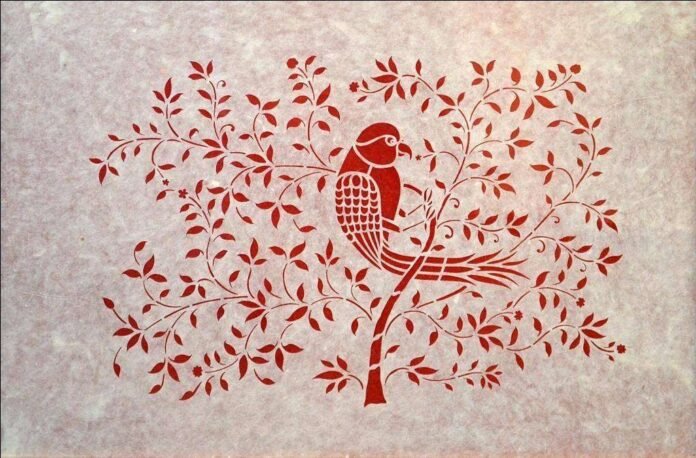
Sanjhi art is a traditional Indian folk art that involves cutting intricate designs and patterns into paper or banana leaves with specially made scissors.These stencils are placed on flat surfaces or water, where the rangoli has to be drawn. Dry colors are then sifted onto the surface.
The term “Sanjhi” comes from the Hindi word sandhya, which refers to the period of dusk, when the art form is typically associated.

Origin
Sanjhi art is a traditional Indian art form that originated in Mathura, the hometown of Lord Krishna.
According to Hindu mythology, Radha, Lord Krishna’s chosen gopini, would decorate the walls of her home with Sanjhi art to attract her beloved. The other gopinis of Vrindavan followed suit, hoping to attract Krishna’s attention.

Growth
Sanjhi art grew in popularity in the 16th and 17th centuries, when temples began decorating their walls and floors with Sanjhi motifs. Adding to this sanjhi has been popular ever since, and during the Mughal period, contemporary themes were introduced for greater perspective. Today, Sanjhi art is found in many homes and spaces.

The art of Sanjhi is still practiced today, but there are concerns about its survival. Some say that the art form needs to be promoted and that people need to learn it to preserve it.

Know the details of Phulkari art of Punjab..

0

Khushi Sharma

Phulkari: Literally means ‘flower work’. It is a style of embroidery that has its origins in the state of Punjab, India. Initially, it was the womenfolk who worked with bright colourful thread strands to create beautiful flower motifs on cotton fabrics.
The phulkari of south and southwestern Punjab in India and Pakistan has wide edges upon which designs of animals and birds are embroidered. As is the case of the chope, the edges are embroidered on both sides of the cloth.
It is also said that the jats, the strongest clan in South-east Punjab who are agriculturists, introduced the art of Phulkari wherever they went

It is a very crucial and integral part of the state Punjab and it is imperative to keep the traditional handicraft alive.

There are several types of phulkari embroidery like:
Darshan dwar
Thirma
Chope
Bhawan bagh and many more

Patterns
The hallmark of Phulkari is, making innumerable patterns by using long and short darn stitches. The designs were not traced. Techniques and patterns were not documented but transmitted from word of mouth and each regional group was identified with the style of embroidery or design. The thread came from Kashmir, Afghanistan, and Bengal and was dyed in the big cities by the lalaris. The best quality silk came from China.