Home Blog Page 427

India on the Global Food Map: Punjab, Maharashtra, and Bengal Among Top 100 Culinary Destinations

0

India has made its mark on the global food map, with multiple regions earning spots in the TasteAtlas 2024 rankings of the top 100 food regions worldwide. Among them, Punjab, Maharashtra, and West Bengal shine brightly for their distinctive culinary offerings, reflecting India’s rich and diverse food culture.

Punjab, ranked an impressive 7th, is celebrated for its hearty and flavorful dishes. Staples like Amritsari kulcha, butter chicken, saag paneer, and lassi have captivated global palates. Known for its vibrant spices and robust cooking techniques, Punjab stands shoulder-to-shoulder with culinary powerhouses like Tuscany and Paris.

At 41st, Maharashtra impresses with its street food culture. Iconic dishes such as vada pav, pav bhaji, and aamras showcase the state’s ability to blend simplicity with taste. Its cosmopolitan capital, Mumbai, contributes significantly with its thriving food scene, offering everything from spicy Misal Pav to sweet Puran Poli.

West Bengal, ranked 54th, draws attention for its unparalleled love for sweets and subtle flavors. Renowned for treats like rasgulla, sandesh, and shukto, as well as iconic street foods like the kathi roll, Bengal seamlessly blends tradition with innovation in its cuisine. Darjeeling tea, a global favorite, adds another feather to the region’s culinary cap.

Additionally, Southern India, an amalgamation of states, ranks 59th, showcasing dishes like dosa, biryani, and Mysore pak. This highlights India’s versatility, with distinct culinary identities coexisting within its borders.

These rankings, based on thousands of ratings by TasteAtlas users, underscore how Indian food—from spicy curries to delicate desserts—has found global appeal. By celebrating regional specialties, these rankings not only honor India’s food diversity but also inspire food enthusiasts worldwide to explore its vast culinary heritage.

World Saree Day: Draping the Legacy of Grace, Culture, and Timeless Elegance!

0

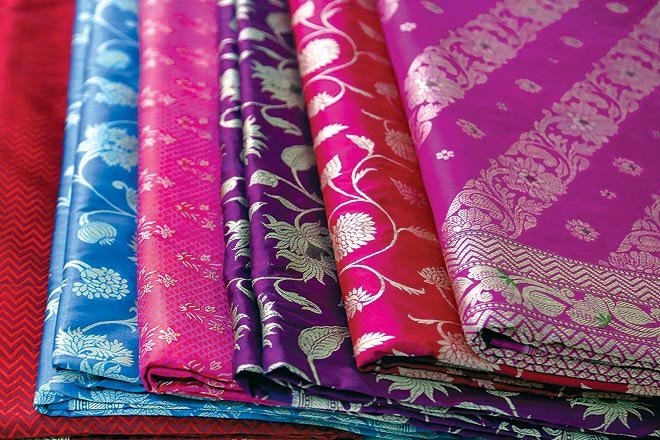
World Saree Day, celebrated every year on 21st December, is a global ode to the timeless grace and cultural richness of the saree. This day honors the saree as a symbol of heritage, femininity, and diversity, transcending borders and generations. The saree, a six to nine-yard unstitched garment, is not just a piece of clothing but a living testament to India’s craftsmanship and storytelling.

Legacy of the Saree

The saree dates back to the Indus Valley Civilization (2800–1800 BCE), where it was initially a simple, unstitched drape. Over centuries, it evolved into an intricate form of art, with each region in India contributing its unique style and technique. From the opulent Banarasi silk of Uttar Pradesh to the handwoven Kanjeevaram of Tamil Nadu and the vibrant Bandhani of Rajasthan, sarees represent the diversity and artistry of Indian culture.

The saree is more than a garment; it’s a legacy passed down from one generation to the next. Mothers gift sarees to their daughters, symbolizing love, continuity, and tradition.

Importance and Significance

World Saree Day is celebrated to:

  1. Preserve Heritage: To revive and sustain the traditional art of saree-making and promote handloom industries.
  2. Empower Women: As a versatile attire, the saree empowers women by celebrating their individuality, beauty, and confidence.
  3. Cultural Connection: It encourages people across the world to connect with India’s rich cultural tapestry and embrace traditional attire.
  4. Environmental Sustainability: With growing awareness of eco-friendly clothing, handwoven sarees highlight the importance of sustainable fashion.

Why December 21st?

The winter solstice marks the shortest day of the year, symbolizing the saree’s timeless presence amidst ever-changing times. It’s a reminder to pause, reflect, and celebrate enduring traditions in a modern world.


Poetry: A Tribute to the Saree

Oh, saree, drape of eternal grace,
You carry stories time cannot erase.
Threads of love in every fold,
A timeless saga, forever told.

From Kanjeevaram’s golden hue,
To Chikankari’s delicate dew,
You weave heritage, art, and pride,
A nation’s heart in you resides.

On this day, we honor your reign,
Through you, our culture shall sustain.
Oh, saree, symbol of unity’s thread,
Your legacy lives, never to fade.

Celebrate this World Saree Day by embracing the timeless charm of sarees and sharing the legacy with future generations!

Why Zurich Tops the List as the World’s Best City for Quality of Life in 2024

0

Zurich has solidified its reputation as the best city in the world for quality of life, according to Mercer’s annual survey for 2024. This Swiss metropolis stands out for its exceptional safety, healthcare, infrastructure, and overall livability. Zurich is not just a financial hub but also a vibrant cultural and environmental haven.

  1. Safety and Healthcare
    Zurich boasts extremely low crime rates, ensuring a secure environment for residents and visitors alike. Its healthcare system, ranked among the best globally, offers top-notch public and private services, making it a model for efficiency and accessibility.
  2. Infrastructure and Connectivity
    The city’s infrastructure is superb, with a well-planned public transport network and meticulously maintained public spaces. Zurich Airport, a key international gateway, has recently expanded its connectivity, making the city even more accessible to global travelers.
  3. Environmental Quality
    Zurich excels in sustainability, offering clean air, green spaces, and easy access to nature, including the stunning Swiss Alps and pristine lakes. The city’s commitment to preserving its natural environment aligns with its high ranking in urban livability.
  4. Education and Culture
    Home to renowned institutions like ETH Zurich, the city attracts students and professionals worldwide. Zurich also thrives as a cultural hotspot with museums, theaters, and a lively arts scene. Its blend of historical charm and modern amenities adds to its allure.
  5. Economic Strength
    Zurich’s economy is robust, characterized by high wages and low unemployment. It is a global financial center, attracting expats and professionals from diverse fields. However, the city’s high living costs may pose a challenge for some.

Zurich’s ability to balance urban sophistication with natural beauty, combined with its focus on safety and sustainability, makes it a global benchmark for quality of life. For anyone considering relocation or travel, Zurich represents the pinnacle of modern city living, offering an unmatched standard of well-being.

India’s Culinary Capitals Shine in Taste Atlas’ Top 100 Food Destinations for 2024

0

Taste Atlas’ 2024/25 awards have placed six Indian cities among the world’s top 100 food destinations, showcasing the country’s rich culinary diversity. Mumbai, known for its vibrant street food scene and local delicacies like vada pav, pav bhaji, and chaats, secured the 5th spot. Amritsar, ranked 43rd, is celebrated for its hearty Punjabi dishes such as butter chicken, sarson ka saag, and makki di roti. New Delhi (45th) and Hyderabad (50th) are famous for their diverse street food offerings—think kebabs, chaats, biryanis, and samosas. Kolkata (71st) is renowned for its sweets like rasgulla and mishti doi, while Chennai (75th) is known for its south Indian specialties like dosa, idli, and sambar.

These rankings highlight India’s culinary richness, blending traditional flavors with modern tastes. Mumbai’s food scene is particularly iconic with its bustling streets filled with stalls offering everything from crispy dosas and spicy pavs to tangy chaats. Amritsar’s food, deeply rooted in the Punjabi culture, is a testament to hearty and flavorful cooking, epitomized by dishes like dal makhani and kulcha. Delhi and Hyderabad, meanwhile, offer a mouth-watering mix of Mughlai and Hyderabadi cuisine, each a delightful exploration of spices and textures. Kolkata enchants with its sweets and seafood, reflecting the city’s cultural diversity and colonial history. Chennai’s food, with its emphasis on rice-based dishes and aromatic spices, offers a taste of South India’s rich culinary heritage.

Royal Crafts Day 1: A Tribute to India’s Timeless Heritage

0

The Pink City came live with the vibrant spirit of tradition as the Royal Crafts Exhibition opened its doors, celebrating India’s rich and diverse handicrafts. Organised by the FICCI FLO Jaipur Chapter under the leadership of President Raghushree Poddar, the event was a collaboration with the World Crafts Council – Asia Pacific Region (WCC-APR) and the Garment Exporters Association of Rajasthan (GEAR).

The grand exhibition was inaugurated on 16 December 2024 at the Front Lawn of the Rajasthan International Centre (RIC), Jhalana Dungri, Jaipur. It brought together artisans, designers, and craft enthusiasts to honor India’s unparalleled artistic legacy.

Royal Crafts Day 1: A Tribute to India’s Timeless Heritage

The inaugural ceremony, held at 10:30 a.m., was graced by Diya Kumari, Deputy Chief Minister of Rajasthan, who lit the ceremonial lamp. Among the distinguished attendees were Neeta Boochra, Founder of the FLO Jaipur Chapter, representatives of the WCC, FICCI FLO members, and other dignitaries. In her address, Diya Kumari Ji stressed the importance of preserving India’s traditional crafts and applauded the artisans whose talent continues to enrich the nation’s cultural heritage.

Throughout the day, the exhibition grounds buzzed with energy as visitors explored India’s largest curated crafts showcase, featuring textiles, home furnishings, jewellery, furniture, handicrafts, and clothing.

A key highlight of the day was a 3:00 p.m. talk show featuring Gaurang Shah, an esteemed figure in textile design. He captivated the audience with his insights into Jamdani weaving, Ikat artistry, and traditional embroidery techniques, offering a deeper appreciation for the enduring beauty and contemporary relevance of Indian textiles.

Royal Crafts Day 1: A Tribute to India’s Timeless Heritage

The first day of the Royal Crafts Exhibition proved to be an extraordinary celebration of heritage and innovation, providing a vibrant platform to showcase Indian handicrafts on a global scale, foster meaningful dialogue, and share the stories of artisans who keep these traditions alive.

What is Yakshagana? A timeless art of Karnataka..

0


Khushi Sharma

Yakshagana is traditional theatre, developed in Dakshina Kannada, Udupi, Uttara Kannada, Shimoga and western parts of Chikmagalur districts, in the state of Karnataka and in Kasaragod district in Kerala that combines dance, music, dialogue, costume, make-up, and stage techniques with a unique style and form. It is believed to have evolved from pre-classical music and theatre during the period of the Bhakti movement.

Origin
Yakshagana is believed to have evolved from ancient storytelling and performance art, and is rooted in Sanskrit literature and theater. It may have originated from the Bhutha-worship prevalent in the region, and was influenced by folk dance, Sanskrit drama, and Bharatha’s Natyashasthra.
Experts have placed the origin of Yakshagana somewhere in the period of the 11th to 16th centuries CE. Yakshagana was an established performance art form by the time of the noted Yakshagana poet, Parthi Subba (c. 1600).

Evolution
In the mid-20th century, Yakshagana began to change, with performances moving indoors and women participating in the art form. Over time, Yakshagana developed its own unique style, incorporating elements of mime, dance, and improvisation. It also became a way to spread religious beliefs and values.

What is Chittara art and paintings?

0

Khushi Sharma

Chittara is a folk art form from Karnataka that involves creating geometric patterns on the walls and floors of homes using clay paste. In chittara art, women from the Deewaru community painted images on the inside and outside of houses on auspicious occasions.
Chittara when translated into English means guitar.

Origin
Chittara art originated from ancient cave paintings and is a traditional folk art form from the Deevaru community that eventually made its way to the walls and floors of village homes. The word Chittara is a Kannada word that means “image” or “design”.

It is characterized by intricate geometric patterns that represent life’s auspicious ceremonies and rituals created using clay paste. Today Chittara is a languishing craft, with only a few families practicing it in Karnataka.

What is Gamaka? What is its relation with Carnatic music?

0

Khushi Sharma

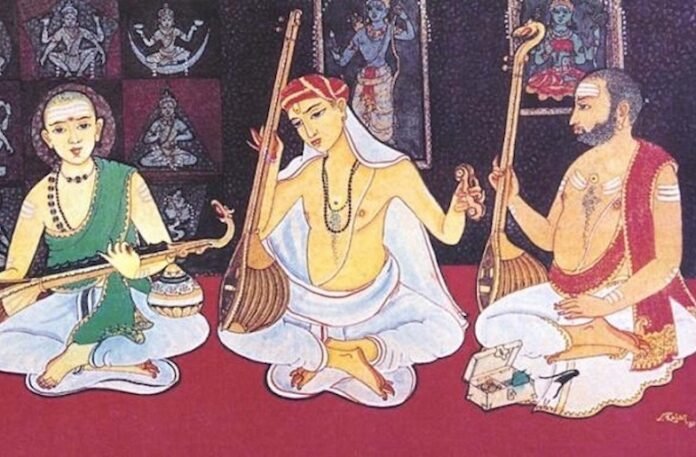
Gamaka indicates the ornamentation that is used in the performance of North and South Indian classical music. Gamaka can be understood as embellishment done on a note or between two notes. Present-day Carnatic music uses at least fifteen different kinds of ornamentation.
It can also refer to a form of storytelling by singing, originated in Karnataka, India. It involves one person reading a poem stanza with emphasis on meaning, and then another person explaining the meaning with examples. The singing is called gamaka, and the singer is called a gamaki.

The term gamaka itself means “ornamented note” in Sanskrit.Various commentators on Indian music have mentioned different numbers of gamakas. For example, Sarangadeva describes fifteen gamakas, Narada in Sangeeta Makaranda describes nineteen gamakas, and Haripala in Sangeet Sudhakar describes seven gamakas.

Carnatic music or Karnataka Sangita is one of the three main subgenres of Indian classical music that evolved from ancient Hindu texts and traditions particularly the Samaveda. Notation for gamakas is generally not found in the Indian music system. There can be considerable difficulty in conveying the complex and fluid melodic movement of gamakas in a notation system that uses fixed pitch signs. In Carnatic music in particular, the notation of gamakas is often unnecessary, as performers use notation as a memory aid for compositions they already learned by hearing and imitating.

India’s Anti-Doping Milestone: Understanding the Athlete Biological Passport (ABP)

0

The World Anti-Doping Agency (WADA) has granted approval to the National Dope Testing Laboratory (NDTL) in New Delhi to oversee the Athlete Biological Passport (ABP) program. This milestone marks a significant advancement in India’s efforts to ensure clean and fair sports by monitoring athletes’ biological markers over time.

What is the Athlete Biological Passport (ABP)?

The ABP is a cutting-edge system designed to track changes in an athlete’s biological variables, particularly blood and steroid levels, over an extended period. Unlike traditional methods, which focus on detecting specific substances, the ABP identifies irregularities in biological data that could indicate doping. This longitudinal approach enhances the ability to uncover doping practices that may otherwise go undetected.

Why WADA’s Approval Matters

India’s inclusion among the 17 countries with a recognized Athlete Passport Management Unit (APMU) is a monumental step forward. It not only boosts the country’s credibility in global anti-doping efforts but also signifies a commitment to upholding integrity in sports. The approval positions India as a regional leader in the fight against doping.

Role of the National Dope Testing Laboratory (NDTL)

The NDTL will play a pivotal role in implementing the ABP system. This includes conducting tests, managing data, and monitoring athletes’ biological markers for any abnormalities. The NDTL’s responsibility extends beyond Indian athletes, as the APMU will also assist anti-doping organizations in neighboring countries, fostering a collaborative approach to clean sports across the region.

Significance for Clean Athletes and Sports Integrity

The ABP system is a safeguard for clean athletes, ensuring a level playing field and protecting those who compete fairly. It promotes a culture of transparency and integrity in sports, discouraging doping while encouraging adherence to ethical practices.

A Bright Future for Indian Sports

With the introduction of the ABP and WADA’s endorsement, India is set to strengthen its anti-doping framework. This development is expected to bring more rigorous testing and monitoring, inspiring confidence among athletes and fans alike. As India takes this step forward, the commitment to clean sports and fair play will continue to grow, reinforcing the nation’s position on the global stage.

Five New Species of Rare Darwin Wasps Discovered

0

In a remarkable discovery, researchers at the Ashoka Trust for Research in Ecology and the Environment (ATREE) have identified five new species of Darwin wasps in India and Thailand. Belonging to the subfamily Microleptinae, these wasps are known for their parasitic life cycle, where their larvae develop within a host. This discovery not only expands scientific knowledge of the Microleptinae subfamily but also marks its first recorded presence in India.

About the Ichneumonidae Family and the Subfamily Microleptinae

The Ichneumonidae family, to which these wasps belong, consists of 42 subfamilies. Among them, Microleptinae is one of the smallest, comprising a single genus, Microleptes. Until this study, only 14 species of Microleptes had been documented globally, mostly from the Palaearctic region. The only previous record of this genus in the Oriental region was Microleptes malaisei, found in Myanmar in 1998.

New Species Identified

This groundbreaking study introduced five new species:

  • From India:
    • Microleptes chiani
    • Microleptes gowrishankari
    • Microleptes sandeshkaduri
    • Microleptes tehriensis
  • From Thailand:
    • Microleptes depressus

In addition to these discoveries, the researchers also identified the female of Microleptes xinbinensis, a species previously documented only in China.

Honouring Influences Through Naming

The naming of these species reflects deep respect for individuals and places associated with biodiversity and conservation:

  • Microleptes chiani pays homage to Tamilazhagan from Tamil Nadu.
  • Microleptes gowrishankari honors Dr. P. Gowri Shankar for his contributions to King Cobra research.
  • Microleptes sandeshkaduri acknowledges Sandesh Kadur’s work in biodiversity conservation.
  • Microleptes tehriensis is named after its collection site in Tehri, Uttarakhand.

Significance of the Discovery

This discovery emphasizes the importance of taxonomic research in understanding biodiversity and ecological systems. ATREE’s findings highlight the need for in-depth studies on the distribution and diversity of the Microleptinae subfamily. Understanding these species is crucial for gaining insights into ecological dynamics, particularly the roles of parasitic insects in regulating ecosystems.

A Call for Conservation

The findings from varied geographical regions underscore the urgency of conserving habitats that support such diverse life forms. Further exploration into the distribution and ecological significance of the Microleptinae subfamily could provide critical insights for biodiversity conservation initiatives.

This milestone serves as a reminder of how much remains to be discovered in the natural world, especially in biodiversity-rich regions like India and Thailand. The discovery of these rare Darwin wasps is not just a victory for taxonomy but also a step forward in global conservation efforts.