Home Blog Page 421

Cosmic Spectacle: Unveiling the Mysteries of Planetary Parades

0

A planetary parade, also known as a planetary alignment, is a celestial event where multiple planets appear to line up in the sky from Earth’s perspective. This captivating phenomenon occurs when planets gather closely on one side of the Sun, aligning along the ecliptic—the Sun’s apparent path across the sky. While a perfectly straight alignment is geometrically improbable due to the varying orbital planes of the planets, these gatherings create a striking visual spectacle for observers on Earth.

The term “planetary parade” is informal and can refer to alignments involving three to all eight planets. Such events are relatively rare and vary in the number of planets involved and their visibility. For instance, on June 3, 2024, a notable alignment occurred where six planets—Mercury, Mars, Jupiter, Saturn, Uranus, and Neptune—aligned in the early morning sky. However, not all were visible to the naked eye; Uranus and Neptune required telescopes for observation.

Looking ahead, the next significant planetary alignment is anticipated on January 21, 2025. During this event, six planets—Mars, Jupiter, Uranus, Neptune, Venus, and Saturn—will align in the evening sky just after sunset. Of these, Mars, Jupiter, Venus, and Saturn will be easily visible without special equipment, while Uranus and Neptune will require telescopes or high-powered binoculars for viewing.

Observing a planetary parade can be a mesmerizing experience. To enhance your viewing, consider the following tips:

Timing: Plan your observation for just after sunset or before sunrise, depending on the alignment’s specifics.

Location: Choose a viewing spot with a clear, unobstructed horizon and minimal light pollution to maximize visibility.

Equipment: While many planets can be seen with the naked eye, having a pair of binoculars or a telescope can enhance the experience, especially for spotting distant planets like Uranus and Neptune.

Planetary parades not only offer a visual treat but also serve as a reminder of the dynamic and ever-changing nature of our solar system. They provide an excellent opportunity for both amateur and seasoned astronomers to engage with the night sky, fostering a deeper appreciation for the cosmos.

Indore Airport Soars High as India’s First Zero-Waste Green Hub!

0

Indore’s Devi Ahilyabai Holkar Airport has achieved a significant milestone by becoming India’s first zero-waste airport. This accomplishment underscores the city’s commitment to sustainability and innovation in waste management.

Zero-Waste Initiative and 4R Strategy

The airport’s zero-waste initiative is anchored in the 4R principle: Reduce, Reuse, Recycle, and Restore. This comprehensive approach aims to minimize waste generation and maximize resource recovery, setting a new benchmark for environmental sustainability in the aviation sector.

Material Recovery Facility (MRF)

A pivotal component of this initiative is the establishment of a 3,000-square-foot Material Recovery Facility (MRF). This state-of-the-art facility is designed to process approximately 750 kilograms of waste generated daily from various sources, including aircraft, terminal shops, gardens, and restrooms. The MRF segregates waste into wet and dry categories, enabling efficient recycling and composting processes.

Wet Waste Processing

The MRF features an advanced Wet Waste Processing Unit that transforms organic waste into nutrient-rich compost. This compost is utilized to enhance the airport’s landscaping, promoting a circular economy and reducing reliance on chemical fertilizers.

Dry Waste Management

Dry waste is meticulously sorted into multiple categories within the MRF, facilitating effective recycling. This process ensures that materials such as plastics, metals, and paper are redirected from landfills and reintroduced into the production cycle, thereby conserving resources and reducing environmental impact.

Collaborative Efforts and Inauguration

The successful implementation of the zero-waste project is the result of collaborative efforts among various stakeholders. IndiGoReach, the corporate social responsibility arm of IndiGo Airlines, partnered with the Airports Authority of India (AAI) and the AAS Foundation, Indore, to bring this vision to fruition. The facility was inaugurated by Union Civil Aviation Minister Kinjurapuram Rammohan Naidu, alongside other dignitaries, marking a significant advancement in sustainable aviation practices.

Economic and Environmental Impact

Prior to this initiative, the airport incurred costs for waste disposal through the Municipal Corporation. With the in-house waste segregation and processing plant now operational, the airport not only eliminates these expenses but also generates revenue through the sale of compost. This development enhances the airport’s economic viability while reinforcing its commitment to environmental stewardship.

Future Prospects

The zero-waste model adopted by Indore Airport sets a precedent for other airports nationwide, demonstrating that sustainable waste management is both feasible and beneficial. As the aviation industry continues to grow, such initiatives are crucial in mitigating environmental impacts and promoting sustainable development.

Indore’s achievement as India’s first zero-waste airport reflects a broader commitment to sustainability and innovation, aligning with global efforts to create more environmentally responsible infrastructure.

Uttarakhand Uncorks Its First Wine Production Unit: A Toast to Tourism and Tradition!

0

In December 2024, the Uttarakhand government inaugurated its first wine production unit in Kotdwar, marking a significant step toward promoting wine tourism under the state’s new excise policy.

This facility has already produced 1,000 cases of wine, signaling a promising start for the region’s nascent wine industry.

The initiative aims to attract wine enthusiasts by offering comprehensive tours of the production unit, where visitors can learn about the history of wine, observe the production process, and sample various wine varieties.

To enhance the tourist experience, guesthouses are being developed around the facility, allowing visitors to enjoy the scenic beauty of Uttarakhand while indulging in wine-related activities.

This move is part of a broader strategy to boost state revenue and create employment opportunities by leveraging the region’s rich agricultural resources.

Uttarakhand’s diverse fruit production, including malta oranges, apples, buransh (rhododendron) flowers, pears, and galgal (hill lemons), provides a unique opportunity to produce a variety of fruit wines, adding a distinctive flavor to India’s wine offerings.

The success of the Kotdwar unit has prompted plans to establish additional wine production facilities in Bageshwar and Champawat, further expanding the state’s wine tourism infrastructure.

By integrating wine production with tourism, Uttarakhand aims to position itself as a notable destination for wine enthusiasts, contributing to the state’s economic development and offering a new avenue for cultural and recreational activities.

This initiative reflects a growing trend in India to explore and develop wine tourism, combining traditional agricultural practices with modern tourism strategies to create sustainable economic growth.

As the industry evolves, Uttarakhand’s commitment to promoting wine tourism is expected to attract both domestic and international visitors, eager to experience the unique blend of natural beauty and viticulture that the state offers.

Republic Day 2025: Celebrating ‘Swarnim Bharat’ with Heritage and Progress on Full Display!

0

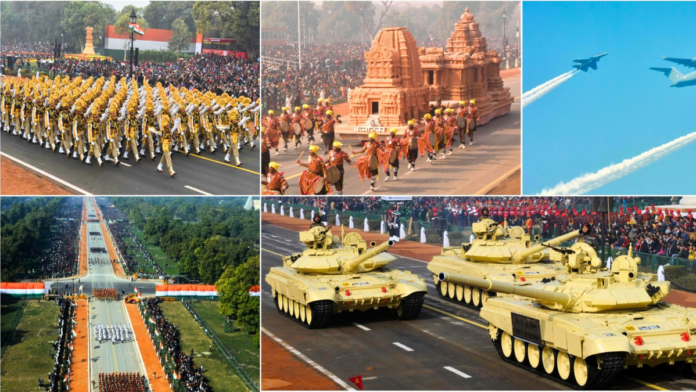
India’s 76th Republic Day, celebrated on January 26, 2025, promises to be a vibrant display of the nation’s rich heritage and dynamic progress with its tableaux theme, “Swarnim Bharat – Virasat aur Vikas” (Golden India – Heritage and Development). The theme reflects India’s journey of preserving its cultural treasures while embracing modernity and sustainable growth.

A Grand Parade of Heritage and Progress

The majestic Republic Day parade at Rajpath (Kartavya Path) will feature state and union territory tableaux, highlighting local traditions, historic landmarks, and their contributions to development. From Rajasthan’s forts and folk dances to Kerala’s backwaters and Ayurveda, every tableau will depict the seamless integration of heritage with innovative advancements in fields like technology, green energy, and infrastructure.

This year’s highlight includes a special tableau by the Ministry of Culture, showcasing India’s UNESCO World Heritage Sites alongside the technological marvels driving economic growth, symbolizing the perfect blend of “Virasat aur Vikas.”

Key Features of 2025 Celebrations

  1. Cultural Spectacles: Over 1,000 artists from across the nation will perform folk and classical dances, narrating India’s diverse cultural legacy.
  2. Technological Innovations: A section of the parade will focus on India’s strides in AI, space exploration (including the success of Chandrayaan-3), and renewable energy projects.
  3. Sustainability in Action: Eco-friendly decorations and floats powered by solar energy will emphasize the country’s commitment to sustainable development.

Global Participation

In 2025, India will also celebrate international collaborations, with invited delegations from G20 nations contributing to the global unity theme. Special exhibits will honor India’s partnerships in trade, climate action, and global peacekeeping efforts.

A Vision for the Future

“Swarnim Bharat – Virasat aur Vikas” embodies India’s aspiration to preserve its ancient wisdom and cultural ethos while championing modern innovation. It is a powerful reminder of how the past and future converge, defining India’s unique path on the world stage.

Join the celebrations this Republic Day to witness the grandeur of a nation that reveres its roots and soars towards new horizons!

Kulhad-made Xmas tree at ITC Rajputana in Jaipur. Read the story of sustainability scripted here…

0

Have you ever seen a Christmas tree made up of Kulhads? I am sure you have not! Because for the first time in Jaipur, ITC Rajputana has unveiled a distinctive festive centerpiece this season—a Sustainable Christmas Tree crafted entirely from over 4000 kulhads, the traditional clay cups in Rajasthan. This unique creation seamlessly blends the vibrant traditions of Rajasthan with a commitment to sustainability, celebrating both cultural heritage and eco-consciousness.

In Rajasthan, kulhads hold a deep symbolic meaning, representing a lifestyle rooted in environmental respect and cultural preservation. The tree, constructed entirely from these simple yet meaningful clay vessels, stands as a testament to Rajasthan’s timeless traditions and profound connection to the earth.

Kulhad-made Xmas tree at ITC Rajputana in Jaipur. Read the story of sustainability scripted here...

Each kulhad adorning this tree tells a story of Rajasthan’s grandeur. Intricate hand-painted motifs inspired by the state’s rich cultural heritage bring the tree to life. Vibrant hues of traditional folk art, patterns reflecting the region’s iconic bandhani textiles, and designs echoing the grandeur of palaces and forts are all intricately depicted. Among the many artistic elements, subtle references to the majestic Amer Fort—a symbol of Rajasthan’s royal legacy and architectural brilliance—further enhance the tree’s cultural narrative.

This sustainable tree exemplifies ITC Rajputana’s dedication to eco-friendly practices. By using natural, biodegradable clay kulhads, the design ensures minimal environmental impact. Additionally, the project emphasizes empowering artisans and supporting local craftspeople, contributing to the preservation of traditional art forms and the sustenance of livelihoods.

The Sustainable Christmas Tree at ITC Rajputana is more than a festive decoration; it’s a call to action. It highlights the beauty of combining cultural pride with eco-conscious values, inspiring others to adopt sustainable practices. This creation encourages individuals to celebrate responsibly and meaningfully, fostering a deeper connection with traditions while protecting the planet.

Kulhad-made Xmas tree at ITC Rajputana in Jaipur. Read the story of sustainability scripted here...

Through this tree, ITC Rajputana showcases the harmony of culture and sustainability, lighting the way towards a brighter and greener future this festive season.

When is ISRO’s PSLV-C60/SPADEX Mission going to launch?

0

The Indian Space Research Organisation (ISRO) is set to mark another milestone in space exploration with the launch of the PSLV-C60/SPADEX mission. Scheduled for December 30, 2024, at 9:58 PM IST from the Satish Dhawan Space Centre in Sriharikota, this mission promises to demonstrate cutting-edge in-space docking technology, paving the way for future lunar explorations and India’s ambitious Bharatiya Antariksh Station (BAS) project.

Mission Objectives

The PSLV-C60/SPADEX mission’s primary objective is to showcase the docking and undocking capabilities of two small spacecraft, designated as SDX01 (Chaser) and SDX02 (Target), in low-Earth orbit. This mission is a crucial step in testing technologies that will support future advancements in in-space robotics and collaborative spacecraft operations. Additionally, the mission will test power transfer between the docked units, a capability critical for sustained operations during extended space missions.

Launch Vehicle and Preparation

The PSLV-C60 launch vehicle, a testament to India’s reliable launch systems, has been fully integrated and positioned at the First Launch Pad in Sriharikota. This stage signifies the completion of preparations, with the satellite integration process underway. The spacecraft will be deployed into a 470 km circular orbit, with a planned separation distance of 10-20 km following the launch.

Once in orbit, the two spacecraft will align and execute the docking manoeuvre. Post-docking, the mission will validate the power transfer mechanism, which will play a vital role in future cooperative space missions. Upon successful completion of these tests, the spacecraft will undock and continue separate tasks for up to two years, contributing valuable data to ISRO’s research initiatives.

Indigenous Technology Development

The PSLV-C60/SPADEX mission underscores India’s commitment to self-reliance in space technology. Key components such as docking mechanisms, sensors, and power transfer systems have been indigenously developed, showcasing the country’s engineering and scientific prowess. The SpaDeX spacecraft were meticulously designed at the UR Rao Satellite Centre, with integration and testing carried out at Ananth Technologies in Bengaluru.

Significance of the Mission

This mission represents a major stride toward enhancing India’s capabilities in space exploration. By successfully demonstrating in-space docking technology, ISRO will establish a foundation for complex missions such as lunar landings, interplanetary exploration, and the development of the Bharatiya Antariksh Station. The PSLV-C60/SPADEX mission is not just a technological achievement but also a testament to India’s vision for advancing humanity’s presence in space.

As the countdown begins, all eyes are on Sriharikota for what promises to be another historic moment in India’s space journey.

India Launches First Bio-Bitumen Highway Stretch

0

India has achieved a significant milestone in sustainable infrastructure development by inaugurating its first bio-bitumen-based National Highway stretch. Located on NH-44 in Mansar, Nagpur, Maharashtra, this innovative stretch was built using lignin-based bio-bitumen technology. The project is a collaborative effort involving Praj Industries, CSIR-CRRI, NHAI, and Oriental, marking a step forward in environmentally conscious construction practices.

What is Bio-Bitumen?

Bio-bitumen is a sustainable alternative to conventional fossil-based bitumen, commonly used as a binder in road construction. It is derived from lignin, a natural polymer found in the cell walls of plants. Bio-bitumen mimics the binding properties of traditional bitumen but with a significantly lower environmental footprint.

The Importance of Lignin

Lignin, a renewable resource abundant in agricultural waste, forms the core of bio-bitumen production. Its utilization offers multiple advantages:

  • Addresses Bitumen Shortage: India currently imports 50% of its traditional bitumen requirements. Bio-bitumen reduces dependency on imports, fostering self-reliance.
  • Promotes Local Production: By tapping into agricultural residues, the project supports indigenous production, aligning with India’s vision of Aatmanirbhar Bharat (self-reliant India).

Environmental Benefits of Bio-Bitumen

The shift to bio-bitumen aligns with global sustainability goals, offering significant environmental advantages:

  1. Reduced Greenhouse Gas Emissions: Bio-bitumen production emits up to 70% less greenhouse gases compared to traditional bitumen.
  2. Prevents Stubble Burning: Agricultural waste, including crop stubble, serves as a raw material for bio-bitumen, helping to reduce air pollution caused by stubble burning.

A Boost to India’s Sustainable Development

The adoption of bio-bitumen is more than a step toward greener roads; it also supports India’s economy and farmers:

  • Revenue Generation: The initiative enables bio-refineries to profit from agricultural waste, creating an additional revenue stream.
  • Empowering Farmers: Union Minister Nitin Gadkari emphasized that farmers can transition from being solely food producers to becoming energy and resource providers. By contributing agricultural waste for bio-bitumen and other biofuels, farmers play a pivotal role in India’s sustainable future.

CNG Production from Biomass

In addition to bio-bitumen, India is exploring biomass-based compressed natural gas (CNG). Union Minister Gadkari announced 400 projects focused on producing CNG from biomass, with 40 projects already operational. These initiatives have utilized over 60 lakh tonnes of stubble, offering cleaner fuel alternatives while addressing air pollution caused by stubble burning.

A New Era of Sustainable Infrastructure

The inauguration of the bio-bitumen highway stretch in Nagpur signals India’s commitment to innovation and sustainability in infrastructure. By combining cutting-edge technology with environmentally friendly practices, this initiative sets a precedent for future projects, helping India transition toward greener, self-reliant development.

As bio-bitumen gains traction, the nation moves closer to achieving its climate goals while empowering farmers and local industries. This milestone is not just a testament to technological advancement but also a celebration of India’s journey toward a sustainable and self-reliant future.

What is a Speed Gun? Understanding Its Role in Modern Transportation and Beyond

0

In today’s fast-paced world, technology is at the heart of ensuring safety and efficiency in transportation. Among the many tools aiding this mission, speed guns play a critical role in measuring the speed of moving objects. From traffic enforcement to sports applications, these devices are indispensable in maintaining order and accuracy.

What is a Speed Gun?

A speed gun is a non-contact device that measures the speed of a moving object. It operates by emitting electromagnetic waves, which bounce off the object and return to the device. By analyzing the reflected waves, the device calculates the object’s speed.

The Science Behind Speed Guns: The Doppler Effect

At the core of speed gun technology lies the Doppler Effect, which describes changes in the frequency of waves due to the movement of the wave source.

  • Approaching Object: When an object moves toward the speed gun, the waves compress, leading to a higher frequency or pitch.
  • Receding Object: As the object moves away, the waves stretch, resulting in a lower frequency.

Speed guns utilize this phenomenon with radio waves, capturing the frequency shift to calculate speed accurately.

A Historical Perspective

Speed guns trace their origins to World War II, where they were initially developed for military purposes. Over time, they transitioned to civilian applications, especially in traffic enforcement and sports. A typical speed gun consists of:

  1. Transmitter: Emits radio waves.
  2. Receiver: Detects the reflected waves.
  3. Processor: Computes the speed based on frequency changes.

How Do Speed Guns Measure Speed?

All electromagnetic waves, including radio waves, travel at the speed of light. By comparing the frequency of transmitted waves with that of the reflected waves, speed guns calculate the velocity of moving objects. This method is effective over varying distances and speeds, unaffected by environmental factors like air resistance.

Challenges in Speed Gun Technology

Despite their effectiveness, speed guns face certain limitations:

  1. Wave Spread: Radio waves naturally disperse, leading to multiple reflections that can distort readings.
  2. Simultaneous Signals: In traffic scenarios, continuous-wave radar systems may pick up signals from multiple vehicles, complicating speed measurements.

The Evolution: LIDAR Technology

As technology advances, LIDAR (Light Detection and Ranging) has emerged as a more precise alternative to traditional speed guns. Unlike radio waves, LIDAR uses laser light, which minimizes wave spread and enhances accuracy. Key advantages of LIDAR include:

  • Precision: Targets specific objects more accurately.
  • Operational Similarity: Functions like traditional speed guns but with greater reliability.

Summing Up

From monitoring speeding vehicles to clocking the velocity of a fastball in sports, speed guns have become integral to modern technology. While traditional radar-based devices continue to serve their purpose, the rise of LIDAR technology points to a future of even greater precision and reliability.

As our transportation systems evolve, tools like speed guns will remain crucial in ensuring safety and efficiency, adapting to meet the challenges of a rapidly changing world.

‘Christmas Eve Asteroid’ To Pass Closest To Earth At This Time, NASA Confirms

0

Mark your calendars! This Christmas Eve, a massive asteroid named 2024 XN1, nicknamed the “Christmas Eve Asteroid,” will make its closest approach to Earth. NASA’s Asteroid Watch dashboard has confirmed that the space rock, which measures between 95 and 230 feet in diameter and travels at a staggering speed of 14,743 mph, will skim past our planet at 02:56 am GMT on December 24, 2024.

Size and Speed

Comparable in size to an airplane, 2024 XN1 is the largest among the five asteroids that are expected to make close approaches to Earth in the coming days. Scientists estimate its potential destructive power to be equivalent to 12 million tonnes of TNT—a reminder of the immense energy such celestial objects carry.

How Close Is Close?

While the asteroid is classified as a “near miss” in astronomical terms, there’s no cause for alarm. 2024 XN1 will safely pass Earth at a distance of approximately 4.48 million miles (7.21 million kilometers), which is about 18 times the distance between Earth and the Moon.

Despite its harmless fly-by, the asteroid’s proximity underscores the importance of continuous monitoring of near-Earth objects (NEOs) to better understand and prepare for potential future risks.

Discovery and Monitoring

The asteroid was first discovered on December 12, 2024, by NASA and the European Space Agency’s planetary defense systems. Once its orbit was calculated, scientists confirmed it would pass within 4.65 million miles (7.5 million kilometers) of Earth, classifying it as a “close approach.”

NASA’s Asteroid Watch dashboard has been instrumental in tracking this space rock. The dashboard provides real-time updates about asteroids and comets making close approaches, offering insights into their size, speed, and proximity. Users can explore detailed data about each asteroid’s encounter, fostering public awareness and understanding of such events.

A Safe but Significant Fly-By

While 2024 XN1 is the largest of the upcoming asteroids, none of the objects pose any immediate threat to Earth. However, this event highlights the necessity of ongoing efforts to monitor space rocks and develop strategies to mitigate potential risks from hazardous NEOs in the future.

As NASA’s experts assure, “There is no risk of collision,” but the Christmas Eve Asteroid serves as a powerful reminder of the vastness of space and the vital role of science in keeping our planet safe.

So, as you celebrate Christmas Eve, spare a moment to think about 2024 XN1—a silent traveler in the cosmos passing by, reminding us of the wonders and mysteries of the universe.

Where Will You Celebrate New Year’s Eve This Time? Let Goa Set the Stage!

0

As the countdown to New Year’s Eve begins, many of you may already have plans set in stone. But if you’re still undecided, worry not! In this series, we bring you some of the most sought-after destinations in India to celebrate the arrival of the New Year. This time, we take you to the land of sun, sand, and surf – Goa!

Goa: Ready to Welcome 20 Lakh Tourists

This vibrant coastal paradise is pulling out all the stops to host an unforgettable New Year celebration. For the first time ever, Goa promises a fireworks display reminiscent of Sydney’s iconic Harbour Bridge spectacle.

As the sun sets on Baga Beach, the world-famous hotspot comes alive. The golden sands and roaring waves are set against the backdrop of pulsating live music. From hip-hop and rock to pop and Indian beats, party vibes fill the air as a sea of domestic and international tourists groove in joyous abandon.

By nightfall, the 10-kilometer stretch of beaches is transformed into a dazzling wonderland, illuminated by colorful lights. The celebrations are in full swing across North and South Goa, with 135 beaches and over 1,000 shacks (restaurants, bars, and shops) ensuring there’s no shortage of fun, food, and festivities.

Fireworks, Music, and Culture

According to Cruz Cordozo, President of the All Goa Shacks Association, “This year, Goa expects to welcome 18-20 lakh tourists from around the world. Specially designed fireworks displays will create a breathtaking spectacle at midnight on December 31. A 10-second countdown will build anticipation before lighting up the skies with an unforgettable show over the ocean.”

The Old Goa Church is also a major attraction this season. Large crowds of Christian devotees are flocking to the church for the Exposition of St. Francis Xavier’s Body, an event that happens only once every 10 years. The display will continue until January 4, offering a spiritual highlight amidst the celebrations.

Adding to the festivities is the Sunburn Goa Music Festival, kicking off on December 28 for three electrifying days. Music lovers from across the globe are gathering here, with live performances making even the ocean waves sway in rhythm.

Exclusive Packages and Offers

Goa’s hotels and restaurants are rolling out a range of special offers for New Year celebrations. Whether you’re a couple, a family, or a group of friends, there’s something for everyone – from honeymoon packages to group deals and family bundles.

Tourists from countries like Britain, Italy, Germany, and the USA are already making their way to Goa, many arriving on chartered flights.

Italy’s Stephen, enjoying seafood on Baga Beach, says, “It’s an amazing experience! I’ll be spending two weeks soaking up the lively atmosphere here.” His daughter Chelsea, dancing with friends at a nearby disco, adds, “This is my first time in Goa, and I’m already planning my next trip here!”

The Place to Be This New Year

Goa’s streets and markets are buzzing with energy, even late into the night. The sparkling ambiance on Baga Beach on a Monday evening is just a glimpse of the vibrant atmosphere that will peak as New Year’s Eve approaches.

So, if you haven’t decided where to ring in the New Year, pack your bags and head to Goa for a celebration filled with music, lights, culture, and the unmatched charm of this tropical paradise. Make this New Year’s Eve one for the books!