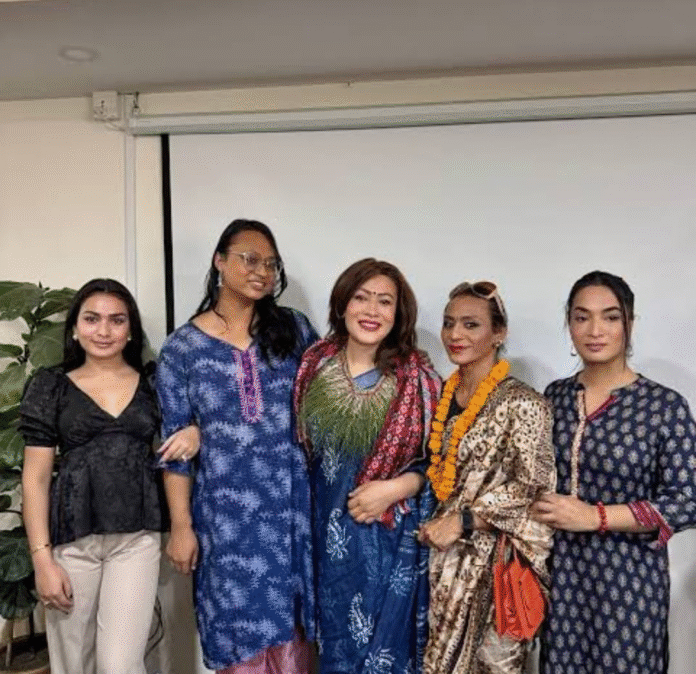
In a groundbreaking moment for inclusivity and representation in South Asia, Bhumika Shrestha has become Nepal’s first transgender woman Member of Parliament. On March 16, 2026, Nepal’s Election Commission officially confirmed the 37-year-old LGBTQ+ rights activist as a proportional representation MP from the centrist Rastriya Swatantra Party (RSP), which secured a commanding majority in the recent general elections. Draped in garlands and surrounded by supporters at the Blue Diamond Society office in Kathmandu, Shrestha accepted symbolic gifts-including a pen representing her new legislative authority-amid celebrations that underscored the joy and hope within Nepal’s marginalized communities.
Shrestha, a longtime advocate affiliated with the Blue Diamond Society (BDS), has dedicated years to fighting for the rights of gender and sexual minorities. She is the author of the autobiography Bhumika: Tisro Lingiko Atmakatha (Bhumika: Autobiography of a Third Gender), which chronicles the challenges and triumphs of transgender individuals in Nepal. Her work earned her international recognition, including the International Women of Courage Award from the U.S. State Department in 2022.
Expressing her emotions after the confirmation, Shrestha told AFP: “I am very excited but also feel the responsibility on my shoulders. Our constitution has provisions for our community but they have not translated to laws and policies. Our community expects me to raise our issues in parliament.”
This landmark achievement comes in the wake of Nepal’s March 5, 2026, general elections-the first since anti-corruption protests toppled the previous government in September 2025. The RSP, led by rapper-turned-politician Balendra Shah, won 125 directly elected seats and 57 through proportional representation, totaling 182 seats in the 275-member House of Representatives-just shy of a two-thirds majority.
Nepal has long been a regional leader in progressive LGBTQ+ policies: discrimination based on gender or sexual orientation was outlawed in 2007, a “third gender” category was introduced for citizenship documents in 2013 (with passports following in 2015), and a 2023 Supreme Court interim order allowed same-sex and transgender couples to register marriages. Despite these advancements, openly LGBTQ+ representation in politics has been scarce since openly gay activist Sunil Babu Pant served as a lawmaker in 2008.
With more than 900,000 people identifying as sexual minorities according to BDS estimates, Shrestha’s entry into parliament is hailed as a “historic” step by community leaders like Umisha Pandey, president of BDS: “Our pains, our sufferings, our feelings, our stories and our every problem is only understood by us, not by others.”
Shrestha has pledged to advocate for stronger constitutional implementation, legal protections, and greater inclusive representation for gender and sexual minorities-turning symbolic progress into tangible policy change. This victory not only elevates transgender voices in Nepal’s political arena but also signals a broader shift toward diversity in governance, inspiring hope for marginalized groups across the region. As Shrestha steps into her role, the Himalayan nation takes a significant stride toward true equality and representation.