Home Blog Page 404

Time for a wake-up call? Nord Stream Methane Leak

0

In 2022, the ruptures in the Nord Stream pipelines resulted in one of the largest methane leaks ever recorded, releasing a staggering amount of this potent greenhouse gas into the atmosphere. This catastrophic event has underscored the urgent need to address methane emissions, given their significant role in climate change. A groundbreaking international study, spearheaded by the United Nations Environment Programme (UNEP), brought together scientists and advanced technology to quantify the scale and impact of the leaks.

The Nord Stream Pipelines

The Nord Stream network comprises two major offshore natural gas pipelines—Nord Stream 1 and Nord Stream 2—that connect Russia to Germany. Designed to supply natural gas to Western Europe while bypassing Ukraine, these pipelines begin in Russia and terminate in Lubmin, Germany.

While critical to Europe’s energy infrastructure, the 2022 rupture exposed the environmental risks associated with such massive natural gas transport systems.

The Methane Emissions Crisis

The leaks released approximately 465,000 metric tons of methane, a greenhouse gas that is significantly more potent than carbon dioxide at trapping heat in the short term. To put this into perspective, the emissions from this single event equate to the annual climate impact of over 8 million cars on the road.

A Global Research Effort

The UNEP-led study enlisted 67 scientists from 30 organizations, including prominent contributions from the UK’s National Centre for Earth Observation (NCEO). The team combined multiple methodologies to assess the scale of the emissions:

  • Satellite technology was pivotal, particularly the Infrared Atmospheric Sounding Interferometer (IASI) aboard EUMETSAT’s MetOp-B satellite, which provided crucial observations of the methane plume.
  • Top-down atmospheric models tracked methane across Scandinavia and the North Sea, validating findings with real-world data from aircraft and ground-based monitoring stations.
  • Comparisons to background methane levels ensured accuracy, enhancing the study’s reliability.

Key Contributions from UK Scientists

Scientists at the NCEO used satellite-based measurements to monitor the methane plume’s trajectory, employing advanced models to estimate the leak rate. Their work was instrumental in providing a clearer picture of the incident’s scale and its impact on the atmosphere.

Advanced Satellite Technology

The IASI instrument played a critical role in detecting methane emissions despite challenges like cloud cover, which often hinder traditional satellite observations. Its ability to measure atmospheric changes with precision was a game-changer in quantifying the Nord Stream leaks.

Broader Implications for Climate Action

The Nord Stream leaks highlight the pressing need for comprehensive strategies to reduce methane emissions globally. While this event was accidental, human activities such as agriculture, landfills, and energy production contribute the majority of global methane emissions.

The findings emphasize the importance of initiatives like the 2030 Global Methane Pledge, which aims to reduce methane emissions significantly in the coming years.

Future Monitoring and Preparedness

This research underscores the need for continuous monitoring of methane emissions to address both accidental leaks and human-caused emissions effectively. Enhanced satellite technology, combined with ground-based research, is vital for early detection and mitigation of future events.

A Call to Action

The Nord Stream methane leak serves as a stark reminder of the environmental risks posed by fossil fuel infrastructure. While immediate action is needed to prevent similar incidents, a broader focus on transitioning to sustainable energy sources and reducing methane emissions from all sectors is essential to combat climate change.

As the world grapples with the consequences of this unprecedented event, the study stands as a testament to international collaboration and the power of technology in addressing the challenges of a warming planet.

What is H5N1 Avian Influenza ?

0

In early 2025, a groundbreaking study revealed alarming mutations in the H5N1 avian influenza strain isolated from a human in Texas. This discovery underscores the virus’s potential to adapt and become a greater threat to human health, sparking global concern among virologists and public health officials.

Key Findings of the Study

Published on January 8, 2025, the study identified nine unique mutations in the H5N1 strain from a human patient. These genetic changes:

  • Enhanced the virus’s ability to replicate in human cells.
  • Increased its virulence, making infections more severe.

The findings highlight the virus’s adaptability and its potential to pose a serious zoonotic threat.

The Texas Case: A Zoonotic Alarm

The study stems from the case of a dairy farm worker in Texas who contracted the virus after coming into contact with infected milk. This marked a pivotal moment, emphasizing the zoonotic nature of H5N1—its ability to jump from animals to humans.

This case has raised significant concerns about occupational exposure, particularly for those working closely with livestock and poultry.

Impact on Agriculture

The H5N1 outbreak, particularly the clade 2.3.4.4b variant, has had devastating effects on agriculture since 2024:

  • Over 928 dairy herds in the United States have been affected.
  • Millions of birds have died, leading to substantial economic losses in the poultry and dairy industries.

The virus’s spread highlights the urgent need for stricter biosecurity measures and monitoring in the agricultural sector.

Research Methodology and Genetic Analysis

To understand the implications of the human-derived strain, researchers introduced it into mice for analysis. The results revealed:

  • The strain replicated more efficiently and caused more severe disease compared to the bovine version.
  • The human strain, labeled H5N1 HPhTX, exhibited mutations absent in the bovine strain, suggesting rapid genetic changes post-human infection.

These findings indicate the virus’s potential to adapt quickly and increase its transmissibility, raising red flags for public health.

Antiviral Efficacy Offers a Silver Lining

The study also tested the effectiveness of FDA-approved antivirals against both the human and bovine strains. Fortunately, the mutations did not compromise the efficacy of these treatments, providing a glimmer of hope in managing future infections.

Public Health Concerns and Future Monitoring

Scientists have warned that the genetic adaptations in H5N1 could enable the virus to transmit between humans, a scenario that would significantly increase the risk of a global pandemic. Continuous surveillance of H5N1 strains is critical to:

  • Identify emerging mutations.
  • Develop updated treatment protocols.
  • Implement preventative measures to curb potential outbreaks.

A Sobering Milestone: The First US Death

On January 6, 2025, Louisiana reported the first human death from highly pathogenic avian influenza (HPAI) H5N1 in the United States. This tragic event underscores the need for enhanced public health preparedness and rapid response mechanisms to combat the growing threat.

Summing Up

The discovery of mutations in the H5N1 strain from the Texas case serves as a wake-up call for both the scientific community and public health systems worldwide. With the virus showing an alarming ability to adapt, it is imperative to prioritize research, strengthen biosecurity measures, and maintain robust surveillance to prevent a potential global health crisis.

Unveiling the Past: Ratnagiri Buddhist Excavations Resume After Six Decades

0

The Archaeological Survey of India (ASI) has resumed excavations at the Ratnagiri Buddhist complex in Odisha, reviving efforts to uncover the rich historical and cultural heritage of this ancient site after a 60-year hiatus. Known for its profound connection to Buddhism and its cultural links to Southeast Asia, the site is once again drawing global attention with recent discoveries, including a colossal Buddha head and other artefacts that illuminate its storied past.

Historical Significance of Ratnagiri

Dating back to the 5th to 13th centuries, Ratnagiri was a flourishing hub of Buddhist learning and culture. Its construction peaked between the 7th and 10th centuries, making it a major center of Buddhist scholarship, rivaling the renowned Nalanda.

The site is deeply tied to Emperor Ashoka, who embraced Buddhism following the conquest of Kalinga. Ratnagiri is a testament to Odisha’s role in the spread of Buddhism across Asia and its enduring legacy in Indian history.

Recent Discoveries

The current excavation has unearthed remarkable artefacts, including:

  • A colossal Buddha head showcasing exquisite craftsmanship.
  • A five-foot palm, believed to be part of a larger Buddha statue.
  • Inscribed relics from the 8th and 9th centuries, shedding light on the site’s cultural and religious significance.

These discoveries provide fresh insights into the region’s Buddhist traditions and its importance as a center of spiritual learning and artistic expression.

Earlier Excavations

The last major excavations at Ratnagiri were conducted between 1958 and 1961 under the leadership of Debala Mitra. These efforts revealed:

  • A brick stupa believed to hold relics of the Buddha.
  • Extensive monastic complexes showcasing the architectural ingenuity of the period.
  • Numerous votive stupas, indicating the site’s religious and cultural vitality.

These findings laid the foundation for understanding Ratnagiri’s pivotal role in the Buddhist world.

Trade and Cultural Links with Southeast Asia

Ratnagiri’s significance extends beyond its spiritual heritage. Odisha, historically known as Kalinga, was a maritime powerhouse with extensive trade connections to Southeast Asia. Spices, silk, and precious metals were exchanged with regions like Bali and Sri Lanka, fostering cultural and religious exchanges.

The Baliyatra festival, celebrated annually in Odisha, commemorates these ancient maritime traditions, underlining the state’s pivotal role in connecting India to the wider Asian world.

Buddhism’s Spread from Kalinga

While there is no evidence to suggest that the Buddha visited Kalinga, the region played a crucial role in the dissemination of Buddhism. Merchant brothers Tapassu and Bhallika, believed to be from Odisha, are among Buddha’s first disciples, symbolizing the region’s early embrace of his teachings.

Kalinga’s influence in spreading Buddhism to Southeast Asia is well-documented, with its traders and monks contributing significantly to the region’s religious and cultural landscape.

Future Excavations and Research

The current ASI-led excavation is set to continue for another month or two, with plans for further studies based on the findings. These efforts aim to deepen our understanding of Ratnagiri’s material culture, its architectural innovations, and its far-reaching connections to Southeast Asia.

A Treasure Trove of Heritage

Ratnagiri stands as a testament to Odisha’s rich cultural legacy and its enduring contributions to Buddhism. With every artefact unearthed, the site provides a clearer picture of its historical grandeur and its role in shaping the spiritual and cultural fabric of ancient India.

As the excavations progress, Ratnagiri’s story continues to unfold, offering a glimpse into a time when Odisha was a beacon of learning, trade, and spiritual enlightenment.

Discovery of Goby Fish in Andhra Pradesh Highlights Mangrove Ecosystem’s Importance

0

Researchers from the Zoological Survey of India (ZSI) have made a remarkable discovery in the Coringa Wildlife Sanctuary, Andhra Pradesh, identifying two previously undocumented species of goby fish—Hemigobius hoevenii and Mugilogobius tigrinus. This finding is particularly significant as it marks the first-ever documentation of M. tigrinus along India’s eastern coastline, emphasizing the critical role of mangrove ecosystems in supporting biodiversity.

The Role and Significance of Goby Fish

Goby fish play a pivotal role in maintaining the ecological balance of estuarine ecosystems. They serve as biological indicators of environmental health, reflecting the state of their habitats. Acting at various levels of the food chain, goby fish contribute to nutrient cycling and the overall stability of estuarine and mangrove ecosystems.

Coringa Wildlife Sanctuary: A Biodiversity Haven

Located near Kakinada, Coringa Wildlife Sanctuary is India’s third-largest mangrove forest. Home to 24 species of mangrove trees and over 120 bird species, including critically endangered vultures, the sanctuary is a hotspot for biodiversity. Its mangrove habitat has proven to be a haven for goby fish, as researchers have recorded 53 of the 135 goby species found in India within the sanctuary’s boundaries.

Mangroves: Guardians of the Coastline

Mangrove ecosystems, where goby fish thrive, are vital for coastal protection and marine biodiversity. These unique intertidal forests act as natural barriers, protecting shorelines from erosion and storm surges. Their intricate root systems also provide critical habitats for marine organisms, including fish, crustaceans, and mollusks.

Challenges to Mangrove Biodiversity

Despite their ecological significance, mangroves face multiple threats. Pollution near estuaries, including improper waste disposal, directly impacts the diversity of species like goby fish. Limited accessibility to mangrove areas further hampers research efforts, leaving gaps in understanding the full extent of biodiversity in these fragile ecosystems.

Encouraging Future Research

This discovery underscores the need for further exploration of mangrove ecosystems across India. Other mangrove regions, such as the Sundarbans in West Bengal and the Andaman and Nicobar Islands, hold immense potential for uncovering hidden biodiversity. Expanding research efforts could reveal new species and provide insights into preserving these invaluable ecosystems.

India’s Place in the Global Context

Globally, there are 5,561 known goby species, but India’s documented diversity remains comparatively low. The discovery of Hemigobius hoevenii and Mugilogobius tigrinus is a step toward bridging this gap, highlighting the need for continued studies to better understand the full range of goby species in the country.

A Call for Conservation and Action

The discovery of these goby fish is not just a milestone for biodiversity research but also a reminder of the ecological significance of mangrove ecosystems. Protecting these habitats is crucial for maintaining biodiversity, combating coastal erosion, and ensuring the health of marine life. As India’s mangrove forests come under increasing pressure, the findings from Coringa Wildlife Sanctuary serve as a clarion call for sustainable conservation efforts.

With discoveries like these, India’s mangroves continue to reveal their ecological treasures, offering hope and inspiration for future research and preservation.

From Trash to Treasure: Brothers Earn Rs 10 Lakh/Month by Turning 100 Tonnes of Plastic Waste Into Furniture

0

In an inspiring tale of innovation and perseverance, brothers Vikash Kumar and Rahul Vashukhi have revolutionized the way plastic waste is utilized by transforming 100 tonnes of discarded material into stylish, sustainable furniture. Their journey, which started with a homemade machine and a vision to combat plastic pollution, has grown into a thriving business generating Rs 10 lakh in monthly revenue.

The Visionaries Behind the Venture

Vikash Kumar, an IIT postgraduate, and Rahul Vashukhi, a NIFT graduate, share a common goal: to tackle the mounting problem of plastic waste while creating something valuable. Their mission began humbly, as they went door to door collecting trash from their community. Despite facing ridicule for what was dismissed as “kabadiwala kaam” (ragpicker work), the duo remained undeterred, motivated by their desire to make a difference.

Innovation Meets Sustainability

With no initial funding, the brothers engineered their own machines to process hard-to-recycle plastic waste, such as discarded electronics. Their innovative process involves cutting, washing, and transforming the plastic into sheets that closely resemble premium marble. These sheets are not only waterproof, termite-proof, and scratch-resistant but also environmentally friendly, making them the perfect material for sustainable furniture.

Turning Waste Into Wonders

Under their brand, Minus Degre, Vikash and Rahul have produced stunning eco-friendly furniture, creating a ripple effect in the sustainability space. Their creations have earned partnerships with major brands like Tata, Adidas, and BMW, and they’ve even designed an entire school using their products. This accomplishment showcases the potential of recycled materials to redefine modern architecture and interior design.

A Growing Enterprise with Big Impact

What began as a small-scale operation with a Rs 10,000 homemade machine has now blossomed into a flourishing enterprise. By transforming discarded materials into valuable products, the brothers have not only built a sustainable business but have also set a benchmark for tackling plastic pollution innovatively. Their efforts have diverted 100 tonnes of waste from landfills and oceans, proving that sustainability and profitability can go hand in hand.

Redefining the Future of Furniture

From their humble beginnings to becoming industry leaders, Vikash and Rahul have shown that with determination, innovation, and purpose, it is possible to create meaningful change. Minus Degre stands as a testament to the power of sustainable entrepreneurship, paving the way for a cleaner planet and a brighter future.

These two brothers are not just cleaning up plastic waste — they are reshaping the furniture industry, one piece at a time.

Vande Bharat Sleeper Train Successfully Completes Trial Run, Marks Milestone in High-Speed Rail Services

0

India’s rail infrastructure achieved another significant milestone as the Vande Bharat sleeper train completed its trial run between Mumbai Central and Ahmedabad on Wednesday. The trial is a crucial step toward introducing high-speed overnight train services in the country. The train will officially join the Indian Railways network for regular operations only after passing its final assessment and receiving certification.

Record-Breaking Speeds During Trials

The sleeper train demonstrated its remarkable capabilities during recent trial runs, reaching a peak speed of 180 kmph. On January 2, it clocked this speed over a 30-km stretch between Kota and Laban in Rajasthan’s Bundi district. Similarly, on January 1, it achieved the same speed over a 40-km stretch between Rohal Khurd and Kota. Additional trials recorded speeds of 170 kmph and 160 kmph on the Kota-Nagda and Rohal Khurd-Chau Mahla sections, respectively, showcasing the train’s ability to deliver high-speed performance across varying terrains.

Cutting-Edge Design and Features

The 16-coach Vande Bharat sleeper train is meticulously designed for comfort and convenience. It includes:

  • 11 AC-3 tier coaches
  • 4 AC-2 tier coaches
  • 1 First AC coach

The First AC coach features 24 luxurious berths, while the Second AC coaches accommodate 48 berths each. Among the Third AC coaches, five are equipped with 67 berths each, and four have 55 berths each.

Modern amenities include Type A and C charging ports, foldable snack tables, integrated lighting systems, laptop charging facilities, and Braille navigation support for visually impaired passengers. Safety remains a priority, with HL3-compliant fire safety systems in all coaches. Additional features include dog boxes at both ends, adequate linen storage, and 38 designated seats for attendants, ensuring a seamless travel experience for passengers and staff alike.

Supervised by RDSO and Awaiting Certification

The Research Designs & Standards Organisation (RDSO) is overseeing the extensive trials, while the railway safety commissioner will assess the train’s performance at its maximum speed. Certification is expected next week, following which the Railway Board will finalize the deployment route for the sleeper train.

A Step Toward High-Speed Connectivity

During the trial run at 130 kmph, the train departed Ahmedabad at 7:29 am and reached Mumbai Central at 1:50 pm, with the return journey commencing at 2:45 pm. The successful trial underscores the potential of the Vande Bharat sleeper train to redefine overnight train travel in India.

With its state-of-the-art features and high-speed capabilities, the Vande Bharat sleeper train is set to transform passenger experiences. As it awaits its final deployment decision, the train promises to usher in a new era of comfort, safety, and efficiency in Indian Railways.

Creativity we all need: Britannia puts ‘eco-friendly’ billboards across India to let trees shape them, photos viral

0

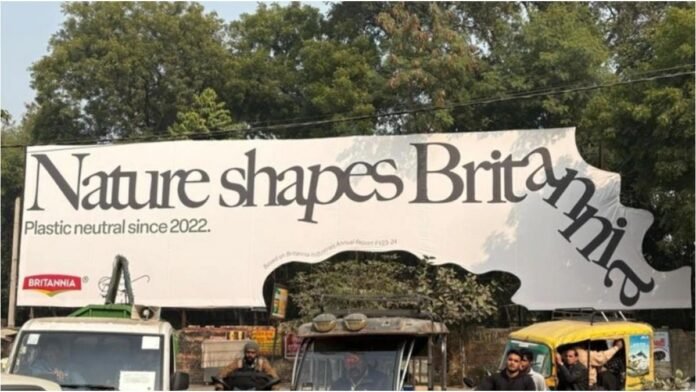
In the chaotic hustle of urban landscapes, where billboards often blend into a sea of visual clutter, Britannia’s latest campaign, “Nature Shapes Britannia,” has captured attention with its groundbreaking commitment to sustainability. This out-of-home (OOH) initiative isn’t just a creative endeavor; it’s a powerful statement about the brand’s dedication to ecological preservation.

The campaign, launched with an impactful video on Britannia’s social media channels, integrates the natural contours of trees into the design of each billboard. In cities like Hyderabad, Kolkata, Meerut, and Pune, these billboards creatively incorporate tree branches into their typography, allowing nature itself to shape the message. This ingenious design not only preserves the trees but also transforms them into central elements of the urban narrative.

Creativity we all need: Britannia puts 'eco-friendly' billboards across India to let trees shape them, photos viral

A Social Media Success

Social media has been abuzz with admiration for Britannia’s eco-friendly approach. Users on platforms such as X (formerly Twitter) and LinkedIn have shared images of the billboards, applauding the innovative execution.

One X user humorously commented, “Jackie Shroff said ‘bhidu environment bachao,’ and Britannia took it seriously,” while another noted, “Britannia woke up and chose to save trees in a smart way.” A third shared their journey from confusion to appreciation, writing, “I was confused when I came across this weird billboard. It took me a moment to realize it was designed according to the tree’s shape.”

Green by Design

Further enhancing the campaign’s eco-conscious message, the billboards are crafted from 100% cotton biodegradable material, as reported by the Financial Express. This sustainable approach is the result of a collaboration between Britannia, the creative agency Talented, and media partners Coral Media and Madison. Together, they have reimagined outdoor advertising by blending it seamlessly with the natural growth patterns of local trees.

A New Standard in Environmental Advertising

The “Nature Shapes Britannia” campaign is more than a marketing initiative; it’s a benchmark for the future of environmental advertising. By prioritizing sustainability and harmonizing commercial messaging with nature, Britannia has shown that brands can create meaningful impact without compromising their creative vision.

Creativity we all need: Britannia puts 'eco-friendly' billboards across India to let trees shape them, photos viral

In a world where environmental degradation often takes center stage, Britannia’s thoughtful campaign offers a glimmer of hope—proving that even billboards, a staple of urban advertising, can be redefined to coexist with nature. With this campaign, Britannia not only showcases its products but also its values, making a bold statement about the importance of ecological preservation in today’s world.

PUMA changed its name to PVMA as 2-time Olympic medallist PV Sindhu becomes its new brand ambassador

0

In a groundbreaking move, Puma India has joined forces with badminton icon and two-time Olympic medallist PV Sindhu, solidifying a multi-year partnership that positions India as the first country in Puma’s global network to embrace the racquet sport. This partnership marks Puma’s strategic leap into the world of badminton and underscores its commitment to inspiring young athletes and elevating the sport in India.

A Bold Rebranding Move: ‘PUMA’ Becomes ‘PVMA’

To announce the collaboration in style, Puma pulled off a daring marketing stunt by rebranding its store signage across the country from “PUMA” to “PVMA” for nearly a week. The sudden logo change sent social media into a frenzy, sparking a meme fest as people speculated about the mystery behind the new signage. The clever rebranding campaign not only generated massive buzz but also amplified excitement around the partnership.

A New Era for Indian Badminton

The collaboration officially kicked off ahead of the India Open 2025, signaling the start of an exciting new chapter for Indian badminton. With Sindhu as its face in the badminton arena, Puma aims to inspire the next generation of athletes and solidify the sport’s growing prominence in the country.

PV Sindhu: A Champion Who Inspires

PV Sindhu is a name synonymous with excellence in badminton. She is the first Indian to win five world championship medals in the sport and has achieved unparalleled success on global platforms such as the Olympics, Commonwealth Games, and Asian Games. Her stellar career has earned her some of India’s highest honors, including the Rajiv Gandhi Khel Ratna, Padma Shri, Padma Bhushan, and the Arjuna Award.

Sindhu’s partnership with Puma symbolizes not only her remarkable journey but also the aspirations of millions of young athletes striving to make their mark in badminton.

Puma’s Vision for Indian Sports

Puma’s foray into badminton is a testament to its vision of fostering sports culture in India. By associating with Sindhu, the brand is championing inclusivity, excellence, and the pursuit of dreams—values that resonate with young sports enthusiasts across the nation.

As Puma and PV Sindhu embark on this exciting journey together, the collaboration promises to redefine the landscape of Indian badminton, inspiring a new generation of champions and taking the sport to unparalleled heights.

Game on, India!

Harvard will now teach “how to be happy” in new online course on Happiness

0

Happiness is more than a fleeting emotion—it is the cornerstone of a meaningful and fulfilling life. To help individuals cultivate a life of joy and purpose, Harvard University offers an insightful course, Managing Happiness, available worldwide through the edX platform. This program equips learners with practical strategies and scientific insights to enhance well-being across all stages of life.

A Science-Backed Approach to Happiness

The course is led by Arthur Brooks, a Harvard professor, renowned social scientist, and former classical musician. Combining perspectives from neuroscience, positive psychology, social science, and philosophy, Brooks provides participants with a comprehensive understanding of happiness.

Through engaging lectures and practical tools, participants explore the definition of happiness, its significance in daily life, and the ways it is influenced by genetics, social dynamics, and economic factors. The course also emphasizes emotional management, teaching individuals how to create a “happiness portfolio” tailored to personal goals.

Building a Balanced Life

One of the key components of the program is balancing short-term accomplishments with long-term satisfaction. Learners gain insights into how to enhance happiness in both their professional and personal lives, while building resilience to navigate challenges with clarity and confidence.

Flexible Enrollment Options

Harvard offers two enrollment tracks for this transformative course:

  • Verified Track: For $219 (₹18,199 approx.), participants gain full access to all course materials, graded assessments, and a certificate upon completion.
  • Audit Track: A free option providing limited access to materials without graded assignments or certification. This track is available until February 25, 2024.

Program Details

  • Duration: 6 weeks
  • Time Commitment: 2–3 hours per week (self-paced)
  • Languages: Delivered in English with multilingual transcripts
  • Course Period: January 12 to March 27, 2024

The flexible schedule ensures that learners from diverse backgrounds and time zones can progress at their convenience.

Why Take This Course?

In a world that often prioritizes material success over emotional well-being, Managing Happiness provides a refreshing perspective. By integrating cutting-edge research with actionable strategies, the course empowers individuals to create a fulfilling life.

Whether you are seeking to improve personal happiness, strengthen relationships, or navigate challenges with resilience, this course offers tools to help you thrive.

Explore the science of happiness and take the first step toward a more meaningful life by enrolling in Harvard’s Managing Happiness.

Real-life Jurassic Park soon? Bioscience startup raises Rs 2000 crore to bring back extinct animals to life

0

Colossal Biosciences, the trailblazing biotech company aiming to resurrect extinct species like the woolly mammoth, dodo, and thylacine, has announced a monumental achievement: securing $200 million in Series C funding. The funding round was led by TWG Global, spearheaded by Mark Walter, CEO of Guggenheim Partners and co-owner of the Los Angeles Dodgers and Chelsea FC, alongside Thomas Tull, former CEO of Legendary Entertainment.

A Vision for De-Extinction and Conservation

“Colossal is at the forefront of AI, computational biology, and genetic engineering, leading groundbreaking work in de-extinction and species preservation,” said Mark Walter. “The company’s achievements in advancing conservation align with TWG Global’s core values.”

This significant funding propels Colossal’s valuation to $10.2 billion, with its total funding now reaching $435 million. The company has already made notable advances in de-extinction science and the preservation of endangered species, including its efforts to save the critically endangered northern white rhinoceros.

Breakthroughs in Biotechnology

The fresh funding will accelerate the development of cutting-edge genetic engineering technologies. These advancements span software, wetware, and hardware, with potential applications in both wildlife conservation and human healthcare.

CEO and co-founder Ben Lamm expressed excitement about the opportunities this investment brings:

“This funding allows us to expand our team, enhance our technology, and broaden our de-extinction species list as we work towards making extinction a thing of the past.”

Colossal operates at the nexus of innovation, collaborating with labs at 16 universities worldwide while managing state-of-the-art facilities in Dallas, Boston, and Melbourne.

High-Profile Investors Backing the Mission

Colossal’s groundbreaking work has attracted an impressive lineup of investors, including:

  • Peter Jackson and Fran Walsh, acclaimed filmmakers of The Lord of the Rings.
  • Richard Garriott, pioneering tech entrepreneur.
  • Jeff Wilke, former Amazon executive.

The company also enjoys the backing of USIT, Animal Capital, Breyer Capital, and Draper Associates.

Conservation Beyond De-Extinction

While de-extinction captures headlines, Colossal’s mission extends beyond resurrecting lost species. The company actively supports conservation efforts, including the preservation of endangered Australian bird species and initiatives to ensure the survival of the northern white rhinoceros.

By combining advanced genetic technology with a commitment to biodiversity, Colossal is not only reshaping the future of conservation but also demonstrating how biotechnology can tackle some of the most pressing challenges in ecology and healthcare.

A Future Where Extinction is Optional

Colossal’s bold vision has sparked excitement in both the scientific community and the general public. As the company continues to push the boundaries of biotechnology, it reinforces the possibility of a future where extinction is no longer irreversible—a world where cutting-edge science safeguards our planet’s biodiversity for generations to come.