Home Blog Page 400

Meet the 63-Year-Old Woman Behind a ₹1 Crore Wooden Toy Venture Empowering Rural Women

0

When Kokila K lost her husband at the age of 42, she faced a mountain of challenges. Penniless and with three sons to support, her future seemed uncertain. But today, at 63, Kokila stands as a symbol of resilience and purpose, helming Woodbee Toys—a ₹1 crore wooden toy venture that champions sustainability and empowers rural women.

A Second Chapter Begins

In 2020, at the age of 59, Kokila founded Woodbee Toys in Walajapet, Tamil Nadu, after decades of balancing personal tragedy and professional responsibility. Her company, known for producing over 110 non-toxic, sustainable wooden toys, embodies her belief that it’s never too late to start something meaningful. Her journey highlights how age is just a number when persistence and passion lead the way.

Meet the 63-Year-Old Woman Behind a ₹1 Crore Wooden Toy Venture Empowering Rural Women

Rising from Loss

Kokila’s life changed dramatically when her husband, a pesticide distributor, succumbed to a lung tumor caused by prolonged chemical exposure. Left with mounting medical debts and a modest government salary as a Junior Telecom Officer, she had only ₹200 left after loan deductions. Determined to provide for her family, she took over her late husband’s fumigation and wooden box supply business.
Meet the 63-Year-Old Woman Behind a ₹1 Crore Wooden Toy Venture Empowering Rural Women

After a year and a half, Kokila pivoted away from fumigation—given its role in her husband’s illness—and focused solely on manufacturing wooden boxes. Her daily routine was grueling: juggling factory operations in the morning, her government job during the day, and factory work in the evening.

From Boxes to Toys

Years later, when the COVID-19 pandemic disrupted the export market, Kokila and her family decided to venture into wooden toys. The idea struck Kokila during a market visit where she noticed the dominance of low-quality plastic toys. With her woodworking experience, she and her family began crafting neem wood teethers as a natural, non-toxic alternative to plastic toys.
Meet the 63-Year-Old Woman Behind a ₹1 Crore Wooden Toy Venture Empowering Rural Women

This shift wasn’t just about business; it was personal. Kokila wanted to ensure children, including her grandchildren, had access to safe, sustainable toys. The family’s Instagram-based marketing strategy resonated with parents, rapidly increasing demand for their thoughtful products.

A Family Affair

Woodbee Toys thrives as a family-run enterprise. Kokila’s daughters-in-law play key roles—one manages social media while another oversees product quality. Even her third daughter-in-law, a doctor by profession, contributes passionately. Together, the family channels customer feedback to refine their toys, ensuring every product exceeds expectations.

Empowering Women, Transforming Lives

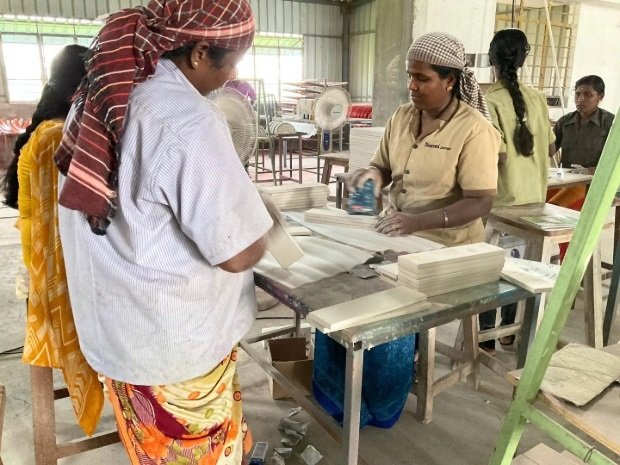
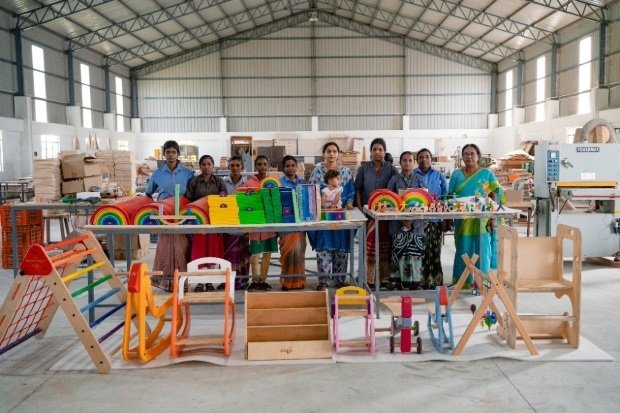
At its core, Woodbee Toys is more than just a business. The venture employs 40–50 people, most of whom are women from nearby villages. Many workers had little to no formal education but, under Kokila’s mentorship, became skilled machine operators.

Meet the 63-Year-Old Woman Behind a ₹1 Crore Wooden Toy Venture Empowering Rural Women

“The women were initially hesitant, but now they’re the first to embrace new challenges,” Kokila shares. This supportive work environment has helped uplift countless families, fostering pride and empowerment among the workforce.

Toys with a Purpose

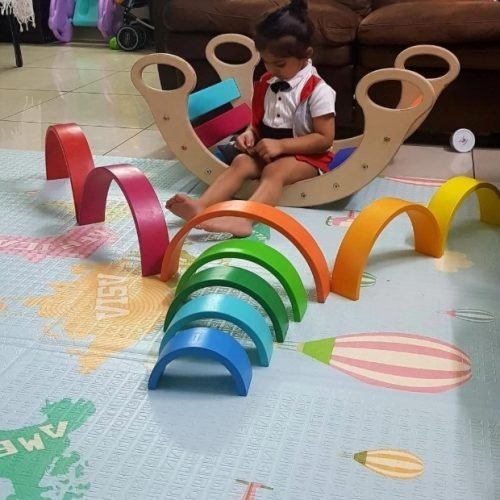
Woodbee Toys prioritizes safety and sustainability. Using untreated neem, pine, and beech woods, along with certified non-toxic paints, the company adheres to rigorous quality standards. The toys are designed for open-ended play, inspired by Waldorf education principles that encourage creativity and imagination.

Customer testimonials highlight the durability and thoughtfulness of the toys. “I’ve been purchasing from Woodbee Toys for three years, and the quality is unmatched. Even after heavy use, the paint hasn’t chipped, and the toys remain in great condition,” says Yunita Almeida, a loyal customer.

Scaling New Heights

With monthly revenues of ₹20–30 lakh, Woodbee Toys produces 10,000–20,000 toys per month. Their products are sold through major retailers like FirstCry, Hamleys, and Funskool, alongside direct sales via Instagram and their website. The company is also exploring global markets, with trial exports to Australia and the USA already underway.

A Legacy of Resilience

For Kokila, Woodbee Toys represents more than financial success—it’s a testament to grit, determination, and the power of community. “Education and knowledge are the greatest assets we have,” she reflects.

As Kokila looks toward the future, she remains committed to innovation, sustainability, and empowering those around her. Her journey is proof that life’s challenges can be stepping stones to greatness, and with purpose and perseverance, anything is possible.

Woodbee Toys is not just a business—it’s a movement, redefining entrepreneurship, sustainability, and empowerment, one wooden toy at a time.

China creates world’s first artificial sun using nuclear fusion

0

China has made a groundbreaking advancement in nuclear fusion technology with its Experimental Advanced Superconducting Tokamak (EAST), often referred to as the country’s “artificial sun.” In a historic achievement, EAST successfully sustained plasma for 1,000 seconds, shattering its previous record of 403 seconds set in 2023. This breakthrough underscores China’s leadership in the global pursuit of sustainable energy solutions.

What is Nuclear Fusion?

Nuclear fusion, the process that powers the sun, involves the merging of atomic nuclei to release immense energy. Unlike nuclear fission—the process used in conventional nuclear reactors that splits atoms—fusion produces energy with minimal environmental risks. It promises a virtually limitless, clean energy source, free from greenhouse gas emissions and with fewer concerns about radioactive waste or material theft.

Achieving fusion on Earth, however, requires extreme conditions, such as temperatures exceeding 100 million degrees Celsius, to maintain the stability of plasma—a state of matter where atomic nuclei and electrons exist separately.

EAST’s Latest Achievement

The recent 1,000-second plasma duration at EAST represents a critical step toward overcoming the challenges of fusion energy. This accomplishment demonstrates the reactor’s ability to sustain the extreme conditions necessary for fusion for extended periods, moving scientists closer to the goal of continuous power generation.

Song Yuntao, director of the Institute of Plasma Physics under the Chinese Academy of Sciences, highlighted the significance of this milestone, emphasizing its potential to maintain stable, long-term energy production in future fusion plants.

Global Implications of Fusion Energy

Fusion energy holds immense promise as a game-changer for global energy systems. It offers the potential to meet rising energy demands sustainably, reduce dependence on fossil fuels, and mitigate climate change. However, one of the key hurdles is achieving ignition—the point where a fusion reactor generates enough energy to sustain the reaction on its own.

While EAST has yet to achieve ignition, the progress signals promising steps toward making fusion energy a practical reality.

Expanding Research and Collaboration

China is now constructing a new generation of experimental fusion research facilities in Anhui Province to further refine and scale fusion energy technology. This effort is expected to accelerate breakthroughs and pave the way for the construction of future fusion power plants.

Song Yuntao also emphasized the importance of international collaboration in the EAST project, inviting global scientists to contribute to and benefit from advancements in fusion research. Such partnerships could accelerate progress toward harnessing fusion energy for global needs.

A Bright Future for Fusion Energy

With the EAST project achieving new milestones, the dream of harnessing nuclear fusion as a clean, sustainable, and nearly limitless energy source feels closer than ever. While challenges remain, the strides made by China’s “artificial sun” shine a light on the future of energy and humanity’s potential to unlock the power of the stars.

Table Tennis, Pickeleball, Snooker & what not: Ahmedabad transforms area under their bridges into sports complex

0

Union Home Minister Amit Shah recently inaugurated a cutting-edge sports complex in Ahmedabad, adding to the city’s growing reputation as a hub for world-class infrastructure. Located near the Science City side of the CIMS Railway overbridge in Gota Ward, North-West Zone, this state-of-the-art facility, built at a cost of ₹3.50 crore by the Ahmedabad Municipal Corporation (AMC), aims to foster athletic excellence and community engagement.

A Hub for Diverse Sporting Activities

The new sports complex boasts facilities for a wide range of sports, including table tennis, box cricket, basketball, pickleball, and volleyball. Additionally, it offers spaces for indoor games such as snooker, chess, ludo, and carrom, catering to enthusiasts across age groups. The complex is expected to play a vital role in encouraging fitness, recreation, and sportsmanship within the community.

Dignitaries in Attendance

After the inauguration, Shah, accompanied by Gujarat Chief Minister Bhupendra Patel and Home and Sports Minister Harsh Sanghavi, toured the complex. Officials provided them with insights into its features as well as details about AMC’s ambitious Iconic Road project, which will connect ISKCON to Pakwan, further enhancing the city’s infrastructure.

A Day of Milestones: 37 Public Welfare Projects

The inauguration was part of a larger eventful day where Amit Shah launched and laid the foundation for 37 public welfare projects across Ahmedabad. With a total investment of ₹651 crores, these include ten completed projects worth ₹95 crores and 27 new initiatives valued at ₹556 crores. These projects span the Ahmedabad East, Ahmedabad West, and Gandhinagar Lok Sabha constituencies, showcasing the city’s rapid developmental strides.

Table Tennis, Pickeleball, Snooker & what not: Ahmedabad transforms area under their bridges into sports complex

Honoring Netaji Subhash Chandra Bose

During the ceremony, Shah paid tribute to Netaji Subhash Chandra Bose on his birth anniversary, highlighting the leader’s immense contribution to India’s freedom struggle and his enduring inspiration to the nation.

Ahmedabad’s Olympic Aspirations

The construction of this sports complex aligns with India’s larger vision of hosting the 2036 Olympics in Ahmedabad, as hinted by the extensive sports facilities being developed across the city. It reflects a commitment to creating Olympic-standard infrastructure, echoing the magnificence of the Sabarmati Sports Complex at the Sabarmati riverfront.

A Bright Future for Sports and Development

With the inauguration of this new sports complex and the launch of numerous development projects, Ahmedabad continues to position itself as a leader in modern urban infrastructure and sports promotion. These initiatives, spearheaded by the AMC and supported by visionary leadership, promise to make the city a beacon of progress and a potential stage for global sporting events.

Antartica’s unusual ‘Blood Falls’ flowing from glacier into valleys has internet stunned

0

Tucked away in the icy expanse of the McMurdo Dry Valleys, one of the coldest and driest places on Earth, lies a natural wonder that continues to captivate scientists and explorers alike—Blood Falls. Discovered in 1911 by Australian geologist Griffith Taylor, this eerie crimson waterfall is as much a spectacle as it is a scientific enigma.

The Science Behind the Crimson Flow

The striking red hue of Blood Falls is not due to blood, as its name might suggest, but rather the result of a fascinating natural process. The water emerging from the falls originates from a subglacial lake beneath the Taylor Glacier, where it has been trapped for millions of years. This ancient, iron-rich saltwater seeps out through cracks in the glacier and reacts with oxygen in the atmosphere. This oxidation process, similar to the rusting of iron, gives the waterfall its distinctive red color.

Adding to its intrigue, the water at Blood Falls is about three times saltier than seawater and contains virtually no oxygen, creating an environment so extreme that it challenges conventional understanding of life and chemical processes.

A Window into Extreme Life and Astrobiology

Despite the harsh conditions, researchers have discovered thriving microbial life in the isolated subglacial lake feeding Blood Falls. These microorganisms have adapted to survive without sunlight or oxygen, relying instead on the chemical energy produced by the oxidation of iron.

This discovery is significant not only for understanding how life persists in extreme conditions on Earth but also for its implications for astrobiology. Blood Falls serves as a natural laboratory, providing clues about how life might exist in similarly hostile environments elsewhere in the universe, such as Mars or Europa, one of Jupiter’s icy moons.

A Glimpse into Earth’s Climate History

The Taylor Glacier, which houses the subglacial lake feeding Blood Falls, is a relic from a time when Antarctica’s climate was much warmer. Studying this unique feature offers scientists valuable insights into Earth’s past climatic conditions and the evolution of polar ecosystems.

Furthermore, Blood Falls sheds light on how ice and water interact in a warming world. As climate change accelerates polar melting, understanding these processes becomes increasingly critical for predicting future changes to Earth’s glaciers and sea levels.

Antartica's unusual 'Blood Falls' flowing from glacier into valleys has internet stunned

A Natural Wonder with Scientific Significance

Blood Falls is more than just a striking visual phenomenon; it is a testament to the resilience of life and the power of natural processes in shaping our planet. Its vibrant red flow, set against the stark white Antarctic landscape, is a reminder of the mysteries hidden beneath Earth’s surface and the profound connections between geology, biology, and climate science.

As researchers continue to explore this frozen wonder, Blood Falls remains a key to unlocking secrets about Earth’s history, the resilience of life in extreme environments, and the potential for life beyond our planet.

NITI Aayog Releases Fiscal Health Index 2025

0

The Fiscal Health Index (FHI) 2025, an annual report published by NITI Aayog, provides a detailed evaluation of the fiscal health of Indian states. Designed to offer data-driven insights, the FHI aims to improve fiscal governance and strengthen economic resilience across the country. By highlighting the strengths and weaknesses of fiscal management at the state level, the report lays the groundwork for better policy interventions.

Key Features of the Fiscal Health Index (FHI)

The FHI 2025 assesses the fiscal health of 18 major states through a composite index derived from five critical sub-indices:

  1. Quality of Expenditure – Evaluates the efficiency of state spending.
  2. Revenue Mobilisation – Assesses the states’ ability to generate income.
  3. Fiscal Prudence – Measures financial discipline and sustainability.
  4. Debt Index – Examines the states’ debt burden.
  5. Debt Sustainability – Analyzes the ability to manage and service debt.

Each state is ranked based on its composite score, providing a comprehensive overview of fiscal performance and enabling targeted reforms.

Top Performing States

The 2025 rankings spotlight Odisha as the top-performing state, with an impressive score of 67.8, thanks to its robust revenue mobilization and prudent expenditure management. Chhattisgarh (55.2) and Goa (53.6) follow closely, showcasing their effective fiscal governance.

These states serve as benchmarks for others, demonstrating how disciplined financial strategies can lead to economic resilience and growth.

States Requiring Improvement

While states like Jharkhand have made progress in fiscal prudence and debt sustainability, others, such as Karnataka, face challenges in areas like expenditure quality and debt management. These disparities underscore the need for state-specific reforms to address unique fiscal challenges and bridge regional gaps.

Significance of the Fiscal Health Index

The FHI is more than a ranking system—it is a tool for policy evaluation and improvement, designed to:

  • Promote fiscal consolidation at the state level.
  • Ensure transparent resource management.
  • Provide actionable insights to policymakers for aligning fiscal strategies with national development goals.

By encouraging states to adopt effective fiscal practices, the FHI fosters a culture of accountability and efficiency in governance.

Promoting Cooperative Federalism

The FHI emphasizes the importance of cooperative federalism in addressing fiscal disparities. Collaboration between the Centre and states is essential for achieving holistic economic development and ensuring balanced growth across regions. The report underscores that such partnerships are vital for driving sustainable progress.

Future Implications and Alignment with Viksit Bharat @2047

The Fiscal Health Index 2025 aligns with India’s vision of Viksit Bharat @2047, aiming for a fiscally stable and prosperous nation. By encouraging healthy competition among states, the FHI serves as a catalyst for improved governance and innovation in fiscal strategies.

The findings of the FHI will enable policymakers to make informed decisions, paving the way for long-term fiscal stability. As India marches toward its centennial year of independence, the FHI will play a critical role in guiding the nation toward economic resilience and sustainability.

Mody School, Lakshmangarh, Celebrates 76th Republic Day with Grandeur and Patriotism

0

Mody School, Lakshmangarh, celebrated the 76th Republic Day with immense pride and enthusiasm, reflecting the spirit of patriotism and unity. The event began with the ceremonial welcome of the esteemed chief guest, Major General Vinod Kumar Tiwari, whose presence added prestige to the occasion.

The celebrations commenced with the unfurling of the Indian tricolor by Major General Tiwari, accompanied by the distinguished dignitaries: Shri Raghavendra Anant Mody, Chairman of Mody Institute; Dr. Ashutosh Bahardwaj, President of Mody University; and Madam Charu Sharma, Principal of Mody School. The ceremony was witnessed by a gathering of proud attendees, including deans, GMs, AGMs of Mody Institute, faculty members, parents, and enthusiastic students.

Mody School, Lakshmangarh, Celebrates 76th Republic Day with Grandeur and Patriotism

A Day of Grandeur and Inspiration

The celebration was marked by a vibrant parade that featured students, horse riders, and the student councils of both Mody School and Mody University. The colorful and synchronized march reflected discipline and coordination, earning admiration from the audience.

The event was further enriched with cultural programs showcasing the incredible talents of Mody School’s students. The school’s orchestra performed soul-stirring patriotic songs, while awe-inspiring cultural presentations captivated everyone. A highlight of the event was the daring bike stunts performed by the courageous students under the guidance of AGM Sports, Madam Anita Kaushik, leaving the audience thrilled and inspired.

Words of Encouragement and Recognition

Addressing the gathering, Major General Vinod Kumar Tiwari praised the students, especially the girls, for their exceptional talents and dedication. He encouraged them to aim high and pursue excellence in all aspects of life, inspiring a sense of confidence and determination among the young attendees.

Mody School, Lakshmangarh, Celebrates 76th Republic Day with Grandeur and Patriotism

Honors and Gratitude

The grand finale of the event included the announcement of the best march-past trophy, awarded to Sarojini House and Kasturba House, recognizing their outstanding performance. As a token of appreciation, a memento was presented to Major General Tiwari for gracing the occasion with his presence and words of encouragement.

The ceremony concluded with a heartfelt vote of thanks delivered by Ms. Honey Agarwal, Head Girl of Mody School, and Ms. Nrityanahika Jaiswal, Head of Literary. Their words reflected gratitude and reverence for the dignitaries, faculty, and everyone who contributed to the event’s success.

A Celebration of Unity and Patriotism

The 76th Republic Day celebration at Mody School was a testament to the institution’s values of unity, talent, and patriotism. It left a lasting impression on all present, inspiring pride in the nation and hope for a brighter future.

ISRO’s 100th Launch: A Milestone in India’s Space Journey

0

The Indian Space Research Organisation (ISRO) is set to achieve a historic milestone with its 100th launch. Scheduled for January 29, 2025, the GSLV-F15 mission will deploy the NVS-02 satellite from the Satish Dhawan Space Centre in Sriharikota. This landmark event reinforces ISRO’s position as a global leader in space technology and represents a significant step forward for India’s Navigation with Indian Constellation (NavIC) system.

What is NavIC?

NavIC, or the Navigation with Indian Constellation, is India’s indigenous regional navigation satellite system. It provides Position, Velocity, and Timing (PVT) services across India and an area extending 1,500 km beyond its borders.

Key features of NavIC include:

  • Dual Service Types: It offers Standard Positioning Service (SPS) for civilian use and Restricted Service (RS) for secure, encrypted applications.
  • High Accuracy: NavIC delivers position accuracy better than 20 meters and timing accuracy within 50 nanoseconds.
  • Global Compatibility: SPS signals work seamlessly with global navigation systems like GPS (US), Glonass (Russia), Galileo (EU), and BeiDou (China).

The Role of GSLV-F15

The GSLV-F15 mission is pivotal in deploying the NVS-02 satellite, a next-generation NavIC satellite. Key aspects of this mission include:

  • Mission Duration: The launch will last approximately 19 minutes, culminating in the satellite’s deployment into its designated orbit.
  • Satellite Replacement: NVS-02 will replace the aging IRNSS-1E satellite at 111.75ºE longitude, ensuring the continuity and improvement of NavIC services.

Features of NVS-02 Satellite

The NVS-02 satellite represents a leap forward in navigation technology. Key features include:

  • Lift-Off Mass: Weighing 2,250 kg, it operates on the reliable I-2K bus platform.
  • Advanced Timing: Equipped with sophisticated atomic clocks, it ensures unparalleled timing accuracy.
  • Enhanced Payloads: It carries navigation payloads across multiple frequency bands, including the L1 band, which aligns with frequencies used by the US GPS system, making it compatible with a broader range of devices, including smaller gadgets like fitness trackers.
  • Longevity: Designed for an operational lifespan of 12 years, the satellite addresses challenges faced by earlier IRNSS satellites, such as atomic clock malfunctions.

Advancing Navigation Technology

The introduction of the NVS series reflects ISRO’s commitment to addressing past challenges and driving innovation. By incorporating L1 band signals, the NVS-02 satellite ensures better compatibility with international navigation systems, which is expected to enhance the adoption of NavIC in consumer electronics and mobile devices.

Addressing Challenges in NavIC

Despite its potential, NavIC has faced criticism for underutilization. However, advancements since 2017, including the development of user receivers and increased compatibility with mobile devices, have expanded its applications. The deployment of NVS-02 is a crucial step in ensuring NavIC’s broader adoption and improved reliability.

The Future of Indian Navigation

The NVS series will consist of five satellites, each designed to elevate the accuracy and reliability of NavIC services. The successful launch of NVS-02 will set the stage for future advancements, helping India strengthen its position in satellite navigation technology and enabling strategic autonomy in critical areas.

Summing Up

ISRO’s 100th launch is not just a celebration of its remarkable journey but also a testament to India’s technological prowess. With the GSLV-F15 mission and the deployment of NVS-02, ISRO is paving the way for a more robust and reliable navigation ecosystem. This milestone not only enhances India’s regional navigation capabilities but also underscores the nation’s growing role in global space exploration.

SANJAY Battlefield Surveillance System: Revolutionizing India’s Defence Capabilities

0

In a significant leap toward modernizing India’s military technology, Defence Minister Rajnath Singh unveiled the SANJAY Battlefield Surveillance System (BSS) on January 24, 2025. This state-of-the-art system is poised to transform the Indian Army’s operational capabilities by integrating cutting-edge technology with indigenous innovation.

What is the SANJAY System?

The SANJAY system is a sophisticated, automated Battlefield Surveillance System designed to provide a comprehensive, real-time surveillance picture by integrating inputs from ground and aerial battlefield sensors. It processes data to confirm its accuracy, eliminates duplication, and fuses information to deliver a unified surveillance overview.

Operating through a secured Army Data Network and Satellite Communication Network, the system is built to enhance India’s Intelligence, Surveillance, and Reconnaissance (ISR) operations significantly.

Key Features of SANJAY

  1. Advanced Sensors and Analytics: Equipped with cutting-edge sensors, SANJAY can monitor vast land borders with exceptional accuracy.
  2. Unified Data Processing: It collects, analyzes, and visualizes data—voice, video, and images—through secure digital communication links.
  3. Enhanced Operational Capability: By providing a common surveillance picture, SANJAY acts as a force multiplier, enabling commanders to make informed decisions quickly and efficiently.

Operational Phases

The Indian Army plans to induct SANJAY in three phases between March and October 2025. During this period, the system will be deployed across all operational brigades, divisions, and corps. The Ministry of Defence has aptly termed 2025 as the ‘Year of Reforms,’ highlighting the importance of this transformative initiative.

Indigenous Development: A Step Toward ‘Aatmanirbharta’

SANJAY represents the Indian Army’s commitment to self-reliance under the ‘Aatmanirbhar Bharat’ mission. Developed in collaboration with Bharat Electronics Limited (BEL), this system reflects India’s growing emphasis on indigenously built defence technologies. Following the Army’s ‘Year of Technology Absorption,’ SANJAY underscores the nation’s capability to innovate and deploy advanced military solutions.

Technological Advancements

The SANJAY system harnesses artificial intelligence and sophisticated information-based techniques to assess battlefield scenarios. By utilizing secure communication links, it ensures the seamless transmission of critical data, enabling military commanders to respond swiftly to evolving threats.

The Crucial Role of Surveillance

In modern warfare, effective surveillance is paramount. The SANJAY system provides an integrated platform for understanding terrain, troop placements, and infrastructure, transforming the approach to both conventional and sub-conventional operations. Its ability to deliver accurate, real-time intelligence equips the Indian Army to counter threats more effectively.

Investment and Strategic Importance

The development of SANJAY comes at an investment of approximately ₹2,402 crore, underscoring the Government of India’s focus on bolstering national defence through advanced technology. This initiative not only enhances military readiness but also reinforces India’s strategic positioning on the global stage.

Summing Up

The SANJAY Battlefield Surveillance System is a testament to India’s determination to modernize its armed forces while promoting self-reliance. By integrating advanced technology and indigenous development, SANJAY sets a new benchmark for battlefield surveillance, ensuring the Indian Army is prepared to meet the challenges of the future with precision and agility.

Microplastics and Their Alarming Impact on Brain Function and Blood Circulation

0

Recent research has raised red flags about the effects of microplastics on brain function and overall health. A groundbreaking study published in Science Advances reveals that microplastics may obstruct blood circulation, impair cognitive abilities, and cause neurobehavioral abnormalities. Although these findings are based on experiments conducted on mice, they highlight the pressing need to investigate the implications for human health.

What Are Microplastics?

Microplastics are tiny plastic particles measuring less than 5 millimeters in size. They originate from:

  • The breakdown of larger plastic items.
  • Manufactured plastic pellets used in various industries.

These particles are omnipresent, polluting oceans, soil, and even remote regions like Antarctic ice. They can enter the human body through multiple pathways, including ingestion (via contaminated food and water) and inhalation of airborne particles.

How Microplastics Affect the Brain

Using advanced imaging techniques, researchers tracked microplastics in the brains of mice and discovered alarming mechanisms at play:

  1. Lodged in Blood Vessels: Microplastics were found in the cerebral cortex, an area crucial for cognitive functions.
  2. Immune Response: Immune cells attempted to engulf the particles, leading to inflammation and blood vessel blockage.
  3. Restricted Blood Flow: These obstructions impaired blood circulation, a critical factor in maintaining healthy brain function.

Cognitive and Behavioral Effects

The restricted blood flow resulted in significant cognitive impairments in mice, including:

  • Neurobehavioral abnormalities resembling depressive states.
  • Reduced activity levels, leading to changes in feeding behavior and weight loss.

These findings suggest a direct relationship between microplastic exposure and neurological health, with possible implications for mood, memory, and overall mental well-being.

Routes of Brain Interaction

Microplastics can impact the brain through multiple pathways:

  1. Peripheral Organs: They may indirectly influence neural activity by affecting other systems.
  2. Blood-Brain Barrier: Microplastics can cross this protective barrier, exposing the brain to harmful substances.
  3. Blood Vessel Obstruction: The study highlights a third, newly identified route—directly blocking blood flow in the brain.

What This Means for Human Health

While the findings are concerning, researchers caution against directly applying the results to humans. Differences in immune systems, vascular structures, and blood volume between humans and mice may influence the effects of microplastics. For example:

  • The internal diameter of human coronary arteries is around 4 mm, significantly larger than in mice.
  • This may reduce the likelihood of similar blockages in humans, although the risk remains unclear.

Call for Action and Further Research

The study emphasizes the urgent need for more research on microplastics and their effects on human health. As microplastics continue to infiltrate ecosystems and food chains, understanding their impact is essential for public health policies and prevention strategies.

The findings also underscore the importance of reducing plastic pollution and exploring sustainable alternatives to safeguard both the environment and human health. The question remains: how much longer can we afford to ignore the invisible threats posed by microplastics?

Kerala’s Virki Family Builds Dubai’s Most Expensive School with Annual Fees of ₹35 Lakhs

0


The renowned GEMS Education Group, one of the world’s largest private school operators, is set to open a new campus in Dubai with a staggering investment of $100 million (approximately ₹863 crore). Spread over an area of 47,600 square meters, this state-of-the-art campus will feature world-class facilities, including a 600-seat auditorium, an Olympic-sized swimming pool, and a football field that can double as a helipad.

The school will also provide cutting-edge opportunities for students, such as robotics labs and go-kart engineering workshops. Students will be able to test their creations on a dedicated 400-meter track. The school is scheduled to open in August and will initially offer the British curriculum from FS1 (Foundation Stage 1) to Grade 6.

Fees That Set New Standards: Up to ₹35 Lakhs Annually

The tuition fee for the school will start at ₹27 lakhs annually for nursery classes, rising to ₹35 lakhs by Grade 6. In the future, when the school expands to include Grades 7–12, the fees are expected to reach ₹48 lakhs annually. With this, the school will become Dubai’s most expensive educational institution, comparable to prestigious schools like Andover in Massachusetts, USA, where tuition fees also range between ₹48–49 lakhs per year.

From Kerala to Dubai: The Legacy of the Virki Family

The GEMS Education Group was founded in 1968 by K.S. and Mariamma Virki, who moved from Kerala to Dubai. They started with a small English-medium school catering to the children of local Arab families. Today, the group operates numerous schools across the globe, offering primary and secondary education.

The current CEO of GEMS Education, Dino Virki, justifies the high fees, stating, “If you compare our fees to the benchmarks set by some of the most expensive schools globally, we are still competitively priced. Dubai and the UAE have matured to a point where the market is ready to set new benchmarks in education.”

Dubai’s Rising Population and Education Demand

Dubai’s population has surged significantly since 2020, with an influx of residents from countries like Russia, India, and Western nations. The city has also become a hub for hedge funds, crypto traders, and bankers, creating a growing market of professionals willing to pay a premium for world-class education.

Known for its already high education costs, Dubai is set to cement its position as a global leader in premium education with this new campus. Beyond its luxurious facilities, the school represents the city’s growing economic power and its ability to attract an affluent, globally-minded population.