Home Blog Page 395

From Adversity to Entrepreneurship: How a Cancer Survivor Built a Thriving Food Business

0

Laveena Jain, a 56-year-old cancer survivor, transformed her passion for cooking into a flourishing business—‘Laveena’s Tripti Foods’. What began with a mere Rs 1,500 and a handful of local customers has grown into a well-known brand across Uttar Pradesh, specializing in homemade murabbas, jams, pickles, and squash. But behind this success lies a story of immense struggle, resilience, and an unbreakable spirit.

A Life Turned Upside Down

Laveena and her husband once enjoyed a comfortable life running a private transport business in Meerut, Uttar Pradesh. However, in 2010, their world crumbled when both were diagnosed with cancer—breast cancer for Laveena and mouth cancer for her husband. The couple underwent back-to-back surgeries, chemotherapy, and radiotherapy, forcing them to shut down their business. With mounting medical bills and school fees for their two young children, they faced financial turmoil. Borrowing money from friends and family seemed like an endless cycle, and the pressure to sell their home loomed over them.

“We were devastated, not just financially but mentally and physically. Yet, we knew we were in this fight not just for ourselves, but for our children’s future,” Laveena recalls. Determined not to give up, she sought ways to rebuild their lives without letting go of the home that held their memories.

Rediscovering a Forgotten Skill

After eight months of treatment, Laveena searched for ways to sustain her family. She recalled a skill she had learned in her teenage years—food preservation. In the 1980s, she had taken a course in making murabbas, pickles, and jams, more as a hobby than a necessity. Little did she know that this knowledge would one day become her lifeline.

From Adversity to Entrepreneurship: How a Cancer Survivor Built a Thriving Food Business

Encouraged by her husband, who was still recovering and unable to speak for six months, she enrolled in the Uttar Pradesh Government’s 100-day employment development programme on food preservation. Post-training, with just Rs 1,500 in hand, she launched ‘Laveena’s Tripti Foods’ from her home kitchen.

A Humble Beginning with a Big Dream

With no formal marketing experience, Laveena faced challenges in selling her homemade products. “Making a product is easy, but selling it is a different battle,” she says. Her breakthrough came through local kitty parties, where she offered samples of her products. The response was overwhelmingly positive, and soon, pre-orders for her lemon squash, mango pickles, and other delicacies started pouring in.

From reusing old bottles for packaging to carefully refining her recipes, she steadily built her customer base. What started as a small-scale venture soon expanded into an enterprise offering 60 to 70 varieties of homemade products.

A Family’s Unbreakable Bond

Throughout this journey, Laveena’s biggest motivation remained her family. Her son, Kinshuk, who was initially set on becoming a chartered accountant, found himself drawn into the business. He juggled his studies while helping his mother at exhibitions and managing operations.

“I remember my parents sitting us down and telling us about their fourth-stage cancer. They didn’t know what the outcome would be but wanted my sister and me to always support each other,” Kinshuk recalls.

The business was not just a financial necessity; it was a testament to their resilience. Kinshuk faced his own challenges while promoting their products. Initially hesitant, he found encouragement from his father, who, despite his condition, wrote messages on paper to motivate him. “He reminded me how he once personally invited passengers onto his bus despite being the owner. That lesson gave me the courage to go door-to-door with our food samples,” he shares.

A Thriving Business with a Purpose

What started in Meerut has now expanded to cities like Moradabad, Ghaziabad, Aligarh, and Noida. Laveena’s products are sold both offline and online, including on platforms like Amazon. Today, they receive an average of 300 orders per month, and the business has helped them clear loans of Rs 15 lakh.

Looking back, Laveena believes her journey is a story of courage and perseverance. “I don’t see myself as an inspiration, but I want to show that no matter what challenges come your way, you must not lose hope.”

Each jar of pickles, bottle of squash, and pack of jam carries more than just flavors—it carries a story of survival, resilience, and the indomitable spirit of a woman who refused to give up.


Incredible! This man creates non-stop talk show record for 24 hrs, 27 mins…

4

One Sunil Sushila Sharma from Jaipur has set a remarkable record by hosting a nonstop talk show for 24 hours and 37 minutes, engaging with over 58 participants. This extraordinary feat has been officially recognised by the India Book of Records as the longest talk show on natural farming.

Titled Akhand Samvad, the programme featured distinguished guests, including Padma Shri award-winning farmers, the Vice Chancellor of an Agricultural University, the Commissioner of the Food and Safety Department, the Director of the Agriculture Department, and several farmer scientists. The discussions covered various aspects of chemical-free farming, its benefits, challenges, and solutions. Additionally, experts explored methods to conserve the rapidly depleting water resources by optimizing agricultural water use. Throughout the event, a team from the India Book of Records was present to verify the achievement.

For years, Sunil Sushila Sharma has been dedicated to promoting chemical-free farming through his television programs. Having worked with multiple channels, his mission is to create a toxin-free agricultural environment, ensuring healthier food for the common man and a disease-free future for upcoming generations.

The entire event was streamed live on Update India’s YouTube channel for 25 hours, attracting between 5,000 to 8,000 viewers who stayed engaged from start to finish.

He further attributed the success of this programme to the dedicated individuals who stayed in their offices through the night, patiently waiting for their turn to contribute to the discussion and engaging in meaningful conversations.

Padma Shri Sunda Ram Verma likened Sunil Sushila Sharma’s efforts to a ritual, emphasizing that by sharing their thoughts, they are collectively working towards the success of this campaign.

The Bird Whisperer: How One Woman Transformed Her Balcony into a Birding Paradise

0

For most, a balcony is just an extension of their home—an outdoor space for morning tea or an occasional potted plant. But for Radhika Sonawane, it became a sanctuary for birds. In the heart of an urban jungle, she carved out a miniature ecosystem, earning herself the title of ‘The Bird Whisperer.’

From Isolation to Harmony with Nature

During the COVID-19 lockdown, while many struggled with isolation, Radhika found solace in an unexpected way—by connecting with nature. What started as a simple attempt to attract birds to her balcony quickly evolved into something extraordinary.

Initially, her efforts seemed futile—no birds ventured close, hesitant to trust the human presence. But Radhika, guided by her love for wildlife, refused to give up.

Creating a Heaven for Birds

Determined to provide a safe and welcoming space, she carefully curated her balcony with:

  • Lush greenery to mimic natural habitats
  • Bird feeders, stocked with seeds and grains
  • Birdbaths to provide fresh drinking water
  • Shelter areas to make them feel safe

Her patience paid off. First, a few sparrows fluttered in. Then, parrots, bulbuls, and even doves began visiting. Over time, these once-hesitant birds became regular guests, filling her mornings with a symphony of chirps and melodies.

A Bond Beyond Words

Today, Radhika shares an extraordinary connection with her feathered visitors. Some birds perch on her shoulders, while others eat straight from her hands—a rare display of trust from wild creatures.

“For them, my balcony isn’t just a place to stop by; it’s home,” she says.

Beyond Personal Joy: Inspiring a Movement

Radhika’s love for birds extends beyond her own home. She now conducts workshops to educate people on how to create bird-friendly spaces in urban areas.

With cities rapidly losing green cover, she emphasizes the need for small urban sanctuaries where birds can find rest and nourishment.

“Giving birds a place to rest is the least we can do,” she says. “Because birds belong in the sky, not cages.”

Her story is a reminder that small actions can create ripples of change—proving that even in a concrete jungle, nature can find its way back, if only we make room for it.

Bengaluru-Based Startup Ethereal X builds India’s First Reusable Rocket Engine

0

In a groundbreaking achievement for India’s space technology sector, Ethereal Exploration Guild, a Bengaluru-based company specializing in reusable launch vehicles, has unveiled the country’s first-ever reusable rocket engine’s Thrust Chamber Assembly (TCA), named the Pegasus TCA.

This innovation marks a significant leap in aerospace technology, as it powers the upper stage of their Razor Crest Mk-1 rocket, incorporating a fully indigenous propulsion system.

A Breakthrough in Propulsion Technology

For the first time in fifty years, an upper stage rocket engine will utilize an entirely new, domestically developed feed cycle—the Full Flow Segregated Cooling Cycle (FSCC). This advanced design improves efficiency and reusability, positioning Ethereal Exploration Guild as a formidable competitor in the global space industry.

According to the company, the test-ready, regeneratively cooled Pegasus TCA is capable of:

  • Generating 40kN of thrust
  • Achieving a specific impulse (Isp) of 293 seconds at sea level

If these performance metrics hold during testing, the Pegasus TCA will become India’s most efficient semi-cryogenic Thrust Chamber Assembly.

Key Milestones in Space Innovation

With the Pegasus TCA, Ethereal Exploration Guild has accomplished several pioneering feats:

  • World’s first RP-1/LOX engine TCA capable of operating on an expander cycle
  • India’s first reusable rocket engine TCA
  • India’s first bi-propellant-cooled engine TCA
  • India’s most powerful domestically developed semi-cryogenic TCA

These achievements solidify India’s growing expertise in next-generation space propulsion systems.

Global Recognition: Selected for the I2A Launchpad Program

Ethereal Exploration Guild has also earned a coveted spot in the India to America (I2A) Launchpad program, a strategic initiative fostering collaboration between Indian innovators and the US Department of Defense, Defense Innovation Unit (DIU), and other major space and defense stakeholders.

This selection is particularly significant as Ethereal Exploration Guild is the only launch vehicle company among the eight Indian startups chosen—a testament to their cutting-edge advancements.

A Rising Challenger to SpaceX?

Founded in 2022, Ethereal Exploration Guild is led by Manu J. Nair, a Mechanical Engineer and IIAS Scientist-Astronaut Graduate, alongside former ISRO scientist Shubhayu Sardar (COO) and aerospace engineer Prashant Sharma (CTO).

With a vision to disrupt the commercial launch market, the company aims to offer launches at significantly lower costs:

$350 to $2,000 per kilogram to space—challenging the industry benchmarks and undercutting major players like SpaceX.

The Future of Space Exploration in India

With their revolutionary propulsion technology, cost-effective launch solutions, and international recognition, Ethereal Exploration Guild is poised to redefine India’s role in the global space race.

As the demand for affordable, reusable launch vehicles grows, this Bengaluru-based startup is setting the stage for a new era in space exploration—one where India emerges as a leading force in sustainable and cost-efficient space travel.

India Leads the World in Tiger Conservation

0

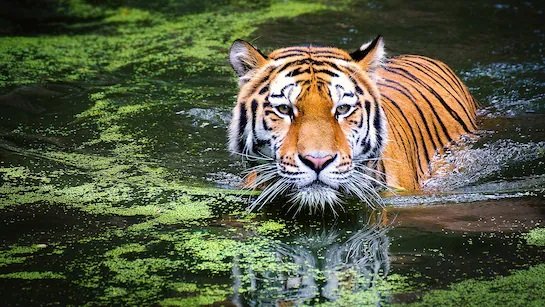
India has emerged as the global leader in tiger conservation, boasting the largest tiger population in the world despite having just 18% of the world’s tiger habitat and one of the highest human population densities.

A Remarkable Rise in Numbers

Over the past decade, India’s tiger population has surged past 3,600, accounting for 75% of the global tiger population. These magnificent big cats share a landscape of 138,200 sq km—roughly half the size of the United Kingdom—with an estimated 60 million people.

What Led to This Conservation Success?

According to a study published in Science, India’s tiger recovery has been driven by:

Stronger anti-poaching measures
Efforts to restore degraded habitats
Increased prey availability
Minimization of human-wildlife conflicts
Support for local communities in conservation efforts

“It’s not just about the number of people but their attitudes towards conservation that play a crucial role,” said Yadvendradev Vikramsinh Jhala, the study’s lead author, in an interview with the BBC.

A Tale of Contrasts: India vs. Malaysia

Jhala highlighted how, despite economic prosperity and lower population density, Malaysia has struggled to revive its tiger population, whereas India’s structured conservation efforts have yielded success.

The study, co-authored by Ninad Avinash Mungi, Rajesh Gopal, and Qamar Qureshi, examined tiger distribution in India between 2006 and 2018, during which tiger habitats expanded by 30%.

Human-Tiger Coexistence: A Complex Dynamic

While protected areas rich in prey have played a vital role, tigers have also adapted to regions inhabited by millions of people, mainly in agricultural and peri-reserve landscapes.

The level of human-tiger coexistence varies across states, influenced by economic, social, and cultural factors:

Madhya Pradesh & Maharashtra – Prosperous states with robust conservation programs have successfully sustained large tiger populations.

Odisha & Chhattisgarh – High levels of poaching and weaker conservation enforcement have led to population declines.

The Double-Edged Sword of Economic Growth

While economic prosperity aids tiger recovery by promoting sustainable ecosystem use, it also presents challenges. Unregulated development and habitat destruction pose a significant risk to long-term conservation.

“Economic growth can be a double-edged sword for tiger habitats,” Jhala cautioned.

Political Unrest: A Hidden Threat to Tigers

The study also pointed to armed conflict and political instability as major contributors to tiger population decline. Wildlife exploitation and habitat destruction tend to escalate in regions experiencing social or political turmoil.

The Road Ahead

India’s tiger conservation success is a testament to decades of dedicated efforts by forest officials, conservationists, and local communities. However, sustaining this success will require:

Continued habitat protection
Stronger anti-poaching laws
Sustainable economic policies
Engaging local communities in conservation

Burj Khalifa’s Hidden Penthouse Unveiled: A Billionaire’s Dream Residence

0

For 13 years, a luxurious penthouse on the 108th floor of Burj Khalifa remained hidden from the world. Now, this ultra-exclusive residence is up for sale at a staggering ₹422 crore.

A Sky-High Marvel

Located 1,509 feet above ground, this two-story penthouse spans 21,000 square feet, offering breathtaking views of Dubai’s skyline and the Arabian Gulf.

Exclusive Features:

  • 12 dedicated parking spaces
  • Direct access to the Armani Hotel
  • Gated garden for privacy
  • Three state-of-the-art gyms
  • A private tennis court

Designed for the Elite

For over a decade, this property was kept a closely guarded secret, reserved for high-profile celebrities and billionaires. The lucky buyer will gain access to a private lounge, an outdoor Jacuzzi, and a luxurious 25-meter swimming pool.

However, to truly experience its grandeur, an additional ₹42 crore must be spent on renovations.

Dubai’s Ultimate Luxury Real Estate

This sale reinforces Dubai’s position as a global hub for luxury living, with Burj Khalifa continuing to be a symbol of prestige and exclusivity.

Indian Navy Women Officers Cross Point Nemo: A Historic Maritime Feat

0

In a remarkable display of resilience and maritime skill, Lieutenant Commanders Dilna K. and Roopa A. of the Indian Navy have successfully navigated through Point Nemo, the most remote location on Earth. This historic milestone was achieved aboard INSV Tarini as part of the Navika Sagar Parikrama-II, an initiative that underscores women’s participation in global maritime exploration.

What is Point Nemo?

Point Nemo, officially known as the Oceanic Pole of Inaccessibility, is the farthest point from any landmass on Earth. It is located in the South Pacific Ocean, approximately 2,688 kilometers away from the nearest land.

🔹 Extreme Isolation – The closest humans to Point Nemo are often astronauts aboard the International Space Station (ISS), which orbits at an altitude of ~400 kilometers—closer than any human settlement on land.
🔹 Geographical Significance – The point was named after Captain Nemo, the fictional submariner from Jules Verne’s novel Twenty Thousand Leagues Under the Sea.
🔹 First Recorded Visit – In 1999, the Spanish research vessel Hespérides became the first documented ship to traverse this remote region.

Why is Point Nemo Important?

Despite its isolation, Point Nemo holds scientific, ecological, and technological significance.

1. Oceanic Research and Environmental Studies

Point Nemo is part of the South Pacific Gyre, an area known for its:

Crystal-clear waters – The region has some of the least biologically active waters in the world.
Minimal marine life – Due to its extreme remoteness and nutrient-poor waters, marine biodiversity is sparse.
Oceanographic Significance – It serves as a critical research site for studying ocean currents, pollution levels, and climate change impacts.

As part of their mission, the Indian Navy officers collected water samples, which will be analyzed by the National Institute of Oceanography. These samples provide vital data on chemical composition, microplastic pollution, and climate change indicators, contributing to global marine conservation efforts.

2. Spacecraft Cemetery: The Final Resting Place of Satellites

Another intriguing aspect of Point Nemo is its role as a decommissioned spacecraft graveyard.

🚀 Space agencies worldwide, including NASA, Roscosmos, and ESA, use this isolated region to safely dispose of defunct satellites and space stations.
🚀 The famous Mir Space Station and several old ISS modules were deorbited and sent crashing into the waters of Point Nemo.
🚀 This practice ensures that space debris doesn’t endanger human populations on land.

Navika Sagar Parikrama-II: India’s Women-Led Sailing Expedition

The crossing of Point Nemo is part of the larger Navika Sagar Parikrama-II, an ambitious 23,000-nautical-mile circumnavigation expedition undertaken by Indian Navy women officers.

Expedition Highlights

📍 Flagged off from Goa on October 2, 2024.
📍 Route spans four continents and three oceans.
📍 The journey is divided into five legs, with stopovers for replenishment and maintenance.
📍 The officers navigate through challenging weather conditions, demonstrating India’s growing naval capabilities and gender inclusivity in maritime missions.

A Defining Moment for India’s Naval Prowess

The successful crossing of Point Nemo by Indian Navy officers Lt. Cdr. Dilna K. and Lt. Cdr. Roopa A. is not just a testament to their sailing expertise but also a symbol of India’s progress in empowering women in defense forces.

As these trailblazing officers navigate uncharted waters, they inspire a new generation of women in the Indian Navy and reaffirm India’s commitment to maritime excellence and global exploration.

Saffron Reedtail Damselfly Discovered in Karnataka

0

A rare discovery has been made in the Western Ghats as researchers have recorded the presence of the Saffron Reedtail Damselfly (Indosticta deccanensis) in Madhugundi village, Chikkamagaluru district, Karnataka. This marks the northernmost record of the species, expanding its known range beyond Tamil Nadu and Kerala, where it was previously documented.

This significant finding highlights the rich biodiversity of the Western Ghats and underlines the importance of preserving its pristine forest streams, which serve as crucial habitats for rare and sensitive species like the saffron reedtail.

Characteristics of the Saffron Reedtail Damselfly

The Saffron Reedtail belongs to the Platystictidae family, commonly known as shadow damselflies due to their slender and elusive nature. These tiny damselflies possess distinct features that make them fascinating subjects of study:

🔸 Size – Measures less than two inches in length, making it one of the smaller damselfly species.
🔸 Coloration – Features a cinnamon-colored thorax, which sets it apart from other damselflies.
🔸 Wings – Delicate and transparent, allowing them to blend seamlessly into their forested surroundings.
🔸 Behavior – Due to their slender body and elusive nature, they are difficult to spot without trained observation.

Habitat and Distribution

Saffron Reedtails are typically found in slow-moving forest streams with pristine water quality and dense vegetation. These conditions are vital for their survival, as they rely on clean water and undisturbed ecosystems for breeding and sustenance.

🔹 Their discovery in Madhugundi, Karnataka, extends their range further northward, suggesting that they may be more widespread than previously believed.
🔹 As bioindicators, their presence signals a healthy ecosystem—free from major pollution and deforestation.
🔹 The species is highly sensitive to environmental changes, meaning any disturbances, such as deforestation, habitat destruction, or water pollution, can severely impact their population.

Ecological Importance of the Saffron Reedtail

The presence of this damselfly is an encouraging sign of a well-preserved and unpolluted environment. Being part of the odonate group (dragonflies and damselflies), they play a critical role in maintaining ecological balance by controlling insect populations and serving as food for other species.

🔸 Water Quality Indicator – Their lifecycle depends on clean, oxygen-rich water, making them natural monitors of ecosystem health.
🔸 Predator-Prey Dynamics – As both predators (of mosquitoes and small insects) and prey (for birds and amphibians), they contribute to biodiversity stability.
🔸 Threats to Survival – Habitat degradation, climate change, deforestation, and water pollution pose major risks to their long-term survival.

Research and Conservation Efforts

The discovery of the Saffron Reedtail Damselfly adds to the growing body of research on odonates in the Western Ghats, a region known for its rich diversity of dragonflies and damselflies.

🔹 The Western Ghats is home to 196 identified odonate species, with 175 reported in Kerala alone.
🔹 Studies have shown that odonates respond quickly to environmental changes—for instance, during the COVID-19 lockdown, their populations increased in urban areas due to reduced human activity and lower pollution levels.
🔹 The Society for Odonate Studies (SOS) continues to advocate for the conservation of odonates and their delicate habitats, emphasizing the need for sustainable ecosystem management.

Historical Context and Local Significance

The Saffron Reedtail Damselfly was first described by British biologist Frank Fortescue Laidlaw. Since then, it has been recognized as an endemic species of the Western Ghats, meaning it is not found anywhere else in the world.

🔹 The species thrives during the monsoon season, from June to November, when water levels are optimal for breeding.
🔹 In Malayalam, it is locally known as ‘Kumkuma Nizhal Thumbi’, reflecting its saffron hue and shadowy movements.
🔹 Unlike common urban damselflies, this species is rarely found in urban environments, reinforcing the importance of preserving natural forest habitats.

Future Research Directions

Despite recent discoveries, much remains unknown about the ecology and behavior of odonates, including the Saffron Reedtail Damselfly. Ongoing research and conservation efforts are essential to:

Study Their Role in Ecosystems – Understanding how they contribute to local food chains and biodiversity.
Assess Environmental Impact – Monitoring their populations to gauge the effects of climate change and habitat degradation.
Promote Conservation Awareness – Engaging communities, researchers, and policymakers in sustainable habitat preservation.

Summing Up

The discovery of the Saffron Reedtail Damselfly in Karnataka is a major milestone in documenting the biodiversity of the Western Ghats. As a bioindicator species, its presence highlights the need for conservation efforts to protect pristine forest streams and maintain ecological balance.

With continued scientific research, habitat protection, and community awareness, species like the Saffron Reedtail can thrive, ensuring that the Western Ghats remains a sanctuary for unique and rare wildlife for generations to come.

UNESCO Launches Ocean Coordination Mechanism to Protect Marine Environments

0

The Intergovernmental Oceanographic Commission of UNESCO has launched the Ocean Coordination Mechanism (OCM), an ambitious initiative designed to tackle pressing marine challenges in the Caribbean and the North Brazil Shelf. These regions are rich in biodiversity and serve as critical ecosystems supporting local economies, fisheries, and climate resilience. Through collaboration, sustainable resource management, and conservation efforts, the OCM aims to safeguard marine environments for future generations.

UNESCO Launches Ocean Coordination Mechanism to Protect Marine Environments

The Vital Role of Healthy Oceans

Oceans cover more than 70% of the Earth’s surface, playing an essential role in climate regulation, biodiversity preservation, and human sustenance. From stabilizing global temperatures to providing resources for coastal communities and industries, healthy oceans are fundamental to planetary and human well-being.

Key Benefits of Healthy Oceans:

Climate Regulation – Oceans absorb carbon dioxide and regulate global temperatures.
Biodiversity Hotspots – Marine ecosystems support millions of species, including vital fisheries.
Coastal Protection – Coral reefs and mangroves act as natural barriers against storms and erosion.
Economic Importance – Fisheries, tourism, and marine-based industries support billions of livelihoods worldwide.

Threats to Marine Ecosystems

Despite their significance, oceans face severe environmental threats, including:

🌊 Pollution – Plastic waste, oil spills, and chemical runoff degrade marine habitats.
🎣 Overfishing – Unsustainable fishing practices threaten fish populations and disrupt ecosystems.
🔥 Climate Change – Rising sea temperatures and ocean acidification endanger coral reefs and marine life.
🏝 Coastal Habitat Destruction – Urban expansion and deforestation damage critical ecosystems like mangroves and seagrass beds.

Addressing these challenges requires strong international coordination and policy frameworks, which is where the Ocean Coordination Mechanism comes into play.

Objectives of the Ocean Coordination Mechanism (OCM)

The OCM builds on lessons from previous ocean conservation programs, such as the Pacific Islands Regional Ocean Policy. Its primary objectives include:

🔹 Sustainable Marine Resource Management – Establishing policies to protect fish stocks, coral reefs, and coastal habitats.
🔹 Strengthening International Collaboration – Encouraging cooperation between governments, scientists, and local communities.
🔹 Inclusive and Science-Based Approaches – Integrating traditional knowledge with modern scientific research to develop effective conservation strategies.

Funding and Financial Sustainability

To ensure long-term success, the OCM has secured an initial investment of $15 million from the Global Environment Facility (GEF), with an additional $126.02 million in co-financing. However, this funding remains lower than other global conservation initiatives, raising concerns about whether the OCM will be able to fully meet its ambitious goals.

Community Involvement: A Key to Success

One of the defining strengths of the OCM is its commitment to engaging local communities in conservation efforts. By blending traditional ecological knowledge with scientific advancements, the initiative fosters a more inclusive and culturally relevant approach to ocean protection.

Empowering Coastal Communities – Involving fishermen, Indigenous groups, and local stakeholders in decision-making.
Education and Awareness Programs – Promoting marine conservation literacy at the grassroots level.
Supporting Sustainable Livelihoods – Encouraging eco-friendly alternatives like community-managed fisheries and marine ecotourism.

Blue Carbon Projects: A Win-Win for Climate and Conservation

The OCM actively promotes blue carbon projects, which focus on utilizing coastal ecosystems (mangroves, seagrasses, salt marshes) to absorb and store carbon dioxide. These initiatives benefit both the environment and local economies by:

🌿 Mitigating Climate Change – Enhancing carbon sequestration to reduce greenhouse gas levels.
🐠 Preserving Biodiversity – Protecting crucial marine habitats for fish, birds, and marine mammals.
💰 Boosting Economic Growth – Supporting sustainable activities like carbon credit markets and eco-tourism.

A Global Call to Action

With the launch of the Ocean Coordination Mechanism, UNESCO is taking a bold step toward safeguarding the world’s oceans. However, the success of this initiative depends on global cooperation, strong policy enforcement, and sustained financial support.

As the world grapples with climate change and environmental degradation, protecting marine ecosystems is no longer an option—it is a necessity. The OCM provides a structured, science-backed, and community-driven approach to ensuring that the oceans remain healthy, resilient, and productive for generations to come.

Mount Taranaki Granted Legal Personhood: A Historic Recognition of Māori Heritage

0

In a landmark decision, New Zealand has officially recognized Mount Taranaki, also known as Taranaki Maunga, as a legal person. This groundbreaking move grants the mountain the same rights and responsibilities as a human being, acknowledging its profound significance to the Indigenous Māori people. The decision is part of a broader effort to address historical injustices and restore the connection between Māori and their ancestral lands.

Historical and Cultural Significance

Mount Taranaki, a dormant volcano standing 2,518 meters tall, has been revered by the Māori for centuries. To them, it is more than just a natural landmark—it is an ancestor and a guardian. The mountain holds deep spiritual significance, and its name, Taranaki, reflects the cultural identity of the local iwi (tribes).

However, with British colonization in the 18th and 19th centuries, Māori communities faced widespread land confiscation, including around Taranaki. Despite the Treaty of Waitangi (1840)—which was meant to safeguard Māori rights—many of its provisions were violated. The recognition of Mount Taranaki’s personhood represents a significant step in addressing these historical grievances.

What Does Legal Personhood Mean?

Under the new legislation, Mount Taranaki is legally recognized as Te Kāhui Tupua, meaning it is regarded as a living entity with inherent rights. A governing body will be established to represent Taranaki’s interests, comprising local Māori iwi members and appointees from New Zealand’s Department of Conservation. This framework ensures that Māori voices play a central role in the mountain’s management and protection.

Implications for Conservation and Environmental Protection

The legal personhood of Taranaki Maunga is not just a symbolic gesture—it carries practical environmental benefits. With this status, the mountain is granted rights that prevent land sales, promote conservation efforts, and encourage the revival of traditional Māori environmental practices. The new governance structure will focus on preserving native wildlife, maintaining the mountain’s ecosystem, and ensuring its long-term protection from exploitation.

New Zealand’s Ongoing Movement for Environmental Personhood

New Zealand has been a global leader in recognizing natural entities as legal persons. This movement began in 2014 with the recognition of Te Urewera Forest, followed by the Whanganui River in 2017. These legal shifts reflect a growing international recognition of Indigenous rights and the intrinsic value of nature beyond economic terms.

A Unanimous Decision and a Future of Healing

The bill granting personhood to Mount Taranaki was unanimously passed in Parliament, highlighting a collective commitment to reconciliation and justice. The decision was met with celebrations, including traditional Māori songs and ceremonies, symbolizing a moment of unity.

While challenges remain in fully restoring Māori land rights, this recognition of Mount Taranaki is a powerful step towards healing. It not only safeguards the mountain’s ecological future but also reinforces the Māori philosophy of kaitiakitanga (guardianship)—a principle that respects the deep, reciprocal relationship between people and nature.