Home Blog Page 393

Declared extinct in 2000, Vantara re-introduces 41 extinct parrots in Brazil

0

Once declared extinct in the wild in 2000, the Spix’s macaw—one of the world’s rarest birds—is now at the heart of a historic rewilding project. In a collaborative effort, the Greens Zoological Rescue and Rehabilitation Centre (GZRRC), a part of Vantara, has partnered with the Association for the Conservation of Threatened Parrots (ACTP) to bring this iconic species back to its natural habitat.

A Landmark Milestone in Conservation

A major step in this ambitious initiative was the transfer of 41 Spix’s macaws from ACTP’s breeding facility in Berlin, Germany, to a dedicated reintroduction site in Bahia, Brazil. This follows the successful release of 20 Spix’s macaws in 2022, which resulted in the first wild-born chicks in over two decades—a clear indication that the program is working.

Through this international Reintroduction Programme, Vantara is providing vital support to ACTP, furthering its commitment to reintroducing the Spix’s macaw into its natural home within Brazil’s Caatinga biome.

A Carefully Selected Group for a New Beginning

The 41 relocated macaws were meticulously chosen based on their health and genetic lineage. The group consists of:

  • 23 females
  • 15 males
  • 3 juveniles (undetermined sex)

Some of these macaws will be integrated into the upcoming release batch, while others will strengthen breeding programs aimed at long-term species survival.

Before being moved, the birds underwent a rigorous 28-day quarantine in Berlin, including extensive medical examinations to ensure they were free from disease and posed no risk to Brazil’s ecosystem.

Declared extinct in 2000, Vantara re-introduces 41 extinct parrots in Brazil

A Complex but Well-Orchestrated Operation

On January 28, 2025, the macaws were flown to Petrolina Airport, Brazil, in a chartered flight, where every detail of their transportation was carefully planned. The operation involved:

  • Border police and federal customs assistance for expedited processing
  • Specialized vehicles for safe ground transport
  • Constant supervision by two ACTP veterinarians and a keeper
  • Logistical support from Vantara’s GZRRC team

Upon arrival, the birds were immediately transferred to a local quarantine facility under strict observation, marking another crucial step in their path to rewilding.

A Hopeful Future for the Spix’s Macaw

This initiative represents one of the most successful bird reintroduction programs in history. With every milestone, the return of the Spix’s macaw to the wild edges closer to reality, offering hope not only for this species but for global conservation efforts.

By working together, Vantara, ACTP, and dedicated conservationists are proving that extinction doesn’t have to be permanent—and that with commitment and innovation, endangered species can thrive once again in their natural environments.

A Lifetime of Achievement: Shri Ram Bahadur Rai of SGT University Receives Padma Bhushan

0

SGT University proudly announces that its esteemed Chancellor, Shri Ram Bahadur Rai, has been conferred with the Padma Bhushan, India’s third-highest civilian award. Recognized for his outstanding contributions to journalism, education, and literature, Shri Rai received this prestigious honor on the occasion of India’s 76th Republic Day, further cementing his legacy as a towering intellectual and visionary leader.

A Distinguished Career in Journalism

A revered author, educator, and veteran journalist, Shri Ram Bahadur Rai has spent decades shaping India’s media landscape. His journey began with Hindustan Samachar, where his fearless reportage covered key historical events, including the Bangladesh Liberation War, with vivid eyewitness accounts published in the Hindi daily Aaj.

As Bureau Chief and News Editor of Jansatta and later as Special Correspondent for Navbharat Times, he redefined Indian journalism, setting unparalleled editorial standards and championing journalistic integrity. His earlier achievements were recognized in 2015, when he was awarded the Padma Shri, India’s fourth-highest civilian honor.

A Literary Luminary

Beyond journalism, Shri Ram Bahadur Rai’s literary contributions have been monumental. His biographies and historical works have provided deep insights into India’s socio-political landscape, including:

  • Manjil se Jyada Safar – A biography of former Prime Minister V. P. Singh
  • Shashwat Vidrohi Rajneta – Chronicling the life of Acharya J. B. Kripalani
  • Rahvari ke Sawal – A compelling account of Chandrashekhar

His book Bharatiya Samvidhan: Anokhi Kahani explores the history and evolution of the Indian Constitution, while Bharat Mai Samaajvaad Ka Itihas is regarded as a key resource in understanding the rise and impact of socialism in India.

A Champion of Democracy and Leadership

A close associate of freedom fighter Jayaprakash Narayan, Shri Rai played a pivotal role in the JP Movement and actively opposed the Emergency (1975-77), reinforcing his lifelong commitment to democracy and justice.

His influence extends to prestigious leadership roles, including:

  • President of the Indira Gandhi National Centre for the Arts (IGNCA)
  • Patron of the Integrated Talent Development Mission (ITDM)
  • Recipient of numerous journalism awards, including the Madhavrao Sapre National Journalism Award, Manikchandra Vajpayi National Journalism Award, Bhagwandas Journalism Award, Satyagrahi Samman, and the Jagadguru Ramanandacharya Award

His Vision for SGT University

As Chancellor of SGT University, Shri Ram Bahadur Rai has played a vital role in shaping academic excellence and thought leadership. Under his guidance, the university has co-sponsored landmark events like the Conference of Academic Leadership on Education for Resurgence, which was addressed by Hon’ble Prime Minister Narendra Modi and attended by over 350 university leaders.

Reflecting on the university’s progress, Shri Rai often emphasizes:

“I am confident that through dedicated efforts, SGT University will continue to advance its mission to produce capable, responsible, and community-driven individuals.”

SGT University: A Hub for Excellence

Recognized by UGC, SGT University has established itself as a premier institution for research, innovation, and multi-disciplinary education. It is among the youngest Indian universities to receive NAAC A+ accreditation and offers over 200 programs across 18 faculties on its 75-acre campus. The university’s medical programs, in collaboration with SGT Medical College, Hospital & Research Institute, are among the most respected in the country.

A Well-Deserved Honor

SGT University congratulates Shri Ram Bahadur Rai on this well-earned Padma Bhushan and looks forward to continuing its journey of excellence under his inspiring leadership. His lifelong dedication to journalism, literature, and education serves as a guiding light for generations to come.

Jaipur Music Stage 2025 begins with a spirited celebration of music!

0

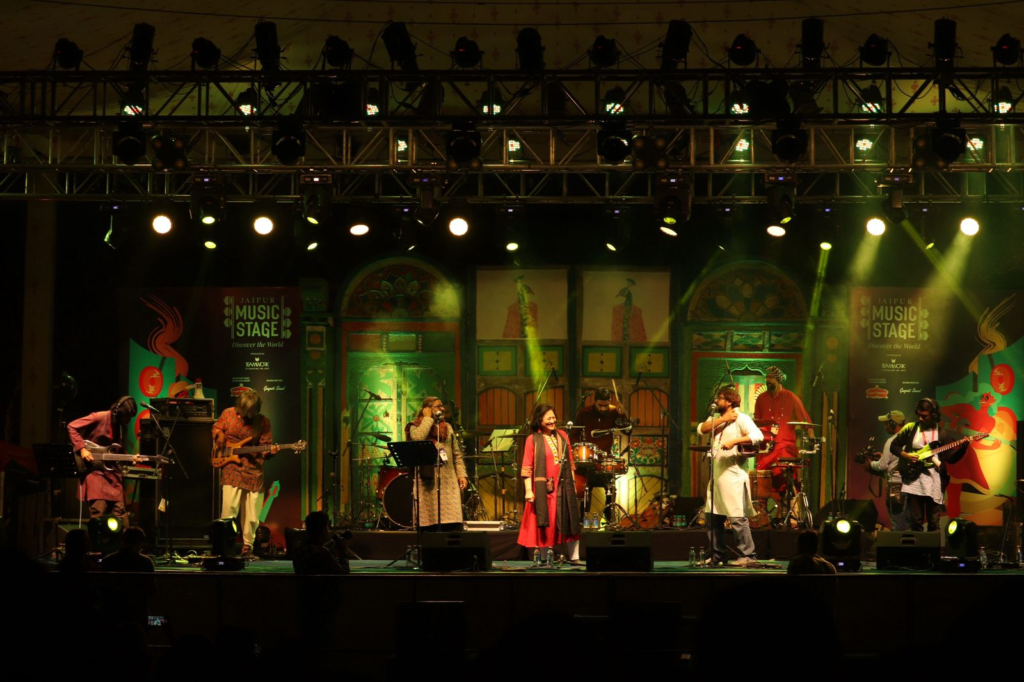
The annual Jaipur Music Stage, showcasing electrifying music each evening at the Jaipur Literature Festival, kicked off on January 30th, with much aplomb at Hotel Clarks Amer, Jaipur. The 3-day music festival, being held alongside the iconic sumptuous feast of books, literature & ideas, is a perfect conclusion to the events of each day.

Jaipur Music Stage 2025 begins with a spirited celebration of music!

The festival opened with a tribute to two historic poets of India: the 13th-14th century Sufi Amir Khusrau and the 14th-15th-century mystic-poet Kabir Das. This evening showcased their timeless legacies through evocative performances.

The Amir Khusrau Project by Abhijit Pohankar, renowned for his expertise in Indian classical fusion and the keyboard, celebrated the sublime verses of Khusrau through their performance. Dastaan LIVE, an ensemble celebrated for its fusion of poetry, folk, and rock, brought Kabir’s poetic wisdom to life through the set Kabira Khada Bazaar Mein.

“We at Dastaan LIVE are so glad to bring Kabir’s message of love and unity in such times to Jaipur with our show Kabira Khada Bazaar Mein, that reinterprets the music of the play by the same name and was directed by M.K. Raina. Working with Teamwork Arts is always a great experience, and we really appreciate the work that they put in to push the art and culture scene in the country.” said Anirban Ghosh, founder Dastaan LIVE.

The much-awaited performances from Day 1 brought back the magic of live music to a stage that has seen some of the greatest offerings from India and around the world in its previous editions.

Saudi Arabia’s First Five-Star Luxury Train Set to Hit the Tracks Next Year

0

The global trend of luxury train travel is gaining momentum, and now Saudi Arabia is set to join the elite league with its first five-star luxury train, Dream of the Desert. Scheduled to roll out next year, this ultra-luxurious train promises an unforgettable journey through the Arabian desert.

A New Era of Luxury Rail Travel

Luxury trains are often referred to as “cruise ships on rails,” offering travelers a lavish experience on land. Saudi Arabia’s Dream of the Desert will feature 14 exquisitely designed carriages, covering a 1,300-kilometer stretch in just one day and two nights. While ticket prices are yet to be announced, the train will offer high-end amenities, including opulent cabins and suites, unlimited gourmet dining, and even an onboard library for travelers to indulge in.

Sky-High Prices for an Unmatched Experience

The pricing of luxury train travel is often exclusive, catering to elite travelers. Reports suggest that the cost per night for this Saudi luxury train could range between ₹2.5 lakh to ₹3.5 lakh.

Saudi Arabia’s First Five-Star Luxury Train Set to Hit the Tracks Next Year

Saudi Arabia isn’t the only country investing in high-end rail travel. Similar ultra-luxury trains across the world include:

  • Blue Train (South Africa): A three-day, two-night journey covering 1,600 km from Cape Town to Pretoria costs between ₹2 lakh to ₹4 lakh.
  • Kyushu Seven Stars (Japan): The world’s only seven-star train, this Japanese marvel costs a staggering ₹21 lakh per passenger.
  • Orient Express La Dolce Vita (Italy): Launching in April this year, this European luxury train will cover 16,000 km, traversing 14 regions.

With Dream of the Desert, Saudi Arabia is set to redefine the luxury rail experience, offering travelers a royal journey through the heart of the desert. Would you be willing to embark on such an extravagant adventure?

Meet the 83-Year-Old Who Has Been Sweeping His Bengaluru Neighbourhood Clean for 24 Years

0

“Be the change that you wish to see in the world.” – Mahatma Gandhi

For 83-year-old Suryanarayan, this is not just a quote—it’s a way of life.

Every morning for the past 24 years, the retired manager has stepped out of his home in HSR Layout, Bengaluru, armed with a broom and an unwavering commitment to cleanliness. Whether it’s sweeping the streets, unclogging drains, or planting trees, his relentless efforts have transformed his neighbourhood into one of the cleanest and greenest in the city.

A Habit Rooted in Passion

Born into a family of farmers, Suryanarayan grew up surrounded by nature, learning the importance of caring for the environment. This early influence stayed with him, shaping his approach to community service. Even after retirement, while many choose to slow down and relax, he chose a different path—one that involved rolling up his sleeves and getting to work.

Since 2001, he has been dedicating his mornings to keeping the streets spotless. Even during the monsoons, when many would hesitate to step out, he takes extra effort to clear accumulated mud and prevent waterlogging.

For Suryanarayan, this isn’t just a routine—it’s a mission.

Overcoming Challenges with Resilience

Despite sustaining injuries over the years, he remains undeterred. His wife has been his strongest supporter, standing by him as he continues his work. When asked why he does it, his response is simple yet profound: “I do it for myself because it brings me joy.”

His tireless dedication has not only kept his surroundings clean but has also inspired others in the community to take responsibility for their environment.

A Legacy of Change

What started as a personal initiative has now become a movement. Suryanarayan’s selfless efforts have set an example, proving that individual actions—no matter how small—can lead to significant change. His street, once like any other, now stands as a model of cleanliness and greenery, a testament to the power of one person’s determination.

In an era where civic responsibility often takes a backseat, Suryanarayan’s story serves as a powerful reminder: Change begins with us.

Using Tomato Waste, This Startup Creates a Sustainable Replacement for Animal Leather

0

Can Bioleather Really Replace Animal Leather?

Pritesh Mistry’s innovative startup, The Bio Company (TBC), is tackling this question by transforming tomato waste into eco-friendly bioleather. Imagine shoes and bags made from tomatoes! This groundbreaking idea earned TBC the Best Innovation in Textile award at the PETA Vegan Fashion Awards in 2021.

As bioleather—a leather alternative derived from plant materials—gains traction, 26-year-old Mistry has found a way to turn tomato waste into stylish and sustainable products.

The Science Behind Tomato Leather

Using tomatoes as the primary raw material, along with a process free from polyurethane (PU) and polyvinyl chloride (PVC), TBC’s Bioleather offers a fully sustainable alternative to traditional leather, without harming animals. But why tomatoes?

“India, the world’s second-largest producer of tomatoes, generates around 44 million tons annually, with 30-35% going to waste,” explains Mistry.

“This waste, primarily comprising skin and seeds, serves as an excellent raw material for Bioleather,” he adds.

Using Tomato Waste, This Startup Creates a Sustainable Replacement for Animal Leather

Tomatoes contain pectin, a natural polymer that enhances flexibility and strength, while their fibrous structure and natural oils help create a leather-like texture, ensuring biodegradability. “By utilizing tomatoes, we address both food waste and pollution, transforming an overlooked by-product into a valuable, eco-friendly material,” says Mistry.

From College Project to Eco-Friendly Enterprise

With a biotechnology degree from Thadomal Shahani Engineering College in Mumbai, Mistry’s journey into bioleather began as a final-year project. His research took him to the tanneries of Kanpur, where he witnessed firsthand the environmental damage caused by traditional leather tanning. Around the same time, he observed the staggering amount of food waste generated on farms.

“These experiences made me realize there had to be a better way—something that addressed both pollution and waste,” recalls Mistry.

After months of experimentation, he successfully developed a Bioleather prototype. “It took extensive trials with tomato by-products, testing various formulations, and refining the texture and durability to create something that not only resembled leather but was also fully sustainable and biodegradable,” he explains.

TBC has since patented its technology and process, ensuring that its alt-leather innovation remains a leader in the sustainable materials industry.

How Is Tomato Leather Made?

Since launching its first product, ‘Original Bioleather,’ in 2019, TBC has remained committed to producing affordable, vegan, carbon-neutral, and biodegradable leather dyed with all-natural colors.

To achieve this, TBC sources tomato waste from local food processing units and farms in tomato-rich states like Maharashtra, Gujarat, and Madhya Pradesh.

“The by-products would otherwise be discarded, so we partner with suppliers to collect and repurpose them into a valuable resource,” explains Mistry.

At its Surat-based facility, Bioleather is crafted by blending tomato by-products with biopolymers, plant-based binders, and natural fibers. The process includes blending these elements, followed by non-toxic curing to achieve a durable, leather-like texture. A final plant-based coating enhances water resistance and durability, resulting in a PU- and PVC-free, biodegradable leather alternative with minimal environmental impact.

Who Is Using Tomato Leather?

The early adopters of Bioleather span across fashion, accessories, and automotive sectors, with sustainable brands incorporating it into jackets, bags, and footwear.

“Bioleather is PU- and PVC-free, which sets it apart from conventional faux leathers. It’s an extraordinary innovation, and its plant-based composition makes it unique,” says Natasha Mangwani, founder and CEO of Satuhati, a Toronto-based plant-based handbag label.

“We started designing samples with Bioleather in May 2024 and began commercial production three months later. After an incredible Black Friday and Cyber Monday sale, we restocked for the Christmas markets, and the response exceeded our expectations,” she adds.

In the automotive industry, brands are also exploring Bioleather for upholstery and interior design, seeking sustainable alternatives to traditional leather, Mistry informs.

When asked whether Bioleather smells like traditional animal leather, he responds, “Bioleather has a pleasant, neutral scent that avoids the typical plastic-like or chemical odors associated with synthetic leathers.”

Scaling Up Sustainable Leather Production

Currently, TBC manufactures around 5,000 meters of Bioleather per month at its Surat facility.

“This production capacity is scalable, and as demand increases, we are working to expand output while ensuring the quality and sustainability of the material remain top priorities,” says Mistry.

With its patented tomato-based Bioleather, The Bio Company is revolutionizing the leather industry, offering an eco-friendly and ethical alternative that aligns with the future of sustainable fashion and responsible consumerism.

Wing Commander Akshay Saxena Receives Vayu Sena Medal

0

Wing Commander Akshay Saxena has been awarded the Vayu Sena Medal (Gallantry) for his exceptional contributions during anti-piracy operations in the Arabian Sea. This recognition highlights the growing threats posed by piracy in international waters, particularly from Houthi rebels targeting merchant vessels. The operation, conducted on March 16 last year, was part of the Indian Navy’s Operation Sankalp, aimed at ensuring maritime security in the region.

Key Facts About Vayu Sena Medal

The Vayu Sena Medal (VM) was instituted on January 26, 1960, to honor exceptional devotion to duty or acts of courage by Indian Air Force personnel. In 1994, it was split into two categories:

  • VM (Gallantry): Awarded for acts of bravery and courage.
  • VM (Devotion to Duty): Recognizing outstanding service and commitment.

Operation Sankalp Overview

Operation Sankalp was initiated by the Indian Navy in response to escalating maritime threats. It focuses on safeguarding Indian-flagged vessels in the Persian Gulf and Gulf of Oman. Following attacks on merchant ships in June 2019, this operation has become crucial for maintaining safe passage through the Strait of Hormuz. Currently, 23 warships are deployed, ensuring an average of 16 safe passages daily.

Wing Commander Saxena’s Mission Details

Wing Commander Saxena led a critical mission involving the airdrop of Combat Rubberised Raiding Craft (CRRC) and marine commandos. The operation targeted a pirate-controlled ship that had attacked merchant vessels and opened fire on INS Kolkata. The mission required precise execution under tight time constraints and the need for secrecy. Saxena ensured aircraft readiness and coordinated effectively with the Navy, demonstrating remarkable leadership and operational expertise.

Significance of the Operation

The mission underscores the importance of inter-service coordination in modern military operations. It showcases the Indian Armed Forces’ capability to respond swiftly to maritime threats. The successful execution of this mission also reflects the strategic importance of the Arabian Sea for trade and security.

INS Talwar and Maritime Security

INS Talwar, a Talwar-class frigate, plays a pivotal role in Operation Sankalp. This vessel is equipped for anti-air, anti-ship, and anti-submarine warfare. Its deployment marks India’s commitment to securing its maritime interests, particularly given its reliance on oil imports from the Gulf region.

Geopolitical Context of the Persian Gulf

The Persian Gulf is vital for global oil trade, containing two-thirds of the world’s proven oil reserves. Its strategic significance is underscored by the heavy maritime traffic that passes through. The Gulf of Oman serves as a critical shipping route, linking the Arabian Sea and the Persian Gulf, making its security a shared interest among major oil exporters and importers.

Christine Carla Kangaloo Receives Pravasi Bharatiya Samman Award

0

Christine Carla Kangaloo, the President of Trinidad and Tobago, has been honored with the prestigious Pravasi Bharatiya Samman Award. This accolade recognizes her significant contributions to public affairs and her efforts in strengthening India’s global reputation. The award was presented by the High Commissioner of India during a Republic Day reception, underscoring the deep-rooted ties between the two nations.

Kangaloo’s achievements were further celebrated at the 18th Pravasi Bharatiya Divas Convention in Bhubaneswar, Odisha, where she was invited as the chief guest. Her recognition highlights the vital role of the Indian diaspora in fostering international cooperation and cultural exchange.

Historical Context of Indo-Trinidadian Relations

The connection between India and Trinidad and Tobago dates back to 1845, when Indian indentured workers arrived in Trinidad, laying the foundation for a rich cultural exchange. Over the years, this historical migration has resulted in a strong Indo-Trinidadian community that continues to uphold and promote Indian traditions.

Following Trinidad and Tobago’s independence in 1962, India was among the first countries to establish diplomatic relations with the island nation. This longstanding relationship has flourished over the decades, fostering collaboration in various fields, including trade, education, and cultural exchanges.

Contributions of the Indian Diaspora

The Indian diaspora has played a pivotal role in shaping Trinidad and Tobago’s cultural and socio-economic landscape. Today, descendants of Indian indentured workers make up approximately 42% of the country’s population. Their contributions span various sectors, including politics, business, education, and the arts, preserving Indian heritage while enriching the nation’s diversity.

From traditional festivals like Diwali and Holi to the influence of Indian cuisine and music, Indo-Trinidadians have significantly contributed to the multicultural fabric of the nation. Their perseverance and success continue to strengthen the bond between India and Trinidad and Tobago.

Significance of the Pravasi Bharatiya Samman Award

The Pravasi Bharatiya Samman Award is the highest honor conferred upon overseas Indians, recognizing exceptional achievements across various fields such as public service, business, science, and the arts. It serves as a bridge, reinforcing India’s connection with its global diaspora and celebrating their invaluable contributions.

By honoring President Christine Carla Kangaloo, the award reaffirms the enduring relationship between India and Trinidad and Tobago. It also encourages further collaboration and engagement, ensuring that the legacy of Indo-Trinidadian heritage continues to thrive on the global stage.

Punyashlok Ahilyabai: Vibrant world of theatre comes alive in Ratlam

0

Punyashlok Ahilyabai’s Life Story Staged in Ratlam

After decades, the vibrant world of theatre came alive in Ratlam as the powerful play “Punyashlok Ahilyabai” was staged, captivating audiences with its compelling narrative and stellar performances.

The Malwa Media Fest hosted this grand theatrical performance on January 25, drawing a packed house. The audience was mesmerized by the seamless blend of light, sound, and live action, while the intense and expressive performances of seasoned actors earned resounding applause.

Punyashlok Ahilyabai: Vibrant world of theatre comes alive in Ratlam

Ahilyabai Holkar: A Timeless Inspiration

Ahilyabai Holkar was a visionary leader of the 18th century, revered as the “Goddess of Justice.” Her unwavering commitment to justice was so profound that she did not hesitate to sentence her own son to death when required. Her life continues to be a source of inspiration for the youth, showcasing resilience in the face of adversity, including the loss of her husband, son, and father-in-law.

Her legacy includes:

  • Formation of India’s first women’s army
  • Advocacy for widows’ welfare
  • Abolition of the death penalty
  • Restoration of iconic Shiva temples, including Somnath, Kashi Vishwanath, Badrinath, Kedarnath, Nashik, Maheshwar, and Ujjain
  • Construction of pyaavs (drinking water stations), ghats, and dharamshalas
  • Elevating Maheshwar’s weaving industry to global recognition

This theatrical production brings to life the pivotal moments of Ahilyabai’s extraordinary journey.

Creative Team Behind the Production

  • Stage Parade Director: N.K. Pant
  • Creative Director: Arun Shekhar
  • Stage Manager: Reshu Gupta
  • Presented by: Rishabh Mishra
  • Playwriting: Sajaldeep Khare
  • Costume & Props Design: Rachna Joshi
  • Choreography: Sudipto Sarkar
  • Music: Milind Trivedi / Sudhir Rekhadi
  • Singing: Isha Singh, Riddhima Bagga
  • Assistant Direction: Anand Kumar Pal, Reshu Gupta
  • Light Design: Abhishek Srivastava
  • Sound Operation: Kunal Gupta

Stellar Cast

Aditi Mishra, Preeti Aa, Kajal Sheddi, Keshavi Sethiya, Priyanti Biswas, Lalita Kumar, Shashwat Srivastava, Anand Kumar Pal, Rahul Sisodia, Santosh Sahu, Priyanshu Shukla

About the Director

N.K. Pant, a veteran theatre artist, boasts 35 years of experience, with notable contributions including:

  • Seven years as an actor and coordinator in the National School of Drama’s T.I.E. program
  • Extensive acting experience at V.N.A. and Shriram Center Rangmandal
  • Senior Fellowship Award, Vaagartha Swayam Siddh Samman
  • Over 1,000 stage performances
  • Direction of more than 30 plays
  • Acting in over 50 ad films and feature films
  • Production of a documentary on Kumaon’s Ramlila

A Nationwide Tribute to Ahilyabai’s Legacy

This 300th-year tribute to Ahilyabai Holkar aims to educate and inspire today’s youth through her extraordinary life story. The play, created in collaboration with Drama Drafting, Sahaj Kalakriti Foundation, and Pant Drama Forum, continues to be performed across the country in both live and light-sound formats.

This theatrical production is a testament to Ahilyabai’s enduring ideals, ensuring that her legacy of justice, resilience, and reform remains alive in the hearts and minds of the people.

Who is Libia Lobo Sardesai?

0

Libia Lobo Sardesai, a fearless nationalist and a pivotal figure in Goa’s freedom struggle, was recently honored with the Padma Shri, India’s fourth-highest civilian award. This recognition commemorates her vital role in the fight against Portuguese colonial rule, particularly through the establishment of an underground radio station that became a voice of resistance.

Early Life and Influences

Born in 1924 in Portuguese-ruled Goa, Libia Lobo Sardesai spent her formative years in Bombay (now Mumbai), where she was deeply influenced by the broader Indian freedom movement. During her college years, she actively engaged in nationalist activities, determined to see Goa freed from colonial oppression. The arrest of peaceful protestors in 1954 and the brutal suppression of civil liberties further fueled her commitment to the cause.

The Underground Radio Station: A Voice of Freedom

In response to the Portuguese regime’s strict censorship, Libia and her husband, Vaman Sardesai, established an underground radio station that played a crucial role in countering Portuguese propaganda. Initially named Q, it later became known as Goenche Sodvonecho Awaz (Voice of Goan Liberation) and Voz de Liberdade (Voice of Freedom). The station broadcast crucial updates about the liberation struggle, instilling hope and unity among Goans.

Secret Operations in the Jungle

Operating in secrecy from the dense forests of Maharashtra and Karnataka, Libia and her team worked tirelessly—often for 18-hour days—to gather news, prepare broadcasts, and deliver them to the people of Goa. The conditions were treacherous, with the constant threat of discovery by Portuguese authorities and the challenges of surviving in remote wilderness areas.

The Final Days Before Goa’s Liberation

As the liberation movement gained momentum, Libia and Vaman Sardesai were taken to a rest house in Belgaum, Karnataka, just days before Operation Vijay—India’s military action to reclaim Goa. On December 17, 1961, they transmitted a critical message from India’s Defence Minister to the Portuguese Governor-General, warning of imminent military intervention.

Announcing Goa’s Freedom

On December 19, 1961, Libia Lobo Sardesai etched her name in history by officially announcing Goa’s liberation. Flying aboard an Indian Air Force plane equipped with a loudspeaker and radio transmitter, she declared to the people of Goa:

“Today, after 451 years of alien rule, Goa is free.”

This momentous announcement marked the end of centuries-long Portuguese dominance, ushering Goa into a new era of self-governance and integration with India.

Timeline of Goa’s Struggle and Integration

India-Portugal Relations Before Liberation

  • 1947: India gains independence; diplomatic ties with Portugal remain friendly.
  • 1949: India establishes formal diplomatic relations with Portugal.
  • 1950: Portugal refuses to relinquish Goa, Daman & Diu, and Dadra & Nagar Haveli, straining ties.
  • 1951: Portugal amends its constitution to declare Goa an “overseas province” rather than a colony, hoping to invoke NATO protection in case of an Indian attack.
  • 1955: Diplomatic relations between India and Portugal are severed after failed negotiations.
  • 1961: India launches Operation Vijay on December 18, leading to the annexation of Goa, Daman, and Diu the next day.

Integration of Other Portuguese Territories

  • Dadra and Nagar Haveli (1954–1961): Captured by Indian nationalists in 1954, officially integrated in 1961.
  • Daman and Diu (1961): Integrated alongside Goa after Operation Vijay.

The Broader History of Goa’s Freedom Movement

Portuguese Colonial Rule

Goa became a Portuguese colony in 1510 when Admiral Afonso de Albuquerque defeated the Bijapur Sultanate. For over four centuries, Portuguese rule persisted, resisting global decolonization movements.

Rise of Goan Nationalism

Inspired by India’s independence struggle, Goan nationalists intensified their efforts in the 20th century. Key figures included:

  • Tristão de Bragança Cunha (1928): Founded the Goa National Congress, advocating for self-rule.
  • Ram Manohar Lohia (1946): Led civil disobedience movements demanding freedom and civil liberties.

Diverging Approaches to Liberation

Goa’s freedom movement saw a divide between:

  • Nonviolent Satyagraha: Advocated peaceful protests and negotiations.
  • Armed Resistance (Azad Gomantak Dal – AGD): Used force against colonial authorities.

Internal disagreements and geopolitical considerations delayed Goa’s liberation, but in 1961, India’s military action finally ended 451 years of Portuguese rule.

Libia Lobo Sardesai: A Legacy of Courage

Libia Lobo Sardesai’s contribution to Goa’s freedom struggle remains an inspiring chapter in India’s history. Her fearless efforts in running an underground radio station, her resilience in the face of adversity, and her iconic announcement of Goa’s liberation cement her legacy as a true patriot.

Her Padma Shri recognition serves as a tribute not just to her but to all unsung heroes of Goa’s struggle, reminding future generations of the sacrifices made for independence.