The debate over oil exploration in Assam’s Dibru Saikhowa National Park has once again sparked controversy following the denial of permission for extraction activities. Despite previous rejections citing environmental concerns, Oil India Limited (OIL) has sought approval to conduct research and development (R&D) studies using Extended Reach Drilling (ERD) technology. In a new development, the Environment Ministry’s Forest Advisory Committee (FAC) has recommended the proposal—though with strict conditions.
What is Extended Reach Drilling (ERD)?
ERD is a drilling technology designed to extract resources without disturbing the surface environment. It allows for horizontal drilling at depths of 3,500 to 4,000 metres, significantly reducing the risk of surface disruption.
OIL has proposed using this technology for research purposes only, aiming to study its environmental impact before considering full-scale extraction. However, given the fragile ecosystem of Dibru Saikhowa, environmentalists remain skeptical.
The Background: A History of Rejections
The current R&D project was introduced after the FAC rejected an earlier proposal to drill seven oil wells inside the national park. The decision was influenced by concerns over environmental safety, particularly in light of the 2020 Baghjan blowout, a massive oil field disaster that caused severe ecological damage.
Additionally, the Supreme Court has imposed strict regulations against mining activities in national parks and their buffer zones, further complicating OIL’s plans.
The Role of the Wildlife Institute of India (WII)
Supporting OIL’s R&D initiative, the Wildlife Institute of India (WII) argues that controlled drilling is essential to accurately assess the impact on biodiversity. The WII has been entrusted with conducting a five-year study covering various biogeographic zones. The objective is to develop site-specific recommendations that can minimize potential harm to the ecosystem.
Environmental Concerns and Regulatory Challenges
Despite technological advancements, conservationists continue to raise alarms over the risks associated with oil exploration in such an ecologically sensitive area. Key concerns include:
Potential oil spills contaminating the fragile ecosystem
Proximity to the Brahmaputra River, increasing the risk of water pollution
Disruption of wildlife habitats due to underground drilling operations
The FAC’s initial rejection of the proposal was based on existing legal precedents and stringent environmental guidelines that restrict mining in protected areas.
Balancing Development and Conservation
The push for oil exploration in Dibru Saikhowa highlights the complex balance between economic development and environmental conservation. While OIL views ERD as a breakthrough for sustainable resource extraction, environmentalists fear irreversible damage to one of India’s most biodiverse national parks.
With strict regulatory oversight and continued scientific studies, the decision on whether ERD technology can safely coexist with conservation efforts remains uncertain. As the debate unfolds, one thing is clear—the future of Dibru Saikhowa’s ecosystem hangs in the balance.
The style of sports training has totally changed. Athletes don’t have to guess anymore. Wearable fitness technology has completely changed the game. Every muscle contraction, heartbeat, and action is tracked and analyzed. There are new enhancements to wearable fitness that help with injury prevention and enhance performance on the day of the game. Coaches and players are now able to make smarter decisions and do so on the spot. This is not a glimpse of what the future holds. This is the reality. Let’s take a look at how exactly professional sports have been altered with wearable tech.
How Wearable Fitness Tech is Revolutionizing Athlete Training
These days, athletes no longer depend solely on physical examinations and trainers. With the advancement of wearable technology, science-backed, accurate data on performance is now available. Every movement is analyzed by GPS trackers, heart rate monitors, and motion sensors, allowing players to push their limits while minimizing danger.
This change is being welcomed by elite teams around the world. And we are sure that your favorite team, which you can bet on by visiting online betting platforms, also uses analytics to show the best results in real games. In soccer, players wear GPS vests, which enable coaches to oversee the distance covered alongside sprint speeds and tough fatigue levels. In the NBA, biometric sensors aid in ensuring players do not overtrain by monitoring workload. Even in combat sports, fighters use smart gloves to evaluate punching technique and power. These advanced technologies have redefined convenience and training.
Wearable fitness devices are the most reliable means of tracking an athlete’s body and effort. The following are the metrics that can be tracked using these devices:
Heart Rate: This function allows for the tracking of physical effort so that the athlete does not exert themselves beyond their limits.
Acceleration & Speed: GPS watches capture the speed of a player’s sprint and their deceleration, combined with agility measures important in sports such as football and soccer.
Sleep Patterns: Smart bands examine sleep to ensure that the athlete recovers properly to perform well and react quickly to changes in the course of play.
Workload Monitoring: Measures the stress placed on muscles and joints to avoid injuries brought on by training.
Technological devices like GPS trackers or smart bands have moved from being optional to becoming critical aspects of athletic performance. Coaches and athletes use them to perfect every detail of the training process.
The Role of Wearable Tech in Injury Prevention and Recovery
Technology has long captured our world. After all, now, even bets can be made from anywhere on the planet, thanks to the MelBet APK download. With its convenient foreign interface and low Internet consumption, even in the most remote areas, you will not miss the opportunity to bet on the next match. But technology also helps athletes and is no less important. It allows them to reduce the risk of injury by tens of times. Injuries can bring a season to a halt, but technology is geared towards enabling athletes to extend their careers. By tracking muscle strain, fatigue, and movement mechanics, these devices help prevent injuries by identifying risks before they turn into serious problems.
Many elite teams use force plates and motion sensors to detect imbalances or irregular movements. If a player is slightly changing their sprinting mechanics, it could be a sign of fatigue or a deeper issue. Getting the information early helps the medical staff take action before the issue becomes a long-term injury. The same applies during rehab, as sensors around the athlete gather information to confirm that recovery is on schedule. As a result, there are fewer injuries to deal with, recoveries are faster, and careers last longer.
Real-Time Data: How Coaches Use Wearables to Optimize Training
Wearable technology is useful for the players, but it is highly beneficial to the coaches, as it allows them to make important decisions. Here is how real-time data affects training practices:
Fatigue Management: Working out without overdoing it is essential, and coaches can manage that through biometric feedback.
Position-Specific Training: A player’s movements can be tracked, and GPS data can show patterns that will help coaches prepare unique drills for each position on the team.
Hydration & Nutrition Needs: Sweat sensors can track how many electrolytes have been lost and help develop measures to ensure that players are well-fueled.
In-Game Strategy Adjustments: Wearable devices capture real-time data, such as how fatigued a player is compared to their reaction times, to help with substitutions.
With this data in place, there is no guessing while training. Coaches have hard data to back up any changes they make, increasing team efficiency.
Personalized Training Plans Based on Wearable Insights
Every athlete is different, and fitness wearables offer the ability to tailor fitness programs for each individual. Custom fitness plans are developed based on individual biomechanics and physical requirements rather than broad plans provided for the entire team.
For instance, a post-surgery basketball player will have a vastly different training regimen compared to a sprinter trying to enhance their acceleration. Wearables make it possible to continuously monitor oxygen consumption and muscle engagement, thus enabling different sessions to target specific areas. With an increased focus on targeting particular areas with specialized training gadgets, the result is an increase in performance with a decrease in injury while smarter training takes place.
The Future of Wearable Tech in Professional Sports Training: LIMITLESS POSSIBILITIES!
Technology has changed the world of sports as we know it. If you thought it was impressive before, just imagine what is coming next. AI-driven analytics, micro-sensors on jerseys, or even brainwave tracking technology to monitor focus—this is only the tip of the iceberg. There is little to no distinction between science and sports these days, and it opens a world of possibilities. One thing is absolute: those who welcome technology will have the edge. Those who do not? That is a different story.
In the heart of Jaipur, perched atop a small hill near the Moti Dungri Fort Palace, lies a temple that holds a mystique unlike any other. Ekalingeswar Mahadev Mandir, one of the city’s oldest Shiva temples, opens its doors to devotees only once a year—on the auspicious occasion of Maha Shivratri.
A Temple Wrapped in Tradition and Devotion
Throughout the year, the temple remains closed to the public, adding to its air of mystery and reverence. But on Maha Shivratri, as the doors finally open, thousands of devotees, who have been waiting patiently, seize the rare opportunity to seek blessings from Lord Shiva. The temple’s deep spiritual significance, combined with its limited accessibility, makes the occasion even more special.
Owned and managed by the royal family of Jaipur, this historic temple has long been a site of devotion for the city’s rulers. In ancient times, Jaipur’s kings and queens would visit Ekalingeswar Mahadev Mandir to offer prayers. Even today, during the holy month of Sawan and other royal festivals, members of the royal family continue this tradition, paying their respects in private ceremonies.
The Maha Shivratri Celebration
On Maha Shivratri, the temple comes alive with the echoes of devotional chants, the fragrance of incense, and the rhythmic beats of temple bells. Devotees, filled with excitement and devotion, make their way up the hill to witness the rare darshan of Lord Shiva. The temple’s sanctum, which remains untouched for most of the year, radiates an aura of divinity, drawing worshippers into deep spiritual reflection.
For the people of Jaipur and beyond, Ekalingeswar Mahadev Mandir is not just a temple but a symbol of faith and tradition. As the temple’s doors close once again at the end of Maha Shivratri, devotees leave with hearts full of devotion and the hope of returning for another darshan the following year.
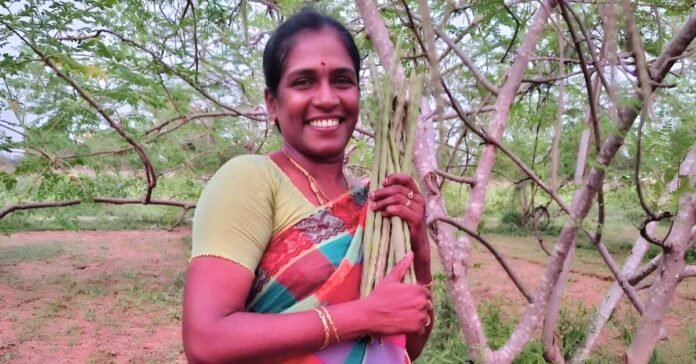
At 38, Ponnarasi stands as a beacon of inspiration for aspiring entrepreneurs, particularly women looking to redefine their roles in society. From a humble background in Tamil Nadu to becoming a celebrated name in moringa farming, her journey showcases the power of determination, innovation, and the willingness to adapt.
Rooted in Agriculture, Growing in Innovation
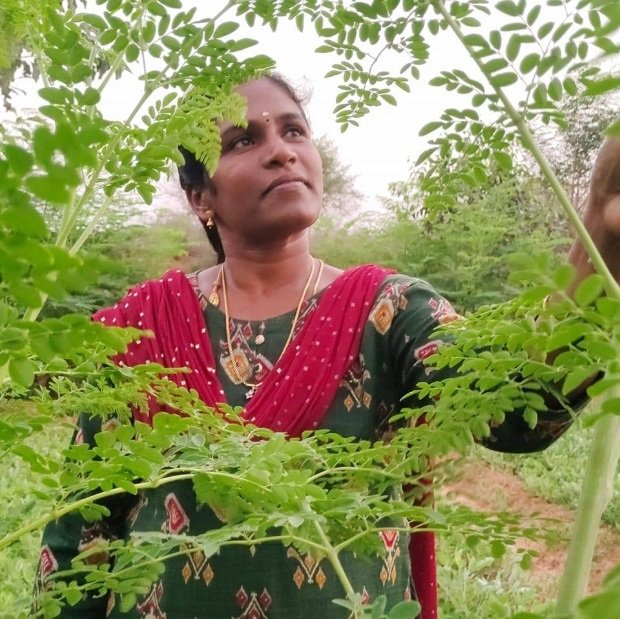
Raised in a family deeply connected to agriculture, Ponnarasi grew up amidst sprawling fields, understanding the toil and dedication farming demands. However, she never imagined that moringa—commonly known as the drumstick tree—would become her path to success.
“I didn’t know moringa could change my life,” she reflects. “But it has given me a purpose, and I want others to find theirs too.”
Her journey into moringa farming began a decade ago in Dindigul, Tamil Nadu. The family cultivated moringa across 10 acres of land, selling leaves, seeds, and roots. However, plummeting prices in the market, with moringa seeds sometimes selling as low as Rs 5 to 10 per kilogram, made her realize that a new approach was needed.
The Turning Point: Value Addition
A visit to Tamil Nadu Agricultural College in Coimbatore introduced her to agricultural expert John Kennedy, whose insights into value addition changed her perspective. “Most farmers focus only on selling raw produce rather than maximizing the potential of their crops,” she recalls.
Determined to break the cycle of low profits, she attended training at the Gandhigram Agricultural Extension Office, where she learned about moringa product development. Her persistence soon caught the attention of Krishi Vigyan Kendra (KVK) officers, who guided her through the complexities of moringa oil production.
“They introduced me to the international demand for moringa oil, which is sold at Rs 5,000 per liter and used in cosmetics, food, and medicine,” she explains.
Armed with this knowledge, Ponnarasi began producing moringa oil, leveraging the drought-resistant Moolanur variety known for its high oil content and resilience to harsh weather conditions.
Overcoming Challenges and Skepticism
Ponnarasi’s early days in product development were not easy. Experimenting with oil extraction at home required immense precision and labor-intensive methods, particularly in removing seed coats. The skepticism from her community added to her struggles. With only a Class 10 education, many doubted her ability to succeed.
“I used to travel to gatherings with my four children on a two-wheeler, and my relatives often made snide remarks about my financial situation,” she recalls.
However, her determination never wavered. Her workforce, comprising mostly local women, believed in her vision and stood by her. “Akka (elder sister) has faced many troubles, both internal and external. But her confidence keeps us focused on our work,” says Kalaiarasi, a longtime employee.
Scaling Up: From Small Business to Global Enterprise
Once she perfected the oil extraction process, Ponnarasi took crucial steps to formalize and expand her business. She obtained quality certifications from the Indian Food and Edible Export Development (IEFED) in Thanjavur, which enhanced her credibility in the market.
A government subsidy of Rs 2 lakh under a women entrepreneurs’ scheme enabled her to establish a Pack House—a facility crucial for processing and packaging moringa products.
With the right infrastructure in place, her business diversified to include an impressive range of 36 products, from moringa oil and powder to soaps, shampoos, lip balms, and soup powders. “We make all the food-related products by hand, and my brother manages the cosmetic line,” she shares.
One of her team members, Kalaiarasi, even came up with the idea of adding moringa to idli podi (spice powder), which became a hit. Innovation continues to drive her business, with the goal of introducing 10 new products each year.
Becoming the ‘Moringa Queen’
Ponnarasi’s efforts have paid off, with her business now generating Rs 12 lakh annually. Over six years, she has built a customer base of over one lakh people, primarily through Facebook and WhatsApp.
Her reach has extended beyond India, with international exports to Malaysia, Singapore, the United States, France, and Muscat. Moringa seeds, soup powders, and oil remain her best-selling products, attracting a global customer base.
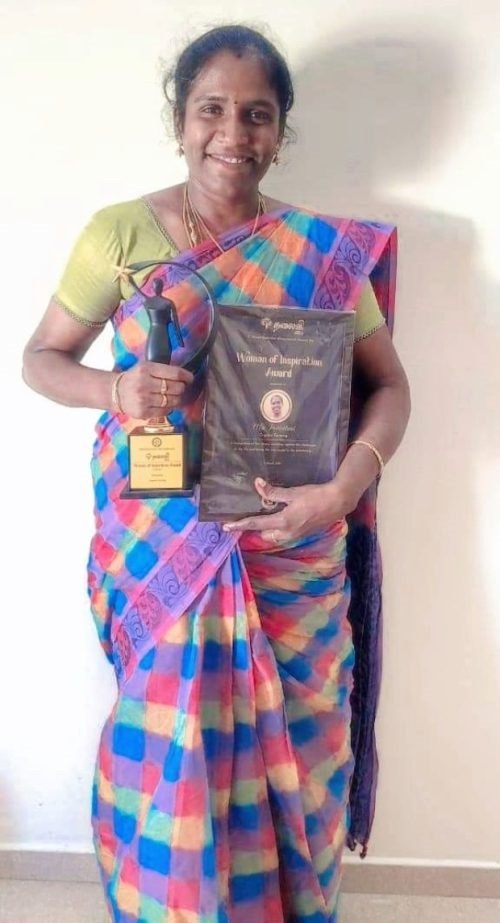
Her entrepreneurial achievements have earned her several awards, including the Best Entrepreneur Award from the Collector of Trichy. The community fondly refers to her as ‘Murungai Arasi’—the Moringa Queen.
Mentorship and Empowerment
Beyond personal success, Ponnarasi is committed to giving back to the farming community. She mentors farmers and self-help groups, conducting workshops on value addition and business development.
“I feel proud when I am invited to MBA colleges to share my experiences in entrepreneurship and farming,” she says with a smile.
Kalaiarasi, who has worked with her for years, describes the impact: “Ponnarasi’s guidance has given me the skills to stand on my own feet and contribute to my family’s livelihood.”
Leveraging Technology for Growth
Understanding the power of digital marketing, Ponnarasi embraced social media to expand her business. “I had no prior experience with social media, so I started learning with my daughter’s help,” she says.
Facebook became her primary platform, helping her connect directly with customers, receive feedback, and secure international orders. “It helped me reach customers I would never have found otherwise,” she explains.
Breaking Stereotypes and Encouraging Women Entrepreneurs
Despite her success, Ponnarasi acknowledges the challenges women entrepreneurs face in society. “Society tends to confuse a woman’s responsibilities with her identity. If a woman starts a business, people assume she has failed as a mother or a wife,” she says.
Her advice to women is simple: “Explore opportunities without fearing societal opinions. In the end, success is not about your degree but your willingness to learn, adapt, and grow.”
Summing Up
From a Class 10 dropout to a thriving entrepreneur, Ponnarasi’s story is one of resilience, innovation, and empowerment. Through moringa farming, she has not only transformed her own life but has also inspired thousands to see agriculture as a path to prosperity. Her journey proves that with the right mindset, challenges can turn into stepping stones for success.
India’s electric vehicle (EV) market is growing rapidly, fueled by increasing investments and policy support. In the past few years, over $450 million has been invested in start-ups developing EV charging networks and battery-swapping models. Despite this progress, the country’s charging infrastructure remains inadequate. India currently has just one public charger for every 135 EVs, while the global average ranges from one charger per 6 to 20 EVs. Meeting the government’s ambitious targets will require urgent expansion of charging facilities.
Current Infrastructure Landscape
India has set a bold goal of installing 3.9 million charging stations by 2030 to support its vision of 30% of new private vehicle registrations being electric, equating to 80 million EVs on the road.
Encouragingly, the number of operational public charging stations has nearly doubled in the past year, increasing from 6,586 to 12,146. Maharashtra leads the charge with 3,079 stations, followed by Karnataka with 1,041. However, to keep pace with rising EV adoption, further acceleration is needed.
Investment Trends and Start-Up Growth
The EV charging infrastructure sector has attracted significant investor confidence.
Over the past five years, 50 Indian start-ups have collectively raised approximately $511 million.
New business models are emerging, including pay-per-use public charging, subscription services for fleets, and battery-swapping networks, particularly for two- and three-wheelers.
The growing interest in fast-charging and smart-charging technologies is shaping the future of the industry.
Government Initiatives and Support
The Indian government has implemented several policies to accelerate the development of EV charging infrastructure:
Faster Adoption and Manufacturing of Hybrid and Electric Vehicles (FAME II): Provides subsidies for EVs and charging infrastructure.
Production-Linked Incentive (PLI) Scheme: Encourages domestic manufacturing of EV components and batteries.
State-Level Policies: Many states offer land acquisition support, tax exemptions, and capital subsidies to promote charging station deployment.
Challenges Hindering Growth
Despite the progress, multiple challenges hinder large-scale EV infrastructure expansion:
High Capital Costs: Setting up charging stations is expensive, requiring substantial investment.
Land Acquisition Issues: Finding suitable locations, especially in urban areas, remains a challenge.
Grid Reliability Concerns: A robust power supply is crucial to prevent disruptions in charging networks.
Rural Penetration: EV adoption remains low outside major cities, limiting infrastructure expansion in these areas.
Learning from Global Leaders
Countries like California, the UK, and Singapore have successfully accelerated EV adoption through policy incentives, public-private partnerships, and streamlined regulatory processes. India can adopt similar models by:
Simplifying land acquisition and permit processes.
Standardizing interoperability to ensure seamless access across different charging networks.
Encouraging partnerships between automakers, energy companies, and tech firms for rapid infrastructure deployment.
Future Prospects: The Road Ahead
India’s EV revolution is not just about increasing the number of electric vehicles—it’s about building a robust charging ecosystem that ensures convenience, affordability, and accessibility. The expansion of charging infrastructure presents significant investment opportunities in the energy and mobility sectors. A strategic mix of public-private partnerships, innovative financing models, and policy-driven incentives will be key to achieving India’s ambitious EV goals.
As the country moves towards a cleaner and more sustainable future, strengthening its EV charging infrastructure will be a defining factor in the success of India’s electric mobility transition.
The Indian Space Research Organisation (ISRO) has unveiled the latest version of its Finite Element Analysis of Structures (FEAST) software at the 8th National Finite Element Developers’ Meeting, held at IIT Hyderabad. The event brought together over 250 experts from academia and industry, highlighting the significance of FEAST in advancing India’s space missions. ISRO Chairman V. Narayanan emphasized the software’s critical role in structural design for upcoming projects such as the Gaganyaan Human Spaceflight Mission and the Bharatiya Antariksh Station.
What is FEAST?
Developed by ISRO’s Vikram Sarabhai Space Centre (VSSC), FEAST is an indigenous finite element analysis software designed to predict how structures respond to different forces, including stress and temperature variations. The software provides a cost-effective alternative to foreign simulation tools, making it highly beneficial for students, researchers, and industries in India.
Applications of FEAST
FEAST plays a crucial role in several of ISRO’s major projects, including:
Gaganyaan Mission: India’s first manned space mission relies on FEAST for structural design and analysis.
Bharatiya Antariksh Station: The design and structural assessment of India’s proposed space station incorporate FEAST simulations.
Next Generation Launch Vehicle (NGLV): The software aids in enhancing the structural robustness of ISRO’s future launch vehicles.
By streamlining complex simulations, FEAST strengthens India’s space exploration capabilities and reduces dependency on foreign software solutions.
Accessibility of FEAST
To encourage widespread usage, ISRO has issued over 4,000 licenses for FEAST across academic institutions, research centers, and industries. The software is available in three versions:
Academic Version – Tailored for students and educational institutions.
Premium Version – Designed for small and medium industries.
Professional Version – Suitable for larger enterprises and advanced research applications.
Additionally, ISRO offers a free trial version on its official website, fostering accessibility and adoption among a broader user base.
Educational Initiatives
To further promote learning, ISRO has published a book titled Introduction to Finite Element Analysis, aimed at undergraduate engineering students and practicing engineers. This resource provides step-by-step tutorials and solved examples, making it easier to understand and apply finite element analysis (FEA) techniques.
Future Developments
Beyond FEAST, ISRO is also developing Pravaha, a computational fluid dynamics (CFD) software. This initiative aligns with ISRO’s vision of enhancing simulation capabilities and fostering self-reliance in engineering software development.
By investing in indigenous software like FEAST and Pravaha, ISRO continues to pave the way for technological advancements, making India a global leader in space technology and structural engineering.
Happy Teddy Day 2025 Wishes: Teddy Day, celebrated on February 10, is one of the most adorable and heartwarming days of Valentine’s Week 2025. It’s a perfect occasion to express your love, care, and affection by gifting a cuddly teddy bear to your special someone. A teddy bear symbolizes warmth, comfort, and everlasting love, making it a cherished gift for partners, friends, and family members alike.
To make your Teddy Day even more special, we have compiled a collection of heartfelt wishes, romantic quotes, and beautiful images that you can share with your loved ones.
Teddy Day 2025: A Celebration of Love and Warmth
Teddy Day marks the fourth day of Valentine’s Week, which is a week filled with love, romance, and meaningful gestures. The seven days of Valentine’s Week 2025 include:
Rose Day (February 7)
Propose Day (February 8)
Chocolate Day (February 9)
Teddy Day (February 10)
Promise Day (February 11)
Hug Day (February 12)
Kiss Day (February 13)
Unlike other days, Teddy Day is all about warmth and comfort. A teddy bear is more than just a plush toy; it’s a symbol of love, companionship, and a promise of togetherness. Whether you are near or far, sending a teddy bear or a heartfelt message on Teddy Day 2025 will surely bring a smile to your loved one’s face.
Happy Teddy Day 2025 Wishes
Here are 10 heartfelt Teddy Day wishes to express your love and make the day extra special:
Happy Teddy Day! May this cuddly teddy remind you of my love and warm hugs, always keeping you company even when I’m not around.
Wishing you a Happy Teddy Day! May your life be as soft, warm, and comforting as a teddy bear’s hug.
On this special day, I’m sending you a teddy bear filled with love, care, and endless hugs. Happy Teddy Day, my love!
Just like this teddy, I promise to always be by your side, offering warmth, love, and comfort. Happy Teddy Day, sweetheart!
You are my real-life teddy bear—soft, cute, and always making me feel loved. Wishing you a wonderful Teddy Day!
Happy Teddy Day! May this day bring you as much happiness and comfort as you bring into my life every single day.
Sending you a big, warm teddy hug to make you feel my love, no matter how far apart we are. Happy Teddy Day, darling!
Every hug from you feels like a teddy bear’s embrace—warm, safe, and full of love. Wishing you a cozy and cuddly Teddy Day!
On this Teddy Day, I just want to say that you are as precious to me as the softest teddy bear, filling my life with joy and love.
Life is better with a little bit of love and a lot of cuddles! Happy Teddy Day to the one who makes my world so special!
Happy Teddy Day 2025 Messages
Here are 20 heartfelt Teddy Day messages to share with your loved ones:
Happy Teddy Day! Just like this soft and cuddly teddy, I promise to always be there to comfort you and make you smile.
May this Teddy Day bring you warmth, love, and endless hugs. You are as precious to me as the cutest teddy bear.
A teddy bear is a hug you can hold, and I hope this one reminds you of my love every single day. Happy Teddy Day!
Just like a teddy bear, I want to be by your side, offering you warmth and love whenever you need it. Happy Teddy Day!
On this Teddy Day, I’m sending you a fluffy bear to remind you of my warm hugs and endless love.
May your life be as soft, sweet, and full of love as a teddy bear’s embrace. Wishing you a wonderful Teddy Day!
You are my teddy bear—soft, cute, and always making me feel loved. Happy Teddy Day to the most special person in my life!
Sending you a teddy bear filled with love, hugs, and all my affection. Happy Teddy Day, my dear!
Just like a teddy, I want to be your source of comfort, happiness, and warmth forever. Happy Teddy Day, my love!
Whenever you need a hug, just hold this teddy close and feel my love surrounding you. Happy Teddy Day!
Happy Teddy Day 2025 Quotes
Here are 10 adorable quotes to share on Teddy Day 2025:
“A teddy bear is a hug that never lets go.” – Unknown
“You are my teddy bear—soft, cuddly, and always making me feel loved.” – Unknown
“A teddy bear does not need hearts to love; it just needs a hug to show it.” – Unknown
“Teddies may be soft and cuddly, but nothing compares to the warmth of your love.” – Unknown
“Love is like a teddy bear—always there to comfort, cuddle, and bring a smile to your face.” – Unknown
“Teddy bears are the best listeners, they never interrupt and never judge.” – Unknown
“A teddy bear is a faithful friend you can hug forever.” – Unknown
“Teddy bears are not just for children, they are for anyone who needs a little comfort and love.” – Unknown
“There’s nothing better than a hug from a teddy bear, except a hug from you!” – Unknown
“Sometimes, a teddy bear is all you need to make your day better.” – Unknown
Happy Teddy Day 2025 WhatsApp Status
Here are 10 Teddy Day WhatsApp status ideas:
Happy Teddy Day! Sending you a warm hug wrapped in the fluffiest teddy bear. #TeddyDay2025
A teddy bear is a hug you can hold forever. Wishing you all the warmth and love this Teddy Day!
You are my real-life teddy—soft, adorable, and always comforting. Happy Teddy Day, my love!
Life is better with a little bit of love and a lot of teddy bear hugs! #TeddyDayVibes
Just like this teddy, I’ll always be there to hold you close and keep you safe. Happy Teddy Day!
Celebrate Teddy Day with Love and Warmth!
Teddy Day is a beautiful way to express your emotions without saying much. Whether you choose to gift a teddy bear, send a heartfelt message, or post a cute quote, make sure to let your loved ones know how much they mean to you. Happy Teddy Day 2025!
In September 2024, researchers announced the discovery of a new species of water flea, Bryospilus (Indobryospilus) bharaticus n. sp., at Korigad Fort near Pune. This groundbreaking find marks the first species of its kind discovered in Tropical Asia, further highlighting the Western Ghats’ rich biodiversity and unique ecosystems.
About Bryospilus bharaticus
Bryospilus bharaticus belongs to the crustacean group, specifically the water fleas—small aquatic organisms typically found in rivers, ponds, and pools. However, this species has evolved distinct adaptations that enable it to survive in semi-terrestrial environments, particularly in water films present on mosses.
Habitat and Distribution
Discovered in semi-terrestrial habitats, which contain moisture but are not fully aquatic.
Has relatives in similar environments across West Africa, South and Central America, and New Zealand.
Reinforces the Western Ghats as a significant biodiversity hotspot.
Physical Characteristics
Unique adaptations for movement through thick, debris-laden water films.
Antennae specially evolved to support locomotion in its challenging habitat.
Lacks a main eye, an adaptation to its low-light surroundings, allowing it to forage efficiently without relying on color distinction.
Evolutionary Significance
The ancestors of Bryospilus bharaticus are believed to have thrived on the Indian subcontinent before the breakup of the prehistoric landmass Gondwanaland, around 200 million years ago. This discovery sheds light on the evolutionary history of the region, suggesting that the Western Ghats may harbor other ancient, undiscovered species.
Environmental Concerns
The presence of such sensitive species is an indicator of pristine habitats. However, increasing human disturbances pose a significant threat to these ecosystems. This study emphasizes the urgent need for conservation to protect these unique environments and their fragile biodiversity.
With its fascinating adaptations and deep evolutionary roots, Bryospilus bharaticus is a testament to the incredible, yet often overlooked, biodiversity of the Western Ghats.
The Swavalambini Women Entrepreneurship Programme was launched in 2025 to foster women-led enterprises in Northeast India. The initiative, inaugurated across nine colleges and universities, marks a significant step toward equipping young women with entrepreneurial skills and resources.
Programme Overview
Swavalambini is a structured initiative designed to instill an entrepreneurial mindset among female students in higher education institutions. Spearheaded by the Ministry of Skill Development and Entrepreneurship (MSDE) and NITI Aayog, the programme aims to empower women across Assam, Meghalaya, and Mizoram by offering:
Entrepreneurship Awareness & Training: A comprehensive framework encompassing awareness, development, mentorship, and financial support.
Essential Business Resources: Access to mentorship, structured business development processes, and market linkages.
Practical Learning Opportunities: A platform to refine business ideas and navigate the entrepreneurial landscape with expert guidance.
Training and Development
The programme includes two key training components, ensuring structured learning at different levels:
Entrepreneurship Awareness Programme (EAP): A two-day session that introduces 600 female students to the fundamentals of entrepreneurship.
Women Entrepreneurship Development Programme (EDP): A more intensive 40-hour training for 300 selected students, covering critical business areas such as finance, market linkages, compliance, and networking.
Mentorship and Support
Beyond training, Swavalambini offers six months of mentorship to help participants translate their ideas into sustainable businesses. This hands-on support system ensures that women entrepreneurs receive the necessary guidance to overcome challenges and build successful enterprises.
Faculty Development Initiative
Recognizing the role of educators in shaping entrepreneurial mindsets, the programme includes a Faculty Development Programme (FDP). This five-day training equips faculty members with essential skills to mentor students effectively. Specialised modules provide industry insights and business incubation strategies, further strengthening the entrepreneurial ecosystem.
Recognition and Awards
To celebrate and encourage outstanding women entrepreneurs, the programme introduces the Award to Rewards Initiative. This initiative recognizes successful women-led ventures, inspiring future entrepreneurs and reinforcing the critical role of women in India’s economic landscape.
Government Support and Policy Alignment
Swavalambini aligns with existing government schemes such as Start-Up India and PM Mudra Yojana, offering additional benefits to women entrepreneurs. The Union Budget 2025 further strengthens this commitment by increasing funding and extending tax exemptions for start-ups, ensuring financial accessibility for aspiring businesswomen.
Impact on Northeast India
By focusing on Northeast India, Swavalambini seeks to unlock the region’s entrepreneurial potential. The initiative aims to create a sustainable ecosystem for women-led businesses, with a target of ensuring at least 10% of EDP trainees successfully launch their ventures. This programme not only fosters economic growth but also empowers women to become change-makers in their communities.
With its structured approach, government backing, and robust mentorship framework, the Swavalambini Women Entrepreneurship Programme is set to be a game-changer for aspiring female entrepreneurs in Northeast India.
The Grameen Credit Score Scheme was announced by Finance Minister Nirmala Sitharaman in the 2025 budget to enhance financial inclusion for Self Help Groups (SHGs) and rural women entrepreneurs in India. This initiative marks a transformative shift in assessing the creditworthiness of millions of women involved in SHGs, integrating them into India’s formal financial system.
Understanding the Grameen Credit Score
The Grameen Credit Score is a newly designed framework specifically for rural women. It focuses on:
Supporting women entrepreneurs in SHGs.
Evaluating their creditworthiness effectively.
Enabling their access to formal financial services.
Objectives of the Scheme
The scheme aims to eliminate barriers preventing women from obtaining credit. Many SHGs remain disconnected from formal credit systems, hindering financial inclusion. The Grameen Credit Score seeks to formalize SHG transactions within the central credit system, making it easier for financial institutions to assess and extend credit to these groups.
Anticipated Benefits
The introduction of the Grameen Credit Score is expected to bring several positive changes:
Enhanced Financial Access: Rural women will have greater opportunities to secure loans and expand their businesses.
Financial Literacy and Credit Utilization: Concepts like credit cards, loan repayment, and financial discipline will be introduced to SHG members.
Digital Framework for Credit Assessment: A structured system will bridge gaps in the current credit bureau infrastructure, ensuring more accurate credit evaluations.
Tailored Financial Products
To further support micro-entrepreneurs, the scheme includes customized financial products, such as credit cards for SHGs and small businesses. These credit cards will offer limits of up to ₹5 lakh, empowering grassroots entrepreneurs with essential financial tools to manage and grow their enterprises effectively.
Economic Impact
The Grameen Credit Score is poised to boost economic stability in rural areas. By increasing access to credit, SHG-led enterprises can contribute more effectively to household incomes and local economies. This initiative aligns with the government’s broader agenda of sustainable development and poverty alleviation.
Continuous Monitoring and Improvement
A key feature of the scheme is its emphasis on continuous credit monitoring. Women will be able to track their credit scores and borrowing capacities regularly, allowing them to improve their financial standing. This ongoing assessment will also promote responsible borrowing and repayment practices, ensuring long-term financial sustainability.
Summing Up
The Grameen Credit Score Scheme is a groundbreaking initiative that seeks to revolutionize financial access for rural women. By formalizing SHG transactions, introducing digital credit assessment frameworks, and offering tailored financial products, this scheme will empower countless women entrepreneurs, paving the way for a more inclusive and economically stable rural India.