Home Blog Page 384

Mahashivratri – The Story of Shiva and Parvati

0

Rudra Pratap Singh

On a night unlike any other, the universe stood still. The stars shimmered brighter, the air was thick with divine energy, and a sense of deep mystery filled the skies. It was Maha Shivratri—the night of Lord Shiva.

High in the mountains, Shiva, the great ascetic, had long renounced the world. But Parvati, his devoted admirer, refused to give up. She meditated for years, her love unwavering. Finally, moved by her devotion, Shiva accepted her, and on this very night, they were married. The heavens burst into celebration, for their union was not just a wedding—it was the merging of energy (Shakti) and consciousness (Shiva), the very forces that hold the universe together.

But Maha Shivratri is also a night of sacrifice. When the gods and demons churned the cosmic ocean, a deadly poison surfaced, threatening to destroy all of creation. The world turned to Shiva. Without hesitation, he drank the poison, holding it in his throat so that it would harm no one. His throat turned blue, earning him the name Neelkanth. As the poison burned within him, the gods stayed awake, offering him sacred water to soothe his pain. And so, the tradition of fasting and night-long worship was born.

In another story, a weary hunter, lost in the forest, unknowingly worshiped a Shiva Lingam by dropping bilva leaves on it from a tree. Without realizing it, he had earned Shiva’s blessings, proving that even the smallest acts of devotion can bring salvation.

And so, every year, on this night of divine magic and mystery, devotees stay awake, chant Shiva’s name, and seek his blessings. It is a night of transformation, a reminder that destruction leads to rebirth, and that in surrendering to the divine, we find true awakening.

World Anthropology Day: Celebrating Humanity

0

Rudra Pratap Singh

Observed on the third Thursday of February, World Anthropology Day highlights the rich diversity of human cultures, histories, and traditions. Anthropology isn’t just about the past—it helps us understand the present and shape the future.

Why Does Anthropology Matter?

Anthropology explores how societies evolve, what connects us, and why cultures differ. Its four key branches offer unique insights:

Cultural Anthropology – Studies traditions, beliefs, and social structures.

Archaeology – Unearths ancient civilizations through artefacts.

Biological Anthropology – Examines human evolution and genetics.

Linguistic Anthropology – Explores how language shapes identity and communication.

How to Celebrate?

You don’t have to be an anthropologist to join in!

Visit a museum or attend a lecture on human history.

Read, watch, or listen to content about different cultures.

Celebrate your own heritage by sharing traditions or stories.

Engage online using #WorldAnthropologyDay.

A Shared Human Story

At its heart, World Anthropology Day reminds us that every culture, language, and tradition contributes to our collective story. By learning from each other, we build a future rooted in understanding and respect

Nine Years of Pradhan Mantri Fasal Bima Yojana: A Milestone in Agricultural Security

0

On February 18, 2025, the Pradhan Mantri Fasal Bima Yojana (PMFBY) marked its nine-year anniversary, reaffirming its significance in securing farmers’ livelihoods. Launched in 2016 by Prime Minister Narendra Modi, the scheme has played a crucial role in stabilizing agricultural incomes and promoting resilient farming practices across India.

About PMFBY: A Shield Against Agricultural Risks

PMFBY was introduced to protect farmers from the financial hardships caused by unpredictable natural calamities. It provides insurance coverage against:

  • Droughts, floods, and hailstorms
  • Pest attacks and crop diseases
  • Prevented sowing due to adverse weather
  • Post-harvest losses caused by unexpected calamities

By ensuring timely financial support, the scheme empowers farmers to recover from crop failures and sustain their agricultural activities without falling into debt traps.

Government Commitment and Budget Allocation

Recognizing its positive impact, the Union Cabinet recently extended PMFBY along with the Restructured Weather-Based Crop Insurance Scheme (RWBCIS) until 2025-26. The budget allocation for these schemes stands at ₹69,515.71 crore, reflecting the government’s dedication to strengthening agricultural resilience.

Technological Innovations in PMFBY

To improve efficiency and transparency, PMFBY has integrated cutting-edge technologies, including:

  • Satellite imagery and remote sensing for crop area estimation
  • Drones for yield assessment and loss evaluation
  • YES-TECH system (introduced in Kharif 2023) to enhance the accuracy of yield estimates and ensure swift claim settlements

These advancements have streamlined claim processing, reducing disputes and ensuring fair compensation for affected farmers.

Key Benefits of PMFBY

1. Affordable Premium Rates

Farmers pay only 2% premium for Kharif crops and 1.5% for Rabi crops, while the remaining amount is subsidized by the government. This makes insurance coverage affordable and accessible to even small and marginal farmers.

2. Quick and Hassle-Free Compensation

PMFBY ensures that farmers receive compensation within two months after harvest, preventing financial distress and supporting continuous agricultural investment.

3. Comprehensive Coverage Against Risks

The scheme covers a wide range of risks, from sowing failure to localized calamities, ensuring that farmers are financially secure throughout the crop cycle.

Rising Participation and Farmer Trust

Since its inception, PMFBY has witnessed a steady rise in farmer participation. Notably, in 2023-24, non-loanee farmers (who are not mandated to take insurance) accounted for 55% of total coverage, reflecting a growing trust in the scheme. Additionally, some state governments have waived premium contributions, further reducing the financial burden on farmers.

A Global Benchmark in Crop Insurance

With millions of farmer applications each year, PMFBY has become the largest crop insurance scheme in the world. Its success story has positioned India as a global leader in agriculture risk management, inspiring similar initiatives in other nations.

Summing Up

As PMFBY completes nine years, its impact on agricultural stability, farmer welfare, and rural prosperity is undeniable. With continuous technological advancements, policy improvements, and increased farmer participation, the scheme is set to play an even more significant role in India’s agricultural future.

WHO Releases 2025 Edition of ICD-11: Advancing Global Health Classification

0

The World Health Organization (WHO) has unveiled the 2025 edition of the International Classification of Diseases, 11th Revision (ICD-11). This latest version aims to standardize the language used by healthcare professionals worldwide, enhancing disease diagnosis, monitoring, and reporting. With its updated features, ICD-11 is set to revolutionize health systems, improve data accuracy, and support digital health innovations across the globe.

Key Features of ICD-11 (2025 Edition)

1. Enhanced Accuracy and AI Integration

The 2025 update incorporates advanced natural language processing (NLP) and API-based coding, improving diagnostic precision. New functionalities include:

  • Error detection enhancements, such as spelling correction and language variation recognition, minimizing data entry mistakes.
  • Automation capabilities, allowing seamless integration with health records for efficient coding and analysis.

2. Multilingual Accessibility

ICD-11 is now available in 14 languages, making it more accessible to healthcare professionals worldwide. WHO continues to expand language support, ensuring broader usability across diverse healthcare settings.

3. Integration with Global Health Standards

To promote interoperability, ICD-11 integrates with major medical classifications, including:

  • Orphanet (for rare diseases).
  • MedDRA (for medical regulatory affairs and drug safety).
  • Other international health terminologies, facilitating comprehensive health data analysis and reporting.

4. Traditional Medicine Module

A significant addition to the 2025 edition is the Traditional Medicine Module, which officially recognizes and categorizes conditions from:

  • Ayurveda
  • Siddha
  • Unani

This allows systematic tracking of traditional medicine services, promoting evidence-based research and policy development in complementary medicine.

Impact on Health Policies and Clinical Practices

ICD-11 is more than just a classification system; it plays a pivotal role in shaping global health policies, medical research, and healthcare delivery. Key impacts include:

  • Reclassification of immune system diseases, leading to better management of autoimmune disorders.
  • Influencing health funding and insurance policies, ensuring proper allocation of resources for disease prevention and treatment.
  • Standardizing disease definitions globally, improving epidemiological tracking and public health interventions.

Advancements in Digital Health Systems

The 2025 edition of ICD-11 is designed for seamless integration with digital health technologies, allowing for:

  • Real-time data exchange using FHIR API (Fast Healthcare Interoperability Resources).
  • Efficient coding automation, reducing administrative burdens on healthcare professionals.
  • Enhanced patient care, as less time is spent on manual data entry and more on treatment.

Training and Resource Efficiency

The intuitive design of ICD-11 significantly reduces training time and resource consumption for healthcare workers. By streamlining classification processes, the system enables medical professionals to focus more on patient care rather than administrative tasks.

ICD-11’s Role in Global Health & Sustainability

ICD-11 is fundamental to identifying global health trends and supports WHO’s mission to achieve health-related Sustainable Development Goals (SDGs). By providing a universal disease classification system, ICD-11 helps:

  • Address global health inequalities.
  • Support national healthcare planning.
  • Strengthen responses to emerging diseases and pandemics.

Summing Up

The 2025 edition of ICD-11 marks a major milestone in healthcare standardization and digital transformation. With its advanced AI integration, multilingual support, interoperability, and recognition of traditional medicine, this update is set to reshape healthcare systems worldwide. As countries continue to adopt ICD-11, the future of global health classification looks more efficient, inclusive, and technologically driven than ever before.

TrailGuard AI: Revolutionizing Wildlife Protection in Similipal Tiger Reserve

0

The integration of artificial intelligence (AI) in wildlife conservation is transforming anti-poaching strategies, leading to significant reductions in poaching incidents. The Similipal Tiger Reserve in Odisha has emerged as a prime example of how AI-driven technology, particularly TrailGuard AI, is enhancing wildlife protection.

Similipal Tiger Reserve: A Biodiversity Hotspot

Location & Geography

  • Located in Mayurbhanj District, Odisha, at the northernmost part of the state.
  • Spans 2,750 sq. km, home to famous waterfalls like Joranda and Barehipani.
  • Forms part of the Mayurbhanj Elephant Reserve, along with Hadgarh and Kuldiha Wildlife Sanctuaries.
  • Characterized by high plateaus, undulating hills, and rich forests. The highest peaks are Khairiburu and Meghashini (1,515 m).

History & Protection Status

  • Declared a Tiger Reserve under Project Tiger in 1973.
  • Designated as a Wildlife Sanctuary in 1979.
  • 303 sq. km of its core area was proposed as a National Park in 1980.
  • Recognized as a UNESCO Biosphere Reserve in 2009, highlighting its ecological significance.

TrailGuard AI: A Game-Changer in Wildlife Protection

How TrailGuard AI Works

TrailGuard AI is an advanced surveillance system comprising 100-150 AI-powered cameras placed strategically across the reserve. These cameras:

  • Detect movement and capture images in real-time.
  • Use AI models to analyze threats, distinguishing between humans, animals, and vehicles.
  • Transmit data to the control room within 30-40 seconds, allowing officials to take immediate action.

Impact on Anti-Poaching Efforts

In the past year, TrailGuard AI has led to:

  • The arrest of 96 poachers.
  • The seizure of over 86 firearms.
  • A significant reduction in poaching activities, with officials estimating up to an 80% decline in future cases.

By identifying poachers through photo recognition and facilitating targeted raids, the technology has improved enforcement efficiency.

Operational Mechanism

  • The cameras operate in low-power mode, activating high-power detection when movement is sensed.
  • On-site AI inference determines whether the detected entity is an animal, human, or vehicle.
  • Alert images are transmitted within seconds, enabling rapid response teams to act immediately.

Community Engagement & Challenges

The introduction of AI-driven surveillance has also affected local communities. Many villagers, fearing misidentification, have limited their entry into the forests—impacting their traditional resource-gathering activities. Recognizing this, the Forest Department is working closely with local communities by:

  • Conducting awareness programs on poaching prevention.
  • Facilitating safe access to forests for legitimate purposes.

Future Prospects & Expansion

Following its success in Similipal, TrailGuard AI is now being considered for deployment in other wildlife reserves, including those in Madhya Pradesh and Uttar Pradesh. Beyond anti-poaching measures, the technology has potential applications in:

  • Wildlife monitoring for conservation research.
  • Managing human-wildlife conflict, preventing animal intrusions into villages.

Advantages of TrailGuard AI

  • Compact and durable, designed for rugged environments.
  • Long battery life of 6 to 12 months, reducing maintenance needs.
  • Cost-effective solution for conservation authorities.
  • Anti-theft design, making it difficult for poachers to tamper with.

Summing Up

With its cutting-edge technology and impactful results, TrailGuard AI is reshaping wildlife conservation. By combining AI-powered surveillance with community engagement, authorities are making significant strides in protecting endangered species and curbing illegal activities. The success of TrailGuard AI in Similipal sets a precedent for a smarter, technology-driven future in wildlife conservation.

National Geospatial Knowledge-Based Land Survey Initiative

0

The National Geospatial Knowledge-based Land Survey of Urban Habitations (NAKSHA) is a transformative initiative launched by the Government of India to modernize and streamline land records in urban and semi-urban areas. This ambitious program, inaugurated by Union Minister Shivraj Singh Chouhan in Madhya Pradesh, aims to enhance land ownership transparency and urban planning efficiency. Covering 152 Urban Local Bodies (ULBs) across 26 states and three Union Territories, the initiative is fully funded by the central government at an estimated cost of ₹194 crore.

Objectives of NAKSHA

The NAKSHA initiative is designed to:

  • Ensure precise and updated documentation of land ownership.
  • Empower citizens by improving ease of living and reducing bureaucratic hurdles.
  • Minimize land-related disputes by establishing clear property boundaries.
  • Enhance transparency and efficiency in property administration.
  • Support sustainable urban planning and infrastructure development.

Technological Framework

NAKSHA leverages cutting-edge technology to conduct accurate and efficient land surveys:

  • Drone-Based Aerial Surveys: Drones will capture orthorectified imagery, ensuring precise mapping of urban and semi-urban landscapes.
  • Survey of India Partnership: As the technical partner, the Survey of India will oversee aerial surveys and data collection.
  • GIS-Based Data Management: The Madhya Pradesh State Electronic Development Corporation (MPSEDC) will develop an end-to-end web-GIS platform to facilitate efficient data storage, analysis, and accessibility.

Implementation Process

The execution of the NAKSHA initiative follows a structured approach:

  1. Data Collection: Advanced drone technology will be employed to conduct aerial surveys.
  2. Field Surveys and Ground Truthing: States and Union Territories will validate aerial imagery through on-ground verification.
  3. Data Processing and Record Creation: The collected data will be processed and integrated into a digital repository.
  4. Issuance of Land Records: Property owners will receive official registration cards, ensuring clarity in land ownership.

Benefits of NAKSHA

The NAKSHA initiative offers numerous advantages, including:

  • Enhanced Urban Planning: Accurate land data will facilitate better city development and infrastructure projects.
  • Reduction in Property Disputes: Clearly defined land records will minimize conflicts related to ownership and encroachments.
  • Sustainable Development: Efficient land management will promote planned growth and environmental conservation.
  • Increased Transparency and Citizen Trust: Digital land records will provide a tamper-proof, publicly accessible system for property verification.

Historical Context and Policy Evolution

NAKSHA builds upon the earlier Svamitva scheme, which focused on validating property ownership in rural India. While Svamitva aimed to formalize land records in villages, NAKSHA extends this modernization effort to urban environments. This initiative signifies a broader commitment by the Indian government to digitize and reform land record systems across the country.

With NAKSHA’s structured approach and integration of advanced geospatial technology, India is taking a significant step toward improving urban land governance, fostering economic growth, and enhancing the overall quality of life for its citizens.

Kalyana Chalukyas: New Archaeological Discoveries Shed Light on a Glorious Era

0

Recent excavations in Kankal village, Vikarabad district, have unearthed three Kannada inscriptions from the Kalyana Chalukya era. These inscriptions, dating back to the reign of Emperor Someswara-III Bhulokamalladeva between 1129 and 1132 CE, document significant events such as temple constructions and land donations, offering valuable insights into the region’s historical and socio-economic landscape.

Historical Context of the Kalyana Chalukyas

The Kalyana Chalukyas, a prominent dynasty that ruled the Deccan region from the 6th to the 12th centuries, emerged as a dominant power after breaking away from the Rashtrakuta Empire. With Kalyani (modern-day Karnataka) as their capital, they made significant contributions to art, architecture, and literature, shaping the cultural fabric of South India.

Significance of the Inscriptions

The three inscriptions discovered in Kankal are dated December 25, 1129, October 5, 1130, and January 8, 1132. These inscriptions provide invaluable information about:

  • The construction of the Bijjeswara temple, commissioned by a local chief.
  • Donations of land and resources by rulers and local elites.
  • The active participation of communities in temple patronage, reflecting the socio-economic dynamics of the time.

Administrative Structure and Governance

The Western Chalukya administration was largely hereditary, with power typically passed down through male heirs. The kingdom was divided into regions overseen by powerful feudatories such as the Hoysalas and Kakatiyas. This decentralized governance model facilitated efficient local administration and ensured a well-organized military system.

Artistic and Architectural Achievements

The Kalyana Chalukyas played a crucial role in the evolution of Deccan-style temple architecture. They are credited with constructing numerous temples, renowned for their intricate carvings and distinct architectural features. Notable examples include:

  • The Mallikarjuna Temple in Bellary
  • The Siddeshvara Temple in Haveri These structures highlight the dynasty’s expertise in stone craftsmanship and temple aesthetics, leaving a lasting architectural legacy.

Literary Contributions

The reign of the Kalyana Chalukyas marked a golden age for Kannada and Telugu literature. The rulers actively patronized poets and scholars, fostering an environment that nurtured literary advancements and cultural growth. This era witnessed the emergence of many classical works that enriched Indian literature.

Decline of the Kalyana Chalukyas

The decline of the Kalyana Chalukyas began after the death of Vikramaditya VI in 1126. Prolonged conflicts with the Chola dynasty gradually eroded their power. Internal strife and growing rebellions from feudatories like the Hoysalas and Kakatiyas further weakened the empire, leading to its eventual disintegration.

Summing Up

The recent discoveries in Kankal village reaffirm the enduring legacy of the Kalyana Chalukyas. These inscriptions serve as vital historical records, shedding light on governance, socio-economic structures, and cultural developments of the time. As further research unfolds, they are expected to provide deeper insights into one of South India’s most influential dynasties.

Changes in Chief Election Commissioner Appointment Process

0

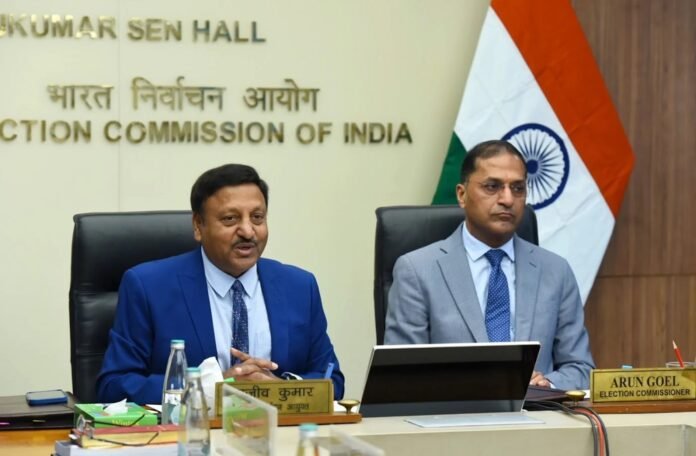
Recently, a high-level meeting took place involving Prime Minister Narendra Modi, Home Minister Amit Shah, and Leader of Opposition Rahul Gandhi. The agenda was to appoint a successor to Chief Election Commissioner Rajiv Kumar, who was set to retire. This meeting highlighted significant changes in the appointment process for the Chief Election Commissioner (CEC) and raised concerns regarding the new law governing these appointments.

Previous Appointment Process Overview

Historically, the Chief Election Commissioner and Election Commissioners were appointed by the President of India based on the Prime Minister’s advice.

  • There was no formal legislation governing the process.
  • The most senior Election Commissioner typically succeeded the outgoing CEC.
  • Seniority was determined by the date of appointment, which sometimes led to ambiguity in cases where multiple commissioners were appointed on the same day.

Introduction of the New Law

The new appointment process is governed by the Chief Election Commissioner and Other Election Commissioners (Appointment, Conditions of Service and Term of Office) Act, 2023. This law establishes a structured procedure for selecting the CEC and Election Commissioners.

  • A search committee led by the Law Minister creates a shortlist of candidates.
  • The shortlist is reviewed by a selection committee comprising the Prime Minister, the Leader of Opposition, and a Cabinet Minister.

Role of the Selection Committee

The selection committee has the authority to consider candidates beyond the initial shortlist, broadening the candidate pool. This change aims to enhance transparency and accountability in appointing key electoral officials.

Eligibility Criteria and Terms of Service

The new Act specifies the eligibility criteria for the CEC and Election Commissioners:

  • Candidates must have held a position equivalent to a Secretary in the Government of India.
  • They must possess integrity and experience in managing elections.
  • Officials are not eligible for reappointment.
  • The maximum term for any individual serving in these roles is six years.

Reasons for the Change in Appointment Process

The Supreme Court’s intervention played a significant role in reshaping the appointment process. The Court observed that the Constitution did not intend for the Executive to have exclusive authority over such appointments. Consequently, the Supreme Court mandated a more inclusive selection process, leading to the enactment of the new law by Parliament.

Ongoing Legal Challenges

Despite these reforms, legal challenges persist. The Association for Democratic Reforms has contested the removal of the Chief Justice of India from the selection committee. The Supreme Court is set to hear these petitions, raising crucial questions about Parliament’s authority to modify judicial rulings through legislation.

This evolving legal and political debate continues to shape the future of India’s electoral governance, with the new appointment process aiming to strike a balance between transparency, accountability, and institutional independence.

ISRO Develops World’s Largest Vertical Propellant Mixer

0

The Indian Space Research Organization (ISRO) has achieved a significant milestone in its pursuit of self-reliance in the space sector. On February 13, 2025, ISRO announced the successful development of a 10-tonne Vertical Planetary Mixer, the largest of its kind globally for solid propellants. Designed and manufactured in collaboration with the Central Manufacturing Technology Institute (CMTI) in Bengaluru, this groundbreaking equipment is set to revolutionize the production of solid rocket motors.

Significance of Solid Propulsion

Solid propulsion plays a crucial role in India’s space transportation systems, requiring precise mixing of sensitive and hazardous ingredients. The newly developed vertical mixer significantly enhances the efficiency and safety of this process. Improved mixing capabilities will result in higher quality propellants, a critical factor in the success of future space missions.

Technical Specifications of the Mixer

  • Weight: 150 tonnes
  • Dimensions: 5.4 metres in length, 3.3 metres in breadth, and 8.7 metres in height
  • Agitators: Multiple hydrostatically driven agitators for superior mixing
  • Control System: Remotely operated PLC-based system integrated with SCADA stations for precision control

This cutting-edge technology ensures meticulous mixing, crucial for achieving the desired propellant consistency and performance.

Collaboration and Development Process

The project was spearheaded by the Satish Dhawan Space Centre (SDSC) in collaboration with CMTI. The development process involved partnerships with leading academic institutions and industry experts. The successful completion of factory-level acceptance tests confirms the mixer’s operational efficiency, marking another step forward in India’s space technology advancements.

Impact on Indian Space Missions

The introduction of this vertical mixer is expected to transform the production of solid rocket motors, leading to enhanced productivity and throughput. This advancement aligns with India’s broader initiative to achieve self-reliance in critical space technologies. ISRO’s relentless commitment to innovation and technological development is evident in this achievement, reinforcing India’s position as a leader in space exploration.

With the successful deployment of this mixer, ISRO is well-positioned to further strengthen its space capabilities, paving the way for more ambitious and technologically advanced missions in the future.

Successful Test of Matsya-6000: Advancing India’s Deep Ocean Mission

0

India’s Deep Ocean Mission is making significant strides with the development and testing of the Matsya-6000 submersible. Led by the National Institute of Ocean Technology (NIOT), this ambitious project aims to bolster the country’s deep-sea exploration capabilities. Designed to withstand extreme underwater conditions, Matsya-6000 will play a pivotal role in studying marine biodiversity and exploring ocean resources, contributing to India’s growing blue economy.

Overview of Matsya-6000

Matsya-6000 is a state-of-the-art deep-sea submersible with a compact design and advanced capabilities. Key features include:

  • diameter of 2.1 metres, making it compact yet robust.
  • Capacity to accommodate three personnel for deep-sea missions.
  • Titanium alloy construction, ensuring durability and resistance to immense underwater pressure.
  • Equipped with ballast systems for divingthrusters for movement, and advanced communication tools for seamless underwater operations.

Subsystems and Features

To ensure successful deep-sea missions, Matsya-6000 is equipped with cutting-edge systems, including:

  • Main ballast system for diving and surfacing.
  • Multidirectional thrusters for efficient movement and maneuverability.
  • Battery bank and power distribution network for sustained operations.
  • Underwater navigation devices to enhance precision and safety.
  • Acoustic modem and underwater telephone for real-time communication with surface teams.
  • Life-support systems, ensuring crew safety and endurance during deep-sea explorations.

Testing Phases and Progress

Matsya-6000 has successfully undergone multiple testing phases to assess its operational efficiency:

  • Dry tests were conducted over a 500-metre range to evaluate its structural integrity and overall performance.
  • Subsequent wet tests at L&T Shipbuilding facility focused on testing stability, maneuverability, and communication capabilities.
  • Eight dives, including unmanned and manned trials, were carried out to validate its functionality in real underwater conditions.

Future Prospects and Significance

Matsya-6000 is an integral part of the Samudrayan project, aimed at exploring deep-sea resources such as precious metals and minerals while advancing marine biodiversity studies. The submersible is expected to be fully operational by 2026, aligning with India’s broader vision for sustainable ocean exploration and resource utilization.

India’s increasing focus on ocean exploration is a key component of its blue economy strategy, which seeks to enhance the nation’s GDP through sustainable marine resource management. By leveraging cutting-edge technology and scientific advancements, Matsya-6000 will not only expand India’s deep-sea research capabilities but also contribute to global efforts in ocean conservation and responsible resource extraction.

With Matsya-6000 nearing completion, India’s role in deep-sea exploration is set to grow, paving the way for scientific breakthroughs, economic opportunities, and enhanced understanding of the vast underwater world.