Home Blog Page 380

Kerala’s Karunya Arogya Suraksha Padhathi: A Lifeline for Healthcare Access

0

The Kerala government has taken a significant step towards universal health coverage with the Karunya Arogya Suraksha Padhathi (KASAP), an integrated health protection scheme designed to provide comprehensive medical coverage to the state’s most vulnerable populations. With an additional allocation of ₹300 crore, the total funding for KASAP in the current financial year has reached ₹978.54 crore, reinforcing the government’s commitment to ensuring accessible and affordable healthcare.

A Boon for the Underprivileged

KASAP primarily targets the poorest 40% of Kerala’s population, covering over 64 lakh beneficiaries, and aims to alleviate the financial burden of medical expenses. This initiative is crucial for low-income families who often struggle to afford quality healthcare.

Key Objectives of KASAP

  • Financial Protection: Provides an annual health coverage of ₹5 lakh per family.
  • Wide Beneficiary Base: Covers approximately 41.99 lakh families.
  • Access to Critical Healthcare: Ensures secondary and tertiary medical services for those in need.

Comprehensive Coverage & Benefits

KASAP is designed to offer cashless medical treatment across a wide network of hospitals, significantly reducing out-of-pocket expenses for beneficiaries.

  • Hospitalization Coverage: Covers costs for various medical treatments.
  • Empanelled Hospitals: Beneficiaries can avail services at 197 state-run hospitals, 4 central hospitals, and 364 private hospitals across Kerala.
  • Pre & Post-Hospitalization: Extends up to 15 days after discharge, ensuring holistic care.
  • Coverage for Pre-Existing Conditions: Beneficiaries are eligible from day one, eliminating waiting periods.
  • No Family Size or Age Restrictions: Ensures universal access within the targeted groups.

Integration with Other Government Health Schemes

KASAP is a converged initiative, integrating multiple government-sponsored healthcare schemes to create a seamless health service framework:

  • Rashtriya Swasthya Bima Yojana (RSBY)
  • Comprehensive Health Insurance Scheme (CHIS)
  • Senior Citizen Health Insurance Scheme (SCHIS)
  • Karunya Benevolent Fund (KBF)

This streamlined approach ensures that beneficiaries receive efficient and uninterrupted healthcare support.

Karunya Benevolent Fund: A Lifesaver for Critical Illnesses

A unique aspect of KASAP is its synergy with the Karunya Benevolent Fund (KBF), which provides financial aid for severe ailments such as cancer, kidney disease, and heart conditions.

  • Funding Source: The KBF is supported through Kerala’s lottery system, making it a self-sustaining model for healthcare funding.
  • Extended Assistance: Supplements KASAP by covering high-cost treatments that require additional financial support.

Towards a Healthier Future

KASAP is not just a welfare initiative—it is a transformative step towards healthcare equity. By ensuring cashless treatment, integrating multiple schemes, and providing critical illness support, the scheme is paving the way for a more resilient and inclusive healthcare system in Kerala.

With continued government investment and community participation, KASAP is set to redefine public health accessibility, ensuring that quality healthcare remains a right, not a privilege.


Bharat Tex 2025: Showcasing India’s Textile Powerhouse on the Global Stage

0

Bharat Tex 2025, held in New Delhi from February 14 to 17, 2025, emerged as one of the largest textile exhibitions in the world, reinforcing India’s ambition to become a global textile leader. The event set the stage for significant industry advancements, with Prime Minister Narendra Modi announcing an ambitious target to triple India’s textile exports—from ₹3 lakh crore to ₹9 lakh crore by 2030.

A Grand Platform for India’s Textile Industry

Bharat Tex 2025 is the second edition of this prestigious annual exhibition, organized by twelve export promotion councils and backed by the Ministry of Textiles. Spanning an impressive 2.2 million square feet, the event showcased India’s complete textile value chain, from raw materials to finished products. With over 5,000 exhibitors, it provided a massive platform for manufacturers, artisans, and entrepreneurs to engage with global markets.

Global Participation and Market Expansion

Bharat Tex 2025 attracted over 6,000 international buyers from 110+ countries, including major textile markets like Japan, the UAE, and the USA. The participation of renowned global brands and retail chains reinforced India’s position as a dominant player in the global textile industry.

Sustainability at the Core

Sustainability was a key theme at Bharat Tex 2025, with a strong emphasis on organic fabrics, energy-efficient production, and circular economy initiatives. Several European Union (EU)-funded projects were unveiled, focusing on:

  • Sustainable fabric innovation
  • Energy-efficient textile production
  • Empowering women in the textile workforce

These initiatives align with the EU-India Circular Economy Initiative and India’s Sustainable Bharat Mission for Textiles, ensuring the sector moves towards environmentally responsible growth.

Technology & Digital Innovation in Textiles

Bharat Tex 2025 highlighted the integration of technology into textile manufacturing, with discussions on AI-driven production, smart fabrics, and automation. A dedicated mobile application allowed participants to network, explore innovations, and track industry developments, enhancing engagement for exhibitors, buyers, and investors.

Conferences & Knowledge Sharing

The event featured 70+ conferences, roundtables, and masterclasses covering:

  • Global trade shifts in textiles
  • Technical textiles and smart fabrics
  • AI and automation in textile manufacturing
  • Sustainable and circular economy practices

With key policymakers and industry experts in attendance, the sessions fostered international collaboration and strategic partnerships for India’s textile growth.

EU-India Textile Partnership: A Step Towards Inclusive Growth

A significant highlight was the launch of seven new EU-India textile projects, aimed at promoting sustainability, resource efficiency, and economic empowerment in the sector.

Key Features of the EU-India Textile Partnership

Funding & Objective

  • The European Union allocated €9.5 million (₹85.5 crore) for the projects.
  • Focus areas: Sustainability, women’s empowerment, and resource efficiency.

Implementation & Beneficiaries

  • The projects will be executed in nine Indian states, including Assam, Andhra Pradesh, Telangana, Uttarakhand, Uttar Pradesh, Odisha, Jharkhand, Bihar, and Haryana.
  • Expected impact:
    🔹 35,000 direct beneficiaries, including 15,000 MSMEs, 5,000 artisans, and 15,000 farmer-producers.
    🔹 Empowerment of 2 lakh (200,000) women over the next 3–5 years.

Alignment with Government Initiatives

  • Supports India’s Sustainable Bharat Mission for Textiles.
  • Complements the EU-India Circular Economy Initiative and is executed by GIZ in collaboration with India’s Ministry of Environment, Forest, and Climate Change.

Employment & Challenges in India’s Textile Industry

The textile sector is a pillar of India’s economy, employing 45 million people, with 60% being women. However, it faces significant challenges, including:

  • High carbon emissions and energy consumption
  • Excessive water usage in textile production
  • Low recycling rates and textile waste management issues

The Road Ahead

  • To achieve its ambitious textile export target, India must:
  • Strengthen sustainable production practices
  • Invest in skill development and technology adoption
  • Expand global partnerships for market access

Bharat Tex 2025 demonstrated that India is not just a manufacturing hub but an innovation-driven leader in the textile industry. With continued policy support, international collaborations, and a focus on sustainability, India’s textile sector is well-positioned for transformative growth.

Coral Reefs’ Historical Resilience in the Gulf of Eilat

0

Recent research has unveiled significant insights into the growth patterns of coral reefs in the Gulf of Eilat, shedding light on their remarkable resilience over time. Scientists have discovered a 3,000-year hiatus in coral growth, which occurred between 4,400 and 1,000 years ago. This period of stagnation is believed to be linked to sea level fluctuations, possibly driven by global cooling. The findings are consistent with similar disruptions observed in coral reefs worldwide, pointing to a broader environmental phenomenon.

Historical Growth Patterns of Coral Reefs

The study highlights a notable pause in reef development during the late Holocene, aligning with disruptions found in coral ecosystems in Mexico, Brazil, and Australia. Despite this prolonged dormancy, the reefs demonstrated an impressive recovery, largely driven by recolonization from deeper coral species. This ability to regenerate underscores the resilience of coral reefs in adapting to environmental shifts over millennia.

Causes of the Coral Growth Hiatus

Researchers attribute this historical shutdown in coral growth to a combination of tectonic activity and glacio-eustatic sea-level changes. A temporary drop in sea levels exposed the reefs, preventing their natural growth and expansion. This event serves as a stark reminder of how sensitive coral ecosystems are to even minor fluctuations in their surroundings.

Advanced Research Techniques Used

To understand the growth history of the reefs, scientists employed cutting-edge methods, including:

  • Extensive Coral Core Sampling – Extracting coral cores up to three meters long provided a detailed timeline of reef development over the past 10,000 years.
  • Carbon Isotope Analysis – By analyzing coral skeletons, researchers detected shifts in carbon isotopic composition, revealing the increasing influence of human activities on the global carbon cycle.

These advanced techniques have provided unprecedented insights into how coral reefs have responded to past environmental changes and what challenges they may face in the future.

Implications for Coral Conservation

The ability of coral reefs to recover from past environmental disruptions offers hope for their survival. However, modern threats—including climate change, ocean acidification, and pollution—pose unprecedented challenges to their existence. Unlike past natural fluctuations, today’s threats are largely human-induced and accelerating at an alarming rate.

Why Conservation Matters:

  • Understanding how reefs recovered in the past can inform modern conservation strategies.
  • Efforts to mitigate climate change and reduce pollution are critical for their long-term survival.
  • Sustainable policies must be implemented to protect marine biodiversity and ensure the continued ecological benefits of coral reefs.

The Significance of Coral Reefs

Coral reefs are often called the “rainforests of the sea” due to their immense biodiversity. Their role in maintaining marine ecosystems and protecting coastal regions is indispensable:

  • Marine Biodiversity Hotspots – Home to over 25% of all marine species, despite covering less than 1% of the ocean floor.
  • Natural Coastal Defenses – They act as barriers against erosion, storm surges, and tsunamis, safeguarding coastal communities.
  • Carbon Cycle Regulation – Coral reefs play a crucial role in absorbing and regulating carbon dioxide levels, helping to maintain oceanic and atmospheric balance.

Key Facts About the Gulf of Eilat

  • Geographical Location: The Gulf of Eilat (also known as the Gulf of Aqaba) is situated at the northern tip of the Red Sea, bordered by Egypt, Israel, Jordan, and Saudi Arabia.
  • Depth Variations: While the Gulf of Aqaba plunges to depths of 1,850 meters (6,070 feet), the adjacent Gulf of Suez is much shallower at less than 100 meters (330 feet) but significantly wider.
  • Unique Coral Ecosystem: The northernmost coral reef in the world is located near Eilat, Israel, showcasing an exceptionally diverse marine habitat despite its high-latitude location.

Summing Up

The coral reefs of the Gulf of Eilat stand as a testament to nature’s resilience, having survived significant environmental changes over thousands of years. However, their current challenges are far greater than ever before, demanding urgent global conservation efforts. By studying past patterns of reef growth, decline, and recovery, researchers hope to develop sustainable solutions to protect these marine treasures for future generations.

Indian Railways to Redevelop 61 Stations in Karnataka Under Amrit Bharat Station Scheme

0

Indian Railways has taken a significant step towards modernizing railway infrastructure by selecting 61 stations in Karnataka for redevelopment under the Amrit Bharat Station Scheme (ABSS). This ambitious initiative aims to transform railway stations into modern, passenger-friendly hubs equipped with enhanced facilities, improved connectivity, and sustainable infrastructure.

Understanding the Amrit Bharat Station Scheme

Launched in February 2023, the Amrit Bharat Station Scheme (ABSS) is a nationwide project aimed at the redevelopment of 1,309 railway stations across India. The key objectives of the scheme include:

  • Upgrading passenger amenities to enhance comfort and convenience.
  • Implementing long-term master plans for phased development of railway stations.
  • Improving traffic circulation through better road planning, entry-exit management, and parking solutions.
  • Enhancing inter-modal connectivity to integrate railway stations with other transport modes.
  • Ensuring accessibility for all passengers, including those with disabilities.

Key Features of ABSS

The redevelopment plan encompasses several modern features to elevate the railway travel experience:

  • Upgraded Passenger Facilities – Stations will be equipped with clean waiting areas, modern restrooms, food outlets, and retail spaces.
  • Traffic Management Enhancements – Redesigned entry and exit points, wider approach roads, and ample parking will ease congestion.
  • Seamless Inter-Modal Connectivity – Better integration with buses, metro networks, and other transport systems will improve accessibility.
  • Smart Signage & WayfindingMultilingual signage and digital information boards will guide passengers efficiently.

Structural Advancements and Sustainability Focus

The ABSS goes beyond aesthetic upgrades by incorporating structural enhancements and eco-friendly solutions:

  • Station buildings will be modernized with improved architecture and infrastructure.
  • Ballastless tracks will be introduced, reducing noise and vibration for a smoother travel experience.
  • Sustainable initiatives such as energy-efficient lighting, rainwater harvesting, and green spaces will be integrated.
  • Roof plazas may be constructed where feasible, creating additional commercial and public utility spaces.

Project Implementation and Funding

The implementation of the ABSS in Karnataka involves multiple stages, requiring statutory clearances that may impact project timelines. The funding for passenger-centric improvements falls under Plan Head – 53 ‘Customer Amenities’, which is managed by different railway zones.

Total Budget Allocation for Karnataka – ₹2,000 crore for redevelopment projects.

Recent Developments in Karnataka

Karnataka will witness major railway station transformations, with specific focus on the Bengaluru Division and other key locations:

  • 15 railway stations in the Bengaluru Division, including Bangarpet and Whitefield, have been chosen for redevelopment.
  • 13 additional stations are set for rejuvenation, transforming them into urban landmarks with:
    • Shopping zones & food courts
    • Enhanced accessibility for the physically challenged
    • Increased socio-economic activities

These upgraded stations aim to become bustling hubs of commerce and community engagement, reflecting the growing importance of railway networks in Karnataka’s urban development.

Summing Up

The Amrit Bharat Station Scheme is set to redefine railway travel in Karnataka, creating modern, efficient, and sustainable transport hubs. With passenger-centric advancements and infrastructure modernization, this initiative will significantly improve the railway experience for millions of commuters while boosting regional connectivity and economic growth.

As Indian Railways continues to expand and modernize, the redevelopment of these 61 stations will mark a transformational milestone in Karnataka’s railway landscape.

What is Tibetan Buddhism ?

0

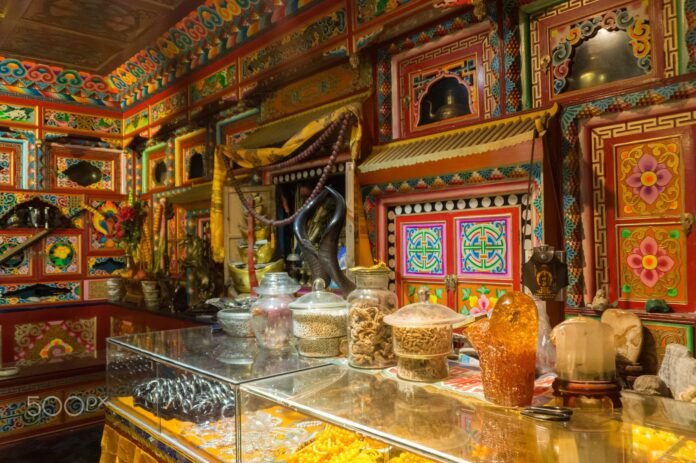
In December 2024, the State Administration for Religious Affairs in China introduced new regulations governing Tibetan Buddhist temples, marking a significant escalation in state control over religious practices in Tibet. These measures, effective from January 1, 2025, are part of a broader effort by the Chinese Communist Party (CCP) to integrate Tibetan Buddhism into the Han Chinese cultural framework. The policy aligns with Beijing’s long-standing strategy to assimilate Tibetan culture while enforcing political loyalty within religious institutions.

Tibetan Buddhism: A Brief Overview

Buddhism made its way into Tibet by the 9th century AD, evolving from Mahayana and Vajrayana traditions while also incorporating elements of Bon, the indigenous Tibetan spiritual tradition. Over time, Tibetan Buddhism developed into four primary schools:

  • Nyingma
  • Kagyu
  • Sakya
  • Gelug

Among these, the Gelug School, founded in the 15th century, has been the most influential since the 17th century.

The Gelug School and the Dalai Lama

The Gelug School, known for its emphasis on monastic discipline and scholarly traditions, is closely associated with the Dalai Lama, the spiritual leader of Tibetan Buddhism. The title ‘Dalai Lama,’ meaning ‘ocean teacher’ in Mongolian, was first conferred upon Ngawang Lobsang Gyatso, the 5th Dalai Lama, who institutionalized the tradition of reincarnation-based succession.

New Regulations: Political Control Over Religious Life

The updated Measures for the Administration of Tibetan Buddhist Temples make political loyalty a mandatory prerequisite for religious leadership. These regulations directly integrate state ideology into religious governance, ensuring that monasteries operate under the CCP’s directives.

According to the Tibetan Centre for Human Rights and Democracy, these changes undermine existing legal protections for religious freedom, further restricting the autonomy of Tibetan Buddhist institutions.

Impact on Tibetan Religious Practices

The new policies impose strict state control over Tibetan monastic institutions and clergy. Religious teachings, ceremonies, and appointments are now required to align with CCP ideology, leaving little space for traditional Tibetan Buddhist practices.

The CCP’s ultimate goal is to subordinate Tibetan cultural identity under a unified Han Chinese identity, pressuring Tibetan Buddhists to abandon their distinct traditions and beliefs.

Religious Suppression and Coercion

Over the years, China has intensified its crackdown on religious freedom in Tibet. Some of the key tactics include:

  • Coercive ‘patriotic education’ campaigns, designed to instill loyalty to the CCP.
  • Arbitrary arrests and detentions of monks and religious practitioners.
  • Heavy surveillance of monasteries and religious gatherings to monitor and suppress dissent.

With the implementation of these new measures, the religious landscape in Tibet has become even more tightly controlled, leaving Tibetans with little room for spiritual autonomy.

The Larger Implications: Sinicisation of Religion

China’s approach to Tibetan Buddhism reflects a broader national policy of Sinicisation of religion, wherein religious institutions are reshaped to fit within CCP-approved narratives. By enforcing political conditions on religious practices, the party seeks to eliminate any potential opposition rooted in Tibetan Buddhist traditions.

This raises significant concerns about the preservation of Tibetan cultural and spiritual identity, as the forced integration of Tibetan Buddhism into Han Chinese ideology threatens to erode centuries-old traditions.

Summing Up

The new religious regulations in Tibet mark another drastic step in China’s long-running efforts to assert control over Tibetan Buddhism. By intertwining politics with religious administration, the CCP continues to tighten its grip over Tibetan cultural and spiritual life, leaving Tibetan Buddhists facing an uncertain future.

While these policies might serve China’s political interests, they also spark global concerns over human rights, religious freedom, and the survival of Tibetan identity in the face of relentless state interference.

No traffic, no tickets for flight/train: 7 youth from Bihar travel 550 Km Mahakumbh via boat

0

Amidst a massive traffic jam choking the highways to Prayagraj due to the influx of pilgrims for the Maha Kumbh Mela, seven young men from Kamhariya village in Bihar’s Buxar district took an unconventional route—sailing down the Ganga River. Instead of getting stuck in endless lines of vehicles, they navigated 275 kilometers of the sacred river in a motor-propelled boat, reaching their destination with ingenuity and determination.

An Unconventional Pilgrimage

The group, comprising professional boatmen—Manu Chaudhary, Sumant, Sandeep, Sukhdev, Aadu, Ravindra, and Ramesh—set off on their journey on February 11. Their vessel, a boat typically used by Manu for daily crossings at Kotwa Narayanpur in Ballia, became their means of defying gridlocked highways.

In an interesting modern twist, they relied on Google Maps for navigation—just like the commuters stuck on congested roads. The only difference? Instead of highways, Google showed them the meandering course of the Ganga, guiding them safely through the river’s twists and turns, even in the pitch darkness of night.

Prepared for the Long Haul

This wasn’t just a desperate attempt to bypass traffic; it was a well-planned expedition. The team ensured their boat was stocked with essentials—a gas cylinder, stove, food supplies, an extra engine, and a fuel reserve—allowing them to be self-sufficient throughout their 84-hour-long round trip.

Covering nearly 550 kilometers in total, they reached Prayagraj on February 13. Upon nearing the city, they anchored their boat near pontoon bridge number 30 and proceeded on foot to the Mela site.

More than a Journey, an Experience

Despite the physically demanding voyage, the group fulfilled their spiritual goal—taking the sacred snan (bath) in the holy waters before embarking on their return journey. Their entire trip was budget-friendly, costing around ₹20,000, primarily spent on petrol.

This unique voyage wasn’t just a pilgrimage but a testament to their ingenuity, resilience, and deep-rooted connection to the Ganga. While thousands were stranded in hours-long traffic jams, these seven men sailed seamlessly to their destination, blending tradition with modern technology in an extraordinary journey of faith.

Mother, warrior and protector: RPF Officer carries her 1-year-old child on duty, internet salutes “Supermom”

0

A few hours after a tragic stampede at New Delhi Railway Station claimed several lives, a heartwarming video has surfaced, capturing the resilience and unwavering spirit of a mother on duty.

In the viral video, a female Railway Protection Force (RPF) officer is seen carrying her child strapped to her front while holding a baton in her hand, ensuring peace and order at the station. This striking image, blending motherhood with duty, has deeply moved the internet, with many praising her dedication.

With a firm grip on her baton and a gentle smile on her face, she embodies both strength and compassion. The sight of the innocent child nestled against her chest, oblivious to the chaos around, contrasts with her determined presence as she upholds her responsibilities. This powerful moment serves as a tribute to all working mothers who seamlessly balance their professional and personal lives, proving that love and duty know no boundaries.

A Mother, A Protector, A Warrior

Social media users have flooded the internet with admiration and respect for the officer.

“After the stampede at Delhi railway station, an RPF female officer carrying her one-year-old child while on duty. Don’t know whether I should feel proud or sad for her,” wrote one user.

Another echoed the sentiment, tweeting, “A Mother, Protector, and Warrior. An RPF personnel carrying her child while on duty proves that women can balance everything with grace. Salute!”

A poetic tribute by a third user read:
“A woman in uniform, fierce yet kind,
Carrying her child, but never behind.
On the railway platform, she guards the night,
With strength in her heart and a mother’s might.
Salute to the Mother and Policewoman.”

The Tragic Incident

The emotional moment emerged just hours after a horrific stampede at New Delhi Railway Station on Saturday night, which resulted in the deaths of at least 18 people, including five children, and left over a dozen injured.

The tragedy unfolded as thousands of passengers surged toward the trains heading to Prayagraj for the Mahakumbh. The foot-overbridge connecting platforms 14 and 15 became a scene of panic when some travelers slipped while descending, leading to a deadly crush. Authorities have since launched an investigation into the circumstances that triggered the stampede.

In the wake of such a devastating event, the image of the RPF officer standing strong, balancing her duty and motherhood, serves as a poignant reminder of the human spirit’s resilience. While the nation mourns the loss of lives, this moment of courage and dedication has touched hearts, symbolizing hope amid tragedy.

Elon Musk’s 12 kids and 4 marriages: A closer look to his personal life..

0

Elon Musk, the world’s richest man and the founder of Tesla, SpaceX, Neuralink, and The Boring Company, is a father to 12 children from three different women. Some of these names are so unique that pronouncing them can be a challenge for many. Musk is admired not only for his wealth but also for his intellect, wit, and candidness. He has never shied away from expressing his opinions, regardless of how the world perceives them. Naturally, when it comes to naming his children, he has chosen some truly distinctive names.

How Many Children Does Elon Musk Have?

According to public records, Musk has 11 children from three women—two of whom were his wives and one a Neuralink executive. Bloomberg recently reported the birth of his 12th child this year, although no further details have been disclosed. His eldest child is 20 years old. Despite his large family, Musk has also faced a deep personal loss—his firstborn son tragically passed away just 10 weeks after birth. This means Musk has had a total of 13 children, with one deceased and one undisclosed.

Children from Elon Musk and Justine Wilson

Musk’s first wife, author Justine Wilson, gave birth to six children. Their first child, Nevada Alexander Musk, passed away as an infant. The couple later had twins and triplets:

  • Twins (born 2004): Griffin and Vivian Jenna Wilson (formerly Xavier Alexander Musk)
  • Triplets (born 2006): Kai, Saxon, and Damian Musk

Vivian Jenna Wilson legally changed her name and gender identity in 2022, distancing herself from Musk. The triplets were conceived via IVF, as were the twins.

Children from Elon Musk and Grimes

Canadian musician Grimes and Elon Musk have three children:

  • X Æ A-12 Musk (born 2020) – Later modified to X Æ A-Xii Musk due to California’s naming laws; often called “X.”
  • Exa Dark Sideræl Musk (born 2021) – Nicknamed “Y,” born via surrogacy.
  • Techno Mechanicus Musk (born 2023) – Nicknamed “Tau.”

Children from Elon Musk and Shivon Zilis

Shivon Zilis, an executive at Neuralink, has three children with Musk:

  • Twins (born 2021) – Their names remain undisclosed.
  • A third child (born 2024) – No details have been revealed yet.

The Loss of Nevada Alexander Musk

Musk and Justine’s firstborn, Nevada Alexander Musk, was born on May 18, 2002, but tragically passed away just ten weeks later due to sudden infant death syndrome (SIDS). This loss had a profound impact on Musk and his outlook on parenthood.

A Concern for Population Decline

Elon Musk has openly expressed concerns about declining birth rates and their impact on the future of civilization. His growing family appears to reflect his commitment to addressing what he calls the “population crisis.” He has stated on multiple occasions that people should have more children to prevent a demographic collapse.

Summing Up

Elon Musk’s personal life is as unconventional as his business ventures. With 12 children, unique names, and a blend of relationships, he continues to capture public fascination beyond his technological innovations. While his approach to naming and parenting may seem unorthodox, it aligns with his larger-than-life persona—one that defies norms and pushes boundaries in all aspects of life.

The Green Carpet of IIFA: A Symbol of Sustainability and Bollywood’s Global Impact

0

For the past 16 years, the International Indian Film Academy (IIFA) Awards have welcomed celebrities onto a vibrant green carpet, breaking away from the traditional red. This unique shift, first introduced at the 2007 IIFA Awards in Sheffield, UK, was not just a stylistic change but a powerful statement about environmental consciousness.

The Story Behind the Green Carpet

In a bid to raise awareness about climate change, IIFA launched the “Greening The IIFAs” initiative, replacing the classic red carpet with an eye-catching green one. The goal was to align the event with an environmental cause and leverage the influence of Bollywood stars to promote sustainability.

“IIFA has always put the environmental agenda at the forefront of its celebrations,” organizers explained. “The green carpet is a conscious effort to send a global message about sustainability, with celebrities serving as ambassadors for change.”

This initiative has since become a defining feature of the awards, reinforcing Bollywood’s commitment to social responsibility while ensuring that IIFA stands out in the world of entertainment.

The IIFA Awards: A Global Celebration of Indian Cinema

First held in London in 2000, the IIFA Awards were conceptualized by Mumbai-based Wizcraft International Entertainment to honor excellence in Hindi cinema. The event is hosted in a different international destination each year, promoting Bollywood’s influence across the globe.

Dubai hosted the ceremony in 2006, followed by cities such as Bangkok, New York, Colombo, Amsterdam, Madrid, Florida, Kuala Lumpur, and Macau. For the third consecutive year, Abu Dhabi is playing host to the star-studded festival at the Etihad Arena on Yas Island.

This year, the IIFA Festival spans three days, featuring multiple events:

  • IIFA Utsavam (Friday): Celebrating South Indian cinema, hosted by Rana Dagubatti and Teja Sajja (Telugu), Sathish and Diya Menon (Tamil), Akul Balaji and Vijay Raghavendra (Kannada), and Sudev Nair and Pearle Maaney (Malayalam).
  • IIFA Awards (Saturday): The grand Bollywood awards night, hosted by Shah Rukh Khan, Karan Johar, and Vicky Kaushal.
  • IIFA Rocks (Sunday): A night dedicated to music, featuring performances by Shankar-Ehsaan-Loy, rapper Honey Singh, and singer Shilpa Rao.

Performances at the IIFA Awards will include Bollywood legends such as Rekha, along with Vicky Kaushal, Shahid Kapoor, Kriti Sanon, and Janhvi Kapoor. Meanwhile, IIFA Utsavam will showcase talents like Pragya Jaiswal, Raashii Khanna, Regina Cassandra, Prabhu Deva, and Shane Nigam.

The Legacy of the Red Carpet

The tradition of the red carpet dates back to the early 1900s when New York’s Central Railroad used it to guide first-class passengers onto trains. Hollywood later adopted it in the 1920s, and by 1964, the Academy Awards broadcast turned it into a global spectacle, marking the arrival of celebrities in grand style.

While red carpets remain a staple for film festivals and state events, IIFA’s decision to go green reflects a modern evolution—one that blends glamour with purpose.

A Celebration with a Cause

By continuing to embrace the green carpet, IIFA has successfully merged entertainment with environmental advocacy. The move not only distinguishes the Bollywood extravaganza from other global awards but also serves as a reminder that sustainability can be seamlessly integrated into even the most glamorous of events.

As Bollywood’s biggest stars walk the green carpet this year, they will once again reinforce a powerful message—that entertainment and responsibility can go hand in hand.

Albert Hall Museum to Celebrate its 139th Foundation Day on February 21st

0

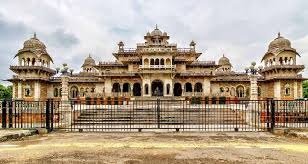
On February 21, 2025, the Albert Hall Museum will mark its 139th Foundation Day, commemorating a legacy of cultural heritage and historical significance. The museum will host a special exhibition titled ‘Albert Hall: Through the Window of the Past’ to celebrate this milestone.

The exhibition will provide a captivating glimpse into the museum’s journey from its inception to the present day. Visitors will be able to experience the evolution of this iconic institution through a unique display of photographs and artifacts. A special feature will be a series of meticulously curated motion pictures, which chronicle the museum’s journey over the years.

Dr. Pankaj Dhirendra, the museum’s director, shared insights about the exhibition and the significant role the museum plays in preserving the cultural heritage of Jaipur and India. The event promises to be a fascinating experience for both tourists and local visitors, shedding light on the history, architectural beauty, and collections that make Albert Hall Museum a cornerstone of Rajasthan’s cultural identity.

Visitors will be invited to witness the rich history of the museum, with the opportunity to explore its impressive exhibitions that span diverse fields, including art, archaeology, and ethnography. The day’s celebrations will highlight the museum’s enduring importance as a treasure trove of Rajasthan’s heritage and its continued contribution to India’s cultural landscape.