Home Blog Page 366

10 Unforgettable Nature Adventures to Enjoy with Your Kids This Summer

0

Summer is the perfect season to step outside and immerse yourself in the beauty of nature. With long, sunlit days and warm breezes, there’s no better time to embark on thrilling adventures that not only entertain kids but also deepen their understanding of the world around them. From watching fireflies dance in the night sky to stargazing under the Himalayan expanse, these experiences promise memories that last a lifetime.

So, pack your bags and get ready to explore India’s most breathtaking natural wonders with your family!

1. Firefly Watching in Maharashtra

Where to go: Purushwadi, Rajmachi, or Bhimashankar Wildlife Sanctuary
Why it’s special: Witness thousands of twinkling fireflies light up the forest in a mesmerizing display of bioluminescence.
What to do: Take an evening nature walk or camp overnight to fully soak in the glow. Teach kids about the science behind fireflies and the importance of preserving their natural habitats.

2. Tea Plucking in Munnar, Kerala

Where to go: Kolukkumalai Tea Estate or Kannan Devan Hills
Why it’s special: Kids get hands-on experience learning how tea leaves are harvested and processed.
What to do: Let them try plucking tea leaves, tour a tea factory, and sip freshly brewed tea while enjoying breathtaking mountain views.

3. Night Safaris in Jim Corbett, Uttarakhand

Where to go: Jim Corbett National Park
Why it’s special: Experience the thrill of exploring the jungle at night and spotting elusive nocturnal creatures.
What to do: Take a guided night safari to see leopards, civets, and owls while listening to the jungle’s symphony after dark.

4. Mangrove Kayaking in Goa

Where to go: Chapora River, Nerul Backwaters, or Zuari River
Why it’s special: Paddle through serene mangrove forests while spotting crabs, kingfishers, and coastal wildlife.
What to do: Teach kids about the vital role of mangroves in protecting coastlines and maintaining biodiversity.

5. Turtle Hatching in Odisha

Where to go: Rushikulya Beach or Gahirmatha Marine Sanctuary
Why it’s special: Witness thousands of Olive Ridley turtle hatchlings take their first steps towards the ocean.
What to do: Join conservationists in observing the hatching process while learning about efforts to protect these endangered creatures.

6. Coffee and Spice Farm Exploration in Coorg, Karnataka

Where to go: Madikeri or Chikmagalur plantations
Why it’s special: A sensory-rich experience where kids can touch, smell, and see how coffee and spices like cardamom and pepper are grown.
What to do: Walk through lush plantations, meet local farmers, and learn about sustainable farming.

7. DIY Bird Feeders and Bird Watching

Where to go: Your own backyard or parks like Keoladeo National Park, Bharatpur
Why it’s special: Encourages kids to connect with nature and practice patience while observing birds.
What to do: Create a bird feeder using recycled materials and track different bird species visiting your home.

8. Eco-Treks and Village Walks in Meghalaya

Where to go: Mawlynnong, Cherrapunji, or Dawki
Why it’s special: Kids learn sustainable living practices while walking through scenic, eco-friendly villages.
What to do: Trek across living root bridges, interact with locals, and explore Meghalaya’s stunning landscapes.

9. Beach Cleanup and Sand Art in Chennai

Where to go: Marina Beach or Elliot’s Beach
Why it’s special: A fun and impactful way to teach kids about environmental conservation.
What to do: Participate in a community beach cleanup and get creative with sand art after learning about the effects of plastic pollution on marine life.

10. Stargazing and Camping in Ladakh

Where to go: Pangong Lake or Nubra Valley
Why it’s special: With minimal light pollution, Ladakh offers one of the clearest night skies in India.
What to do: Camp under the stars, use a telescope to observe constellations, and inspire young astronomers to learn about the universe.

Make This Summer One to Remember

These immersive nature experiences will not only strengthen your bond with your kids but also instill in them a deep appreciation for the environment. Whether it’s firefly watching, tea plucking, or kayaking through mangroves, each activity promises adventure, education, and a treasure trove of unforgettable memories.

So, step outside, embrace the beauty of nature, and make this summer an adventure-filled season your children will cherish forever!

Kashmiri Youth Fought to Keep Tribal Girls in School & the President Recognised His Efforts

0

Kifayatullah Malik: The Torchbearer of Education in Kashmir’s Tribal Communities

In the quiet village of Lawaypora, nestled in the scenic landscape of North Kashmir’s Bandipora district, a silent revolution is unfolding. Leading this transformation is 25-year-old Kifayatullah Malik, a young social worker who has dedicated his life to ensuring that no child in his community is forced to abandon their education due to financial hardship.

Growing up, Malik witnessed the pain of seeing his friends drop out of school, their dreams crushed under the weight of domestic responsibilities and economic burdens. He could have been one of them, but he fought against the odds to stay in school, eventually becoming the first in his family to pursue higher education. Today, his mission is clear: to bring education to every child in his community, making learning a right, not a privilege.

A Personal Struggle That Sparked a Movement

Malik’s journey began with his own experiences. As the first child in his family to attend school, he understood the barriers that prevented children from completing their education. Determined to make a difference, he went on to complete a master’s in social work from Amar Singh College, Srinagar. During his college years, he gathered a group of like-minded youth to tackle the dropout crisis in Kashmir’s tribal areas.

What started as a small initiative of collecting and distributing used textbooks soon grew into a movement. “Most students throw their books away after getting promoted to the next class, but for many others, those books are a lifeline,” he recalls. Malik’s humble efforts soon gained traction, and today, he leads a team of over 10 volunteers who work tirelessly to re-enroll tribal children in schools.

Bringing Dropouts Back to School

Among the hundreds of children Malik has helped is Sumaiya, a young girl from the tribal community. Like many others, Sumaiya was forced to drop out after Class 5 as her family could only afford to educate her brother. “Watching my dreams slip away was heartbreaking,” she shares. For two years, Sumaiya remained out of school, until she met Malik.

Through personal intervention, Malik not only provided her with books and stationery but also counseled her parents on the importance of education. His efforts bore fruit—Sumaiya re-enrolled in school last year. Now, she dreams of becoming a teacher, determined to uplift other girls who face the same struggles.

The problem of school dropouts is a pressing issue in Kashmir. According to official data, the tribal community has the highest school dropout rate at the secondary level, with 14.17% overall—19.05% among girls and 10.55% among boys. Teachers like Afshana Gul from Uri have seen this reality firsthand. “As a teacher, nothing hurts more than seeing a bright student drop out,” she says. “Some of my best students from three years ago are now at home, unable to continue their studies.”

Despite the financial and logistical challenges, Malik remains undeterred. His initiative runs entirely on crowdfunding, with people contributing small amounts—Rs 100, Rs 200, or Rs 500 per month. “People trust me now. These small contributions, though minimal for them, make a big difference in fulfilling a child’s dream of education,” he says.

Beyond Schooling: Empowering Communities for Long-Term Change

Malik’s work doesn’t stop at re-enrolling students. He is also focused on empowering tribal women by helping them acquire vocational skills. “Most people in tribal areas are unaware of the resources available to them,” he explains. His team conducts awareness programs and guides families on how to leverage government schemes for skill development and self-sufficiency.

One such success story is Sadiya, a young woman who enrolled in a government-sponsored three-month stitching course after attending one of Malik’s awareness sessions. Today, she earns Rs 300-400 per day, which has significantly improved her family’s livelihood. Her village now boasts a 12-member self-help group, where women have found sustainable sources of income.

A Vision for the Future

Malik’s relentless efforts have earned him national recognition. He serves as the district coordinator for REACHA (Research and Extension Association for Conservation of Horticulture and Agroforestry) under the Smartpur project, which aims to bridge the digital divide in Kashmir’s remote areas. To Malik, this initiative is not just a project but a mission to enlighten the most marginalized communities with education and digital literacy.

His dedication has also won him numerous accolades, including:

  • The President’s Award for National Social Service (2021-22)—the first-ever recipient from the University of Kashmir.
  • The Best Forest Friend Award by the Jammu and Kashmir Social Forestry Department for his large-scale tree-planting initiatives.
  • The Ambassador of Humanity Award (2024).
  • The Global Human Rights Award.

But Malik’s work is far from over. His long-term mission is to bridge the digital literacy gap and ensure that every tribal child has access to quality education. He hopes to expand his efforts beyond North Kashmir and collaborate with NGOs to sustain and scale his initiatives.

A Ripple Effect of Change

For Malik, changing even one life can create a ripple effect. “Today, we are re-enrolling students. Tomorrow, they will be the ones advocating for education in their own families,” he says.

In the remote villages of North Kashmir, where access to education was once uncertain, opportunities are now being reclaimed. Through sheer determination and unwavering belief in the power of education, Kifayatullah Malik is proving that grassroots efforts can transform entire communities. His journey is not just about bringing children back to school—it is about rewriting the future of Kashmir, one student at a time.

Celebrating 50 Years of India’s First Hockey World Cup Triumph

0

Fifty years ago, on March 15, 1975, Indian hockey witnessed one of its greatest moments—winning its first and only Men’s Hockey World Cup. This historic victory in Kuala Lumpur, Malaysia, remains a cherished chapter in Indian sports history, marking the pinnacle of India’s dominance in international hockey.

The Journey to Glory

Under the captaincy of Ajit Pal Singh, India entered the tournament with determination and skill. The competition was fierce, with powerhouse teams like the Netherlands, Pakistan, and West Germany vying for the title. However, India displayed remarkable grit and teamwork throughout the event.

India’s campaign began with a draw against England, followed by a solid win over Australia. The team gained momentum with victories against Argentina and West Germany, securing their place in the knockout stages. In the semi-finals, India defeated Malaysia in a thrilling contest, setting up a high-stakes final against Pakistan.

The Historic Final: India vs. Pakistan

On March 15, 1975, India faced arch-rivals Pakistan in the World Cup final. The match was an intense battle, with both teams showcasing their best performances. Pakistan took an early lead, but India, refusing to back down, equalized through a brilliant goal by Surjit Singh.

The defining moment came when Ashok Kumar, son of hockey legend Dhyan Chand, scored the winning goal, securing a 2-1 victory for India. As the final whistle blew, the Indian team erupted in joy, etching their names in history as world champions.

Impact and Legacy

India’s 1975 Hockey World Cup triumph was more than just a sporting achievement; it was a moment of national pride. The victory inspired generations of young players and reinforced India’s legacy as a hockey powerhouse. The team was celebrated across the country, with heroes like Ajit Pal Singh, Ashok Kumar, and Michael Kindo becoming household names.

Despite dominating world hockey in the early 20th century, this remains India’s only World Cup victory. While Indian hockey has seen ups and downs over the decades, the 1975 win serves as a reminder of the country’s potential in the sport.

Celebrating the Golden Jubilee

As India marks 50 years of this historic win, it is an opportunity to honor the legends who made it possible and to reignite the passion for hockey in the country. Events, felicitation ceremonies, and retrospectives will commemorate this golden milestone, inspiring future generations to strive for excellence.

While Indian hockey continues its journey toward reclaiming its former glory, the memories of 1975 serve as an enduring beacon of what can be achieved with determination, teamwork, and skill. The dream of another Hockey World Cup victory lives on, fueled by the legacy of those who triumphed half a century ago.

Radhanagar Beach: India’s Hidden Gem Ranked Among Asia’s Top 5 Beaches

0

When one thinks of a beach paradise in India, the first destinations that come to mind are often the bustling shores of Goa or the tranquil retreats of Lakshadweep and Puducherry. However, a hidden jewel nestled in the Andaman and Nicobar Islands has now claimed its place among Asia’s finest. Radhanagar Beach, located on Havelock Island (Swaraj Dweep), has been ranked fifth in the prestigious TripAdvisor Travelers’ Choice Best of the Best 2025 awards, making it one of the top beaches in Asia.

A Global Recognition for India’s Pristine Shores

While Thailand’s Banana Beach secured the top spot, Radhanagar Beach’s inclusion in this elite list highlights its untouched beauty and growing global appeal. Other beaches that made it to the top 10 include Indonesia’s Kelingking Beach, South Korea’s Haeundae Beach, and the Philippines’ White Beach.

The Unparalleled Beauty of Radhanagar Beach

Unlike the often-crowded and commercialized beaches of Goa, Radhanagar Beach offers a secluded, pristine, and mesmerizing coastal experience. With powdery white sand, crystal-clear turquoise waters, and breathtaking sunsets, this stretch of coastline provides an idyllic retreat for nature lovers and solitude seekers alike.

Visitors can indulge in activities like swimming, snorkeling, trekking through lush forests, or simply unwinding by the shore, soaking in the unparalleled beauty. The calm and inviting waters make it a perfect destination for families, honeymooners, and adventure enthusiasts.

A Responsible and Sustainable Destination

Beyond its scenic allure, Radhanagar Beach stands out as an environmentally conscious destination. It has been awarded the coveted Blue Flag certification, an international recognition given to beaches that uphold high standards of cleanliness, safety, and sustainable tourism. This highlights India’s commitment to preserving its natural treasures while promoting eco-friendly travel.

Additionally, Radhanagar Beach received global acclaim when Time magazine named it one of the world’s best beaches in 2004. Over the years, its reputation has only grown, attracting travelers seeking an unspoiled tropical paradise.

How to Reach This Island Paradise

For those eager to experience Radhanagar Beach’s magic firsthand, the journey begins at Port Blair, the capital of the Andaman and Nicobar Islands. From there, travelers can take a ferry to Swaraj Dweep (Havelock Island), followed by a scenic drive through lush greenery leading directly to this breathtaking beach.

As India’s best-kept beach secret gains international recognition, Radhanagar Beach is poised to become a must-visit destination for those looking to escape into nature’s serene embrace. Whether it’s the stunning vistas, eco-conscious initiatives, or the promise of solitude, this Andaman gem continues to captivate travelers from around the world.

Meet 16-YO Racing Prodigy: From Go-Karts at 9 to Shattering Speed Limits at 210 kmph

0

Shriya Lohia: Racing Beyond Limits

“Don’t call me a woman racer; just a racer.” These words define the spirit of Shriya Lohia, a 16-year-old motorsport sensation determined to make her mark in a male-dominated field. A Class 11 student with an insatiable thirst for speed, Shriya is proving that gender is no barrier in the world of racing.

At just nine years old, she was already clocking speeds of 110 kmph in go-karts. By 15, she was pushing past 210 kmph at the Indian F4 Championships, racing towards her dream of representing India on the global stage.

A Passion Discovered by Chance

Shriya’s love for racing began during a family trip to Panchgani, Maharashtra. What started as a fun activity on a rental go-kart track quickly turned into a revelation. By the end of the trip, she made an unwavering declaration to her parents: “I want to be a racing driver.”

From Karting to Indian F4 Championships

Shriya dabbled in multiple sports growing up—tennis, basketball, swimming, and badminton—but none of them ignited her passion like racing. “I knew immediately that this was what I wanted to do,” she recalls.

Determined to support their daughter’s dream, Shriya’s parents, Ritesh and Vandana Lohia, went the extra mile. They researched training centers and realized that the best karting facilities were in Karnataka and Tamil Nadu. Despite the physical toll of traveling from Pune to Bengaluru, Shriya remained steadfast.

In 2018, at just nine years old, she began professional karting training in Bengaluru. The long journeys left her exhausted, but she persevered. “I used to rest for a full day after training; that’s how physically demanding it was,” she shares.

Her dedication paid off when she made her racing debut in the Rotax Max India Karting Championship, securing fourth place in the Micro Max category. Over the next few years, Shriya went on to win the FMSCI’s Outstanding Woman in Motorsports Award for four consecutive years and made history in 2023 as the youngest female to race and score points in the Indian F4 Championship, representing Hyderabad Blackbirds.

“We didn’t even know what go-karting was before that road trip,” she laughs, reflecting on how far she has come.

Overcoming Financial Barriers

Motorsport is an expensive pursuit, and the financial burden was significant. “Each championship cost around Rs 5-7 lakh, and the racing gear alone was a major investment,” her father Ritesh explains. Despite the challenges, the Lohia family made sacrifices to ensure Shriya’s dreams were not hindered by monetary constraints.

“Most drivers tested every weekend, but for us, even two sessions before a race were a big deal,” Shriya recalls. Yet, she made the most of every opportunity, proving that talent and determination can bridge any gap.

A breakthrough came when Shriya secured her first sponsor after one and a half years in the sport, lifting some of the financial strain from her family. “Without sponsorships, it’s nearly impossible to self-fund in motorsport,” she admits.

Her sister, Jiya Lohia, adds, “She sometimes feels guilty about being a financial burden, but we’ve never seen it that way. We’re just proud to support her passion.”

Shattering Gender Stereotypes

With over 120 races and eight awards under her belt, Shriya continues to prove that she belongs on the track. Yet, she faces an additional challenge—gender bias in racing.

“When I overtake male competitors, some get agitated, as if being beaten by a woman is unacceptable,” she shares. This often results in aggressive on-track behavior, with some racers deliberately trying to disrupt her race.

Her father, Ritesh, voices his concerns: “Already, I worry about my daughter driving at 240 kmph. The stereotypes make it even harder.”

But Shriya refuses to be deterred. “I don’t let it affect me. I focus on being the best racer I can be, not just a female racer.” She remains optimistic about change, believing that as more women enter the sport, barriers will break.

Balancing Racing and Academics

Despite her rigorous training and travel schedule, Shriya is still a 16-year-old student. To ensure her education doesn’t take a backseat, her parents opted for homeschooling.

“I balance racing and studies because I know both are important,” she asserts. She covers her syllabus during off-racing periods, ensuring she doesn’t fall behind.

Though she sometimes misses the social aspect of regular school, she recognizes the once-in-a-lifetime opportunity she’s pursuing.

A Future in Formula 1?

Shriya’s dedication has not gone unnoticed. She received the Pradhan Mantri Rashtriya Bal Puraskar in 2022, an achievement she sees as a milestone for both her and motorsport in India. “Motorsport isn’t widely recognized in India, so being acknowledged by the Prime Minister was a huge step forward,” she says.

As she speeds toward her ultimate dream—competing in Formula 1—Shriya remains steadfast in her mission to inspire young racers. “Motorsport is tough, but I’m ready to give it my all,” she declares.

With every lap she completes and every barrier she breaks, she’s not just racing for herself; she’s paving the way for future generations of female racers. Her message to aspiring athletes? “Focus on your goals and don’t listen to the naysayers. Your talent and dedication will speak louder than any criticism.”

Sunita Williams, Butch Wilmore to return to Earth on March 18: NASA

0

Nine Months in Orbit: Stranded NASA Astronauts Finally Set to Return Home

After more than nine months aboard the International Space Station (ISS), NASA astronauts Butch Wilmore and Suni Williams are finally coming home. What was initially planned as a brief mission turned into an extended stay in orbit due to an unexpected technical failure, capturing global attention and sympathy.

A Long-Delayed Return

NASA has confirmed that Wilmore and Williams, who have been on the ISS since June 2024, will return to Earth on Tuesday, March 18, 2025. Their journey home will be aboard a SpaceX Crew Dragon capsule, alongside fellow astronaut Nick Hague and Russian cosmonaut Aleksandr Gorbunov. The capsule, which docked at the ISS early Sunday, is set for an ocean splashdown off the Florida coast at approximately 5:57 p.m. ET (2157 GMT), a day earlier than initially planned.

“The updated return target continues to allow the space station crew members time to complete handover duties while providing operational flexibility ahead of less favorable weather conditions expected for later in the week,” NASA stated.

A Mission That Became an Ordeal

Wilmore and Williams’ extended stay was far from the standard six-month ISS rotation. Their mission took an unexpected turn when the Boeing Starliner, the spacecraft they were testing on its maiden crewed voyage, suffered propulsion issues, rendering it unsafe for their return. Initially designed as a short-duration flight, their journey instead became a months-long wait for a safe return option.

While their prolonged time in space is notable, it falls short of the 371-day record set by NASA astronaut Frank Rubio in 2023, or the world record of 437 continuous days set by Russian cosmonaut Valeri Polyakov aboard the Mir space station. However, the circumstances of their extended mission—being stranded far from home with limited supplies—made their situation unique. Additional clothing and personal care items had to be sent up, as they had only packed for a brief trip.

The Final Countdown

NASA and SpaceX are closely monitoring conditions for the return journey, which will be broadcast live starting Monday evening, as hatch closure preparations begin. This long-awaited homecoming will mark the end of an unexpected yet historic chapter in modern space exploration.

As Wilmore and Williams prepare to leave behind the weightlessness of space, they do so with the knowledge that they have contributed invaluable data to future missions—particularly regarding the resilience and adaptability required for prolonged human presence in orbit. Their experience will likely shape the future of space travel as NASA and its partners continue to push the boundaries of human exploration.

For now, though, their focus is on something much simpler but just as monumental—setting foot on solid ground once again.

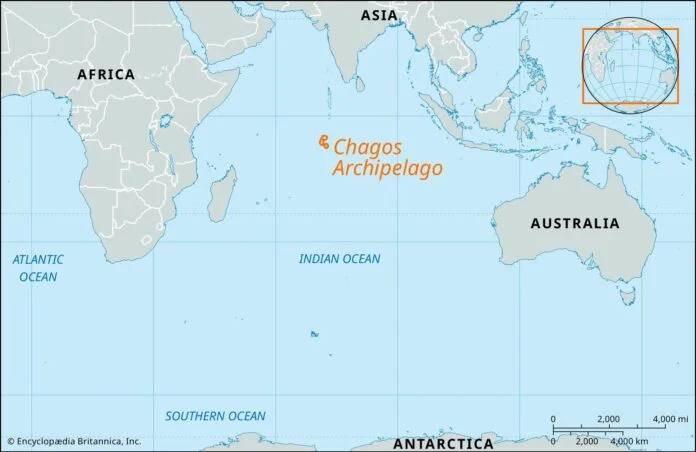
What is Chagos Archipelago?

0

The Chagos Archipelago, situated in the Indian Ocean, has long been at the center of a territorial dispute between Mauritius and the United Kingdom. Although Mauritius gained independence in 1968, the UK retained control over the islands, leading to decades of diplomatic tensions. Recent developments have seen the UK formally acknowledge Mauritius’ claims over the archipelago, yet key concerns remain—particularly regarding Diego Garcia, which hosts a strategic military base.

Historical Background

The Chagos Archipelago consists of over 60 islands, with Diego Garcia being the largest. Originally uninhabited, the archipelago saw its first permanent settlements in the 18th century. The French laid claim to the islands in the 1700s, but British control was established following the Napoleonic Wars. Over time, the islands were used for plantations, heavily relying on slave and indentured labor.

Creation of the British Indian Ocean Territory

In 1965, the UK formed the British Indian Ocean Territory (BIOT), which included the Chagos Archipelago. This move was part of a broader strategy to maintain a military presence in the Indian Ocean during the Cold War. As part of the agreement, the UK paid Mauritius £3 million for the detachment of Chagos, a decision that remains contentious to this day.

Strategic Importance of Diego Garcia

The United States established a military base on Diego Garcia in the 1970s, leading to the forced expulsion of the indigenous Chagossian population, who were relocated to Mauritius and Seychelles. By 1986, the base was fully operational, playing a crucial role in US military operations, particularly in the Middle East and the Indo-Pacific region.

International Legal Challenges

Mauritius has long contested British control over Chagos. In 2017, the United Nations General Assembly sought an advisory opinion from the International Court of Justice (ICJ) regarding the legal status of the islands. In 2019, the ICJ ruled that the UK must end its administration of Chagos. Following this, the UN General Assembly passed a resolution calling for the UK’s withdrawal.

Recent Developments

In 2024, the UK and Mauritius reached a historic agreement recognizing Mauritius’ sovereignty over Chagos while permitting the UK to maintain control over Diego Garcia for 99 years. However, this agreement has sparked controversy, particularly among the Chagossians, who feel excluded from discussions about their future and potential resettlement.

Geopolitical Concerns and Future Prospects

The agreement has raised concerns over China’s growing influence in the Indian Ocean, especially as Mauritius strengthens economic and strategic ties with Beijing. Critics argue that the deal could shift the region’s power dynamics. Meanwhile, the future of the displaced Chagossian community remains uncertain, with ongoing debates about resettlement and compensation.

As diplomatic negotiations continue, the Chagos Archipelago remains a symbol of colonial legacy, military strategy, and unresolved historical grievances. The world will closely watch how this agreement shapes regional stability and the fate of the Chagossian people.

Astra Missile Test Launch: A Significant Leap in India’s Defence Capabilities

0

Recently, the Aeronautical Development Agency (ADA) successfully conducted a test launch of the Astra missile from the Light Combat Aircraft (LCA) AF MK1 prototype. This milestone event took place off the coast of Chandipur, Odisha. The successful launch demonstrated the missile’s accuracy and effectiveness, marking significant progress in India’s indigenous defence capabilities.

About the Astra Missile

The Astra is a state-of-the-art Beyond Visual Range Air-to-Air Missile (BVRAAM) developed by the Defence Research and Development Organisation (DRDO). It is designed to engage and neutralize aerial threats at distances exceeding 100 kilometres. Equipped with advanced guidance and navigation systems, the Astra missile ensures high precision in striking enemy targets, reinforcing India’s aerial combat superiority.

Integration with Indian Air Force

The Astra missile has already been inducted into the Indian Air Force (IAF), significantly enhancing India’s air defence capabilities. As part of a phased deployment strategy, the missile is being integrated not only with the indigenous LCA Tejas but also with the Indian Navy’s Mig-29 fighter jets, boosting India’s operational readiness across multiple platforms.

Test Launch Details

During the recent test, the Astra missile successfully engaged and destroyed a designated flying target. All subsystems performed optimally, meeting mission parameters and objectives. This test follows the maiden launch of Astra from the LCA in August 2023, further validating the missile’s advanced capabilities and reliability.

Collaboration and Development

The development of the Astra missile is a testament to India’s strong research and development ecosystem. The project has been a collaborative effort involving multiple organisations, including ADA, DRDO, Hindustan Aeronautics Limited (HAL), the Centre for Military Airworthiness and Certification (CEMILAC), and the Directorate General of Aeronautical Quality Assurance (DG-AQA). Their joint efforts have played a crucial role in advancing India’s indigenous defence systems.

Significance of Beyond Visual Range (BVR) Missiles

Beyond Visual Range (BVR) missiles are crucial in modern air combat scenarios. They allow fighter aircraft to engage enemy targets from distances exceeding 20 nautical miles (approximately 37 kilometres), ensuring a strategic advantage. This capability enables aircraft to neutralize threats while minimizing exposure to enemy air defences, a key factor in modern warfare.

Future Prospects

Further trials of the Astra missile are planned to enhance performance evaluation and operational effectiveness. The successful test launch marks a crucial step in India’s journey toward self-reliance in advanced defence technologies. Defence Minister Rajnath Singh and DRDO Chairman Dr Samir V. Kamat have lauded the collaborative efforts of all teams involved in the Astra project, reaffirming India’s commitment to strengthening its indigenous defence capabilities.

RBI Announces ‘On Tap’ Cohort Within Regulatory Sandbox

0

RBI Governor Sanjay Malhotra recently unveiled plans for a dedicated ‘On Tap’ cohort within the Reserve Bank of India’s (RBI) Regulatory Sandbox. This initiative is designed to foster innovation in the financial sector, particularly in addressing climate change and promoting sustainable finance.

Regulatory Sandbox and Financial Innovations

The RBI’s Regulatory Sandbox serves as a controlled environment for fintech companies to test and refine new financial products before full-scale deployment. Over time, this initiative has facilitated various technological advancements in the financial ecosystem. The introduction of the ‘On Tap’ cohort specifically targets climate change risks and sustainable finance, encouraging solutions that address these pressing global concerns.

Understanding Climate Change Risks in Finance

Climate change poses a multifaceted challenge to the financial sector, requiring a dual approach:

  1. Facilitative Dimension: This involves building capacity and creating an ecosystem conducive to green finance, ensuring that financial institutions are equipped to support sustainable initiatives.
  2. Prudential Dimension: This focuses on managing the risks associated with climate change in the financial sector, helping institutions navigate regulatory and economic uncertainties.

Both aspects are critical for ensuring financial stability and regulatory preparedness in the face of environmental changes.

The Role of Central Banks in Climate Risk Management

Globally, central banks are increasingly acknowledging their role in addressing climate-related financial risks. In advanced economies, central banks tend to adopt an asset-neutral approach, ensuring that financial markets operate without bias towards specific sectors. In contrast, emerging markets and developing economies (EMDEs) often implement directed lending policies to support key industries such as renewable energy. This targeted approach aims to align financial systems with broader sustainability goals.

Prudential Risks in Financial Markets

Climate change introduces a range of financial risks, including:

  • Credit Risk: Increased default rates due to climate-related disruptions.
  • Market Risk: Fluctuations in asset values driven by environmental policies and market sentiment.
  • Operational Risk: Infrastructure vulnerabilities due to extreme weather events.

Recognizing these threats, the RBI seeks to strengthen its regulatory framework and support capacity building among financial institutions to mitigate climate-related financial risks.

Challenges in Green Financing

One of the primary hurdles in advancing green finance is the elevated credit risk associated with emerging technologies. Many sustainable innovations lack an extensive performance history, making it difficult for financial institutions to assess their reliability. Consequently, lenders must develop expertise in evaluating green projects to ensure sound financial decision-making.

Impact on the Real Economy

The implications of climate change extend beyond the financial sector, affecting industries such as manufacturing, agriculture, and small and medium enterprises (SMEs). To address these widespread challenges, coordinated efforts between financial regulators, government agencies, and corporate entities are essential. The RBI’s new ‘On Tap’ cohort represents a proactive step in fostering financial resilience against climate-related disruptions, ensuring that India’s economy remains robust and sustainable in the long run.

With this initiative, the RBI reaffirms its commitment to integrating climate risk considerations into the financial system, paving the way for a more sustainable and resilient economy.

India’s Space De-Docking Breakthrough: ISRO’s Historic Achievement

0

On January 16, 2025, the Indian Space Research Organisation (ISRO) achieved a major milestone in space exploration by successfully docking two satellites, SDX01 and SDX02. Just two weeks later, on January 30, ISRO completed a complex de-docking process, further demonstrating its growing expertise in space operations. With this accomplishment, India joins an elite group of nations capable of executing advanced space docking and de-docking maneuvers, a crucial step toward future space missions.

Understanding Docking and De-Docking

Docking is a precise space operation where two spacecraft connect in orbit, requiring meticulous alignment of speed and orientation. It is a key capability for space station operations, refueling, and deep-space missions. While docking itself is a highly controlled maneuver, de-docking presents its own set of challenges. It involves the careful separation of spacecraft without causing unintended drift or collision in the microgravity environment of space.

The Complexity of De-Docking

Unlike a simple disengagement, de-docking requires remote execution of multiple steps. Latches and hooks must be carefully released, and if a pressurized tunnel connects the spacecraft, it must be safely decompressed before separation. The process demands precision to ensure that even minimal forces do not lead to unexpected drift, making low-force separation techniques critical.

The SpaDex Mission and Its Significance

The SpaDex (Space Docking Experiment) mission, launched on December 30, 2024, was designed to demonstrate India’s ability to execute autonomous docking and de-docking with small spacecraft. The mission, carried out using a Polar Satellite Launch Vehicle (PSLV), involved SDX01 and SDX02 working in tandem to perform these sophisticated maneuvers. This mission paves the way for future advancements in satellite servicing, space station development, and interplanetary exploration.

Future Missions and Applications

ISRO’s success in docking and de-docking is expected to play a critical role in upcoming missions, including:

  • Chandrayaan-4: A lunar sample return mission requiring advanced docking capabilities.
  • Gaganyaan: India’s first crewed spaceflight, which will need docking technology for orbital maneuvers and future space station missions.
  • In-Space Refueling: Mastering docking will allow satellites to refuel in orbit, significantly extending their operational lifetimes and reducing the cost of launching replacements.

What Lies Ahead

Following this achievement, ISRO plans to conduct additional experiments starting March 15, 2025. The unified satellite system remains in an elliptical orbit, offering periodic opportunities to refine docking technologies every two months. These future tests will further strengthen India’s position in the global space industry and prepare ISRO for more ambitious missions in the years to come.

With this technological leap, ISRO not only enhances India’s space capabilities but also positions itself as a leader in autonomous satellite operations, setting the stage for a new era of space exploration.