Home Blog Page 337

The Future Circular Collider: A Giant Leap in Particle Physics

0

In the realm of cutting-edge science, few projects match the scale and ambition of CERN’s Future Circular Collider (FCC). Unveiled in 2025 as the successor to the renowned Large Hadron Collider (LHC), the FCC promises to push the boundaries of physics, unlocking mysteries of the universe that remain unsolved. With an estimated budget of $17 billion, this colossal initiative stands as one of the most significant scientific undertakings in history.

A Vision for the Future

The FCC will be housed within a 91-kilometre underground circular tunnel beneath the French-Swiss border. This vast infrastructure will support two distinct operational phases. The first phase, expected to launch around 2046, will feature an electron-positron collider. The second phase, scheduled for 2070, will introduce a proton-proton collider capable of reaching unprecedented energy levels.

Pushing the Limits of Physics

At the heart of the FCC’s mission lies a quest to probe the fundamental nature of reality. Scientists hope to explore the enigmatic realms of dark matter and dark energy, phenomena that constitute the majority of the universe but remain largely unexplained. The collider will also investigate the properties of fundamental particles, potentially discovering entities even smaller than electrons. With projected energy levels of 100 trillion electronvolts—seven times the LHC’s maximum capacity—the FCC could pave the way for groundbreaking discoveries in particle physics.

Advancing Scientific Innovation

To achieve such ambitious goals, the FCC will leverage cutting-edge technology, including next-generation superconducting magnets, state-of-the-art cryogenic systems, and ultra-high vacuum environments. These advancements are not only vital for particle physics but could also lead to technological breakthroughs with applications in various industries, from medical imaging to quantum computing.

Environmental and Ethical Considerations

As with any large-scale scientific project, the FCC is subject to scrutiny regarding its environmental and economic impact. CERN has pledged to conduct comprehensive environmental assessments, with independent experts evaluating the project before a final decision is made by CERN’s member states in 2028. However, some critics argue that the immense funding could be better allocated to smaller-scale research projects, sparking debates on the sustainability of such a vast scientific endeavor.

Building on the Legacy of the LHC

Since its inception in 2008, the LHC has revolutionized our understanding of the universe. Perhaps its most famous achievement was the confirmation of the Higgs boson, a cornerstone of the Standard Model of particle physics. The FCC seeks to build on this legacy, potentially uncovering new forces of nature and redefining our grasp of the cosmos.

A Monumental Opportunity for Science

The Future Circular Collider represents more than just a technological marvel—it embodies humanity’s relentless pursuit of knowledge. While its success hinges on securing funding and overcoming engineering challenges, its potential to reshape our understanding of physics is unparalleled. If realized, the FCC could mark the dawn of a new era in scientific discovery, transforming not only the field of particle physics but the future of innovation itself.
Bagh Printing In Madhya Pradesh: This 1000-Year-Old Art Bespeaks Tale of Ancient Handcraft Traditions Which Used Natural Dyes…

0

Madhya Pradesh, often referred to as the “heart of India,” is renowned for its rich cultural heritage and handicrafts. Among these treasures is the Bagh Hand Block Print, a traditional art form originating from the village of Bagh in the Dhar district of Madhya Pradesh. This craft not only showcases the skill of local artisans but also keeps alive India’s ancient handcraft traditions through the use of natural dyes and intricate designs. In this article, we will explore the origins of Bagh printing, its evolution, and its current value in India and the world.

The Origins of Bagh Print
Pinpointing the exact origin of Bagh printing is challenging, but it is believed to be over 1,000 years old. The art form derives its name from Bagh village, situated on the banks of the Baghini River. Its roots are traced back to Sindh (now in Pakistan), from where artisans of the Khatri community migrated to Madhya Pradesh around 400-500 years ago. The Khatri community, known for their expertise in textile dyeing and printing, originally practiced Ajrakh printing in Sindh. It is said that these artisans first settled in the Marwar region of Rajasthan, then moved to Manawar in Madhya Pradesh, and finally established themselves permanently in Bagh village by 1962.
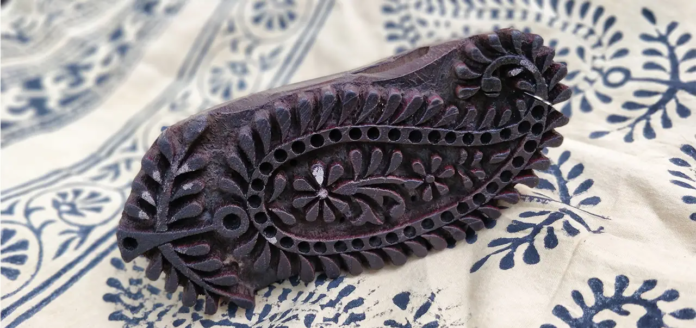
The choice of Bagh was influenced by the Baghini River, whose water is rich in copper content. This water enhances the vibrancy of natural dyes, a defining feature of Bagh prints. The technique involves using wooden blocks to imprint geometric and floral patterns onto fabric. Initially, this art was used to create traditional garments like lugda (a type of sari) and ghaghra (skirts) for local tribal communities such as the Bhil and Bhilala. Artisans like Ismail Suleman Khatri played a pivotal role in refining and modernising this craft, elevating it to new heights.

Process and Characteristics
The process of Bagh printing is labor-intensive and eco-friendly. It relies on natural dyes, such as alizarin for red and a mixture of rusted iron and jaggery for black. The fabric is first soaked in a solution of salt, castor oil, and goat dung, then dried in the sun. Wooden blocks are then used to stamp designs onto the fabric, which is subsequently washed in the flowing waters of the river. This process ensures the colors are permanent and vibrant. Bagh prints are distinguished by their striking combination of red, black, and white hues, along with intricate patterns that set them apart from other printing techniques.

Current Value in India and the World

Today, Bagh printing has gained recognition not only in India but also globally. In 2008, it was awarded the Geographical Indication (GI) tag, certifying its regional uniqueness and quality. In India, Bagh prints are popular in sarees, dupattas, kurtas, bedsheets, and home décor items. Their price varies depending on the complexity and materials used. A typical Bagh print saree may cost between ₹1,500 and ₹5,000, while high-quality silk sarees can fetch ₹10,000 or more.
In the global market, the demand for Bagh prints is growing among environmentally conscious consumers and handicraft enthusiasts. Countries in Europe, the United States, and beyond have embraced it, with fashion designers and interior decorators incorporating it into their work. Internationally, a Bagh print product can range from $20 to $100 or more, depending on the design and fabric quality. Its appeal lies in its eco-friendliness and natural beauty, qualities that modern machine printing cannot replicate.

Bagh hand block printing is a vibrant symbol of Madhya Pradesh’s cultural heritage. From its origins with the migratory journey of the Khatri community to its current status on the global stage, this art form has come a long way. It serves as a source of livelihood for artisans while showcasing India’s rich handicraft tradition. Preserving and promoting this invaluable legacy is a collective responsibility, ensuring that future generations can continue to appreciate its beauty and significance.

Batto Bai Dolls: A Handcrafted Legacy from Madhya Pradesh Earns Global Eyeballs

0

Imagine a world where scraps of cloth, a sprinkle of clay, and a dash of creativity weave together to give birth to something magical—dolls that whisper stories of tradition, resilience, and rural charm. Welcome to the captivating realm of Batto Bai dolls, a vibrant handicraft hailing from the heart of India, Madhya Pradesh. These aren’t just dolls; they’re tiny ambassadors of culture, dressed in bright fabrics and brimming with history. Let’s embark on a journey through time to uncover how this art began, how it blossomed, and what it’s worth today—both in India and across the globe.

Batto Bai Dolls: A Handcrafted Legacy from Madhya Pradesh Earns Global Eyeballs

The Spark of Creation: A Craftswoman’s Dream
Our story begins in the bustling heritage city of Gwalior, where a spirited woman named Batto Bai dared to dream with her hands. Decades ago, in a humble home, she learned the art of doll-making from her mother-in-law, turning everyday materials—rags, paper, clay, cotton, wires, and bamboo—into something extraordinary.

What started as a personal craft soon became a legacy, named after the enterprising craftswoman herself. Batto Bai’s dolls, often called “Gudda-Gudiya” (boy and girl dolls), were more than toys; they were reflections of rural Madhya Pradesh life, adorned in traditional attire and bursting with character.

Her creations weren’t solitary figures—they came in pairs, a tradition tied to the auspicious festival of Akha Teej. Young girls would buy these pairs, stage miniature weddings for them, and pray for their own happy unions. With every stitch and splash of organic color, Batto Bai breathed life into her dolls, capturing the essence of Gwalior’s vibrant culture. Word of her talent spread, and soon, her family joined in, passing the craft down through generations. Today, her fourth generation carries the torch, keeping her vision alive in a modern world.

From Humble Homes to Global Horizons
What began in the dusty lanes of Gwalior didn’t stay confined there. The Batto Bai dolls, with their rustic charm and tribal flair, caught the eye of travelers and art lovers alike. Crafted with sustainable materials and painted with permanent organic hues, these dolls—ranging from a few inches to an impressive two feet tall—became symbols of Madhya Pradesh’s rich heritage. Markets like Laskar, Bada, and Nai Sadak in Gwalior buzzed with their presence, while annual fairs showcased their allure to wider audiences.
But the dolls didn’t stop at India’s borders. Their exotic appeal and handcrafted uniqueness found fans in far-off lands—Japan, France, Australia, and the USA among them. From home decor to collector’s treasures, Batto Bai dolls transcended their origins, proving that art born from simplicity can resonate universally. In Bhopal and Jhabua, too, artisans embraced the craft, adding their own regional twists, yet the soul of Batto Bai’s vision remained intact.

The Worth of a Legacy: India and Beyond

So, what are these dolls worth today ? In India, their value is twofold—monetary and cultural. A pair of Batto Bai dolls starts at a modest ₹100-200 in Gwalior’s local markets, making them accessible to all. Yet, their true price lies in their storytelling power. They’re not just purchases; they’re heirlooms, gifts, and tokens of tradition. During festivals, their demand spikes as families seek them for rituals and decorations, cementing their place in Madhya Pradesh’s cultural fabric.
Globally, the dolls have carved a niche in the handicraft market. Exported in large numbers, they fetch higher prices abroad, often ranging from $5 to $20 per pair, depending on size, craftsmanship, and destination. Art collectors and enthusiasts prize them for their authenticity and the human touch they embody—a stark contrast to mass-produced toys. In countries like Japan and the USA, they’re celebrated as exotic decor pieces, while in Europe, they’re admired for their sustainable craftsmanship. Their worth isn’t just in dollars or rupees; it’s in the bridges they build between cultures, carrying Madhya Pradesh’s spirit to the world.

A Living Art in a Modern Age

The Batto Bai dolls are more than a craft—they’re a testament to resilience. In an era dominated by technology and fast fashion, this art form endures, thanks to the dedication of artisans like Bharat Singh Parihar, Batto Bai’s grandson, and his family. Challenges like modernisation and competition loom large, but the dolls’ charm persists, fueled by their handmade allure and the stories they tell. Efforts to preserve this heritage—through fairs, exhibitions, and tourism—ensure that Batto Bai’s legacy doesn’t fade.
As we stand in 2025, these dolls are a reminder that beauty lies in the hands that create. In India, they’re a cultural heartbeat; worldwide, they’re a whisper of tradition in a globalized world. So, next time you spot a pair of Batto Bai dolls, don’t just see them—listen. They’re singing the song of Madhya Pradesh, one stitch at a time

Bamboo Art Speaks the Story of Timeless Artistry in Heartland of India, Madhya Pradesh

0

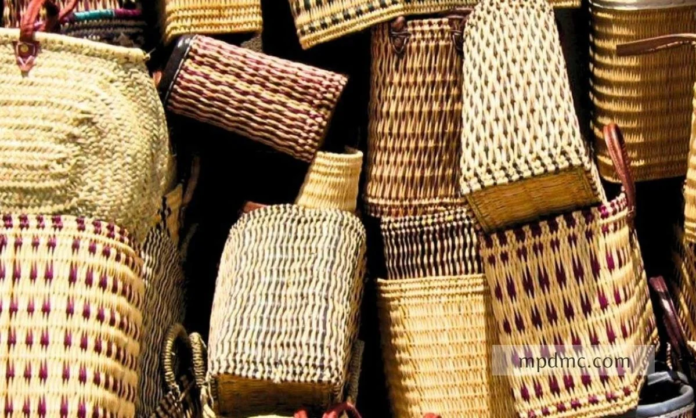
Did you ever think about a Bamboo can be a source of art too? No ?? Here comes an interesting story of bamboos.. There is a place in India where the rustle of bamboo thickets whispers tales of ancient forests, where skilled hands transform humble stalks into objects of utility and beauty, and where the heartbeat of rural life pulses through every woven strand.

This is Madhya Pradesh, the heart of India, a state cradled by lush greenery and vibrant tribal cultures. Here, bamboo craft is not merely an art—it’s a living connection to the past, a bridge between nature and humanity, and a testament to the ingenuity of its people. From the dense jungles of Shahdol to the rolling hills of Mandla, the craft has flourished for centuries, intertwining the lives of the Gond, Baiga, Korku, and Basor tribes with the resilient bamboo that surrounds them. What began as a necessity has evolved into a celebrated tradition, its worth resonating across India and the world.

The Origins: A Craft Born of Necessity and Nature

The story of bamboo craft in Madhya Pradesh stretches back to a time when tribal communities roamed the forests, their lives intricately tied to the land. Bamboo, abundant and versatile, was their companion—a “poor man’s timber” that offered endless possibilities. Historical records may not pinpoint an exact moment of origin, but the craft’s roots are as old as the tribal settlements themselves, likely dating back centuries. In regions like Balaghat, Seoni, Shahdol, and Mandla, where bamboo grows in profusion, the Gond and Baiga tribes began shaping it into tools for survival: fishing traps to snare the bounty of rivers, hunting implements to navigate the wild, and baskets to carry the fruits of their labor. The Korku and Basor communities joined in, each adding their unique flair to the craft.

This was no mere trade; it was a way of life. Passed down from generation to generation, the knowledge of bamboo weaving was a sacred inheritance, taught by elders under the shade of ancient trees. The artisans learned to split bamboo with precision, to bend its flexible culms without breaking them, and to weave patterns that mirrored the rhythms of their environment. Over time, these utilitarian objects—agricultural implements, mats, and doors—became symbols of resilience, reflecting a deep harmony between the people and the forests they called home.

Evolution Through the Ages

As centuries unfolded, the bamboo craft of Madhya Pradesh adapted to changing tides. The arrival of new tools and techniques allowed artisans to refine their work, blending age-old methods with innovation. What was once solely functional began to take on decorative forms—intricate baskets, elegant furniture, and ornamental pieces that caught the eye of local markets. The craft’s evolution was spurred by necessity and opportunity alike; the abundance of bamboo in Madhya Pradesh, which boasts the largest forest area in India, ensured a steady supply, while the skill of its tribal artisans gave it a distinctive edge.
The state government recognized its potential, promoting it as a source of livelihood and cultural pride. Communities like the Basor, traditionally bamboo craftsmen, found their work elevated from weekly haats (markets) to broader platforms. The craft began to weave its way into urban homes, with chairs, tables, and lamps crafted in wicker style finding favor among modern decorators. Yet, its soul remained rooted in the villages, where the sound of splitting bamboo and the scent of drying culms still fill the air.

The Worth in India Today

In contemporary India, the bamboo craft of Madhya Pradesh holds a dual significance: economic and cultural. Economically, it sustains thousands of rural families, particularly in tribal belts. The state’s vast bamboo resources—covering over 20% of India’s bamboo area—generate employment, with harvesting alone creating millions of man-days annually. The National Bamboo Mission has further amplified its impact, encouraging sustainable cultivation and cottage industries that process bamboo into marketable goods. From humble mats to sophisticated home décor, these products fetch modest but vital income for artisans, empowering communities like the Baiga and Gond to preserve their heritage while adapting to modern demands.

(This article is written by Anjali Solanki)

Rajasthan Utsav 2025 in New Delhi: Women Artisans Generate Over ₹50 Lakh in Sales

0

The nine-day Rajasthan Utsav 2025 concluded on Wednesday at Bikaner House, New Delhi, leaving behind a vibrant celebration of Rajasthani art, culture, handicrafts, and cuisine. The festival, which attracted Delhiites and non-resident Rajasthanis, showcased traditional handicrafts crafted by women from self-help groups associated with the Rajasthan Rural Livelihood Development Council (Rajivika). Around 60 stalls displayed a diverse range of Rajasthani folk art and products, with live demonstrations by skilled artisans captivating visitors.

Rajasthan Utsav 2025 in New Delhi: Women Artisans Generate Over ₹50 Lakh in Sales

Handmade Creations Draw Buyers

Ramesh Kumar, who managed the fair operations on behalf of Rajivika, reported that artisans recorded over ₹50 lakh in sales. Stalls featured a variety of handmade products, including handicrafts, clothing, jewelry, organic goods, and traditional Rajasthani cuisine. Visitors not only admired these unique creations but also made significant purchases, providing a boost to the artisans.

Kumar emphasized that selling self-help group products at the fair empowered rural women financially while also granting their crafts national recognition. The festival received an overwhelming response, with attendees appreciating the artistry and authenticity of the handmade items.

Rajasthan Utsav 2025 in New Delhi: Women Artisans Generate Over ₹50 Lakh in Sales

A Blend of Culture and Fun

The festival, inaugurated by Chief Minister Bhajanlal Sharma, also featured engaging activities such as a painting competition, mehndi competition, golgappa eating contest, and traditional Rajasthani games. The top participants in these events were awarded consolation prizes, adding to the festive spirit.

Rajasthan Utsav 2025 once again proved to be a platform that not only celebrated the state’s rich heritage but also uplifted its artisans, ensuring their craftsmanship reaches a wider audience.

India Becomes Global Leader in Locomotive Manufacturing; Surpasses US, Europe & Australia

0

India has emerged as a global leader in railway locomotive manufacturing, achieving a record production of 1,681 locomotives in the financial year 2024-25. This milestone surpasses the total locomotive production of regions such as the United States, Europe, South America, Africa, and Australia, reaffirming India’s growing dominance in the global railway sector.

India Becomes Global Leader in Locomotive Manufacturing; Surpasses US, Europe & Australia

Indian Railways’ locomotive manufacturing units have achieved a remarkable milestone by producing 1,681 locomotives in various categories during the financial year 2024-25. This marks an increase of 209 locomotives, or 19%, compared to the 1,472 locomotives produced in the previous financial year 2023-24. This record-breaking production is the highest ever for locomotive manufacturing in the country, reflecting the significant achievements of all units in enhancing railway infrastructure and capacity.

The continuous rise in locomotive production is a direct result of strategic decisions taken to strengthen the “Make in India” initiative. Between 2004 and 2014, India produced a total of 4,695 locomotives, with a national annual average of 470. In contrast, from 2014 to 2024, locomotive manufacturing witnessed a significant surge, with 9,168 locomotives produced, raising the annual average to approximately 917.

In the financial year 2024-25, Indian Railways achieved a record production of 1,681 locomotives across its manufacturing units. The production was distributed as follows: Chittaranjan Locomotive Works manufactured 700 locomotives, Banaras Locomotive Works produced 477, Patiala Locomotive Works contributed 304 locomotives and 100 locomotives each were manufactured at the Madhepura and Marhowrah units

The majority of the locomotives produced in the country were intended for freight trains. Among the 1,681 locomotives produced in the financial year 2024-25, the breakdown is as follows:

  • WAG-9/9H locomotives: 1,047
  • WAG-9HH locomotives: 7
  • WAG-9 Twin locomotives: 148
  • WAP-5 locomotives: 2
  • WAP-7 locomotives: 272
  • NRC locomotives: 5
  • WAG-12B locomotives: 100
  • WDG 4G/6G locomotives: 100

Poonam Gupta Is New Deputy Governor at RBI. Know Her Qualification And Professional Background…

0

India on Wednesday appointed former World Bank and International Monetary Fund economist Poonam Gupta as a Deputy Governor at the Reserve Bank of India (RBI). Gupta’s appointment comes at a crucial time, as the RBI is in the midst of a monetary policy easing cycle.

According to a report by Bloomberg, an Indian official, speaking on condition of anonymity in line with government regulations, stated that Gupta has been appointed for a three-year term. Her expertise in global finance and policy is expected to contribute significantly to the RBI’s decision-making process during this period of economic transition.

The Appointments Committee of the Cabinet has approved the appointment of Poonam Gupta, a member of the Economic Advisory Council to the Prime Minister. Before leading the National Council of Applied Economic Research (NCAER), she served as Lead Economist for Global Macro and Market Research at the International Finance Corporation. Her past roles also include professor at the Indian Council for Research on International Economic Relations and the Delhi School of Economics, as well as a researcher at the International Monetary Fund (IMF).

Educational Background

  • Ph.D. in Economics – University of Maryland, College Park (1998)
  • Specialization: Macroeconomics, International Finance, and International Trade
  • M.A. in Economics – University of Maryland, College Park (1995)
  • M.A. in Economics – Delhi School of Economics (1991)
  • B.A. in Economics – Hindu College, Delhi University (1989)

She won the 1998 EXIM Bank award for her PhD in international economics.

Jantar Mantar: India’s Timeless Observatory That Still Reads the Cosmos Precisely

0

The Jantar Mantar in Jaipur stands as one of the most extraordinary astronomical observatories in the world. Constructed in the early 18th century by Maharaja Sawai Jai Singh II, this observatory is a remarkable fusion of science, astronomy, and architectural ingenuity. Designed to observe celestial bodies with the naked eye, its instruments embody precision and monumental craftsmanship. Today, Jantar Mantar is not just a UNESCO World Heritage Site but a testament to India’s advanced understanding of astronomy centuries ago.

Historical Significance

Maharaja Sawai Jai Singh II, an erudite ruler with a deep passion for astronomy, commissioned five observatories across India—Jaipur, Delhi, Ujjain, Mathura, and Varanasi. The Jantar Mantar in Jaipur, completed in 1734, is the most extensive and well-preserved among them. Jai Singh II drew inspiration from Islamic, Hindu, and European astronomical traditions, making Jantar Mantar a unique confluence of scientific cultures. It was used to refine astronomical tables, improve calendar calculations, and provide astrological predictions.

The Astronomical Instruments and Their Uses

The Jantar Mantar consists of around 20 large-scale astronomical instruments, each designed with a specific purpose. These instruments remain operational and provide insight into celestial movements even today.

1. Samrat Yantra (The Supreme Instrument)

Jantar Mantar: India’s Timeless Observatory That Still Reads the Cosmos Precisely
  • The world’s largest sundial, towering at 27 meters, accurately measures time down to 2 seconds.
  • The shadow cast by its gnomon moves approximately the width of a human hand every minute, demonstrating the precision of ancient Indian astronomical tools.
  • It also helps determine the declination of celestial bodies.

2. Jai Prakash Yantra (The Celestial Hemisphere)

Jantar Mantar: India’s Timeless Observatory That Still Reads the Cosmos Precisely
  • This hemispherical instrument consists of two complementary structures, allowing for accurate readings of celestial altitudes.
  • It helps determine the positions of stars and planets with impressive precision.

3. Ram Yantra (The Altitude-Measuring Device)

Jantar Mantar: India’s Timeless Observatory That Still Reads the Cosmos Precisely
  • Used to measure the altitude and azimuth of celestial objects.
  • Features open circular structures with suspended crosswires that enable direct observations.

4. Rashivalaya Yantra (Zodiac Instruments)

Jantar Mantar: India’s Timeless Observatory That Still Reads the Cosmos Precisely
  • A collection of 12 separate devices, each dedicated to one zodiac sign.
  • Used to calculate the positioning of planets relative to different zodiac constellations, playing a vital role in astrological forecasts.

5. Narivalaya Yantra (Equatorial Sundial)

Jantar Mantar: India’s Timeless Observatory That Still Reads the Cosmos Precisely
  • Measures time based on the equatorial plane and functions with remarkable accuracy.
  • One of its two hemispherical dials remains functional throughout the year, depending on the Earth’s tilt.

6. Kapali Yantra

Jantar Mantar: India’s Timeless Observatory That Still Reads the Cosmos Precisely
  • A sophisticated instrument used to determine the coordinates of celestial bodies.
  • It allows astronomers to accurately locate stars and planets in the night sky.

7. Dakshin Bhitti Yantra (Meridional Instrument)

Jantar Mantar: India’s Timeless Observatory That Still Reads the Cosmos Precisely
  • Primarily used for observing the transit of celestial objects across the local meridian.
  • Aids in calculating the precise longitude of stars and planets.

Architectural Ingenuity and Relevance

The Jantar Mantar was an architectural marvel for its time. Each instrument was built using stone and marble, ensuring durability while allowing fine calibrations. The observatory’s layout was designed to facilitate maximum accuracy in readings without the aid of telescopes or modern tools. Today, Jantar Mantar remains relevant as a center for historical and educational study in observational astronomy.

Modern-Day Significance

Jantar Mantar’s contributions to astronomy extend beyond its historical era. While technology has evolved, the principles behind its instruments continue to be referenced in modern astronomical studies. Scholars and researchers analyze its measurements, and the site is an essential stop for students, historians, and astronomy enthusiasts. The instruments, despite their age, still function with astonishing precision, reaffirming the genius of ancient Indian astronomical science.

The observatory is also deeply tied to India’s cultural and astrological traditions. Astrologers often visit the site to study planetary alignments and make horoscopic predictions. Furthermore, it stands as a symbol of India’s scientific heritage, inspiring future generations to explore the mysteries of the cosmos.

Preservation and Challenges

Although the Jantar Mantar has survived centuries, exposure to the elements and urban expansion pose challenges to its preservation. The Rajasthan Monuments Archaeological Site and Antiquities Act of 1961 protects the observatory, but ongoing conservation efforts are crucial. Tourists and researchers must be encouraged to respect the site, ensuring that it remains a well-preserved window into India’s astronomical past.

Conclusion

The Jantar Mantar is more than just an ancient observatory; it is a bridge between the past and the future of astronomical study. The precision of its instruments showcases India’s rich scientific tradition, while its historical and cultural significance continues to inspire. As the world delves deeper into space exploration, sites like Jantar Mantar remind us that the quest to understand the cosmos is a timeless endeavor. Whether you are a scientist, historian, or curious traveler, a visit to Jantar Mantar offers a glimpse into the brilliance of India’s astronomical legacy.

The Mewar Festival: A Celebration of Heritage, Culture, and Devotion

0

Nestled in the heart of Rajasthan, the city of Udaipur comes alive each year with the vibrant hues of the Mewar Festival, a grand celebration marking the arrival of spring. This centuries-old festival, deeply rooted in Rajasthani traditions, is not just an event but a living testimony to the rich cultural heritage of the Mewar region. For locals and visitors alike, it offers an unparalleled experience of devotion, music, dance, and artistic splendor.

A Festival of Renewal and Devotion

The Mewar Festival coincides with Gangaur, a significant festival dedicated to Goddess Gauri (Parvati), symbolizing marital bliss and prosperity. Women, both married and unmarried, actively participate in rituals to seek the goddess’s blessings for a harmonious married life or a good husband. Adorned in exquisite traditional attire, they carry beautifully decorated idols of Gauri and Shiva through the streets of Udaipur, culminating in a grand procession to Lake Pichola, where the idols are immersed in its sacred waters.

Udaipur: The Perfect Canvas for Celebration

Udaipur, often called the City of Lakes, provides a breathtaking backdrop for the Mewar Festival. The city’s historic havelis, temples, and ghats are illuminated with thousands of lamps, casting an enchanting glow across the shimmering waters of its lakes. The grand palaces, intricate architecture, and serene boat rides add an ethereal charm to the festivities, making it an unforgettable experience for travelers and photography enthusiasts.

A Cultural Extravaganza

Beyond its religious significance, the Mewar Festival is a showcase of Rajasthani culture and artistry. The streets echo with the rhythms of folk music and dance performances like Ghoomar and Kalbeliya, capturing the essence of Rajasthan’s vibrant spirit. Skilled artisans and craftsmen set up stalls displaying intricate handicrafts, jewelry, miniature paintings, and textiles, offering visitors a chance to take home a piece of Mewar’s artistic heritage.

Food is another integral part of the festival, with stalls serving authentic Rajasthani delicacies such as dal baati churma, ghewar, and mirchi vada, tantalizing the taste buds of locals and tourists alike.

Bridging the Past and the Present

What sets the Mewar Festival apart is its seamless blend of ancient traditions with contemporary celebrations. While rooted in devotion and folklore, it has evolved into an event that promotes tourism and cultural exchange. Tourists from across the globe gather to witness and participate in this vibrant festival, making it a true representation of India’s diverse yet unified spirit.

Conclusion: An Experience Like No Other

The Mewar Festival is more than just a festival; it is a celebration of life, love, and legacy. It captures the heart and soul of Rajasthan’s rich traditions, allowing visitors to immerse themselves in a world of colors, devotion, and joyous festivities. Whether you seek spiritual fulfillment, cultural immersion, or simply the charm of Rajasthan, the Mewar Festival in Udaipur is an experience that lingers in the heart long after the celebrations fade.

So, if you’re planning a visit to India, ensure that Udaipur during the Mewar Festival is on your itinerary—it’s an enchanting spectacle that promises memories for a lifetime!

Lighting the World in Blue: Understanding and Embracing Autism on World Autism Awareness Day

0

Every year on April 2nd, the world comes together to observe World Autism Awareness Day, a time dedicated to fostering understanding, acceptance, and support for individuals on the autism spectrum. Recognized by the United Nations since 2007, this day serves as a powerful reminder that autism is not a disorder to be “fixed” but a unique way of experiencing the world that deserves respect and accommodation.

What is Autism?

Autism Spectrum Disorder (ASD) is a neurological and developmental condition that affects social interaction, communication, and behavior. The term “spectrum” signifies the vast range of abilities and challenges that autistic individuals may experience—some may require significant support in daily life, while others are highly independent.

Common traits of autism include:

  • Differences in communication – ranging from nonverbal individuals to those with highly developed language skills.
  • Sensory sensitivities – heightened or reduced responses to stimuli like light, sound, or touch.
  • Repetitive behaviors and routines – a preference for predictability and structured environments.
  • Deep interests and talents – exceptional skills in areas like mathematics, music, or art.

The Importance of Awareness and Acceptance

While awareness is the first step, acceptance is the ultimate goal. The challenges faced by autistic individuals often stem not from autism itself but from societal barriers. Misconceptions and stereotypes can lead to exclusion, discrimination, and a lack of opportunities in education and employment.

Inclusion matters. A world that embraces neurodiversity is one that benefits from the unique perspectives, creativity, and talents that autistic individuals bring. Many famous figures, such as scientist Temple Grandin, entrepreneur Elon Musk, and artist Stephen Wiltshire, have used their autistic strengths to make groundbreaking contributions in their fields.

How the World Observes Autism Awareness Day

Organizations and individuals around the world mark this day through various activities:

  • “Light It Up Blue” Campaign – Famous landmarks, from the Empire State Building to the Sydney Opera House, are illuminated in blue to symbolize support for autism awareness.
  • Educational programs and workshops – Schools and workplaces organize discussions to spread knowledge about autism and the importance of inclusion.
  • Fundraising and charity events – Nonprofit organizations work towards providing resources, research, and support services for autistic individuals and their families.
  • Autism-friendly initiatives – Businesses and public spaces implement sensory-friendly events, ensuring accessibility for those with sensory sensitivities.

Supporting Autistic Individuals Beyond April 2nd

Autism awareness shouldn’t be limited to just one day. Here’s how we can support autistic individuals every day:

  • Listen and Learn – Engage with the autistic community to understand their needs and perspectives.
  • Promote Inclusivity – Advocate for accessible education, workplaces, and social environments.
  • Challenge Stereotypes – Reject outdated myths and embrace the concept of neurodiversity.
  • Support Autism Organizations – Contribute to initiatives that provide services and resources for autistic individuals and their families.

A Future of Acceptance and Empowerment

As society continues to evolve, so must our approach to autism. The vision for the future is not just one of awareness but of complete acceptance, empowerment, and celebration of autistic individuals as valued members of the global community.

This World Autism Awareness Day, let’s go beyond lighting up buildings in blue—let’s light up minds and hearts with empathy, understanding, and action. Because when we make the world a more inclusive place for autistic individuals, we make it better for everyone.