Home Blog Page 335

Telangana Adopts National Organ Transplant Law: A Step Towards Ethical Transplantation

0

In a significant move to regulate organ transplantation and curb illegal commercial dealings, the Telangana Assembly has adopted the Transplantation of Human Organs and Tissues Act, 1994 (THOTA). Previously, the state followed its own Telangana Transplantation of Human Organs Act, 1995, but aligning with the Central Act and its 2011 amendments strengthens regulatory measures, ensuring better compliance with national standards.

The Transplantation of Human Organs and Tissues Act: An Overview

THOTA governs the removal, storage, and transplantation of human organs and tissues across India. The Act is designed to ensure ethical organ donation practices while preventing exploitation and commercialization. It establishes clear guidelines for hospitals and healthcare providers and enforces strict penalties for violations.

Regulations on Organ Donation

The Act permits organ transplants from both deceased donors and living donors. Living donations are allowed from close relatives, including parents, siblings, children, and spouses. In exceptional cases, donations from distant relatives or friends are permitted, but they require thorough scrutiny to eliminate financial inducements and unethical practices.

Provisions for Unrelated Donations

When a donor is not biologically related to the recipient, strict documentation is required to establish a long-term relationship. An independent Authorisation Committee reviews these cases to prevent illegal transactions and ensures that all donations remain voluntary and free of coercion.

Strict Penalties for Violations

THOTA enforces severe penalties for violations, aiming to deter illegal organ trade. Key offences include:

  • Commercial transactions in organ donation
  • Misrepresentation or falsification of documents
  • Unauthorized organ removal and transplantation

Convictions under this Act can lead to imprisonment of up to 10 years and fines up to ₹1 crore, making it one of the strictest laws against organ trafficking in the world.

Role of the National Organ and Tissue Transplant Organization (NOTTO)

The establishment of NOTTO under the Directorate General of Health Services has played a crucial role in streamlining organ donation and transplantation across India. NOTTO oversees:

  • National organ donation registries
  • Coordination of organ and tissue procurement and distribution
  • Awareness campaigns to promote ethical organ donation

By maintaining a transparent allocation system, NOTTO ensures that organs reach recipients based on medical urgency rather than financial influence.

Authorisation Committee and Evaluation Process

The 2014 rules mandate the formation of an Authorisation Committee, which evaluates donor-recipient relationships and ensures ethical compliance. The committee plays a crucial role in:

  • Verifying the authenticity of unrelated donations
  • Preventing financial transactions in organ donation
  • Facilitating urgent evaluations for critically ill patients

Conclusion: Strengthening Ethical Organ Transplantation

The adoption of THOTA in Telangana marks a significant step toward strengthening India’s organ transplantation framework. By aligning with national regulations, Telangana enhances transparency, ethical compliance, and accessibility to life-saving transplants. The stringent legal measures, combined with efficient national coordination through NOTTO, ensure that organ donation remains a noble, altruistic act rather than a commercial enterprise. Continued efforts in public awareness and enforcement will be key to building a robust and ethical organ transplantation system in India.


How a Former Corporate Employee Helped 30,000 Farmers Earn 4X with Exotic Vegetable Farming

0

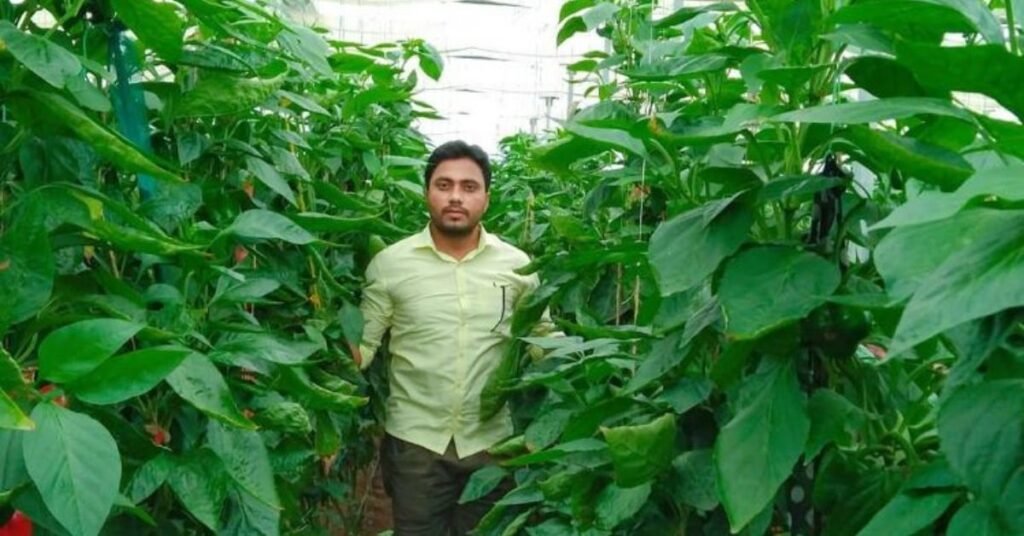
In the heart of Maharashtra’s Vidarbha region, a remarkable transformation is taking place. Suhas Bali, once a corporate employee with a stable office job, took a leap of faith and ventured into exotic vegetable farming. His journey is not just a tale of personal reinvention; it is a beacon of hope for thousands of farmers who have quadrupled their incomes by following his innovative methods.

From Corporate Cubicles to Lush Green Fields

Suhas completed his MBA in 2014 and spent four years working in the corporate sector. Yet, his job left him yearning for something more fulfilling—something connected to nature and his roots. In a bold move, he returned to his family’s 30-acre farmland in Washim district, Vidarbha, an area predominantly known for cotton and soybean farming.

With no formal training in agriculture, Suhas saw an untapped opportunity in exotic vegetable farming. Recognizing the growing demand for exotic vegetables in urban markets, he began experimenting with crops like red and yellow capsicum under polyhouse farming.

“What you cannot achieve on a 20-acre farm with traditional crops, you can do with just two acres if you choose the right crops and techniques,” says Suhas.

Cultivating a Green Revolution

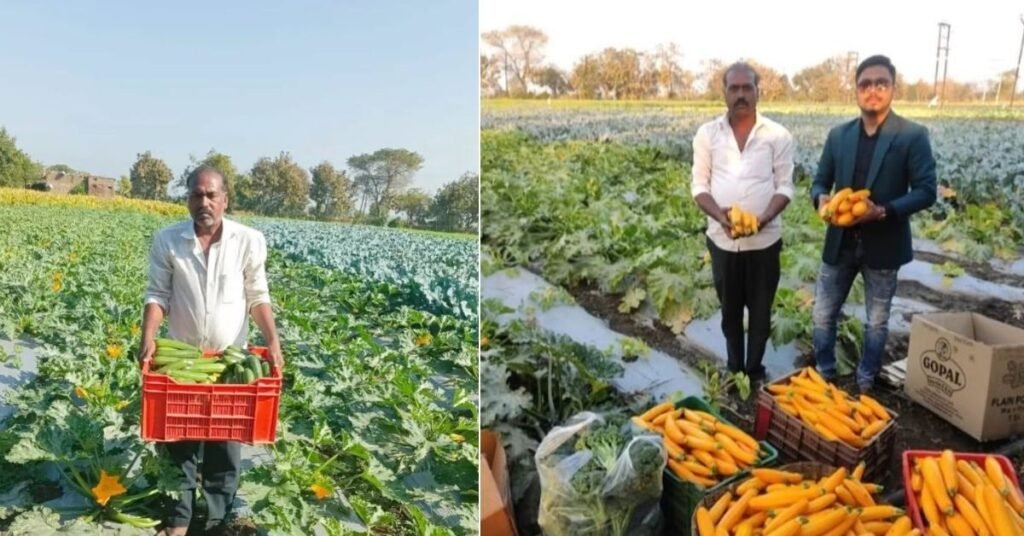
Suhas expanded his agricultural repertoire to include broccoli, red cabbage, zucchini, cherry tomatoes, and iceberg lettuce through open-field farming. The economic results were astonishing. For instance, one acre of red cabbage yielded around 16,000 plants, producing approximately 8,000 kilograms of produce that sold for Rs 80-100 per kilogram. This translated to an impressive revenue of Rs 8 lakh per acre within just three months—a stark contrast to the Rs 25,000 earned over six months from traditional soybean farming.

However, the journey was not without hurdles. “Exotic farming requires efficient irrigation and water management,” Suhas explains. Leveraging high-tech farming equipment, he implemented drip irrigation to conserve water, a precious resource in agriculture. Flood irrigation was never an option due to its inefficiency and high water wastage.

How a Former Corporate Employee Helped 30,000 Farmers Earn 4X with Exotic Vegetable Farming

Empowering 30,000 Farmers

Suhas’s journey did not end with his own success. In 2021, he established a Farmer Producer Organization (FPO) named ‘Rudrayani Agro India’ to support small and marginal farmers. This initiative provided collective bargaining power and better market access. Collaborations with companies like Reliance Fresh enabled farmers to sell their produce in lucrative urban markets such as Mumbai, Pune, and Bengaluru.

Through regular training sessions and community engagement, Suhas motivated local farmers to diversify into exotic vegetable farming. His efforts have helped over 30,000 farmers boost their income fourfold.

One of these farmers is Swapnil Kokare, who owns a four-acre farm. Inspired by Suhas, he dedicated two acres to sugarcane and two acres to zucchini cultivation. “Sugarcane takes 1.5 years to mature and earns around Rs 3 lakh. With exotic vegetables like zucchini, I can earn the same amount in just two months,” Swapnil shares.

Swapnil added, “I used to grow ladyfingers and brinjals on a small scale, but exotic vegetables have a more lucrative market with little competition. Suhas ji not only taught me how to cultivate these crops but also helped me market the produce in Mumbai. He keeps us updated daily about market rates.”

Redefining Farming in Maharashtra

Beyond personal financial gains, Suhas finds his greatest satisfaction in witnessing the transformative impact on the lives of fellow farmers. “Venturing into exotic farming has increased their annual incomes by four times. My mission remains to dismantle the notion that small landholders cannot thrive,” he emphasizes.

Suhas continues to expand his network by collaborating with agricultural officers and farmer groups across Maharashtra. He routinely meets produce collectors and leverages social media to inspire others to join the movement.

A Vision Rooted in Hope

As he stands among his vibrant crops, Suhas reflects on his journey. “Whether it’s celery or red cabbage, every seed sown in these fields tells a story of growth and hope,” he says. His vision is not just about cultivating exotic vegetables; it’s about nurturing a sustainable and prosperous future for farmers across Maharashtra.

Suhas Bali’s remarkable journey is a testament to the power of resilience, innovation, and community empowerment. His story continues to inspire farmers and entrepreneurs alike to dream big and cultivate success from the ground up.

Safeguarding Genetic Resources for a Sustainable Future

0

Genetic resources—both animal and plant—are the foundation of sustainable food production and global nutrition. They serve as the backbone of livestock development and agricultural resilience, playing a pivotal role in food security. With nearly 70 percent of the rural poor depending on livestock for their livelihoods, the management of these resources is essential for ensuring sustainable agricultural systems.

The Role of Animal Genetic Resources in Food Security

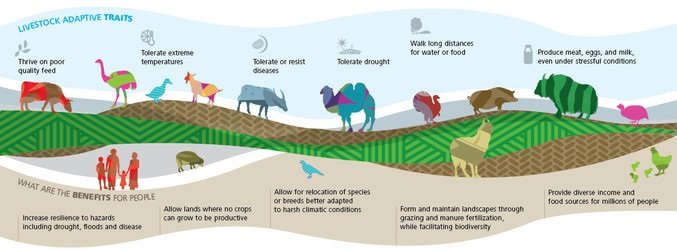
Animal genetic diversity contributes significantly to food security. Livestock provides essential nutrients and serves as a crucial food source for many communities. Beyond direct consumption, animals support agricultural practices through manure production, land tilling, and even pollination. The genetic diversity within livestock species enhances resilience against diseases and climate change, ensuring long-term agricultural sustainability.

The Global Plan of Action for Animal Genetic Resources

The Global Plan of Action for Animal Genetic Resources provides a strategic framework for managing livestock diversity. It focuses on four key areas:

  1. Characterization, Inventory, and Monitoring: Understanding the genetic diversity of livestock breeds and their unique traits.
  2. Sustainable Use: Ensuring that animal genetic resources are utilized in a way that enhances productivity while maintaining genetic diversity.
  3. Conservation: Preventing the loss of valuable genetic traits by preserving diverse breeds for future generations.
  4. Policies and Capacity Building: Strengthening institutional frameworks and policies to support effective genetic resource management.

National Responsibilities in Genetic Resource Management

National governments play a central role in implementing the Global Plan of Action. They must address technical and policy issues related to genetic resource management by integrating animal genetics into broader socio-economic and natural resource strategies. This approach ensures the protection and sustainable use of genetic diversity while fostering rural development.

Threats to Plant Genetic Resources

Plant genetic resources face significant threats due to agricultural homogenization. Although around 6,000 plant species have been cultivated for food, 60 percent of global crop production relies on just nine crops. This reliance on a limited number of species heightens the risk to food security. According to the Food and Agriculture Organization (FAO), plant diversity is particularly at risk in regions such as southern Africa and the Caribbean.

In-Situ and Ex-Situ Conservation Strategies

To protect plant genetic diversity, two major conservation strategies are employed:

  • In-Situ Conservation: Preserving plant species in their natural habitats. However, approximately 42 percent of surveyed plant species are currently threatened.
  • Ex-Situ Conservation: Storing genetic material in controlled environments such as seed banks. While effective, this approach faces significant challenges, as many countries lack the necessary infrastructure and support to maintain these repositories effectively.

Climate Change and Agricultural Diversity

Climate change poses a severe threat to agricultural biodiversity. Erratic weather patterns disrupt crop yields and reduce genetic diversity. Many nations struggle to assess and mitigate these impacts due to limited resources and unreliable seed supplies. The lack of access to diverse seeds and planting materials, especially in the wake of natural disasters, further exacerbates the problem.

Case Study: India’s Seed Hubs Initiative

Recognizing the importance of genetic diversity, India’s Ministry of Agriculture launched a seed hub initiative to enhance pulse production. By developing high-yielding seed varieties and improving distribution networks, pulse production increased dramatically from 14.76 million tonnes to 24.42 million tonnes over a decade. This initiative highlights the power of strategic planning in bolstering agricultural resilience.

A Path Forward: Strengthening Management Practices

The effective management of both animal and plant genetic resources is vital for the future of sustainable agriculture. Collaboration among governments, institutions, and local communities is necessary to safeguard genetic diversity, enhance food security, and build resilience against environmental changes. Investing in conservation strategies, policy development, and scientific research will ensure that future generations continue to benefit from the rich diversity of our planet’s genetic resources.

Social Protection Data Pooling Exercise: Enhancing Welfare Coverage in India

0

India has made significant strides in expanding its social protection coverage, ensuring that a larger segment of the population benefits from welfare schemes. In a landmark initiative, the Ministry of Labour and Employment, in collaboration with the International Labour Organization (ILO), has embarked on a comprehensive data-pooling exercise aimed at strengthening the understanding and reach of social protection benefits across the country. Recent findings reveal that 65% of India’s population, approximately 92 crore individuals, are now covered by at least one social protection benefit.

Understanding the Social Protection Data Pooling Exercise

The data-pooling exercise commenced on 19 March 2025, focusing on consolidating information from various central government schemes, including MGNREGA (Mahatma Gandhi National Rural Employment Guarantee Act), Employees’ Provident Fund (EPF), and Employees’ State Insurance (ESI). Over 200 crore records were meticulously processed using encrypted Aadhaar as a unique identifier to streamline the identification of beneficiaries. This initiative not only aims to highlight unique beneficiaries but also seeks to optimise welfare spending by reducing redundancy and ensuring accurate disbursement.

Coverage Statistics: A Remarkable Growth

According to the ILO’s World Social Protection Report 2024-26, India’s social protection coverage has seen a remarkable upward trajectory. The coverage expanded from 24.4% in 2021 to 48.8% in 2024, encompassing both cash and in-kind benefits. However, the report’s assessment may still underestimate the true extent of coverage, as it does not fully account for in-kind benefits such as food security and housing schemes.

State-Level Collaboration and Data Consolidation

Collaboration with state governments has been a crucial element of this data consolidation exercise. Labour departments across various states have been instrumental in compiling and sharing relevant data. The initial phase of the project includes Uttar Pradesh, Rajasthan, Maharashtra, Madhya Pradesh, Tamil Nadu, Odisha, Andhra Pradesh, Telangana, Karnataka, and Gujarat. These states were selected for their large population base and active implementation of social welfare schemes.

Impact and Future Prospects

This comprehensive data pooling initiative is poised to enhance India’s reputation as a global leader in social protection. By identifying unique beneficiaries, state and central governments can better manage social protection schemes, minimise leakage, and ensure that resources reach the intended recipients. Moreover, this accurate and streamlined data system will strengthen India’s stance in international trade and social security negotiations, projecting the country as a model for welfare management.

Expansion of the Employees’ State Insurance Scheme

In a significant development, the Employees’ State Insurance Corporation (ESIC) recently expanded its coverage within Uttar Pradesh, including 15 additional districts under the ESI Scheme. With this expansion, 74 out of 75 districts in the state are now covered, marking a pivotal step towards enhancing social security for workers. This reflects India’s ongoing commitment to broadening the scope of its welfare schemes.

Summing Up

India’s Social Protection Data Pooling Exercise represents a monumental step towards ensuring that welfare benefits reach those who need them the most. By leveraging technology and fostering state-centre collaboration, the initiative is set to optimise welfare spending and enhance the effectiveness of social protection schemes. As India continues to expand its coverage and streamline its processes, it stands as a beacon of progress in global social security frameworks.

Unlocking Identity: The Science Behind DNA Fingerprinting

0

DNA fingerprinting has transformed modern science, revolutionizing forensics, genealogy, and medicine. This powerful technique enables the identification of individuals based on their unique genetic code. By analyzing DNA, the blueprint of life found in every cell of the body, scientists can uncover mysteries of identity, lineage, and health.

The Essence of DNA: Life’s Genetic Code

DNA, or deoxyribonucleic acid, is the hereditary material in humans, encoding the instructions for life. Each cell carries 46 DNA molecules, arranged in 23 pairs—one set inherited from the mother and the other from the father. These genetic instructions are stored in chromosomes and determine individual traits, from eye color to susceptibility to certain diseases.

Polymorphisms: The Genetic Variations That Define Us

No two people (except identical twins) share the exact same DNA sequence. This is due to polymorphisms—variations in the DNA sequence that make each individual unique. These variations, found within chromosomes, are instrumental in tracing ancestry and genetic relationships. By analyzing them, scientists can reconstruct family trees and solve mysteries of human migration.

Short Tandem Repeats (STRs): The Markers of DNA Profiling

At the heart of DNA fingerprinting are Short Tandem Repeats (STRs), specific DNA sequences that repeat multiple times at particular locations in the genome. Since the number of repeats varies between individuals, STRs serve as unique genetic markers, allowing precise identification. This variation is what makes DNA fingerprinting such a powerful forensic tool.

Amplifying DNA: The Power of PCR

To analyze DNA, scientists often work with minute samples. The Polymerase Chain Reaction (PCR) is a revolutionary technique that amplifies specific DNA segments, making millions of copies in just a few hours. This process involves heating DNA to separate its strands, using primers to target key sequences, and employing DNA polymerase to build new strands. PCR ensures that even a tiny biological sample, such as a single hair or a drop of saliva, can provide a complete DNA profile.

Capillary Electrophoresis: Sorting DNA by Size

Once amplified, DNA fragments must be sorted and analyzed. Capillary electrophoresis is a high-precision technique that separates DNA fragments by size using an electric field. Smaller fragments move faster, while larger ones lag behind, allowing scientists to measure STR patterns accurately. This step is crucial in creating a reliable DNA fingerprint.

What Is a DNA Fingerprint?

A DNA fingerprint is a unique genetic profile generated from an individual’s STR data. This profile is as distinctive as a traditional fingerprint, but far more precise. It can be obtained from various biological samples, including blood, saliva, and hair, making it an invaluable tool for identification in diverse scenarios.

Real-World Applications of DNA Fingerprinting

DNA fingerprinting has countless applications:

  • Forensics: Crime scene investigators use it to identify suspects and victims, linking evidence to individuals with extraordinary accuracy.
  • Paternity Testing: It provides definitive answers in disputes over biological relationships.
  • Medical Advancements: DNA profiling aids in organ matching for transplants and helps identify genetic predispositions to diseases.
  • Historical and Archaeological Insights: Scientists have extracted DNA from ancient remains, tracing human ancestry and migration patterns.
  • Cold Case Investigations: The durability of DNA allows law enforcement to re-examine old evidence, solving decades-old cases and exonerating the wrongfully convicted.

The Stability and Longevity of DNA

One of DNA’s most remarkable properties is its stability. Genetic material has been successfully extracted from fossils and ancient remains, preserving history at the molecular level. This longevity ensures that DNA evidence remains viable for re-examination, offering justice to those who were once denied it.

The Future of DNA Fingerprinting

As technology advances, DNA fingerprinting continues to evolve, becoming even faster and more precise. Emerging techniques like next-generation sequencing and AI-driven analysis promise breakthroughs in forensic science, medical research, and genetic genealogy. What was once science fiction is now an integral part of modern investigation and discovery.

From the courtroom to the laboratory, from family ancestry to medical diagnostics, DNA fingerprinting stands as one of the most powerful scientific achievements of our time—unlocking secrets written in the very fabric of life.

Ancient Impact: Earth’s Oldest Meteorite Crater Discovered in Australia

0

A groundbreaking discovery in the Pilbara region of Western Australia has unveiled what is now considered the oldest known meteorite impact crater on Earth. Dating back over 3.5 billion years, this impact site predates all previously identified craters by more than a billion years. The findings provide crucial insights into the formation of Earth’s earliest continents and open new pathways for understanding our planet’s geological evolution and the origins of life.

A Window Into Earth’s Past

The newly discovered crater sheds light on the fundamental processes that shaped the young Earth. Scientists suggest that meteorite impacts played a pivotal role in forming the planet’s first landmasses. The extreme energy released by such collisions may have influenced early chemical and biological processes, making this discovery a significant piece in the puzzle of Earth’s formative years. These findings lend support to the hypothesis that external celestial forces, rather than just internal geological activity, contributed to the emergence of the planet’s continents.

Deciphering Early Continental Formation

For decades, geologists have debated how the oldest rocks on Earth—over 3 billion years old—came into existence. Found primarily in the ancient cores of modern continents, these rocks have sparked two leading theories. One proposes that they formed due to heat-driven mantle plumes rising from deep within the Earth, while the other argues for their creation through early plate tectonic movements. Both perspectives acknowledge the crucial role of heat dissipation from Earth’s interior in shaping the planet’s surface. The newly discovered impact crater adds a compelling dimension to this debate, suggesting that meteorite impacts also played a role in the formation of early continental crust.

The Search for the Ancient Crater

This remarkable discovery was the result of extensive fieldwork that began in May 2021. Researchers focused their efforts on the Antarctic Creek Member, a distinctive rock layer in the Pilbara region. They searched for shatter cones—rare geological formations that serve as unmistakable indicators of past meteorite impacts. Their efforts were rewarded when these structures were identified, confirming the existence of an ancient crater. Further analysis in May 2024 provided definitive age data, linking the impact event directly to the Antarctic Creek Member and securing its place as Earth’s oldest known crater.

Evidence Supporting the Impact Hypothesis

The presence of shatter cones throughout the Antarctic Creek Member offered irrefutable proof of a past impact event. These unique structures only form under the immense pressures generated by meteorite collisions and have remained preserved since their initial formation. Subsequent laboratory studies confirmed that the impact event coincided with the age of the rock layer, strengthening the argument that this ancient crater influenced the formation of Earth’s early continents.

A New Frontier for Scientific Exploration

This discovery raises profound questions about the role of meteorite impacts in shaping not only Earth’s physical landscape but also the environmental conditions necessary for life to emerge. It suggests that numerous other ancient impact craters may remain hidden within the cores of Earth’s oldest landmasses, awaiting discovery. Future research in this field has the potential to reshape our understanding of early Earth processes and may even offer insights into how life could arise on other planets with similar geological histories.

As scientists continue to uncover the secrets of our planet’s past, this finding stands as a testament to the enduring power of celestial events in shaping the world we know today. With further exploration, we may soon unlock even more hidden chapters of Earth’s ancient history.

Loitering Munitions: Transforming Modern Warfare

0

Loitering munitions, colloquially known as “kamikaze drones,” are revolutionizing the landscape of modern combat. These sophisticated weapons merge the reconnaissance capabilities of unmanned aerial vehicles (UAVs) with the precision and lethality of guided missiles. By hovering over potential targets, they meticulously track movements before delivering a fatal strike. This seamless integration of intelligence gathering and destruction is redefining military strategies worldwide.

What Are Loitering Munitions?

Unlike conventional missiles that follow a predetermined path, loitering munitions have the capability to linger in the airspace, observe the battlefield, and wait for the optimal moment to strike. This adaptability makes them highly effective in dynamic combat environments. Recent conflicts have demonstrated their potential to be game-changers in warfare.

Global Applications in Warfare

Loitering munitions have found widespread use in conflicts across the globe:

  • Ukraine Conflict: Russia employs Lancet-3 drones to precisely target Ukrainian artillery positions. In response, Ukraine utilizes U.S.-supplied Switchblade drones and its indigenous RAM II systems.
  • Middle East: Israel leverages Harop drones for precision strikes, while Iran’s mass-produced Shahed-136 drones challenge sophisticated air defenses, proving the effectiveness of cost-efficient drone swarms.

These instances highlight how loitering munitions are altering the nature of modern warfare.

India’s Strategic Developments

India is proactively expanding its arsenal of loitering munitions and autonomous drones to bolster national defense:

  • SkyStriker Drone: With a 500 km range, this drone is operational for the Suppression of Enemy Air Defenses (SEAD).
  • Nagastra-1: Introduced in 2024, it is tailored for high-altitude warfare.
  • Private Sector Innovations: Indian firms are conducting successful trials of cost-effective loitering munitions, aiming to reduce dependence on imports.

These developments signify India’s commitment to strengthening its defense capabilities through indigenous innovation.

The Rise of Swarm Warfare

The future of warfare is leaning towards drone swarms rather than individual units. India has already showcased its capability with a coordinated 75-drone swarm demonstration. NewSpace Research & Technologies has taken this further by developing a 100-drone swarm for battlefield deployment. Ongoing research into AI-driven systems for detecting and targeting enemy assets is expected to enhance operational effectiveness significantly.

Economic Considerations in Drone Warfare

Despite the technological strides, cost remains a considerable hurdle for India’s drone industry. While indigenous drones are more affordable than Israeli models, they remain costlier than Russian and Iranian alternatives. The competitive pressure to innovate and reduce production costs is intensifying. Western projects like the Hellhound S3 loitering munition underscore the global emphasis on speed and cost-efficiency.

India’s Defence Industry and Self-Reliance

India’s push for self-reliance is evident in its military modernization efforts. According to the Defence Ministry, 65% of the military equipment is now domestically produced. Defence production reached a record Rs 1.27 lakh crore in 2023-24. Initiatives such as iDEX (Innovations for Defence Excellence) and SAMARTHYA are encouraging private sector participation and technological advancement. Major procurement decisions reflect a clear shift towards indigenization.

Challenges and the Road Ahead

Despite these advancements, India faces stiff competition from Russia and Iran, which produce low-cost drones. Although domestic options are more affordable than Israeli ones, achieving cost parity with Russian and Iranian drones remains a challenge. The focus on AI-driven autonomy for UAVs is crucial for maintaining future competitiveness. Additionally, the development of stealthy loitering munitions is underway to ensure India remains at the forefront of military technology.

Future Implications of Drone Warfare

As geopolitical tensions escalate, the strategic importance of drone warfare continues to grow. India’s investments in AI, swarm technology, and long-range capabilities are positioning the nation as a formidable player in modern combat. The shift from conventional airstrikes to unmanned systems heralds a new era in military strategy, underscoring the need for continuous innovation and self-reliance in defense technology.

Indian Farmstays for Fruit Picking, Horse Riding & Stargazing With Your Kids This Summer

0

Summer holidays bring back a flood of memories for most adults — endless hours of fun, devouring mangoes, playing informal games, and attending summer camps. However, the magic of the outdoors has faded in the digital age. This summer, why not take a trip down memory lane and recreate those golden moments with your kids? Explore these incredible Indian farmstays that offer fruit picking, horse riding, stargazing, and more.

1. Pala Farms, Goa

Nestled in the Rivona forest of South Goa, Pala Farms is a picturesque oasis where nature and animals co-exist harmoniously. Monique Pala’s love for nature is evident in this idyllic farm where horses, goats, ducks, and dogs roam freely.

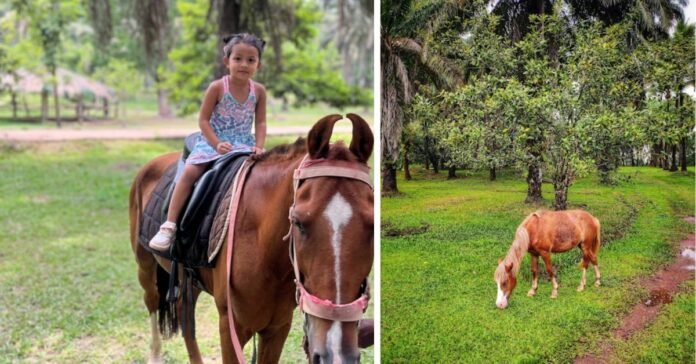
Children can engage in feeding ducks, horse riding, and exploring the farm through guided tours. Meanwhile, parents can unwind on the grass or finish that long-pending book. A guest, Dr. Vimarsha Bhatkalkar, described it as an experience that provides the joy of farm life, even if only for a day.

Address: Sanguem Rd, Vodlemol Cacora, Kudchaden, Goa – 403705.

2. Sangam Farms, Rajasthan

What once was an unused piece of land is now a thriving green haven known as Sangam Farms in Bhilwara, Rajasthan. Anurag Soni, Managing Director of the Sangam Group, transformed this land into a vibrant agro-tourism spot.

Kids can enjoy horse riding, fruit picking, and even witness pizza baking in a brick oven. Adults can relish farm-fresh salads, cheese, and buttermilk made on-site. It’s an ideal spot to experience rural life while enjoying modern comforts.

Address: NH79, Chittorgarh Rd, Bhilwara, Rajasthan – 311001.

Indian Farmstays for Fruit Picking, Horse Riding & Stargazing With Your Kids This Summer

3. The Farm of Happiness, Maharashtra

Located in Ratnagiri, The Farm of Happiness is an agro-tourism model spread over 20 acres of mango and cashew trees. Founders Rahul and Sampada Kulkarni created this farm to help city dwellers reconnect with nature.

Children can learn about farming, identify birds, participate in nature trails, and visit the nearby Ukshi village with pre-historic rock carvings. It’s a perfect blend of fun and education.

Address: Off, Parchuri Road near Kaatal Wadi, Phungus, Maharashtra – 415611.

Indian Farmstays for Fruit Picking, Horse Riding & Stargazing With Your Kids This Summer

4. Ayra Farms, Maharashtra

Ayra Farms in Ratnagiri, Maharashtra, is a sustainable homestay that offers a slice of idyllic village life. Chef Noopur Chaughule credits her father, Rajan, for transforming the once-dilapidated land into a lush farm with cottages, a tent area, and a kitchen garden.

Kids can enjoy running around with animals, drawing on the ground with natural chalk, and relishing Maharashtrian delicacies. The farm provides a screen-free, immersive outdoor experience.

Address: House #655, BrahminVadi, Talavli village, Chikhali, Guhagar, Ratnagiri, Maharashtra – 415719.

Indian Farmstays for Fruit Picking, Horse Riding & Stargazing With Your Kids This Summer
xr:d:DAE-VW4f63M:1477,j:9009844358701953827,t:23061313

5. Soulitude by the Riverside, Uttarakhand

For an extraordinary experience under the stars, head to Soulitude by the Riverside in Uttarakhand. Known for its clear night skies, it offers astronomy sessions where kids can learn about galaxies, nebulae, and celestial wonders.

During the day, families can enjoy riverfront picnics with breathtaking views of the Maheskhan Hills or go for a hike through the Pine Forest. It’s an excellent destination for nature lovers and curious young minds.

Address: Near Kalsa River Banks, Nainital District, Chanfi, Uttarakhand – 263136.

Indian Farmstays for Fruit Picking, Horse Riding & Stargazing With Your Kids This Summer

Summing Up

Recreate the magic of your childhood summers with these delightful Indian farmstays. From fruit picking and horse riding to stargazing and nature trails, these destinations offer an excellent blend of fun, learning, and relaxation. Give your kids the gift of unforgettable memories this summer.

Timbuktu: A Timeless Symbol of Africa’s Intellectual Heritage

0

Timbuktu, located in the West African nation of Mali, is a historic city that stands as a testament to Africa’s rich cultural and intellectual legacy. Founded in the 12th century by the Tuareg tribe as a temporary settlement, it quickly evolved into a significant hub for trade, culture, and Islamic education during the 14th and 15th centuries.

A Cradle of Knowledge

During its golden era from the 14th to 16th centuries, Timbuktu became renowned for its Sankore Madrasah, one of the world’s first universities. Scholars from across Africa and beyond gathered here to study subjects ranging from theology and law to mathematics and astronomy. The city became a beacon of learning, attracting intellectuals and traders alike.

Preserving Ancient Manuscripts

One of Timbuktu’s most remarkable treasures is its vast collection of ancient manuscripts — hundreds of thousands of them — carefully preserved for centuries. These manuscripts cover a wide range of topics, including science, medicine, literature, and philosophy, reflecting the city’s deep commitment to knowledge and scholarship.

Architectural and Cultural Splendor

The city’s architecture is another reflection of its rich history. The mud-brick mosques, such as the famous Djinguereber Mosque, stand as enduring symbols of the city’s Islamic heritage and architectural ingenuity. These structures are not just places of worship but also monuments of African resilience and creativity.

A Legacy Remembered

Timbuktu remains a symbol of global knowledge and cultural exchange. Despite challenges over the centuries, it continues to inspire historians, scholars, and travelers with its rich legacy. Its story is a powerful reminder of Africa’s pivotal role in shaping the intellectual history of the world.

To this day, Timbuktu is remembered not just as a city but as a bridge where trade, culture, and knowledge converged — a timeless beacon of Africa’s intellectual heritage.

Reviving Ancient Heritage: Bihar’s Vikramshila University to Emerge as a Tourism Hub

0

Patna: Bihar is all set to revive its glorious past by breathing new life into the ancient Vikramshila University, a once-renowned center for Tantric studies. After the successful reconstruction of the historic Nalanda University, attention has now shifted to Vikramshila, located in Bhagalpur. The Archaeological Survey of India (ASI) is actively working to transform this ancient site into a prominent tourist destination.

The ruins of Vikramshila University are undergoing extensive cleaning and restoration. The site has been strategically divided into grids for efficient preservation and security, ensuring that this historic treasure is maintained for generations to come.

A ₹500 Crore Initiative

Vikramshila University was once a thriving hub for studies in Tantra, theology, philosophy, grammar, metaphysics, and logic. It flourished for nearly four centuries before its decline in the 13th century. In 2015, the central government allocated ₹500 crore for the restoration of this ancient center of learning. This ambitious project aims to transform Vikramshila into a world-class tourist attraction.

208 Classrooms for Tantric Studies

At the heart of Vikramshila lies a massive brick stupa surrounded by 208 small rooms. Centuries ago, these rooms were bustling with monks and students engaged in the study of Tantric practices. After Hinayana and Mahayana, Tantra was considered the third major branch of Indian Buddhism. Scholars from Vikramshila were known for their profound expertise in this field.

Founded in the Late 8th Century

Vikramshila University was established in the late 8th century by King Dharmapala of the Pala dynasty. It was a contemporary of Nalanda University. While Nalanda was famous for its diverse academic disciplines, Vikramshila was the sole center dedicated to Tantric studies. Both universities were at the pinnacle of learning during their time.

Boosting Tourism and Cultural Heritage

The revival of Vikramshila University is not just about preserving history; it is about promoting tourism and cultural pride. Once restored, this ancient educational hub is expected to draw tourists and history enthusiasts from across the globe.

By turning the pages of history and bringing this ancient marvel back to life, Bihar is set to offer a unique blend of heritage and education to the world. The restoration of Vikramshila will stand as a testament to India’s rich academic legacy and serve as an inspiration for generations to come.