Home Blog Page 323

New Revolution in Media-Entertainment Sector: India Takes Center Stage in Media Entertainment Sector as New Revolution Sets In, Writes Aamir Khan

0

Bollywood actor Aamir Khan has voiced his opinion on India taking centrestage n media and entertainment sector as new revolution is setting in. He says World Audio Visual and Entertainment Summit (WAVES) to be held in India this time reflects country’ growing stature in global entertainment arena. Here is the editorial piece written by veteran actor as shared on www.jagran.com. The PIB officials shared it on media group and hence it comes here…

By Aamir Khan

India is emerging as a pivotal force in the global media and entertainment industry. The sector is undergoing rapid growth, propelled by evolving technologies, the proliferation of regional language content, and a tech-savvy audience hungry for fresh, diverse, and inclusive narratives.

From streaming services to digital storytelling, the content boom across platforms underscores India’s vast potential—not just as a source of entertainment, but also as a catalyst for cultural expression, economic growth, and global influence.

A significant step in this direction is the upcoming World Audio Visual and Entertainment Summit (WAVES), scheduled to take place from May 1 to 4 at the Jio World Convention Centre, BKC, Mumbai. Organized by the Government of India, WAVES reflects the country’s growing stature in the global entertainment arena.

Drawing from decades of industry experience, I can affirm that stories hold the power to unite, inspire, and transform. With initiatives like WAVES and Waves Bazaar, India is charting a bold course toward a more collaborative and inclusive entertainment ecosystem.

Introducing Waves Bazaar: A Game-Changer for the Industry

Waves Bazaar is a groundbreaking online B2B marketplace connecting professionals, creators, and businesses from across the global entertainment landscape. Launched by Union Minister for Information and Broadcasting, Ashwini Vaishnaw, on January 27, the platform aims to realize the Prime Minister’s vision of making the WAVES Summit a landmark event—comparable in prestige to the World Economic Forum in Davos.

Since its launch, the portal has already onboarded 5,500 buyers, over 2,000 sellers, and nearly 1,000 projects from across sectors like film, TV, gaming, music, animation, XR, advertising, and sound design.

Waves Bazaar is more than just a marketplace—it’s a comprehensive content and networking hub. Featuring AI-powered profiling and matchmaking tools, it facilitates seamless connections and high-value collaborations.

Whether you are a filmmaker seeking co-production partners, an advertiser scouting for innovative platforms, a game developer pursuing investment, or an artist looking to showcase work globally, Waves Bazaar offers a dynamic space to grow and thrive.

A Seamless Platform for Global Collaboration

Bringing together sectors such as film, television, music, gaming, XR, AR, and VR, Waves Bazaar streamlines discovery and deal-making through category-specific listings, secure viewing rooms, and curated networking features. It allows sellers—ranging from production houses to podcast creators—to present their offerings to a global pool of investors and distributors, while buyers gain access to cutting-edge, high-quality content.

In addition to virtual interactions, the WAVES Summit at BKC will provide select participants from the platform an opportunity to network in person, attend investor meetings, participate in live screenings, and close deals with industry leaders.

A Movement, Not Just a Marketplace

Waves is more than a platform—it represents a movement toward a more inclusive, cross-cultural, and technologically driven future for the global entertainment industry. It encourages creators to collaborate across languages, cultures, and formats.

As artists, we constantly seek platforms that push creative boundaries, spark collaboration, and celebrate diversity. Waves has the potential to be one such medium—akin to the revolutionary shift we witnessed with films like Lagaan. It marks a turning point for India, not only as a content powerhouse but as a visionary leader in shaping the future of media and entertainment.

Let us come together to imagine, innovate, and create a future that is truly global, inclusive, and inspiring.

Top Outdoor Floor Tiles for Your Patios, Gardens and Pathways

0

A house with a patio, pathway or garden has a beauty of its own. You can transform these outdoor spaces into a functional, durable and beautiful place with the right kind of flooring. Outdoor floor tiles for these areas offer the perfect combination of practicality and style. Outdoor tiles are available in a wide range of designs, materials and finishes. They not only appeal to the eyes but are easy to maintain and are weather-resistant. Choosing the right floor tiles for your home’s exterior can enhance your outdoor living experience to a great extent.

In this post, we will explore the importance of outdoor floor tiles and their different varieties.

Importance of Outdoor Floor Tiles for Outdoor Areas

Outdoor floor tiles for patios, gardens and pathways not only create beautiful open-air spaces but come with other benefits as well. Here are some reasons why these tiles are so important:

●      Easy to Maintain

Outdoor floor tiles require minimal upkeep and maintenance. Occasional sweeping or a quick wash with normal water keeps the tiles clean. Most importantly, these tiles are resistant to mould, mildew and algae, which are common in gardens and damp outdoor environments.

●      Slip Resistant

Outdoor floor tiles are slip-resistant. For example, Simpolo Tiles and Bathware’s Rockdeck Collection is specifically designed with slip-resistant, slightly rugged, and uneven surfaces, making them a safe choice for patios and pathways exposed to moisture, rain, and snow, among other things. These tiles are a great choice for families with children and elderly people as they minimise slip-and-fall risks.

●      Longevity and Durability

Outdoor floor tiles made from natural stone, porcelain, ceramic and similar materials can withstand the harsh forces of nature easily. These tiles are also resistant to cracking, staining and fading so that the garden, patio or the pathway looks good for long.

●      Temperature Control

Outdoor floor tiles from premium manufacturers stay cooler than other outdoor flooring options like concrete or wood. These tiles reflect sunlight and maintain a comfortable temperature so that you can enjoy a walk on the patio or pathway even on a hot day.

●      Good Looking Exteriors

Outdoor floor tiles are available in a wide variety of patterns, colours and textures, which sync well with the overall outdoor design of your house. Premium companies offer tile options which suit your tastes and complements the garden, patio or pathway. Whether you want a rustic look or a sleek, modern appearance, there are versatile designs to choose from.

Top Variety of Options for Your Outdoor Floor Tiles

Choosing the right material for outdoor floor tiles is important as it impacts the durability, maintenance and appearance of the space. Each material has its advantages and disadvantages. Choose the material which fulfills your particular outdoor needs from the different varieties available. Here are some of the most popular options for outdoor floor tiles:

●      Natural Stone-Like Tiles

There is nothing better than natural stone-like tiles when it comes to outdoor flooring. Every stone has a unique natural appearance and texture, which makes the exteriors more attractive. Great for patios, gardens and pathways, these tiles are durable and resistant to wearing and harsh weather conditions.

●      Concrete Look and Feel Tiles

Concrete tiles are an excellent option for contemporary outdoors, providing an industrial aesthetic. The tiles are robust, durable, and versatile, perfect for achieving a modern look. With minimal maintenance required and resistant to extreme temperatures and heat, they are ideal for use in pathways and patios.

●      Ceramic Tiles

Ceramic tiles are an option for outdoor floor tiles. They have a highly porous surface and less density, so they are best suited for outdoor areas with less exposure to moisture and moderate temperatures. Easy to clean and maintain, ceramic tiles are an excellent choice for covered patios.

●      Porcelain Tiles

Porcelain tiles are a popular choice for outdoor flooring due to their versatility and flexibility. Crafted from dense, non-porous clay, these tiles are durable, weather-resistant and require minimal maintenance. Available in a wide range of white tile textures, finishes, and colours, these scratch-, stain-, and slip-resistant tiles are perfect for patios, gardens, and pathways.

●      Cement Tiles

Handcrafted cement tiles often feature vibrant colours and intricate patterns, adding a unique and artistic flair to home exteriors. These customisable tiles are durable and endure harsh weather conditions with ease. They are perfect for creating decorative pathways and patios.

Conclusion

Choosing the right floor tiles for your garden, patio, or pathways improves the functionality and appearance of the outdoor space. Whether you like the modern appeal of porcelain and ceramic tiles, the elegance of natural stones or the rustic charm of clay tiles, you will find a variety that matches your taste and gels with your home exteriors.

The right selection of outdoor floor tiles from leading companies like Simpolo Tiles and Bathware can change the whole appearance of your patio, garden or pathways.

Take your outdoor living experience to a new dimension with the outdoor floor tiles!

April 16, 1853 Scripted Historic Milestone as First Passenger Train Ran Between Bori Bunder and Thane

0

Journey Through Time: The Evolution of Indian Railways

April 16, 1853 – A Historic Milestone
On April 16, 1853, India witnessed a transformative moment in transportation history as the first passenger train ran between Bori Bunder (now Chhatrapati Shivaji Maharaj Terminus, Mumbai) and Thane, covering a distance of 34 kilometers. The train, comprising 14 carriages and carrying over 400 passengers, was powered by three steam locomotives named Sahib, Sultan, and Sindh. This marked the beginning of India’s rich and expansive railway journey.

Laying the Tracks: The Beginning of Rail in India
The foundation for this historic event was laid on August 21, 1847, when James John Berkely, Chief Resident Engineer appointed by the Great Indian Peninsula Railway in collaboration with the East India Company, began work on the country’s first railway line. Though constructed earlier, the line officially opened for passenger service in 1853.

India’s First Railway Station: Bori Bunder to CSMT
The original terminus for the first train, Bori Bunder, eventually evolved into Chhatrapati Shivaji Maharaj Terminus (CSMT)—a UNESCO World Heritage Site and a symbol of India’s railway heritage. Reconstructed in 1887 and renamed Victoria Terminus, it was rechristened Chhatrapati Shivaji Terminus (CST) in 1996, and later CSMT in 2017 to honor the Maratha warrior king.

The First Locomotive Made in India
In 1895, a significant achievement in self-reliance was marked when the Ajmer workshop of the Rajputana Malwa Railway manufactured the first Indian-built steam locomotive, No. F-734.

A Simple Letter that Changed Rail Travel: Introduction of Toilets
Until the early 20th century, trains lacked basic sanitation facilities. This changed after Okhil Chandra Sen, a passenger, wrote a heartfelt letter to the Sahibganj Divisional Office in West Bengal on July 2, 1909, requesting toilets in train coaches. His plea highlighted the urgent need for amenities during long-distance travel, leading to the introduction of toilets on Indian trains later that year—over five decades after passenger services began.

Forbes Reveal Top 30 Richest People in The World

0

Top 30 Richest People in the world

In 2025, the number of billionaires worldwide surpassed 2,850 individuals, collectively representing nearly $15 trillion in wealth. The global billionaire population grew by 7% this year, continuing an upward trend. Beinsure Media has analyzed data from the Forbes Billionaires Index to present an updated ranking of the world’s wealthiest individuals as of April 2025.

These individuals belong to an elite group that wields considerable influence across the global economy, politics, and philanthropy. Many are founders of major technology companies, with substantial portions of their wealth still tied to the businesses they created.

While most people have a general sense of who these billionaires are, their true financial impact is far-reaching. Comprehensive net worth assessments and breakdowns are available on each billionaire’s profile page.

Interestingly, many billionaires utilize strategic financial tools to maintain and grow their wealth. Instead of selling shares and triggering capital gains taxes, they can borrow against their holdings—deferring or even eliminating taxes on unrealized gains. Additionally, a wide array of tax deductions and loopholes allow some ultra-wealthy individuals to report minimal—or even zero—taxable income in certain years.

🗺️

:-

🇺🇸

Elon Musk – $369.7 Billion

🇺🇸

Jeff Bezos – $202.0 B

🇺🇸

Mark Zuckerberg – $188.1 B

🇺🇸

Larry Ellison – $166.7 B

🇺🇸

Warren Buffett – $163.0 B

🇫🇷

Bernard Arnault & family – $151.6 B

🇺🇸

Larry Page – $131.5 B

🇺🇸

Sergey Brin – $126.0 B

🇺🇸

Steve Ballmer – $117.0 B 10.

🇪🇸

Amancio Ortega – $115.7 B

🇺🇸

Rob Walton & family – $111.2 B

🇺🇸

Jim Walton & family – $109.9 B

🇺🇸

Bill Gates – $107.2 B

🇺🇸

Michael Bloomberg – $104.7 B

🇺🇸

Alice Walton – $102.2 B

🇺🇸

Jensen Huang – $97.1 B

🇺🇸

Michael Dell – $92.1 B

🇮🇳

Mukesh Ambani – $91.0 B

🇲🇽

Carlos Slim Helu & family – $80.8 B 20.

🇫🇷

Francoise Bettencourt Meyers & family – $80.4 B

🇺🇸

Julia Koch & family – $74.2 B

🇺🇸

Charles Koch & family – $67.5 B

🇨🇳

Zhang Yiming – $65.5 B

🇨🇦

Changpeng Zhao – $61.6 B

🇺🇸

Jeff Yass – $59.0 B

🇮🇳

Gautam Adani – $58.7 B

🇨🇳

Zhong Shanshan – $55.0 B

🇺🇸

Thomas Peterffy – $51.6 B

🇨🇳

Ma Huateng – $47.5 B 30.

🇯🇵

Tadashi Yanai & family – $45.5 B SOURCE: Forbes (As of April 2025)

The Future of Grassroots Sports: How Young Talent is Being Developed

0

Tributes of grassroots sports provide the initial development for those who will become sports legends. All the future legendary athletes, including Messi and Serena Williams, started their first steps on local average playing fields. The original development phase is currently undergoing a quick transformation. Thanks to technology and investments alongside new-surfaced talent identification methods, the entire athletic player development system is undergoing a complete transformation that makes everything exciting.

Early Access to Professional Coaching

Young athletes are now facing the challenge of advancing their sporting commitment. Japanese and German youths receive elite coaching beginning at the age of six. The training facilities include structured drills and sincere evaluations that build up fundamental principles. The former clubs have transformed into programmatic pathways that lead to national league participation. Fans who want to trace the influence of up-and-coming athletes on global sports can consult information on these performers at an online betting site. Bettors obtain accurate performance updates and statistical data from online platforms to make wiser predictions regarding these developing athletes.

Youth academy programs now receive support from professional clubs. Ajax, Barcelona, and Brazilian clubs and organizations in Egypt now place pro-style processes within their grassroots development systems. The stated purpose remains straightforward: seizing talent before its star dies. Through direct practical training, young athletes learn discipline, leading them to competition beyond their dreams

Investment from Private and Public Sectors

Development costs a lot of money, but is no longer attributed solely to governmental involvement. Everyone’s betting on the future:

  • Nike and Adidas conduct school investments and talent selection tournaments to discover new sporting personalities and leverage this initiative as a market strategy.
  • The nations of Qatar and China invest substantial state funds in developing youth academy training programs.
  • The operation of online sportsbooks includes subtle investments within amateur league structures to develop their sports betting system and obtain gambling customers.
  • Businesses operating at the local level support under-15 teams to promote their brand awareness and show support for neighborhood pride.

Building talent roots will result in championship success, domestic recognition, and audience popularity.

The Rise of Smart Training Tools

Modern training follows technological advancements, creating quick, innovative training solutions for individual athletes. Athletes now experience abnormal speed development, which experts monitor through live tracking. The Melbet Vietnam Facebook delivers essential information about technological developments in youth athletics as they affect athlete performance. This rising popularity enables coaches and bettors to use data-dependent decision tools that now dominate training and predictive activities.

Data and Performance Tracking

No more relying on a coach’s memory. The modern sports log down every sprint, including passes and heartbeats. Football academies across Europe employ GPS vests, which monitor the combination of athletes’ distance traveled while recording their maximum speed and tracking their fitness deterioration. In Sweden, children under 12 must wear performance trackers, which offer weekly technical performance reports to coaches and parents.

Machine learning algorithms evaluate performance patterns of youth athletes by measuring their maximum achievements, declining phases, and stress responses. Temple found that Catapult, in addition to STATSports, actively serves more than 3,000 teams worldwide and displays entry into community youth sports programs. 

The Future of Grassroots Sports: How Young Talent is Being Developed

Virtual and Remote Coaching

A young athlete in rural Kenya can access Miami-based ex-NBA player training on shooting fundamentals. Through Famer and Onform, users can obtain customized video analysis, details on slow-motion analysis, and individual frame distinction features.

World-class experts provide feedback to athletic clips recorded by young athletes, who post them on the internet. Major European clubs such as Benfica and Bayern Munich use these technological tools to evaluate youngsters who train abroad. Families who do not have access to elite academies find their lifeline in digital tools, which decreases the talent gap beyond expectations.

Inclusion and Equal Opportunity Programs

Proper neighborhoods alone don’t determine a person’s talent. Progressive changes are occurring in the scouting methods that identify talented young athletes living in underprivileged areas. Modern scouting activities have actively started operating in Brazilian favelas. Professional scouts from major leagues now attend organized sporting leagues operating within European refugee camps.

Sports federations and NGOs launch programs that eliminate cost barriers for prospective candidates. Wealthy groups, transport assistance, and nutrition programs are reshaping everything silently. The UK’s “Sporting Equals” and Kenya’s “Moving the Goalposts” represent NGX’s transformative power. This occurs when organizations enter markets and become champions due to lowered entry barriers.

The Future of Grassroots Sports Development

The sports transformation at grassroots levels changes every aspect of athlete development through the combined application of technology and investments. Young athletes now gain previously impossible opportunities through access to professional coaching, innovative training equipment, and inclusive programs. The evolution of sports continues at an accelerated rate, and because of this, the following generation of global athletic stars shows excellent promise.

Difference Between Puthandu and Vishu, South India’ New Year Celebration Days

0

Puthandu and Vishu are vibrant New Year festivals celebrated in South India, typically falling on the same day—April 14 or 15—based on the solar calendar. Though they share the spirit of new beginnings, these festivals are observed by different communities with unique cultural nuances.

Name and Language

  • Puthandu (புத்தாண்டு) is the Tamil New Year, celebrated by the Tamil-speaking population.
  • Vishu (വിഷു) marks the Malayalam New Year and is celebrated by Malayalis in Kerala.

Location

  • Puthandu is primarily observed in Tamil Nadu and among Tamil communities worldwide.
  • Vishu is celebrated across Kerala and by Malayali communities in India and abroad.

Traditions and Celebrations

Despite their regional and linguistic distinctions, both festivals share common elements such as:

  • Wearing new clothes
  • Visiting temples
  • Preparing elaborate festive meals
  • Spending time with family

However, there are notable traditions specific to each:

  • Vishu:
    • Vishukkani: An arrangement of auspicious items like rice, fruits, flowers, a mirror, and a lit lamp is prepared the night before, and it is the first thing one sees on the morning of Vishu.
    • Vishukkaineetam: Elders gift money to children and younger family members as a blessing for prosperity.
  • Puthandu:
    • The day typically begins with viewing auspicious items (kani), similar in spirit to Vishukkani, though it is less ritualized.
    • Mango Pachadi: A symbolic dish made with raw mango, jaggery, neem flowers, and tamarind, representing the varied experiences of life—sweet, sour, bitter, and tangy.

Shared Spirit, Regional Flavor

While Puthandu and Vishu are culturally distinct, they share a deep-rooted connection in their emphasis on renewal, prosperity, and familial bonds. Their simultaneous observance and overlapping rituals reflect the interconnectedness of South Indian traditions, shaped by geography, language, and shared heritage

Maharashtra Signs MoU with Russia’s ROSATOM for Thorium-Based Small Modular Reactor

0

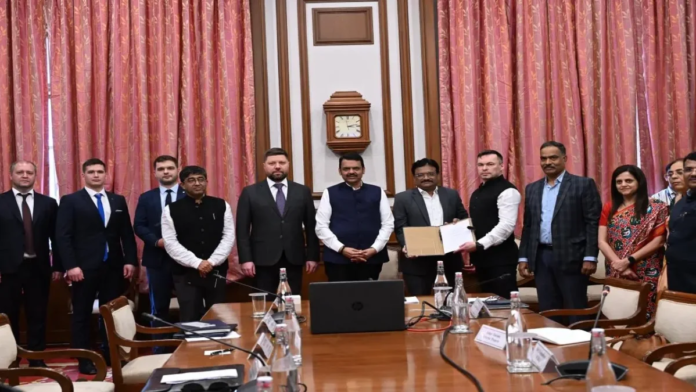
In a landmark development, the Maharashtra government has signed a Memorandum of Understanding (MoU) with Russia’s state-owned ROSATOM for the development of a Small Modular Reactor (SMR). This marks the first instance of a state government in India directly participating in nuclear energy development—an area traditionally overseen by the Department of Atomic Energy (DAE). The project will move forward only after securing necessary approvals from the central government.

Objectives of the MoU

The primary aim of the MoU is the collaborative development and eventual commercialization of a thorium-based reactor in Maharashtra. The initiative emphasizes adherence to safety standards laid down by the Atomic Energy Regulatory Board (AERB) and aims to establish a localized manufacturing ecosystem under the ‘Make in Maharashtra’ initiative.

Key Stakeholders

The agreement was signed between Maharashtra State Power Generation Co. Ltd. (MAHAGENCO) and ROSATOM’s Small Modular Reactor division. Strategic support will be provided by the Maharashtra Institution for Transformation (MITRA). A joint working group will be created to facilitate research, coordination, and implementation of the project.

Safety and Regulatory Compliance

The project will operate in full compliance with the Government of India’s legal and regulatory framework, particularly the safety protocols set by the AERB. Given the sensitive nature of nuclear energy, strict adherence to safety guidelines is a cornerstone of this initiative.

India’s Thorium Journey: Background

While India has developed significant expertise in the nuclear fuel cycle, it currently does not operate any reactors powered by thorium. The Prototype Fast Breeder Reactor (PFBR), under development, will initially use Uranium-Plutonium Mixed Oxide (MOX) fuel but is eventually designed to convert thorium-232 into fissile Uranium-233. This progression is key to leveraging India’s abundant thorium reserves.

Advantages of Small Modular Reactors

Small Modular Reactors present several benefits over conventional nuclear reactors. They are inherently safer, more efficient, and easier to integrate into existing power systems due to their modular design. The PFBR, for example, incorporates advanced safety mechanisms that enable rapid shutdown during emergencies, thereby mitigating potential risks.

Looking Ahead: Future Prospects

This collaboration between Maharashtra and ROSATOM could be a turning point for India’s nuclear energy sector. If successful, it will not only boost domestic energy security but also support the nation’s transition towards clean and sustainable energy sources. The project represents a forward-looking step in aligning with India’s broader goals of energy innovation and environmental responsibility.

Wanna Know What NITI Aayog’s Report on Strengthening India’s Automotive Sector Says? Read the Crux Here…

0

Recently, NITI Aayog released a significant report titled “Automotive Industry – Powering India’s Participation in Global Value Chains.” The report examines the current landscape of India’s automotive sector, identifies key challenges, and outlines strategic recommendations to strengthen India’s position in global markets.

Global and Indian Automotive Landscape

In 2023, global automobile production reached approximately 94 million units, while the global automotive components market was valued at USD 2 trillion. India emerged as the fourth-largest automobile producer worldwide, manufacturing nearly 6 million vehicles annually. The country has a strong footprint in both domestic and export markets, particularly in small cars and utility vehicles. Government initiatives like Make in India continue to enhance India’s competitive edge.

Emerging Trends in the Automotive Sector

The global automotive industry is undergoing a transformative shift toward electric vehicles (EVs), spurred by growing consumer demand for sustainability and tightening regulatory standards. EV sales are rising steadily, reshaping the industry’s manufacturing dynamics. Battery production hubs are emerging in regions such as Europe and the United States, opening new avenues for investments in lithium and cobalt mining.

Simultaneously, the adoption of Industry 4.0 technologies—including Artificial Intelligence (AI), Machine Learning (ML), the Internet of Things (IoT), and robotics—is revolutionizing manufacturing, driving increased efficiency, productivity, and flexibility.

Challenges Facing India’s Automotive Sector

Despite its scale, India holds only a 3% share in the global automotive component trade, valued at roughly USD 20 billion. Major challenges hindering growth include high operational costs, inadequate infrastructure, limited integration into global value chains, and low investment in research and development. India’s presence in high-precision component segments remains minimal, affecting overall competitiveness.

Kings in India Named Ponds, Palace in Name of Their Queens; Women Were Empowered In Indian History Too!

0

How many of you have seen women’ nameplate right outside their houses? Thinking and surprised? Yes, because it is a rare sight in today’ era. However, when we speak of Indian history, this wasn’t taboo as kings used to name ponds and palaces in the name of their queens.

A small town in MP which has big contribution to Indian Railways and Indian trade boasts of this reality. The age old pong called s Jhali Talab was named in memory of Maharani Rajkunwar Jhali. After the World War, the then-Maharaja of Ratlam, Sajjan Singh, performed a ritual for success on its banks. This pond was constructed for his victory and safety by priests and in memory Maharani Rajkunwar Jhali, this pond was named as the jhali talab. The beautiful pond situated near Kalika Mata Temple is carved from red-pink stones with 52 steps and a depth of 86 feet, this pond is recognised as a centre of historical and religious faith.

Today, we talk about women’s empowerment and equality everywhere. In India, having a woman’s name on a house’s nameplate is considered an achievement. However, in India, this isn’t new—it has been a tradition since ancient times. Women’s empowerment has been prevalent even when a woman’s identity was veiledsays Anjali Solanki adding that in this article, she discusses a pond in Ratlam built by the then-ruler Sajjan Singh, which reflects this legacy. A city nestled in the Malwa region of Madhya Pradesh, India, is steeped in history and cultural heritage. Among its many landmarks, Jhali Talab stands out as a serene pond with a rich historical narrative tied to the royal legacy of the region. Located within the Kalika Mata Temple complex, this water body is more than just a scenic spot it carries a legacy that intertwines with themes of women’s significance and empowerment, reflecting the strength and influence of women in Ratlam’s past.

So what will you say after reading this article? Dont you feel woman empowerment is not a new term but it existed in India since centuries, asks Anjali.