Home Blog Page 320

Taking Electricity, Wherever They Go: Engineer’s Portable Solar Units Power Huts of Tribal Migrants in Maharashtra

0

From Darkness to Dignity: How Solar Power is Illuminating the Lives of Maharashtra’s Tribal Communities

Imagine a village where nightfall brings an impenetrable darkness. No streetlights, no bulbs glowing through the windows, just the flicker of kerosene lamps and the occasional flash of lightning in the monsoon sky. For the Katkari and Kunbi tribal communities of Maharashtra, this was not a temporary inconvenience—it was daily life.

“In our village, the day ended with the sunset. By 7:30 pm, darkness ruled,” says Sonu Shitaram Jadhav, a resident of Munshi village. Nighttime meant vulnerability—wild animals lurked nearby, crime often found cover in the shadows, and safety was a hope rather than a guarantee.
Taking Electricity, Wherever They Go: Engineer’s Portable Solar Units Power Huts of Tribal Migrants in Maharashtra

Most villagers worked as labourers in brick kilns, earning just Rs 120 a day. Generations had adapted to life without electricity. But about six months ago, a spark—quite literally—changed everything.

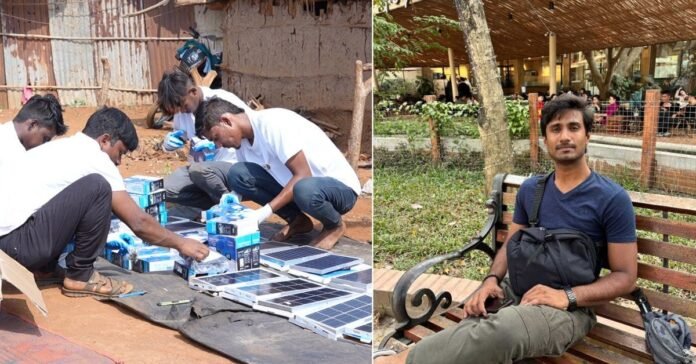
Enter Mission Urja, the brainchild of Tanveer Inamdar, a 28-year-old mechanical engineer from Pune. Leaving behind a lucrative career in multinational companies, Tanveer founded the TREEI (Technology Reuse Environment Empowerment Innovation) Foundation in 2018. Initially focusing on water-fetching solutions, he quickly realized that the lack of electricity in these communities was an even more pressing issue.

“In every field visit, we saw the same thing—pitch-black nights and an overwhelming dependence on kerosene. That’s when we knew we had to act,” Tanveer explains.

Lighting Up Lives—One Solar Panel at a Time

Taking Electricity, Wherever They Go: Engineer’s Portable Solar Units Power Huts of Tribal Migrants in Maharashtra

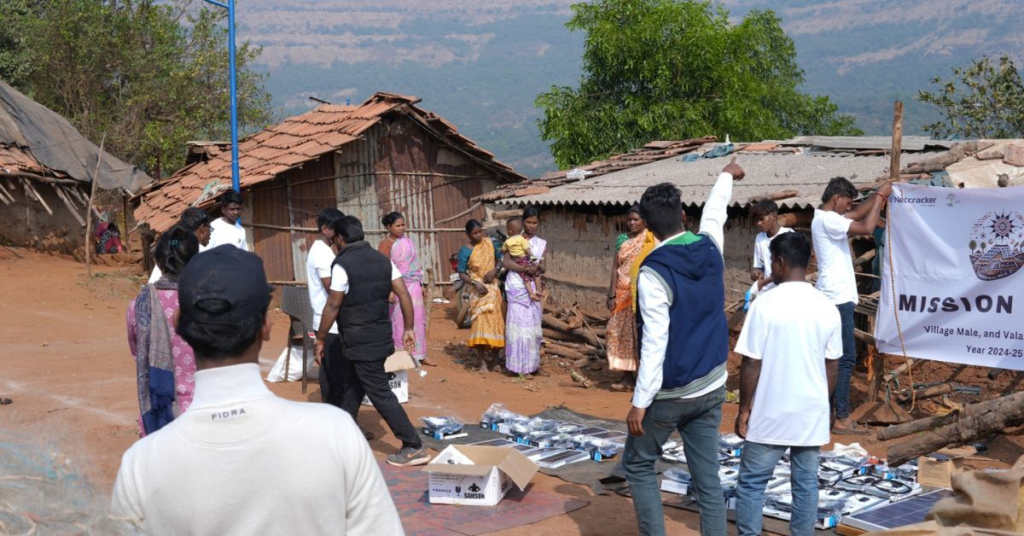
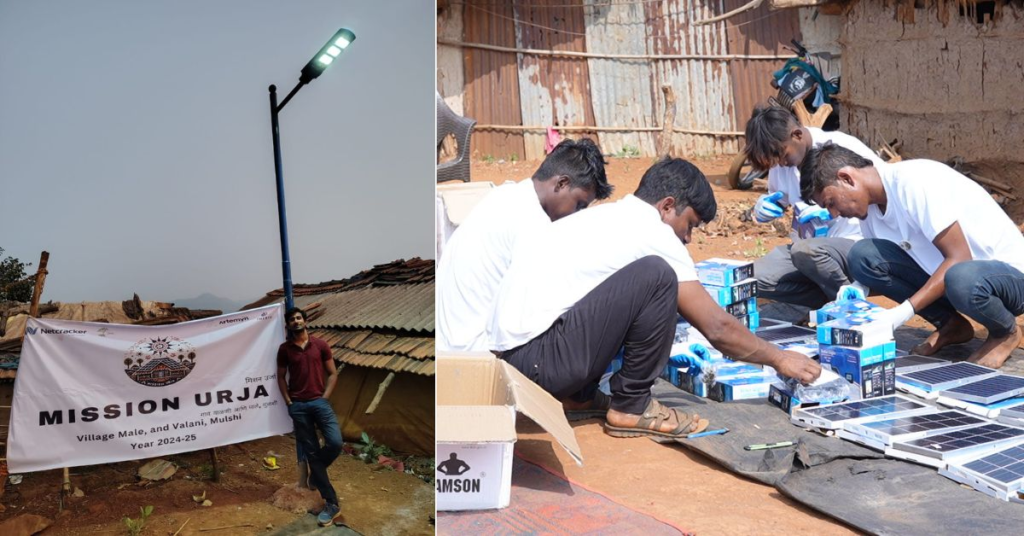
By 2022, Mission Urja was officially underway. Using a blend of solar and hydroelectric power tailored to the geography of each village, Tanveer and his team brought innovative, portable power solutions to places where electricity had never dared to go.

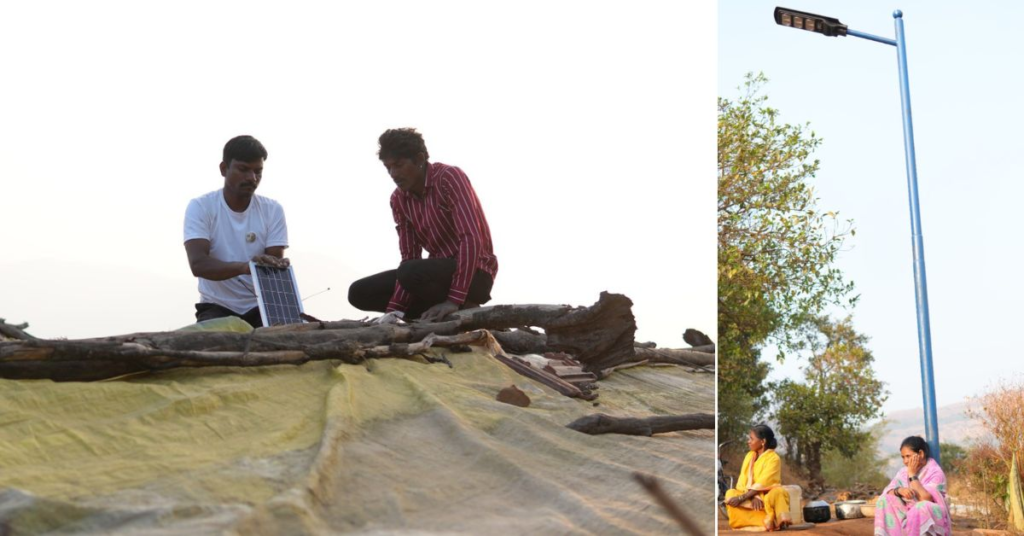
Highland villages used waterfall-powered hydro systems. For nomadic and semi-permanent dwellings, TREEI Foundation provided small, foldable solar panels that weighed just 3 kilograms and could be clipped onto any surface. These panels powered LED lights, fans, and mobile phone chargers, functioning automatically as the sun went down.

“Many families don’t own the land they live on, so permanent installations made no sense. Portability was key,” says Tanveer.

The cost of bringing light to one home ranges from Rs 16,000 to Rs 42,000. But for the tribal residents, it’s completely free—funded through CSR partnerships with companies like Netcracker Technologies, Imerys Group, Artymn, and Persistent Foundation.

The Human Impact: A New Lease on Life
Taking Electricity, Wherever They Go: Engineer’s Portable Solar Units Power Huts of Tribal Migrants in Maharashtra

What does light change? Everything.

“Now, I can charge my phone, turn on a fan, and my kids can study after dark,” beams Sonu. Sanjay Gopinath Pawar, another resident, adds, “Wild animals no longer come near our huts. Our dogs are safer. We are safer.”

Evenings, once dreaded, are now opportunities to gather, chat, and build community. The simple act of turning on a light has added hours of productivity, safety, and connection.

Building Systems of Sustainability
Taking Electricity, Wherever They Go: Engineer’s Portable Solar Units Power Huts of Tribal Migrants in Maharashtra

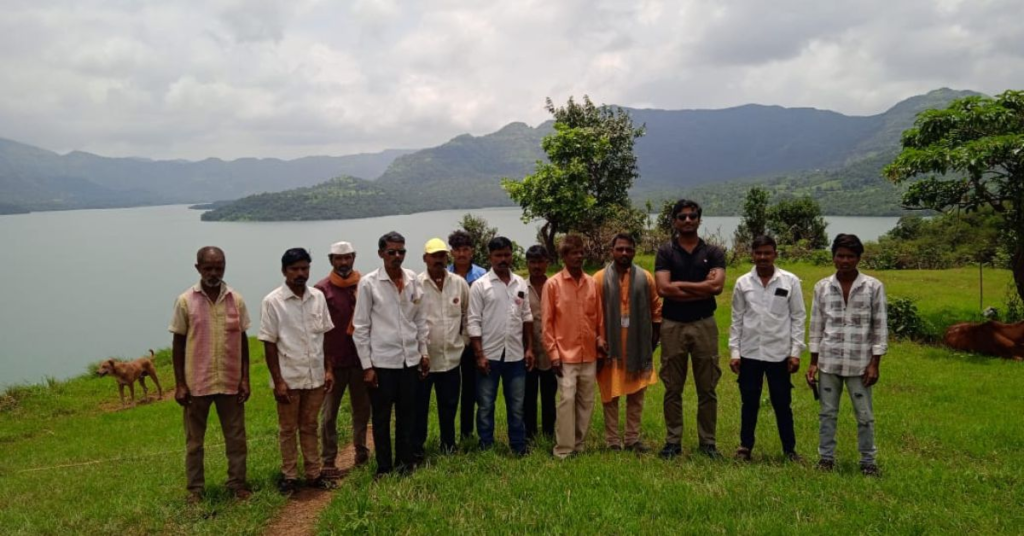
To make the model truly self-sustaining, Tanveer established Urja Committees—local energy management groups comprising three men and two women. Additionally, 10 village youth were trained in technical maintenance.

Each household pays a nominal fee of Rs 10 to Rs 50 monthly, which is saved in the committee’s bank account for future maintenance. “The idea is that after five years, when the warranty expires, they have enough saved to repair or replace the systems. It’s a full-circle model,” Tanveer explains.

In the past, some families paid up to Rs 500 a month to ‘borrow’ electricity from wealthier neighbours’ illegal connections. “They were paying exorbitant prices for just a single bulb. Now, they have ownership, dignity, and real savings,” says Tanveer.

Challenges and Forward Momentum
Taking Electricity, Wherever They Go: Engineer’s Portable Solar Units Power Huts of Tribal Migrants in Maharashtra

Of course, progress hasn’t been without hurdles. Political pushback and lack of cooperation from local authorities occasionally stalled the project. “Some tried to claim credit or blocked efforts for their own gain. That’s the hardest part,” Tanveer admits.

Still, the mission marches on. So far, Mission Urja has reached 945 families across villages like Gelgani, Ghevande, DhopeKhind, and Chandavne. 395 of those now thrive on hydroelectricity. Another 342 use portable solar panels, while 208 enjoy permanent solar installations.

“This isn’t just about electricity,” says Tanveer. “It’s about reclaiming control over one’s life. It’s about dignity.”

The Road Ahead

For these tribal communities, light is more than illumination—it’s transformation. Children now study late into the evening. Women feel safer. Families gather after dark. A way of life has been reshaped.

“Imagine visiting a village that’s pitch black one month and glowing with life the next,” Tanveer smiles. “It’s surreal. It’s magical. And it’s just the beginning.”

By 2028, Mission Urja aims to electrify 100 more villages. If light symbolizes hope, then hope now dances freely through the once-dark alleys of Maharashtra’s tribal heartland, carried by a young engineer’s dream and a community’s undying spirit.

This IAS Officer’s Mission in Odisha Helped 470 Women Clean Up 360 Tonnes of Plastic — and Earn From It

0

From Sarees to Sustainability: How Rural Women Are Leading Odisha’s Waste Revolution

High in the undulating hills of Odisha, as the morning sun spills golden light across red-earth roads and dense green canopies, a quiet revolution is in motion. It’s not carried by machines or mandates, but by a determined brigade of women in colourful sarees and work gloves, riding tricycles and battery-operated vehicles with grit in their hearts and a mission on their minds.

They are the Swachhta Sathis—the sanitation companions of Sundargarh. Armed with nothing more than their training, tenacity, and deep-rooted sense of duty, these women have become the front-liners of a grassroots movement that is rewriting the rules of rural waste management.

And it all begins at the doorstep.

This IAS Officer’s Mission in Odisha Helped 470 Women Clean Up 360 Tonnes of Plastic — and Earn From It

Turning Households into Habits

Each morning, the Swachhta Sathis move from home to home, encouraging families to sort their waste at the source. What was once a foreign concept in these villages has become routine: plastics separated from organics, recyclables kept apart from the rest.

With warmth and persistence, these women have transformed waste into a conversation. Village meetings, street plays, and door-to-door chats have become the new normal—tools of transformation wielded not from podiums, but from the heart.


Waste with a Way Forward

This IAS Officer’s Mission in Odisha Helped 470 Women Clean Up 360 Tonnes of Plastic — and Earn From It

Once collected, the waste doesn’t just disappear—it embarks on a second life. At local segregation sheds and Material Recovery Facilities (MRFs), the Swachhta Sathis sort every piece with care and precision.

High-value plastics like PET bottles are sent off to registered recyclers, reborn into everyday items. The lower-value, often overlooked plastics—like those stubborn multilayered snack wrappers—don’t go to waste either. They find use in road construction and even as alternative fuels in cement kilns, closing the loop in a truly circular economy.

As of now, over 360 metric tonnes of plastic waste has been processed under this initiative. And this is no fleeting clean-up—it’s a self-sustaining ecosystem, built with purpose and maintained through community ownership.

This IAS Officer’s Mission in Odisha Helped 470 Women Clean Up 360 Tonnes of Plastic — and Earn From It

The Man Behind the Mission

This IAS Officer’s Mission in Odisha Helped 470 Women Clean Up 360 Tonnes of Plastic — and Earn From It

Spearheading this movement is IAS officer Manoj Satyawan Mahajan, the 2019-batch collector of Sundargarh.

When he began his field visits, he encountered the reality many had learned to live with—waste dumped on roadsides, floating in water bodies, and burnt in backyards. People weren’t indifferent—they were uninformed and unequipped.

That changed in 2021 with the birth of Aama Sundargarh Swachh Sundargarh. Supported technically by UNICEF and designed under the Urban Rural Convergence model, the initiative became a blueprint for a new kind of rural waste management—community-owned, women-powered, and environmentally focused.

With over 1,682 villages and 3.6 lakh households now participating, nearly 70% of Sundargarh’s rural population has been impacted.


Women Rising with Waste

This IAS Officer’s Mission in Odisha Helped 470 Women Clean Up 360 Tonnes of Plastic — and Earn From It

But perhaps the most inspiring facet of this initiative is the 470 rural women who now stand at its forefront.

From mastering the mechanics of shredders and balers to managing operations at decentralised centres, these women have taken complete ownership of the waste ecosystem. Many, like Monika Minz from Kacharu Gram Panchayat, once worked as daily-wage labourers. Today, Monika earns ₹6,725 per month, begins her rounds at 7 a.m., and ends her workday with a sense of pride and purpose.

“The community calls me Swachhta Didi. I feel like I’m doing something meaningful,” she says. Her income supports her children’s education, and her schedule allows her to balance work and family life—a rare and precious combination.

And Monika isn’t alone. Across villages, women who once had no stable income now walk with confidence and dignity. They are not just workers—they are role models, environmentalists, and community leaders.


Cleaner Villages, Stronger Futures

The district’s success hasn’t gone unnoticed. Sundargarh has been recognised as the best-performing district in plastic waste management under the Swachh Bharat Mission (Gramin).

What started as a problem of sanitation has evolved into a story of empowerment, innovation, and environmental resilience. With an investment of around ₹14 crore, the district has built not just infrastructure—but a movement that thrives on people, partnerships, and purpose.

For Manoj Mahajan, this is more than a job. “It’s close to my heart,” he says. “This initiative blends environmental stewardship with economic upliftment. It’s about showing that rural communities can manage waste as effectively—if not more so—than urban ones.”


What’s Next?

With the success of the model, the district aims to expand. By next year, over 700 Swachhta Sathis are expected to join the movement, doubling down on sustainability while transforming the very notion of what it means to be a sanitation worker in rural India.

Because in Sundargarh, waste is no longer a problem—it’s a possibility. A possibility for cleaner villages, dignified livelihoods, and women at the helm of change.

And it all began with a simple question: What if we empowered those who’ve always been overlooked to clean up what’s always been ignored?

Turns out, the answer was already in the heart of the village—riding a tricycle, wearing gloves, and redefining what leadership looks like.

How to Grow Passion Fruit at Home — Whether You Have a Balcony, Terrace or Garden

0

Grow Your Own Tropical Paradise: The Passion Fruit Guide You Didn’t Know You Needed

Imagine stepping into your garden and plucking a ripe, aromatic passion fruit straight from the vine. The air carries hints of sweetness, the flowers are a burst of purple and white, and your home suddenly feels a bit more like a sun-kissed paradise. Sounds dreamy? It’s totally doable.

Whether you’ve got a balcony, backyard, or just a bit of gardening curiosity, growing passion fruit at home is a delicious decision. And no, you don’t need a rainforest to make it work—just a little sunlight, patience, and this handy guide to help you out.


Step 1: Find the Sweet Spot for Sunshine

Passion fruit isn’t shy—it loves to bask in the sun. Look for a sunny nook that gets at least 6 hours of direct light daily. South-facing walls, bright patios, or balconies are prime real estate. If you live somewhere that gets chilly, consider growing your vine in a large pot. That way, you can whisk it indoors when winter rolls in like an uninvited guest.


Step 2: Soil That Treats It Right

How to Grow Passion Fruit at Home — Whether You Have a Balcony, Terrace or Garden

Passion fruit has taste—it prefers well-drained, fertile soil with a slightly acidic to neutral pH (around 6.5 to 7). If your soil’s heavy on clay, mix in some compost or organic matter. Think of it like prepping a comfy bed for your plant, complete with fluffy pillows of nutrients.


Step 3: Seed or Sapling—Your Choice

Feeling adventurous? Start from seeds. Just soak them for 24 hours, then plant them about an inch deep in a seed-starting mix. Keep them warm, keep them moist, and whisper encouraging things to them (okay, maybe just the first two).

Want a shortcut to fruit-bearing glory? Buy a young plant from a nursery. It’s faster, simpler, and perfect if patience isn’t your strongest gardening trait.


Step 4: Give It Something to Climb

How to Grow Passion Fruit at Home — Whether You Have a Balcony, Terrace or Garden

Passion fruit vines are natural climbers—they love to sprawl and reach. Set up a sturdy trellis, fence, or archway. Not only does it keep your plant healthy with good airflow, but it also turns your garden into a lush green cathedral. Bonus: it looks amazing.


Step 5: Water and Feed Like a Pro

Water regularly, but remember—passion fruit hates wet feet. The soil should be moist, not soggy. If you’re container gardening, drainage is your best friend. Every 4–6 weeks, give your plant a balanced fertilizer to keep it strong, leafy, and fruit-happy.


Step 6: Prune to Prosper

Pruning isn’t just about keeping things tidy. It’s essential for airflow, growth, and disease prevention. Snip off any dead or unruly growth, and shape the vine as it grows. A little grooming goes a long way in the passion fruit world.


Step 7: When the Fruit’s Ready to Shine

How to Grow Passion Fruit at Home — Whether You Have a Balcony, Terrace or Garden

You’ll know it’s harvest time when the skin of the fruit turns purple or yellow, depending on the variety. It should feel soft, a little wrinkled, and basically be whispering, “Eat me.” Gently twist it off the vine—no need to wrestle with it.


Passion Fruit Pro Tips:

How to Grow Passion Fruit at Home — Whether You Have a Balcony, Terrace or Garden
  • Sunlight is everything: It’s the fuel your vine craves.
  • Drainage is non-negotiable: Avoid root rot like the plague.
  • Climbing support is a must: Think of it as a vine’s gym.
  • Water smart, not hard: Moist, not mushy.
  • Feed and fertilise: Every few weeks to keep things fruity.
  • Prune with purpose: Keeps your vine healthy and tidy.

Growing passion fruit at home isn’t just about harvesting delicious fruit (though, let’s be real, that’s a huge perk). It’s about inviting a little bit of the tropics into your daily life—creating a lush, living space that feeds both your belly and your soul.

So go ahead, plant that vine. Your future self—with a bowl of fresh passion fruit in hand—is already thanking you.

Bengaluru Startup Founded By IIT Madras Alumni Is Putting Seaweed at the Heart of India’s Energy Future

0

From Ocean to Octane: How Seaweed is Powering a Greener Tomorrow

When you think of seaweed, your mind probably drifts to sushi rolls, tangled toes at the beach, or perhaps that mysterious green goo in your toothpaste. But beneath its slippery surface lies an untapped powerhouse—a marine marvel that could be the unlikely hero in our quest for sustainable energy.

Enter Sea6 Energy, a Bengaluru-based startup that’s rewriting the story of seaweed—taking it from sea to spark plug.

The Startup That Started at Sea (and IIT Madras)

Back in 2010, a group of visionary IIT Madras alumni—Nelson Vadassery, Shrikumar Suryanarayan, Sri Sailaja Nori, and Sowmya Balendiran—looked at seaweed and saw more than a salad garnish. They saw fuel. They saw fertiliser. They saw the future.

What started as a focus on microalgae soon evolved into a full-blown love affair with macroalgae—specifically, fast-growing red seaweeds. Why? Because they’re scalable, economically viable, and they grow faster than a college rumor—up to two feet a day!

Farming the Future: Cultivating the Blue-Green Gold

But this isn’t your average algae-in-a-jar setup. Sea6 Energy developed a mechanised ocean farming system, designed to cultivate seaweed at industrial scale. Think of it as vertical farming, but horizontal and underwater—a graceful dance of green ribbons swaying beneath the sea, quietly capturing carbon while they grow.

This isn’t just farming. It’s farming 2.0, and it’s renewable, reliable, and remarkably green.

Turning Seaweed into Biofuel: Nature’s Alchemy

Bengaluru Startup Founded By IIT Madras Alumni Is Putting Seaweed at the Heart of India’s Energy Future

So, how exactly does something slimy become something that fuels jets and heats homes?

Through a process called hydrothermal liquefaction (HTL). Sea6 Energy takes wet seaweed biomass and subjects it to high heat and pressure, simulating what the Earth naturally does over millions of years—but in mere hours. The result? Biocrude—a thick, energy-rich oil comparable to conventional crude.

And here’s the kicker: this process is carbon neutral. The CO₂ released when the fuel burns is offset by the CO₂ the seaweed absorbed while growing. It’s a neat loop of give-and-take—a rare win-win in a world of climate trade-offs.

Big Players, Big Moves

The startup’s trailblazing work has drawn global eyes and serious investment. In 2021, Sea6 Energy landed a $9 million funding round from Aqua-Spark, a Netherlands-based investment firm that clearly sees the tide turning in seaweed’s favor.

By December 2024, Sea6 had levelled up again, entering into a partnership with Hindustan Petroleum Corporation Ltd (HPCL). The mission? To co-develop seaweed-to-fuel technologies that could help meet India’s ambitious energy targets outlined in the National Biofuel Policy.

A Green Revolution That Grows Underwater

The potential impact is enormous. Seaweed doesn’t compete for arable land or freshwater, making it a hero in a world of strained resources. Large-scale cultivation boosts marine biodiversity and acts as a carbon sink, turning vast stretches of ocean into eco-allies.

And since it grows so rapidly, it doesn’t just sit there—it hustles. Seaweed is the startup founder of the ocean world: lean, green, and endlessly scaling.


The Bottom Line: Seaweed is More Than Salad

Sea6 Energy isn’t just innovating—they’re proving that sustainability can be scalable, and that the answers to our biggest problems might be swaying gently beneath the waves.

From ocean farms to filling stations, this humble marine plant could soon be fuelling your morning commute and cooling our planet all at once.

Who knew the future smelled faintly of saltwater and sushi?

Modi University Honours the Women of Shekhawati in Anubhooti

0

Modi University, Laxmangarh, celebrated the remarkable achievements of women from the Shekhawati region through a special programme titled Anubhooti, dedicated to honouring their contributions in the fields of education, health, and social welfare. The event took place at the Swami Tansen Auditorium within the university campus.

The programme was inaugurated by Prof. Ashutosh Bhardwaj, President of Modi University, who warmly welcomed the empowered women of Shekhawati and paid tribute to their strength and resilience. Highlighting the pivotal role of women in societal development, Prof. Bhardwaj stated that the efforts of Shekhawati’s women in building a better society are truly exceptional.

Modi University Honours the Women of Shekhawati in Anubhooti

Aditi Rathore, a specially invited speaker, addressed the gathering on the topic of child upbringing. She delved into the physical, social, and emotional aspects of a child’s development, emphasizing how small, mindful actions can lead to positive transformations in children’s lives.

The university’s Admissions Department presented details of the Swabhiman Scholarship Scheme, a special initiative for meritorious girl students from Shekhawati. The scheme offers scholarships ranging from 10% to 100% for various academic courses, with a total scholarship fund of up to ₹5 crore. Additionally, in response to local demand, Modi Vidyalaya will now offer day-school facilities from Class 1 to 12, ensuring quality education for local girls within the region.

The event saw the presence of Dr. Vinod Purohit, Registrar of Modi University, along with other university officials and dignitaries.

Coinciding with the Anubhooti programme, World Health Day was also observed at Modi University with a special focus on women’s health and wellness.

Dr. V.K. Jain of Keshar Mahavir Seva Trust graced the occasion as Chief Guest. In his address, he shed light on lifestyle-related diseases and practical ways to prevent them. A highlight of the session was a live demonstration of CPR (Cardiopulmonary Resuscitation), equipping attendees with life-saving skills to respond effectively in emergencies such as heart attacks.

The event was attended by Prof. Ashutosh Bhardwaj, Prof. Jitendra Binwal (Dean, School of Liberal Arts and Sciences), deans from various faculties, and a large number of faculty members and students.

L&T’s Bold Move: An All-Women Team Is Driving Change in Mining

0

In an industry where steel meets dust and machines roar louder than voices, women were long seen as outliers — observers, not operators. But in 2020, a quiet revolution rumbled to life in the heart of India’s mining sector. And it was driven not by machines, but by women.

At a time when questions still hovered over whether women could handle the demands of massive mining machinery, L&T didn’t just say “yes” — they acted on it. The company launched a bold initiative: an all-women team trained to operate and maintain the behemoths of the mining world. It wasn’t just a nod to inclusion. It was a call to rewrite the rules.

Today, that initiative has transformed into something far more powerful — a movement. A living, working, high-powered testament to the fact that talent has no gender.


The First Step: Belief

The spark came from a simple belief — that capability isn’t determined by chromosomes but by character, commitment, and courage.

L&T’s Bold Move: An All-Women Team Is Driving Change in Mining

“We believed that women could run heavy-duty mining equipment just as efficiently as men — if not better,” says Arvind K Garg, Senior VP and Head of L&T’s Construction & Mining Machinery Business. It was a vision that went against decades of industry tradition, but L&T was ready to challenge the status quo.

That vision took shape at the Noamundi site, where a team of six women, trained at L&T’s workshops, stepped onto the mining ground — helmets on, boots laced, and spirits unshakable.


More Than Machines: Building a Culture of Support

But training alone wasn’t enough. L&T knew the real challenge was reshaping mindsets — inside and outside the company.

To create a workplace where women could truly thrive, the company overhauled more than just policies. Dedicated restrooms, wellness rooms, and ergonomic tools were introduced. Tasks that once required brute force were reimagined with smarter tools — leveling the playing field, not lowering the bar.

L&T’s Bold Move: An All-Women Team Is Driving Change in Mining

Perhaps the bigger challenge lay beyond logistics: changing long-held societal norms. Many of these women faced resistance at home. Mining wasn’t seen as a “woman’s job.” But L&T didn’t just offer employment — they stood by these women, offering emotional backing, mentorship, and stability. During the uncertainty of the COVID-19 pandemic, the company ensured salaries were paid on time — often in advance — providing not just paychecks but peace of mind.


The Ripple Effect: One Woman, Many Doors

L&T’s Bold Move: An All-Women Team Is Driving Change in Mining

What began with six pioneers has now grown to 47 onboarded women, 40 of whom have completed training. Seven more have joined as apprentices — a signal that the momentum isn’t slowing down.

And these aren’t just machine operators. They’re leaders. Mentors. Catalysts. The very women once trained by L&T are now passing that knowledge forward, guiding fresh recruits through classroom sessions and real-world experience.

The 45-day training module — a blend of theory and hands-on practice — became the launchpad for these women to not only operate complex machinery but to take charge of their space in a field that once seemed off-limits.


Changing the Landscape, One Gear at a Time

The success of L&T’s all-women team has done more than just make headlines. It has begun to chip away at the deep-seated belief that certain industries are too tough, too technical, or too “masculine” for women.

And this isn’t token inclusion — it’s full participation. These women aren’t given special treatment; they’re given equal footing, the right tools, and a belief in their ability to rise.

With every load they lift, every gear they shift, and every machine they command, these women are sending a clear message: the future of mining — and of many other industries — is inclusive, equitable, and full of potential.


The Road Ahead

L&T’s initiative is no longer just a corporate program. It’s a model — one that shows what’s possible when companies stop asking if women can and start asking how to support them.

As the company continues to expand its efforts, onboarding more women, mentoring new batches, and refining the training ecosystem, it also sets a bold example for industries across the board.

Arvind Garg says it best: “It wasn’t about proving people wrong. It was about showing what happens when we believe in people’s potential — and then back that belief with action.”

In the quiet hum of a mining machine, in the confident stride of a woman walking toward a bulldozer, in the camaraderie of a team once told “you don’t belong here” — change is happening.

It’s loud. It’s powerful. And it’s just getting started.

How to Grow Cucumbers With Your Kids At Home: A Kerala Gardener’s Easy Guide

0

High above the bustling streets of Thiruvananthapuram, a quiet green revolution is unfolding — on a 500-square-foot terrace. Here, surrounded by the hum of the city and the warmth of the southern sun, 48-year-old gardener Padma Suresh has created an oasis teeming with life, flavor, and a whole lot of inspiration.

Raised in the lush village of Vellarada on the Tamil Nadu-Kerala border, Padma’s roots run deep in farming. She grew up watching seeds become sustenance, seasons guide harvests, and soil nurture life. And though city life pulled her away from her village, it couldn’t shake off the green in her fingers.

Over the past 12 years, she’s lovingly transformed her modest rooftop into a flourishing kitchen garden. From fiery chillies to sweet cherry tomatoes, and crunchy cucumbers to juicy brinjals — every corner of her terrace whispers a tale of resilience, care, and the quiet joy of growing one’s own food.

But this isn’t just a story of homegrown produce. It’s about sharing knowledge, inspiring others, and passing down the age-old love for farming — especially to little hands eager to dig into the earth.

As Padma puts it, cucumbers are the perfect first plant for young gardeners. Easy to grow, quick to harvest, and delicious straight off the vine, they make the ideal gateway into the world of edible gardening. Here’s her friendly, step-by-step guide — tailor-made for curious kids and patient parents.


Step 1: Pick the Perfect Sunny Spot

How to Grow Cucumbers With Your Kids At Home: A Kerala Gardener’s Easy Guide

Cucumbers are sun lovers. They thrive in warmth and light, so finding the right spot is step one. A sunny balcony, a bright terrace, or even a corner patch in your backyard will do the trick.

Padma’s terrace, where over 200 plants thrive, is a perfect example. Let kids pick a corner they can call their own — a patch of promise where their green dreams will take root.


Step 2: Get Your Hands Dirty

This is where the fun begins. Preparing the soil is messy, hands-on, and a great way to bond with nature. Padma swears by organic compost — a mix of vermicompost, cow dung, and neem cake. No harmful chemicals here, just good old earthy goodness.

Let kids mix the compost with the soil and feel how it crumbles and smells — this is the ground where their cucumbers will grow strong and healthy.


Step 3: Plant the Seeds of Possibility

How to Grow Cucumbers With Your Kids At Home: A Kerala Gardener’s Easy Guide

Now it’s time to plant. Use small pots or grow bags if space is limited — cucumbers aren’t fussy, just a bit needy when it comes to spreading out.

Push the seeds gently about 1–2 cm into the soil. Each seed holds the magic of transformation, and kids will love the thrill of planting something that, in a few weeks, they’ll actually get to eat.


Step 4: Water with Love (and Routine)

How to Grow Cucumbers With Your Kids At Home: A Kerala Gardener’s Easy Guide

Once the little sprouts appear, they’ll need water — regularly, but not too much. Padma recommends watering every morning and evening, a perfect habit for kids to build discipline and learn responsibility.

It’s their chance to become caretakers — watching something grow because of them.


Step 5: Help the Vines Climb

Cucumbers grow on climbing vines, so they need a little help reaching for the sky. Set up a simple trellis or frame where they can curl and cling.

Building the support structure can be a fun DIY session for parents and kids. And as the vines grow taller day by day, so will the sense of pride.


Step 6: Go Organic Against Pests

How to Grow Cucumbers With Your Kids At Home: A Kerala Gardener’s Easy Guide

Every garden has its villains — but Padma’s approach is straight from nature’s playbook. She uses a powerful organic fertiliser and pesticide mix made from sardine fish and jaggery.

Chop up the sardines, mix with jaggery, seal it in an airtight container, and stir daily. The end result? A nutrient-rich tonic that keeps plants strong and pests away — and it’s a fun science experiment for young gardeners.


Step 7: Harvest the Happiness

After weeks of watering, watching, and waiting — it’s time. When cucumbers reach about six inches and turn a healthy green, it’s harvest season!

There’s something magical about plucking your first cucumber — grown with your own hands, nurtured with patience and love. For kids, it’s not just a snack. It’s a reward, a story, and a memory.


A Garden of Life and Lessons

Padma Suresh’s terrace garden is more than a patch of green in the city — it’s a living, breathing classroom. It teaches sustainability, patience, and the incredible joy of self-reliance. It shows how anyone, anywhere, can reconnect with the earth — one pot, one plant, one cucumber at a time.

And in a world growing more distant from nature, her message couldn’t be more timely: you don’t need acres of land to grow something beautiful. All you need is a bit of space, a seed of curiosity, and the will to get your hands dirty.

Bengaluru Architect Purifies Water With Plants, Harvests 1.3 Lakh Litres Rainwater Per Year

0

Tucked away in the heart of Bengaluru is a home that doesn’t just shelter — it breathes, reuses, and gives back. Designed by Principal Architect Jaya Rayaprolu, this house isn’t a peek into the future of sustainable living — it is the future, wrapped in sun-dried bricks and powered by the sun.

Jaya and her family have spent the past two years living in complete harmony with nature, embracing eco-conscious choices in every corner of their lifestyle. From the moment you step inside, it becomes clear that this isn’t just a residence — it’s a masterclass in sustainable design.

Water: Captured, Cleaned, and Cherished

Water management is a standout feature of the home. Beneath the courtyard lies a massive 30,000-litre underground sump that harvests rainwater efficiently. Each year, this system collects up to 1.3 lakh litres, meeting the family’s drinking, cooking, and washing needs — significantly reducing dependence on external water sources.

Greywater recycling is another everyday triumph. Around 800 litres of wastewater from the kitchen and bathrooms is treated on-site. The process begins in a baffle tank that initiates primary purification. From there, the water travels to a reed bed filled with aquatic plants that naturally filter it. The final stage is a polishing tank, where exposure to sunlight eliminates remaining bacteria, making the water fit for use in gardening and toilet flushing.

A Zero-Sewage Home

The home goes even further by ensuring it produces zero sewage waste. A compact biodigester, developed by DRDO, converts household sewage into 95% pure water using bioenzymes. This recycled water is reused for garden irrigation or allowed to percolate into the ground to recharge the local water table.

Built by the Earth, Powered by the Sun

Sustainability is embedded not only in the house’s systems but in its very structure. Built using sun-dried bricks made from the very soil excavated during construction, the house maintains a naturally cool temperature, even in Bengaluru’s rising summer heat. Smart ventilation techniques eliminate the need for artificial cooling systems.

Electricity needs are completely met by a 3kW solar power setup, enabling the family to live comfortably without generating an electricity bill. It’s a home that truly runs on nature’s terms — light, air, water, and sun.

Living Light on the Earth

This home stands as a shining example of what thoughtful, responsible architecture can achieve. It proves that sustainable living isn’t about sacrificing comfort — it’s about redesigning it. With zero electricity bills, zero wastewater, and a structure rooted in natural materials, the house reflects a lifestyle that is not just eco-friendly, but empowering.

In a time when urban challenges grow heavier and natural resources grow scarcer, this house doesn’t just offer a solution — it offers inspiration. It redefines what it means to live well by living light on the earth.

From Rs 40 to a Life of Impact: Here Is Actor Gurmeet Choudhary’s Journey

0

Before the red carpets, television awards, and adoring fans, Gurmeet Choudhary was just another wide-eyed dreamer in Mumbai—armed with Rs 40, relentless ambition, and a belief that someday, somehow, he’d make it.

He didn’t arrive in the city of dreams with a silver spoon or a godfather in the industry. Instead, he carried a suitcase full of hope and a mind set to hustle. With no connections and no roof over his head, Gurmeet found himself sleeping in the corridors of his acting institute—sometimes curled up next to the sweepers, just to save money. There were nights filled with hunger and mornings thick with uncertainty. But for Gurmeet, quitting simply wasn’t an option.


The Role That Changed Everything

Years of quiet struggle and quiet auditions finally led to his breakthrough in 2008, when he was cast as Shri Ram in the mythological TV series Ramayan. The role wasn’t just a stepping stone—it was a catapult that flung him into the hearts of millions. Gurmeet didn’t just play Ram; he became him for an entire generation of viewers.

But perhaps the biggest twist in his personal story came off-screen. On the sets of Ramayan, he met Debina Bonnerjee, who played Sita. What began as on-screen chemistry soon blossomed into something deeper. The divine couple of Indian mythology turned into a real-life love story, culminating in marriage in 2011.


Beyond the Spotlight: A Heart for Change

While many use fame to bask in the limelight, Gurmeet took a different route. He chose purpose over publicity.

His success didn’t make him forget where he came from—it made him remember why he started. From supporting underprivileged children to helping cancer patients access treatment, Gurmeet quietly turned his platform into a powerful tool for impact. His charitable efforts are often done away from cameras, driven not by applause but by a genuine desire to give back.

He’s proof that being a star isn’t just about being seen—it’s about what you do when no one’s watching.


Stardust with Soul

Despite the fame and recognition, Gurmeet remains refreshingly grounded. There’s a quiet strength in him, carved not by comfort but by hardship. He wears his success like a soft jacket, never forgetting the worn-out blanket he once clung to on cold institute floors.

His journey isn’t just about survival in a cutthroat industry. It’s a story of resilience, of a love that blossomed under studio lights, and of a man who found meaning beyond the screen.


The Legacy of a Dreamer

Gurmeet Choudhary’s life reads like a script—one filled with dramatic turns, tender moments, and triumphant arcs. But what makes his story truly gripping is that it’s real. It reminds us that dreams are valid, no matter how small your starting point. That the right role can change a career, but the right mindset can change lives.

And perhaps most importantly, it’s a story that teaches us this:
If you ever find yourself with just Rs 40 and a dream—don’t count yourself out. You might just be one audition away from a legacy.

Lives on the Line: The Global Struggle to End Maternal Mortality

0

Every day, somewhere in the world, 712 women die from causes linked to pregnancy or childbirth. That’s roughly one woman every two minutes—a number that’s as heartbreaking as it is unnecessary.

But behind the statistics is a story of both progress and peril, as highlighted in the United Nations’ 2024 report, Trends in Maternal Mortality: 2000 to 2023. Published by the UN Maternal Mortality Estimation Inter-Agency Group—a collaboration between WHO, UNICEF, UNFPA, the World Bank, and the UN Department of Economic and Social Affairs—the report reveals a world that has made significant strides in maternal health but now stands at a critical crossroads.


A Drop in Numbers, But Not in Urgency

Let’s start with the good news: global maternal deaths have dropped by 40% since 2000. That’s a testament to two decades of tireless global efforts—better healthcare services, safer delivery practices, and greater awareness.

For the first time in modern reporting, no country has been classified as having “extremely high” maternal mortality, and no region bears the red mark of being “very high-risk.” That’s an achievement worth celebrating.

But before we pop the champagne, here’s the sobering twist: since 2016, progress has plateaued. In 2023 alone, approximately 260,000 women lost their lives during pregnancy or childbirth. While that’s an improvement over previous years, the world is not on track to meet the Sustainable Development Goal of fewer than 70 maternal deaths per 100,000 live births by 2030.


Unequal Burdens: A Geography of Risk

The map of maternal mortality is far from even. A staggering 70% of maternal deaths occurred in sub-Saharan Africa, while nearly 17% were in Central and Southern Asia. Conflict zones and fragile healthcare systems account for a disproportionate share—64% of deaths came from just 37 countries battling crises.

One of the most telling stories in the report comes from India. Despite dramatic progress—from a maternal mortality rate of 362 per 100,000 live births in 2000 down to 80 in 2023—India still accounted for 19,000 maternal deaths last year, tying with the Democratic Republic of Congo for the second-highest number worldwide. Only Nigeria reported more, with 75,000 maternal deaths.

For comparison, China reduced its rate from 56 to just 16 in the same period—showing what a robust healthcare system and consistent policy support can achieve.


A Tale of Two Indias

India’s national numbers mask sharp regional disparities. In southern states like Kerala and Tamil Nadu, where access to quality private healthcare is more common, maternal mortality rates have plummeted. In contrast, northern states such as Uttar Pradesh and Bihar struggle due to a toxic mix of poverty, underfunded public health services, and a lack of trained personnel.

Public health centers—especially in rural regions—often lack basic resources to manage complicated pregnancies. The result? Frequent and delayed referrals, which can turn treatable complications into fatal outcomes.


When the Pandemic Pushed Back Progress

Like so many aspects of healthcare, maternal health took a hit during the COVID-19 pandemic. Maternity services were stretched thin or halted altogether. The world witnessed an estimated 40,000 additional maternal deaths in 2021 alone, reversing years of progress.

Thankfully, post-pandemic, maternal death rates have generally returned to pre-COVID levels, but the report makes it clear: any future emergency must not interrupt essential maternal care. Health systems need to be resilient, not reactive.


What’s Killing Mothers: The Medical Realities

The leading causes of maternal death remain tragically preventable:

  • Postpartum hemorrhage
  • Hypertensive disorders like pre-eclampsia
  • Infections
  • Indirect causes such as pre-existing health conditions (e.g., diabetes, anemia, heart disease)

These are not obscure or untreatable issues. With timely, skilled care, most of these deaths could be avoided. Yet millions of women—especially in remote or underserved communities—never receive that care in time.


The Infrastructure of Hope

The road to ending maternal mortality doesn’t just run through hospitals. It winds through primary health centers, community clinics, ambulance networks, pharmacies, and training institutes. It requires well-equipped facilities, adequately staffed teams, reliable transportation, and continuous access to life-saving medications.

In many countries, these basics are still considered luxuries.


So What Can Be Done?

The report lays out a clear, urgent roadmap:

  • Invest in healthcare systems, especially at the primary and community levels.
  • Train and support skilled birth attendants—the front line of maternal care.
  • Ensure uninterrupted access to emergency obstetric care, even during crises.
  • Empower women through education, awareness, and access to reproductive health services.
  • Prioritize public health over politics, and make maternal health non-negotiable.

A Future Where No Woman Dies Giving Life

Maternal mortality is more than a health issue—it’s a mirror of societal priorities. Every death reflects a failure not just of medicine, but of equity, infrastructure, and justice.

We’ve come a long way since 2000, but the last mile is often the hardest. Still, hope glimmers—borne by midwives in remote clinics, policy makers fighting for better budgets, and researchers designing tools that save lives.

With global commitment and community action, a world where no woman dies giving life is within reach.

But we have to want it badly enough to work for it—every day, for every mother.