Home Blog Page 319

Siblings Day: A Celebration of Shared Childhoods, Secrets & Sandwiches

0

They are the first friends we never chose, the first rivals we sparred with over TV remotes, the first confidantes to hear our deepest secrets — and yes, probably the first ones to rat us out too. Siblings.

Whether they’re older and protective, younger and chaotic, or exactly your age and your cosmic twin — siblings are the co-authors of our life stories. So, it’s only fair that they get their own day of celebration.

Welcome to Siblings Day — a tribute to love, rivalry, shared rooms, inside jokes, and unspoken bonds.


The Origins of Siblings Day

While Mother’s Day and Father’s Day have long been fixtures on the calendar, Siblings Day is a relatively young (but fast-growing) celebration.

It was the brainchild of Claudia Evart, an American woman who tragically lost both her siblings at a young age. She created Siblings Day in their memory in 1995, choosing April 10th — her late sister Lisette’s birthday — as the official date.

Evart’s goal was simple but powerful: to honour the irreplaceable role siblings play in our lives and to ensure their impact is celebrated just like that of parents.

Her efforts paid off. Siblings Day has gained traction not only in the U.S. but in countries like India, Australia, Canada, and the UK. While it’s not yet a public holiday, its emotional gravity continues to grow year by year.


Why Siblings Day Matters

Sure, you may have spent your childhood plotting their downfall during Monopoly, but deep down, most of us know this truth: siblings shape us in ways no one else can.

Here’s why the day matters:

  • Emotional Anchors: Siblings often know us before we know ourselves. They’ve seen us at our best and worst — and somehow still choose to stay.
  • Shared History: They remember the family vacations, the strange relatives, and the trauma of dial-up internet. They get it.
  • Lifelong Bonds: As life spins forward — college, careers, moving cities — siblings are often the constants in a sea of change.
  • Mental Health: Studies show strong sibling relationships can actually buffer stress and enhance emotional well-being.

So yes, your sibling might still owe you that hoodie, but they’ve also unknowingly helped you build your identity.


How to Celebrate Siblings Day

You don’t need a fancy gift or a huge gesture. Here’s how you can make April 10th special — whether you’re miles apart or sharing a couch:

1. Call, Text, or Video Chat

A simple “Remember when…?” message can unlock a flood of shared memories. Go full nostalgia mode.

2. Plan a Sibling Date

Go for coffee, take a walk, revisit an old haunt. If you’re apart, schedule a virtual game night or movie binge. Bonus points if it’s something you used to do as kids.

3. Recreate Childhood Photos

Bring out the old albums, find your most embarrassing childhood pic, and try to recreate it now. Same clothes, same pose. Hilarity guaranteed.

4. Write a Letter or Post a Tribute

Not everyone is big on words, but trust us — telling your sibling what they mean to you can hit harder than you think. If you’re the social type, post a throwback with a sweet (or hilarious) caption.

5. Sibling Shoutouts

Some people celebrate their chosen family. If you don’t have a sibling, honor someone who feels like one — a cousin, a best friend, or even a pet you’ve trauma-bonded with.


Sibling Bonds Across Cultures

Interestingly, many cultures already have beautiful traditions centered around siblings:

  • India celebrates Raksha Bandhan and Bhai Dooj, where siblings express love, protection, and respect through rituals, sweets, and symbolic gifts.
  • China has familial reverence built deeply into holidays like Chinese New Year, where siblings gather and celebrate family bonds.
  • In parts of Africa, siblinghood extends beyond blood — it’s a community role, an interdependent support system.

Siblings Day is a beautiful global blend of these ideas — informal yet powerful, modern yet timeless.


Final Thoughts

Siblings Day isn’t just about celebrating perfect relationships. Let’s be honest — siblinghood can be messy, complex, and filled with silent grudges about stolen clothes or birthday gifts from 2006.

But it’s also rich with love — the kind that survives long silences, dumb fights, and every weird thing you’ve done in each other’s presence.

So today, lean into that love. Be the first to say “thank you,” “I’m sorry,” or “remember that one time…?”

Because whether they’re in your contacts or in your memories — siblings are the people who make the story of your life more colorful, more ridiculous, and more unforgettable.

And that’s worth celebrating.

Peering Through the Canopy: ESA’s Biomass Mission to Unlock the Secrets of the World’s Forests

0

On April 29, 2025, a satellite unlike any other will launch into the silent void of space — not to gaze at stars or scan the oceans, but to listen to the whispers of the trees.

This is the Biomass mission, the European Space Agency’s latest venture into the living, breathing heart of Earth: its forests. Equipped with cutting-edge radar technology, this satellite will unravel the secrets of carbon, climate, and the colossal ecosystems that knit our planet together — one treetop at a time.


Why Forests Matter (More Than You Think)

Forests aren’t just scenic backdrops for postcards or vacation photos — they’re the planet’s lungs. These green giants absorb roughly 16 billion metric tonnes of carbon dioxide every year, acting as a natural buffer against the rising tide of emissions.

And yet, we’re losing them.

In 2023 alone, an estimated 3.7 million hectares of tropical forest vanished, releasing vast quantities of stored carbon into the atmosphere — about six percent of global CO₂ emissions in one go. Every tree lost is a breath held too long, a climate target slipping further out of reach.

The problem? We don’t even have a clear picture of how much forest biomass exists — let alone how fast it’s changing.

Enter: the Biomass satellite.


How the Biomass Mission Works

At the core of the Biomass mission is a marvel of remote sensing: a P-band synthetic aperture radar (SAR) operating at 435 MHz — a frequency powerful enough to penetrate deep through forest canopies and reflect back vital data about what lies within.

This is no ordinary radar. Unlike optical or higher-frequency radar systems, the P-band can see what others cannot — tree trunks, branches, root zones, even underbrush — essentially giving us X-ray vision for forests.

From its low Earth orbit, the satellite will circle the planet, capturing detailed 3D images of Earth’s woodlands. Over the next five years, it will track forest biomass, carbon storage, and even subtle shifts in forest structure with interferometric precision.

It’s like giving scientists a time-lapse lens on the world’s forests — one that finally fills the massive data gap in our climate models.


Looking Beyond the Trees

But forests aren’t the only thing this radar will watch.

The Biomass satellite will also keep a close eye on the ice sheets of Antarctica, tracking their slow, silent flow. It will map terrain hidden beneath thick vegetation, opening new frontiers in ecology, geology, and conservation. From monitoring remote jungles to shifting glaciers, its radar beams will gather stories untold.

In a world of accelerating climate change, this kind of multi-purpose Earth intelligence is nothing short of gold.


Part of a Larger Quest: The Earth Explorer Programme

Biomass is the latest chapter in the European Space Agency’s Earth Explorer Programme — a suite of missions designed to tackle Earth’s greatest mysteries using satellite science.

Let’s rewind for a moment:

  • GOCE (2009–2013) mapped the Earth’s gravity field.
  • SMOS still monitors soil moisture and ocean salinity to improve weather forecasts.
  • CryoSat measures Arctic ice thickness.
  • Swarm peeks into the planet’s magnetic heartbeat.
  • Aeolus pioneered global wind monitoring.
  • EarthCARE (launched May 2024) studies clouds and radiation for sharper climate predictions.

And after Biomass, the future looks even greener (and geekier):

  • FLEX will track plant photosynthesis — yes, it’ll actually watch how plants breathe.
  • FORUM will explore far-infrared radiation to refine climate models.
  • Harmony will map Earth’s dynamic surface, from earthquakes to glacier flows.

Together, these missions form a space-based orchestra, each playing a unique tune about the planet’s systems, and together crafting a symphony of insight.


Why This Mission Matters Now

We live in an age of tipping points.

Forests are disappearing. Ice is melting. Climate systems are becoming more erratic. To navigate the future, we need not just more data, but better data — the kind that can pinpoint where carbon is stored, where it’s being released, and how ecosystems are evolving in real time.

The Biomass mission isn’t just about trees. It’s about understanding how life on Earth works, and how to protect it.

Because in the end, it’s not just about looking at Earth from space — it’s about seeing it more clearly than ever before.


When Biomass lifts off in April 2025, it won’t just be carrying radar equipment and antennas. It’ll carry the hopes of climate scientists, conservationists, and future generations — all banking on a better map to guide us through the forest of the future.

The Iron Curtain Inside the Sun: How One Element Is Changing Our View of the Stars

0

For centuries, humanity has looked up at the sun — a blazing sphere of light and life — using it as a cosmic compass to decode the mysteries of the universe. But even our closest star is keeping secrets. And now, thanks to new discoveries about the humble element iron, scientists are rewriting chapters of the story we thought we knew.

At the heart of this revolution is a concept both dazzling and deceptively simple: opacity — a material’s resistance to letting light pass through. And in the sun’s case, it turns out that iron might be holding onto light far more tightly than we ever imagined.


Why Opacity Matters in the First Place

Imagine light trying to escape the core of a star. It doesn’t shoot out in a straight line; instead, it’s like a pinball bouncing through a dense crowd of atoms. The more opaque a material is, the harder it is for that light to make its way to the surface.

Opacity shapes everything — from a star’s heat and brightness to how energy flows inside it. It’s the backstage manager of a star’s fiery performance, subtly directing the way a star lives, breathes, and dies.


The Sun: Our Celestial Benchmark

The sun isn’t just the source of Earth’s warmth and Instagram-worthy sunsets — it’s the gold standard for astrophysical models. As our closest star, it serves as a kind of living laboratory. We study its behavior to understand how other stars form, burn, evolve, and sometimes explode spectacularly.

But there’s been a nagging problem.

Our solar models, no matter how sophisticated, haven’t been lining up with what we actually observe. One major head-scratcher? The sun seems to have 30–50% less carbon, nitrogen, and oxygen than models predict. It’s like baking a cake, following the recipe to the letter, and ending up with a soufflé.


Enter Iron, Stage Right

In a surprising twist, iron — not the flashy element you’d expect to steal the spotlight — might just be the key.

A groundbreaking study in 2015 shook things up by suggesting that iron’s opacity could be up to 400% higher than previously thought. And it wasn’t a fluke. Follow-up research, including work from Sandia National Laboratories, confirmed the trend using high-tech methods that mimic the extreme conditions inside the sun.

With tools like powerful X-ray sources and ultrafast cameras, scientists were able to peer into the behavior of iron under intense heat and pressure. What they found? Iron is a much more stubborn gatekeeper of light than our models had accounted for.


Why It’s a Big Deal (Like, Universe-Sized)

If iron is holding onto more light, it throws a cosmic wrench into our current understanding of how energy flows through the sun. That, in turn, affects everything — from how we measure elemental abundances, to how we estimate the lifespan of stars, to how we interpret the data from distant galaxies.

In other words: if we misjudge the sun, we may be misjudging the entire universe.

Think of stellar models as the Rosetta Stone of modern astronomy. They inform how we study exoplanets, interpret cosmic microwave background data, and even simulate galaxy formation. A glitch in the model of our own star? That could ripple across astrophysics like a solar flare through the ionosphere.


The Science Behind the Revelation

So how did we get it so wrong?

Previously, opacity values were largely theoretical — derived from calculations and computer models, not from hands-on experimentation. But recent studies took it further, using real-world tests that recreated sun-like conditions. These included subjecting iron samples to powerful pulses of energy, heating them to over 2 million degrees, and watching how they absorbed X-rays.

The result? A stark mismatch with the numbers we’d been using. And with that, the realization: our solar cookbook might be missing a few crucial ingredients — or miscalculating how they blend.


Looking Forward: A New Age of Stellar Physics

For now, scientists are hard at work revising models, recalibrating instruments, and, frankly, rethinking what we thought we knew.

The journey is far from over. Iron’s story is still unfolding, and so is our understanding of stellar interiors. But what’s clear is this: the tiniest atoms can have the biggest implications.

So the next time you look at the sun — behind your UV-rated sunglasses, of course — think about this: billions of tons of iron deep inside are subtly shaping the light that eventually kisses your skin. The sun, it seems, has been whispering its secrets all along.

We just had to listen more closely.

‘She Was Widowed at 16, Started a Pickle Biz at 65’: This Daughter is Carrying Forward Her Amma’s Legacy

0

Hidden in the quieter corners of the internet — past the noise, beneath the hashtags, beyond the digital bustle — lives a legacy brined in tradition and bottled with love. It’s a legacy sautéed in cold-pressed oils, cured with patience, and seasoned with sendha namak (Himalayan pink salt). It’s the story of a woman who turned the ancient art of pickle-making into a timeless heirloom. And it all began with a kilo of mango pickle.

This is the story of Shyamlata Sihare, the matriarch behind Old Fashioned Gourmet — also known as Aravali Foods — a brand that, since 1993, has been quietly revolutionizing the way India thinks about achaar, papads, squashes, and spices.


From White Saris to Red Chillies: A Woman Before Her Time

‘She Was Widowed at 16, Started a Pickle Biz at 65’: This Daughter is Carrying Forward Her Amma’s Legacy

To understand the soul of Old Fashioned Gourmet, you must first meet its spirited founder.

Shyamlata Sihare’s journey is not one you’ll find in business textbooks. It’s stitched into the folds of white cotton saris worn in widowhood — a life imposed on her at just 16. Pre-independence India had few choices for a young widow, and none that included ambition.

“She was blamed for my father’s death,” her daughter Vasundhara Jhunjhunwala shares. “Her in-laws turned against her.”

Rescued by her maternal grandfather, Shyamlata returned to her parental home — a space governed by decorum and confinement. Leaving the house was rare; dreaming even rarer.

And then, one day, she dropped a bombshell: she’d been accepted to Michigan State University for an MA in advertising.

Vasundhara, now 50, still marvels at how her mother pulled it off. “It’s one of the greatest mysteries of her life,” she smiles. “I wish I’d asked her how.”


Spoons, Spices, and Second Acts

‘She Was Widowed at 16, Started a Pickle Biz at 65’: This Daughter is Carrying Forward Her Amma’s Legacy

After returning from the U.S., Shyamlata remarried, joined her husband’s family business, and carved her space in Delhi’s testosterone-soaked paper market — becoming the first woman paper merchant in that space. A woman selling paper among gruff men with ink-stained hands? Scandalous. And utterly fabulous.

But at 65, when most retire to the background of family life, she decided to create something personal. Something lasting. A brand.

With nothing but a kilo of mango pickle and a lifetime of heirloom recipes, she launched Old Fashioned Gourmet — a tribute to the art of traditional Indian food, curated with a Marwari precision and matriarchal passion.


The Kitchen, the Alchemy, the Legacy

‘She Was Widowed at 16, Started a Pickle Biz at 65’: This Daughter is Carrying Forward Her Amma’s Legacy

“She always said pickle-making was an art,” Vasundhara explains. “You begin by sourcing the best ingredients — never compromise. You sort, you sun-dry, you hand-pound. No shortcuts.”

That spirit now runs through every jar the company produces: tangy lemon ajwain, fiery lal mirch Banarasi, rustic gajar-gobi-shalgam — each one echoing Sihare’s bold yet grounded palette.

Vasundhara took over the business after her mother passed away in 2014. And though the reins were passed, the compass remained fixed: What would Amma do?

When a batch of expensive red chilli powder self-heated and burned during a test for Mangalore-style ghee roast masala, the staff panicked. “It was still usable, but not perfect,” Vasundhara recalls. Her decision was immediate: discard all 30 kg.

“Because Amma wouldn’t settle.”


Ingredient Stories, Not Just Ingredient Lists

In a world where mass production blurs taste into sameness, Old Fashioned Gourmet leans hard into specificity. Their mangoes? From one select region in Gujarat. Their strawberries? Sourced from a single farm on the outskirts of Delhi. Even their chia preserves are rooted in terroir.

Vasundhara doesn’t just collect recipes — she excavates them. She sifts through yellowed notebooks, faded margins, handwritten notes with turmeric stains and ajwain-scented memories. That’s where she found the mint salt — a zesty blend of 25 spices and mineral salts, born from obscurity, now starring on modern snack platters.

And the gajar-gobi-shalgam pickle? It wasn’t just a recipe revival; it was a pilgrimage.

“I searched everywhere. Finally, a dear biji — someone’s grandmother — shared her Punjabi winter recipe.”

It now tops the brand’s sales charts. But for Vasundhara, revenue isn’t the full story.

“There are people who taste our pickles and say, ‘I haven’t eaten anything like this since my grandmother passed.’ That’s the real success.”


The Business of Emotion

In every spoonful of Old Fashioned Gourmet‘s offerings is a whisper of history. A taste of someone’s childhood. A time capsule of culture.

“When passion drives you instead of commerce,” Vasundhara reflects, “decision-making becomes simple.”

In the shimmering jars that line her shelves — redolent with mustard oil, clove, jaggery, hing — lies more than just flavor. There’s courage, too. Tenacity. A woman’s will to live boldly, in full color, when the world demanded grayscale.

So, when the kitchen throws her a curveball — or life does — Vasundhara pauses, smiles, and asks:

“What would Amma do?”

The answer is always the same.

Make a pickle. Of course.

A Mouse, The Matrix, and the Most Detailed Brain Map Ever Made

0

In a groundbreaking scientific feat that blurs the line between neuroscience and science fiction, a team of over 150 researchers has mapped the most detailed section of a brain in history — and the star of the show is, unexpectedly, a mouse watching The Matrix.

Yes, you read that right. The Matrix. The Keanu Reeves one.

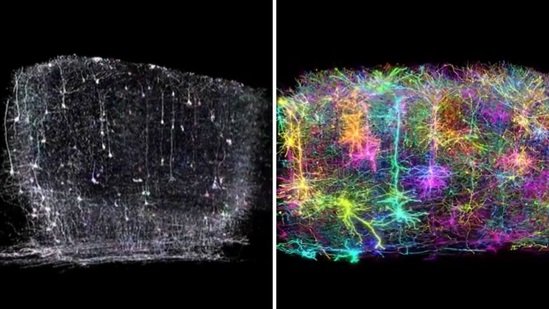
While the rodent likely didn’t grasp the philosophical depth of dodging bullets in slow-mo, its brain did something far more impressive: it lit up in spectacular, glowing patterns, providing researchers with a rare window into the intricacies of thought, perception, and cognition. The result? A dazzling three-dimensional map of the brain’s inner circuitry — 84,000 neurons tangled in a cosmic dance across 500 million synaptic junctions.

It’s being called the largest functional map of a brain to date, and it’s leaving scientists, and the internet, utterly speechless.


The Neuronverse: A Brain That Looks Like the Cosmos

When Forrest Collman of the Allen Institute first laid eyes on the map, his reaction wasn’t clinical—it was cosmic.
“It definitely inspires a sense of awe, just like looking at pictures of the galaxies,” he said. And with good reason. The neural tapestry resembles sprawling constellations, where each glowing thread marks a communication pathway, and each flickering node — a thought, a memory, a moment of mousey Matrix-mindfulness.

“We’re looking at just one tiny part of a mouse’s brain, and it’s already unimaginably complex,” Collman continued. “It gives you a sense of how complicated you are.”

If that doesn’t blow your mind, the map’s location might: it’s a poppy-seed-sized sliver of the visual cortex, the region that processes what the mouse sees — be it sci-fi films, nature clips, or animated spectacles.


How Do You Map a Brain? Start With a Movie Night

Here’s where science turns cinematic. The mouse was shown a series of video clips — including high-octane scenes from The Matrix, animations, and footage of nature and sports. The mouse was no mere viewer. It was a living, glowing participant, genetically engineered so its neurons would fluoresce when active.

As the clips rolled, a laser-powered microscope tracked these neon sparks, essentially filming the brain watching the film.

Then came the real magic: a tiny section of brain tissue was carefully extracted, examined, and reconstructed in 3D. With the help of AI, the researchers “painted” the individual neuron fibers in different colors, resulting in a vibrant, full-color roadmap of thought in action.

The scale? Think of it as Google Maps for the brain — but with galaxies instead of cities.


Why It Matters: Beyond the “Cool” Factor

A Mouse, The Matrix, and the Most Detailed Brain Map Ever Made

For R. Clay Reid, one of the leading scientists on the project, this isn’t just about pretty pictures.

“You can make a thousand hypotheses about how brain cells might do their job,” he said. “But you can’t test those unless you know how they’re wired together.”

That’s what this map delivers: a blueprint of the brain’s wiring. And with it, comes the potential to revolutionize our understanding of mental health, cognitive disorders, even consciousness itself.

Sebastian Seung, a Princeton neuroscientist and AI expert involved in the project, sees this as a critical step forward: “This will give us our first real chance to identify abnormal patterns of connectivity that give rise to disorders.”

It’s not just theoretical. This dataset — published in Nature and made available to the global scientific community — is expected to accelerate research in everything from Alzheimer’s to autism.


The MICrONS Project: A Decade of Determination

The research, part of the MICrONS (Machine Intelligence from Cortical Networks) project, is funded by the U.S. government’s Intelligence Advanced Research Projects Activity (IARPA). The aim? To unlock the secrets of how the brain processes information — and to use that knowledge to build smarter, more human-like AI.

Teams from Baylor College of Medicine, Princeton University, and the Allen Institute worked in sync, assembling what’s now being hailed as a “Rosetta Stone” for brain science.

And while some researchers were busy cracking neuron codes, others were simply stunned. “It’s mind-blowing,” said one user on social media. “Mapping the brain like this could change everything we know about how we think.”

Another, more cautiously, added: “Incredible… also worrying.”


Where Neuroscience Meets Art

While the research is deeply technical, the results have an almost spiritual beauty. The map is more than data — it’s a visual symphony, each colored wire a note in the soundtrack of thought.

Even researchers not directly involved are celebrating. Mariela Petkova and Gregor Schuhknecht, leading neuroscientists in their own right, called it “a major leap forward” and “an invaluable resource for future discoveries.”


The Future: From Mice to Minds

This mouse’s moment in the spotlight is just the beginning. Scientists hope to scale the technology up to map larger portions of the brain — perhaps even a human one, someday.

Imagine understanding how memory forms, how trauma reshapes our minds, or how consciousness emerges from cells and circuits. We’re not there yet. But this is the first step — and it began with a mouse watching The Matrix.

Neo might’ve said it best: “I know you’re out there. I can feel you now.”

Turns out, we really can feel the brain now. Neuron by neuron. Synapse by synapse.

And the future? It’s glowing.

This Goan Farmer Has Cared for His Cows Every Day for 45 Years To Keep His Family’s 100-Year Legacy Alive

0

In the quiet village of Aldona, nestled amidst the lush landscapes of Goa, time moves to the rhythm of cowbells and footsteps across dewy fields. Here lives Krishna Kerkar, a man whose life is inseparably entwined with the soil beneath his feet and the cows he calls family. For 45 years—and counting—Krishna has been a silent steward of a dying legacy.

“My father did this for over 60 years. I just followed him,” he says with a humble shrug, though his voice carries the quiet pride of a man deeply rooted in purpose.

Krishna’s story isn’t loud or dramatic. It doesn’t unfold in boardrooms or break headlines. But it echoes a truth that’s fading from our collective memory—one of patience, persistence, and profound connection to the land.


The Unseen Struggles of a Lifelong Farmer

This Goan Farmer Has Cared for His Cows Every Day for 45 Years To Keep His Family’s 100-Year Legacy Alive

Each morning at 6 a.m., Krishna and his wife begin their day not with screens or alarms, but with the earthy rituals of rural life—collecting cow dung, feeding the herd, and preparing for the first round of milking. By 9 a.m., the cows are led out for grazing, a slow, quiet procession through the fields. Noon is a brief pause. Then, the afternoon brings another round of care—milking at 3:30, grazing again at 5.

Even social commitments come second. “Weddings, functions—I always return by 4 p.m. My cows must be taken out. They depend on me, and I won’t let them down.” He chuckles, then adds, “They understand me. When I call them, they walk back home on their own.”

But behind this deeply affectionate routine lies a hard truth: it’s getting harder to sustain. The cost of fodder has risen sharply, leaping from ₹1,500 to ₹1,800 and beyond. Each month, Krishna spends nearly ₹20,000 just on feeding his cows—fodder trucked in from Sattari, vulnerable to the rain and prone to spoilage.

“There’s no profit in this anymore,” he says, not bitterly, but with quiet resignation. “It’s hard work—sun or rain, we’re out in the field. You have to love it, or you can’t do it.”


A Life Rewritten by Circumstance

Krishna wasn’t always certain this path was his future. After completing his SSC, he pursued training at an Industrial Training Institute (ITI) in Karaswada, Mapusa, hoping for a stable job. He worked for three years and even came close to a government position. But despite every effort—including knocking on the doors of political ‘influencers’—nothing came through.

“I tried every possible contact, every shortcut people said would work. But nobody helped. I gave up.” He turned instead to the one thing he knew intimately—the land.

Today, his entire family works alongside him—his wife, his daughters, and sometimes, even visiting relatives lend a hand. It’s a life sustained by shared effort, even as savings remain elusive. “We manage to run the household, but saving money? Impossible,” Krishna says.


Wounds of Time, and the Wisdom It Brings

A fall some years ago left Krishna with chronic back pain. Bending, lifting, even simple movements now come with a wince. His daughters have stepped up, handling much of the cleaning work, but the toll of decades is undeniable.

Still, Krishna carries on.

“Earlier, when there were no electric pumps, we used to draw water from wells with ropes. That was hard work, but good work. It kept us strong.”

He laughs a little at the irony: that in chasing comfort, we may have lost health. “Today, people go to gyms. We used to do it all in the fields!”


A Tradition Disappearing into Dust

This Goan Farmer Has Cared for His Cows Every Day for 45 Years To Keep His Family’s 100-Year Legacy Alive

Perhaps the hardest blow, Krishna admits, isn’t physical—it’s generational. “The youth don’t want this life. And I understand. They’ve seen us work hard in the sun and rain with nothing left at the end of the day. They want office jobs, AC rooms, holidays. Who wouldn’t?”

His worry is not that they are wrong, but that something irreplaceable is being lost.

“We used to keep many bulls. Now, none. We used to make a thousand cow dung cakes, sell them, use them as fuel. Now, people don’t want them. They want gas. They want cement floors, not cow dung-coated ones.”

In the past, even cow dung was a valued resource—dried, shaped into cakes, and sold or used during the monsoons as firewood. It kept homes warm, fields fertile, and floors cool. Today, it’s barely recognized for its worth.

“We make about 200 to 500 cakes now. Most of it we use ourselves. No one buys it anymore.”


“They’re Not Animals. They’re Family.”

For Krishna, the cows are more than a livelihood—they are his compass, his comfort, his companions.

“They understand me,” he says. “They walk with me, listen when I call, and make every day feel complete. If I don’t see them, something feels missing.”

In a world rapidly shifting toward mechanisation, digitisation, and detachment, Krishna Kerkar represents a rare kind of wealth: one not counted in currency, but in care.

“I don’t have savings, or security. But I have peace. I have my cows. And I have my land. That’s enough.”


The Question That Remains

Krishna doesn’t ask for sympathy. But his life raises a silent question for all of us: What happens when people like him are gone? When fields fall silent, cows no longer graze, and the last cow dung cake crumbles into memory?

Maybe, just maybe, it’s time we listened—not just to stories like Krishna’s, but to what they’re trying to tell us. That not all progress lies in leaving the past behind.

Sometimes, it lies in remembering it—before it disappears forever.

How 7 Abandoned Havelis Were Restored to Reignite India’s Small-Town Tourism

0

India’s havelis—those timeless sentinels of sandstone, lime, and legend—stand quietly in the bylanes of history. Once grand abodes of royalty, merchants, and noble families, these architectural marvels have weathered monsoons, dynasties, and dust. For decades, many crumbled into silent ruins. But now, they’re waking up.

From the deserts of Rajasthan to the coastal charm of Maharashtra, a quiet but steady revival is underway. Meticulously restored and lovingly repurposed, these havelis are not just architectural showpieces—they’re vibrant cultural hubs offering travellers a rare passage into a bygone world.

Ready to time-travel? Here are seven lesser-known restored havelis across India where heritage meets hospitality:


1. Daspan House – Jodhpur, Rajasthan

How 7 Abandoned Havelis Were Restored to Reignite India’s Small-Town Tourism

Where the desert tells its stories in stone

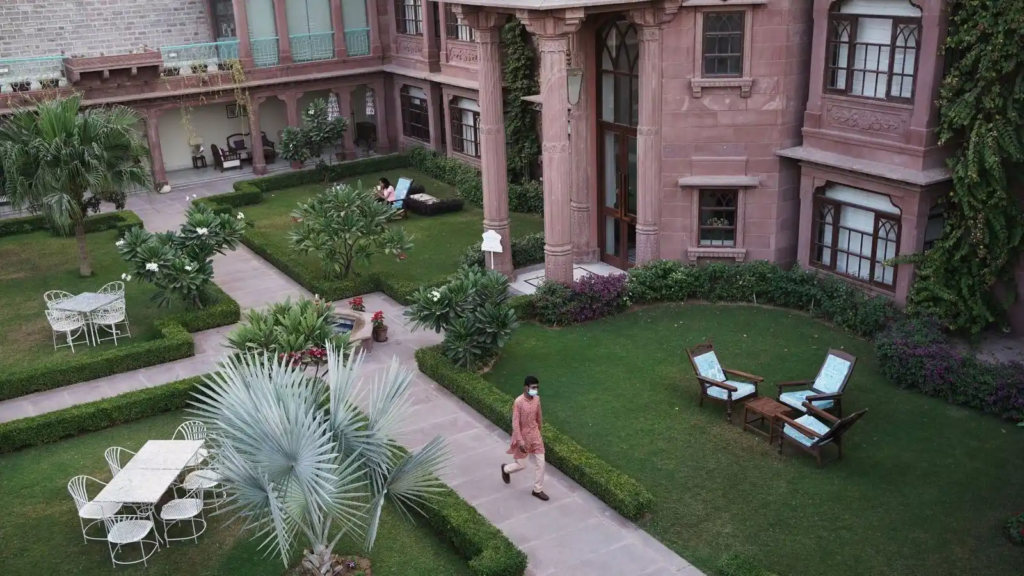
Tucked away in the Blue City’s quieter quarters, Daspan House rises like a regal whisper. Built in 1921 and revived in 2019, this sandstone haveli now shines as a boutique hotel with an old soul. Every corner hums with stories—spiral marble staircases wind into serenity, rooms overlook gardens where time seems to slow, and the infinity pool reflects both sky and history. Hungry? Head to Old Loco, the in-house restaurant and bar, for a sip of the past with a modern twist.


2. Peepal Haveli – Gurdaspur, Punjab

How 7 Abandoned Havelis Were Restored to Reignite India’s Small-Town Tourism

Where tradition meets transformation

Once nearly forgotten in the folds of rural Punjab, Peepal Haveli in Nawanpind Sardaran has emerged as a model of sustainable restoration. Over 125 years old, this heritage gem won the UNESCO Asia-Pacific Award for Cultural Heritage Conservation in 2023. The revival wasn’t just about walls and windows—it revived a community. Traditional materials, local craftsmanship, and a focus on educational use make Peepal Haveli a living, breathing tribute to responsible conservation.


3. Figueiredo House – Loutolim, Goa

How 7 Abandoned Havelis Were Restored to Reignite India’s Small-Town Tourism

A museum of memory in Indo-Portuguese stone

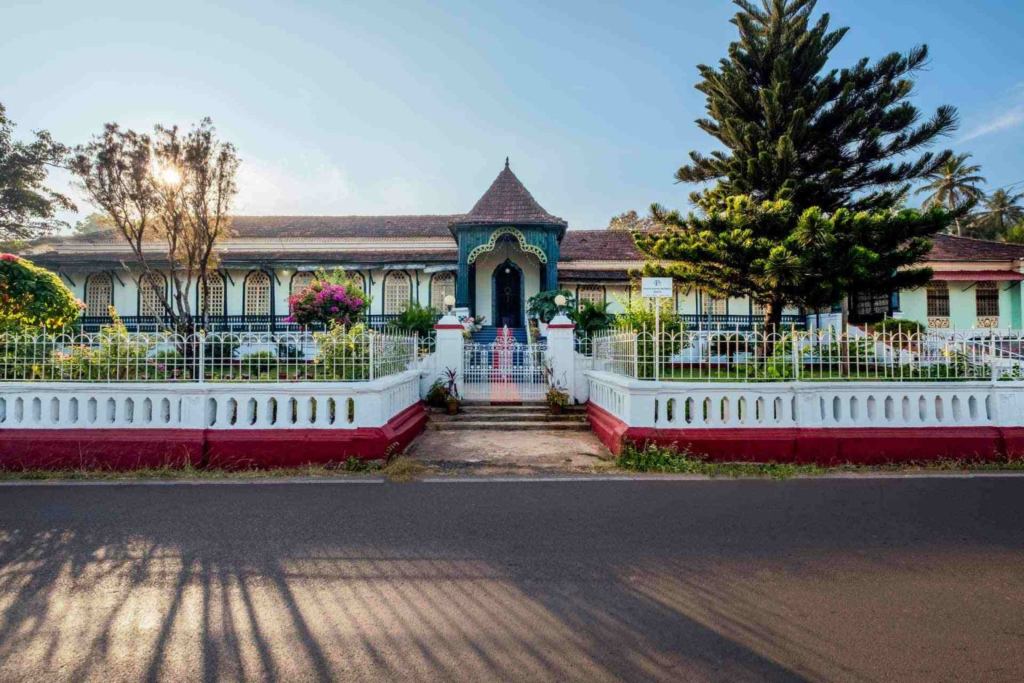
Dating back to 1590, this Goan mansion is less a house and more a chronicle of centuries. The Figueiredo House, restored lovingly by Maria de Lourdes Figueiredo de Albuquerque, is now a living museum where you don’t just look—you feel. Think wooden altars dressed in azulejos, a ballroom echoing the rustle of bygone soirées, and a family legacy you can walk through. One step inside, and you’ll never see Goa the same way again.


4. Mahishadal Rajbari – Purba Medinipur, West Bengal

How 7 Abandoned Havelis Were Restored to Reignite India’s Small-Town Tourism

Where Bengal’s royal bloodlines still bloom

Two palaces—Rangi Basan (1840) and Phulbagh (1926)—stand proudly on the Mahishadal estate, their arches wide with welcome and walls lined with tales of rajahs and revolutions. Preserved with care, these palaces blend grandeur with grace. Wander through their corridors, and you’ll find vintage photographs, regal artifacts, and echoes of Bengal’s royal past that still hum in the air.


5. Amolee – Alibaug, Maharashtra

How 7 Abandoned Havelis Were Restored to Reignite India’s Small-Town Tourism

Where the sea breeze carries stories of faith

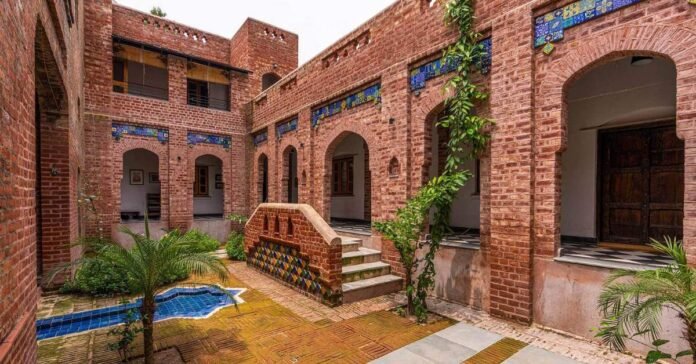
Built in 1830 in the sleepy coastal town of Alibaug, Amolee is a traditional wada—but it carries the soul of a community. Constructed using Burma teak, limestone, and brick, the mansion holds special significance for the Bene Israeli Jews of the region. Today, antique furniture, mosaic-tiled floors, and oil lamps bathe the space in nostalgia. A sanctuary of cultural fusion, Amolee offers a serene stay for those seeking depth over dazzle.


6. Golden Haveli – Chandni Chowk, Delhi

How 7 Abandoned Havelis Were Restored to Reignite India’s Small-Town Tourism

History’s heartbeat in the heart of Old Delhi

Amidst the chaos of Chandni Chowk, the Golden Haveli is a rare oasis—150 years old and freshly restored in 2023. This grand mansion now stands as a heritage guesthouse where visitors can live the Mughal-era charm without losing modern comforts. Imagine sipping chai on a jharokha overlooking bustling bazaars, or waking up to the call of a 19th-century world. It’s Delhi, distilled.


7. Chettinad Mansions – Karaikudi, Tamil Nadu

How 7 Abandoned Havelis Were Restored to Reignite India’s Small-Town Tourism

Tiles, teak, and the trail of trade

The mansions of Chettinad, once the pride of the Chettiar merchant community, are architectural epics. Built between the 19th and mid-20th centuries, these mansions boast Burmese teak, Belgian mirrors, and Italian tiles—testament to a time when Karaikudi was a global trade node. Though many fell into neglect, the Chettinad Heritage and Cultural Festival (launched in 2022) is fuelling a quiet renaissance. Today, several havelis have reopened as heritage hotels, letting guests sleep where history lives.


The Revival Revolution

The resurgence of India’s havelis is more than a conservation effort—it’s a reclamation of identity. In an age of glass towers and identical skylines, these mansions remind us that beauty has layers, and stories need shelter.

So, if you find yourself yearning for an escape that’s more soulful than sanitized, follow the sandstone trails. There’s a haveli waiting to welcome you—with creaking doors, whispered histories, and a charm that refuses to fade.

Mahavir Jayanti 2025: Celebrating Birth of Lord Mahavir and His Timeless Teachings; Know History and Quotes

0

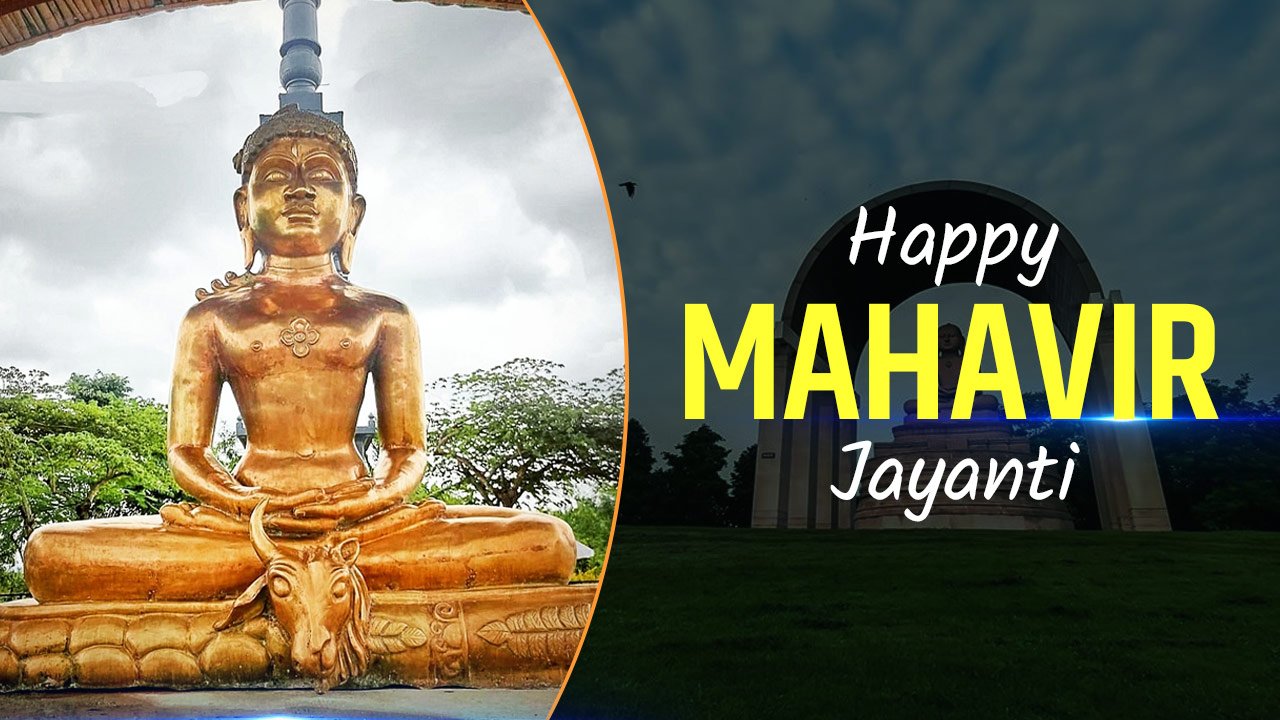
Mahavir Jayanti, one of the most important festivals for the Jain community, commemorates the birth of Lord Mahavir, the 24th and last Tirthankara of Jainism. This year, the festival will be observed on April 10, with the Trayodashi Tithi of Shukla Paksha in the Chaitra month beginning at 10:55 PM on April 9 and ending at 1:00 AM on April 11, according to Drik Panchang.

Lord Mahavir was born in 599 BCE in Kundagrama, a region in present-day Bihar, into the Ikshvaku dynasty. He grew up in a royal household, surrounded by wealth and comfort, yet chose a path of deep spiritual pursuit. At the age of 30, he renounced his worldly life in search of truth and enlightenment. After 12 years of intense meditation and ascetic practices, he attained Kevala Jnana, or absolute knowledge.

Following his enlightenment, Lord Mahavir dedicated his life to spreading the core principles of Jainism: Ahimsa (non-violence), Satya (truth), Asteya (non-stealing), Brahmacharya (celibacy), and Aparigraha (non-possession). These five ethical vows form the cornerstone of Jain philosophy and are central to the spiritual life of every follower.

Mahavir Jayanti 2025: Celebrating Birth of Lord Mahavir and His Timeless Teachings; Know History and Quotes

The Significance of Mahavir Jayanti

Mahavir Jayanti is not only a celebration of Lord Mahavir’s birth but also a day for spiritual reflection. It holds deep significance for Jains as it encourages them to embody the values he taught. His message of compassion, discipline, and truthfulness continues to guide millions toward a life of ethical and mindful living.

On this auspicious day, devotees reaffirm their commitment to Lord Mahavir’s teachings by practicing non-violence, truth, and kindness in their daily lives. The festival serves as a powerful reminder to care for all living beings and live in harmony with nature.

Celebrations Across the World

Mahavir Jayanti is celebrated with great devotion and enthusiasm by Jains around the world. Although customs may vary across regions, most communities organize a Rath Yatra, where an idol of Lord Mahavir is carried in a beautifully decorated chariot. This procession symbolizes the spread of his message to humanity.

Devotional songs and bhajans are sung in praise of Lord Mahavir, while the idol is ceremonially bathed in an Abhisheka, representing spiritual purification. Acts of charity and selfless service are also emphasized during the celebrations, reflecting Lord Mahavir’s emphasis on compassion and non-attachment.

Many devotees visit Jain temples to participate in prayer meetings, listen to spiritual discourses, and take part in community service. Religious leaders and scholars share sermons and stories from Lord Mahavir’s life, inspiring followers to walk the path of righteousness and inner peace.

Godrej Rolls Out Next-Gen Smart Security Solutions in Jaipur for Residential and Jewellery Sectors

0

The Security Solutions division of Godrej Enterprises Group today launched its latest range of premium, tech-enabled lockers in Jaipur, reaffirming its leadership in Rajasthan’s dynamic security market. With a robust presence in both consumer and institutional segments, this new product portfolio is designed to address the growing demand for advanced security solutions among homeowners and jewellers in the state.

Rajasthan’s thriving jewellery sector, valued at approximately ₹11,183 crore (around $1.35 billion) in FY24 and driven by Jaipur’s renowned craftsmanship and global appeal, presents a significant opportunity. With this strategic move, Godrej aims to further strengthen its foothold in India.

“As a trusted name in security for over a century, we continuously innovate to meet evolving customer needs,” said Pushkar Gokhale, Business Head, Security Solutions Business, Godrej Enterprises Group. “Jaipur, with its vibrant jewellery industry and modern urban landscape, is a key market for us. The Indian jewellery sector, contributing about 7% to the nation’s GDP and projected to grow at a CAGR of 8.34% from FY2023 to FY2027, presents a promising landscape. Our new range of lockers are for homes and institutes engineered to provide intelligent, reliable protection—whether safeguarding cherished home valuables or securing high-value jewellery inventories. With a focus on convenience, design, and uncompromising security, we are committed to protecting both the lifestyles and livelihoods of Rajasthan’s communities.”

In addition to the product launch, Godrej Enterprises Group is intensifying its expansion strategy in Jaipur and across Rajasthan by broadening its distribution network, forging key retail partnerships, and enhancing digital engagement. The company is targeting robust growth of around 18% for the next three years, with Jaipur contributing significantly to this expansion, and aims to secure dominant market share of over 75% in the home locker segment and close to 60% in the jewellery segment.

Supporting this momentum, the Rajasthan government’s initiatives—such as the ‘One District One Product’ scheme—are further enhancing business opportunities and streamlining operations for jewellers, fostering an environment ripe for innovation and growth.

Godrej has introduced the Defender Aurum Pro Royal Class E safe, a BIS-certified high-security safe engineered specifically for jewellery businesses, ensuring secure and high-capacity storage of valuable inventories. Complementary offerings such as the AccuGold iEDX Series provide non-destructive gold testing for jewellery retail, hallmarking centres and Banks for their Gold Loan business. The Godrej MX portable strong room modular panels offer maximum security with ease of setup and flexibility, especially for areas where constructing RCC reinforced Strong rooms is unviable due to difficulties in approvals or logistic issues.
Additionally the new product lineup for Home includes the NX Pro Slide, NX Pro Luxe, Rhino Regal, and NX Seal—each featuring advanced security technologies such as dual-mode access (digital and biometric), intelligent Ibuzz alarm systems, discrete storage compartments, and sleek interiors designed to complement modern homes.

Godrej is also accelerating it’s expansion beyond Jaipur into the fast-growing Tier 2 and Tier 3 cities across Rajasthan, regions renowned for their jewellery craftsmanship. Gems & jewellery being an important cornerstone of the state of Rajasthan, Godrej is dedicated to supporting this legacy by delivering state-of-the-art security solutions that empower this sector.

Peering into the Cosmos from the End of the Earth: China’s ‘Three Gorges Antarctic Eye’ Telescope Ushers in a New Era of Astronomy

0

In a place where the wind screams across endless white deserts and the sun disappears for months at a time, a new eye has opened—one that doesn’t blink, doesn’t sleep, and gazes endlessly into the universe. Welcome to Zhongshan Station, Antarctica, where China has just inaugurated one of its boldest scientific ventures yet: the Three Gorges Antarctic Eye, a 3.2-meter radio/millimetre-wave telescope designed to unravel the secrets of star birth and the vast clouds of gas that cradle them.

A Telescope at the Edge of the World

Antarctica is perhaps the most unlikely place you’d imagine setting up a delicate scientific instrument. But that’s precisely why it’s perfect. With its ultra-clear skies, dry atmosphere, and near-zero light pollution, Earth’s southernmost continent offers a window into the cosmos unlike any other.

Co-developed by China Three Gorges University and Shanghai Normal University, the Three Gorges Antarctic Eye builds on China’s previous Antarctic Survey Telescopes (AST3). But this new instrument is a leap forward. Its mission? To listen in on the quiet whispers of the galaxy—the spectral lines of hydrogen and ammonia—to better understand how stars are born, evolve, and shape the universe.

Engineering in Extremes

Building anything in Antarctica is an exercise in patience, perseverance, and mind-boggling logistics. Constructing a cutting-edge telescope? That’s next level.

Engineers had to ensure the telescope could survive temperatures that plunge below –50°C and withstand wind speeds that could flatten a truck. Every wire, lens, and motor had to be redesigned, ruggedized, and rigorously tested to function in an environment that humans can barely survive in, let alone thrive.

But those hardships have paid off. The telescope now stands proud and ready, built to endure the harshest conditions on Earth to uncover the most delicate phenomena in space.

The Science: Cosmic Cradles and Galactic Gas

At its core, the Three Gorges Antarctic Eye is designed to observe neutral hydrogen (HI) and ammonia (NH₃)—two key markers in the vast nurseries where stars are born. By mapping and analyzing these gases, scientists aim to piece together a clearer picture of the star formation process, galactic structure, and the life cycles of cosmic matter.

This data will not only further China’s own astronomical ambitions, but also contribute to the global scientific community’s efforts to decode the mysteries of our galaxy.

Antarctica: Earth’s Natural Observatory

Antarctica isn’t just a place for penguins and polar explorers—it’s fast becoming a frontier for astronomy. With its clean, dry atmosphere and extended periods of darkness, it provides near-perfect conditions for observing the universe in wavelengths that are blocked or distorted elsewhere on Earth.

China’s expansion into Antarctic astronomy puts it in league with other nations investing in cutting-edge polar observatories, such as the IceCube Neutrino Observatory at the South Pole, which listens for ghostly particles from exploding stars.

Academic Ambitions & Future Endeavours

This isn’t just a government-backed initiative; it’s also a call to the country’s scientific institutions. China Three Gorges University plans to send regular research teams to Zhongshan Station to carry out on-site investigations and experiments. The telescope will act as a beacon for academic collaboration, innovation, and hands-on learning in extreme conditions.

With time, this initiative could open doors to more powerful submillimeter-wave observatories, turning the barren ice fields into bustling hubs of interstellar insight.

A Global Chorus of Cosmic Listening

The Three Gorges Antarctic Eye joins a growing symphony of observatories around the world listening to the universe in new and exciting ways:

  • INO (India-based Neutrino Observatory) – Peering into the world of neutrinos deep beneath Tamil Nadu’s mountains.
  • IceCube (USA) – Catching elusive neutrinos as they whiz through frozen Antarctic ice.
  • JUNO (China) – Preparing to detect solar and geoneutrinos from its underground lair.
  • DUNE (USA) – A next-gen neutrino experiment set to uncover the secrets of supernovae by 2030.
  • TRIDENT (South China Sea) – A deep-sea telescope diving into the unknown world of aquatic neutrino interactions.

Each of these observatories is like a unique musical instrument in an orchestra, together composing humanity’s grand symphony of cosmic discovery.

The Bigger Picture: Gazing Up, Grounded in Hope

In an age when Earth feels increasingly small and divided, the act of looking up—of pushing into the unknown together—remains a quietly revolutionary thing.

China’s Three Gorges Antarctic Eye isn’t just a marvel of science and engineering; it’s a statement of intent. A declaration that even from the coldest, loneliest corners of the planet, we can reach for the stars.