Home Blog Page 308

Life After Clearing UPSC: 5 Civil Servants Solving India’s Toughest Local Challenges

0

When we think of civil servants, it’s easy to picture crisp suits, long meetings, and mountains of paperwork. But across India, a quiet revolution is unfolding — not in conference rooms, but on riverbanks, in classrooms, and deep within forests.

Here, a handful of determined individuals are rolling up their sleeves, stepping into communities, and turning good intentions into tangible change. Their missions go beyond drafting policies; they’re crafting hope, resilience, and a better tomorrow — one bold action at a time.

Meet five such trailblazers who are proving that true leadership happens when you leave the desk behind.


1. Manish Bansal, Uttar Pradesh: Breathing Life Back into the Sot River

For years, the Sot River in Sambhal was little more than a fading memory — a once-proud waterway buried under decades of encroachment and neglect. Fields that had once thrived on its waters dried up. Generations grew up knowing only dust where there had once been abundance.

Life After Clearing UPSC: 5 Civil Servants Solving India’s Toughest Local Challenges

Enter Manish Bansal, IAS — not with grand speeches, but with a practical, boots-on-the-ground revival plan. His team began by meticulously tracing the river’s original path, using old revenue maps like a treasure map back to life itself. Illegal encroachments were cleared, and hundreds of MGNREGA workers got down to the gritty task of desilting.

And the river responded.

A 110-km stretch of the Sot now flows once more, nourishing land, livelihoods, and spirits alike. Over 10,000 bamboo saplings line its rejuvenated banks, holding the soil — and the community’s hopes — firmly in place.

Impact unlocked: Where there was barrenness, there’s now bloom; where there was silence, the river sings again.


2. Dr. Nidhi Patel, Himachal Pradesh: Launching Dreams into Orbit

Tucked in the hills of Bilaspur, a quiet revolution in education is underway. In a region where many children once drifted away from school, a gleaming new space lab now hums with excitement and wonder.

Life After Clearing UPSC: 5 Civil Servants Solving India’s Toughest Local Challenges

At its helm? Dr. Nidhi Patel — an educator on a mission to replace resignation with rocket science.

Since its launch in January 2024, the lab has welcomed over 900 young minds, lighting fires of curiosity where once there was only indifference. Here, students build obstacle-avoiding robots, peer through telescopes, and dream of galaxies far beyond their mountain homes.

Gone are the days when science felt like a distant, city-born luxury. Today, thanks to Dr. Patel, rural children are boldly charting their own cosmic journeys.

Impact unlocked: Where there was hesitation, there’s now lift-off.


3. Vikas Ujjawal, Jharkhand: Healing Forests, Healing Futures

In the heart of Naxal-affected Lohardaga, the Dubang-Salgi Protected Forest had been stripped bare — victim to illegal logging, forest fires, and desperate survival tactics.

When IFS officer Vikas Ujjawal arrived, he faced not just a devastated ecosystem, but also the daunting challenge of winning back trust in a fractured community.

He answered with action.

Three lakh plants later, the forest breathes again. Sloth bears, foxes, hyenas, deer, and porcupines have returned. Water streams once clogged with ash now trickle with life. Ecotourism projects offer new income streams, gently nudging locals away from deforestation.

Ujjawal’s restoration is not just of a forest — but of faith, in nature’s resilience and human potential.

Impact unlocked: From ashes to abundance, from fear to hope.


4. Swapnil Pundkar, Andhra Pradesh: Turning Litter into Lessons

What do you do when daily garbage collection isn’t enough to stop people from littering?

If you’re Swapnil Pundkar, IAS, you don’t just collect the garbage — you return it to sender.

Life After Clearing UPSC: 5 Civil Servants Solving India’s Toughest Local Challenges

Under Kakinada’s quirky-yet-effective ‘Return Gift Campaign’, households caught littering find their own waste handed back to them, tagged with RFID data to keep track. The message is simple, brilliant, and — let’s be honest — a little hilarious.

Public attitudes shifted swiftly. Cleanliness wasn’t just the government’s job anymore; it became a badge of community pride.

Swapnil’s genius lay not in punishment, but in participation — gently nudging people to own their shared spaces with pride.

Impact unlocked: Garbage became a mirror, reflecting a cleaner, more responsible city.


5. Ujjwal Kumar Chavan, Maharashtra: Water, the Wellspring of Hope

In drought-ravaged Marathwada and Khandesh, the land had grown so dry it seemed even the sky had forgotten how to rain.

Moved by personal tragedy — a farmer’s suicide in his own village — former IRS officer Ujjwal Kumar Chavan decided that mere sympathy wouldn’t cut it. Action would.

Using the traditional Johad method, Chavan oversaw the creation of reservoirs and check dams capable of storing a jaw-dropping 500 crore litres of water across 204 villages.

Today, nearly 6,000 farmers reap the rewards: greener fields, fuller rivers, and incomes that allow for futures filled with possibility instead of despair.

Impact unlocked: Where once there was parched earth and grief, now there is water — and with it, life.


The Bigger Picture: A New Breed of Leadership

These civil servants didn’t wait for perfect conditions or textbook solutions. They met people where they were, listened, innovated, and most importantly, acted.

Their stories remind us that true leadership isn’t about wielding power; it’s about empowering others. It’s about planting seeds — whether bamboo by a river, curiosity in a classroom, or hope in a drought-scarred village — and having the patience to nurture their growth.

As we look toward the future, it’s clear: real change is already taking root, quietly and resolutely, in the hands of leaders who aren’t afraid to get their boots muddy.

And perhaps, in these stories, there’s an invitation for all of us: to lead, to act, and to believe that no effort is too small to ripple outward into real transformation.

Because sometimes, changing the world begins not with a roar, but with a quiet, steady, unstoppable commitment to make things better.

From Repairing a Toy to Gardening: 5 Fun Activities To Teach Kids Sustainability

0

Imagine a world where “fixing” is cooler than “throwing away,” cleaning feels like a science experiment, and showers turn into rock concerts. Sound too good to be true? Well, it’s not a faraway dream — it’s a lifestyle you can start right at home, with nothing more than a broken toy, a few lemons, and a two-minute timer.

Today, when climate change, pollution, and overconsumption seem like buzzwords from a dystopian novel, sustainability isn’t a “nice-to-have.” It’s a must. But don’t worry — teaching it doesn’t mean adding another brick to your mountain of chores. With a pinch of creativity (and maybe a little mess), it can become a game, a family tradition, and even a way to create memories your kids will carry into adulthood.

Here are five hands-on, heart-forward activities that spark curiosity, build lifelong habits, and — let’s be honest — make you feel like a pretty awesome parent.


1. Join the ‘Fix-it Club’ — Where Broken is Beautiful

Why should you do it?
Because in a world where replacing is just one click away, showing kids the magic of repairing is nothing short of revolutionary. Plus, Bob the Builder didn’t ask if we wanted to fix it — he just asked, “Can we fix it?” And the answer was always, “Yes, we can!”

From Repairing a Toy to Gardening: 5 Fun Activities To Teach Kids Sustainability

How to bring it to life:
Create a mini ‘Fix-it Club’ in your living room once a month. Gather broken toys, torn clothes, or that gadget you swore you’d fix three months ago. Teach your kids how to stitch, glue, tape, or repurpose. Bonus points if you invite a grandparent or neighbor who’s a wizard with a sewing needle or screwdriver. Take before-and-after photos — trust me, you’ll want to capture those proud faces.

Life lesson unlocked: Value over waste. Creativity over consumption.


2. Whip Up Some DIY Natural Cleaners — Magic in a Bottle

Why should you do it?
Because most commercial cleaners could double as chemical warfare, and because every plastic spray bottle you toss out is basically a “Dear Planet, Sorry!” note.

From Repairing a Toy to Gardening: 5 Fun Activities To Teach Kids Sustainability

How to bring it to life:
Hand your little scientist a lab coat (or, you know, an old T-shirt) and mix up some natural cleaners using lemon juice, baking soda, and vinegar. Let them decorate and label their very own “Magic Cleaner” bottles using recycled containers. Cleaning suddenly feels less like punishment and more like alchemy.

Life lesson unlocked: Nature already gave us superpowers. We just need to use them.


3. Grow a Mini Garden — Watch Tiny Miracles Unfold

Why should you do it?
Because kids think tomatoes come from grocery stores until proven otherwise. And because there’s something deeply magical about watching a seed turn into a snack.

From Repairing a Toy to Gardening: 5 Fun Activities To Teach Kids Sustainability

How to bring it to life:
No backyard? No problem! Recycle old cans, bottles, or cartons as pots. Grow easy starters like basil, mint, or cherry tomatoes. Compost your kitchen scraps and let your kids become guardians of their very own green kingdom. You’ll witness them learning patience, responsibility, and a little bit of botany — without even realizing it.

Life lesson unlocked: Growth takes care, time, and a little bit of dirt under your fingernails.


4. Take the Two-Minute Shower Challenge — Turn Conservation into a Concert

Why should you do it?
Because if water could talk, it would be politely begging us to stop singing the entire soundtrack of “Frozen” while showering.

From Repairing a Toy to Gardening: 5 Fun Activities To Teach Kids Sustainability

How to bring it to life:
Pick a two-minute song your child loves — think peppy, think loud — and challenge them to finish their shower before the final beat drops. Make it a game! (Bonus: you’ll finally get them out of the bathroom before they turn into a raisin.)

Life lesson unlocked: Resources are precious — and life is more fun with a soundtrack.


5. Go on a Nature Scavenger Hunt — Adventure is Just Outside the Door

Why should you do it?
Because nothing beats fresh air, dirty shoes, and wide-eyed wonder. And because the best way to love nature is to know it.

From Repairing a Toy to Gardening: 5 Fun Activities To Teach Kids Sustainability

How to bring it to life:
Head to your local park, a patch of woods, or even your own backyard. Create a scavenger checklist: five different leaves, three birds, one butterfly, and one cool bug! Arm your little adventurers with magnifying glasses and reusable bags to pick up litter. Share tidbits about pollinators, soil, and ecosystems along the way.

Life lesson unlocked: Stewardship starts with wonder. Wonder starts with exploration.


Final Thoughts:

Sustainability doesn’t have to be a heavy lecture or a “when-you’re-older” concept. It can be baked into the very fabric of your child’s everyday life, sparked by laughter, curiosity, and the joy of discovery.

By weaving eco-awareness into small, joyful activities, we plant the seeds for a generation that doesn’t just inherit the Earth — they cherish it, protect it, and maybe, just maybe, make it better than they found it.

So grab your toolkits, your lemon sprays, your magnifying glasses — and let’s raise little planet warriors who know how to fix it, grow it, clean it, and love it.

Because saving the planet? Turns out, it’s the ultimate family project.

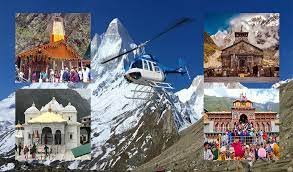
Chardham Yatra 2025: Complete Guide to Registration, Routes, Tour Packages, and Helicopter Booking

0

The sacred Chardham Yatra will officially begin when the doors of the Gangotri and Yamunotri temples open on Akshaya Tritiya, April 30, 2025, at 10:30 AM. This year, authorities expect over 50 lakh pilgrims to participate, surpassing the 48.11 lakh devotees who undertook the pilgrimage in 2024.

If you’re planning to embark on the Chardham Yatra, you’re likely wondering:

  • How and where to start?
  • How many days to take off?
  • How to book the journey?
  • Which is the best route?
  • What are the stay arrangements?
  • How much will the entire trip cost?
  • How to book a helicopter ride?

To answer these questions, we visited Uttarakhand to personally explore the routes to Gangotri, Yamunotri, Kedarnath, and Badrinath. We interacted with government officials, tour operators, taxi drivers, hoteliers, and pilgrims to create a comprehensive, tourist-friendly Chardham Yatra guide and route map.

Registration is Mandatory Before Starting the Chardham Yatra

Pilgrims must register online at registrationandtouristcare.uk.gov.in before beginning their journey. For those unable to register online, offline registration will start from April 28, 2025, at more than 50 centers located in Haridwar, Dehradun, Rishikesh, Chamoli, Rudraprayag, and Uttarkashi.

Upon offline registration, your mobile number will be linked to the Passenger Tracking System, helping authorities monitor your location in case of emergencies. You’ll also need to provide details of your medical history during registration.

Vinay Shankar Pandey, Commissioner of the Garhwal Region, said:
“We launched online registration 45 days ahead of the Yatra. So far, over 20 lakh registrations have been completed. For the first time, Aadhaar linking has been made mandatory to maintain a complete passenger database.”
He added that offline registration quotas have been increased to ensure that no pilgrim leaves without darshan as per CM Pushkar Singh Dhami’s directive.
Major registration centers have been opened in Haridwar, Rishikesh, and Vikasnagar.

Tour Packages: From ₹4,000 to ₹2.5 Lakh

Various tour packages are available from Haridwar, covering Yamunotri, Gangotri, Kedarnath, and Badrinath over 9–10 days across approximately 1400 km. The journey typically starts from Haridwar and ends at Badrinath, returning to Haridwar via Joshimath and Rishikesh.

Sanjay Sharma, President of the Haridwar Tour and Travel Association, stated:
“Pilgrims can choose packages based on their budget — ranging from ₹4,000 to ₹2.5 lakh.”

Transport Options:

  • Haridwar to Joshimath (Badrinath): Bus fare around ₹800
  • Haridwar to Sonprayag (Kedarnath): Bus fare ₹600–₹700
  • Haridwar to Harsil (Gangotri): Bus fare around ₹600
  • Haridwar to Dharasu (Yamunotri): Bus fare ₹400–₹500
    (From Dharasu, taxis are available to reach Yamunotri.)

Helicopter Booking: Only via GMVN and IRCTC

Sunny, a tour advisor who booked helicopters for over 150 passengers through IRCTC, warned:
“Helicopter shuttle services for Chardham are only booked via the official websites of GMVN (Garhwal Mandal Vikas Nigam) and IRCTC. Any other source offering helicopter booking is fraudulent.”

Helicopter fares for Kedarnath are as follows:

  • From Guptkashi: ₹8,100 (round trip)
  • From Phata: ₹6,400 (round trip)
  • From Sirsi: ₹6,000 (round trip)

Important Tips for Chardham Yatra

  • Medical Fitness: Consult a doctor before traveling; all four Dhams are located at high altitudes.
  • Clothing: Carry warm clothes, gloves, hats, and trekking shoes.
  • ID Proof: Always keep your Aadhaar card or other valid ID with you.
  • Hydration: Keep drinking water frequently during the journey.
  • Own Vehicle: If traveling by personal vehicle, first reach Haridwar, then continue to the Dhams.

This year’s Chardham Yatra promises to be more organized and pilgrim-friendly than ever before. Plan wisely and register early to ensure a smooth and blessed journey!

India and France Sign Deal for 26 Rafale Marine Jets Worth ₹63,000 Crore; First Delivery in 2028

0

In a major defense acquisition, India signed a deal with France on Monday to purchase 26 Rafale Marine fighter jets for the Indian Navy. Defense Secretary Rajesh Kumar Singh signed the agreement on behalf of India. The deal, valued at approximately ₹63,000 crore, marks India’s largest defense procurement from France to date.

Under the agreement, India will acquire 22 single-seater and 4 twin-seater Rafale Marine aircraft, all capable of carrying nuclear weapons. The aircraft will also come with weapon systems, spare parts, and necessary equipment to support operations.

The Cabinet Committee on Security (CCS), chaired by Prime Minister Narendra Modi, had approved the purchase on April 23, shortly after the terrorist attack in Pahalgam.

According to reports, deliveries will begin in 2028–29, with the entire fleet expected to arrive by 2031–32. The Rafale Marine jets will be deployed on India’s indigenously-built aircraft carrier, INS Vikrant. Manufacturer Dassault Aviation has customized the jets to meet India’s specific operational requirements, including enhanced anti-ship strike capabilities, nuclear weapons delivery, and extended 10-hour flight recording.

Why the Rafale Marine is Crucial for the Indian Navy

Design and Capabilities

The Rafale Marine (Rafale-M) is specially designed for aircraft carrier operations. It measures 50.1 feet in length and weighs approximately 15,000 kg. With a fuel capacity of 11,202 kg, it can sustain longer missions and reach a maximum altitude of 52,000 feet. The jet’s folding wings are robust, enabling efficient storage on carriers, and it can achieve speeds of up to 2,205 km/h.

Key Features

  • Rapid Climb: The Rafale-M can ascend to 18,000 meters in just one minute.
  • Superior Range: It has an operational strike range of up to 3,700 km.
  • Armament: Equipped with a 30 mm auto-cannon and 14 hardpoints for weapons.
  • Landing Capability: Capable of landing on short and limited spaces like aircraft carriers.
  • Missile Systems: It can be fitted with powerful anti-ship missiles, capable of air-to-air and air-to-ground attacks.
  • Specialized Radar: Includes advanced radar for detecting submarines.
  • Mid-Air Refueling: Enhances its range and operational endurance.

Compared to Pakistan’s F-16 and China’s J-20 fighters, the Rafale-M offers significant advantages in speed, climb rate, radar capabilities, and combat versatility.

Strengthening India’s Naval Power

Currently, the Indian Navy operates MiG-29K fighter jets from its aircraft carriers INS Vikramaditya and INS Vikrant. However, the aging MiG fleet faces maintenance challenges and limited availability. The induction of Rafale-M jets will significantly bolster India’s maritime strike capabilities, enhancing dominance across sea, land, and air domains.

Why India Chose Rafale Marine

Initially, the Navy planned to procure 57 deck-based fighter jets and conducted trials of France’s Rafale Marine and America’s Boeing F/A-18 Super Hornet in Goa. By 2022, India had requested extensions from both nations. France’s agreement to extend the proposal timeline, while the U.S. did not, played a crucial role in India’s decision.

Rafale Marine’s advanced radar technology, superior weapon-carrying capability, and better sensors make it a natural replacement for the MiG-29K. Moreover, the Indian Air Force’s existing familiarity with Rafale aircraft will ease training and maintenance efforts for the Navy.

Beyond defense, the deal also reflects the deepening strategic partnership between India and France, reaffirming cooperation in aerospace, security, and technology

From Rs 10 to Rs 150/kg: How Koppal’s Kesar Mangoes Became a Global Hit

0

Summers in India carry a scent — a heady mix of ripe mangoes and sun-baked earth. Every household counts down the days, awaiting the first golden fruits of the season.
But what if I told you that the wait could end a little sooner? That somewhere, mangoes blush into ripeness not in June, but by mid-April?

From Rs 10 to Rs 150/kg: How Koppal’s Kesar Mangoes Became a Global Hit

Welcome to Koppal, Karnataka — where the Kesar mango, juicy and fragrant, is ready to steal the show before the rest of the country even sets out the mango crates.


The Sweet Secret of Koppal

In Bengaluru and beyond, families eagerly clear space in their fruit bowls by mid-April, waiting for one thing: the arrival of Koppal’s Kesar mangoes. And not just any mangoes — these are the kind that inspire poetry. Sun-gold flesh, a sweet-and-sour zing, and a richness that seems touched by the land itself.

Among mango connoisseurs, Kesar holds an exalted spot. But the ones grown in Koppal? They’re in a league of their own.

Padmakal T, a veteran mango trader from Mandya, puts it simply:
Koppal’s Kesar mangoes attract traders from Hyderabad and Mumbai — they know quality when they see it.


A Taste Born from the Earth

Koppal’s mangoes owe their magic to their birthplace. The region’s dry heat, unique soils, and wide-open skies aren’t just a backdrop; they’re the secret ingredients. Here, summers flirt shamelessly with 45°C, accelerating ripening, intensifying sweetness, and coaxing out an aroma so rich you can practically taste it on the wind.

Unlike Alphonso mangoes, which demand humid coastal weather to mature gracefully, Kesar mangoes revel in Koppal’s dry embrace. No sourness. No spongy disappointments. Just clean, pure mango perfection.

The result? A signature flavor that farmers now proudly brand as Koppal Kesar, much like Maharashtra’s famed Devgad Hapus.


A Revolution Rooted in the Soil

From Rs 10 to Rs 150/kg: How Koppal’s Kesar Mangoes Became a Global Hit

But Koppal’s journey to mango stardom wasn’t always this golden.

Enter Krishna Ukkunda, a horticulturist with a mission. Posted to Koppal in 2016, Ukkunda found a puzzling scene:
Despite Kesar’s incredible quality, farmers were selling their mangoes at rock-bottom prices — Rs 10 per kilo — while the lesser Benishan variety fetched three times more.

Rather than wring his hands, Ukkunda rolled up his sleeves. He rallied over a thousand farmers from 15 villages for a marathon three-day workshop: teaching better agronomy, pest management, organic methods, and the wonders of drip irrigation.

To top it off, he invited mango exporters from Mumbai and Hyderabad to mingle with the growers, creating a direct bridge between farm and market.

In 2017, the first Koppal Mango Mela swung into action. Farmers priced their produce at Rs 80 a kilo and raked in a crore in sales. And the rest, as they say, is juicy, sun-kissed history.


A Climate Made for Mango Dreams

From Rs 10 to Rs 150/kg: How Koppal’s Kesar Mangoes Became a Global Hit

Koppal’s dry climate isn’t just good for early ripening — it’s a competitive edge on the national stage.

While Gujarat’s famed Kesars ripen in June, Koppal’s fruits start arriving by mid-April. That’s nearly two months ahead of schedule, and it’s a game-changer for both traders and mango lovers.

Ambaresh Tatti, who owns a 900-tree orchard in Kaltavargera village, sums it up:
Its early arrival — two months before Gujarat’s Kesar — has truly played to our advantage.

And thanks to strategic support from local horticulture departments, from sapling distribution to custom mango boxes for pandemic-era delivery, farmers have turned challenges into opportunities.


Growth that Tastes Like Success

Fast forward eight years:
Koppal’s mango cultivation has exploded from 1,300 hectares to over 5,000 hectares across 60 villages. This year, an eye-popping 60,000 tonnes are expected to be harvested, with prices ranging from Rs 150 to 250 per kilo depending on quality.

What’s more, Koppal Kesar is now gracing plates across Sri Lanka, Dubai, Bahrain, Bangladesh — even Europe. Pandemic or not, the golden fruit kept crossing oceans.

From Rs 10 to Rs 150/kg: How Koppal’s Kesar Mangoes Became a Global Hit

State subsidies for drip irrigation and branding efforts have further fertilized this boom, ensuring that Koppal’s farmers aren’t just surviving — they’re thriving.


A Future Bright with Possibility

For farmers like Srinivas Jalihal from Neologal village, the Kesar revolution has been life-changing.
On his seven acres, Srinivas grows Kesar, Mallika, and Benishan varieties — and he’s looking at a staggering Rs 14 lakh in earnings this season.

With continued innovation, robust branding, and an unwavering commitment to quality, Koppal’s mango story is far from reaching its peak. It’s a reminder that with the right soil, the right people, and the right dream, even a sunburnt patch of land can grow into a global sensation.


In the Heart of Koppal, Summers Begin Early

So the next time you bite into a mango in mid-April, that first sun-sweetened taste flooding your senses, remember — it might just be a Koppal Kesar, carrying the whispers of dry winds, warm soil, and a farmer’s dream come true.

And isn’t that the true flavor of summer?

70% Solar-Powered & Plastic-Free, This Madhya Pradesh Jungle Lodge Grows 80% of Its Own Food

0

Imagine this: you’re bouncing along the dusty roads of Satpura forest, sun streaming through the sal trees, when a sign appears, almost like a mirage — Denwa Backwater Escape. And suddenly, it’s as if you’ve stumbled into a hidden realm — one where the trees hum a lullaby, the river winks in the afternoon light, and luxury whispers, not shouts.

Welcome to Denwa Backwater Escape, Madhya Pradesh’s best-kept secret — a soulful blend of eco-luxury, wild adventure, and heartfelt sustainability. Established in 2013 on a once-barren patch of land, today it’s a lush sanctuary that doesn’t just invite you in — it embraces you.


A Riverfront Slice of Paradise

When we first found this land, it was tired and bare, shares Property Manager Prashant Seegu. Our dream was to bring it back to life.

70% Solar-Powered & Plastic-Free, This Madhya Pradesh Jungle Lodge Grows 80% of Its Own Food

Spoiler alert: they nailed it.

Denwa is a masterclass in regeneration. Thoughtfully designed cottages and treehouses now rise amidst whispering woods, their wide balconies gazing dreamily over the shimmering Denwa River. Each corner is a soft nod to local culture, wrapped in earthy tones and natural textures — a living, breathing tribute to the forest it calls home.

The treehouses, perched like gentle sentinels, offer a literal bird’s-eye view — it’s just you, the river, and a sky full of stories.


Powered by the Sun, Fueled by Passion

At Denwa, sustainability isn’t a buzzword; it’s the beating heart.

70% Solar-Powered & Plastic-Free, This Madhya Pradesh Jungle Lodge Grows 80% of Its Own Food

We meet about 70% of our energy needs from solar power, says Prashant proudly, tipping his hat to the relentless Madhya Pradesh sun. It’s clean, green, and quietly heroic — just like everything else here.

From the solar panels soaking up the day’s energy to the compost pits transforming kitchen scraps into garden gold, every detail whispers: we care.


From Soil to Supper — A Delicious Revolution

In the Denwa kitchen, every meal is a love letter to the earth. Going organic isn’t just a trend for us; it’s a way of life, beams Sous Chef Arun Kumar, juggling tomatoes like a circus pro (well, almost).

70% Solar-Powered & Plastic-Free, This Madhya Pradesh Jungle Lodge Grows 80% of Its Own Food

About 80% of what’s served on your plate comes from Denwa’s own organic gardens — think plump tomatoes, crunchy cucumbers, fragrant herbs, and fresh flowers foraged seasonally. The remaining 20%? Sourced from local vendors, pumping life and pride back into nearby communities.

No preservatives, minimal oil, maximum flavor — because Mother Nature really knows how to season a salad.

And oh, the thalis. Four kinds — each a passport to India’s rich culinary tapestry. Breakfasts flirt with global classics and Indian staples, while dinners sweep you across continents, all from your candlelit table.


Zero-Plastic Promise — Small Steps, Giant Leaps

70% Solar-Powered & Plastic-Free, This Madhya Pradesh Jungle Lodge Grows 80% of Its Own Food

Single-use plastics at Denwa? Extinct species.

Guests are greeted with sturdy steel water bottles and charming glass jars filled with loose-leaf teas, fresh coffee, and homemade cookies (warning: dangerously addictive). Even the tiniest choices here — like avoiding packaged goods — ripple out into a cleaner, kinder world.

This is our home. We’re just doing what good guests should do — take care of it, smiles Kshitih Gambhir, the lodge’s ever-curious Head Naturalist.


Design that Breathes

70% Solar-Powered & Plastic-Free, This Madhya Pradesh Jungle Lodge Grows 80% of Its Own Food

Denwa’s interiors are a warm embrace — wide, open spaces framed by vast windows that pull the outdoors in. Driftwood lamps, tables shaped from the soul of ancient trees, and sculptures rescued from railway sleepers — every artifact here carries a second life, a new story.

It’s rustic chic meets forest fairy tale — and you’re living in it.


How to Spend 48 Hours at Denwa (and Fall in Love Forever)

Sure, you could just sit by the pool with a book (highly recommended, by the way), but there’s a whole wonderland out there. Here’s how to dive in:

Safari Thrills

Hop into a jeep and plunge into the wild heart of Satpura National Park. Tigers? Maybe. Sloth bears, leopards, giant squirrels? Definitely. And birdlife so dazzling it could shame a Bollywood costume designer.

Kshitih and his team of naturalists will teach you to read the jungle like a novel — from pugmarks to alarm calls — making every rustle in the bushes an edge-of-your-seat mystery.

River Adventures

Canoe along the Denwa River at dawn — mist swirling, kingfishers diving — and feel like you’ve slipped into a dream. Or opt for a boat safari with breakfast served on deck — gourmet eggs with a side of elephant sightings.

Walk on the Wild Side

Denwa’s Forsyth Trail mobile camping experience is for the truly adventurous: two days trekking through Satpura’s buffer zone, sleeping in cozy tents, and swapping stories by firelight under a billion stars.

Warning: You may never want to return to four walls and Wi-Fi again.

Birdwatching Bonanza

With over 250 bird species fluttering through Satpura, even casual strollers become avid birders. Grab your binoculars, follow the calls, and prepare for feathered fireworks.

Cycle and Soak it All In

Pedal through villages and past wildflower fields with a local naturalist leading the way. Trust us: you’ve never seen India like this.


The Essentials

  • How to Reach: Bhopal Airport (150 km) or Itarsi Railway Station (70 km)
  • Tariffs: ₹20,000 + taxes
  • Best Time to Visit: November to June
  • Website: Visit Denwa Backwater Escape

Why Denwa Matters

Denwa isn’t just another jungle lodge. It’s a movement disguised as a vacation. It’s proof that you can have comfort and conscience, luxury and responsibility, indulgence and impact.

It’s a call to slow down, look closer, and remember — the earth isn’t something we visit. It’s something we belong to.

And sometimes, belonging looks like waking up in a treehouse, sipping fresh coffee, and watching the mist kiss the river good morning.

Ready to answer the call of the wild? Denwa Backwater Escape is waiting.

How Kashmir’s 16-YO ‘Rabbit Girl’ Turned Her Home Into a Shelter After the Pahalgam Attack

0

When the gunfire cracked across the emerald meadows of Baisaran on Tuesday afternoon, it tore through more than just the still mountain air—it ripped through Kashmir’s very soul.

Five kilometres above the sleepy tourist town of Pahalgam, where ponies graze and laughter usually echoes among the pines, terror unfurled its dark wings. Yet amid the chaos, it was not fear that claimed the day—but the fierce courage of a 16-year-old girl known simply, and lovingly, as the Rabbit Girl of Kashmir.


A Sudden Storm

Rubeena, a bright-eyed teenager from a nearby Gujjar settlement, had spent her days offering tourists a fleeting moment of joy: a photo with her beloved pet rabbit, a few rupees exchanged for smiles. After the COVID-19 lockdowns snuffed out normalcy, guiding visitors through Baisaran’s Eco Park had become her new lifeline—one that fed not just her family, but also her dreams.

On Tuesday, she had been helping a young couple from Chennai navigate the gentle, winding trails of the park. They had just finished cooking Maggi noodles over a portable stove—one of those small, forgettable joys that travel offers—when the first shots rang out.

“At first we thought it was a celebration, firecrackers maybe,” Rubeena said, her voice carrying the tremble of memory. “But then… the screaming began. The running.”

It was not a celebration. It was a massacre.

Gunmen had stormed the meadows, targeting tourists. When the dust finally settled, 26 souls had been lost. Seventeen others were left wounded—bodies and spirits broken alike. Kashmir, just beginning to taste hope again, found itself plunged back into mourning.


The Heart That Wouldn’t Run

How Kashmir’s 16-YO ‘Rabbit Girl’ Turned Her Home Into a Shelter After the Pahalgam Attack

As the world tilted on its axis around her, Rubeena did what instinct dictated—she fled. But only for a moment. Safety, once reached, became unbearable. The faces of the tourists she had been guiding haunted her. Were they safe? Were they alone?

Braving the gunfire and confusion, she sprinted back to the park entrance—once, twice, three times—searching, hoping.

“I didn’t even think. I just… had to go back,” she whispered.

As exhausted, dust-caked visitors stumbled down from the hills, Rubeena and her 17-year-old sister, Mumtaza, transformed their humble mud-and-thatch home into a sanctuary. Tourists, barefoot and shivering, found shelter there, along with cups of water and soft, broken words of comfort.

Mumtaza, despite nursing a fractured foot, even carried a ten-year-old child down from the chaos above. In their darkest hour, these teenage girls became the light.


A Father’s Terror, a Valley’s Tears

Their father, Ghulam Ahmad Awan, frail and ailing, remembers hearing the gunfire from afar. He froze. His daughters were up there.

“I thought they were gone,” he said simply, blinking away tears. When Mumtaza finally limped through the doorway, he collapsed with relief.

But the scars of that afternoon run deep. With tourism now at a standstill, the family’s only source of income has vanished. Rubeena had already left school behind to support them, earning Rs 400 to Rs 500 a day. It wasn’t much, but it kept hope on their table.

“That money kept us afloat,” Awan said. “Now… I don’t know.”

And yet, even as grief shrouds the valley, so too does something else—something defiant and enduring.


Grief, Solidarity, and a Stubborn Flame

Across Kashmir, mourning has knitted the people together. Silent marches wind through abandoned streets. Candlelight vigils flicker against the falling night. Hotels, pony-wallas, shopkeepers—every hand that once welcomed visitors—now join in collective sorrow.

“This wasn’t just an attack on tourists,” a pony-walla said during a silent protest. “It was an attack on our hearts. On who we are.”

In a region often misunderstood by the world beyond its mountains, the story of the Rabbit Girl spreads quietly. A symbol not of tragedy, but of who Kashmir truly is—resilient, generous, unbreakable.

Rubeena sits now on a wooden cot, the weight of memory heavy on her small shoulders. Her rabbit, her steady companion through countless sunny afternoons, is gone. Her routine has crumbled. But her spirit, like the snow-fed rivers she grew up beside, keeps flowing forward.

“I just want peace,” she says, a soft but steady promise. “I want people to come back to these mountains. Not in fear—but with smiles.”


The Valley Listens

Maybe one day soon, laughter will return to Baisaran’s meadows. Ponies will carry wide-eyed children up misty trails. Rubeena might once again offer tourists a photo with a new bunny, trading not just snapshots, but slivers of joy.

Until then, Kashmir grieves—and waits.

And in the silence, in the weeping wind over Baisaran, a quiet hope endures.
Just like a girl with a rabbit, who chose courage when the world crumbled.

The Whispering Stones of Sas-Bahu Mandir Speaks of A Sacred Bond Which Remains Unbreakable

0

By Anjali Solanki

At a time when the TV serials continue airing the saas bahu fights, there is a temple in Gwalior which speaks of unbreakable bond of saas bahu temple. This temple is situated beneath the golden haze of Gwalior’s ancient fort, where the winds carry echoes of forgotten queens and the sandstone breathes a thousand years of secrets. Here stand two temples, entwined like the hearts of two women who dared to dream beyond their time.

The Sas-Bahu Mandir, or Sahastrabah Temples, are no mere relics of the 11th century they are a love letter carved in stone, a symphony of devotion sung by a mother-in-law and her daughter-in-law. Their names, Indrani and Chandrika, linger in the air, their story a tapestry of faith, artistry, and an unbreakable bond that defied the shadows of a royal court. For every woman who wanders their sacred halls, these temples whisper a timeless truth together, we rise, our legacies eternal as the stars above Gwalior.

Sas Bahu Mandir: The Creation of a Masterpiece

The construction began in 1092 AD, under the skilled hands of artisans who poured their souls into every carving. The larger temple, for Vishnu, rose majestically, its three-story mandapa adorned with intricate pillars that seemed to dance with life. The walls came alive with scenes from the Ramayana and Mahabharata Sita’s grace, Draupadi’s courage, and Radha’s love for Krishna, each carving a tribute to the strength of women in Hindu mythology. Above the entrance, a lintel bore the images of Brahma, Vishnu, and Shiva, a reminder of the unity of all divine forces.
The smaller temple, for Shiva, was no less enchanting. Though more modest in size, its ornate doorframe and delicate motifs spoke of Chandrika’s vibrant spirit. The sanctum, though now in ruins, once housed a lingam that glowed under the light of oil lamps, its walls adorned with carvings of dancers and musicians, celebrating Shiva’s cosmic dance.
As the temples took shape, Indrani and Chandrika worked side by side, overseeing the artisans and infusing the project with their shared vision. They laughed over shared meals, debated the placement of sculptures, and prayed together, their voices blending in a harmony that transcended their differences. The people of Gwalior watched in awe, inspired by the love and respect between the two women. In a world where royal women were often pitted against each other, Indrani and Chandrika were rewriting the story.
Legend has it that the temples were once adorned with diamonds that sparkled so brightly they illuminated the night. When a torch was lit at the entrance, its light would dance across the gems, bathing the complex in a celestial glow. The women of Gwalior would gather at dusk, their eyes wide with wonder, dreaming of a future where their own bonds could shine as brightly.

The Vision of Unity

One evening, as the sun dipped below the horizon, casting a golden glow over the fort, Indrani and Chandrika sat together in the palace gardens. The air had fragrance of jasmine, and the distant sound of temple bells mingled with the chatter of peacocks. Indrani, her eyes sparkling with an idea, spoke softly to her daughter-in-law.
Chandrika, our faiths may differ, but our hearts beat for the same family, the same kingdom. Let us build something that honors both our gods and our bond a legacy that will stand for centuries.
Chandrika, her youthful face alight with enthusiasm, clasped Indrani’s hands. Mother, let us create two temples, side by side, like us different yet together, strong in our unity.
And so, the vision was born. King Mahipala, moved by the harmony between his queen and daughter-in-law, declared that the temples would be built within the fort’s sacred precincts. The larger temple, dedicated to Lord Vishnu, would be for Indrani, the Saas, and the smaller, dedicated to Lord Shiva, would be for Chandrika, the Bahu. The temples would be called Sahastrabahu, after Vishnu’s thousand-armed form, but the people of Gwalior, charmed by the story of the two women, would forever know them as the Saas-Bahu Mandir.

A Call to Visit

The Sas-Bahu Mandir is open year-round, but the cooler months of October to March are ideal for exploring its serene beauty. Located within the Gwalior Fort, it is easily accessible by taxi or auto-rickshaw from Gwalior Junction Railway Station or the Rajmata Vijaya Raje Scindia Air Terminal, just 12 kilometers away. The fort’s ticket includes entry to the temples and the nearby Teli Ka Mandir, another architectural gem. As you wander the complex, let the stories of Indrani and Chandrika guide you, and savor the local cuisine spicy kachoris and sweet jalebis at Gwalior’s vibrant eateries. The Saas-Bahu Mandir is not just a destination; it is a journey into the heart of women’s resilience and creativity. For every woman who visits, it offers a chance to reflect on her own bonds, her own legacy, and the temples she will build in her lifetime

Similipal: Odisha’s Living Crown Jewel Earns Its Place Among India’s National Parks

0

In the heart of Odisha, where ancient sal forests whisper tales of tigers and elephants, a momentous chapter in India’s conservation story has just been written. Similipal, a land teeming with life and mystery, has been formally declared a national park by the Odisha government — a decision decades in the making, and one that promises a vibrant future for the state’s natural legacy.

Covering 845.70 square kilometers, Similipal now stands as Odisha’s largest national park and proudly joins the esteemed ranks as India’s 107th national park. But beyond the numbers lies a story of persistence, hope, and the timeless bond between nature and humanity.


A Dream Four Decades in the Making

The journey to Similipal’s new status traces back to 1980, when the idea of national park recognition first took root. Even then, the region’s breathtaking biodiversity — its leopards slipping through the mist, its herds of elephants stirring the riverbeds, and its forests alive with birdcalls — was undeniable.

Before that, in 1975, Similipal was declared a wildlife sanctuary, a protective cloak that nevertheless fell short of the stricter, enduring safeguards a national park designation offers. For nearly half a century, conservationists, forest officials, and local communities worked tirelessly, their dreams fueled by the vision of securing Similipal’s place among India’s most cherished wild spaces.

At long last, that vision has become reality.


An Ecological Wonderland

Similipal is not merely a stretch of forest; it is a symphony of life.

  • 55 species of mammals roam its depths — from the stealthy leopard to the majestic elephant.
  • 361 species of birds paint the sky with flashes of vibrant color and song.
  • 62 species of reptiles and 21 species of amphibians lurk under leaf and stone, weaving an intricate web of life often hidden to the casual eye.

Much of Similipal’s soul is entwined with the Similipal Tiger Reserve, a sprawling conservation area covering 2,750 square kilometers. Its core critical tiger habitat, notified in 2007, spans 1,194.75 square kilometers — a heartland fiercely protected for one of the world’s most iconic predators.

In every tree, every flowing stream, every footprint on the forest floor, Similipal whispers of ancient Earth, still breathing, still wild.


The Struggles Behind the Glory

But achieving national park status was no fairy tale.

One of the thorniest challenges was human habitation. Six resilient villages nestled within the park’s proposed core zone — generations of families with deep spiritual and survival ties to the land. The government, walking a delicate line between conservation and human rights, successfully relocated several communities. Yet Bakua village remains, its presence too rooted, too vital to uproot.

In a decision reflecting respect as much as pragmatism, Bakua was carefully excluded from the national park’s final boundary. The landscape, it seems, tells not just a story of wildlife, but of human endurance, memory, and belonging.


A New Dawn for Conservation

With national park status, Similipal’s guardians — the forest department — are now armed with stronger conservation powers. Stricter enforcement against encroachments, poaching, and deforestation is now possible. Greater funding and resources can flow into habitat restoration, research, and community engagement.

But this is about more than just policing or preserving. It’s about reimagining a relationship between people and wilderness — one where protection, livelihood, and pride can grow together.

The Odisha government envisions Similipal not as a sealed fortress of biodiversity, but as a living landscape where sustainability and heritage walk hand in hand.


Walking Together with the Tribes of the Forest

For the tribal communities who call the forest their mother and muse, this declaration carries a profound promise.

Conservation efforts tied with sustainable development initiatives mean improved infrastructure, education, healthcare, and livelihood options — all while honoring traditional knowledge and cultural practices that have long coexisted harmoniously with nature.

Rather than being sidelined by conservation, the local tribes are being invited to become stewards of Similipal’s future. Their voices, their stories, and their wisdom will be vital in ensuring the forest doesn’t just survive — but thrives.


A Living Legacy

Similipal today stands at a luminous crossroads — a bridge between the past and the possible.

As monsoon rains nourish its ancient groves and the sun dapples its clearings in gold, the park hums with an ageless truth: we are part of the wild, and it is part of us. Protecting it is not an act of charity, but one of remembering who we are.

With this new designation, Similipal doesn’t just earn a title.
It reclaims its rightful place — as a crown jewel of Odisha, a treasure of India, and a hope for the world.

Mount Kailash: The Sacred Enigma 6666 Kilometers from Everywhere

0

In the remote vastness of western Tibet, a lone peak rises like a sentinel from the heavens — stark, unyielding, and utterly mesmerizing. Mount Kailash, with its perfect symmetry and eternal snows, has been revered for millennia as the spiritual center of the world. But recently, a curious observation has whispered its way into the annals of the mountain’s many mysteries: Mount Kailash’s distance from several significant places is eerily close to 6666 kilometers.

Coincidence? Cosmic joke? Or a deliberate signature of an intelligence far older than recorded time?

The mountain, it seems, is guarding its secrets well.

A Mountain Like No Other

Mount Kailash: The Sacred Enigma 6666 Kilometers from Everywhere

Kailash is not just a mountain; it is a symbol, a legend, a riddle.
For Hindus, it is the abode of Lord Shiva, where he sits in eternal meditation.
For Buddhists, it is the cosmic center, Mount Meru, connecting the heavens and the earth.
For Jains, it marks the place of spiritual liberation.
For followers of Bon, the ancient shamanic faith of Tibet, it is the very navel of the world.

Unlike Everest or K2, no human has ever climbed its summit — nor have they been permitted to. It is said that to disturb its sacred peak would invite calamity. Even the most ambitious mountaineers turn away, whispering that the mountain must remain untouched, that its power is not meant to be conquered but revered.

It stands alone, untamed, a monument to the unknowable.


The Curious Case of 6666

Enter the strange and whispered numbers.

It has been noted — with an almost mischievous mathematical precision — that the distance from Mount Kailash to several key locations hovers astonishingly close to 6666 kilometers.

  • To the North Pole — approximately 6666 km.
  • To certain ancient sites like Stonehenge, Easter Island, and even the Great Pyramids — similar magical ratios and alignments appear, tantalizingly close, as if a hidden geometry ties them together.

The number 6666 — perfectly symmetrical, flowing, balanced — invites both mathematicians and mystics to speculate.
Is it a fluke?
Or is there an ancient blueprint, long forgotten, etched into the very bones of the Earth?

If you listen closely to the stories whispered on cold Himalayan winds, some say Mount Kailash is not just a mountain but an ancient, colossal pyramid, its dimensions aligned with an unseen grid of energy crisscrossing the planet.
A cosmic generator.
A timeless temple.
A still-beating heart of something vast and eternal.

Science Meets the Sacred

Of course, the rational mind leans in, arching an eyebrow: measuring from the summit or the base? From sea level or ground level? Tiny shifts could account for hundreds of kilometers. Global positioning isn’t always as precise as we like to think, especially when tracing lines across a living, breathing Earth.

Yet — and this is crucial — the mystery persists.

Because whether or not every calculation stands up to modern GPS standards, the symbolism remains unnervingly resonant. Ancient builders, from Egypt to the Andes, revered numbers, distances, alignments. They built temples, tombs, and cities with breathtaking astronomical precision — without the aid of computers, satellites, or even telescopes as we know them.

It begs the question:
Did they know something we have forgotten?
Did they trace the Earth not merely as land and sea, but as sacred space — a living, breathing web of energy and intention?

If so, Mount Kailash may be more than a geographical marvel; it could be the silent anchor of an entire planetary consciousness.

The Whisper of the Infinite

Even today, pilgrims circle the mountain — performing the Kora, a sacred circumambulation — believing that each step erases the sins of a lifetime. Some say completing 108 revolutions brings enlightenment, a shortcut to nirvana itself.

No one climbs it.
No one desecrates it.
Because something deeper than law — something felt in the very marrow of the bones — tells us:
Here, the Earth touches the Divine.

Mount Kailash, standing 6666 kilometers from the known, the familiar, and the explainable, reminds us that some mysteries are not meant to be solved — only honored.

Perhaps the real secret of Kailash is not the number, not the distance, but the invitation it offers:
To marvel.
To wonder.
To remember that, in a world rushing toward certainty, there are still places that hum with the music of the unknown.