
Home Blog Page 303

A Journey Through Sapray Sangrahalaya: Celebrating World Press Freedom Day

0

By Anjali Solanki

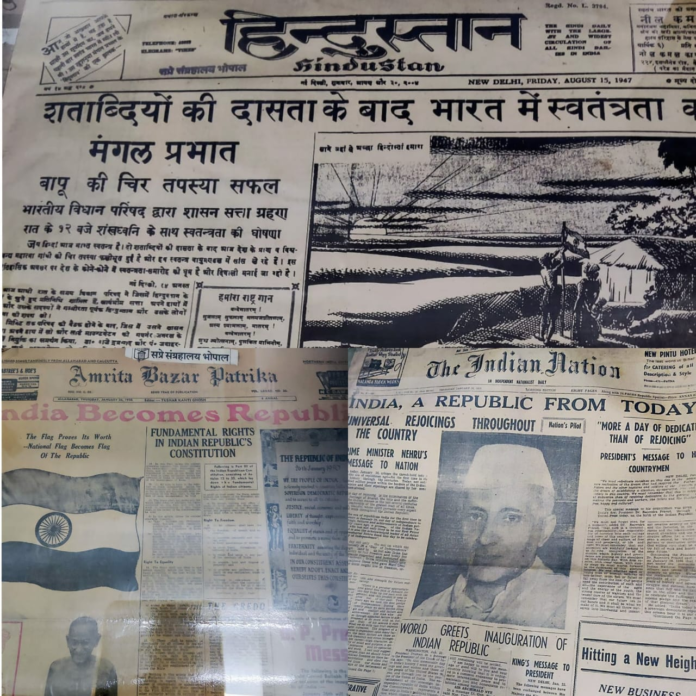
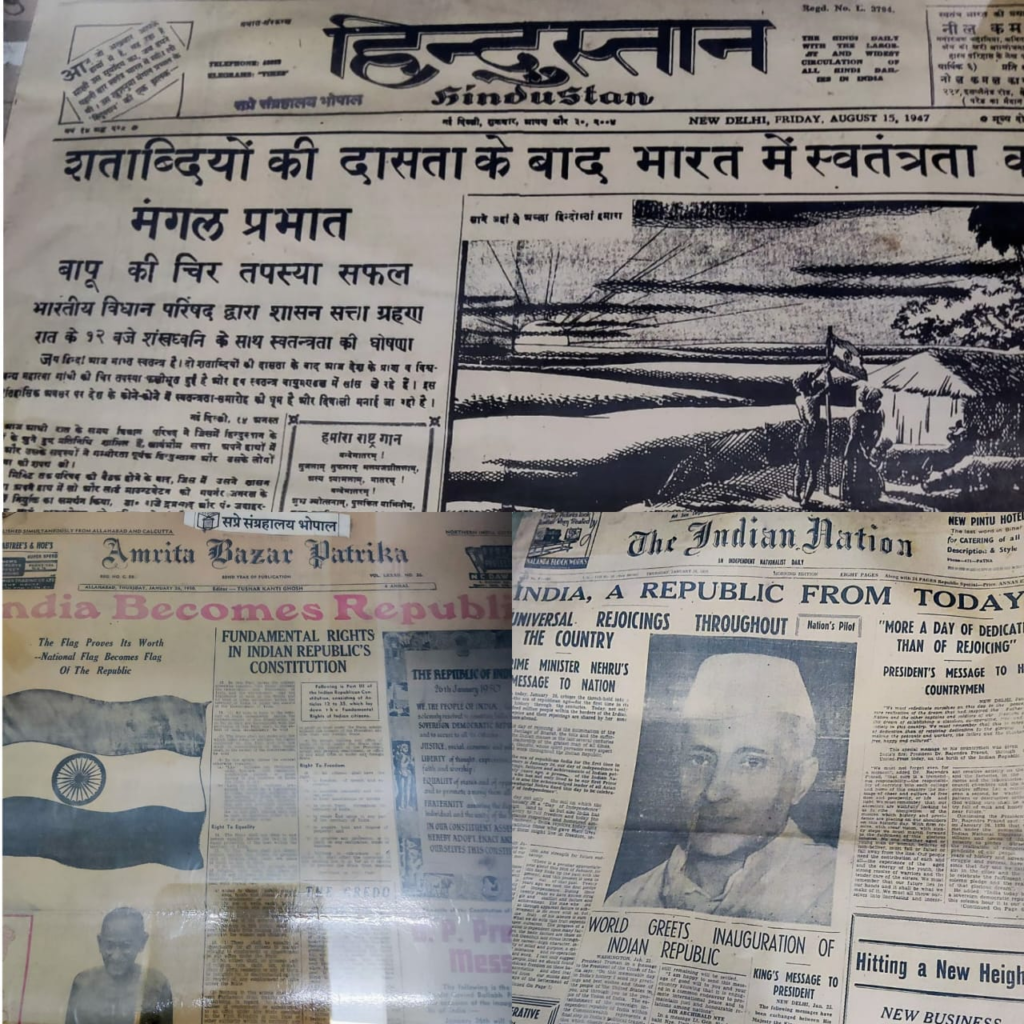
Today on World Press Freedom Day, I stepped into Sapray Sangrahalaya in Bhopal, a vibrant museum nestled in the serene Shyamla Hills. This global celebration of journalism’s courage and resilience felt perfectly at home in a space dedicated to the stories that shape our world. The visit was more than a walk through exhibits; it was a compelling exploration of the past of press freedom, crafted to resonate with anyone who values the pursuit of truth.
A Journey Through Sapray Sangrahalaya: Celebrating World Press Freedom Day

The museum’s modern yet earthy architecture, a striking mural set the tone: newspapers pens, books and more into roots and branches, symbolising journalism’s deep connection to humanity. A special exhibit, curated for World Press Freedom Day, aligned with 2024’s theme: “A Press for the Planet: Journalism in the Face of the Environmental Crisis.” It underscored the press’s role in confronting global challenges, from climate change to corporate accountability.
The journey began with an interactive display of a 1940s newsroom, complete with typewriters, telegrams, and sepia-toned newspapers. The clack of keys and the weight of colonial censorship came alive through the exhibit’s audio guide, which detailed how India’s press fueled the freedom struggle, defying British attempts to silence dissent. These early journalists, armed only with words, laid the foundation for today’s fight for truth a legacy that still inspires.
A shift to modern journalism brought a sobering perspective. A wall of quotes included one by slain journalist Gauri Lankesh: “The pen is mightier than the sword, but only if it dares to write the truth.”

Nearby, a digital memorial honored journalists lost to violence, their names glowing softly. The 2024 World Press Freedom Index ranks India 159th, a slight improvement but a reminder of ongoing challenges like legal harassment, censorship, and economic pressures. This section was a stark call to recognize the sacrifices behind every headline.

The heart of the visit was an immersive exhibit on the future of press freedom. A 360-degree projection room enveloped visitors in a whirlwind of images: drones capturing protests, AI-generated deepfakes, and citizen journalists streaming from conflict zones. A narrator’s voice posed a critical question: “In a world of algorithms and echo chambers, how do we protect the truth?” The exhibit balanced hope and caution, showcasing innovations like blockchain for source verification and AI to detect misinformation, while warning of surveillance and data manipulation. It was a thought-provoking glimpse into the complexities ahead.

In the museum’s outdoor amphitheater, local journalists led a panel discussion on the day’s theme, exploring how environmental reporting often underfunded and dangerous holds power to account. The speakers echoed UNESCO’s stance: “Freedom of expression is a driver for all other human rights.” Their words were a rallying cry, urging journalists and citizens alike to champion truth in an era of climate crises and corporate overreach.

As the sun set, the museum’s rooftop offered a stunning view of Bhopal’s lakes, a serene backdrop for reflection. A post on X captured the day’s essence: “World Press Freedom Day at Sapray Sangrahalaya a reminder that truth is worth fighting for. Here’s to a free, fierce, fearless press.

The Future of Press Freedom

The future of press freedom is a paradox of opportunity and obstacle. Technology has democratized storytelling, smartphones and social media give marginalized voices a stage, bypassing traditional gatekeepers. Yet, these tools also amplify disinformation, propaganda, and online harassment. The 2024 World Press Freedom Index reveals a global landscape where authoritarian regimes tighten media control, and even democracies face trust deficits. In India, legal threats and economic pressures persist, despite incremental progress.
Hope lies in resilience and innovation. Collaborative journalism, like cross-border investigations, can counter suppression. Encrypted communication and decentralized platforms can protect sources. Media literacy is vital readers must question narratives and verify facts. Above all, press freedom requires collective action: governments must uphold Article 19 of the Universal Declaration of Human Rights, and citizens must support independent media. Sapray Sangrahalaya’s exhibits made it clear: the press is not just a profession but a pillar of democracy, and its future depends on our resolve to keep it free.

This visit to Sapray Sangrahalaya was more than a museum tour it was a spark for action. It reminded us that every story we read, share, or question shapes


Artificial Intelligence: A Job Thief Or Job Enhancer?

0

By Anjali Solanki

The rise of artificial intelligence has sparked widespread concern, particularly among young people entering fields like construction, hospitality, and labor. Will AI take over these physical jobs, leaving the next generation scrambling? To address this pressing question, I talked with two experts: Ingarloss Karam, former ANI journalist, Professor of Mass Communication, and tech expert, and Harish Patidar, Director of MIT’s Computer Science and Artificial Intelligence Department. Their insights offer a refreshing perspective, turning fear into opportunity for the youth shaping the future of work.

AI Posing Job Threat?

The fear that AI will replace physical jobs is palpable, but Prof. Karam argues it’s often exaggerated. “AI is great for repetitive, data-driven tasks like assembly lines or basic data entry,” he explains. “But physical jobs like construction or hospitality? They require emotional intelligence, dexterity, and adaptability, which AI can’t easily replicate.” He points out that while a robot might vacuum a hotel room, it lacks the human touch of a concierge who can read a guest’s mood or a carpenter crafting something unique.

Harish Patidar takes a complementary view, framing AI not as a threat but as a partner. “In construction, AI-powered exoskeletons help workers lift heavier loads safely, boosting productivity,” he says. “In hospitality, AI handles repetitive tasks like inventory management, freeing staff to create memorable guest experiences.” For Patidar, AI augments human work, enhancing efficiency and opening new possibilities.

Addressing the Entry-Level Concern


One lingering worry is that AI could reduce demand for entry-level roles, a critical stepping stone for young workers. Patidar acknowledges the concern but sees it as a catalyst for growth. “Some repetitive tasks like basic cleaning or inventory checks might be automated, but this creates opportunities,” he notes. “It pushes workers to focus on higher-value roles.” In construction, for example, AI can handle site mapping, but human decision-making and creative problem-solving remain essential. His advice? “Young people should learn to work with AI, using tools like predictive maintenance software. Free tutorials on YouTube or platforms like Udemy can get them started.”

Prof. Karam agrees, emphasizing the adaptability of digital natives. “Entry-level roles might shift, but that’s not a bad thing,” he says. “In hospitality, they could learn data analytics to personalize guest services. In manufacturing, new roles like ‘robot coordinator’ are emerging to manage AI systems.” His practical tip: “Take a Coursera course, learn one skill, and combine it with human strengths like empathy or creativity. Small steps lead to big opportunities.”

A Mindset Shift for the Future

For young people paralyzed by fear about their career paths, both experts advocate a proactive mindset. Prof. Karam’s advice is direct: “Stop overthinking and start acting. You’re a digital native you’ve got an edge. Combine your human ingenuity with tech fluency. Learn one new skill, like using AI tools for data analytics or operating smart machinery. The future belongs to those who take action, not those who fear it.”
Patidar echoes this call to action, urging youth to embrace AI as a teammate. “Don’t wait for permission,” he says. “Dive in and explore AI tools in your field. Whether it’s hospitality or construction, see AI as a tool to stand out. Experiment with software that predicts maintenance needs or analyzes customer preferences. The ones who succeed will be those who embrace AI to shine.”

Shaping the Future of Work

The discussion with Prof. Karam and Mr. Patidar transforms fear into opportunity. AI isn’t coming for your job it’s waiting for you to harness it. By learning new skills, experimenting with AI tools, and combining them with uniquely human strengths, young people can thrive in an AI-driven world. As Prof. Karam puts it, “The future belongs to those who take action.” So, to the youth reading this: the future of work is yours to shape. Get to work!

International Harry Potter Day 2025: Why May 2 Is Celebrated by Fans Worldwide

0

International Harry Potter Day, celebrated every year on May 2, honors the beloved Harry Potter book series created by British author J.K. Rowling. With millions of fans across the globe, this day celebrates the magical universe that has inspired generations of readers and viewers since the first book’s publication in 1997.

Let’s explore the origin of International Harry Potter Day, why May 2 was chosen, and how fans commemorate this enchanting occasion.

Origin of International Harry Potter Day

The celebration of Harry Potter Day is rooted in the Battle of Hogwarts, a major and emotional turning point in the series. This battle takes place in the seventh and final book, Harry Potter and the Deathly Hallows, and marks the ultimate defeat of Lord Voldemort.

May 2nd is the date when the Battle of Hogwarts occurred — a day that saw the bravery of Harry and his friends, the fall of key characters, and the restoration of peace to the wizarding world. This poignant moment in the Harry Potter timeline symbolizes courage, friendship, and sacrifice, making it a fitting date for annual celebration.

The Journey of the Harry Potter Series

  • The first book, Harry Potter and the Philosopher’s Stone (titled Sorcerer’s Stone in the U.S.), was published in 1997.
  • The series spans seven books, chronicling Harry’s journey from an orphaned boy to the hero who defeats the darkest wizard of all time.
  • The books have sold over 500 million copies worldwide and have been translated into 80+ languages.

The success of the novels led to a globally successful film franchise, starting in 2001 with Harry Potter and the Sorcerer’s Stone. The films not only brought the magical world to life but also expanded the fan base across generations.

Why Is Harry Potter Day Celebrated on May 2?

May 2 is significant as it marks the anniversary of the Battle of Hogwarts. This final confrontation between good and evil resulted in the death of Voldemort and ended a dark era in the wizarding world.

Fans around the world observe this day by:

  • Re-reading their favorite Harry Potter books
  • Hosting movie marathons
  • Dressing up in Hogwarts house robes and wizard costumes
  • Sharing memories and trivia on social media
  • Attending themed events, quizzes, and cosplay parties

The Magical Legacy of Harry Potter

The Harry Potter universe has extended far beyond books and films:

  • Stage plays like Harry Potter and the Cursed Child
  • Merchandise, theme parks, and even real-life Butterbeer
  • The sport of quadball (inspired by Quidditch)
  • A vibrant fan community that continues to grow

International Harry Potter Day is more than just a celebration of a fictional series — it’s a tribute to imagination, friendship, and the magic of storytelling.

Morgan Stanley Plans to Launch Cryptocurrency Trading on E-Trade Platform in 2025

0


Global financial services giant Morgan Stanley is reportedly developing plans to introduce cryptocurrency trading on its popular retail investment platform, E*Trade. If implemented, this would mark one of the most significant moves by a major U.S. bank to provide mainstream access to digital assets, particularly for everyday retail investors.

A Major Shift Toward Retail Crypto Accessibility

According to individuals familiar with the matter, the project is still in its early stages, but Morgan Stanley executives are targeting a 2025 launch. This initiative would represent the bank’s boldest step yet into the crypto space and could help it tap into the growing demand among retail traders for digital assets such as Bitcoin, Ethereum, and other altcoins.

This development also comes as part of a broader shift within traditional finance toward embracing blockchain technology and digital currencies, especially following the regulatory easing initiated during the Trump administration.

What This Means for E*Trade Clients

If launched, E*Trade clients would be able to buy, sell, and possibly store cryptocurrencies directly from their trading accounts. This would put Morgan Stanley in closer competition with platforms like Robinhood, Coinbase, and Fidelity, which have already captured substantial retail interest in crypto trading.

The move could also significantly boost crypto adoption by bringing digital asset trading to millions of existing E*Trade users who are already engaged in stock, ETF, and options trading.

Why This Move Is Important:

  • First-of-its-kind move by a traditional Wall Street bank targeting everyday investors.
  • Bridges the gap between traditional finance and emerging digital assets.
  • Increases mainstream access to crypto, with integrated trading via E*Trade.
  • Could spark further institutional and regulatory acceptance of cryptocurrencies.

Char Dham Yatra 2025: 10,000 kilograms of flowers, comprising 45 different varieties to decorate Kedarnath Dham to Open on May 2

0

The sacred Char Dham Yatra 2025 has officially begun, drawing lakhs of pilgrims from across India and abroad. The doors of Gangotri and Yamunotri Dham opened on April 30, coinciding with the auspicious occasion of Akshaya Tritiya. Now, Kedarnath Dham is set to open on May 2, followed by Badrinath Dham on May 4.

Kedarnath Dham Ready to Welcome Devotees

The Panchmukhi Doli of Baba Kedar has arrived at the sacred Kedarnath temple. The temple will open its doors to devotees after ritualistic worship at 7 AM on Friday, May 2. The main priest, Jagadguru Rawal Bhimashankar Ling Shivacharya, will perform the first puja inside the sanctum sanctorum, accompanied by a limited group of four individuals including temple authorities.

In a statement, the Rawal said:

“The opening ceremony will include traditional rituals, military presence, and spiritual chants. The process will begin with the outer gates, followed by the inner sanctum. The first puja will be performed in continuation with the winter rituals, preserving Kedarnath’s spiritual legacy.”

Floral Decorations from 3 Countries and 8 Indian States

Kedarnath Dham has been adorned with over 10,000 kilograms of flowers, comprising 45 different varieties sourced from eight Indian states and three countries. Expert artisans from Vadodara and Kolkata are overseeing the elaborate floral decoration, creating a visual and spiritual spectacle for visiting devotees.

Expected Pilgrim Footfall to Cross 25 Lakh

With favorable weather conditions expected between June and August, officials anticipate a record-breaking 25 lakh pilgrims visiting Kedarnath Dham this year. The temple will remain open for six months, allowing devotees ample time for darshan.

What Devotees Are Saying

A devotee from Germany, shared her experience:

“This place is extremely energetic. It feels very close to heaven. Coming here feels like responding to an inner spiritual call from Lord Shiva.”

Another Indian devotee remarked:

“The arrangements are excellent—from accommodation to food and security. The administration is actively guiding us, ensuring a smooth and spiritual journey.”

Key Dates for Char Dham Yatra 2025:

  • Gangotri & Yamunotri Dham Opened: April 30
  • Kedarnath Dham Opens: May 2
  • Badrinath Dham Opens: May 4

Vizhinjam International Seaport in Kerala: Know Its Significance and Features

0

Prime Minister Narendra Modi will dedicate to the nation the Vizhinjam International Deep Water Multipurpose Port in Kerala, constructed at a cost of Rs 8,900 crore, on 2 May 2025.

It is the country’s first dedicated container transshipment port, representing the transformational progress being made in India’s maritime sector under the integrated vision of developed India.

The strategically important Vizhinjam Port has been selected as a key priority project that will contribute to strengthening India’s position in global trade, enhancing logistics efficiency and reducing dependence on foreign ports for cargo transshipment.

Its natural depth of about twenty meters and location near one of the world’s busiest maritime trade routes further strengthens India’s role in global maritime trade.

The port has a natural depth of 24 meters, which reduces the need for dredging, and possesses the capability to host many of the world’s massive cargo ships, including those exceeding 24,000 TEU, such as vessels of the ULCS container ships.

Which forest inspired the famous Jungle Book? Was it The Pench National Park?

0

Pench National Park is widely regarded as the true inspiration for the jungle in The Jungle Book. This biodiverse sanctuary, nestled in the Satpura Range, has earned the nickname “Mowgli’s Land” for its striking similarities to the setting described in Kipling’s stories.

Key Reasons Pench Is the Inspiration Behind The Jungle Book

Mowgli’s Land Comes Alive

Pench is often referred to as Mowgli Land due to its resemblance to the fictional jungle Rudyard Kipling described. While The Jungle Book is a work of fiction, many of its scenes mirror the terrain, rivers, and wildlife found in this park.

Rich and Diverse Wildlife

The forest is teeming with animals that Kipling brought to life in his book:

  • Bengal tigers (like Shere Khan)
  • Leopards
  • Sloth bears (like Baloo)
  • Wolves (like Akela and the wolf pack)
  • Deer species, monkeys, and more
    This biodiversity makes Pench a near-perfect match to the animated and written tales of the jungle.

The Seoni Hills and Wainganga River

Kipling’s descriptions of the Seoni Hills and Wainganga River align closely with Pench’s geography. These natural features not only add to the beauty of the region but also anchor the story in a specific and real-world landscape that Kipling may have observed.

Historical Connection to Rudyard Kipling

While Kipling himself never explicitly stated which forest inspired The Jungle Book, historical accounts suggest he may have visited or learned about the Seoni region during his service in the Dewas Riyasat of Madhya Pradesh. His intimate understanding of Indian jungles likely stemmed from stories and firsthand experiences passed down during his time there.

What About Kanha National Park?

Some people also suggest Kanha National Park as a possible inspiration, due to its similar ecosystem and location in Madhya Pradesh. However, experts and naturalists largely agree that Pench Tiger Reserve fits Kipling’s narrative more accurately, both geographically and ecologically

Maahi Roj 2025 Returns to Jaipur Celebrating Sustainable Living and Material Consciousness In Its 11th Edition

0

The 11th edition of Maahi Roj will take place in 2025 with the theme Pad Arth: The Soul of Material, aspiring to explore conscious and mindful living. The festival will be inaugurated at 4:00 PM on 3rd May 2025 by Chief Guest Mrs. Somya Gurjar, Mayor of Nagar Nigam, Greater Jaipur, and Guest of Honor Ms. Shreya Guha, Additional Chief Secretary, Cooperative Department, Rajasthan.

“Maahi Roj is a sustainable, hyper-local festival—an initiative that provides exposure to communities, mentors the next generation, and uplifts livelihoods,” say the founders.

This year, the festival anticipates an engaging audience comprising designers, architects, students and faculty from various institutes, art aficionados, media, and other prominent personalities. It aims to foster meaningful conversations, spark new directions in sustainable design, and share stories that inspire.

Theme: Pad Arth – The Soul of Material

Rooted in the layered meanings of Pad (position) and Arth (meaning, value, commerce), the theme evolves into Padaarth—the essence of matter itself. In 2025, Maahi Roj invites us to see our material world not merely as a resource, but as a relationship—tactile, ethical, and deeply personal.

At a time when consumption often surpasses consciousness, Pad Arth serves as a call to slow down and listen to what materials reveal—about the land they emerge from, the hands that craft them, and the futures they shape. It’s a confluence where design meets ecology, ancient wisdom engages with innovation, and material transforms into meaning.

The festival features evocative installations, hands-on workshops, and intergenerational dialogues, celebrating materials that breathe, biodegrade, and belong. From earth and lime to mycelium and agricultural waste, Maahi Roj encourages a shift toward intentional creation and conscious design.

As the Earth renews itself each spring, Pad Arth reminds us that sustainability is not a trend—it is tradition reborn. It resides in the soil, in nature’s circular rhythms, and in the everyday choices we make with care.

Maahi Roj stands as a heartfelt tribute to the planet—a space where materials speak, stories breathe, and sustainability becomes not just a choice, but a way of life. Through Pad Arth, we invite you to pause, reflect, and reconnect with the matter that truly matters.

Rooted in the meanings of Pad (position) and Arth (value, meaning, commerce), the theme evolves into Padaarth—the essence of matter itself.

–   Evocative Installations 

–   Hands-on Workshops 

–   Intergenerational Dialogues 

These explore materials that:

– Breathe, biodegrade, and belong 

– Range from   earth and lime to mycelium and agricultural waste 

– Encourage creating with   intention  , designing with   care  , and living   lightly   on the planet

Evocative Installations Hands-on Workshops Intergenerational Dialogues These explore materials that: Breathe, biodegrade, and belong Range from earth and lime to mycelium and agricultural waste Encourage creating with intention, designing with care, and living lightly on the planet

Strategic & Associate Partners

  – FICCI FLO Jaipur 

  – WICCI Architects Rajasthan 

  – IWN 

  – ADI Jaipur Chapter 

  – BNI Female Forum 

  – Trimurty Builders 

  – EBNW Story 

  – Dharaksha Ecosolutions 

  – Neewara Academy of Design 

–   Dates:   3 – 4 May 2025 

–   Venue:   AnanTaya, the Kanota Courtyard, Narain Niwas Palace, Jaipur 

–   Birds Nest of India   (Material Lab by ADI Jaipur) – Manoj Kuldeep 

–   Golden Feathers   – Radhesh 

–   Tillotam   (Ceramic Artist) – Vibra Crafts 

–   Dukool   – Aparna Verma 

–   Patchouli   – Namrata Rana 

–   Sanghmitra   – Sadhna Vyas 

–   Cocoloop   – Natural air fresheners 

  #   DAY 01 – 3 May 2025 

–   4:00 – 4:30 PM  : Inaugural Ceremony & Keynote Address 

  –   Chief Guest:   Mrs. Somya Gurjar, Mayor, Greater Jaipur 

  –   Guest of Honor:   Ms. Shreya Guha, Additional Chief Secretary, Cooperative Department Rajasthan 

  –   Keynote:   Geetanjali Kasliwal, Co-founder, Maahi Roj 

–   11:00 AM – 8:00 PM  : All-Day Workshops 

  –   Hands-On Padarth   and Popup Shops 

–   4:30 – 5:30 PM  : Expert Session 

  –   Title:     Mate-Reality of Everyday Life    

  –   Speaker:   Shubhi Sachan, Material Library of India 

–   5:30 – 7:00 PM  : Interactive Session 

  –   Title:     Case Study Capsules: Materials of the Future    

  –   Speakers:   Arpit Dhupar, Shubham Singh, Kushagra Juneja 

–   7:00 – 7:30 PM  : Expert Session 

  –   Title:     Rammed Earth – Revived Future    

  –   Speaker:   Jailaxmi Rathore, Earthen Kriya 

–   7:30 – 8:30 PM  : Panel Discussion 

  –   Topic:   Exploring the Economics & Techniques of Building with Earth 

  –   Moderator:   Ar. Manisha Sharma 

  –   Panelists:   Anand Mishra, Ar. Sushant Koolwal, Ar. Kavita Jain, Ar. Shreya Srivastava 

  #   DAY 02 – 4 May 2025 

–   6:00 – 9:00 AM  : Bioreserve Walk at DHUN, Jaipur 

  –   Led by Vijay Dhasmana    

–   11:00 AM – 1:00 PM  : Film Screening at TOSS Jaipur 

  –   Film:     Life is Beautiful   by Mohammed Jabaly 

  –   A documentary on displacement, hope, and the enduring material of memory in Gaza    

–   4:00 – 6:30 PM  : Workshop –   Padaarth in Your Palm    

  –   Create your own “Clay Grammar”    

  –   Facilitator:   Kiranjeet Kaur, AKFD 

Bagh Caves of Madhya Pradesh Bask Under the Beauty of Ancient Art Which Bespeaks Stories from Buddhist Era

0

Step into a realm where time stands still and history comes alive through vibrant paintings and intricate carvings. Nestled deep in the Vindhya hills of Madhya Pradesh, the Bagh Caves are a lesser-known treasure of India’s Buddhist heritage. These 4th to 6th-century rock-cut monasteries are more than historical monuments—they are a living testament to ancient artistry and spiritual devotion.

A Hidden Gem in the Vindhyas

Located near the Bagh River in Madhya Pradesh, the Bagh Caves consist of nine rock-cut caves carved into sandstone cliffs. These ancient Buddhist caves, although overshadowed by Ajanta and Ellora, hold their own unique charm. Rich in history and culture, the Bagh Caves feature murals and sculptures that rival the finest examples of ancient Indian art.

What makes Bagh truly special is the immersive experience it offers. As you walk through these caves, you can almost hear the echoes of chanting monks and the chiseling of ancient artisans. The caves were once a thriving monastic center where Buddhist monks meditated, taught, and created masterpieces that reflected their spiritual beliefs.

The Timeless Art of Bagh Cave Paintings

The heart of the Bagh Caves lies in its ancient murals—some of the oldest surviving cave paintings in India. These wall paintings were crafted using natural pigments like hematite for reds, lime for whites, and various minerals for other colors. Despite the passage of centuries, many of these artworks still retain their vibrant hues and captivating detail.

From celestial dancers (apsaras) in mid-motion to majestic elephants and serene Buddhas, the paintings come alive with movement and emotion. Each brushstroke tells a story, offering a glimpse into the spiritual and artistic lives of ancient India. These murals are not just decorative; they are sacred expressions meant to inspire devotion and awe.

Sculptures That Whisper Through Stone

Complementing the paintings are stunning stone sculptures that bring Buddhist philosophy to life. Imagine standing before a statue of the Buddha, his peaceful expression and flowing robes carved with such skill that the stone seems to breathe. Rows of stupas and symbolic carvings invite quiet reflection, guiding visitors toward inner peace and enlightenment.

The identity of the sculptors remains a mystery—were they monks with artistic skills or craftsmen brought in from afar? While we may never know their names, their legacy endures in every chiseled figure and sacred symbol.

Bagh Caves of Madhya Pradesh Bask Under the Beauty of Ancient Art Which Bespeaks Stories from Buddhist Era

Why the Bagh Caves Matter Today

The Bagh Caves are not just relics of the past; they are a bridge between ancient wisdom and modern curiosity. They highlight how faith and creativity can transcend time, reminding us of our shared human desire for meaning, beauty, and connection.

However, these treasures are fragile. Centuries of exposure have faded some murals, and ongoing conservation efforts aim to preserve what remains. Every visit, every story shared, helps keep the spirit of Bagh alive.

Bagh Caves of Madhya Pradesh Bask Under the Beauty of Ancient Art Which Bespeaks Stories from Buddhist Era

Plan Your Journey to Bagh Caves

If you’re looking to explore offbeat destinations in India, the Bagh Caves are a must-visit. Located in Madhya Pradesh’s Dhar district, they offer a unique travel experience steeped in history, art, and spirituality. Whether you’re an archaeology enthusiast, a spiritual seeker, or simply someone who appreciates beauty, Bagh has something to offer.

And if you can’t visit in person, immerse yourself in their story through books, documentaries, and online resources. Let their timeless magic spark your imagination and deepen your appreciation for India’s rich cultural heritage.

Bagh Caves of Madhya Pradesh Bask Under the Beauty of Ancient Art Which Bespeaks Stories from Buddhist Era

Final Thoughts

The Bagh Caves of Madhya Pradesh are a testament to the enduring power of human creativity and devotion. They are not just ancient monasteries—they are living narratives, etched in stone and color, waiting to be rediscovered. Step into their world, and let the echoes of eternity speak to your soul