Home Blog Page 28

From Cricket Pitch to Cockpit: Glenn Phillips’ Viral Plane Landing Stuns Fans

0

PC(Facebook)

New Zealand’s explosive all-rounder Glenn Phillips has once again proven why he’s called a true “all-rounder”-this time, not on the cricket field, but in the skies. Fresh off the high of the T20 World Cup, the 29-year-old star shared a thrilling video on Instagram of himself successfully landing a light aircraft (Cessna 172) at Auckland’s Ardmore Aerodrome, leaving fans in awe and the clip going viral across social media.

In the footage posted on March 17, Phillips can be seen handling the controls with professional precision, executing a smooth and confident landing that showcases his skills as a certified pilot. He holds a Private Pilot License (PPL), which he earned in 2025 during a period sidelined by injury. Rather than resting, Phillips channeled his energy into intensive flight training alongside gym sessions, turning a challenging phase into an opportunity for personal growth.

Phillips has long been open about his deep passion for aviation. In interviews, he revealed that if money hadn’t been a factor in his youth, he might have pursued piloting full-time instead of cricket. “It is my passion,” he said. “If I had all the money in the world from childhood, honestly, I would probably have become a pilot. I love being up in the air.” He added that, ideally, he’d live in the mountains with no need to work-but if he had to choose a career outside cricket, flying would be his top pick.

The multi-talented Kiwi is now progressing toward a commercial pilot’s license, recently sharing glimpses of interactions with students and instructors at the Ardmore flying school. Fans have flooded social media with praise, dubbing him a “superstar” and joking about “Philips Airlines” taking off.

Beyond the skies, Phillips remains a key figure in cricket. He will represent Gujarat Titans in the IPL 2026 season after being retained by the franchise for *2 crore. Having previously played for Sunrisers Hyderabad in 2023, his explosive batting, acrobatic fielding, handy bowling, and even occasional wicketkeeping make him a valuable asset-qualities that clearly extend to his life off the field.

From diving catches to perfect landings, Glenn Phillips continues to defy expectations, proving that his talents know no bounds-whether chasing sixes or soaring through the clouds.


World Oral Health Day: A Healthy Smile for a Healthier Life

0

World Oral Health Day is observed every year on 20 March worldwide. It is a global health awareness day that encourages people to take care of their teeth and gums as an essential part of overall well-being.

History and Origin

World Oral Health Day was first declared in 2007 by the FDI World Dental Federation. Initially observed on 12 September, it was later shifted to 20 March in 2013 to avoid clashes with other global events and to symbolically reflect oral health standards related to teeth count and health.

Since then, it has become a major international campaign, with participation from over 100 countries, involving governments, dental professionals, and communities.

Why is World Oral Health Day Celebrated?

The day is observed to raise awareness about the importance of oral hygiene and preventive dental care. Oral diseases are among the most common health issues globally, yet most of them are preventable with proper care and awareness.

It also aims to empower individuals with the knowledge and habits needed to maintain healthy teeth and gums throughout their lives.

Theme for 2026

The theme for World Oral Health Day 2026 is:
“A Happy Mouth is a Happy Life.”
It is the final year of a three-year global campaign that highlights how oral health is closely linked to overall well-being, confidence, and quality of life at every age.

Significance of Oral Health

Oral health is not just about clean teeth—it is directly connected to overall physical and mental health. Poor oral hygiene can lead to pain, infections, difficulty in eating or speaking, and even affect confidence and social interactions.

More importantly, oral health is linked with serious conditions such as diabetes, heart disease, and other non-communicable diseases. This makes dental care a crucial part of overall healthcare, not just a cosmetic concern.

Global Burden of Oral Diseases

Oral diseases affect a vast portion of the global population. Studies suggest that almost 90% of people worldwide experience some form of oral disease during their lifetime, many of which are preventable.

Conditions like tooth decay, gum disease, and tooth loss are among the most common health problems globally. Despite this, oral health often remains neglected, especially in developing regions.

Major Causes of Poor Oral Health

The rise in oral health problems is largely linked to lifestyle and dietary habits. High sugar consumption, tobacco use, alcohol intake, and poor oral hygiene are among the leading causes.

Lack of awareness, irregular dental check-ups, and limited access to dental care further worsen the situation, especially in rural and underserved communities.

Why This Day Matters More Today

In today’s fast-paced lifestyle, oral health is often ignored until serious problems arise. World Oral Health Day reminds people that prevention is far easier and more effective than treatment.

It also highlights the need for integrating oral healthcare into general health systems, ensuring that everyone has access to basic dental services and awareness.

Conclusion

World Oral Health Day is not just about brushing and flossing—it is about understanding the deep connection between oral health and overall well-being. A healthy mouth allows us to eat, speak, smile, and live with confidence.

By adopting simple daily habits and spreading awareness, we can reduce the global burden of oral diseases and move towards a healthier future—one smile at a time.

Iran’s Strait of Hormuz Blockade Raises Alarms Over Global Internet Cables: Could Tehran Disrupt the Digital Lifeline?

0

PC (Energy Reporters)

As the US-Israel-Iran conflict enters its third week with no signs of de-escalation, attention is shifting from oil supplies to another critical artery: the world’s undersea internet infrastructure. Iran has effectively blocked the Strait of Hormuz with sea mines and threats against passing vessels, halting commercial shipping and creating a no-go zone for repair operations. Combined with renewed Houthi attacks in the Red Sea-driven by solidarity with Iran-this dual chokepoint crisis threatens the subsea fiber-optic cables that carry the vast majority of global data traffic.

While a complete global internet “shutdown” remains unlikely due to built-in redundancies, experts warn that damage to these cables could trigger severe regional slowdowns, higher latency, and prolonged outages-particularly affecting Gulf nations, India, Europe-to-Asia connections, and critical systems like banking, cloud services, and Al infrastructure.

A Digital Choke point in Shallow Waters

The Strait of Hormuz, already infamous as the world’s primary energy choke point, is also a vital digital corridor. At its narrowest point-roughly 33 km wide and only about 200 feet deep-multiple submarine cables lie relatively exposed on the seabed, vulnerable to accidental damage from ship anchors, naval activity, mines, or even deliberate sabotage.

According to industry sources like Tele geography, active cables traversing or landing near the Persian Gulf include AAE-1, FALCON, Gulf Bridge International Cable System, and Tata-TGN Gulf. These systems support direct international connectivity for countries in the region, including India’s overseas data links. In the Red Sea, at least 17 cables route traffic between Europe, Asia, and Africa, amplifying the risk when both passages are simultaneously disrupted.

The current blockade-declared by Iran’s Islamic Revolutionary Guard Corps on March 3-has stranded hundreds of ships, damaged tankers, and forced shipping lines to halt operations. Repair vessels, essential for fixing severed cables, cannot safely enter these conflict zones. As Alan Mauldin of Tele geography noted, “Cable ships are not going to operate in areas where there is active military operations happening-it’s too risky.” What might normally take days to repair could now stretch into weeks or months.

Potential Impacts: Slowdowns, Not Total Blackouts

Global internet architecture features extensive redundancies, allowing traffic to reroute via longer alternate paths-such as around Africa-if key routes fail. A full global blackout is improbable. However, simultaneous disruptions in the Strait of Hormuz and Red Sea would force rerouting on a massive scale, leading to significant latency increases and degraded performance for international services.
Severe impacts on Gulf countries, where major tech giants like Amazon, Microsoft, and Google have invested billions in data centers to support Al and cloud computing. Notable effects on India, which routes about a third of its westbound international traffic through these paths. Risks to global financial networks (e.g., SWIFT), stock markets, hospitals, and trade operations reliant on real-time data. Internet analyst Doug Madory of Kentik described the scenario as potentially “globally disruptive,” especially given the unprecedented closure of both choke points.

Accidental Damage as Primary Threat

Experts emphasize that deliberate targeting of cables by Iran is possible but less likely than accidental severance-such as from dragging anchors of vessels evading attacks or navigating mine-infested waters. The shallow depths make cables susceptible even to minor incidents. Ongoing military operations, including sunk Iranian naval assets and reported underwater teams, heighten the danger.

Ongoing projects, like Meta’s 2Africa “Pearls” extension connecting Oman, UAE, Qatar, and beyond to India, have been suspended under force majeure clauses due to security risks. Gulf nations are now accelerating alternative overland fiber routes through Iraq, Syria, or East Africa to reduce future dependence on these vulnerable maritime paths. For now, the cables remain operational, and no major disruptions have been reported. Yet with mines deployed, attacks continuing, and repair ships sidelined, the risk to global connectivity has reached unprecedented levels. As the war intensifies-
targeting oil installations and expanding hostilities-the fragile balance between energy security and digital stability hangs in the balance, with ripple effects potentially felt worldwide.

World Sparrow Day: Protecting the Chirping Companions of Our Lives

0

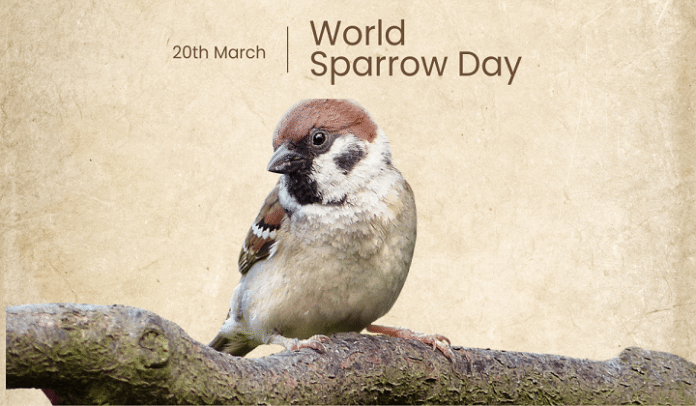
World Sparrow Day is observed every year on 20 March across the globe. It is a day dedicated to raising awareness about the conservation of sparrows and other common birds that live in close association with humans.

History and Origin

The observance began in 2010, initiated by India’s Nature Forever Society in collaboration with international organisations. What started as a small effort to protect a familiar bird has now grown into a global movement, marked in many countries through awareness campaigns, school activities, and conservation drives.

Why is World Sparrow Day Celebrated?

World Sparrow Day draws attention to the alarming decline in sparrow populations, especially in urban areas. Once a constant presence in our homes, courtyards, and streets, sparrows are now rarely seen in many cities.

The day reminds us that even the most common species can become endangered if environmental changes go unchecked. It also encourages people to reconnect with nature and take small but meaningful conservation steps.

Significance of Sparrows in Our Ecosystem

Sparrows play a crucial role in maintaining ecological balance. They feed on insects, helping control pests, and also contribute to pollination and seed dispersal.
Because they live so closely with humans, sparrows are considered indicator species. Their decline signals deeper environmental problems such as pollution, habitat loss, and shrinking biodiversity in urban ecosystems.

Current Condition of Sparrows Worldwide

Although sparrows are still found across many parts of the world, their numbers have been steadily declining. In several regions, especially in cities, their population has dropped significantly over the past few decades.
In India too, sparrows that were once abundant are now missing from many urban landscapes. Their disappearance is gradual but noticeable, raising concerns among environmentalists and researchers.

Why Are Sparrows Disappearing?

The decline of sparrows is the result of multiple factors linked to rapid urbanisation and changing human lifestyles.

Modern buildings, with smooth walls and sealed structures, have eliminated the small spaces where sparrows once built their nests. At the same time, the widespread use of pesticides has reduced insect populations, which are a vital food source for sparrows, especially for their young ones.

Pollution—both air and noise—has further made urban environments less suitable for their survival. The loss of trees and green spaces has also reduced safe habitats.

Another frequently discussed factor is the increase in mobile towers and electromagnetic radiation. While research is still ongoing and not entirely conclusive, several studies suggest that radiation from mobile towers may affect sparrows by disrupting their navigation, breeding patterns, and overall behaviour. This has been widely considered as one of the possible contributors to their decline, especially in densely populated urban areas.

Additionally, changing lifestyles—such as reduced grain storage in homes and cleaner, sealed living spaces—have limited food availability for these birds.

Efforts and What Can Be Done

Conservation efforts are gaining momentum through awareness campaigns and community participation. People are increasingly being encouraged to install nest boxes, provide food and water, and plant native vegetation.

Even simple actions like keeping a bowl of water on balconies or terraces can help sparrows survive, especially during extreme weather conditions.

World Sparrow Day serves as a gentle yet urgent reminder of how rapidly our environment is changing. The disappearance of sparrows is not just about losing a bird—it reflects a deeper imbalance in our ecosystem.

By making small, conscious changes in our daily lives, we can help bring back the familiar chirping of sparrows and ensure that future generations grow up with the same simple joys of nature that we once experienced.

PM Modi Engages Global Leaders Amid Escalating West Asia Conflict, Stresses De-escalation and Strait of Hormuz Security

0

PC (The Times of India)

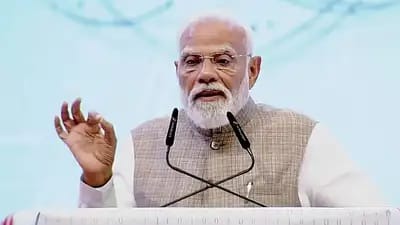
Prime Minister Narendra Modi held a series of high-level telephonic conversations with key world leaders, including Sultan Haitham bin Tariq of Oman, Malaysian Prime Minister Anwar Ibrahim, French President Emmanuel Macron, and Jordan’s King Abdullah II, to address the intensifying military conflict in West Asia. The discussions come against the backdrop of the ongoing war between the United States, Israel, and Iran, which erupted on February 28, 2026, following joint US-Israeli strikes that targeted Iranian military infrastructure and resulted in the death of Supreme Leader Ali Khamenei.

The conflict has seen sustained airstrikes, retaliatory missile and drone attacks by Iran on US bases, Israel, and Gulf allies, and growing threats to critical energy routes like the Strait of Hormuz. This narrow waterway, through which nearly a fifth of global oil trade passes (approximately 20 million barrels per day), faces heightened risks of disruption, raising global concerns over energy security, oil prices, and supply chains.

In his call with Sultan Haitham bin Tariq, PM Modi conveyed advance Eid greetings to the people of Oman and described the conversation as productive. He reiterated India’s strong condemnation of violations of Oman’s sovereignty and territorial integrity, particularly in light of Iranian strikes on Gulf nations, including Oman. The Prime Minister appreciated Oman’s efforts in facilitating the safe return of thousands of stranded individuals, including Indian nationals. Both leaders emphasized the need to prioritize dialogue and diplomacy for de-escalation and the restoration of peace and stability in the region.

PM Modi specifically highlighted the shared commitment of India and Oman to ensuring safe and free navigation through the Strait of Hormuz, underscoring its vital importance for global energy flows and maritime security.
During his discussion with Malaysian Prime Minister Anwar Ibrahim, PM Modi extended warm greetings on the upcoming Hari Raya Aidilfitri festival. The two leaders expressed deep concern over the West Asia situation and reaffirmed their joint commitment to de-escalation through dialogue and diplomacy to restore early peace and stability. In a separate conversation with French President Emmanuel Macron, PM Modi stressed the urgent need for de-escalation amid the fierce military confrontation involving the US, Israel, and Iran, which has targeted military and civilian infrastructure. Both sides agreed on close coordination to advance peace and stability in the region and beyond, with President Macron reciprocating that India and France are working together to keep diplomacy central to efforts for peace.

PM Modi also spoke with King Abdullah II of Jordan, conveying advance Eid wishes and expressing concern over the evolving situation. The leaders condemned attacks on energy infrastructure, which they noted could lead to avoidable escalation, and supported unhindered transit of goods and energy.

PM Modi appreciated Jordan’s role in facilitating the safe return of stranded Indians. This marks PM Modi’s second conversation with the Sultan of Oman since the conflict began, and he has maintained active engagement with multiple regional leaders, including those from Saudi Arabia, Bahrain, the UAE, Qatar, Kuwait, Israel, and Iran. India’s diplomatic outreach reflects its consistent stance on favoring dialogue over confrontation, protecting Indian nationals in the region, and safeguarding global energy security amid the intensifying hostilities. As the conflict enters its third week with reports of expanded strikes on energy targets and fears of broader regional involvement, PM Modi’s proactive diplomacy underscores India’s role as a voice for restraint and stability in one of the world’s most volatile regions.

International Day of Happiness 2026: History, Significance, Theme

0

The International Day of Happiness was established by the United Nations in 2012, inspired largely by the philosophy of prioritizing well-being over purely economic growth. The idea gained momentum from Bhutan’s concept of Gross National Happiness, which emphasizes collective well-being, environmental conservation, and cultural values. The first official celebration took place in 2013, encouraging countries worldwide to recognize happiness as a fundamental human goal. Over time, the day has evolved into a global movement, supported by governments, organizations, and individuals promoting mental health, kindness, and social connection.

Significance

In today’s fast-paced and often stressful world, this day serves as a reminder that true progress goes beyond material success. Rising urban stress, digital overload, and social isolation have made emotional well-being more important than ever. The observance encourages people to focus on mental health, compassion, gratitude, and meaningful relationships. It also highlights the importance of policies that support quality of life—such as healthcare, education, and equality. For individuals, it’s an opportunity to pause, reflect, and engage in simple acts that bring joy, whether that’s spending time with loved ones, practicing mindfulness, or helping others.

Theme

Theme: “Happiness for All, Together”

The 2026 theme emphasizes collective happiness—recognizing that individual well-being is deeply connected to the well-being of communities. It promotes inclusivity, emotional resilience, and shared responsibility in creating a happier world. Small, consistent actions—like kindness, healthy living, and positive communication—are highlighted as powerful tools to build lasting happiness.

What Is Investment? A Simple Guide to Different Types of Investment in India

0

Money sitting in your wallet doesn’t grow. It just sits there. Sometimes it even loses value because prices keep going up.

But money that’s put to work? That’s a different story. It can multiply over time. It can help you reach your dreams. Buy a house. Fund your child’s education. Retire comfortably.

This is what investment is all about. Let’s understand it in the simplest way possible.

What Is Investment?

Think of investment as planting a tree. You put a seed in the ground today. Give it water and care. Years later, you have a big tree giving you fruit.

Your money works the same way. Instead of spending it all now, you put some aside. That money goes into different places where it can grow. Over time, it becomes much more than what you started with.

When you invest, you’re making a choice. Enjoy something small today or get something bigger tomorrow? Most wealthy people choose tomorrow. That’s their secret.

Why Investing Matters

After knowing “what is investment”, now we’ll see what it matters. Let me share something eye-opening. Take ten thousand rupees. Hide it under your mattress for ten years.

You’ll still find ten thousand rupees there. Sounds fine? Not really. That amount won’t buy what it could ten years ago. Bread costs more. Petrol costs more. Everything costs more.

Now picture this instead. You invest that same amount at ten percent returns yearly. After ten years? You’re looking at roughly twenty-six thousand rupees. Same start. Totally different ending.

Your money didn’t just sit there getting weaker. It grew bigger and stayed ahead of rising prices. That’s why investing isn’t optional anymore. It’s necessary.

Understanding Types of Investment in India

India offers many investment options. Each works differently. Each has its own risks and benefits. Let’s look at the main ones.

  • Bank Fixed Deposits are the simplest. You give money to the bank for a fixed period. They pay you interest. Your money is safe. Returns are predictable. Currently, around six to seven percent annually. Good for people who hate risks.
  • Public Provident Fund is a government-backed scheme. You invest for a minimum of fifteen years. Get around seven to eight percent returns. Best part? Triple tax benefit. What you invest, what it earns, what you withdraw – all tax-free. Perfect for long-term goals.
  • Mutual Funds pool money from many investors. Professional managers invest this money in stocks, bonds, or both. Equity mutual funds can give ten to fifteen percent returns over long periods. But they come with market risks. Values go up and down. Debt mutual funds are safer with moderate returns.
  • Stocks mean buying shares of companies. If the company does well, your shares become valuable. You can earn through price increases and dividends. Potentially very high returns. But also high risk. Prices swing wildly. Not for the faint-hearted.
  • Real Estate means buying property. Land, houses, and commercial spaces. Property values generally increase over time. You can also earn rental income. But you need large amounts upfront. Selling takes time. Returns vary hugely by location.
  • Gold has been India’s favourite for generations. People buy physical gold, gold coins, or gold bonds. It holds value during uncertain times. Good against inflation. But returns aren’t spectacular. And storing physical gold has risks.
  • The National Pension System is for retirement planning. You invest regularly during your working years. Get returns based on market performance. Lock-in till retirement. Tax benefits available. Good for building a retirement corpus.
  • Bonds are like loans you give to companies or the government. They pay you interest regularly. Your principal comes back after maturity. Government bonds are very safe. Corporate bonds give higher returns but carry some risk.

Matching Investments to Your Needs

Different types of investment in India suit different situations. Your choice depends on several factors.

Your age matters. Young people can take more risks. They have time to recover from losses. Older people need safer options.

Your goals matter too. Saving for a vacation in two years? Keep money accessible in fixed deposits. Planning retirement in thirty years? Equity investments make sense.

Your comfort with risk is crucial. Some people sleep peacefully even when markets crash. Others panic at small losses. Know yourself before choosing.

Starting Your Investment Journey

Many people delay investing. They think they need lots of money to start. Wrong. You can begin with as little as five hundred rupees monthly in mutual funds.

The key is starting early and staying regular. Even small amounts become significant over decades. Thanks to the power of compounding.

Don’t try to put all your money in one place. Spread it across different types of investments in India. This protects you if one investment performs poorly.

Keep learning as you go. Read articles. Ask questions. Your knowledge will grow with your investments.

The Rule of Thumb: Asset Allocation

Once you understand the basic types of investment in India, the next step is combining them intelligently. This is called Asset Allocation. A common strategy used globally is based on your age, often called the “100 minus age” rule. The simple idea is that the percentage you put into higher-risk/higher-return assets (like equity/stocks) should roughly equal 100 minus your current age. The rest goes into safer assets (like bonds and PPF).

This gives you a personalised starting point for your portfolio mix:

  • For a 30-year-old: Target about 70% (100 – 30) in growth assets (Equity Mutual Funds, Stocks).
  • For a 50-year-old: Target about 50% (100 – 50) in growth assets, shifting the remaining 50% to safer fixed-income products.
  • The Big Idea: This systematic approach ensures your risk level naturally decreases as you get closer to your major financial goals, like retirement.

Taking the First Step

Understanding what investment is just the beginning. The real journey starts when you actually invest your first rupee. Pick one or two types of investment in India that match your situation. Open an account. Set up automatic monthly investments if possible. Then let time do its magic.

Your future self will thank you for the decision you make today. Every investment journey begins with a single step. Take yours now.

BMW Group India Powers Up Rajasthan Presence; The Iconic MINI Brand Makes Its Entry in State

0

BMW Group India has further strengthened its presence in Rajasthan by launching the MINI brand for luxury consumers in the state. The company has also added a new showroom in the blue city of Jodhpur. With this, BMW Group India now has presence in major cities of Rajasthan including Jaipur, Udaipur and Jodhpur.

Sanghi Classic is the exclusive dealer partner of BMW in Rajasthan since 2009 and now has also been appointed to represent MINI. This marks MINI’s strategic entry into one of North India’s most promising luxury automobile markets, ready to excite customers with a dynamic portfolio and energetic brand engagements.

Hardeep Singh Brar, President and CEO, BMW Group India said, “BMW Group India is on the path of success and we want to take our highly aspirational brands to valuable luxury clientele across the length and breadth of the nation. Rajasthan has always been a vibrant market with a deep appreciation for design, individuality and true luxury. It is a very strategic market for us and we are elated to announce a significant expansion here. First, MINI’s debut in this state will cater to creative, unique and urban fans and tap a new segment. Secondly, addition of a new showroom in Jodhpur, housing both BMW and MINI, will underscore our commitment to offer a modern, immersive and highly personalized experiences to a wider audience in the state.”

Puneet Sanghi, Dealer Principal, Sanghi Classic said, “We are proud to strengthen our long-standing partnership with BMW Group India. MINI represents creativity, individuality and a unique driving spirit that resonates strongly with the evolving luxury consumers in Rajasthan. Our Jaipur facility has been transformed into a Retail.NEXT facility and we have just opened the doors to our state-of-the-art Retail.NEXT facility in Jodhpur as well. With the growing demand for premium mobility, Sanghi Classic is deepening its roots across the state and is committed to delivering a world-class sales and service experience in the region.”

BMW Group India Powers Up Rajasthan Presence; The Iconic MINI Brand Makes Its Entry in State

MINI
MINI is a brand defined by its timeless blend of heritage and innovation, continually reinventing itself while staying true to its iconic roots. Since Sir Alec Issigonis sketched the first MINI over half a century ago, the car has grown into a global symbol of style, individuality, and spirited driving. More than just a vehicle, MINI represents a lifestyle, one that celebrates personality, creativity, and a desire for something uniquely expressive. This unwavering commitment to originality ensures MINI remains an icon that never grows old.

Sanghi Classic
Established in 2009 in Jaipur, Sanghi Classic brought the global BMW retail and ownership experience to Rajasthan with a state-of-the-art showroom and integrated aftersales service facility. The dealership introduced BMW’s international standards of luxury retailing, offering sales, service, spare parts, and lifestyle products under one roof.
Located strategically in Khas Bagh, Jodhpur, Sanghi Classic’s new Retail.NEXT showroom offers customers an exclusive gateway to the world of BMW and MINI in the region.

Jal Mahotsav: The Pump Operator from Rajasthan’s Mau Borda Who Keeps the Water Flowing Every Day

0

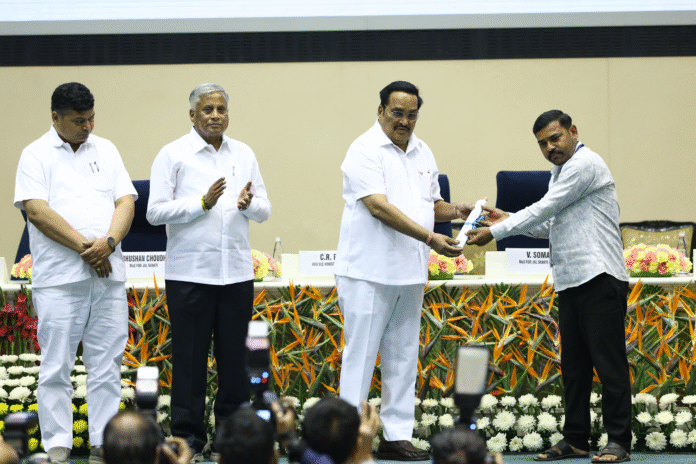
This is an inspirational story coming from Mau Borda village of Khanpur Panchayat Samiti, Rajasthan where a pump operator is showing the rest of India what it means to carry a community’s health, time, and dignity on one’s shoulders every single day. Tikamchand was recently honoured at the National Event of Jal Mahotsav 2026, held at Vigyan Bhawan, New Delhi, by the Union Minister of Jal Shakti, C.R. Patil, for his exemplary service in rural water governance. The National Event on 11th March was graced by the President of India, Draupadi Murmu, who affirmed that water is not merely a basic service but a fundamental pillar of health, dignity, and sustainable development.

Jal Mahotsav 2026 is a nationwide initiative celebrated from 8th March to 22nd March, bringing communities together around water conservation, responsible water management, and the achievements of the Jal Jeevan Mission. Launched on 8th March by the Hon’ble Union Minister of Jal Shakti, Shri C.R. Patil, from Navsari, the local soil from which this national mission drew its first breath of belonging. This year, the event placed special emphasis on the skilling, capacity building, and recognition of pump operators who sustain rural water supply systems across the country, affirming that pump operators are not peripheral to the Mission; they are its operational lifeline.

The Man Behind the Tap

At the heart of Mau Borda’s water supply system is Tikamchand’s daily work. As the pump operator, he manages the functioning of the water supply system by carefully opening and closing valves during the supply cycle, ensuring that water reaches households in a systematic and timely manner. His role requires diligence and responsibility, as the smooth functioning of the village water supply depends on his careful management of the system.

In Mau Borda, this effort is sustained by the community itself; villagers contribute monthly user charges for the water supply service, and from these funds, Shri Tikamchand receives his honorarium. While pipelines and infrastructure make water supply possible, it is his consistent effort that ensures water flows reliably to every household.

At the National Event of Jal Mahotsav 2026, Union Minister C.R. Patil honoured Tikamchand’s contribution, celebrating not only his dedication but also highlighting the importance of empowering pump operators with the skills and respect they deserve.

A Mission Extended, A Vision Deepened

This spirit has now been given renewed momentum by a landmark decision. The Union Cabinet, chaired by Prime Minister Narendra Modi, has approved the extension of the Jal Jeevan Mission up to December 2028 with an enhanced total outlay of ₹8.69 lakh crore, with total central assistance of ₹3.59 lakh crore, increased from ₹2.08 lakh crore approved in 2019-20. The mission will now shift its focus from infrastructure creation to service delivery.

A uniform national digital framework, Sujalam Bharat, will also be instituted under this extended phase. Every village will be assigned a unique Sujal Gaon or Service Area ID, digitally mapping the complete drinking water supply system from source to tap.

What Sujalam Bharat envisions, Mugaliya Haat has already practised: water governance that is visible, accountable, and owned by the community.

People like Shri Tikamchand in his daily service carry the health, the time, and the dignity of his community. And in honouring him, the nation turns the spotlight on those who have always worked in the background, making the promise of Har Ghar Jal not just a policy, but a daily reality.

10 Years of Italian Innovation: Vegea Expands GrapeSkin Production Capacity

0

Celebrating a decade of pioneering innovation, Vegea announced a significant expansion of its production capacity for GrapeSkin, the Italian-made bio-based material crafted from grape-processing by-products. This milestone marks a new chapter in scaling sustainable materials for global industries, from fashion to automotive.

The expansion introduces upgraded production lines alongside newly dedicated units for both fashion-grade and interior-grade finishes. This strategic development enables higher output volumes, accelerated sampling processes, and more reliable delivery timelines—key advantages for designers and manufacturers operating on tight creative schedules.

Crucially, the increased capacity preserves the distinctive qualities that have made GrapeSkin a sought-after material: consistent aesthetics, refined hand-feel, and high performance, all while maintaining its bio-based composition.

A Material for Responsible Luxury

Blending vegetal content with an animal-free composition, GrapeSkin continues to redefine the standards of responsible luxury. Its versatility and premium finish have led to its adoption in collections and projects by globally recognized brands such as Calvin Klein, Diadora, and Bentley.

“Designers need reliable access to innovative materials,” said Francesco Merlino, Founder of Vegea. “Our expanded production footprint ensures consistency, quality, and the ability to meet the evolving demands of creative industries worldwide.”

About Vegea

Founded in 2016, Vegea is an Italian biomaterials company specializing in the transformation of agricultural by-products into high-performance, bio-based materials. With GrapeSkin, Vegea integrates agriculture, green chemistry, and advanced textile manufacturing within a circular economy model—offering low-impact alternatives for fashion, interiors, and automotive sectors. (IANS-arc)