Home Blog Page 278

How Blood Sugar Quietly Steals Your Memory and Brain Power

0

By Udit Sharma

Most of us associate high blood sugar with diabetes and weight gain. But did you know that elevated blood sugar can silently attack your brain, affecting memory, focus, and overall cognitive function? Whether you’re diabetic or not, blood sugar fluctuations may be quietly eroding your brain power every single day.

In this article, we’ll explore how blood sugar affects your brain, the science behind this connection, symptoms to watch for, and practical steps to protect your cognitive health.

The Brain’s Dependence on Glucose

The brain is the most energy-demanding organ in your body, consuming nearly 20% of your daily glucose intake. Glucose fuels mental processes like concentration, learning, problem-solving, and memory retention.

When your blood sugar levels are stable, your brain performs optimally. But when glucose levels frequently spike or drop, your brain starts to suffer — often without you even realizing it.

How High Blood Sugar Damages Your Brain

  1. Oxidative Stress and Inflammation

Consistently high blood sugar leads to oxidative stress, which produces free radicals that damage brain cells. Chronic inflammation from high glucose levels can impair neuron communication, making it harder for your brain to process and store information.

  1. Insulin Resistance in the Brain

High blood sugar often leads to insulin resistance — not just in the body but also in the brain. Insulin helps brain cells absorb glucose and supports neurotransmitter function. When brain cells resist insulin, it leads to cognitive decline, memory loss, and brain fog.

  1. Brain Shrinkage

Research shows that people with elevated blood sugar are more likely to experience brain atrophy, especially in the hippocampus, which is vital for memory. This shrinkage increases the risk of cognitive decline, dementia, and Alzheimer’s disease.

  1. Higher Alzheimer’s Risk (Type 3 Diabetes)

Alzheimer’s disease is sometimes called Type 3 diabetes because of its strong link to insulin resistance and glucose metabolism dysfunction in the brain. High blood sugar contributes to the build-up of beta-amyloid plaques and tau tangles, which are key markers of Alzheimer’s.

Silent Symptoms of Blood Sugar-Related Cognitive Decline
• Frequent forgetfulness
• Difficulty focusing (brain fog)
• Mental fatigue and confusion
• Irritability and mood swings
• Slower processing of information

If you experience these symptoms regularly, your blood sugar could be playing a role—even if you don’t have diabetes.

Who Is at Risk?
• People with prediabetes or diabetes
• Overweight or obese individuals
• People with a sedentary lifestyle
• Poor diet high in processed foods and sugars
• Chronic stress sufferers
• Individuals with poor sleep habits

How to Protect Your Brain from Blood Sugar Damage

  1. Maintain a Balanced Diet
    • Eat low-glycemic foods: whole grains, vegetables, legumes, and lean proteins.
    • Avoid processed sugars, refined carbs, and sugary drinks.
  2. Exercise Regularly
  3. Physical activity improves insulin sensitivity and helps stabilize blood sugar levels.
  4. Get Quality Sleep: Poor sleep affects glucose regulation and increases the risk of cognitive decline.
  5. Manage Stress: Chronic stress raises cortisol, which can destabilize blood sugar levels.
  6. Monitor Your Blood Sugar

Even if you’re not diabetic, periodically check your fasting glucose, HbA1c, and insulin levels to catch issues early.

Conclusion

Blood sugar may be silently stealing your memory and brain power without any obvious signs. By understanding the connection between glucose and brain health, you can take proactive steps to protect your cognitive function. Healthy blood sugar levels not only prevent diabetes but also preserve your mental clarity, focus, and memory for years to come.


Stop Child Labour: Says Netizens on World Day Against Child Labour. Look How They Share Awareness Via Messages and Posters…

0

Globally, an estimated 160 million children are engaged in child labor, which represents nearly 1 in 10 children worldwide. This figure includes 63 million girls and 97 million boys. A significant portion, 79 million, are working in hazardous conditions. The highest prevalence of child labor is in Africa, followed by Asia and the Pacific. 

Here’s a more detailed breakdown:

  • Global Prevalence: 160 million children are engaged in child labor. 
  • Gender Distribution: 63 million girls and 97 million boys are involved in child labor. 
  • Hazardous Work: Nearly half of all children in child labor, 79 million, are in hazardous conditions. 
  • Regional Distribution: Africa (72 million), followed by Asia and the Pacific (62 million), have the highest prevalence. 
  • India: The number of children in child labor in India ranges from 1.8 million (0.7% of all children aged 5-17 years) to 3.3 million (1.3% of children), depending on the definition used. 

Gulab Chakkar in Ratlam Bespeaks Story of Father Daughter’s Bond…

0

The Majestic Gulab Chakkar: A Symbol of Love and Legacy

Can you image a circle in the heart of a city bespeaking a story of a father and daughter love? Surprised? How can a circle bespeak a tale of father daughter bond? This might be a billion dollar question bouncing your brain?

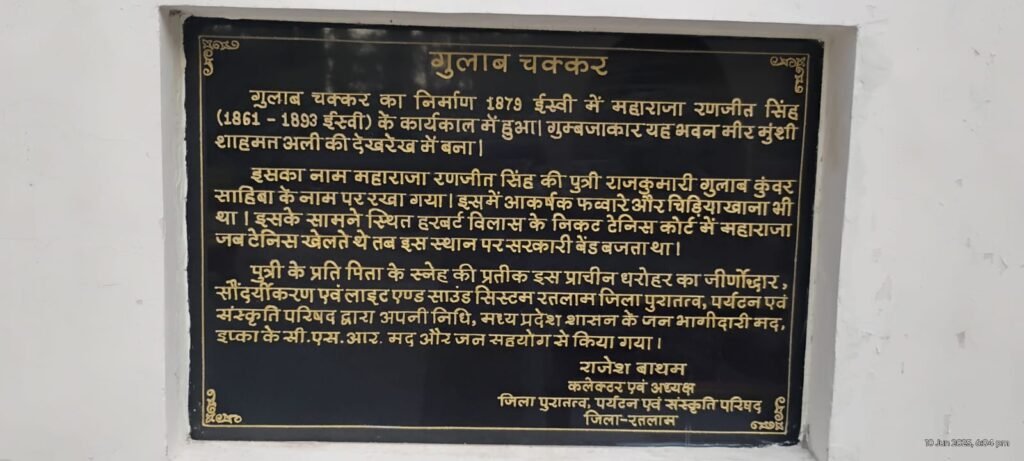
So if you want a reply to this question, you should try visiting Gulab Chakkar situated in the heart of Ratlam. It embodies the city’s royal legacy and a father’s boundless love. Built in 1879 under the patronage of Maharaja Ranjit Singh, this dome-shaped marvel was dedicated to his daughter, Rajkumari Gulab Kunwar Sahiba. Crafted under the meticulous supervision of Mir Munshi Shahamat Ali, Gulab Chakkar is more than an architectural gem—it is a living testament to Ratlam’s rich heritage, a symbol of familial devotion, and a cultural anchor for future generations. Preserving this iconic structure is not just a matter of maintaining a building; it is about safeguarding the soul of Ratlam and its storied past.

And Ratlam District Collector Rajesh Batham should be congratulated for presenting this precious asset to the people of Ratlam which speaks a beautiful story of family’s bonding with its exquisite artistry. Batham opened Gulab Chakar for the city residents after performing Puja. Once Maharaja used to play tennis in Herbert Palace, then the melodious sound of the government band used to resonate here. To make it alive, a musical performance was given by the police band of MP SAF Indore along with Gulab Chakar. In the evening, artists from various singing clubs, groups, orchestras presented songs and music.

Historical Significance: A Monument Born of Familial Devotion

Gulab Chakkar’s historical significance lies in its unique origin story. Born from a father’s love for his daughter, it stands as a rare monument in Indian history where familial affection is immortalized in stone. Unlike many structures from the era built for political or military purposes, Gulab Chakkar represents an emotional narrative, making it a distinctive cultural artifact. Its intricate design, inspired by the architectural brilliance of the time, reflects the craftsmanship of artisans who poured their skill into every detail. Preserving this monument ensures that future generations can connect with the human stories behind Ratlam’s royal past, fostering a sense of pride and identity.

Gulab Chakkar in Ratlam Bespeaks Story of Father Daughter's Bond...

Cultural Touchstone: The Heartbeat of Ratlam’s Heritage

Beyond its historical value, Gulab Chakkar is a cultural touchstone. In its heyday, it was a vibrant hub where fountains sang, peacocks danced in the nearby zoo, and the royal band played melodious tunes as Maharaja Ranjit Singh’s tennis racket echoed on the Herbert Vilas courts. These scenes evoke a time when Gulab Chakkar was the heartbeat of Ratlam’s social and cultural life. Today, it serves as a reminder of the city’s grandeur, a place where history and festivity intertwined. Protecting this monument preserves the memories of a bygone era, allowing Ratlam’s residents to celebrate their heritage and share it with visitors.

Colourful lights enhance its beauty

At night, Gulab Chakkar becomes more than a monument—it turns into a beacon of Ratlam’s royal heritage, its illuminated silhouette standing proud against the starry sky. The lights not only enhance its aesthetic beauty but also amplify its emotional resonance, reminding visitors of the love and devotion etched into its foundation. The surrounding area, once alive with fountains and music, seems to hum with the echoes of history under the gentle glow, inviting quiet reflection and admiration. This nocturnal splendor makes Gulab Chakkar a visual masterpiece, drawing locals and travelers alike to bask in its timeless charm and connect with Ratlam’s storied past.

Gulab Chakkar in Ratlam Bespeaks Story of Father Daughter's Bond...


Now, AC Temperature Can’t Be Set Under 20 Degree Celcius and Above 28 Degree Celcius. Know Why?

0

In a move aimed at reducing electricity consumption and combating global warming, the central government is set to introduce new rules that will restrict air conditioners (ACs) from being set below 20°C. Once the regulations come into force, newly purchased ACs can only operate within a temperature range of 20°C to 28°C.

This initiative is part of a broader government strategy to promote energy efficiency, especially during the peak summer months when electricity usage surges due to widespread AC use.

Massive Savings Expected for Consumers

According to government estimates, this change could result in nationwide savings of ₹18,000 to ₹20,000 crore in electricity bills over the next three years. The decision is being welcomed as a practical step toward balancing consumer comfort with environmental sustainability.

Cooling Efficiency to Improve, Says Power Minister

Union Power Minister Manohar Lal stated that the upcoming regulations will mandate AC manufacturing companies to enhance the cooling efficiency of their products. “The new rule will not only ensure more efficient cooling but also help curb electricity demand and reduce skyrocketing power bills during summer,” he said.

The regulation will apply across all sectors, including residential homes, as well as commercial spaces like offices, malls, hotels, and cinema halls—where ACs are commonly operated at minimum temperatures such as 16°C or 18°C, leading to excessive energy use.

Why This Rule Matters

  • Energy Efficiency: ACs operating at very low temperatures consume significantly more power. Setting a default range helps cut energy waste.
  • Environmental Impact: The move supports India’s commitment to climate goals by limiting unnecessary energy consumption.
  • Health Considerations: Running ACs at excessively low temperatures can also lead to health discomfort or cold-related issues.

The new rule is expected to be rolled out soon and will likely be mandatory for all new AC units sold in India. Consumers are encouraged to adopt eco-friendly practices and adjust to the new norms for a sustainable future.

Da Nang to Target Luxury Tourism from Dubai’s Elite

0

The direct route between Dubai and Da Nang, operated by Emirates – one of the world’s most prestigious airlines – has officially launched. These flights from the Middle East, a fast-growth region, are expected to bring significant changes to the coastal city. Sustaining long-term appeal for this class of affluent travellers is now a central concern for Da Nang.

Potential from the Middle East

Emirates, recently named a global leader in aviation by Forbes Travel Guide 2025, is the largest airline in the Middle East with over 4,100 flights each week from Dubai International Airport to more than 140 cities across 80 countries.
 

The new direct route to Da Nang is a gateway for billionaires from one of the wealthiest regions on earth to access Vietnam’s central coast, carrying immense spending power. It also facilitates the arrival of high-end travellers from Europe and the Americas, as Dubai ranks among the world’s busiest international transit hubs.
 

According to the Department of Culture, Sports and Tourism of Da Nang, as of April 2025, over 13,000 visitors from Middle Eastern countries had arrived in the city. This figure represents 0.73 percent of total international visitors, with most travellers coming from Iran, Israel and Turkey. With the new Emirates route now in operation, this number is expected to rise sharply, potentially adding trillions of Vietnamese dong in tourism revenue to the local economy. 
 

In recent years, Da Nang has made notable progress in diversifying into new high-potential markets. With a keen focus on growth, the city is extending its tourism outreach to areas including the Middle East and Central Asia. Charter flights to Da Nang have already launched from several cities, including Astana and Almaty in Kazakhstan, with seven airlines offering 10 weekly flights from April to October 2025. Centrum-Air Airways is also operating a weekly service from Tashkent, Uzbekistan.
 

According to Tran Chi Cuong, Vice Chairman of the Da Nang People’s Committee, the launch of the Emirates Dubai–Da Nang route reduces the travel gap between Da Nang and major global markets such as the Middle East, Europe, North America and Africa. It also helps to strengthen tourism development and opens new avenues for trade, investment, and cultural exchange.
 

Da Nang appeals to affluent travellers

To serve high-end tourists, a destination must offer diverse experiences and premium resorts. Travelers from the Middle East are increasingly seeking new places to explore beyond the typical Southeast Asian favourites like Thailand, Indonesia and Singapore. It’s a prime opportunity for Da Nang, a city that combines natural beauty with world-class hospitality services, to welcome this affluent market.

India Announces ₹5,400 Crore Boost for Battery Energy Storage to Strengthen Renewable Power Grid

0

India is making a major push toward its clean energy goals with the launch of a new ₹5,400 crore funding package aimed at developing Battery Energy Storage Systems (BESS). This initiative will help establish 30 GWh of storage capacity, supplementing an earlier ₹3,700 crore incentive for 13.2 GWh. In total, the combined government and private sector investment in the energy storage sector is expected to reach ₹33,000 crore. The primary goal is to provide round-the-clock renewable power supply and strengthen grid stability.

Viability Gap Funding (VGF) for BESS

The new funding falls under the Viability Gap Funding (VGF) scheme, which supports infrastructure projects that are not financially feasible without government assistance. The ₹5,400 crore allocation is intended to attract private investment in the battery storage segment and accelerate India’s transition to cleaner energy.

Importance of Battery Energy Storage Systems

As renewable energy sources like solar and wind continue to grow, energy storage becomes critical to manage their intermittent nature. BESS allows excess energy generated during off-peak hours to be stored and then used during peak demand periods. This ensures a reliable and consistent energy supply, reducing reliance on fossil fuels.

Pumped Storage Projects (PSPs)

Alongside BESS, Pumped Storage Projects are gaining attention as large-scale energy storage solutions. These hydro-based systems operate by moving water between two reservoirs at different elevations. Water is pumped to the upper reservoir during low demand and released to generate electricity during high demand, acting as a natural energy buffer.

Transmission Waivers and Infrastructure Upgrades

To further encourage investment, the government has extended the 100% waiver on inter-state transmission system (ISTS) charges for both BESS and PSPs until June 30, 2028. Additionally, an investment of ₹53,000 crore has been approved to enhance the Ultra High Voltage Alternating Current (UHVAC) transmission system, which includes nine major high-voltage lines planned by 2034.

Right of Way (RoW) Compensation Revision

To expedite the rollout of critical energy infrastructure, the government has revised the compensation structure under the Right of Way (RoW) rules. Landowners will now receive enhanced compensation for land used for tower installations, improving cooperation and speeding up project implementation.

Future Storage Requirements

According to the Central Electricity Authority, India will need 37 GWh of battery storage capacity by 2027 and 236 GWh by 2031–32 to support its growing renewable energy demands. The new funding initiative positions India to meet its FY28 target of 43.2 GWh, aligning with national energy security and sustainability goals.

India’s Gig Economy to Touch 62 Million Workers by 2047: VV Giri Institute Report

0

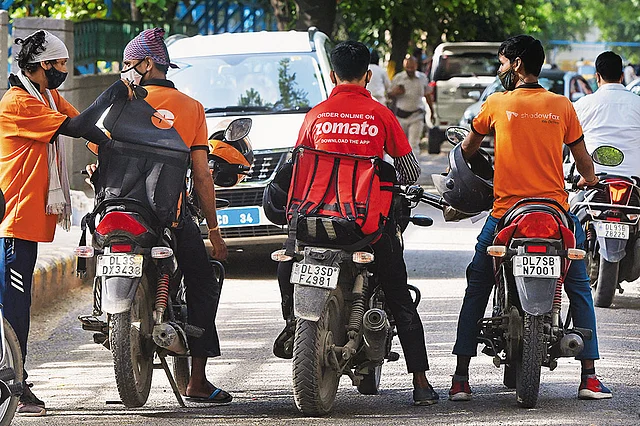
The gig economy in India is undergoing a significant transformation, driven by rapid technological advancements and changing labour preferences. According to a recent study by the VV Giri National Labour Institute, based on 2022 data from NITI Aayog, the country’s gig and platform workforce is projected to reach 62 million by 2047, accounting for approximately 15% of the total non-agricultural workforce.

Evolution and Current Landscape

Initially centred around ride-sharing and food delivery, India’s gig economy has diversified into sectors like healthcare, education, creative services, and professional consulting. In 2020, over 3 million gig workers were engaged across 11 major platform companies. This number is expected to grow significantly—reaching 23 million workers by 2030, which would represent 7% of the non-agricultural workforce.

Future Projections: Growth Amidst Volatility

The study highlights a potential doubling of gig workers in the coming decades. Under optimistic scenarios, India’s gig workforce could surge to 90.8 million jobs by 2047. However, this growth is not without risks. External factors such as economic instability and technological disruptions could limit this figure to just 32.5 million, reflecting the sector’s inherent volatility.

Rights and Legal Recognition

A major focus of the study is the legal status and rights of gig workers. In many countries like the UK and Canada, gig workers receive legal recognition, allowing for collective bargaining, social protection, and fair working conditions. The report calls for India to establish a clear legal framework distinguishing between employees and independent contractors to ensure fair treatment.

Key Challenges Facing Gig Workers

Despite the sector’s growth, gig workers continue to face multiple challenges. These include lack of job security, uncertain income, and limited access to social security. The ambiguity around their employment status often excludes them from traditional labour laws and welfare benefits, leaving them financially vulnerable.

Recommendations for Sustainable Growth

To strengthen the gig economy, the study proposes several recommendations. These include ensuring a minimum guaranteed income, implementing fair working hours, and establishing algorithmic accountability for platform companies. It also advocates for skill development programs, a national registry of gig workers, and streamlined grievance redressal mechanisms to empower the workforce.

Conclusion

India’s gig economy is poised for substantial expansion in the coming decades. However, sustainable growth will depend on how well the country addresses the challenges of worker recognition, rights, and security. With the right policies and protections in place, the gig economy can become a resilient pillar of India’s future labour market.

Only Aadhaar authenticated user can book Tatkal tickets on IRCTC Website and App from July 1

0

No Agent Bookings in First 30 Minutes for AC & Non-AC Classes

OTP based identity authentication Must for online as well as Tatkal Bookings at PRS Counters & Through authorised Agents from July 15


With an aim to ensure fair and transparent access to Tatkal tickets and to safeguard the interests of genuine passengers, Indian Railways has announced key modifications in the Tatkal ticket booking system. These changes are aimed at enhancing user authentication and reducing misuse of the scheme.

The new provisions are as follows:

1. Aadhaar Authentication for Online Tatkal Bookings:

Effective 1st July 2025, Tatkal tickets booked through IRCTC’s official website and mobile app will be available only to users authenticated with Aadhaar.

Further, Aadhaar-based OTP authentication will become mandatory for Tatkal bookings made online starting 15th July 2025.

2. System-Based OTP Authentication at PRS Counters and Agents:

Tatkal tickets booked at computerised Passenger Reservation System (PRS) counters and through authorised agents will require OTP authentication sent to the mobile number provided by the user at the time of booking.

This provision will also come into effect from 15th July 2025.

3. Booking Time Restriction for Authorised Agents:

To prevent bulk bookings during the critical opening period, authorised ticketing agents of Indian Railways will not be permitted to book opening-day Tatkal tickets during the first 30 minutes of the booking window.

For AC classes, this restriction applies from 10:00 AM to 10:30 AM, and for non-AC classes, from 11:00 AM to 11:30 AM.

These changes are being implemented to improve transparency in Tatkal bookings and to ensure that the benefits of the scheme reach genuine end users.

CRIS and IRCTC have been instructed to make necessary system modifications and inform all Zonal Railways and concerned departments accordingly.

The Ministry of Railways urges all passengers to take note of these changes and encourages everyone to ensure Aadhaar linkage with their IRCTC user profiles to avoid inconvenience

Reviving Tradition: Men Learning Art of Dhoti Draping in Jaipur Courtesy, Workshop by AnanTaya

0

You might have seen many saree draping workshops in India, however a dhoti workshop for males sounds difficult to believe. 

However, recently Anantaya turned this ‘difficult to believe’ fact into reality by organising a dhoti workshop in Jaipur which, organisers say, was possibility first of its kind workshop in India. 

On Sunday, this unique workshop titled “Unstitched Dhoti Draping Workshop for Men” was held at the Experience Center in Narayan Niwas, aiming to revive and celebrate traditional Indian menswear.

The workshop was led by architect Gaurav Shori, who guided participants through 8 to 10 traditional styles of draping a dhoti, each rooted in various regions of India. Attendees learned about the historical and cultural significance of each style, along with its practical usage and symbolic meaning in different communities.

Aiming at reviving tradition, this unique Dhoti Draping Workshop received huge response from people in Jaipur.

Ayush Kasliwal, founder of Anantaya, shared that the initiative was driven by the belief that “a man is shaped by the quality of his rituals.” He emphasised that the workshop was an effort to rebuild a connection with India’s timeless traditions and cultural identity through clothing.

The event emerged in an era dominated by Western fashion trends and hence became talk of the town. A refreshing initiative, it aimed to reconnect the youth with India’s rich cultural heritage.

The event was well-received and highlighted the beauty and versatility of Indian traditional attire, offering a rare opportunity for men to explore and embrace their cultural roots in a modern context.

Sant Kabir Das: The Eternal Voice of Devotion and Wisdom on His Birth Anniversary

0

In the heart of India, where spirituality weaves the fabric of everyday life, the reverence for saints and sages transcends time and space. Among these luminous souls, Sant Kabir Das stands as a towering figure—a poet, mystic, and social reformer whose words continue to resonate across centuries. On the occasion of his birth anniversary, the nation unites in celebrating his legacy, with citizens across the country paying homage through recitations of his soul-stirring dohas (couplets), shared fervently on social media, and heartfelt reflections on his teachings. Kabir’s philosophy, rooted in devotion, equality, and the supremacy of the guru, holds a mirror to the Indian ethos, where saints are revered above all else. His timeless verse, such as the iconic lines:

“Guru Govind dono khade, kake lagun paay,
Balihari guru aapki, Govind diyo batay”

sant kabir das

(When Guru and God both stand before me, whose feet should I touch? I offer myself to the Guru, who showed me the path to God), underscores the unparalleled importance of the guru in spiritual awakening, a belief deeply embedded in Indian culture.

The Indian Reverence for Saints

India, often described as the land of sadhus and sants, holds its spiritual luminaries in the highest esteem. From ancient rishis to medieval bhakti poets and modern spiritual leaders, saints are seen as divine conduits, guiding humanity toward truth and liberation. This reverence is not merely ritualistic; it is a profound cultural expression of surrender and gratitude. People offer their sarsav (everything they have) at the feet of saints, seeking blessings and wisdom. Sant Kabir Das, with his simplicity and piercing insights, embodies this ideal. His birth anniversary is not just a commemoration but a celebration of the values he championed—humility, unity, and devotion. On platforms like X, devotees and admirers share his dohas, reflecting on their relevance in today’s fragmented world, a testament to the enduring love for saints in India.

The Life and Legacy of Sant Kabir Das

Born around 1398 CE in Varanasi (though exact dates remain debated), Kabir’s life is shrouded in legend. Raised by a weaver couple, Niru and Nima, he grew up in a humble Muslim household but was deeply influenced by the spiritual currents of both Hinduism and Islam. His refusal to align with any one religion made him a radical figure in his time. Kabir’s teachings emphasized a direct, personal connection with the divine, free from the shackles of dogma, caste, or ritual. His poetry, composed in the vernacular Hindi of the masses, broke barriers, making spiritual wisdom accessible to all.

Kabir’s life was a living sermon. As a weaver by profession, he wove metaphors of the loom into his poetry, likening the soul to a thread seeking union with the divine fabric. His bold critiques of hypocrisy—whether among pandits, mullahs, or rulers—earned him both followers and adversaries. Yet, his message of love and equality won hearts across communities. His birth anniversary is a moment to reflect on his courage to speak truth to power and his unwavering commitment to humanity.

Kabir’s Contribution to Hindi Literature

Sant Kabir Das is a cornerstone of Hindi literature, particularly in the Bhakti movement, which swept across medieval India. His dohas, sakhis (moral teachings), and pads (devotional songs) are treasures of Hindi sahitya (literature). Written in a simple yet profound style, his works blend Awadhi, Braj, and other regional dialects, making them relatable to the common person. His poetry is marked by vivid imagery, sharp wit, and a universal appeal that transcends cultural and linguistic boundaries.

Kabir’s contribution lies not only in his literary output but also in shaping the Bhakti tradition alongside saints like Surdas, Tulsidas, and Mirabai. His verses, collected in texts like the Bijak and the Guru Granth Sahib, challenge societal norms and advocate for a casteless, creedless spirituality. Lines like “Pothi padh padh jag mua, pandit bhaya na koy, Dhai akshar prem ke, padhe so pandit hoy” (The world dies reading scriptures, yet none become wise; one who understands the two-and-a-half letters of love becomes truly learned) highlight his emphasis on love over rote learning. His dohas remain a staple in Hindi literature curricula, inspiring generations of poets, scholars, and seekers.

The Supremacy of the Guru in Kabir’s Philosophy

At the heart of Kabir’s teachings is the guru, whom he places above even God. The couplet “Guru Govind dono khade…” encapsulates this belief. For Kabir, the guru is not merely a teacher but a divine guide who illuminates the path to God. Without the guru’s wisdom, the seeker remains lost in the darkness of ignorance. This reverence for the guru aligns with India’s spiritual tradition, where figures like Shankaracharya, Ramanuja, and Guru Nanak are venerated as embodiments of divine knowledge.

Kabir’s emphasis on the guru resonates deeply in a culture where spiritual mentorship is sacred. His teachings remind us that true wisdom comes not from rituals or scriptures but from the guidance of one who has walked the path. On his birth anniversary, this message inspires countless Indians to seek the light of knowledge through humility and surrender.

Kabir’s Relevance Today

In a world grappling with division and materialism, Kabir’s voice rings truer than ever. His call for unity—“Hindu kahe mohe Ram pyara, Turk kahe Rahim” (Hindus say Ram is dear, Muslims say Rahim)—challenges religious exclusivity. His rejection of caste and creed speaks to the need for social justice. His dohas, shared widely on social media, serve as beacons of hope, urging us to look beyond differences and embrace the universal truth of love.

As India celebrates Sant Kabir Das’s birth anniversary, his legacy reminds us why saints hold such a sacred place in our hearts. They are not just historical figures but living inspirations, guiding us through their words and deeds. Kabir, the weaver of divine verses, continues to thread the needle of spirituality through the fabric of our lives, weaving a tapestry of devotion, equality, and truth. Let us honor him by living his teachings, offering our sarsav not just at his feet but in service to humanity.

“Kabira khada bazaar mein, maange sabki khair,
Na kahu se dosti, na kahu se bair.”

(Kabir stands in the marketplace, wishing well for all,
Neither friend nor foe to anyone.)