Home Blog Page 266

Physically-challenged Ex-Servicemen and Their Dependents Get Scooters and Assistive Equipment in Rajasthan

0

The Rajasthan Ex-Servicemen Corporation (REXCO) organised a distribution programme on Tuesday at the Sapt Shakti Auditorium, Jaipur Military Cantonment, to provide three-wheeler scooters and other assistive equipment to physically challenged ex-servicemen and their dependents under the Corporate Social Responsibility (CSR) initiative.

On the occasion, Brigadier V.S. Rathore from the Sainik Welfare Department conveyed that Sainik Welfare Minister Colonel Rajyavardhan Singh Rathore was unable to attend due to an important meeting with the Chief Minister.

Delivering the keynote address, REXCO Managing Director Major General Vijay Singh stated that REXCO, a Rajasthan Government undertaking established in 2012, has consistently worked for the welfare and dignified employment of ex-servicemen. He emphasised that under the CSR scheme, REXCO has been regularly providing assistive equipment to support disabled ex-servicemen and their families, and this effort will continue in the years ahead.

Physically-challenged Ex-Servicemen and Their Dependents Get Scooters and Assistive Equipment in Rajasthan

Brigadier Rathore reiterated the department’s commitment, stating, “A soldier never truly retires — their service to the nation continues in many forms.”

During the event, the following equipment was distributed 12 three-wheeler scooters, hand-driven bicycles, wheelchairs and disabled sensors.

Physically-challenged Ex-Servicemen and Their Dependents Get Scooters and Assistive Equipment in Rajasthan

Additionally, ex-servicemen who have made significant contributions to REXCO were felicitated with cash awards, REXCO mementos, and letters of appreciation, presented by Brigadier V.S. Rathore and Major General Vijay Singh.

The event was graced by Major General Rohit Mehrotra, GOC, 61 Sub Area, Bharat Sokhian, Senior Deputy Secretary, Sainik Welfare Department, Captain Narendra Gajraj, Administrative Officer (Administration), and Subedar Major Bajrang Singh Rathore, Administrative Officer (Security) of REXCO, along with numerous ex-servicemen from Jaipur.

Physically-challenged Ex-Servicemen and Their Dependents Get Scooters and Assistive Equipment in Rajasthan

The stage proceedings were conducted by Subedar Major Dinesh Sharma.

Amarnath Yatra 2025: History, Spiritual Significance & Complete Pilgrimage Guide

0

Why Amarnath Yatra is One of India’s Holiest Pilgrimages

The Amarnath Yatra is one of the most sacred pilgrimages in Hinduism, dedicated to Lord Shiva. Set in the snow-clad peaks of Jammu & Kashmir, this annual journey takes devotees to the Amarnath Cave Temple, home to the naturally formed Ice Shivling (Shiva Lingam). With its blend of natural wonder and mythological depth, the Yatra attracts thousands of pilgrims every year, especially during the Shravan month (July–August).

The History of Amarnath Yatra: From Ancient Legends to Modern Times

The earliest reference to the Amarnath Cave appears in the 10th-century text Rajatarangini by Kalhana, suggesting the cave has been a pilgrimage site for over 1,000 years. However, its re-discovery is often credited to a shepherd named Butta Malik in the 15th century, who was guided to the cave and later helped popularize the pilgrimage.

The site has since evolved into a pan-Indian spiritual destination, with millions making the trek annually, supported by the Shri Amarnath Shrine Board (SASB) and Indian government.

The Legend of Lord Shiva and the Secret of Immortality

According to Hindu legend, Lord Shiva chose this remote cave to reveal the secret of immortality — the Amar Katha — to his divine consort Goddess Parvati. On the way to the cave, he abandoned his worldly possessions:

  • Nandi (the bull) at Pahalgam
  • The Moon at Chandanwari
  • The Snake at Sheshnag
  • Lord Ganesha at Mahagunas Parvat
  • The Five Elements (Panchtatva) at Panchtarni

He then entered the Amarnath Cave and shared the immortal truth. Unknown to them, two pigeons overheard the story and became immortal – and are said to be seen by pilgrims to this day.

Amarnath Yatra Route: How to Reach the Holy Cave

Pilgrims can choose from two main routes to reach the Amarnath Cave Temple, located at an altitude of 3,888 meters (12,756 ft).

1. Traditional Pahalgam Route (Approx. 46 km)

  • Base Camp: Pahalgam
  • Stops: Chandanwari → Pissu Top → Sheshnag → Panchtarni → Cave
  • Duration: 3–5 days
  • Best for: Pilgrims seeking the traditional and scenic trek

2. Baltal Route (Approx. 14 km)

  • Base Camp: Baltal
  • Duration: 1–2 days
  • Best for: Physically fit individuals looking for a shorter trek
  • Return possible the same day

Helicopter Services are available from both Pahalgam and Baltal up to Panchtarni, making the Yatra accessible to senior citizens and differently-abled devotees.

Spiritual Significance of the Amarnath Yatra

The Amarnath Shivling is a natural ice formation that waxes and wanes with the lunar cycle. It symbolizes Lord Shiva himself and represents divine presence. Witnessing the Lingam is believed to:

  • Cleanse sins from past lives
  • Bring spiritual awakening
  • Offer a chance at moksha (liberation)

Many pilgrims undertake this arduous journey not just for darshan, but for inner transformation, chanting “Har Har Mahadev” with every step.

Amarnath Yatra 2025 Dates & Registration

The Amarnath Yatra 2025 is expected to begin in late June 2025 and continue until mid-August, coinciding with the holy month of Shravan.

Key Registration Details:

  • Online registration via the Shri Amarnath Shrine Board (SASB) website
  • Compulsory health certificate from approved medical institutions
  • Valid ID proof and passport-size photos required
  • Yatra permit issued after registration

Travel Tips for Pilgrims

  • Acclimatize for 1-2 days to prevent altitude sickness
  • Pack warm clothing, trekking shoes, and rain gear
  • Carry medical kit, energy bars, and ID proofs
  • Follow the instructions of SASB officials and local guides
  • Avoid smoking or alcohol before and during the trek

Conclusion: A Sacred Journey of Faith and Transformation

The Amarnath Yatra is not just a religious journey – it’s a test of endurance, faith, and spiritual devotion. For centuries, the call of Lord Shiva’s holy cave has drawn pilgrims from across the world, offering them a once-in-a-lifetime chance to witness the Ice Shivling and absorb the eternal energy of the Himalayas.

Whether you’re a first-time yatri or a returning devotee, Amarnath Yatra 2025 promises a soul-stirring experience filled with divinity, discipline, and deep inner peace.

Kailash Mansarovar Yatra 2025 Flagged Off: Everything You Need to Know About the Sacred Journey

0
Processed by: Helicon Filter;

Introduction: Kailash Mansarovar – A Sacred Pilgrimage Resumes

On June 14, 2025, the first batch of Kailash Mansarovar Yatra pilgrims was officially flagged off by Minister of State for External Affairs Pabitra Margherita. The resumption marks a significant moment after a four-year suspension due to the COVID-19 pandemic and diplomatic challenges.

The Kailash Mansarovar Yatra is more than a trek—it is a spiritual journey rooted in Hindu, Buddhist, Jain, and Bon traditions, blending mystical history and natural beauty in the remote Himalayas of Tibet.

Historical & Mythological Significance of Kailash Mansarovar

Mount Kailash

Mount Kailash is regarded as the spiritual axis of the universe:

  • In Hinduism, it is the abode of Lord Shiva, where he meditates with Goddess Parvati.
  • For Buddhists, it is Mount Meru, the center of the universe in Tantric cosmology.
  • Jains believe it to be the site where Rishabhdev attained liberation.
  • In the Bon religion, it is the seat of all spiritual power.

Circumambulating Mount Kailash (called Kora) is said to cleanse one’s soul of past karmas.

Lake Mansarovar

Situated at 4,590 meters, Lake Mansarovar is one of the highest freshwater lakes on Earth. The name derives from:

  • “Manas” (mind) and “Sarovar” (lake) in Sanskrit.
  • It represents purity, divine consciousness, and liberation.

Believers say that drinking or bathing in its waters can cleanse sins of a hundred lifetimes.

Milarepa and the Mystical Legacy of Kailash

Jetsun Milarepa, the legendary Tibetan yogi and poet (c. 1028–1111), has a profound spiritual link to Mount Kailash:

  • He meditated in caves near Mansarovar and is said to have performed miracles.
  • In a famous tale, he ascended Mount Kailash riding the sun’s rays, highlighting his enlightened state.
  • His life and teachings continue to inspire Tibetan Buddhist pilgrims to visit the sacred site in reverence.

Kailash Mansarovar Yatra 2025 Officially Flagged Off

Minister Pabitra Margherita attended the flag-off ceremony of the first batch, sharing on social media:

“Honoured to flag off the first batch of KMY 2025—a sacred journey that is a testament to India’s living civilizational connections across borders.”

He also praised the Ministry of External Affairs (MEA), ITBP, and other coordinating agencies for executing the event within a tight timeline. Importantly, he acknowledged the Chinese authorities’ cooperation in resuming the Yatra.

Resumption Timeline & Diplomatic Efforts

The Yatra had been suspended since 2020 due to COVID-19 and bilateral issues. However, significant diplomatic efforts helped reopen the route:

  • November 2024: Talks during G20 Summit in Rio de Janeiro
  • February 2025: Discussions at G20 Foreign Ministers Meeting in Johannesburg
  • December 2024 & January 2025: High-level bilateral meetings in Beijing

The two countries finally agreed to resume the Yatra in the summer of 2025.

Kailash Mansarovar Yatra Routes in 2025

India organizes the Yatra via two official routes:

Lipulekh Pass Route (Uttarakhand)

  • Operational since 1981
  • Fully motorable with minimal trekking
  • 5 batches of 50 yatris (250 total)

Nathu La Pass Route (Sikkim)

  • Added in 2015
  • Also fully motorable
  • 10 batches of 50 yatris (500 total)
  • Total of 750 pilgrims selected through a fair computer-generated, gender-balanced process.

Eligibility & Application Details

To be eligible for the Yatra, an applicant must:

  • Be an Indian citizen
  • Hold a valid Indian passport
  • Be between 18 and 70 years old as of January 1 of the Yatra year

Notifications of selection are sent via SMS and email.

In 2025, 5,561 applications were received:

  • 4,024 male applicants
  • 1,537 female applicants

Why Kailash Mansarovar Yatra is Spiritually Transformative

Whether for its mystical history, religious depth, or natural magnificence, this Yatra holds unmatched spiritual energy. It symbolizes:

  • A journey within as much as across terrain
  • A place where the mortal meets the divine
  • A trek that brings peace, clarity, and karmic purification

Final Thoughts

The Kailash Mansarovar Yatra 2025 is not just a return to tradition—it is a reawakening of ancient spiritual pathways that unite civilizations across cultures and faiths. With renewed access, divine history, and the blessings of sages like Milarepa, now is the time to embark on this rare, life-changing Himalayan pilgrimage.

Airbus vs Boeing Accident Report (2019–2023): First Major Crash of Boeing 787-8 Dreamliner Raises Safety Concerns

0

On June 12, 2025, Air India flight AI171, en route to Gatwick Airport, London, crashed minutes after taking off from Sardar Vallabhbhai Patel International Airport, Ahmedabad. The aircraft, a Boeing 787-8 Dreamliner, tragically went down near BJ Medical College in Meghani Nagar, striking a student hostel.

In this devastating incident, 279 people lost their lives, including 241 passengers and crew aboard the flight and 38 local residents. Among the deceased were 169 Indians, 53 British nationals, 7 Portuguese citizens, and 1 Canadian.

Remarkably, only one person survived the crash — Vishwash Kumar Ramesh, a British citizen, who is currently receiving medical care.

The aircraft’s black box has been recovered, and a joint investigation is underway by the Directorate General of Civil Aviation (DGCA) and the Aircraft Accident Investigation Bureau (AAIB).

Boeing 787-8 Dreamliner: First Major Accident

Experts have confirmed that this is the first major accident involving a Boeing 787-8 Dreamliner, a model previously praised for its safety record. However, the broader safety history of Boeing aircraft has come under renewed scrutiny following this disaster.

According to the 2018–2023 ICAO Safety Report, Boeing aircraft have been involved in more fatal accidents compared to Airbus during this period.


Boeing vs Airbus: Safety Statistics (2019–2023)

YearBoeing AccidentsBoeing FatalitiesAirbus AccidentsAirbus Fatalities
20232672230
202221133132
201927229Data Not StatedData Not Stated

These figures highlight a consistent pattern of higher fatalities in Boeing aircraft incidents, despite both companies maintaining high safety standards.

The Boeing 737-800 model has been repeatedly involved in accidents, according to ICAO. In contrast, the 787 series had no major crash history prior to the Ahmedabad disaster.

Boeing vs Airbus: Key Differences

Boeing is based in the United States, while Airbus is a European multinational corporation. The two companies differ significantly in design philosophy:

  • Control Systems: Boeing aircraft use a traditional yoke control system; Airbus uses side-stick controllers.
  • Automation: Airbus is more advanced in fly-by-wire technology and cockpit automation; Boeing offers more manual control, appealing to some pilots for its “hands-on” approach.
  • Cockpit Experience: Airbus cockpits are highly automated, while Boeing designs are often described as more pilot-centric.

While both manufacturers adhere to rigorous global safety standards, the flying experience, control systems, and design philosophies vary considerably — which also affects how pilots interact with the aircraft.

This crash has reignited a global conversation about aviation safety and raised critical questions for regulators. Authorities in India and worldwide are now closely monitoring the investigation’s findings to determine the cause of the tragedy and evaluate broader safety implications.

Can I Use Sunscreen Cream Under Makeup?

0

If you’ve ever asked whether you can put sunscreen cream under your makeup, the answer is yes and it is strongly recommended. You should use sunscreen every day, not just when you go to the beach, but to protect against sun damage, early ageing and pigmentation too. A lot of people are concerned that using sunscreen under makeup will leave their skin looking oily or cakey.

With the right tips and products, you can easily blend sun protection into your beauty routine without ruining your makeup.

Why SPF is a Must, Every Single Day

No matter what time of year it is or how cloudy it is, UV rays can still impact your skin. Using sunscreen cream that has SPF will stop the rays from causing too much ageing and burning skin. Failing to use sunscreen can cause your skin tone to fade, develop more fine lines and acquire spots from the sun.

Therefore, put on good sunscreen each day, including indoors, because blue light exposure from screens can also be harmful to your skin.

How to Layer Sunscreen Cream With Makeup

Here’s the right way to use sunscreen under makeup without making it messy:

1. Cleanse and moisturise- Start with a clean face. Follow it up with a lightweight moisturiser suited to your skin type.

2. Apply sunscreen cream- Choose a sunscreen cream that suits your skin texture. If you have oily or combination skin, go for gel-based sunscreens and for drier skin, a cream works well. Dab 2 finger-lengths of cream onto your face and neck.

3. Wait before makeup- Give your sunscreen 5–10 minutes to settle into your skin before applying makeup. This helps prevent pilling and keeps your foundation smooth.

4. Use makeup products that sit well with sunscreen – Don’t use thick or creamy makeup that could mix poorly with your sunscreen. Layer with BB cream or matte foundations because they are lightweight.

Top Sunscreens That Work Well Under Makeup in 2025

Some sunscreen products are made to be used under makeup. They won’t make your face white, dry within minutes, and they can be worn under foundation. Here are a few trending picks:

  • Lakme Matte Sunscreen- A great option for Indian skin tones, this gives a matte finish and blends well under makeup. Perfect for daily office wear.
  • DOT & KEY Vitamin C + E Sunscreen- This combines SPF with skincare benefits. It hydrates, brightens, and works beautifully under foundation or concealer.
  • Deconstruct Lightweight Gel Sunscreen- A non-sticky gel sunscreen that feels light as air. Ideal for humid Indian weather, it won’t cause your makeup to slide off.

Conclusion

It’s possible and important to apply sunscreen cream before putting on makeup. Because UV rays are increasing and people are having more skin issues, using SPF is now essential for skincare. The important thing is to use sunscreen cream that matches your skin and makeup that doesn’t clash with it. Just the right skincare routine can ensure you look after your skin and still look beautiful.

So next time when you do makeup, don’t skip using that sunscreen cream—your skin will thank you for it.

The Gujari Mahal: A Timeless Tribute to Love and Courage

0

Nestled within the formidable walls of Gwalior Fort in Madhya Pradesh, the Gujari Mahal stands as a monument to an extraordinary love story that has echoed through the centuries. Built in the 15th century by Raja Man Singh Tomar for his beloved Gujar queen, Mrignayani, this palace is not just an architectural marvel but a testament to passion, bravery, and defiance of convention. Today, transformed into the Gujari Mahal Archaeological Museum, it preserves the legacy of a remarkable woman and the rich heritage of Gwalior. Let’s unravel the captivating tale behind this historic gem.

A Fateful Encounter in the Wild

The story begins with Raja Man Singh Tomar, a Rajput ruler of Gwalior, renowned for his patronage of arts and valor in battle. During a hunting expedition in the rugged plains of Gwalior, the king witnessed an astonishing sight: a young Gujar woman, named Ninni, fearlessly separating two enraged buffaloes locked in combat, untangling their horns with her bare hands. Her strength, grace, and doe-like eyes—earning her the name Mrignayani (meaning “gazelle-eyed”)—captivated the king instantly. Smitten, he proposed marriage, but Mrignayani was no ordinary woman; she agreed only on her own terms, setting the stage for an unconventional union.

Mrignayani’s Bold Conditions

Mrignayani, a woman of courage and conviction, laid down three non-negotiable conditions for her marriage to the king. First, she demanded equal status, refusing to live in purdah (seclusion) like his other eight queens. Second, she insisted on accompanying Raja Man Singh to the battlefield, showcasing her warrior spirit. Finally, she requested a separate palace, distinct from the royal harem, with a constant supply of water from the Rai River, which she believed endowed her with beauty and strength. The king, bound by his love, agreed to all her demands, and thus began the construction of the Gujari Mahal, a palace that would immortalize their bond.

The Making of a Love Palace

Constructed in the 15th century, the Gujari Mahal was strategically built near the Rai River, with an aqueduct ensuring a steady water supply as per Mrignayani’s wish. The palace, a square two-storeyed structure, boasted intricate Rajput architecture with tiled exteriors in vibrant blue, green, and yellow, adorned with carvings of animals like ducks and tigers, reflecting the king’s love for nature. Located at the eastern gate of Gwalior Fort, the mahal stood apart from the main palace, symbolizing Mrignayani’s desire for independence and dignity despite her humble origins as the daughter of a milkman or a Gujar tribeswoman.

Whispers of Controversy

Local lore suggests another layer to the story: Mrignayani’s lower caste status may have prompted her demand for a separate palace, as the king’s eight Rajput queens and their families disapproved of her inclusion in the royal harem. Whether driven by her caste or her fierce individuality, the Gujari Mahal became a symbol of her refusal to conform, making it a unique emblem of love and resilience.

A Tragic Love Story

Despite the grandeur of their union, the love story of Raja Man Singh and Mrignayani was short-lived. Historical accounts hint at tensions within the royal court, with the other queens’ families feeling disgraced by the king’s marriage to a Gujar woman. Some legends suggest their disapproval led to a tragic end, though details remain shrouded in mystery. Yet, the Gujari Mahal endured, a silent witness to their passion and Mrignayani’s indomitable spirit.

From Palace to Museum: A Cultural Treasure

In 1922, the Archaeological Survey of India transformed the Gujari Mahal into a museum to preserve Gwalior’s rich heritage. Today, the Gujari Mahal Archaeological Museum houses 28 galleries with over 6,000 artifacts, including Hindu and Jain sculptures from the 1st and 2nd centuries BCE, terracotta figurines, coins, weapons, and replicas of Bagh Cave frescoes. Notable exhibits include the miniature statue of Shalabhanjika Yakshi, often compared to India’s Venus de Milo, and a fragment of the Garuda capital from the Heliodorus pillar. The museum also holds evidence of Gwalior’s musical legacy, with claims that 15 of India’s greatest singers, including Tansen, trained in classical music within its walls.

A Glimpse into the Past

Visitors can explore underground rooms revealing remnants of the ancient pipeline from the Rai River, a nod to Mrignayani’s condition. The museum’s collection of 75-year-old photographs of Mandu and Dhar, along with miniature paintings in Mughal and Rajput styles, offers a window into Gwalior’s storied past. With an entry fee of ₹20 for Indians and ₹400 for foreigners, and photography permitted for a nominal charge, the museum invites history enthusiasts to step into a bygone era.

The Legacy of Gujari Mahal

The Gujari Mahal is more than a historical site; it is a narrative of love that defied societal norms, a tribute to a woman whose courage and charisma left an indelible mark. As you wander through its galleries, the palace whispers tales of Mrignayani’s valor, Raja Man Singh’s devotion, and Gwalior’s vibrant heritage. Whether you’re drawn by the romance, the architecture, or the artifacts, a visit to the Gujari Mahal promises an enchanting journey through time.


Malwa’s Mawa Bati: A Culinary Gem of Madhya Pradesh Known for Its Signature Sweet Taste…

0

By Nirjala Goud

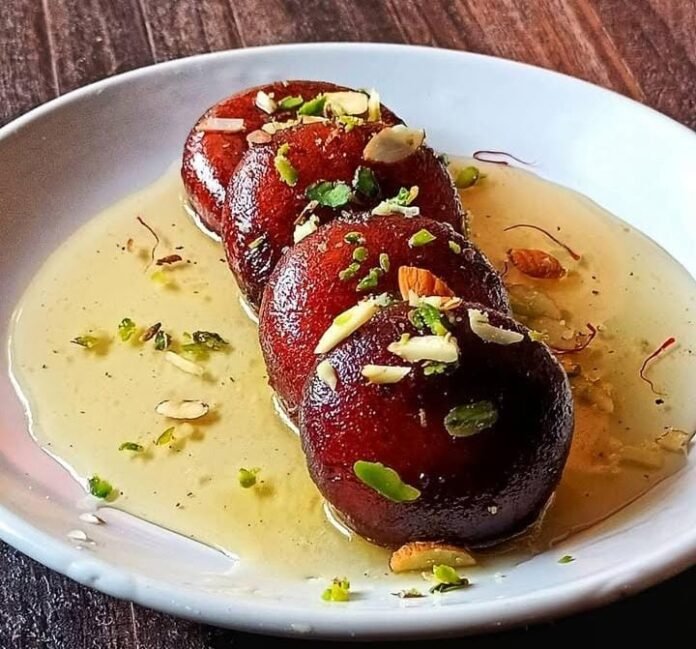
You’ve likely heard of Madhya Pradesh’s iconic Dal Baati or the vibrant Gond dance, and perhaps you’ve even savored the hearty Dal Bafla. But have you ever tasted the delectable Mawa Bati, a celebrated sweet from the Malwa region? If not, let’s dive into the world of this mouthwatering dessert that melts in your mouth, resembling a gulab jamun but larger in size and richer in flavor.

What is Mawa Bati?

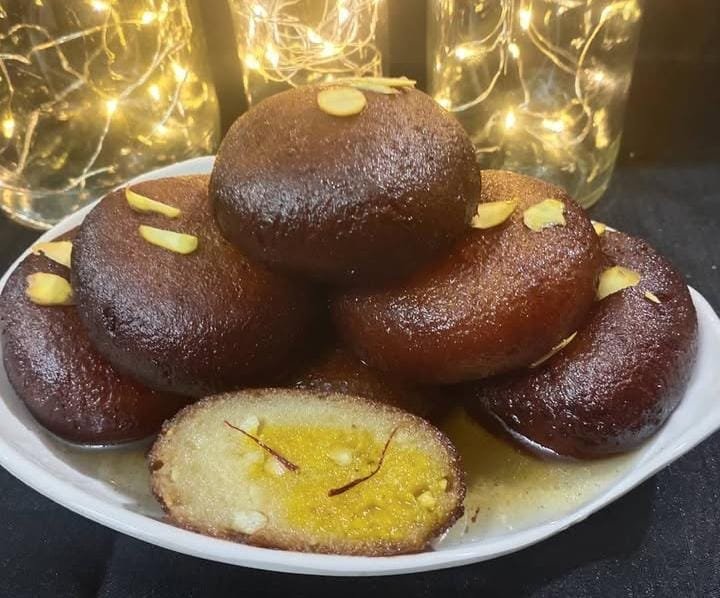
Mawa Bati is a traditional sweet from the Malwa region, crafted from mawa (khoya) and stuffed with a delightful mix of dry fruits. This indulgent treat is deep-fried in ghee and soaked in sugar syrup, often served with creamy rabdi to elevate its taste. While it shares a visual similarity with gulab jamun, Mawa Bati is larger and boasts a unique texture that dissolves instantly, leaving behind a burst of sweetness. Its distinct shape and irresistible flavor make it a standout dessert in Malwa, particularly in Bhopal, where it enjoys widespread popularity.

The Making of Mawa Bati

The preparation of Mawa Bati is an art form. Mawa dough is flattened, shaped into large, round batis, and stuffed with a rich filling of dry fruits. These are then carefully fried on low heat to achieve a golden hue before being immersed in a fragrant sugar syrup. The addition of rabdi enhances its decadence, making every bite a heavenly experience. The larger size and melt-in-the-mouth texture set Mawa Bati apart, embodying the essence of Malwa’s culinary heritage.

Malwa’s Mawa Bati: A Culinary Gem of Madhya Pradesh Known for Its Signature Sweet Taste...


A Sweet Tale of Tradition and Royalty

Mawa Bati is more than just a dessert—it’s a symbol of Malwa’s hospitality and festive spirit, where food represents love, tradition, and community. Legend has it that Mawa Bati was born in the royal kitchens of Malwa. During a grand feast, a king challenged his chefs to create a unique sweet for distinguished guests, something never tasted before. A clever cook innovated by stuffing mawa dough with dry fruits, frying it to perfection, and soaking it in syrup. When served, the dessert enchanted the king, who named it “Rajsi Bati” (Royal Bati). Over time, it became known as Mawa Bati, finding its way into every household, festival, and celebration across Malwa.

The Cultural Significance of Mawa Bati

Bati reflects the soul of Malwa’s vibrant culture, where food is a celebration of life and love. This sweet encapsulates the region’s traditions, weaving stories of royal feasts and culinary creativity into every bite. From humble kitchens to grand festivities, Mawa Bati has become a beloved part of Malwa’s identity, cherished for its rich taste and cultural legacy.

A Taste of Malwa’s Heritage
Mawa Bati is not just a dessert; it’s a journey from the royal courts to the heart of Malwa’s homes. Its unique flavor, paired with the warmth of rabdi, makes it a must-try for anyone exploring Madhya Pradesh’s culinary treasures. So, the next time you’re in Malwa, don’t miss the chance to savor this “Rajsi Bati”—a sweet that carries the original taste of Malwa’s rich heritage.

Hilang Yajik: Arunachal’s Trailblazer Shines on the International Stage, From Remote Kurung Kumey to Global Glory, Hilang Yajik’s Journey of Grit and Triumph

0


In a remarkable tale of resilience and determination, Hilang Yajik, hailing from Arunachal Pradesh’s remote Kurung Kumey district, has etched her name in history by clinching a gold medal at the 15th South Asian Bodybuilding & Physique Sports Championships held in Thimphu, Bhutan, from June 11–15, 2025. Her victory in the Women’s Model Physique (up to 155 cm) category, coupled with a silver in another physique division, marks her as the first female physique athlete from Arunachal Pradesh to achieve such a feat on the international stage. Like the sun that rises despite the harshest storms, Hilang’s journey embodies perseverance, balancing academics and athletics while overcoming economic hardships and limited access to training resources.

A Journey Against All Odds

Kurung Kumey, one of Arunachal Pradesh’s most remote and underdeveloped regions, offers little in terms of sports infrastructure, coaches, or competitive opportunities. Yet, these challenges could not dim Hilang’s spirit. With unwavering determination, she juggled her studies and rigorous training, defying financial constraints and a lack of facilities. Her story is a testament to the human spirit’s ability to rise above adversity and achieve greatness.
Rising Through the Ranks

Hilang’s ascent in the world of physique sports has been nothing short of inspiring. Her career timeline reflects her steady progress:

2022: Hilang made her debut at the Federation Cup in Sikkim, securing fourth place in the Women’s Model Physique (>165 cm) category. Later that year, she claimed a silver medal at the Eastern Zone National Championship in the Model Physique category, signaling her potential.

April 2024: At the 13th Federation Cup in Goa, Hilang won a silver in the Sports Physique category, becoming the first woman from Arunachal Pradesh to medal at this prestigious level.

May 2024: Her talent earned her a spot to represent India at the 56th Asian Bodybuilding Championships and the 15th WBPF World Championships, a significant milestone in her career.

June 2025: Hilang’s crowning achievement came at the South Asian Championships in Bhutan, where she won gold in the Women’s Model Physique (up to 155 cm) category and a silver in another physique division, solidifying her status as a trailblazer.

An Inspiration For Youth

Hilang Yajik’s achievements resonate far beyond the medals. As the first female physique athlete from Arunachal Pradesh to win gold at an international level, she has become a symbol of hope for aspiring athletes from remote regions. Her ability to balance education and sports while overcoming systemic challenges showcases her as a role model for young women across India. Hilang’s triumph proves that with grit and determination, no obstacle is too big, and no dream is too distant.
Her victory in Bhutan is not just a personal milestone but a proud moment for Arunachal Pradesh and India, illuminating the path for others to follow. As Hilang continues to soar, her story reminds us that, like the sun, she was destined to rise—and rise she did.

World Yoga Day Special: Know About The Adiyogi and the Origins of Yoga

0

The word Yoga is derived from the Sanskrit root ‘Yuj’, meaning to unite, to yoke, or to join. Yoga is not just a set of physical exercises—it is a profound spiritual discipline aimed at harmonizing the mind and body. It is both a science and an art of healthy living that has evolved over thousands of years.

The Divine Connection: Lord Shiva and Yoga

At the heart of Yoga lies the divine figure of Lord Shiva, one of the principal deities of Hinduism. He is revered as the Adiyogi—the first yogi—and the fountainhead of Yogic wisdom. According to ancient tradition, all known and unknown asanas (yogic postures) are believed to be inspired by Lord Shiva’s movements. His cosmic dance as Nataraj is itself a symbolic expression of yogic flow and spiritual rhythm.

Often depicted in Padmasana (Lotus Pose), Lord Shiva exemplifies yogic stillness. Surrounded by animals and immersed in deep meditation, he represents the highest state of consciousness. His half-closed eyes reflect inner tranquility, while the third eye on his forehead symbolizes awakened wisdom. The crescent moon denotes mystical insight, and the serpent coiled around his neck represents the dormant Kundalini energy present in every human being. The River Ganga flowing from his matted hair signifies the continuous process of purification and spiritual flow.

The Transmission of Yogic Knowledge

The story of Yoga’s origin traces back to a time nearly 15,000 years ago. It is believed that after attaining 100% enlightenment and using his consciousness to its fullest potential, Lord Shiva ascended to the Himalayas. Overwhelmed by ecstasy, he began to dance wildly—his movements radiating such intense joy and energy that they attracted onlookers. While most left when he didn’t speak, seven seekers stayed, determined to learn the secret of his bliss.

These seven, later known as the Saptarishis, pleaded with Shiva to share his knowledge. Initially, Shiva remained silent—absorbed in a state beyond the physical realm. After 84 years of intense sadhana (spiritual practice), the persistence of the sages moved him. He finally agreed, acknowledging that they had become ready to receive the sacred knowledge.

The Birth of Yogic Science

Lord Shiva imparted the vast Yogic sciences on the serene banks of Kantisarovar, near Kedarnath in the Himalayas. He taught the seven sages seven distinct aspects of Yoga, including Hatha Yoga, Karma Yoga, Bhakti Yoga, Raja Yoga, and others. Upon mastering these disciplines, the Saptarishis were instructed to go in seven different directions to spread the light of Yoga throughout the world.

Thus, the sacred science of Yoga began its journey across civilizations—transcending geography, time, and belief systems.

Yoga: Beyond Exercise

Yogic science is not merely about physical postures. It is a holistic system encompassing the physical, mental, emotional, and spiritual dimensions of the human experience. It is a method to explore the inner self and reach the highest state of consciousness—just as Lord Shiva, the Adiyogi, once did.

Today, millions practice Yoga around the globe, yet its essence remains rooted in the ancient wisdom passed down from Shiva to the Saptarishis. By honoring this lineage, practitioners connect to a timeless tradition that seeks not only health and harmony but the ultimate union with the divine.

Watch Out: Drones Cleaning Trains at Kamakhya Station in Assam…

0

Ministry of Railways has shared a tweet showing drones cleaning train coaches in Kamakhya Station in Assam. It says that Indian Railways has got smarter and has got into a new era of hightech and efficient railway maintenance…