Home Blog Page 262

Halley’s Comet: India’s First Inscriptional Record Found at Srisailam Temple

0

A major archaeological revelation has surfaced from Srisailam Mallikarjunaswamy Temple in Andhra Pradesh, India. A copper plate inscription from 1456 CE—written in Sanskrit using the Nagari script—has been officially recognized as India’s first epigraphical reference to Halley’s Comet.

This finding was announced by Dr. K. Munirathnam Reddy, Director of the Epigraphy Branch of the Archaeological Survey of India (ASI). The inscription sheds light on the cultural responses to astronomical phenomena in the Vijayanagar Empire.

Inscription Highlights

AttributeDetails
Date of InscriptionJune 28, 1456 CE
Script & LanguageNagari script; Sanskrit
Issued ByVijayanagar ruler Mallikarjuna
Celestial Events MentionedHalley’s Comet, Meteor Shower
Cultural ResponseLand grant to counter celestial ‘omens’
BeneficiaryBrahmin scholar Limgaṇarya
Granted VillageSimgapura, designated as agrahāra
Halley's Comet: India’s First Inscriptional Record Found at Srisailam Temple

Halley’s Comet: An Astronomical Context

Halley’s Comet, visible from Earth approximately every 76 years, made a notable appearance in 1456 CE, coinciding with the inscription’s date. This alignment confirms the historical accuracy of the event noted in the copper plate.

Halley’s Comet Appearances (With Cultural Documentation Status)

YearVisibilityIndian Epigraphical Record
240 BCEYesNo
684 CEYesNo
1066 CEYesNo
1456 CEYesYes (Newly Discovered)
1835 CEYesYes (texts, not inscriptions)
1986 CEYesModern documentation

Chart: Frequency of Halley’s Comet Sightings vs. Indian Records

Comets in Ancient Indian Culture

In ancient Indian cosmology, comets (Dhumaketu) were viewed as harbingers of calamity or political upheaval. The 1456 inscription documents such beliefs, revealing how celestial phenomena were often interpreted as omens of impending danger.

“To dispel the ill effects of the comet, King Mallikarjuna granted land to a Vedic scholar” – from the inscription

Such acts reflect the interplay between science, superstition, and statecraft in pre-modern India.

The Scholar: Limgaṇarya and the Royal Grant

The beneficiary of the grant, Limgaṇarya, was likely a Brahmin versed in astronomy and ritual practice. The gifted land, Simgapura, was given as an agrahāra—a village endowed to Brahmins for scholarly or spiritual services.

This royal patronage underscores the prestige of Vedic scholarship and the value of astronomical expertise in the Vijayanagar court.

Future Research and Publications

The inscription is part of a collection of 78 copper plates, previously unpublished. These are now under scholarly review and will be released in a forthcoming book by the Archaeological Survey of India.

Anticipated Insights from the Collection:

  • Political and religious grants during the Vijayanagar period
  • Language and script evolution
  • Astronomical event documentation
  • Royal responses to cosmic phenomena

Conclusion: A Celestial Window into History

This rare inscription not only marks a first in Indian epigraphy but also demonstrates the advanced astronomical awareness and ritualistic responses to comets in 15th-century India. It bridges history, science, and faith—offering scholars and enthusiasts a remarkable look into India’s celestial heritage.

Live Casino Games Unveiled: Boost Your Casino Games Real Money Wins

0

Live Casino games have changed the way people play online. They bring the energy of real casinos right to your screen, with real dealers, real tables, and real-time action. But what makes these games truly special is that you’re not just playing for fun—you’re playing to win casino games real money. And with the right knowledge, your chances of winning can get even better.

Platforms like Royal Baazi make it easier than ever to enjoy live casino action with seamless gameplay and a premium user experience, with over 6000 games available. It’s the perfect mix of thrill, strategy, and real-time rewards.

In this guide, we’ll break down what live casino games are, how they work, the best types to play, and some smart tips to help you win more often.

What Are Live Casino Games?

Live casino games are online games that are played with a real dealer, in real time. Instead of playing with a computer or animated software, you join a table that is being streamed from a casino studio. You can see everything—cards being dealt, the wheel spinning, chips placed—all from your device.

You can talk to the dealer and sometimes even to other players. It’s just like sitting at a real table in Goa or Las Vegas, but without leaving your home.

Popular Live Casino Games to Try

If you want to try your luck with casino games real money, here are some of the top live games that players love:

1. Live Blackjack

A fast-paced card game where you aim to beat the dealer by getting a hand closest to 21. Strategy matters here, and small choices can change the result.

2. Live Roulette

The spinning wheel never gets old. Place bets on red or black, even or odd, or try your luck with a lucky number. It’s simple and exciting.

3. Live Baccarat

Popular in Asia, this game is all about betting on who gets a better hand, the player or the banker. Smart betting strategy helps in this.

4. Live Poker

If you love card games with skill, this is for you. Compete with others or play against the house. A good bluff or smart fold can win big.

5. Game Shows

Games like Crazy Time or Dream Catcher turn casino play into fun shows. Spin wheels, grab bonuses, and enjoy interactive gaming with surprises.

Why Play Live Casino Games with Real Money?

While free games are fun, real excitement comes when there’s money on the table. Here’s why many players switch to casino games for real money:

● You win real cash, not just points.

● Higher stakes, higher rewards.

● Real feeling of risk and reward, just like in a casino.

● Many bonuses are only available for real-money players.

● VIP and cashback offers often come with real play.

Tips to Boost Your Wins in Live Casino Games

You can’t control luck, but you can play smart. Here are some easy tips to increase your chances:

● Learn the Rules First

Each game is different. Don’t rush into betting without knowing how the game works. Start with demo or low-stakes games if needed.

● Use a Budget

Decide on your daily or weekly limit. Never chase your losses. Play with money you can afford to lose.

● Start with Simple Bets

In games like roulette or blackjack, avoid complex betting systems early on. Stick to basic bets with better odds.

● Look for Good Bonuses

Many online platforms offer bonuses for live casino games. Platforms like Royal Baazi offer a welcome bonus of 500% and deposit bonuses for that extra thrill and fun.

● Play When Focused

Don’t play when you’re tired or upset. Your brain should be sharp to make the best moves.

What Makes a Good Live Casino Site?

When you’re playing live for real money, your casino choice matters. Here’s what to look for:

● Licensed and secure platform

● Live games from top providers like Evolution or Ezugi

● Easy deposits and fast withdrawals

● 24/7 support to help anytime

● Bonuses and loyalty programs

● Good mobile experience for playing on the go

If a platform checks all these boxes, it’s likely a good place to start your live gaming journey.

Why Live Casino Games Are the Future

Also, with features like multi-camera angles, side bets, and real-time chat, live games keep players engaged and entertained for longer.

Live casino games are now more popular than ever—and for good reason. They combine real-time action with the comfort of playing from home. Whether you’re looking for the thrill of the wheel or the tension of a poker showdown, these games give you the full experience.

More Indian players are now shifting from basic slots to live tables. They enjoy the challenge, the human touch, and the real-time tension that comes with every round.

Conclusion

The world of live casino games is growing fast in India and around the world. With so many options out there, your choice of platform can shape your entire gaming experience.

Look for a site that doesn’t just have a big game collection but also understands Indian players, offers smooth transactions, respects your time, and treats every user like royalty.

One such platform is quietly becoming a favourite among smart players, Royal Baazi, who want to mix strategy with real-time fun. From Hold’em poker tables to crash games like Aviator, and Indian favourites like Teen Patti or Andar Bahar, this site knows what modern casino fans want.

Whether you’re in it for the thrill, the strategy, or the chance to win big, choosing the right platform makes all the difference.

How a Shy Lobby Visit at Netscape Sparked Elon Musk’s Entrepreneurial Journey

0

In 1995, a young 24-year-old Elon Musk, fresh off degrees in physics and economics, had his sights set on the then – revolutionary world of the internet. He wasn’t yet dreaming of rockets or electric cars – he simply wanted a job at Netscape, the leading web-browser company of the time.

The Shy Attempt

Musk mailed his resume to Netscape but never heard back. Determined to make an in-person connection, he visited their headquarters in Mountain View – yet froze in the lobby.

“I was too shy to talk to anyone… It was pretty embarrassing.”

Without the gift of small talk or personal branding, Musk quietly left, and the opportunity slipped away .

Turning Rejection into Opportunity

Rather than enrolling at Stanford, Musk chose to defer his graduate studies and take a different path. That summer, he began writing software – and in 1996 co-founded Zip2 with his brother Kimbal and Greg Kouri. The company provided early online city guides and maps for newspapers like The New York Times.

By 1999, Zip2 had sold to Compaq for about $307 million – Musk’s first major success.

“I Could Get a Job … Just Not at an Internet Company”

Years later, Musk reflected on the incident via Twitter. He clarified that it wasn’t a lack of job prospects, but a lack of internet opportunities – and his own approach to networking – that held him back:

The Ripple Effect: From Netscape Lobby to SpaceX Launchpad

This early rejection honed Musk’s path:

  1. Zip2 laid the groundwork and financed his next move.
  2. He then launched X.com, which evolved into PayPal and sold to eBay in 2002.
  3. The capital and experience fueled his audacious ambitions: SpaceX, Tesla, SolarCity, and more.

If Netscape had said “yes,” we might be reading a very different tech history today.

Key Takeaways for Aspiring Innovators

  • Rejection isn’t the end – sometimes, being shut out redirects you toward building your own path.
  • Being shy can be powerful – if you let it push you to work harder rather than crumble.
  • Start small: Musk began by writing code himself. He didn’t wait for ideal conditions.
  • Leverage setbacks: Each failure became a fuel for the next bold move.

Conclusion

From a shy figure in a lobby to the head of companies reshaping industries, Elon Musk’s story shows that bold outcomes often start with humble beginnings. His ability to turn rejection into resolve led to innovations that define our era – from online payment to electric cars to interplanetary rockets.

Next time you’re knocked back, remember: your greatest launchpad might be just outside the door.

“Saving Lives Faster: The e‑RaktKosh Rare Blood Revolution in India”

0

What is e‑RaktKosh?

e‑RaktKosh is India’s centralized, citizen‑centric portal and mobile app developed by the Ministry of Health & Family Welfare and C‑DAC, launched in April 2016. It connects blood banks across India, enabling:

  • Real-time visibility of blood stock for various blood groups
  • Searching for nearest blood banks, donation camps, and e‑pass support during lockdowns.
  • Seamless online blood requests and donor coordination via web and mobile apps

Why Does It Matter?

India has more than 4,000 licensed blood banks, but often faces a shortfall—over 1 million units annually—despite over 12 million donations. Fragmentation and lack of real-time data across institutions contributed to chronic shortages in emergencies. e‑RaktKosh addresses this by unifying systems, ensuring efficient inventory management and guideline compliance.

Rare Blood Groups: A Life‑Saving Link

The New ICMR‑NIIH Rare Donor Registry

On June 21, 2025, ICMR-NIIH officially launched India’s first national rare blood donor registry, aiming to support thalassemia, sickle cell disease, trauma, and other critical patients. This registry identifies:

  • Donors negative for high-frequency antigens (HFA), Dobnull, Rees null, etc.
  • Over 600 rare antigen-negative donors, including 250 very rare groups, and 170 Bombay phenotype donors.

These donors are added to the web-based system, which is now being integrated with e‑RaktKosh.

How Integration Works

By merging the rare donor registry with e‑RaktKosh, the system can:

  1. Flag rare blood types in national inventory
  2. Help recipients locate compatible units quickly
  3. Allow blood banks to manage rare-stocking proactively

This integration is expected to dramatically reduce delays in finding rare blood and streamline transfusion logistics for critical patients.

Donors, Receivers, and Real-time Help

For Rare Blood Donors:

  • Add your profile and HFA typing to the registry
  • Stay updated on urgent requests via mobile/in-app alerts
  • Enable your location to be searched in emergencies

For Rare Blood Recipients:

  • One-stop portal for locating compatible donors
  • Get notified when compatible blood is available nearby
  • Avoid last-minute scrambling in emergencies

Challenges & The Road Ahead

While e‑RaktKosh promises streamlined access, several issues remain:

  • Infrastructure: Many blood banks still lack trained staff, equipment, and connectivity.
  • Coverage Gaps: Although initially reporting 824 connected banks (as of Dec 2021), local disparities persist.

Achieving ubiquity in digital adoption will require investment in training, infrastructure, regular audits, and governance.

How to Participate

  • Donors: Visit e‑RaktKosh.gov.in or use the mobile app to register and schedule types
  • Blood banks: Ensure proper antigen typing, update stock in real-time, and link rare-profile donors
  • Hospitals & NGOs: Spread awareness; organize antigen typing camps for identifying rare donors

Conclusion

The integration of India’s first rare blood donor registry with e‑RaktKosh marks a significant leap in maximizing rare blood availability through digitization. For patients with thalassemia, hemophilia, sickle cell disease, and other conditions depending on rare types, this means faster transfusions, safer matches, and fewer needless delays.

Your action today can save a life tomorrow.
If you have a rare blood type—or know someone who does—register on e‑RaktKosh and become part of India’s rare donor network.

Where Divinity Meets Industry: The Story of JVL Lakshmi Narayan Temple, Ratlam

0

A Surprising Sanctuary in a Bustling Hub

Amid the chimneys and commerce of Ratlam’s industrial sector, there stands an elegant and serene Hindu temple that feels like a world apart. Known as the Jai Vilas Lakshmi Narayan Temple or Mangalaya Mandir, this sacred site is lovingly referred to by locals as the JVL Temple. It’s more than just a religious destination—it’s a soulful landmark that connects faith with vision, art with industry, and devotion with daily life.

Where Divinity Meets Industry: The Story of JVL Lakshmi Narayan Temple, Ratlam

A Temple of the Divine Duo: Lakshmi and Narayan

At the spiritual core of this temple is the worship of Lord Lakshmi Narayan—a unified form of Lord Vishnu, the preserver of the universe, and Goddess Lakshmi, the deity of wealth and prosperity. Their presence here symbolizes both cosmic balance and personal abundance, drawing devotees who seek blessings for well-being, peace, and success.

The Vision Behind the Marvel

This temple was established in the late 1980s by Prerna Ben Thakore, a forward-thinking entrepreneur and the founder of JVL—a company known for manufacturing vitamin C and sorbitol. Her idea was revolutionary: to create a place of worship amid the industry her company helped shape. In doing so, she gifted the city not just employment and infrastructure, but a deep spiritual anchor.

Where Divinity Meets Industry: The Story of JVL Lakshmi Narayan Temple, Ratlam

Architectural Elegance in Every Corner

The temple’s design mirrors traditional Indian temple architecture—ornate, symmetrical, and deeply symbolic. Walk through its gates and you’re greeted with intricately carved pillars, detailed stonework, and sculptures that tell stories from ancient scriptures. Every element reflects a commitment to craftsmanship, creating an atmosphere of reverence and awe.

Where Divinity Meets Industry: The Story of JVL Lakshmi Narayan Temple, Ratlam

Living Culture Through Festivals and Gatherings

Far from being just a place of quiet prayer, the JVL Temple pulses with life year-round. Major Hindu festivals such as Diwali, Janmashtami, and Ram Navami are celebrated with grandeur—complete with cultural performances, rituals, and community feasts. These events transform the temple into a colorful center of togetherness, where people from all walks of life gather in celebration.

A Location of Unique Contrast

Situated about 3 kilometers from Ratlam’s main city center, the temple finds itself in the heart of the city’s industrial district. Yet, it manages to exude calm and spiritual warmth, offering a unique contrast—a place of calm where one would expect chaos. This juxtaposition enhances its appeal, turning a simple temple visit into a memorable experience.

‘Rashtrapati Tapovan’ and ‘Rashtrapati Niketan’ Inaugurated in Dehradun: A Blend of Nature, Heritage, and Inclusivity

0

Inaugural Highlights

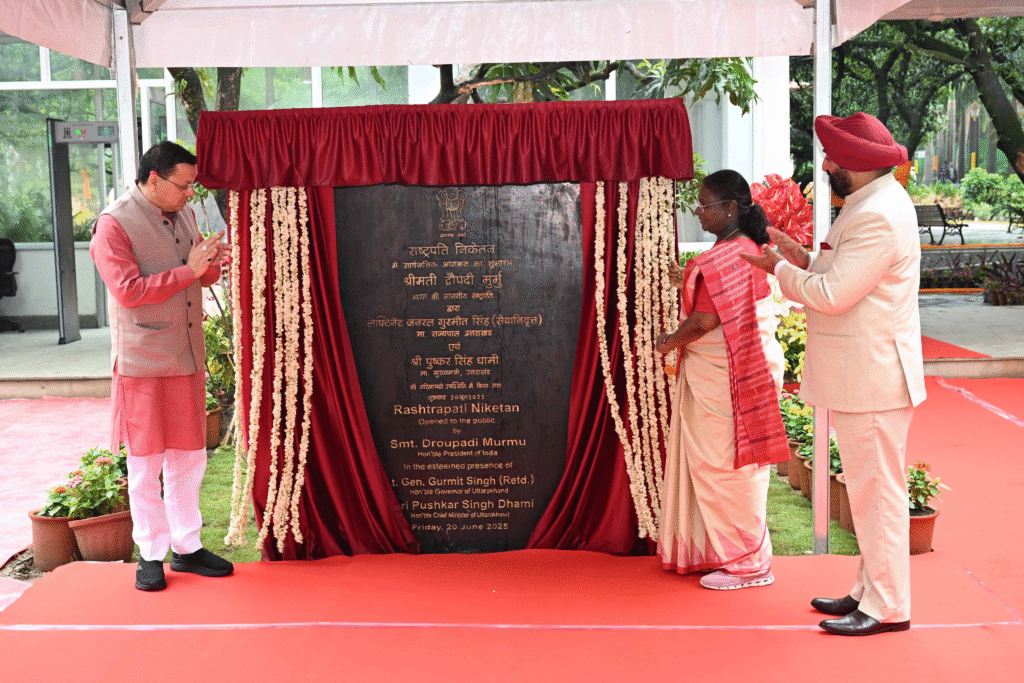
President Droupadi Murmu inaugurated Rashtrapati Tapovan and Rashtrapati Niketan during her visit to Uttarakhand. She also laid the foundation stone for the Rashtrapati Udyan, spread across 132 acres.

What is Rashtrapati Tapovan?

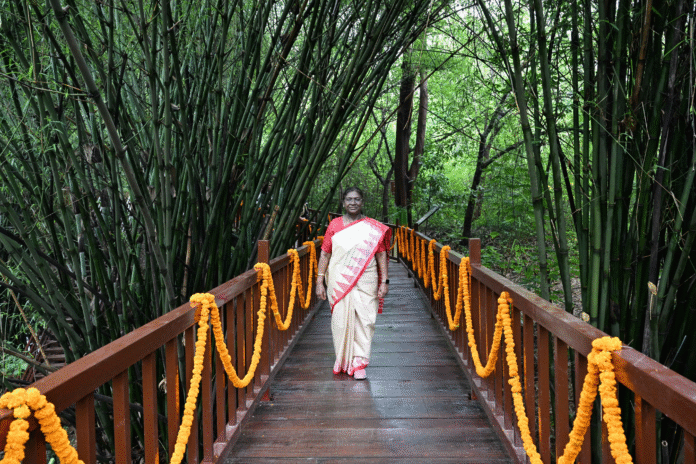
Nestled at the foothills of the Himalayas and spread across 19 acres, this site is a spiritual retreat with a focus on ecological preservation. It hosts 117 species of plants, 52 varieties of butterflies, 41 bird species, and 7 wild mammals.

‘Rashtrapati Tapovan’ and ‘Rashtrapati Niketan’ Inaugurated in Dehradun: A Blend of Nature, Heritage, and Inclusivity

Legacy of Rashtrapati Niketan

Covering 21 acres, this complex carries a rich heritage dating back to 1838. Originally a summer camp for the Governor-General’s guards, it was transformed into a Presidential retreat in 1976.

Why is it being opened to the public?

From June 24 (Tapovan) and July 1 (Niketan), these sites will be open for public visits. The goal is to promote natural beauty, biodiversity, and inclusiveness. The upcoming Rashtrapati Udyan is being specially designed to be accessible to persons with disabilities.

At a Glance

  • Visitor facilities like cafes, souvenir shops, and information centers
  • Launch of a book focused on local biodiversity
  • A step forward in civic pride and community participation

Whispers of Stone: Journey into the Enchanted Dharmarajeshwar Cave Temple

0

A Hidden Jewel Beneath the Hills

Tucked away in the undulating hills of Madhya Pradesh, 80km from mandsaur district and just 20km away from the shyamgrah railway station the Dharmarajeshwar cave temple lies in quiet defiance of time. As the countryside of Garoth tehsil gives way to rugged escarpments, the temple emerges—a timeless monument carved wholly out of living rock, whispering legends with every crevice. Sculpted between the 5th and 6th centuries AD, this breathtaking monolithic marvel stands as a tribute to ancient India’s architectural genius. Imagine a temple not built with bricks and mortar, but carved top-down from a massive hill—its every chamber, shrine, and stairway hewn from the same colossal boulder. At first sight, its sheer size is humbling. But step closer, and the details astound: flowing motifs, celestial carvings, and guardian figures etched with reverence.

From Vaikuntha to Kailash

Originally conceived as a shrine to Lord Vishnu, the temple’s spiritual heart shifted over centuries toward Lord Shiva, embracing the divine duality of India’s mythic tapestry. The main sanctum houses a commanding shivalinga, bathed in natural light during sunrise—a design so precise it feels like a celestial embrace. Surrounding the central temple are seven smaller shrines, guardians of gods and goddesses like Bhairava, Kali, and Parvati. Inside, a profound stillness envelops you. The scent of incense lingers in the cool air, and soft chants echo like lullabies to the deities. The garbhagriha feels untouched by centuries—sacred, solemn, and utterly alive. Stone pillars line the temple’s corridors, each one etched with intricate patterns that seem to breathe with the rhythm of forgotten prayers.

Whispers of Stone: Journey into the Enchanted Dharmarajeshwar Cave Temple

A Canvas of Myth in Stone

What makes Dharmarajeshwar a true wonder isn’t just its monolithic formation—it’s the poetry in stone. The entrance gate dazzles with finely detailed depictions of Lord Vishnu and Goddess Lakshmi, their expressions serene, immortalised forever in basalt. Around the complex, caves carved with equal devotion served as meditation chambers for monks—silent rooms where echoes once became prayers.

Sunlight as Blessing

Perhaps the most mystical element is architectural: each dawn, the first rays of the sun pierce through the eastern doorway to illuminate the shivalinga inside the sanctum. It is as if the universe conspires, each morning, to anoint this space with light and divinity.

Festivals and Serenity

Whispers of Stone: Journey into the Enchanted Dharmarajeshwar Cave Temple

During Maha Shivratri, the temple pulses with life. Pilgrims gather, chants fill the air, and a fair unfurls outside like a woven tapestry of local culture. Yet in quieter months, the same space offers seclusion for the soul-seeker—perfect for contemplation and connection. Reaching this hidden wonder involves a scenic descent nearly nine metres into stone—a symbolic plunge into India’s cultural and spiritual depths. With every step downward, you shed the present and step into the eternal.

Dharmarajeshwar isn’t just a temple—it’s a memory carved in stone, a place where time meditates, and the divine touches earth. Come not just to witness it, but to feel it echo within you.

7 Tips on How To Speed Up the Tattoo Removal Process

0

Getting a tattoo removed can be a lengthy and sometimes uncomfortable process, but there are steps you can take to help speed things up. If you’re considering quality laser tattoo removal Sydney, here are 7 tips to help accelerate the process and achieve the best results.

Choose an Experienced Tattoo Removal Specialist

One of the most important factors in speeding up your tattoo removal is selecting a reputable and experienced clinic. Look for a provider who uses state-of-the-art technology and has a proven track record of successful treatments. They will be able to assess your tattoo and develop a personalized treatment plan to achieve optimal results in the shortest time possible.

Follow All Pre and Post-Treatment Instructions

Your tattoo removal specialist will provide you with detailed instructions on how to prepare for your treatments and care for your skin afterwards. Following these guidelines closely can help ensure that your skin heals properly between sessions, allowing you to schedule treatments closer together and see results faster.

Stay Hydrated and Eat a Healthy Diet

Drinking plenty of water and eating a balanced diet rich in vitamins and nutrients can help support your body’s natural healing processes. Proper hydration is essential for flushing out ink particles that are broken down by the laser, while a nutritious diet provides the building blocks your skin needs to regenerate and recover.

Avoid Sun Exposure

Exposing your tattoo to sunlight can cause the ink to fade unevenly and may even lead to skin damage that could slow down the removal process. Keep the treated area covered or apply a broad-spectrum sunscreen with a high SPF whenever you’re outdoors, especially during the first few weeks after each treatment.

Don’t Smoke

Smoking can impair circulation and slow down your body’s ability to heal, which can prolong the tattoo removal process. If you’re a smoker, quitting or at least cutting back can help speed up your results and improve your overall health at the same time.

Be Consistent with Your Treatments

Sticking to your recommended treatment schedule is key to seeing results as quickly as possible. While it may be tempting to skip a session or space them out further apart, this can actually slow down your progress in the long run. Try to stay on track and keep all of your scheduled appointments, even if you don’t see dramatic changes right away.

Be Patient and Realistic

Finally, it’s important to manage your expectations and understand that tattoo removal is a gradual process. Some tattoos may require more treatments than others, depending on factors like size, location, color, and age. Trust in the expertise of your tattoo removal specialist and don’t get discouraged if you don’t see immediate results – with time and patience, you will achieve the outcome you’re looking for.

By following these 7 tips and choosing a reputable provider for quality laser tattoo removal Sydney, you can help speed up the tattoo removal process and enjoy clearer, ink-free skin sooner. Remember to take good care of yourself and your skin throughout the journey, and don’t hesitate to ask your specialist if you have any questions or concerns along the way.

India’s Javelin Hero : Neeraj Chopra Clinches Paris Diamond League Title with Stunning 88.16m Throw

0

India’s golden boy of athletics, Neeraj Chopra, delivered a sensational performance at the Paris leg of the 2025 Diamond League, seizing first place in the men’s javelin throw with a commanding effort of 88.16 meters. The Olympic champion’s throw, launched on his very first attempt, proved unassailable throughout the competition, earning him his first major international victory of the season and reaffirming his dominance on the global stage.

The event, held at the Charlety Stadium, saw Chopra face off against a strong field, including his arch-rival Julian Weber of Germany. Weber, who had bested Chopra in the previous two Diamond League meets in Doha and Poland, came close with a best throw of 87.88 meters. However, he was unable to surpass the Indian star’s explosive opener.

Chopra’s series began with the winning 88.16m throw, followed by a solid 85.10m in his second attempt. Despite fouling his next three throws, he remained unshaken. In his final attempt, he registered 82.89m, a mark that, while not his best of the day, underscored his consistency and composure under pressure.

Brazil’s Mauricio Luiz da Silva surprised many by securing third place with a personal best of 86.62 meters, while Trinidad and Tobago’s Keshorn Walcott finished fourth with 81.66 meters. The rest of the field, including former world champion Anderson Peters and Kenya’s Julius Yego, failed to breach the 81-meter mark.

This victory is particularly significant for Chopra, who had started his 2025 campaign with a gold at the Potch Invitational in South Africa but had to settle for second place in both Doha and Poland. His 90.23m throw in Doha, a personal best, was overshadowed by Weber’s 91.06m effort. The win in Paris not only breaks Weber’s recent winning streak but also boosts Chopra’s confidence ahead of the upcoming World Championships.

Speaking after the event, Chopra expressed satisfaction with his performance. “It feels great to be back on top. The competition was tough, but I knew I had to give it everything from the start,” he said. “This win gives me momentum for the rest of the season.”

With this triumph, Chopra now levels with Weber in the Diamond League points table, setting the stage for an exciting rivalry as the season progresses. He is next scheduled to compete at the Golden Spike meet in Ostrava, Czechia, on June 24, followed by the inaugural Neeraj Chopra Classic in Bengaluru on July 5.

As the javelin world watches closely, one thing is clear: Neeraj Chopra is far from done rewriting history.

Saila Dance: A Vibrant Symbol of Madhya Pradesh’s Tribal Culture

0

Nestled amidst the lush forests and rich cultural heritage of Madhya Pradesh, the Saila dance is a cherished tradition of the tribal communities, particularly the Gond tribe. This folk dance is not just a celebration of joy and festivity but also a powerful medium of social unity and gratitude toward nature. Also known as Danda Naach or Saila-Reena, it holds a significant place in the cultural tapestry of the region. Let’s explore the essence, significance, and contemporary relevance of this lively dance form.
Ye

A Celebration of Harvest and Unity

Saila dance is traditionally performed after the harvest season, embodying the joy and enthusiasm of the tribal communities. It is a way to express gratitude for a bountiful crop and to celebrate the fruits of their labor. The dance is a hallmark of festivals such as Hariyali Teej, Pola, and Rakshabandhan, where communities come together in collective merriment. Through rhythmic movements and vibrant music, Saila reflects the deep connection between the tribal people, their land, and their traditions.

The Rhythm of Tradition

The Saila dance is characterized by its dynamic use of sticks, which dancers strike against each other while moving in a circular formation. Both men and women participate, adorned in traditional attire that includes vibrant red and yellow kurtas or sarees, black jackets, and dhotis. The rhythmic clashing of sticks is accompanied by local instruments such as the dholak, mridang, tasha, timki, and murli. The songs that accompany the dance often narrate themes of agriculture, nature, tribal life, and festive celebrations, offering a glimpse into the community’s way of life.

A Living Cultural Legacy

Saila dance is more than just a performance; it is a means of preserving and passing down tribal traditions to future generations. It symbolizes the resilience and unity of the tribal communities while keeping their cultural roots alive. The dance serves as a bridge between the past and the present, ensuring that the younger generation remains connected to their heritage.

From Villages to National Stages

In recent times, Saila dance has transcended its rural origins to grace cultural platforms, schools, colleges, and national events. It is a prominent feature at tribal festivals and cultural fairs, captivating audiences with its energy and vibrancy. The dance’s growing popularity on larger stages highlights its significance as a cultural ambassador of Madhya Pradesh’s tribal heritage.