Home Blog Page 260

Where Divinity Meets Industry: The Story of JVL Lakshmi Narayan Temple, Ratlam

0

A Surprising Sanctuary in a Bustling Hub

Amid the chimneys and commerce of Ratlam’s industrial sector, there stands an elegant and serene Hindu temple that feels like a world apart. Known as the Jai Vilas Lakshmi Narayan Temple or Mangalaya Mandir, this sacred site is lovingly referred to by locals as the JVL Temple. It’s more than just a religious destination—it’s a soulful landmark that connects faith with vision, art with industry, and devotion with daily life.

Where Divinity Meets Industry: The Story of JVL Lakshmi Narayan Temple, Ratlam

A Temple of the Divine Duo: Lakshmi and Narayan

At the spiritual core of this temple is the worship of Lord Lakshmi Narayan—a unified form of Lord Vishnu, the preserver of the universe, and Goddess Lakshmi, the deity of wealth and prosperity. Their presence here symbolizes both cosmic balance and personal abundance, drawing devotees who seek blessings for well-being, peace, and success.

The Vision Behind the Marvel

This temple was established in the late 1980s by Prerna Ben Thakore, a forward-thinking entrepreneur and the founder of JVL—a company known for manufacturing vitamin C and sorbitol. Her idea was revolutionary: to create a place of worship amid the industry her company helped shape. In doing so, she gifted the city not just employment and infrastructure, but a deep spiritual anchor.

Where Divinity Meets Industry: The Story of JVL Lakshmi Narayan Temple, Ratlam

Architectural Elegance in Every Corner

The temple’s design mirrors traditional Indian temple architecture—ornate, symmetrical, and deeply symbolic. Walk through its gates and you’re greeted with intricately carved pillars, detailed stonework, and sculptures that tell stories from ancient scriptures. Every element reflects a commitment to craftsmanship, creating an atmosphere of reverence and awe.

Where Divinity Meets Industry: The Story of JVL Lakshmi Narayan Temple, Ratlam

Living Culture Through Festivals and Gatherings

Far from being just a place of quiet prayer, the JVL Temple pulses with life year-round. Major Hindu festivals such as Diwali, Janmashtami, and Ram Navami are celebrated with grandeur—complete with cultural performances, rituals, and community feasts. These events transform the temple into a colorful center of togetherness, where people from all walks of life gather in celebration.

A Location of Unique Contrast

Situated about 3 kilometers from Ratlam’s main city center, the temple finds itself in the heart of the city’s industrial district. Yet, it manages to exude calm and spiritual warmth, offering a unique contrast—a place of calm where one would expect chaos. This juxtaposition enhances its appeal, turning a simple temple visit into a memorable experience.

‘Rashtrapati Tapovan’ and ‘Rashtrapati Niketan’ Inaugurated in Dehradun: A Blend of Nature, Heritage, and Inclusivity

0

Inaugural Highlights

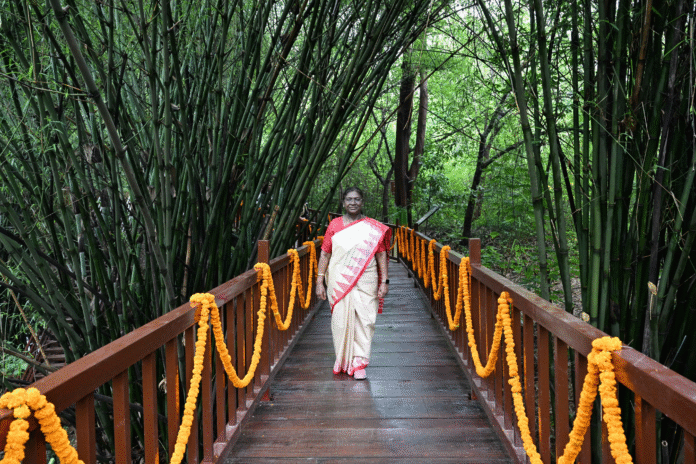
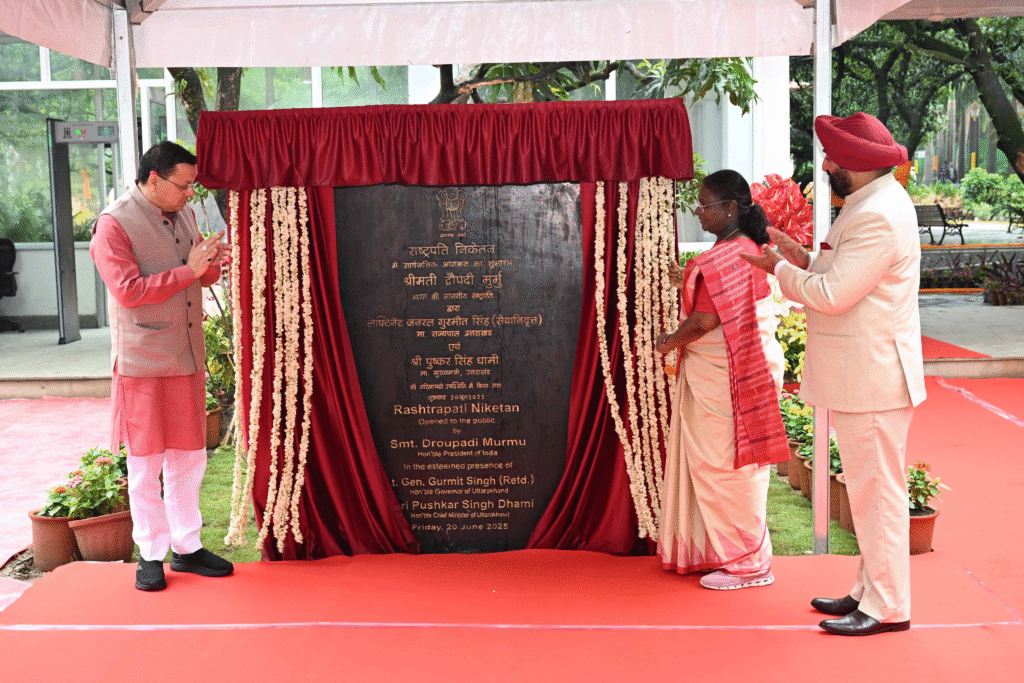
President Droupadi Murmu inaugurated Rashtrapati Tapovan and Rashtrapati Niketan during her visit to Uttarakhand. She also laid the foundation stone for the Rashtrapati Udyan, spread across 132 acres.

What is Rashtrapati Tapovan?

Nestled at the foothills of the Himalayas and spread across 19 acres, this site is a spiritual retreat with a focus on ecological preservation. It hosts 117 species of plants, 52 varieties of butterflies, 41 bird species, and 7 wild mammals.

‘Rashtrapati Tapovan’ and ‘Rashtrapati Niketan’ Inaugurated in Dehradun: A Blend of Nature, Heritage, and Inclusivity

Legacy of Rashtrapati Niketan

Covering 21 acres, this complex carries a rich heritage dating back to 1838. Originally a summer camp for the Governor-General’s guards, it was transformed into a Presidential retreat in 1976.

Why is it being opened to the public?

From June 24 (Tapovan) and July 1 (Niketan), these sites will be open for public visits. The goal is to promote natural beauty, biodiversity, and inclusiveness. The upcoming Rashtrapati Udyan is being specially designed to be accessible to persons with disabilities.

At a Glance

  • Visitor facilities like cafes, souvenir shops, and information centers
  • Launch of a book focused on local biodiversity
  • A step forward in civic pride and community participation

Whispers of Stone: Journey into the Enchanted Dharmarajeshwar Cave Temple

0

A Hidden Jewel Beneath the Hills

Tucked away in the undulating hills of Madhya Pradesh, 80km from mandsaur district and just 20km away from the shyamgrah railway station the Dharmarajeshwar cave temple lies in quiet defiance of time. As the countryside of Garoth tehsil gives way to rugged escarpments, the temple emerges—a timeless monument carved wholly out of living rock, whispering legends with every crevice. Sculpted between the 5th and 6th centuries AD, this breathtaking monolithic marvel stands as a tribute to ancient India’s architectural genius. Imagine a temple not built with bricks and mortar, but carved top-down from a massive hill—its every chamber, shrine, and stairway hewn from the same colossal boulder. At first sight, its sheer size is humbling. But step closer, and the details astound: flowing motifs, celestial carvings, and guardian figures etched with reverence.

From Vaikuntha to Kailash

Originally conceived as a shrine to Lord Vishnu, the temple’s spiritual heart shifted over centuries toward Lord Shiva, embracing the divine duality of India’s mythic tapestry. The main sanctum houses a commanding shivalinga, bathed in natural light during sunrise—a design so precise it feels like a celestial embrace. Surrounding the central temple are seven smaller shrines, guardians of gods and goddesses like Bhairava, Kali, and Parvati. Inside, a profound stillness envelops you. The scent of incense lingers in the cool air, and soft chants echo like lullabies to the deities. The garbhagriha feels untouched by centuries—sacred, solemn, and utterly alive. Stone pillars line the temple’s corridors, each one etched with intricate patterns that seem to breathe with the rhythm of forgotten prayers.

Whispers of Stone: Journey into the Enchanted Dharmarajeshwar Cave Temple

A Canvas of Myth in Stone

What makes Dharmarajeshwar a true wonder isn’t just its monolithic formation—it’s the poetry in stone. The entrance gate dazzles with finely detailed depictions of Lord Vishnu and Goddess Lakshmi, their expressions serene, immortalised forever in basalt. Around the complex, caves carved with equal devotion served as meditation chambers for monks—silent rooms where echoes once became prayers.

Sunlight as Blessing

Perhaps the most mystical element is architectural: each dawn, the first rays of the sun pierce through the eastern doorway to illuminate the shivalinga inside the sanctum. It is as if the universe conspires, each morning, to anoint this space with light and divinity.

Festivals and Serenity

Whispers of Stone: Journey into the Enchanted Dharmarajeshwar Cave Temple

During Maha Shivratri, the temple pulses with life. Pilgrims gather, chants fill the air, and a fair unfurls outside like a woven tapestry of local culture. Yet in quieter months, the same space offers seclusion for the soul-seeker—perfect for contemplation and connection. Reaching this hidden wonder involves a scenic descent nearly nine metres into stone—a symbolic plunge into India’s cultural and spiritual depths. With every step downward, you shed the present and step into the eternal.

Dharmarajeshwar isn’t just a temple—it’s a memory carved in stone, a place where time meditates, and the divine touches earth. Come not just to witness it, but to feel it echo within you.

7 Tips on How To Speed Up the Tattoo Removal Process

0

Getting a tattoo removed can be a lengthy and sometimes uncomfortable process, but there are steps you can take to help speed things up. If you’re considering quality laser tattoo removal Sydney, here are 7 tips to help accelerate the process and achieve the best results.

Choose an Experienced Tattoo Removal Specialist

One of the most important factors in speeding up your tattoo removal is selecting a reputable and experienced clinic. Look for a provider who uses state-of-the-art technology and has a proven track record of successful treatments. They will be able to assess your tattoo and develop a personalized treatment plan to achieve optimal results in the shortest time possible.

Follow All Pre and Post-Treatment Instructions

Your tattoo removal specialist will provide you with detailed instructions on how to prepare for your treatments and care for your skin afterwards. Following these guidelines closely can help ensure that your skin heals properly between sessions, allowing you to schedule treatments closer together and see results faster.

Stay Hydrated and Eat a Healthy Diet

Drinking plenty of water and eating a balanced diet rich in vitamins and nutrients can help support your body’s natural healing processes. Proper hydration is essential for flushing out ink particles that are broken down by the laser, while a nutritious diet provides the building blocks your skin needs to regenerate and recover.

Avoid Sun Exposure

Exposing your tattoo to sunlight can cause the ink to fade unevenly and may even lead to skin damage that could slow down the removal process. Keep the treated area covered or apply a broad-spectrum sunscreen with a high SPF whenever you’re outdoors, especially during the first few weeks after each treatment.

Don’t Smoke

Smoking can impair circulation and slow down your body’s ability to heal, which can prolong the tattoo removal process. If you’re a smoker, quitting or at least cutting back can help speed up your results and improve your overall health at the same time.

Be Consistent with Your Treatments

Sticking to your recommended treatment schedule is key to seeing results as quickly as possible. While it may be tempting to skip a session or space them out further apart, this can actually slow down your progress in the long run. Try to stay on track and keep all of your scheduled appointments, even if you don’t see dramatic changes right away.

Be Patient and Realistic

Finally, it’s important to manage your expectations and understand that tattoo removal is a gradual process. Some tattoos may require more treatments than others, depending on factors like size, location, color, and age. Trust in the expertise of your tattoo removal specialist and don’t get discouraged if you don’t see immediate results – with time and patience, you will achieve the outcome you’re looking for.

By following these 7 tips and choosing a reputable provider for quality laser tattoo removal Sydney, you can help speed up the tattoo removal process and enjoy clearer, ink-free skin sooner. Remember to take good care of yourself and your skin throughout the journey, and don’t hesitate to ask your specialist if you have any questions or concerns along the way.

India’s Javelin Hero : Neeraj Chopra Clinches Paris Diamond League Title with Stunning 88.16m Throw

0

India’s golden boy of athletics, Neeraj Chopra, delivered a sensational performance at the Paris leg of the 2025 Diamond League, seizing first place in the men’s javelin throw with a commanding effort of 88.16 meters. The Olympic champion’s throw, launched on his very first attempt, proved unassailable throughout the competition, earning him his first major international victory of the season and reaffirming his dominance on the global stage.

The event, held at the Charlety Stadium, saw Chopra face off against a strong field, including his arch-rival Julian Weber of Germany. Weber, who had bested Chopra in the previous two Diamond League meets in Doha and Poland, came close with a best throw of 87.88 meters. However, he was unable to surpass the Indian star’s explosive opener.

Chopra’s series began with the winning 88.16m throw, followed by a solid 85.10m in his second attempt. Despite fouling his next three throws, he remained unshaken. In his final attempt, he registered 82.89m, a mark that, while not his best of the day, underscored his consistency and composure under pressure.

Brazil’s Mauricio Luiz da Silva surprised many by securing third place with a personal best of 86.62 meters, while Trinidad and Tobago’s Keshorn Walcott finished fourth with 81.66 meters. The rest of the field, including former world champion Anderson Peters and Kenya’s Julius Yego, failed to breach the 81-meter mark.

This victory is particularly significant for Chopra, who had started his 2025 campaign with a gold at the Potch Invitational in South Africa but had to settle for second place in both Doha and Poland. His 90.23m throw in Doha, a personal best, was overshadowed by Weber’s 91.06m effort. The win in Paris not only breaks Weber’s recent winning streak but also boosts Chopra’s confidence ahead of the upcoming World Championships.

Speaking after the event, Chopra expressed satisfaction with his performance. “It feels great to be back on top. The competition was tough, but I knew I had to give it everything from the start,” he said. “This win gives me momentum for the rest of the season.”

With this triumph, Chopra now levels with Weber in the Diamond League points table, setting the stage for an exciting rivalry as the season progresses. He is next scheduled to compete at the Golden Spike meet in Ostrava, Czechia, on June 24, followed by the inaugural Neeraj Chopra Classic in Bengaluru on July 5.

As the javelin world watches closely, one thing is clear: Neeraj Chopra is far from done rewriting history.

Saila Dance: A Vibrant Symbol of Madhya Pradesh’s Tribal Culture

0

Nestled amidst the lush forests and rich cultural heritage of Madhya Pradesh, the Saila dance is a cherished tradition of the tribal communities, particularly the Gond tribe. This folk dance is not just a celebration of joy and festivity but also a powerful medium of social unity and gratitude toward nature. Also known as Danda Naach or Saila-Reena, it holds a significant place in the cultural tapestry of the region. Let’s explore the essence, significance, and contemporary relevance of this lively dance form.
Ye

A Celebration of Harvest and Unity

Saila dance is traditionally performed after the harvest season, embodying the joy and enthusiasm of the tribal communities. It is a way to express gratitude for a bountiful crop and to celebrate the fruits of their labor. The dance is a hallmark of festivals such as Hariyali Teej, Pola, and Rakshabandhan, where communities come together in collective merriment. Through rhythmic movements and vibrant music, Saila reflects the deep connection between the tribal people, their land, and their traditions.

The Rhythm of Tradition

The Saila dance is characterized by its dynamic use of sticks, which dancers strike against each other while moving in a circular formation. Both men and women participate, adorned in traditional attire that includes vibrant red and yellow kurtas or sarees, black jackets, and dhotis. The rhythmic clashing of sticks is accompanied by local instruments such as the dholak, mridang, tasha, timki, and murli. The songs that accompany the dance often narrate themes of agriculture, nature, tribal life, and festive celebrations, offering a glimpse into the community’s way of life.

A Living Cultural Legacy

Saila dance is more than just a performance; it is a means of preserving and passing down tribal traditions to future generations. It symbolizes the resilience and unity of the tribal communities while keeping their cultural roots alive. The dance serves as a bridge between the past and the present, ensuring that the younger generation remains connected to their heritage.

From Villages to National Stages

In recent times, Saila dance has transcended its rural origins to grace cultural platforms, schools, colleges, and national events. It is a prominent feature at tribal festivals and cultural fairs, captivating audiences with its energy and vibrancy. The dance’s growing popularity on larger stages highlights its significance as a cultural ambassador of Madhya Pradesh’s tribal heritage.

World Hydrography Day 2025: Charting the Future of Ocean Exploration

0

Every year on June 21, the world celebrates World Hydrography Day, a global initiative to highlight the critical role of hydrography in understanding and managing our oceans, seas, coastal areas, lakes, and rivers. Established by the International Hydrographic Organization (IHO) in 2005 and first observed in 2006, this day commemorates the IHO’s founding in 1921. The theme for World Hydrography Day 2025, “Seabed Mapping: Enabling Ocean Action,” underscores the indispensable role of hydrography in ensuring safe navigation, supporting economic development, advancing scientific research, and promoting environmental conservation. This article explores the significance of hydrography, India’s contributions to the field, and the global impact of this vital science.

The Science of Hydrography: Mapping the Blue Planet

Hydrography is the science of measuring and describing the physical characteristics of water bodies, including their depth, currents, waves, and seabed topography. It plays a pivotal role in enabling safe maritime navigation, coastal development, disaster management, and environmental protection. By providing accurate data through advanced technologies like multi-beam echo sounding, side-scan sonar, and autonomous underwater vehicles, hydrography supports critical activities such as shipping, resource exploration, and marine conservation. World Hydrography Day serves as a platform to raise awareness about these contributions and promote the adoption of modern hydrographic techniques.

India’s Leadership in Hydrography

India has emerged as a global leader in hydrography, with the Indian Naval Hydrographic Department (INHD) spearheading efforts in hydrographic surveys and navigational chart production. Operating under the Indian Navy, the INHD has published over 650 electronic and paper nautical charts, ensuring safe navigation across vast maritime regions. The department also coordinates NAVAREA VIII, covering an expansive 26 million square kilometers, and provides services through the India-WINS portal.
The National Institute of Hydrography (NIH) in Goa, accredited by the IHO for Category A and B training, has trained over 800 professionals from 41 countries, establishing India as a hub for hydrographic education. Through the SAGAR (Security and Growth for All in the Region) initiative, India has conducted collaborative surveys covering approximately 89,000 square kilometers and published 96 charts in partnership with Southeast Asian nations and friendly countries. Bilateral agreements with island nations like Mauritius and Seychelles have further strengthened capacity building and data sharing in hydrography.

Advancing Inland Waterways and Global Cooperation

In addition to its maritime efforts, India is enhancing its inland waterways through institutions like the Inland Waterways Authority of India (IWAI). Regular hydrographic surveys and navigational charting are being implemented to support safe and efficient inland water transport. Globally, India’s contributions to hydrography align with the IHO’s mission to standardize and advance seabed mapping, fostering sustainable ocean action.

International Yoga Day: Bollywood Stars, Army men and Sports Stars Become a Part of Huge Celebration…

0

International Yoga Day, observed on June 21 each year, promotes the practice of yoga as a tool for physical, mental, and spiritual well-being. It highlights yoga’s global relevance and ancient Indian origins, serving as a reminder to integrate mindfulness and wellness into daily life. This year’s theme—“Yoga for One Earth, One Health”—stresses harmony between humans, the environment, and overall wellness. The 2025 celebrations emphasise yoga’s unifying role in balancing personal health with planetary health, says Economic Times.

International Yoga Day: Bollywood Stars, Army men and Sports Stars Become a Part of Huge Celebration...

India Leads in Solar Power Potential from Abandoned Coal Mines

0

Can abandoned coal mines prove a boon for solar energy generation? Surprised with the question? But then yes, these abandoned coal mines have proved to be blessing for India as the country has emerged as a global leader in repurposing these coal mines, Recent research highlights a promising opportunity to convert degraded and disused mine lands into productive solar parks—a move that could significantly ease the country’s energy burden while fostering employment and sustainable development.

Landscape of Abandoned Coal Mines in India

India is home to more than 63 abandoned coal mine sites, collectively spanning over 500 square kilometres. These sites hold the potential to generate approximately 27.11 gigawatts (GW) of solar power—equivalent to nearly 37% of India’s current solar energy capacity. States such as Telangana, Odisha, Madhya Pradesh, and Chhattisgarh are among the top 20 global regions in terms of land availability from closed mines, making them prime candidates for solar redevelopment.

Global Context: The Coal Phase-Out

Worldwide, around 3,800 coal mines remain operational and produce 95% of the world’s coal. However, with 33 countries pledging to phase out coal, the number of inactive and abandoned coal mines is set to rise. This global shift presents a unique opportunity to convert former coal sites into clean energy hubs, particularly in regions already equipped with grid infrastructure.

Environmental Risks of Abandoned Mines

Left unmanaged, abandoned coal mines pose serious environmental and safety hazards. A major concern is methane leakage, a potent greenhouse gas with a warming potential many times greater than carbon dioxide. Without proper mitigation, these sites could significantly contribute to climate change. Additional risks include ground subsidence, toxic runoff, and potential fatal accidents due to neglected infrastructure.

Global Solar Potential of Former Mine Lands

India is not alone in this opportunity. Countries such as Australia, Indonesia, and the United States also possess vast potential for solar redevelopment on former mine lands. A global analysis has identified 28 countries with abandoned surface coal mines suitable for solar installations, collectively offering a potential of up to 288 GW of solar capacity. The proximity of many of these sites to existing grid networks enhances their viability for large-scale renewable energy projects.

Employment Opportunities from the Energy Transition

Repurposing abandoned coal mines for solar power could bring substantial employment gains. Estimates suggest the creation of around 259,700 permanent jobs across sectors like manufacturing, maintenance, and operations. Additionally, approximately 317,500 temporary jobs could be generated during the construction and development phases. These job gains are expected to surpass the number of projected job losses in the coal sector by 2035, providing a pathway for a just and inclusive energy transition.

Challenges Ahead

Despite the potential, several challenges hinder the redevelopment of abandoned mines for solar use. Community resistance often arises over concerns about land use, environmental impact, and lack of local engagement. Unclear land ownership and the absence of consistent policies for repurposing closed mines also complicate implementation. Addressing these issues through transparent governance, local consultation, and inclusive development planning will be key to the success of such initiatives.

Conclusion

Transforming abandoned coal mines into solar energy parks represents a powerful symbol of India’s energy transition—from polluting fossil fuels to clean, renewable sources. With strategic planning and community-inclusive execution, these sites could become engines of sustainable development, environmental restoration, and economic opportunity.


x

India is emerging as a global leader in repurposing abandoned coal mines for solar energy generation. Recent research highlights a promising opportunity to convert degraded and disused mine lands into productive solar parks—a move that could significantly ease the country’s energy burden while fostering employment and sustainable development.

Landscape of Abandoned Coal Mines in India

India is home to more than 63 abandoned coal mine sites, collectively spanning over 500 square kilometres. These sites hold the potential to generate approximately 27.11 gigawatts (GW) of solar power—equivalent to nearly 37% of India’s current solar energy capacity. States such as Telangana, Odisha, Madhya Pradesh, and Chhattisgarh are among the top 20 global regions in terms of land availability from closed mines, making them prime candidates for solar redevelopment.

Global Context: The Coal Phase-Out

Worldwide, around 3,800 coal mines remain operational and produce 95% of the world’s coal. However, with 33 countries pledging to phase out coal, the number of inactive and abandoned coal mines is set to rise. This global shift presents a unique opportunity to convert former coal sites into clean energy hubs, particularly in regions already equipped with grid infrastructure.

Environmental Risks of Abandoned Mines

Left unmanaged, abandoned coal mines pose serious environmental and safety hazards. A major concern is methane leakage, a potent greenhouse gas with a warming potential many times greater than carbon dioxide. Without proper mitigation, these sites could significantly contribute to climate change. Additional risks include ground subsidence, toxic runoff, and potential fatal accidents due to neglected infrastructure.

Global Solar Potential of Former Mine Lands

India is not alone in this opportunity. Countries such as Australia, Indonesia, and the United States also possess vast potential for solar redevelopment on former mine lands. A global analysis has identified 28 countries with abandoned surface coal mines suitable for solar installations, collectively offering a potential of up to 288 GW of solar capacity. The proximity of many of these sites to existing grid networks enhances their viability for large-scale renewable energy projects.

Employment Opportunities from the Energy Transition

Repurposing abandoned coal mines for solar power could bring substantial employment gains. Estimates suggest the creation of around 259,700 permanent jobs across sectors like manufacturing, maintenance, and operations. Additionally, approximately 317,500 temporary jobs could be generated during the construction and development phases. These job gains are expected to surpass the number of projected job losses in the coal sector by 2035, providing a pathway for a just and inclusive energy transition.

Challenges Ahead

Despite the potential, several challenges hinder the redevelopment of abandoned mines for solar use. Community resistance often arises over concerns about land use, environmental impact, and lack of local engagement. Unclear land ownership and the absence of consistent policies for repurposing closed mines also complicate implementation. Addressing these issues through transparent governance, local consultation, and inclusive development planning will be key to the success of such initiatives.

Conclusion

Transforming abandoned coal mines into solar energy parks represents a powerful symbol of India’s energy transition—from polluting fossil fuels to clean, renewable sources. With strategic planning and community-inclusive execution, these sites could become engines of sustainable development, environmental restoration, and economic opportunity.

World Music Day: Madhya Pradesh Echoes With A Musical Legacy of Sur-Smrat Tansen, Swar Kokila Lata Mangeshkar, and Many Gharanas…

0

Madhya Pradesh, a land steeped in cultural heritage, has gifted the world two iconic figures in the realm of music: the legendary “Sangeet Samrat” Tansen and the revered “Swar Kokila” Lata Mangeshkar. These musical maestros, born centuries apart, have left an indelible mark on Indian music, representing the pinnacle of classical and contemporary artistry. Their contributions continue to inspire generations, making Madhya Pradesh a proud cradle of musical excellence.

Every year on June 21st, the world unites in rhythm and harmony to celebrate World Music Day—a tribute to the universal language that transcends borders. On this day, it’s only fitting to spotlight Madhya Pradesh, a state that has gifted India—and the world—with some of its most iconic musical legends.

Tansen: The Maestro of Mughal India

Born as Ramtanu Pandey in the village of Behat near Gwalior in the 16th century, Tansen is celebrated as one of the greatest exponents of Hindustani classical music. A towering figure in the history of Indian music, he was one of the nine gems (Navratnas) in the court of Emperor Akbar, who bestowed upon him the honorific title “Mian,” meaning a learned scholar. Tansen’s mastery over the Dhrupad style, his creation of new ragas, and his compositions have immortalized him in the annals of music.
Tansen is credited with composing timeless works, including the revered Shri Ganesh Stotra and the seminal treatise Sangeeta Sara. His innovative approach to music led to the development of ragas that remain integral to Hindustani classical music. His legacy as a vocalist, composer, and scholar continues to influence musicians and performers worldwide, cementing his title as the “Sangeet Samrat” (Emperor of Music).

World Music Day: Madhya Pradesh Echoes With A Musical Legacy of Sur-Smrat Tansen, Swar Kokila Lata Mangeshkar, and Many Gharanas...

Lata Mangeshkar: The Nightingale of India

Born in Indore, Madhya Pradesh, Lata Mangeshkar, fondly known as the “Swar Kokila” (Nightingale of India), was a legendary playback singer whose voice defined the golden era of Indian cinema. Daughter of Pandit Deenanath Mangeshkar, a renowned Marathi theater artist and singer, Lata began her musical journey at the tender age of 13 after her father’s demise. Her first major breakthrough came in 1949 with the song Aayega Aane Wala from the film Mahal, which catapulted her to fame.
Lata Mangeshkar’s illustrious career spanned over seven decades, during which she recorded more than 30,000 songs in over 36 languages. Her mellifluous voice became synonymous with Hindi cinema, particularly between the 1950s and 1990s. Collaborating with legendary singers like Mohammed Rafi, Kishore Kumar, and Manna Dey, and iconic composers such as Shankar-Jaikishan, Laxmikant-Pyarelal, S.D. Burman, and R.D. Burman, she delivered countless chart-topping hits that remain timeless.
Her voice, often compared to the melodious call of the cuckoo (kokila), embodied a natural sweetness, rhythm, and emotional depth, earning her the title “Swar Kokila.” Lata Mangeshkar’s contributions were recognized with prestigious honors, including the Bharat Ratna (2001), India’s highest civilian award, Padma Bhushan (1969), Padma Vibhushan (1999), Dadasaheb Phalke Award (1989), and numerous National Film Awards and Filmfare Awards.

World Music Day: Madhya Pradesh Echoes With A Musical Legacy of Sur-Smrat Tansen, Swar Kokila Lata Mangeshkar, and Many Gharanas...

Gharanas and Gurus: The Classical Backbone

Madhya Pradesh is home to several Hindustani classical gharanas, including:

  • Gwalior Gharana – One of the oldest, known for its khayal singing.
  • Maihar Gharana – Founded by Ustad Allauddin Khan, it produced legends like Ravi Shankar and Hariprasad Chaurasia.
  • Indore Gharana – Associated with Ustad Amir Khan, known for its meditative style.

World Music Day in Madhya Pradesh


Tansen and Lata Mangeshkar, though separated by centuries, share a common thread as ambassadors of Madhya Pradesh’s rich musical heritage. Tansen’s contributions laid the foundation for Hindustani classical music, while Lata Mangeshkar’s voice became the heartbeat of Indian cinema. Their artistry not only elevated Indian music to global heights but also showcased the cultural richness of Madhya Pradesh.