Home Blog Page 249

Deepika Padukone Makes History: First Indian Actress to Join Hollywood Walk of Fame 2026…

0

In a historic moment for Indian cinema, Deepika Padukone has been selected to receive a star on the Hollywood Walk of Fame in 2026, becoming the first Indian actress to be honored in the Motion Pictures category. The announcement was made during a live press conference by the Hollywood Chamber of Commerce, where Deepika’s name appeared alongside global icons like Miley Cyrus, Timothée Chalamet, Emily Blunt, and Gordon Ramsay. This prestigious recognition celebrates her remarkable contributions to the world of entertainment and her growing influence on the international stage.

Deepika made her Hollywood debut in 2017 with xXx: Return of Xander Cage and has since become a familiar face at global events like the Cannes Film Festival, the Met Gala, and even the Oscars, where she introduced the Oscar-winning song Naatu Naatu to a worldwide audience. This honor not only marks a personal milestone for Deepika but also shines a spotlight on Indian talent in global cinema. A proud moment indeed!

Manika Batra: The Spin Queen Who Rewrote India’s Table Tennis Destiny

0

In a country where cricket often overshadows every other sport, Manika Batra carved her own path—one forehand smash at a time. Born on June 15, 1995, in Delhi’s Naraina Vihar, Manika was introduced to table tennis by her elder siblings. What began as a childhood hobby soon transformed into a calling. By the age of 8, she had already won her first state-level tournament. And by 13, she was representing India. But her journey was anything but smooth.

The Struggles Behind the Spotlight

Despite her early promise, Manika faced a barrage of challenges:

  • Limited infrastructure for table tennis in India
  • Financial constraints that made international exposure difficult
  • Gender bias in a male-dominated sports ecosystem
  • And the emotional toll of being a lone warrior in a cricket-crazy nation

She turned down modeling offers and even a scholarship to train in Sweden, choosing instead to stay in India and build her game from the ground up. Her decision was bold—and it paid off.

The Breakthrough: Commonwealth Games 2018

Manika’s defining moment came at the 2018 Commonwealth Games in Gold Coast:

  • Gold in Women’s Singles (first Indian woman to do so)
  • Gold in Women’s Team
  • Silver in Women’s Doubles
  • Bronze in Mixed Doubles

She didn’t just win medals—she shattered stereotypes and became a household name.

Olympic Heartbreak & Comeback Spirit

In the 2024 Paris Olympics, Manika reached the Round of 16, a historic feat for Indian table tennis. But falling short of a medal left her devastated. “I was crying after the match,” she confessed on the Game On podcast. Yet, she didn’t let heartbreak define her. Instead, she channeled it into motivation for LA 2028.

“It’s not just about winning. It’s about how you rise after falling,” she said, her voice steady with resolve.

Mental Strength, Nutrition & Giving Back

Manika credits her success to:

  • Mental resilience: “Sports has taught me how to stay strong even on the toughest days”
  • Clean nutrition & supplements: Especially during intense training and travel
  • Community vision: She plans to open a high-performance academy to nurture young paddlers

Legacy in Motion

Today, Manika Batra is more than a medalist. She’s a symbol of perseverance, a trailblazer for women in Indian sports, and a beacon of hope for every child who dares to dream beyond boundaries.

A Divine Welcome: PM Modi’s Historic Ghana Visit Resonates with Jai Ho and Sanatan Echoes.

0

In a moment steeped in history and spiritual resonance, Prime Minister Narendra Modi was welcomed with grandeur and deep cultural symbolism on his first-ever visit to Ghana, the first by an Indian Prime Minister in over 30 years. The air was electric as 21 ceremonial gunshots rang through Accra, blending military honor with sacred mantras, while the melodic chants of “Hare Krishna filled the atmosphere—an embodiment of Bharat’s soft power and spiritual legacy reaching African shores.

The reception wasn’t just diplomatic—it was devotional. From Ghanaian leaders to local Indian diaspora and ISKCON devotees, crowds gathered waving Tricolour flags, chanting “Jai Ho” with pride, as the prime minister’s cavalcade moved through the streets lined with vibrant traditional dancers and cultural performers. The Hare Krishna chants, symbolic of Sanatan Dharma’s universal appeal, created an ambiance reminiscent of a yatra—one that fused politics with purpose, and tradition with triumph.

This landmark visit marks a new chapter in India–Ghana relations, focused on strengthening strategic, economic, and spiritual ties. For millions of Indians back home and abroad, the moment wasn’t just about diplomacy—it was a proud echo of Hindu heritage and cultural diplomacy asserting itself on the global stage.

Empire of Wealth: Mumbai Shines Bright in Global Billionaire Race-India’s Economic Sun Rises with the Doshi Dynasty

0

In a world constantly shifting with innovation, influence, and investment, the global capital of wealth remains unchanged—New York City has once again clinched the top spot in Forbes’ 2025 list of billionaire cities. With a staggering 123 billionaires whose combined net worth stands at $759 billion, the Big Apple continues to be a financial fortress, a haven for hedge fund kings, tech titans, and media moguls. But while Manhattan soars, the story back home in India is just as compelling.

In Mumbai: India’s Billionaire Beacon

Mumbai, India’s financial nerve center, retains its title as the country’s billionaire capital, ranking 6th globally with 67 billionaires worth $349 billion. Although the city slipped two spots from its 2024 ranking, its foundation only grew stronger. In a testament to India’s evolving economic narrative, Mumbai added six fresh billionaires in 2025 alone—four of whom hail from the Doshi family, thanks to the blockbuster IPO of Waaree Industries, a solar energy powerhouse reshaping India’s renewable landscape. This uptick isn’t just about numbers—it signals Mumbai’s metamorphosis from old-money dynasties to a bold generation of green-tech visionaries and startup disruptors.

“The city’s mix of legacy wealth and new-age entrepreneurship makes it one of the most dynamic financial ecosystems in the world,” said a senior analyst at Forbes India.

Solar Power to the Stock Market: The Doshi Ascent

Among the breakout stories of 2025 is the Doshi family, whose strategic pivot to renewable energy has paid solar-powered dividends. Waaree Industries, which went public earlier this year, is now a stock market darling—bringing not only massive valuations but also shining a spotlight on India’s green transition. From rooftop panels in Ratnagiri to utility-scale farms in Rajasthan, the Doshis have electrified India’s energy future—and billionaire charts—with sunlight.

A Global Game: Where the Wealth Resides

Here’s how the billionaire capitals stacked up in 2025:

CityNumber of BillionairesCombined Net Worth
New York City123$759 billion
Hong Kong110$594 billion
London104$545 billion
Beijing91$488 billion
Shanghai81$441 billion
Mumbai67$349 billion

(source: Forbes 2025)

Mukesh Ambani: Still the Maharaja of Wealth

While the charts shuffled and new names emerged, one figure stood unshaken: Mukesh Ambani, chairman of Reliance Industries, remains Asia’s richest man, now worth $92.5 billion. His continued dominance is underpinned by diversification—retail, telecom, green energy—all deeply rooted in Indian soil, yet with global reach.

10 Dalai Lama Quotes That Will Change the Way You See the World

0

The Dalai Lama, spiritual leader of Tibet, is revered worldwide for his teachings on peace, compassion, and inner strength. Born in 1935, Tenzin Gyatso became the 14th Dalai Lama and assumed political leadership in 1950 at just 16 years old. He is not only the longest-reigning but also the longest-living Dalai Lama in history—and he has even suggested he may be the last to hold the title.

Though his travels have slowed with age, the Dalai Lama has spent decades offering spiritual guidance across the globe. His wisdom—shaped by deep study and enriched by exposure to diverse cultures—resonates with seekers, travelers, and leaders alike. That’s why Dalai Lama quotes on life, compassion, and mindfulness speak so powerfully to those on both physical and spiritual journeys.

Whether you’re exploring the world or navigating your inner path, his words serve as guideposts—encouraging reflection, empathy, and openness to new perspectives.

Dalai Lama top 10 quotes:

1.  “Be kind whenever possible. It is always possible.”
2.  “Love and compassion are necessities, not luxuries. Without them, humanity cannot survive.”
3.  “Our prime purpose in this life is to help others. And if you can’t help them, at least don’t hurt them.”
4.  “Happiness is not something ready made. It comes from your own actions.”
5.  “If you want others to be happy, practice compassion. If you want to be happy, practice compassion.”
6.  “Peace does not mean an absence of conflicts; differences will always be there. Peace means solving these differences through peaceful means.”
7.  “When you practice gratefulness, there is a sense of respect toward others.”
8.  “The more you are motivated by love, the more fearless and free your actions will be.”
9.  “We can never obtain peace in the outer world until we make peace with ourselves.”
10. “Open your arms to change, but don’t let go of your values.”

Dalai Lama Quotes to Think About As You Travel

“Once a year, go someplace you’ve never been before.”

“Open your arms to change but don’t let go of your values.”

“We share the earth not only with our fellow human beings, but with all the other creatures.”

“Because we all share this planet earth, we have to learn to live in harmony and peace with each other and with nature. This is not just a dream, but a necessity.”

“Let us try to recognize the precious nature of each day.”

“Take into account that great love and great achievements involve great risk.”

“Every day, think as you wake up: Today I am fortunate to be alive, I have a precious human life, I am not going to waste it.”

“We can never obtain peace in the outer world until we make peace with ourselves.”

“The goal is not to be better than the other man, but your previous self.”

“Consider carefully, what prevents you from living the way you want to live your life?”

“As you breathe in, cherish yourself. As you breathe out, cherish all beings.”

Dalai Lama Quotes on Compassion

“Love and compassion are necessities, not luxuries. Without them, humanity cannot survive.”

“Our prime purpose in this life is to help others. And if you can’t help them, at least don’t hurt them.”

“Peace does not mean an absence of conflicts; differences will always be there. Peace means solving these differences through peaceful means; through dialogue, education, knowledge; and through humane ways.”

“The whole purpose of religion is to facilitate love and compassion, patience, tolerance, humility, and forgiveness.”

“Only the development of compassion and understanding for others can bring us the tranquility and happiness we all seek.”

“Compassion is the radicalism of our time.”

“Compassion naturally creates a positive atmosphere, and as a result, you feel peaceful and content.”

“Love and compassion are the true religions to me. But to develop this, we do not need to believe in any religion.”

“The topic of compassion is not at all religious business; it is important to know it is human business, it is a question of human survival.”

“Compassion and tolerance are not a sign of weakness, but a sign of strength.”

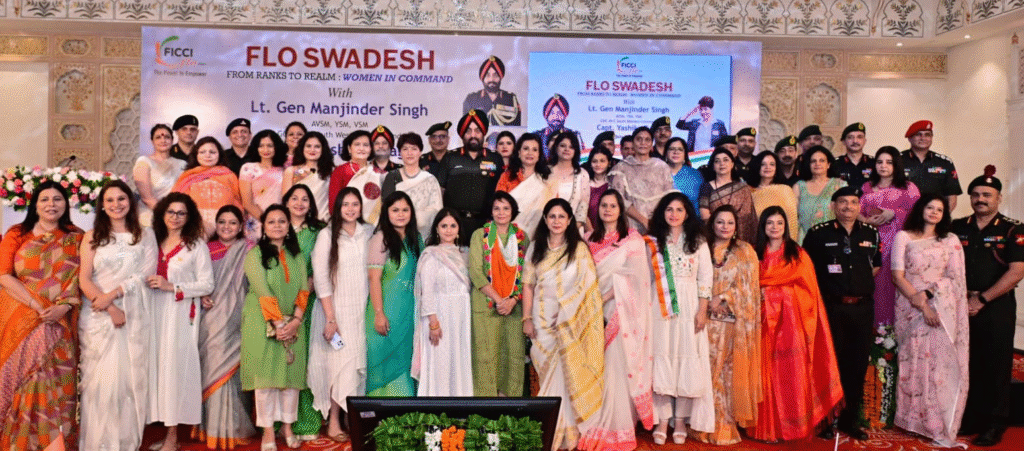
Captain Yashika Bespeaks a Tale of Grit and Courage at ‘FLO SWADESH – From Ranks to Realm: Women in Command’ in Jaipur. Watch Out Pics of Power-Packed Session…

0

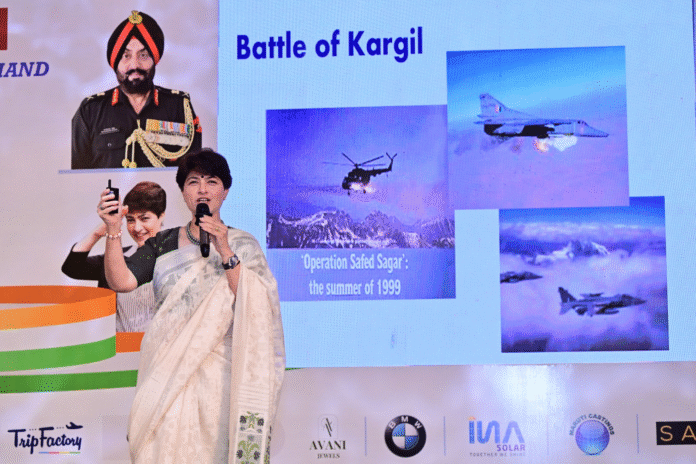
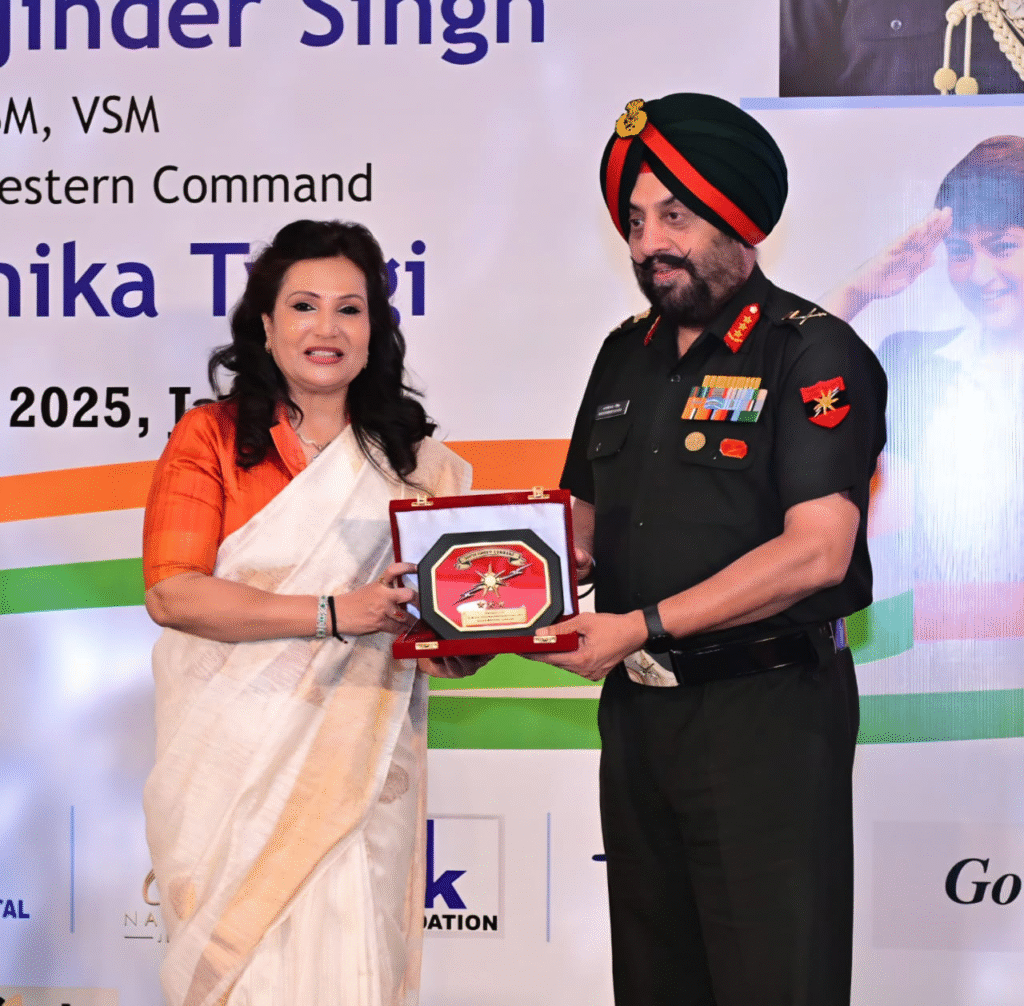
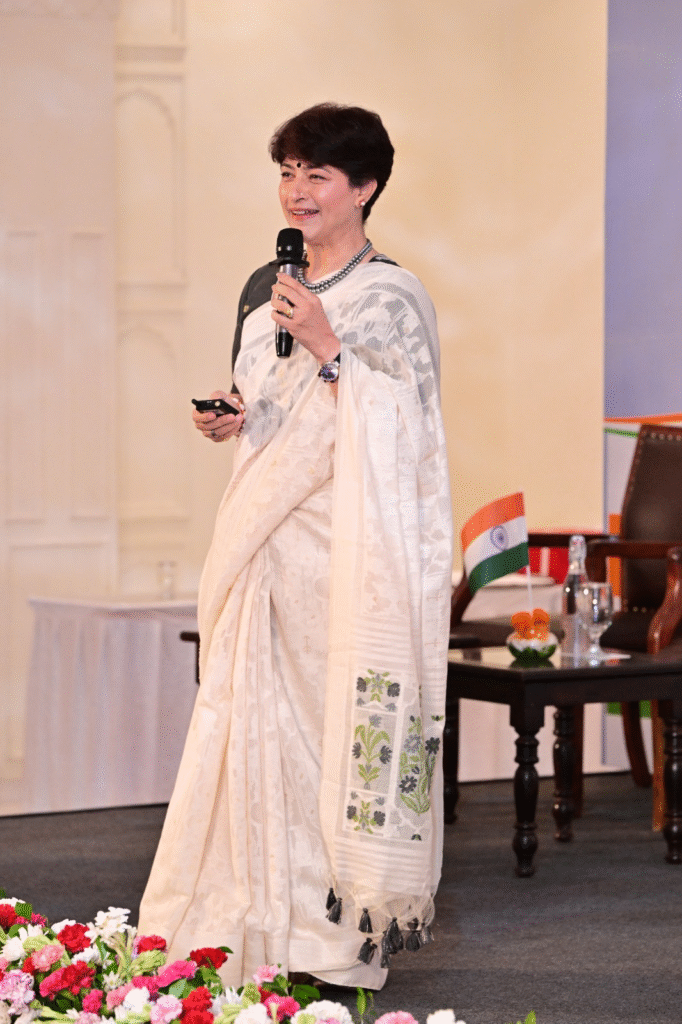
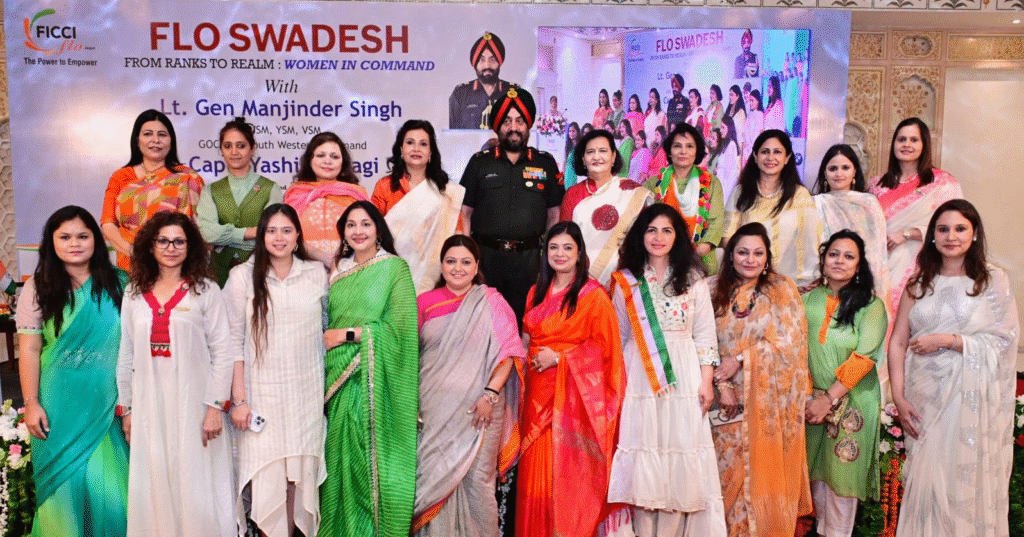
In an evening steeped in patriotism, pride, and purpose, the FICCI FLO Jaipur Chapter, under the visionary leadership of Chairperson Dr. Rimmi Shekhawat, hosted FLO SWADESH – From Ranks to Realm: Women in Command at ITC Rajputana, Jaipur.

The event was graced by the esteemed presence of Lt. Gen. Manjinder Singh, AVSM, YSM, VSM, GOC-in-C, South Western Command, as the Chief Guest. His powerful address left a lasting impression, reflecting on India’s defence ethos, integrity in leadership, and the emotional resilience behind every uniform.

Speaking with conviction on the importance of women in leadership, he emphasized: “Empowering women—both in the armed forces and society at large—is not just about equality; it is about national strength and collective progress.”

Captain Yashika Bespeaks a Tale of Grit and Courage at 'FLO SWADESH – From Ranks to Realm: Women in Command' in Jaipur. Watch Out Pics of Power-Packed Session...

The event also featured engaging Q&A sessions, where FLO members interacted directly with the dignitaries. These exchanges, enriched with battlefield anecdotes, leadership lessons, and personal stories, provided invaluable insights into military life and the evolving role of women within it.

The program saw spirited participation from Army personnel, senior government officials, FLO members, and dignitaries. Over 200 women professionals and entrepreneurs from Jaipur attended, many adorned in the vibrant hues of the Tricolour — a visual celebration of unity and national pride.

Captain Yashika Bespeaks a Tale of Grit and Courage at 'FLO SWADESH – From Ranks to Realm: Women in Command' in Jaipur. Watch Out Pics of Power-Packed Session...

The evening culminated in a collective tribute to India’s real heroes, marked by standing ovations and shared emotions. It was not only a salute to service but a celebration of Naari Shakti — the indomitable spirit of women who lead with courage across all frontiers.

Captain Yashika Bespeaks a Tale of Grit and Courage at 'FLO SWADESH – From Ranks to Realm: Women in Command' in Jaipur. Watch Out Pics of Power-Packed Session...

FLO SWADESH stood as a proud and powerful homage to the Indian Armed Forces and the rising wave of women in leadership — a reminder that courage wears many faces, and service knows no gender.

From ER to Orbit: The Grit and Glory of Anil Menon’s First Space Mission

0

When Earth cried out for heroes, he ran toward the fire. When humanity dreamed of the stars, he built the bridge. And now, in a moment stitched from grit, brilliance, and boundless ambition—Dr. Anil Menon is set to rise beyond the clouds and into the cosmos. In a thrilling announcement, NASA has confirmed Menon’s first voyage to space as Flight Engineer and Expedition 75 crew member aboard the International Space Station. But behind this triumphant milestone lies a storm of personal struggle, split-second decisions in disaster zones, and tireless service across warzones, ERs, and rocket labs.

This isn’t just a mission—it’s a message: The sky isn’t the limit. It’s only the beginning.

The Mission: A Leap Beyond Borders

Launching from the Baikonur Cosmodrome in Kazakhstan, Menon’s mission will focus on scientific research and technology demonstrations—paving the way for future deep space exploration and improving life back on Earth. But this moment, dazzling as it is, is built on decades of quiet resilience and relentless pursuit.

The Early Struggles: Healing Before Soaring

Born in Minneapolis to Indian and Ukrainian immigrant parents, Anil Menon’s path was never linear. He juggled multiple identities—a neurobiology graduate from Harvard, a mechanical engineer and physician from Stanford, and later, a colonel in the U.S. Space Force. But behind the accolades were years of grueling training, sleepless ER shifts, and the emotional weight of being a first responder during crises like the 2010 Haiti earthquake and the 2015 Nepal earthquake. He wasn’t just patching wounds—he was learning how to lead under pressure, how to make life-or-death decisions in seconds. These were the crucibles that forged his calm under cosmic pressure.

The SpaceX Chapter: Building the Bridge to the Stars

Before donning the NASA patch, Menon served as SpaceX’s first flight surgeon, helping launch the historic Demo-2 mission, the first crewed flight of the Dragon spacecraft. He didn’t just monitor vitals—he helped design medical systems for commercial spaceflight, writing a thesis on space medical kits and shaping protocols that would one day protect astronauts on Mars.

The Astronaut Dream: A Long-Awaited Lift-Off

Selected by NASA in 2021 and graduating with the 23rd astronaut class in 2024, Menon’s dream was decades in the making. He trained in aerospace medicine, practiced emergency care at Memorial Hermann’s Texas Medical Center, and mentored future doctors—all while preparing for the moment he’d finally leave Earth behind.

A Mission That Transcends Science

For Menon, this mission isn’t just about research—it’s about representation, resilience, and reaching for the impossible. As the son of immigrants, a healer, and a pioneer, his story is a reminder that the road to the stars is paved with grit, not just genius. And when he finally looks down at Earth from orbit, it won’t just be a view—it’ll be a victory.

AI-Powered Film on Warrior Hadi Rani to Be Screened at Nahargarh Wax Museum on August 15. Watch Pics and Videos…

0

The Nahargarh Wax Museum is set to unveil a pathbreaking short film created using Artificial Intelligence (AI), narrating the heroic tale of Hadi Rani, a 16th-century Rajput warrior known for her extraordinary sacrifice for the nation.

The eight-minute film, produced in collaboration with local artists and AI experts, uses advanced visuals and special effects to recreate the historical era with remarkable realism. According to museum founder-director Anoop Shrivastava, AI technology played a vital role in reconstructing the grandeur and emotion of Hadi Rani’s story. “It was a game-changer,” he said, emphasizing how AI helped breathe life into a narrative that has long inspired generations.

While AI tools were used to generate the visuals and effects, professional dubbing artists were brought in to ensure authenticity in voice, dialogue delivery, and emotional depth.

The film will be screened in a specially designed theater adjacent to Hadi Rani’s wax statue, offering visitors an immersive historical experience. The unique blend of art, history, and technology marks a first-of-its-kind initiative in India’s museum landscape.

This innovative approach aims not only to engage tourists but also to inspire younger generations with the courage, patriotism, and legacy of one of Rajasthan’s bravest women.

AI-Powered Film on Warrior Hadi Rani to Be Screened at Nahargarh Wax Museum on August 15. Watch Pics and Videos...

AI-Powered Film on Warrior Hadi Rani to Be Screened at Nahargarh Wax Museum on August 15. Watch Pics and Videos...

Shalimar Bagh, 400-Year-Old Splendor, Opens to Guests In Delhi; Watch Out Mughal Legacy Meeting Modern Life Here…

0

As the sun rises over North Delhi, the gentle rustle of mango leaves and the sweet chirping of birds create a morning melody that feels both timeless and new. The air, thick with the scent of dew and ripening fruit, carries whispers of history alongside the vibrant footsteps of a new era. This is Shalimar Bagh—once a secluded Mughal retreat, now a flourishing public haven where heritage and modernity meet in quiet celebration.

Laid out in 1653 by Emperor Shah Jahan as a royal escape from the imperial court, Shalimar Bagh remained a lesser-known gem in Delhi’s historic landscape for centuries. Tucked behind busy city roads and dense residential clusters, it existed for decades as an overgrown, nearly forgotten patch of green. Locals remember it as a hushed, wooded refuge—an island of stillness wrapped in wild foliage.

In recent years, however, Shalimar Bagh has undergone a remarkable transformation. What was once an underdeveloped woodland has blossomed into a vibrant centre of community life and cultural resurgence. This revival is the result of a thoughtful collaboration between the Delhi Development Department (DDD) and the Archaeological Survey of India (ASI).

At the heart of this renewal lies a beautifully landscaped park that honours its Mughal roots. Carefully redesigned to preserve the original layout, the park now draws early risers, joggers, families, and tourists. Century-old trees shade winding trails, where children run freely and elders share stories over steaming flasks of homemade chai. Historical signboards whisper reminders of the garden’s royal past, while native flowering plants add colour and fragrance to every corner.

The iconic mango trees, once enjoyed by emperors, still flourish—drawing birds and visitors alike. In mango season, the sweet, heady aroma alone turns the garden into a living invitation.

A Sip of Culture: The Tea Café

Among the garden’s most beloved new features is a charming tea café, established by the DDD. With clay walls and minimalist, rustic furniture, it blends seamlessly into the garden’s natural setting. The scent of freshly brewed tea drifts through the morning air, mixing with the earthy perfume of wet grass and blossoms.

The café has quickly become more than a refreshment stop. Frequented by morning walkers, yoga groups, students, and curious visitors, it serves as a quiet communal hub—a place for conversation, reflection, and connection.

Books and Breeze: The Book Café

Just a few steps away, tucked under a leafy canopy, is the newly opened book café—a modest but meaningful addition by the DDA. Though small, the café has already established itself as the intellectual heart of Shalimar Bagh.

Its shelves are stocked with titles on poetry, history, nature, art, and Delhi’s Mughal past. Visitors lounge in steel chairs or sit on the reading deck that overlooks one of the park’s ancient water channels. Here, students scribble in notebooks, young writers draft stories, and readers disappear into pages under the shade of old trees.

In the months ahead, the café plans to host book readings, author talks, and poetry slams, turning this once-forgotten space into a quiet yet powerful cultural destination.

Shalimar Bagh today is no longer just a historical site—it is a living, breathing testament to the possibility of respectful renewal. A place where past and present meet, not in conflict, but in harmony.

US Independence Day: Let’s Remember Robert G. Heft, The Designer of the 50-Star U.S. Flag from Lancaster, Ohio…

0

US Independence Day Special: Robert G. “Bob” Heft, a humble high school junior from Lancaster, Ohio, left a truly national impact when his 1958 class project became the official 50‑star U.S. flag. The story in interesting and inspiring as he is the man behind the 50-star US Flag who stitched star motifs representing 50 stars giving it a perfect design for US Flag.

From Michigan to Lancaster

  • Born January 19, 1942, in Saginaw, Michigan, Bob moved at age one to Lancaster, Ohio, where he lived with his grandparents.
  • His passion for flag design and American history was nurtured by his involvement in the Boy Scouts.

The Genesis of a National Emblem

  • As a junior at Lancaster High School in 1958, his history project involved redesigning the flag to anticipate Alaska’s and Hawaii’s statehood.
  • Bob cut apart his grandparents’ 48-star flag, added blue fabric, iron‑on stars, and sewed a five-and-four star motif representing 50 stars.

A Grade, a Gamble, and a Golden Opportunity

  • Bob initially received a B‑ from his teacher, Stanley Pratt, who challenged him: “Get it accepted in Washington.”
  • Undeterred, Bob wrote 21 letters and made 18 calls to the White House.

From Classroom Flag to National Symbol

  • In 1960, President Dwight D. Eisenhower rang his phone to invite Bob to Washington D.C., for the official unveiling at the Capitol on July 4.
  • President Pratt acknowledged Bob’s feat and upgraded his project to an A.

A Lifelong Mission in Patriotic Service

  • Heft’s design was officially adopted on July 4, 1960 and remains the longest‑serving flag in U.S. history.
  • Bob designed a backup 51-star flag in anticipation of a new state.
  • A Boy Scout, history teacher, and seven-term mayor of Napoleon, Ohio, his speaking engagements numbered nearly 200 per year. He also visited the White House multiple times.
  • Heft passed away in 2009 at age 67, leaving a legacy of civic dedication and national pride.

Lancaster’s Proud Tribute

  • A historical marker stands at Lancaster High School commemorating the birthplace of his design.
  • In 2001, Bob was inducted into the Lancaster High School Distinguished Alumni Hall of Fame.

Why It Matters

Impact AreaBob Heft’s Legacy
Cultural IconHis design became the enduring symbol of a united 50‑state America.
Teenage InspirationA school assignment turned into global heritage—proof that ambition, passion, and persistence can yield historic outcomes.
Civic EngagementBob’s continued service in politics, education, and public speaking exemplified patriotic dedication.
Local PrideA Midwest student’s creativity led to a national emblem with roots in small-town Ohio.

A Legacy Sewn into the Stars

Robert G. Heft’s journey – from a determined high school junior in Lancaster, Ohio, to the creator of the iconic 50-star American flag – epitomizes how youthful creativity, grit, and civic engagement can leave an enduring mark on national identity. What began as a humble class project and earned him a B–, eventually captured the attention of President Eisenhower and the country at large. That once-mocked teen ultimately saw his design raised over the U.S. Capitol on July 4, 1960, and it remains the longest‑serving version of the American flag – waving proudly for over six decades.

But Heft’s influence extended far beyond a single sewing machine and a school assignment. As an educator, mayor, and motivational speaker, he spent years instilling in others the values of perseverance, patriotism, and service. Even after his death in December 2009 at age 67, his story continues to inspire – from classrooms to public commemorations.

In the annals of American history, few can claim to have designed a national emblem that becomes woven into the fabric of everyday life. Robert Heft did. His legacy reminds us that sometimes, a single idea – nurtured with passion and follow-through – can resonate across generations and stand as a symbol of hope, unity, and the power of one individual’s vision.