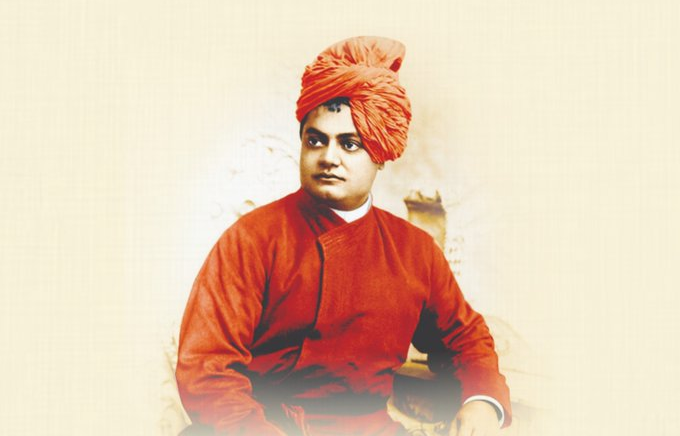
“Arise, awake, and stop not till the goal is reached.” This timeless call isn’t just a quote—it’s the pulse of a youthful nation waiting to rise.
The Beginning of a Revolution
In 1893, at the World Parliament of Religions in Chicago, a young monk greeted the crowd with “Sisters and Brothers of America,” and earned a thunderous ovation. But beyond the applause stood Swami Vivekananda—an embodiment of Vedanta, fearlessness, and truth. His words weren’t merely spoken—they awakened a sleeping India Swami ji declared, “You are the nation’s strength.” To him, service was worship, and the youth were not just dreamers—they were doers. He inspired them to:
Build physical and mental resilience
Define a purpose and chase it relentlessly
Cultivate confidence and inner conviction
Live for a cause larger than self
The Incident Face the Brutes!
Once, while walking through the narrow lanes of Varanasi, Swami Vivekananda was chased by a group of aggressive monkeys. He tried to run, but the more he ran, the bolder the monkeys became. Just then, an old monk shouted, “Face the brutes!” Swami ji stopped, turned around, and stared at the monkeys with fearless eyes. Instantly, they retreated.
Lesson that inspire us
Fear grows when you run from it. But when you face it head-on, it disappears. This story isn’t just about monkeys—it’s about every challenge in life. Whether it’s failure, rejection, or uncertainty, face it boldly. Swami Vivekananda’s wisdom isn’t history—it’s a living legacy.
When he said, “Take up one idea… make that idea your life,” he was handing every youth a blueprint for success. Challenges will be enormous—but victories will be legendary. And in that triumph will echo the pride of Bharat: “Say with pride, we are Hindus.”
July 4 is a special day for fans of fantasy and literature, particularly in the UK, as it marks the celebration of Alice in Wonderland Day. This day honors the world-renowned story Alice’s Adventures in Wonderland and its beloved author, Lewis Carroll, whose real name was Charles Lutwidge Dodgson.
Born in Cheshire, England, Carroll was the third child and eldest son in his family. Like many of his siblings, he had a stammer, but he never allowed it to hinder his pursuits. Educated at home in his early years, Carroll displayed a strong aptitude for reading, delving into works like The Pilgrim’s Progress. He later attended Rugby School and went on to study at the prestigious University of Oxford. Excelling academically, he earned first-class honors in Mathematics Moderations and continued at Oxford as both a student and a lecturer.
Carroll began writing poetry and short stories from an early age. His work appeared in publications such as Miscmasch, the Whitby Gazette, and the Oxford Critic, earning him modest recognition. In 1856, Henry Liddell was appointed Dean of Christ Church, Oxford, and moved there with his family—including his daughters Alice, Lorina, and Edith. The Liddell family became close friends with Carroll and had a lasting impact on his life and work.
Carroll often took the Liddell girls on rowing trips along the River Thames. During these outings, he would tell them imaginative stories to pass the time. One of these tales, featuring a curious young girl named Alice, captivated the children—especially Alice Liddell, who frequently asked him to retell it. In 1864, Carroll gave Alice a handwritten manuscript of the story as a Christmas gift. Encouraged by the positive reception, he published the book the following year, incorporating characters inspired by the Liddell sisters—Lorina became “Lory,” and Edith appeared as the “Eaglet.”
Over time, Carroll expanded the story to include iconic characters such as the Mad Hatter, the Cheshire Cat, and many others, creating a whimsical world that continues to enchant readers of all ages.
celebrate the world of imagination and madness on Alice in Wonderland Day on July 4. The amazing fictional world, created by Lewis Carroll in 1865, is the telling of a young girl who faces worldly obstacles at a tender age. More than a century later, the book continues to enjoy popularity amongst the masses not only for its original story and characters but also because of the subsequent movies that have been made of it. People also enjoy other adaptations like theater performances as well as the numerous types of Alice in Wonderland merchandise available today. Apart from all the superb details related to the story, did you know that the titular character is based on a real-life person?
The first teaser for director Nitesh Tiwari’s ambitious two-part Ramayana epic dropped on July 3, 2025, igniting buzz across Bollywood and digital platforms. Audiences get a dramatic glimpse of Ranbir Kapoor embodying Lord Ram, poised and resolute, and Yash channeling the fierce energy of Ravan.
Teaser Highlights
Visual spectacle & storytelling scale: The three-minute intro unfolds with grand CG scenes – starting with the cosmic roles of Brahma, Vishnu, and Shiva, then building to the epic clash between Ram and Ravan. It also features an aesthetic presentation of cast and crew.
First look at the leads:
Ranbir Kapoor steps into Ram’s shoes, armed with bow and arrow, exuding calm strength.
Yash, rising as Ravan, appears intense and commanding, with a single glare that has left viewers in awe.
Music by Hans Zimmer & A. R. Rahman: The teaser’s powerful score, crafted by these legendary composers, added depth and emotion – earning praise from viewers.
Response & Reactions
Reactions have been overwhelming, with fans praising the visuals and casting:
“Literally got goosebumps.” “He got the body language right… Yash looks menacing and Ranbir… gorgeous.”
Yet some voices floated on social media, suggesting the leads could’ve swapped roles – for instance, Yash as Ram. Still, many defend the cast as “perfect picks.”
Top celebrities reacted too – Karan Johar termed it “unreal,” while Alia Bhatt said, “This feels like the start of something unforgettable.”
What’s Next?
Release timeline:
Part 1: Diwali 2026
Part 2: Diwali 2027
Global push: The teaser debuted alongside screenings in nine Indian cities and even a billboard in Times Square – signaling global ambitions.
Massive scale & budget: Reportedly produced at a whopping ₹835 crore, filmed for IMAX, and backed by Prime Focus Studios and eight-time Oscar-winning VFX studio DNEG.
Why This Matters
This teaser is more than hype – it’s a statement. A combination of star power (Ranbir, Yash, Sai Pallavi, Sunny Deol, Ravi Dubey), A-list music production, blockbuster-grade VFX, and global marketing indicates that this Ramayana aims to be a cinematic milestone. For Indian mythology lovers and world-cinema watchers alike, it’s shaping up to be a landmark event.
In a landmark moment for Indian whisky, Rampur Jugalbandi #6, crafted by Radico Khaitan, has claimed the coveted title of Best World Single Malt at the John Barleycorn Awards 2025 in the USA. This marks a major triumph in the global spirits arena, highlighting the extraordinary strides Indian whisky is making on the international stage.
What Makes This Win Historic?
The John Barleycorn Awards, judged by top-tier spirits journalists and industry veterans, is widely respected for celebrating excellence in taste, innovation, and craftsmanship. The victory by Rampur Jugalbandi #6 is particularly noteworthy because its flavor profile is shaped by maturation in rare Madeira casks, lending it a rich depth and character that stood out to blind-tasting panels.
Additional Accolades from Rampur
Radico Khaitan’s momentum didn’t stop there. Two other expressions earned top honours:
Rampur Select secured a Double Gold award, thanks to its signature smoothness and vibrant, fruit-forward profile.
Rampur Jugalbandi #5, featuring a distinct Tokaji cask finish, took Gold in the “Indian Single Malt – Tokaji Finish” category.
These achievements reflect Rampur’s growing legacy in the premium whisky world and its innovative approach to cask finishes.
Voices from Radico Khaitan
Sanjeev Banga, President – International Business at Radico Khaitan, expressed pride in the global recognition:
“It is truly gratifying to see Indian single malts gaining such remarkable global recognition… when whisky is crafted with authenticity, passion, and purpose, it resonates across cultures and continents.”
Kunal Madan, Vice President – International Business, commented on the bold innovation behind Jugalbandi #6:
“This win places it among the world’s finest, reflecting a uniquely Indian story of innovation rooted in tradition… These recognitions inspire us to keep pushing the boundaries while staying true to our roots.”
Why It Matters
Rampur Distillery, nestled in the Himalayan foothills, benefits from India’s intense seasonal variations – especially torrid summers that accelerate whisky maturation, resulting in complex flavour development . This terroir-driven character, combined with visionary cask selection, positions Rampur products as both authentic and globally distinctive.
The Jugalbandi series, named after the Indian musical tradition of harmonious duets, symbolizes experimental blending of cask influences – Madeira for #6, Tokaji for #5, among others – solidifying Radico Khaitan’s reputation for aesthetic and high-end expressions.
Looking Ahead
With rising demand in the U.S., Europe, and travel retail channels, Rampur’s international footprint is expanding rapidly. The sweeping success of Jugalbandi #6 not only celebrates one bottle – it signals a new chapter for Indian single malts on the world stage.
We’ve all been there. You book a train ticket with excitement—maybe for a vacation, a work trip, or a visit home—and then plans change. Suddenly, that confirmed ticket feels more like a problem than a plan. The good news? Cancelling a train ticket in India isn’t as complicated as it used to be. Knowing the steps and rules around ticket cancellations can save you time, money, and stress, whether you’re a first-time traveller or a seasoned passenger.
In this blog, I’ll break down the real-world process of cancelling a train ticket—whether it was booked online or at the counter—and how to get your refund with as little hassle as possible.
1. Understanding the Type of Ticket You Booked
Before diving into the cancellation process, knowing what kind of ticket you have is important. This makes a big difference in how much refund you get (if any at all).
Confirmed Ticket – You have a seat/berth. Cancellation charges apply based on timing.
RAC (Reservation Against Cancellation) – You’re not guaranteed a berth but can travel. Partial refund rules apply.
Waitlisted Ticket – No confirmed seat; refund rules depend on whether it was booked online or at the station.
Tatkal Ticket – Booked for last-minute travel. Refunds are only possible under special circumstances.
2. Cancelling an Online Ticket (IRCTC)
The process is straightforward if you booked your ticket through the IRCTC website or app.
Steps to Cancel:
Log in to IRCTC.
Go to “Booked Ticket History.”
Select the journey you want to cancel.
Click on “Cancel Ticket” and follow the prompts.
You’ll get a confirmation message and email once cancelled.
Pro Tip: Before cancelling, check your PNR status—sometimes Waitlisted tickets get confirmed at the last moment, saving you cancellation charges!
Refund Timelines:
Refund is generally processed within 3-7 business days using your original payment method. If you used UPI or a wallet, check that account.
3. Cancelling a Ticket Booked at the Railway Counter
Still prefer the charm of buying a paper ticket at the station? If yes, cancellation works differently.
What You’ll Need:
The original printed ticket
Valid ID proof (in case of partial passenger cancellation)
Cancellation Options:
Go directly to the cancellation counter at any railway station.
Fill out a cancellation form and submit the ticket.
Refund is given on the spot, usually in cash.
A refund is simple if you’re cancelling before the chart is prepared. Once the chart is ready (usually 4 hours before departure), cancellation becomes trickier, especially for confirmed tickets.
4. Cancellation Charges (Know Before You Cancel)
Let’s be honest—no one enjoys losing money on cancellations. But if you cancel at the right time, you can minimise the damage.
Here’s a quick guide to standard cancellation charges for confirmed tickets:
Time Before Departure
Sleeper Class
AC Class
> 48 hrs
₹60
₹120
48–12 hrs
25% of the fare
25%
12–4 hrs
50% of the fare
50%
< 4 hrs
No refund
No refund
You get a full refund for waitlisted or RAC tickets cancelled before charting (minus a small fee, usually ₹60).
Note: After the chart is prepared, you can only file a TDR (Ticket Deposit Receipt), and the refund is not guaranteed.
5. Special Scenarios (And What to Do)
Sometimes, travel plans are interrupted due to factors outside your control. IRCTC and Indian Railways do offer ways to claim refunds in special cases.
Train Cancelled by Railways:
A full refund is automatically processed for e-tickets and counter tickets, so there is no need to cancel.
Train Running Late (Over 3 Hours):
You can cancel and claim a full refund if you choose not to travel. But do it before actual departure.
Passenger Didn’t Travel:
Submit a TDR within 1 hour of departure (for online tickets). For offline tickets, approach the station master.
6. TDR – What Is It and When to Use It?
TDR stands for Ticket Deposit Receipt. It’s essentially a formal way of requesting a refund for an unused or partially used ticket after chart preparation.
Here are some valid reasons to file a TDR:
The train cancelled, but the chart was already prepared
Train was delayed, and you didn’t board
The AC coach is not functioning
The passenger passed away before the travel
Depending on your booking, you can file it through IRCTC or submit a form at the station.
Final Thoughts
Cancelling a train ticket doesn’t need to be a bureaucratic nightmare. Whether you booked online or in person, Indian Railways has evolved to make the process more traveller-friendly. The key is to act early, know your ticket type, and stay updated with the rules.
If there’s one piece of advice I’d leave you with, it’s this: Don’t wait till the last minute to cancel, hoping plans magically fall into place. If you know you won’t make that journey, cancel your ticket. You’ll save some money and open up a seat for someone else who may need it more than you think.
July 2025 marked a historic milestone in genetic research as scientists successfully sequenced the oldest known ancient Egyptian DNA, dating back nearly 4,800 years to the Old Kingdom period. This groundbreaking discovery is providing unprecedented insights into human migration, ancient ancestry, and cultural exchanges in early civilizations.
Ancient Remains Discovered in Nuwayrat Tomb
The remains were discovered in a ceramic pot burial inside a rock-cut tomb at Nuwayrat, approximately 265 kilometers south of Cairo. The DNA belonged to a genetically male individual, aged between 44 and 64 at the time of death. Despite signs of a physically demanding life, the burial context suggests the individual enjoyed a relatively high socioeconomic status.
Genetic Ancestry: North Africa Meets Fertile Crescent
DNA analysis revealed a fascinating blend of ancestries:
78% of the genome matched ancient North African Neolithic populations, particularly those from present-day Morocco.
22% was linked to early farmers of the Fertile Crescent, spanning modern-day Iraq, Syria, and Turkey.
This genetic mix indicates early interregional connections, suggesting pre-pyramidal era interactions between North Africa and the Eastern Mediterranean.
Cultural Exchange in Ancient Times
The DNA evidence supports theories of cultural diffusion between ancient Egypt and the Fertile Crescent. These early connections likely influenced:
Agricultural techniques
Trade routes
Linguistic developments, possibly contributing to early writing systems
Such findings reshape our understanding of ancient Egyptian civilization as a part of a broader, interconnected ancient world.
How DNA Was Preserved for 4,800 Years
The remarkable preservation of the genome is credited to:
Burial in a sealed ceramic pot
Stable microclimate within the rock-cut tomb
DNA extracted from tooth root tips, a known reservoir for long-term genetic material
These conditions created an ideal environment for preserving ancient DNA, enabling full genome sequencing.
Why This Study Matters: A Milestone in Ancient DNA Research
This is the first-ever complete genome from ancient Egypt, breaking new ground in archaeogenetics. It challenges the outdated idea that ancient Egyptian populations were genetically isolated and reveals long-standing human mobility and cultural interaction across regions.
Looking Ahead: Future Research Possibilities
This landmark discovery opens the door to:
Sequencing more ancient genomes from Egypt and neighboring regions
Tracing migration patterns across Africa, the Middle East, and Europe
Redefining the early human history narrative
Conclusion: Ancient Egypt’s Genetic Legacy Rewritten
The successful sequencing of a 4,800-year-old genome is transforming how we understand ancient Egypt’s population history. With clear links to both North African Neolithic cultures and Fertile Crescent farmers, this discovery offers a powerful reminder of our shared genetic heritage and the global connections that shaped ancient civilizations.
Glazed by soft mist and ethereal pink skies, with the gentle pitter-patter of rainfall and the innocent laughter of children echoing through the hills since time immemorial, Wellington is a town resting quietly atop the Nilgiris, the Blue Mountains of South India.
Just 73 kilometres uphill from the industrial bustle and polished shoes of Coimbatore, this small town offers a world of contrast: untouched, timeless, and tender.
Contrary to popular belief (and the occasional confused tourist), Wellington is not the capital of New Zealand but rather a hidden gem in Tamil Nadu, known not only for its scenic serenity but also for its tea estates, chocolate factories, and the quiet dignity that fills its mountain air.
Despite housing several factories, Wellington has preserved its natural charm, its flora and fauna thriving in the silence of its hills. Wellington dates back to the colonial era when it was primarily a military cantonment, gaining recognition for its barracks and later becoming home to the Defence Services Staff College.
Though often overlooked by tourists, it has hosted warriors, most notably the late Field Marshal Sam Manekshaw. Today, the town still echoes with discipline and honour as it houses the soldiers of the Madras Regimental Centre at the Srinagesh Barracks, the construction of which was initially begun by the Britishers in the year 1852, known more familiarly as the Wellington Barracks.
Yet, Wellington is more than its military prestige. From the delicate dewdrops that settle on flower petals each morning to the sight of mighty, time-worn Bisons grazing the slopes, this town remains raw and real. Its relative anonymity has helped protect its ecological richness and cultural authenticity.
Wellington is also a community, a living, breathing one, rooted in the traditions of its people. Two prominent tribal communities, the Todas and the Badagas, are the cultural heart of these hills. The Todas are known for their unique lifestyle and exquisite embroidery called phukoor, often crafted in sacred shades of deep red, white, and black. Their rituals and dances speak of a deep connection with the land and spirit.
The Badagas, on the other hand, have long been celebrated for their agricultural expertise and the cultivation of grains and vegetables across the hills. Though traditionally classified as a tribal group, their social and educational development has led some researchers to reconsider that status.
Historically, the Todas and Badagas engaged in a barter system and participated in each other’s ceremonies, an exchange that continues in spirit even today. Wellington is not just a place. It is a feeling. It is romantic when you witness an old couple sharing tea in the garden of a home they built from scratch, weathering the years and the rains together. You sense their belief in love.
It is friendship when you see young children running hand-in-hand down the slopes, building memories with every fall and laugh. You sense their innocence. It is power when the sound of boots of young soldiers hitting the pavement at dawn reminds you of discipline, strength, and sacrifice. You sense courage. The hills of Wellington are resilient yet tender, old yet full of youth, blue yet bursting with colour. It is a place where past and present walk side by side, quietly and with grace. Wellington is home
The 14th Dalai Lama recently reaffirmed the continuation of the Dalai Lama institution. He stated that the Gaden Phodrang Trust will have sole authority in recognising future reincarnations. This announcement comes as he approaches his 90th birthday, ensuring the tradition of the Dalai Lama will persist. The Dalai Lama’s previous statements also support this continuation, indicating that the next reincarnation will be recognised by the Gaden Phodrang Trust.
The Gaden Phodrang Trust
The Gaden Phodrang Trust is a registered body in India. It was established in 2011 and operates from the Dalai Lama’s office in Dharamshala. The trust’s primary responsibility is to oversee the recognition of the next Dalai Lama. It is managed by Prof Samdhong Rinpoche, a senior monk closely associated with the Dalai Lama. The trust ensures adherence to Tibetan Buddhist traditions in the recognition process.
Historical Context of Gaden Phodrang
The term “Gaden Phodrang” refers to the Dalai Lama’s residential quarters at Drepung Monastery. This tradition began with the second Dalai Lama. Following the construction of the Potala Palace, the Dalai Lamas resided there during winter. The tradition continued until the 14th Dalai Lama’s escape to India in 1959, marking shift in the institution’s history.
Related Institutions of the Dalai Lama
There are three main institutions associated with the Dalai Lama – the Gaden Phodrang Trust, the Dalai Lama Trust, and the Gaden Phodrang Foundation. The Dalai Lama Trust was founded in 2009 to support the welfare of the Tibetan people. The Gaden Phodrang Foundation, based in Zurich, promotes human values and environmental protection.
Objectives of the Gaden Phodrang Foundation
The Gaden Phodrang Foundation aims to maintain the traditions of the Dalai Lama. It promotes mutual understanding among different religions and advocates for peace and non-violence. The foundation also focuses on environmental protection and supports Tibetan culture. It seeks to bridge the gap between science and religion through various initiatives.
The Dalai Lama Trust’s Mission
The Dalai Lama Trust focuses on the welfare of Tibetan people. It supports education and cultural preservation. The trust promotes secular ethics and compassion through global initiatives. It partners with various organisations to achieve its objectives, ensuring the continuity of Tibetan culture and language.
In the stillness of space—beyond the pull of Earth’s tides, past the hum of gravity and the breath of the wind—there float small echoes of home. Not instruments of science or tools of survival, but soft reminders of love, laughter, and innocence. A plush swan stitched with wisdom. A sparkly dinosaur picked by tiny hands. A Jedi child cradling the hopes of a galaxy.
These are not just toys. They are messages in orbit—silent, floating emissaries of Earth’s heartbeat. They carry the dreams of sons and daughters, the prayers of parents, and the promise that even in the furthest reaches of the universe, humanity remembers to play, to cherish, to feel. Because astronauts don’t only launch for science—they carry stories. And sometimes, they carry a dinosaur.
Joy the Swan — Grace from Three Nations
When Indian astronaut Shubhanshu Shukla launched aboard Axiom-4 in 2025, he didn’t go alone. Nestled gently beside him was Joy, a white plush swan chosen by his 6-year-old son. But this wasn’t just a bedtime companion—it was a cultural messenger. In India, the swan evokes Goddess Saraswati, patroness of wisdom. In Poland, it stands for loyalty. In Hungary, grace. As Joy fluttered mid-air on the station, her wings seemed to carry whispers from three continents. For Shukla and his crew, Joy wasn’t just a zero-gravity indicator—she was a reminder of Earth’s shared humanity.
Baby Yoda (Grogu) — The Force Floats Free
On SpaceX Crew-1 (2020), the cabin had a small but mighty visitor:Grogu, known lovingly across galaxies as Baby Yoda. The crew—Mike Hopkins, Victor Glover, Shannon Walker, and Soichi Noguchi—chose the toy as a morale booster. As cameras captured Grogu’s slow tumble through microgravity, Earth responded in delight. In one moment of levity, Glover smiled and said, “Baby Yoda says you guys can come back on board,” after a signal dropout. It was the kind of humor that bridges lightyears.
Tremor the Sparkly Dinosaur — Roaring with Love
In May 2020, during Demo-2, astronauts Bob Behnken and Doug Hurley let their sons pick the zero-g indicator. The result? A glittery, blue dinosaur named Tremor. With every flip and spin in the capsule, Tremor reminded them of their children’s wonder. Back on Earth, toy stores sold out the very same plush within days. A dinosaur’s twinkle had bridged science and sentiment.
Earthy the Plush Planet — A Soft Globe in Orbit
Before humans returned to orbit aboard Crew Dragon in 2019, a small plush globe named Earthy floated its way into history. It was the spacecraft’s first zero-g buddy—a poetic symbol of what we leave behind to discover more. As Earthy spun slowly on camera, it offered a poignant reminder: while humanity reaches for Mars and beyond, Earth is still the only home we know.
Buzz Lightyear — “To Infinity…” Became Real
In 2008, NASA and Disney partnered to fulfill a dream both literal and cinematic. A 12-inch Buzz Lightyear launched aboard the ISS, remaining there for over 15 months. His mission? Inspire kids in STEM education. But for millions of fans, Buzz’s voyage was something else—a confirmation that imagination matters in science. Today, he rests in the Smithsonian, a hero of both screen and sky.
Starlight Carried in Small Hands
These toys aren’t just soft bundles or pop culture cameos. They’re emblems of love, symbols of learning, and bridges across Earth and sky. They float alongside laptops and lab kits, not because they’re essential to survival—but because they are essential to spirit. In the lonely silence of space, it’s often the tiniest things—a stitch of cloth, a plastic visor, a pair of blinking plush eyes—that whisper home.
Nestled in the heart of Datia, Madhya Pradesh, the Veer Singh Palace, also known as Satkhanda Palace, stands as a testament to the rich history and architectural brilliance of the Bundela dynasty. Constructed by the renowned Bundela Raja Veer Singh in 1620, this magnificent fort is a captivating blend of Rajput and Mughal architectural styles. Its unique design and historical significance make it a prominent tourist destination today.
A Masterpiece of Architecture
The construction of Veer Singh Palace spanned approximately nine years, resulting in a perfectly square-shaped fort that, when viewed from above, resembles the sacred Swastika symbol. Each corner of the fort is adorned with octagonal domes, adding to its aesthetic appeal. Remarkably, the structure was built without the use of iron or wood, showcasing the ingenuity of the artisans of that era. The fusion of Rajput and Mughal architectural elements is evident in its intricate designs, robust walls, and elegant domes, making it a visual delight for visitors.
Historical Significance and Royal Connections
The history of Veer Singh Palace is as intriguing as its architecture. Raja Veer Singh’s relationship with the Mughal Empire began when he supported a young prince named Salim, who later became Emperor Jahangir. During a period of discord between Salim and his father, Emperor Akbar, Veer Singh played a pivotal role in helping Salim ascend the throne and consolidate his power. In 1614, Veer Singh laid the foundation for a grand mansion in Datia, intended as a tribute to the emperor. However, despite its grandeur, neither Veer Singh nor the emperor ever resided in the palace. Historians note that Veer Singh politely declined the emperor’s invitation to stay in the palace, and over time, the mansion fell into ruin due to neglect.The Legacy of Satkhanda Palace
Today, Veer Singh Palace stands as a proud relic of Datia’s royal past. No longer home to any members of the royal family, it has transformed into a popular tourist attraction, drawing visitors from across the globe. The palace’s historical and architectural significance has also made it a venue for prestigious events, including meetings for G-20 delegates. Its well-preserved structure and captivating history continue to fascinate travelers and history enthusiasts alike.