Home Blog Page 237

Now, Experience The Delicious Delights Coming Right from Royal Kitchens of Awadh in Jaipur…!

0

Hyatt Regency Jaipur Mansarovar is proud to unveil SHROT X Noshe Jaan, a bespoke culinary pop-up that brings together a shared passion for heritage, craft, and hyperlocal cuisine.

Running from 18th to 20th July 2025, this exclusive three-day dining experience at SHROT, the hotel’s signature all-day dining destination, promises an immersive culinary journey steeped in tradition, flavour, and storytelling.

In a city that constantly seeks both nostalgia and novelty, Noshe Jaan—one of Mumbai’s most beloved names in home-style Awadhi cuisine—makes its Jaipur debut. Known for its soulful culinary narratives where every dish tells a story and every bite evokes memory, Noshe Jaan is celebrated for reviving the nuanced flavours of Awadh with reverence and authenticity.

Hosted at SHROT, which champions a “Pure. Local. Natural.” philosophy, this collaboration is a natural extension of Hyatt’s ‘Hyatt Loves Local’ initiative—an ongoing commitment to celebrating local artisans, heritage, and craftsmanship. While SHROT draws deeply from the soil and spirit of Rajasthan, Noshe Jaan pays homage to the royal kitchens of Awadh, with recipes brought to life by khansamas (traditional chefs) using time-honoured techniques—from slow cooking and hand-ground spices to rich, indigenous ingredients.

“Our food is slow because it is thoughtful,” says Neerusha Nikhat, Founder of Noshe Jaan. “Every kebab and every biryani is a reflection of my childhood, of memories passed down through generations. This pop-up is a chance to let guests dine like Nawabs, but with the warmth and ease of modern hospitality.”

A Culinary Showcase Like No Other

The thoughtfully curated menu is a blend of indulgence and nostalgia:

Vegetarian Delights

  • Kathal ki Shami Kebab – melt-in-your-mouth raw jackfruit kebabs
  • Dahi Kebabs – crisp outside, creamy inside
  • Paneer Kesariya Tikka – saffron-kissed paneer with bold spices

Meat Lovers’ Favourites

  • Mutton Galouti – legendary kebabs that need no introduction
  • Sounda Murgh Tikka – delicately spiced and char-grilled
  • Delhi 6-Style Chicken Fry – crispy, fiery, and full of street-style flair

Main Course Highlights

  • Murgh Malai Korma – creamy, aromatic chicken curry
  • Mutton Nihari – slow-cooked overnight to perfection
  • Boti Kebab Pasanda – tender cuts in a luscious gravy
  • Awadhi Mutton Dum Biryani, Sabz Biryani, and Bagara Pulav – layered rice dishes rich in depth and aroma

Desserts to Remember

  • Kimami Sewai – a festive favourite
  • Zafrani Mawa Phirni – a creamy saffron rice pudding

“This collaboration is an extension of what SHROT stands for—bringing soulful food experiences rooted in authenticity,” shares Naveen Yadav, General Manager, Hyatt Regency Jaipur Mansarovar. “We’re honoured to introduce Noshe Jaan’s rich culinary heritage to Jaipur’s discerning diners.”

SHROT X Noshe Jaan besides being a dining event is a tribute to slow-crafted cuisine, culinary memory, and the enduring charm of traditional flavours, he adds.

Event Details

Name: SHROT X Noshe Jaan Pop-up
Date: 18th to 20th July 2025
Time: Lunch & Dinner
Venue: SHROT, Hyatt Regency Jaipur Mansarovar

Copenhagen Tops Global Liveability Rankings in 2025: What Life’s Really Like in the World’s Best Cities

0

For years, Vienna reigned supreme on the Global Liveability Index, but 2025 saw a surprise shift: Copenhagen now holds the crown.

The Economist Intelligence Unit (EIU) has long measured where life is most comfortable, scoring cities on factors like stability, healthcare, culture, education, and infrastructure. While the top cities have remained fairly consistent, this year brought dramatic changes.

Copenhagen’s rise to No. 1 was powered by perfect scores in stability, education, and infrastructure — an unbeatable trio. Meanwhile, Vienna slipped from the top spot following high-profile safety concerns, including a 2024 Taylor Swift concert cancellation due to a bomb threat, and a recently foiled attack on a train station.

Beyond Vienna and Copenhagen, most top-10 cities remain concentrated in Western Europe, Australia, New Zealand, and Canada, with Osaka standing out as the only Asian entry.

But what’s it really like to live in these global hotspots? We spoke to locals in five of 2025’s highest-ranked cities to get the inside scoop.

Top 10 most liveable cities for 2025:

From Northern Europe to East Asia, the top cities on the 2025 Global Liveability Index aren’t just well-ranked on paper—they offer a high quality of life that residents feel every day. Here’s how five of the world’s best cities measure up, according to the people who live there.

1. Copenhagen, Denmark – The New No. 1

Taking the top spot this year, Copenhagen isn’t just the world’s most liveable city—it also recently ranked as the happiest. The two are deeply connected, as residents benefit from high scores in stability, infrastructure, and environmental quality.

From seamless public transport to clean air and inclusive city planning, Copenhagen proves that good governance and smart design can foster both comfort and contentment.

2. Vienna, Austria – Still a Gold Standard

Copenhagen Tops Global Liveability Rankings in 2025: What Life’s Really Like in the World's Best Cities

Though it slipped to second place, Vienna remains a global benchmark for urban living. The Austrian capital earned a perfect score in healthcare, higher than any other city in the index, along with top marks in education and infrastructure.

Residents describe life here as elegant and efficient—where opera houses meet punctual trams, and every corner seems curated for calm.

3. Geneva, Switzerland – Global Quality, Local Charm

Switzerland’s reputation for quality of life is well-earned, and this year both Zurich and Geneva made the top five. But locals say Geneva has a distinct personality.

Copenhagen Tops Global Liveability Rankings in 2025: What Life’s Really Like in the World's Best Cities

“Geneva is a well-run city in a well-run country,” says James F. Royal, an American expat and author of Options Trading 101. “It offers the benefits of a big city—music, arts, business—in a cosier, more relaxed environment.”

Nestled by Lake Geneva with views of the Alps, the city blends global sophistication with a village-like atmosphere.


4. Melbourne, Australia – Culture Meets Comfort

Ranked fourth, Melbourne continues to shine with perfect scores in healthcare and education. But it’s the city’s rich culture and green spaces that give it an edge over other Australian contenders like Sydney and Adelaide.

Copenhagen Tops Global Liveability Rankings in 2025: What Life’s Really Like in the World's Best Cities

Locals often describe it as Australia’s cultural capital, thanks to its vibrant food scene, festivals, and creative communities—all wrapped in a lifestyle that feels both urban and easygoing.

5. Osaka, Japan – Quietly Exceptional

The only Asian city in the top 10, Osaka comes in at No. 7, with perfect scores in stability, healthcare, and education. It may not have Tokyo’s international buzz, but for residents, that’s part of the appeal.

Copenhagen Tops Global Liveability Rankings in 2025: What Life’s Really Like in the World's Best Cities

“Osaka is a very well-developed, very cool city,” says long-time resident Graham Hill, founder of the review site Osaka City. “It’s like San Francisco to Tokyo’s New York—smaller, but with its own unique flavour.”

With a clean, punctual public transit system and less crowding, Osaka offers big-city perks without big-city stress. Hill notes it’s easier to get reservations at top restaurants—and prices are friendlier, too.

The complete list is here:

1. CopenhagenDenmark

2. Vienna Austria (tie)

3. Zurich, Switzerland (tie)

4. Melbourne, Australia

5. Geneva, Switzerland

6. Sydney, Australia

7. Osaka, Japan (tie)

7. Auckland, New Zealand (tie)

9. Adelaide, Australia

10. Vancouver, Canada

India’s Iconic Snacks Samosa and Jalebi Get a Reality Check : A Wake-Up Call— And It’s Deliciously Provocative

0

If you’re the kind of person who greets the day with a piping-hot samosa or swears jalebi is a valid love language, here’s a spicy twist you didn’t see coming. In a pioneering move that’s both bold and eye-catching, the Health Ministry is serving up visual health warnings for beloved high-fat, high-sugar snacks—starting with none other than AIIMS Nagpur. Think of it as your favorite street food getting a “nutrition reality check,” with posters that look more like something you’d see on a cigarette pack than at your local chai tapri.

But don’t panic—no one’s taking your mithai or kachori away. This isn’t about guilt-tripping; it’s about empowering foodies with bite-sized health wisdom. So, as you savor that flaky crust or syrupy swirl, you might also chew on a little knowledge about what’s inside—and what it’s doing to your insides. In a bold and unprecedented public health initiative, the Union Health Ministry has launched a campaign to introduce visual health warnings for popular high-fat and high-sugar Indian snacks—starting with AIIMS Nagpur as the pilot site.

India’s Iconic Snacks Samosa and Jalebi Get a Reality Check : A Wake-Up Call— And It’s Deliciously Provocative

What’s Changing?

  • Snacks like samosas, jalebis, pakoras, vada pav, and chai biscuits will now be accompanied by bright, cigarette-style warning posters in cafeterias and public spaces. These posters will display calorie counts, and highlight the oil, sugar, and trans-fat content of each item.The warnings aim to educate consumers about long-term health risks such as obesity, diabetes, hypertension, and heart disease.

Why AIIMS Nagpur?

  • AIIMS Nagpur has been chosen as the model institution to kick off the campaign. Cafeterias and food counters on campus are already installing “oil and sugar boards”—vivid, easy-to-read displays that mimic tobacco warnings. Officials confirmed that the initiative is part of a larger national movement to combat lifestyle diseases.

The Bigger Picture

  • According to projections, over 449 million Indians could be overweight or obese by 2050, making India the second-largest center of obesity globally. The campaign aligns with Prime Minister Narendra Modi’s “Fit India” movement, which promotes healthier living and a 10% national reduction in oil consumption.

Not a Ban—Just Better Awareness

  • The government clarified that this is not a ban on traditional foods. Instead, it’s a gentle nudge toward moderation, encouraging people to “eat wisely” without stripping away cultural staples. Health messages will also be printed on official stationery, and ministries are being urged to promote nutritious meals and physical activity in workplaces.

What’s Next?

  • The campaign is expected to expand to other cities and institutions later this year. If successful, it could revolutionize how India approaches food labeling and public health education, especially in a country where deep-fried and sugary snacks are cultural icons. So next time you reach for that crispy samosa or syrupy jalebi, you might just pause to read the fine print—and your future self might thank you for it.

World Youth Skills Day: A Call to Empower India’s Young Workforce

0

You are born in an era where innovation roars louder than tradition, and where skills—not just degrees—shape destinies. World Youth Skills Day isn’t just a date—it’s a movement. A reminder that your dreams, your talents, and your grit are the backbone of India’s progress. Whether you’re sketching stories from the soil of your hometown, building tech that connects villages to the world, or reviving cultural legacies with modern flair—the stage is yours. This is your time to turn aspiration into action. Let skills become your voice, your armor, your revolution.

Every year on July 15, the world celebrates World Youth Skills Day, an initiative by the United Nations to spotlight the importance of technical and vocational education and training (TVET). But for India, a country where over 66% of the population is under the age of 35, this day isn’t just a commemoration—it’s a clarion call to harness the untapped potential of its youth.

The Indian Youth Paradox

India boasts one of the largest youth populations in the world, yet many young Indians face a stark reality:

  • Unemployment and underemployment remain high due to skill mismatches.
  • The education system often emphasizes theory over practical, job-ready skills.
  • Many rural and semi-urban youths lack access to modern skill-training facilities.
  • Emerging sectors like AI, robotics, renewable energy, and digital services demand skills that are not widely taught yet.

Skill India Mission: A Step Forward

In response, the Government of India launched the Skill India Mission in 2015 to bridge the gap between education and employability. Key initiatives include:

  • Pradhan Mantri Kaushal Vikas Yojana (PMKVY): Offers free skill training and certification for youth.
  • National Apprenticeship Promotion Scheme (NAPS): Encourages practical learning through workplace apprenticeships.
  • Skill development programs in tribal and remote areas to bring inclusivity into vocational training.

However, challenges remain. Many programs need improved infrastructure, better trainers, and stronger industry partnerships to truly take flight.

Youth Voices and Aspirations

From Rajasthan to Ratlam, young Indians express a strong desire to learn relevant, future-forward skills. Whether it’s mastering graphic design, organic farming, or traditional arts with modern flair, there is an awakening—a call to blend heritage with innovation. Many youth are also creating impact through entrepreneurship, turning local crafts, culinary traditions, or eco-conscious ideas into sustainable businesses. With the right training and mentorship, these sparks can become bonfires.

The Road Ahead

World Youth Skills Day reminds us that India’s youth aren’t just workers—they’re creators, dreamers, changemakers. To empower them:

  • Invest in holistic skill ecosystems that connect education, industry, and innovation.
  • Make skill-training aspirational, not just a fallback option.
  • Focus on regional and cultural strengths that can create niche markets and jobs.
  • Promote gender inclusivity and accessibility, especially for marginalized groups.

India doesn’t just need skilled youth—it needs inspired youth, equipped to shape not just careers but communities. On this World Youth Skills Day, let’s pledge to turn potential into power.

WHO Recognizes India’s Leadership in AI-Powered Traditional Medicine

0

Recent developments show the World Health Organization’s (WHO) recognition of India’s pioneering role in applying Artificial Intelligence (AI) to traditional medicine. WHO released its first technical brief on this subject, following India’s proposal. The document outlines a global roadmap for AI use in traditional medicine, emphasising India’s Ayush systems. This marks step in digital health innovation and global healthcare collaboration.

AI Applications in Diagnosis and Treatment

AI supports traditional diagnostic methods such as pulse reading, tongue examination, and Prakriti assessment. Machine learning and deep neural networks analyse these inputs to improve accuracy. This integration modernises ancient practices while respecting their core principles.

Ayurgenomics

Ayurgenomics combines genomics with Ayurveda to identify disease markers and personalise health plans. AI analyses Ayurvedic constitution types to predict health risks and suggest preventive measures. This approach bridges traditional wisdom with modern genetics.

Herbal Formulations

AI helps decode the genomic and molecular basis of herbal medicines. This allows repurposing traditional remedies for modern diseases. Such research validates the efficacy of herbal formulations and supports their integration into contemporary healthcare.

Digitisation of Traditional Knowledge

India’s Traditional Knowledge Digital Library (TKDL) is a global model for preserving indigenous medical heritage. AI tools catalogue and semantically analyse ancient texts. This improves accessibility to therapeutic knowledge and protects against biopiracy.

Comparative Studies and Chemical Sensors

AI facilitates comparative studies across Ayurveda, Traditional Chinese Medicine (TCM), and Unani systems. Artificial chemical sensors assess traditional parameters like Rasa (taste), Guna (quality), and Virya (potency). These innovations validate and standardise traditional formulations scientifically.

Practitioner Empowerment

India promotes online consultations and digital literacy among Ayush practitioners. Interoperable digital systems integrate traditional medicine with mainstream healthcare. This strengthens healthcare delivery and expands access to traditional therapies.

Global Collaboration

WHO’s roadmap encourages international cooperation in AI and traditional medicine. India’s leadership reflects a commitment to responsible innovation and ethical use of technology. This encourages a robust scientific ecosystem for traditional medicine worldwide.

World Youth Skills Day 2025: Know Purpose, Significance, Theme and India’s Involvement

0

The United Nations General Assembly designated July 15 as World Youth Skills Day in 2014 to raise awareness about the importance of equipping young people with skills for employment, decent work, and entrepreneurship.

Significance:
The day highlights the crucial role of Technical and Vocational Education and Training (TVET) in tackling global challenges such as youth unemployment and underemployment, promoting sustainable development, and ensuring economic growth.

2025 Theme:
“Youth Empowerment through AI and Digital Skills”
This year’s theme underscores the need to equip youth with future-ready skills, especially in light of the rapid transformation of the job market through Artificial Intelligence (AI) and digital technologies.

Focus Areas for 2025:

  • Enhancing digital literacy among youth
  • Expanding access to AI education and training
  • Preparing young people for jobs in data, coding, automation, and other emerging sectors
  • Ensuring inclusive access to digital tools, especially for marginalized and underserved groups

Global Activities:
The day is observed worldwide through a variety of activities, including:

  • Workshops and training sessions
  • Seminars and conferences
  • Skill competitions and exhibitions
  • Awareness campaigns on skill development and youth empowerment

India’s Involvement:
India launched the Skill India Mission on the first World Youth Skills Day in 2015. Since then, the country has continued to observe the day by promoting a range of skill development initiatives and schemes aimed at empowering its young population and aligning them with the needs of the modern workforce.

Through Time, Stars & Royalty — A Day I’ll Never Forget at Nahargarh Wax Museum

0

By Ishita Kanwar

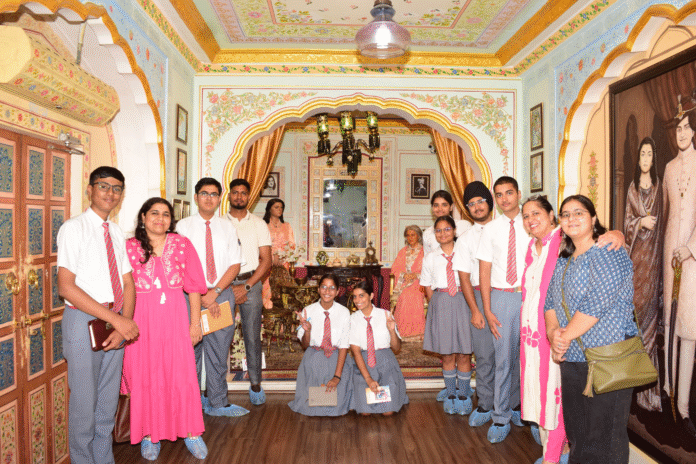
Some school trips are fun. Some are unforgettable. But this one? It was magical. Our visit to the Nahargarh Wax Museum in Jaipur wasn’t just another outing. It was an experience — one that made me laugh, stare in awe, feel goosebumps, and walk away with a heart full of memories. I was lucky to be chosen for this trip — part of the Saksham Sanskar Mass Media team, along with a few other specially selected students from our school. And together, we went on a journey we’ll never forget.

That morning at Army Public School, Jaipur, everything felt special — even the breeze. There was excitement in the air as we boarded the van — some of us chatting nonstop, others already taking selfies, and someone even playing music. The city slowly faded behind us, and ahead was something new… something big. As soon as we saw Nahargarh Fort, I just stared. It felt like a place from a royal storybook — grand, quiet, and full of secrets. Our mentors were waiting, smiling, as we arrived. There was this spark in everyone’s eyes — that feeling when you know something amazing is about to happen.

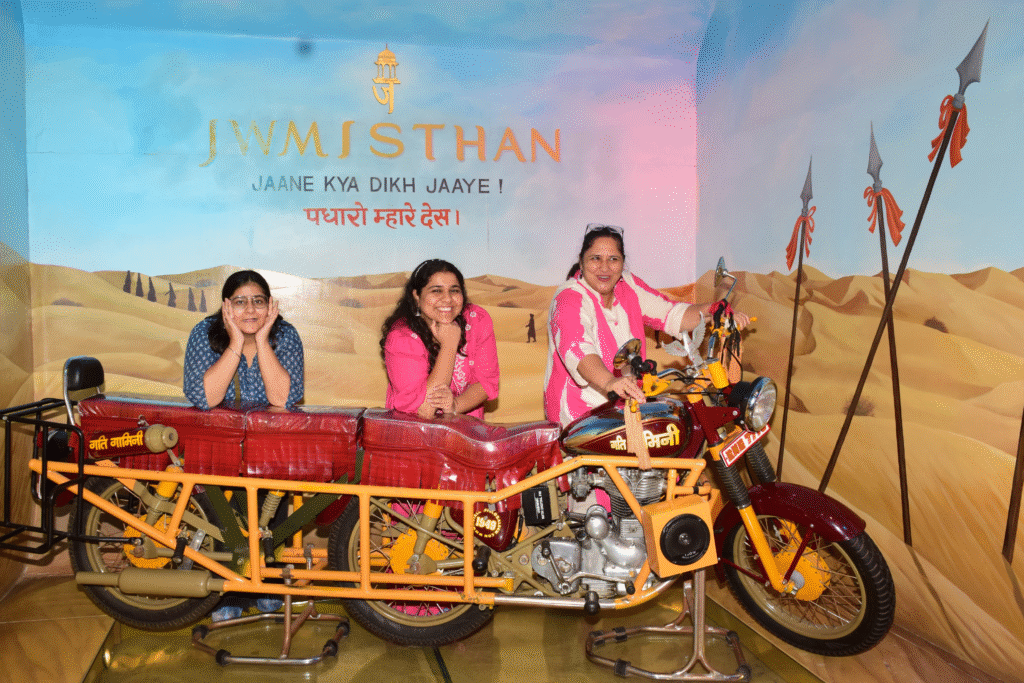
The first thing we saw inside the museum was a five-seater bike called Gati Gamini (1980). It looked old, but strong — like it had carried so many people through time. I couldn’t help but smile. It reminded me of how families stick together — even on a tight seat, there’s always space for love.

Through Time, Stars & Royalty — A Day I'll Never Forget at Nahargarh Wax Museum

Then we walked under a replica of India Gate into a section called Kartavya Path. And that’s where I saw them — Gandhi ji, Nehru ji, Rabindranath Tagore — standing there, as if frozen in time, yet somehow alive. In that moment, I felt proud. I whispered a quiet “thank you” without even realizing it. And in the Freedom Fighters’ Gallery, when I saw Bhagat Singh, Netaji Subhas Chandra Bose, and others… I just stood there. Imagining their courage. I felt small — and inspired.

Through Time, Stars & Royalty — A Day I'll Never Forget at Nahargarh Wax Museum

Then came the Sports Zone, and wow — what a shift! The energy changed the moment we walked in. A giant bat with signatures, a statue of Virat Kohli, and even a tribute to Kalpana Chawla. Seeing her made me think, “If she could touch the stars, why can’t I at least try?” And then came the part we were secretly most excited for — the Bollywood Zone! There was Amitabh Bachchan, looking taller than ever. Then Rajnikanth, Akshay Kumar — all standing like they were about to say their famous dialogues. Even though they were made of wax, they felt real. And yes — we took a lot of photos! Just around the corner, we met Lionel Messi, Queen Elizabeth II, Saina Nehwal, and even Swami Vivekananda — all in one place. Can you imagine?

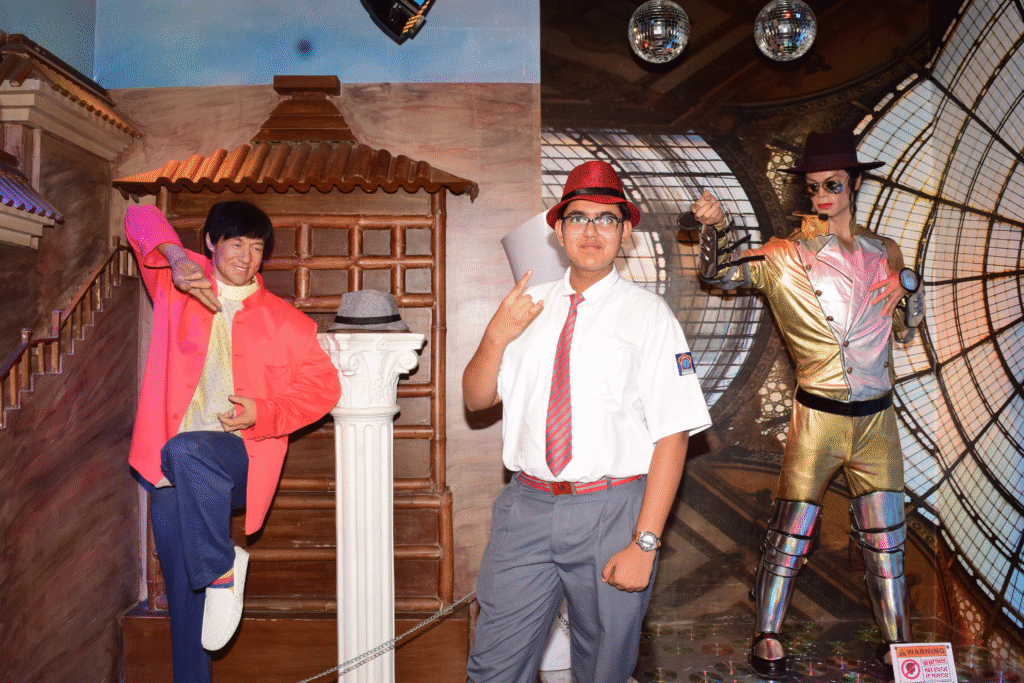
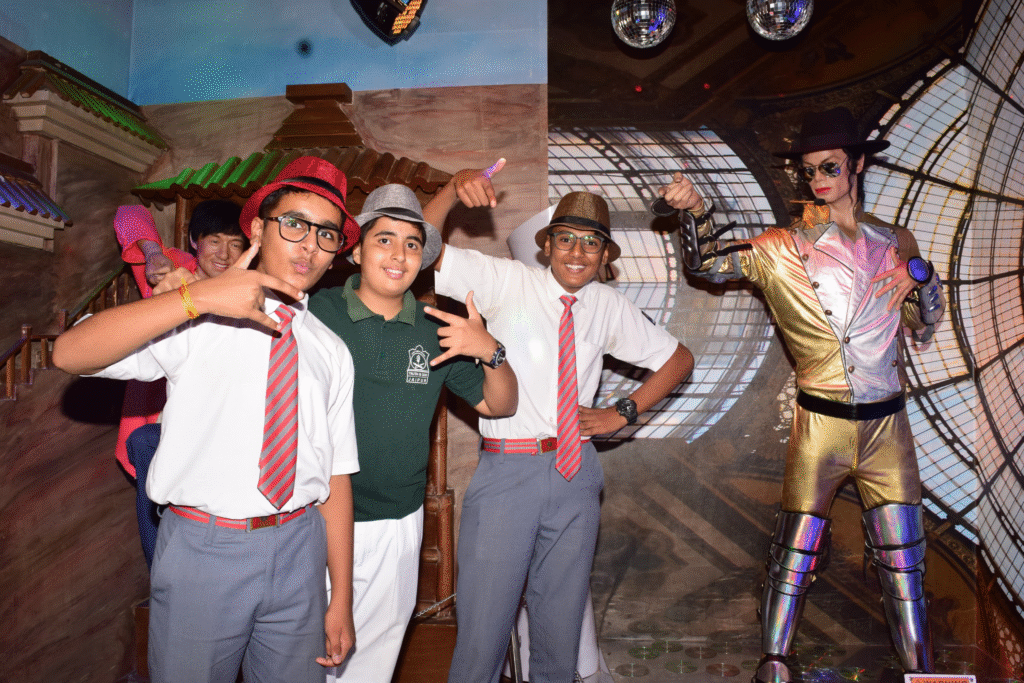
After all the laughter and fun, we entered a calm, softly-lit space. Gentle music played. And there they were — Mother Teresa and the 14th Dalai Lama. I don’t know what happened… but I felt still. Peaceful. Like my heart had paused to breathe. That was one of my favorite moments — quiet, but powerful. And then — boom! — there stood Michael Jackson, mid-dance! We burst out laughing.

Through Time, Stars & Royalty — A Day I'll Never Forget at Nahargarh Wax Museum

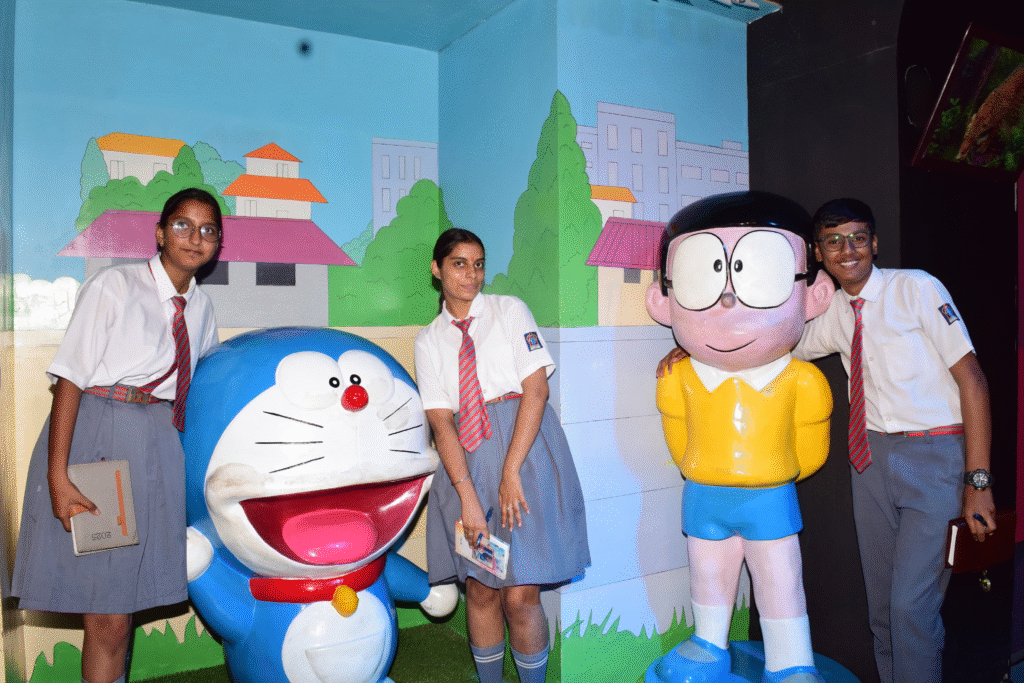
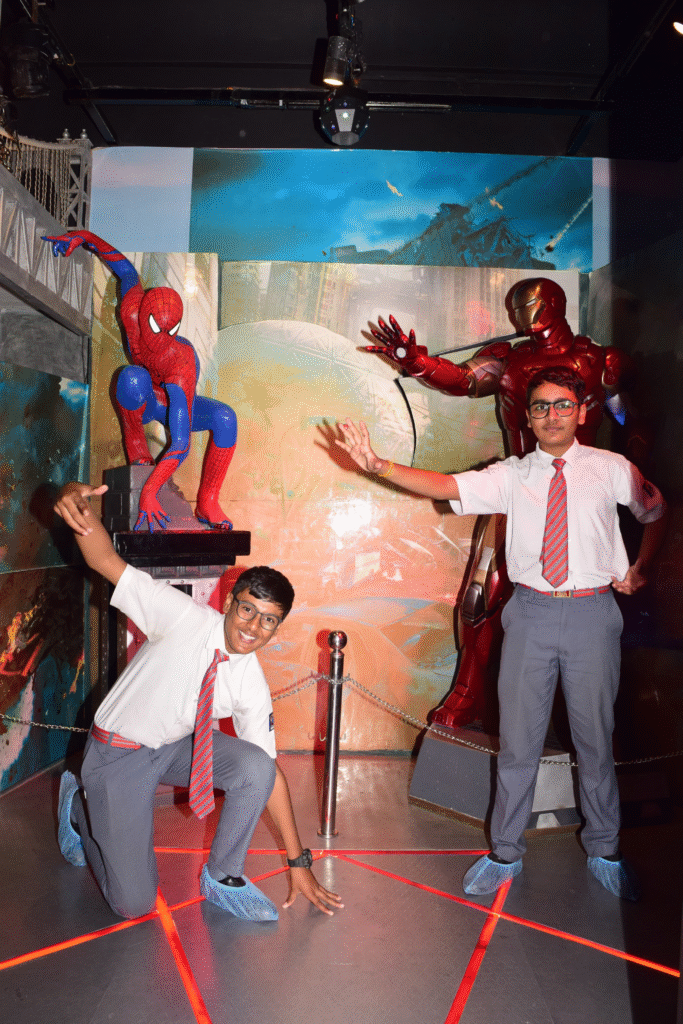
Right next to him, Jackie Chan, looking ready to kick. Then came the Cartoon Zone — and my inner child screamed with joy. Doraemon, Nobita, Spider-Man, Iron Man — even Albert Einstein, looking like he might be wondering how he ended up in a room full of superheroes!

Through Time, Stars & Royalty — A Day I'll Never Forget at Nahargarh Wax Museum

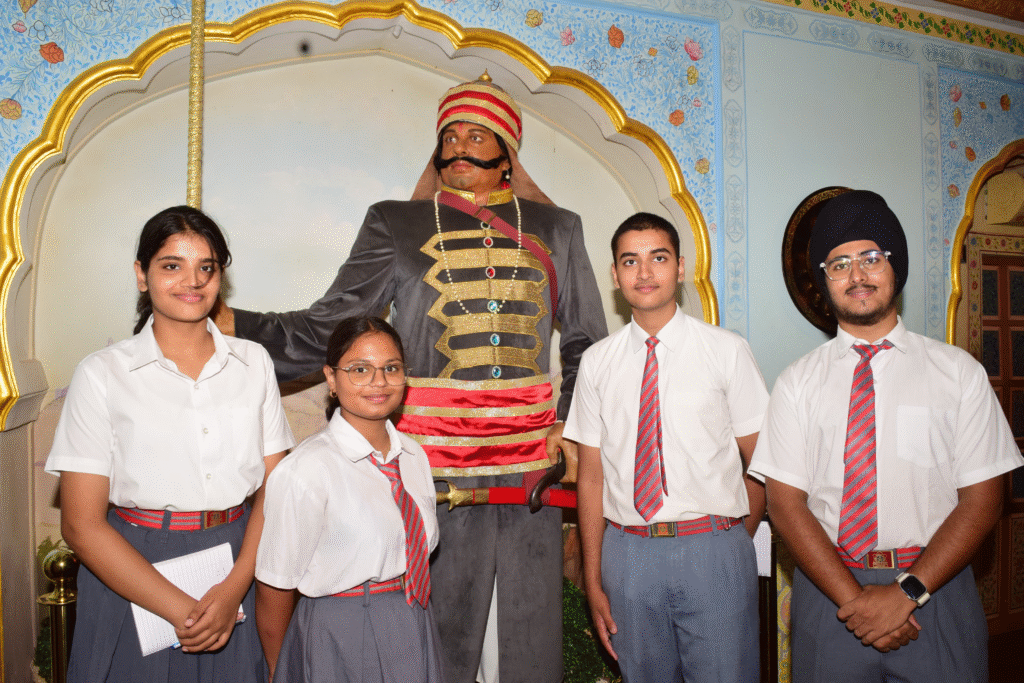
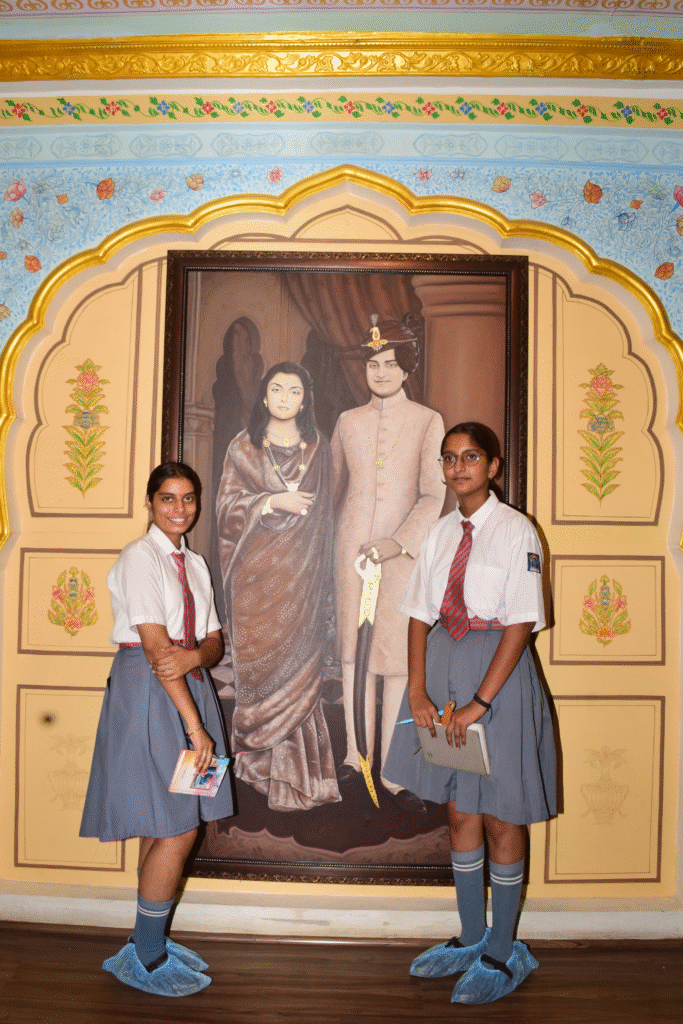
Next, we stepped into a regal hall filled with Rajasthan’s royal past. We saw Maharaja Sawai Jai Singh, and our guide explained how Jaipur was designed using ancient knowledge from texts like the Garud Puran — built with 9 zones and 7 protective gates. Listening to that, I didn’t just feel like a Jaipurite — I felt like I belonged to something timeless. And then… I saw her. Maharani Gayatri Devi. I stopped in my tracks. There was something magical in the way she stood — so elegant, so strong. Her eyes, even though made of wax, felt… real. She didn’t need words. Her presence said everything.

Through Time, Stars & Royalty — A Day I'll Never Forget at Nahargarh Wax Museum

And then — the grand finale: Sheesh Mahal. I had seen pictures before, but nothing compares to standing inside it. The walls and ceiling were covered with over 25 lakh hand-cut mirrors. Everything sparkled. I turned slowly in a circle, taking it all in, feeling like a princess in a story. There were three parts: a royal court in rich colors with a shining throne, a golden room with the Kohinoor diamond replica, and a soft blue-and-white space where I just wanted to sit and stay forever.

We came for a school trip. But we left with something deeper — stories, emotions, pride, and a quiet spark inside us. The Nahargarh Wax Museum didn’t just show us statues. It showed us our heroes. Our history. Ourselves.

Rani Roopmati’s Pavilion: A Love-Laced Legacy Set Against the Timeless Beauty of Mandu…

0
Rani Roopmati’s Pavilion: A Love-Laced Legacy Set Against the Timeless Beauty of Mandu...

In 16th-century Mandu, Sultan Baz Bahadur fell deeply in love with Roopmati, a Hindu singer whose voice could hush the winds. Devoted to the sacred Narmada River, Roopmati requested a place to see it always. Baz Bahadur built the Rani Roopmati Pavilion atop Mandu’s hill, its arches framing the river’s silvery flow. Their romance thrived amidst music and poetry until 1561, when Mughal forces invaded. Baz Bahadur fled, and Roopmati, unwilling to surrender her honor, poisoned herself in the pavilion. Today, this UNESCO site stands as a testament to their tragic love, whispering their story through the monsoon mist.The Beauty of the PavilionPerched on Mandu’s southern edge, the Rani Roopmati Pavilion is a blend of Persian and Indian architecture, its simple elegance amplified by the monsoon. The two-story structure, with open arches and domed roofs, seems to float in the clouds when mist cloaks the Malwa plateau. The Narmada Valley below transforms into a lush, emerald expanse, the river glinting like a sacred thread. During the rains, the pavilion’s stone walls, cooled by the breeze, carry the scent of wet earth, creating a dreamlike ambiance. Its elevated design invites visitors to gaze across the misty landscape, where every arch frames a painting of nature and history. The pavilion’s water reservoir, part of Mandu’s ingenious system, adds practical charm, reflecting the monsoon’s magic. In this season, the site feels alive, as if Roopmati’s songs linger in the air, making it a place where love and loss intertwine with nature’s embrace

what mandu’s local said abot the place

Arjun padiyar, shopkeeper, 35: Mere dada ji batate the ki Roopmati ki awaaz valleys mein goonjti thi, itni pure ki janwar bhi ruk kar sunte the. Pavilion? Woh toh uska sanctuary tha. Wahaan khadi ho, Narmada ko dekhti, apne river aur sultan ke liye gaati thi. Kehte hain Baz Bahadur ne sirf uske liye banaya, taaki woh apni devi ke kareeb feel kare. Aaj bhi, jab monsoon aata hai, uski presence wahaan mehsoos hoti hai. Dhund pavilion ko aise lapet leti hai jaise uska dupatta, hawa mein lehrata hua.

arvind malviya guide, : Yeh sirf patthar nahi—shayari hai. Barish mein wahan khade ho, valley dekho, aur Roopmati ki awaaz sunai degi.” Rani Roopmati Pavilion, monsoon ke dhund mein lipata, bas ek monument nahi—ek pal hai jahan history, romance, aur nature milte hain, ek amar pyar ki kahani ka dilkash nazara dete hue.

India Sets Sail on a New Era of Cruise Tourism, From Ancient Harbors to Global Horizons, A $5.3 Billion Voyage Redefines Tourism, Jobs, and Maritime Legacy…

0


From quiet harbors to global horizons, the Indian cruise sector is transforming into a seaborne saga of ambition, innovation, and cultural grandeur. In 2013–14, a mere 102 cruise ships docked at Indian ports, bringing in 84,000 passengers—a whisper on the global tourism radar. Fast forward to 2024–25, and the tide has turned: 282 ship calls have welcomed 4.92 lakh passengers, signaling a sixfold surge in just over a decade. But this isn’t the crescendo—it’s only the overture.

India’s cruise tourism is charting a visionary course, with ambitious targets by 2029 : 1.5 million river cruise passengers annually,1 million ocean cruise passengers per year By 2047, the centennial year of Indian independence, the government aims to sculpt a globally competitive cruise ecosystem, blending infrastructure, heritage, and sustainability.

Geography as Destiny

India’s natural endowments make it a cruise tourism goldmine:

7,500 km of coastline, touching the Arabian Sea, Bay of Bengal, and Indian Ocean

110 navigable inland waterways, ideal for river cruises

1,300 islands, many steeped in tribal and ecological heritage

  • 200+ ports, from historic Mumbai to serene Kochi

With diverse cruise landscapes—from heritage cities like Varanasi to tropical paradises in Lakshadweep, India’s waters are operable year-round, unlike many seasonal destinations.

Ripple Effects Beyond the Shore

Cruise tourism isn’t just about leisure—it’s a potent force for economic stimulation: Boatbuilders, dock workers, and cruise crew see expanded employment Local guides, artisans, and handicraft vendors connect with global audiences Hospitality, transport, and entertainment services grow exponentiall India is backing this with lasting infrastructure—not surface-level beautification.
Key initiatives include: Modern passenger terminals at major ports, Brand-new marinas for private and leisure vessels, Lighthouse circuits that convert heritage beacons into boutique stays.

Policy Waves & Vision Missions

India’s cruise renaissance is powered by reforms:

  • Simplified visa policies for tourists and crew, Digital customs clearance, ensuring faster turnarounds, Guaranteed berths and single-window systems for cruise lines. Flagship programs such as Cruise Bharat, Maritime India Vision 2030, and Amrit Kaal Vision 2047 aim to align cruise tourism with broader national growth. In a move that puts India on the regional cruise map, the first ASEAN–India Cruise Dialogue in Chennai saw India propose a Cruise Corridor across the Bay of Bengal, stitching together a shared maritime heritage.

River Routes: The Next Frontier

India is investing a staggering $5.3 billion to develop 5,000 km of river cruise circuits—one of the world’s largest inland cruise projects. These rivers not only showcase rural life and spiritual heritage but connect ports, farms, temples, and nature reserves in a seamless cultural experience.

The Voyage Ahead

As India turns its gaze seaward, it’s crafting a narrative where tradition meets tide. From the ghats of Varanasi to the sunlit shores of Goa, every wave carries the promise of transformation. India’s cruise tourism isn’t just about luxury—it’s about legacy, livelihood, and leading a regional renaissance.

From Roots to Roads : Know How Ramachandra’s Tree Translocation Movement Is Replanting India’s Future

0

In a world where development often trumps nature, 38-year-old Ramachandra from Hyderabad has proven that progress doesn’t have to come at the cost of greenery. Over the past decade, he has rescued more than 1.5 lakh trees through the rare and challenging process of tree translocation—a method that moves trees from one place to another without cutting them down.

It all began when Ramachandra saw trees being cut during highway construction. Heartbroken and helpless, he decided to act. Leaving behind a stable job in insurance, he pursued his true calling—saving trees. Despite facing skepticism, financial risks, and even threats, his passion never wavered.

Today, Ramachandra runs Green Morning Horticulture Services Pvt. Ltd., a Hyderabad-based company specializing in tree translocation. From Hyderabad’s Metro corridors to flyovers in Delhi, his team has carefully uprooted and replanted trees, one root at a time.

From Roots to Roads : Know How Ramachandra’s Tree Translocation Movement Is Replanting India’s Future

How Tree Translocation Works:

  • Pruning: 80% of the tree’s branches and leaves are trimmed.
  • Trenching: A trench is dug around the tree, adjusted to its age.
  • Root Treatment: Roots are chemically treated and wrapped in gunny bags to form a secure “root ball.”
  • Uplifting: Cranes lift the tree onto trailers for transportation.
  • Replanting: The tree is placed in a chemical-treated pit at its new location.

This ancient technique has roots dating back to 2000 BC Egypt, and although modern India is only recently embracing it, Ramachandra is among the few turning awareness into action. Governments and corporations are now recognizing the value of this process, thanks to pioneers like him who champion nature while respecting urban growth.

From Roots to Roads : Know How Ramachandra’s Tree Translocation Movement Is Replanting India’s Future

Before founding his company, Ramachandra earned a Master’s in Agriculture and an MBA in Agri Business. But when he landed a bank job, he felt disconnected from his roots—quite literally. “Eight years of agriculture studies, then working in finance… it didn’t feel right,” he reflects. So, he quit the job, choosing passion over comfort.

His work isn’t just technical—it’s deeply emotional. “Trees are cut every day. We need more people to step up. The future depends on it,” he urges. Ramachandra’s story reminds us that one person can make a difference—with heart, grit, and a shovel full of hope.