Home Blog Page 236

Top AI Voice Cloning Tools for Content Creators: Revolutionizing Audio Production

0

With the ever-changing landscape of content creation, perhaps one of the most thrilling advancements of the last few years has been AI voice cloning technology. This revolutionary software enables content developers to create human-sounding voices that can mimic the natural speech patterns of real people. Whether creating podcasts, videos, commercials, or voiceovers, AI voice cloning can save time, improve production quality, and unlock new opportunities for creativity.

This piece brings to the fore the best AI voice cloning software that is transforming the way creators of content create audio, and their features and strengths.

1. Invideo AI – The Best AI Voice Cloning Tool

Invideo AI provides the simplest yet most advanced AI voice cloning devices available. The device is ideal for creators who need to include voiceovers on their videos in a fast and reliable manner. Invideo AI utilizes state-of-the-art artificial intelligence to produce natural-sounding voices that are also very customizable. If you require a gentle voice for a meditation video or a lively voice for an ad, invideo AI can provide it all.

Key Features:

  • Natural voice cloning: Produce professional-sounding voiceovers that are natural and human-sounding.
  • Variety of voices: Select from a range of voices, which include various accents, genders, and tones.
  • Text-to-speech: Input text only, and the AI will produce speech that suits your content.
  • Language support: Supports a range of languages, which makes it perfect for global content creation.
  • Adjustable voice pace and tone: Tailor the speed, pitch, and tone to match the atmosphere of your project or video.

Pro Highlight:

What is unique about invideo AI is that it can conveniently incorporate the AI voice cloning feature into video creation. Whether you are making social media videos or educational content, invideo AI enables you to include realistic voiceovers right within its platform, conserving your time and energy. You can even use invideo AI via the AI video app to create voiceovers and videos on the go.

2. FlexClip – All-in-One AI Voice Cloning and Video Creation Platform

FlexClip stands out as a versatile AI voice cloning tool seamlessly integrated into a full-featured video creation platform. Designed for both beginners and professionals, FlexClip enables users to generate lifelike voiceovers using AI while simultaneously creating or editing videos — all within one browser-based workspace. Whether you’re producing tutorials, promotional videos, or storytelling content, FlexClip’s intuitive design and advanced AI technology make the process effortless and efficient.

Key Features:

  • AI Voice Cloning: Instantly generate realistic voiceovers that sound natural and human-like.
  • Text-to-Speech Integration: Convert scripts into expressive speech directly within your video projects.
  • Language and Accent Options: Choose from multiple languages and accents to suit your audience.
  • Video and Audio Editing Tools: Combine voiceovers with video clips, transitions, and background music seamlessly.
  • AI-Powered Enhancements: Utilize additional AI tools such as noise removal, auto subtitles, and intelligent scene editing.

Pro Highlight:

FlexClip’s unique advantage lies in its ability to merge AI voice cloning with comprehensive video editing in one easy-to-use platform. This allows creators to go beyond generating audio — they can craft polished, professional videos complete with natural voiceovers in minutes, making FlexClip a powerful choice for marketers, educators, and storytellers alike.

3. Descript – Advanced AI Voice Cloning for Podcasters

Descript is an AI transcription and editing platform that also features advanced voice cloning capabilities. Users can use it to create voiceovers from their voice or synthesize a voice based on a sample recording. Descript’s AI voice cloning feature is especially in demand among podcasters and content creators who require fast editing of their content without sacrificing audio quality.

Key Features:

  • Overdub: Dub your voice or record a pre-recorded sample to generate AI-synthesized speech.
  • Transcription and editing: Transcribe your recordings easily and edit directly in the text.
  • Multi-language support: Voice cloning supports various languages.
  • Seamless video integration: Merge voiceovers with video editing functionality to produce a refined final output.

Pro Highlight:

Descript’s Overdub tool is particularly handy for podcasters who need to correct errors without re-recording whole passages. The software can produce speech that is indistinguishable from the creator, saving time and streamlining content editing.

4. Murf AI – Best for Professional Voiceovers

Murf AI is a professional-grade AI voice cloning tool that offers a wide range of voices and customization options for content creators. Whether you’re making explainer videos, podcasts, or audiobooks, Murf AI provides highly realistic voice cloning that can be used in any audio or video project. The platform is also equipped with text-to-speech conversion and a variety of speech styles.

Key Features:

  • Voice choice: Select from a vast variety of voice choices, both professional and neutral tones.
  • Pitch and speed customization: Customize the pitch and speed of the voice to suit your desired tone and style.
  • Multi-language support: Accommodates many languages and dialects for global projects.
  • High-end editing features: Edit the timing and pace of your voiceovers quickly.

Pro Highlight:

Murf AI is a professional-grade voice cloning solution that provides high-quality voiceovers for companies, marketers, and creators who require realistic and high-quality voiceovers. It is specifically ideal for high-stakes projects where voice quality and natural-sounding delivery are paramount.

5. Resemble AI – High-Level Customization for Voice Creation

Resemble AI is a cutting-edge AI voice cloning platform present in the industry today. It comes with rich customization capabilities, with which users can develop distinctive, synthetic voices that can be customized for individual projects. Whether you are a content creator, marketer, or developer, Resemble AI features help you develop realistic voices that best fit your requirements.

Key Features:

  • Custom voice creation: Create a fully customized voice model by training it with your own voice recordings.
  • Speech synthesis: Synthesize text to speech with different tonalities and accents.
  • Voice AI API: Embed AI-generated voices in your apps for more engaging content.
  • Emotion control: Infuse emotional tone in your AI-generated voices for more vibrant delivery.

Pro Highlight:

Similar to AI’s feature-rich customization capabilities, such as controlling emotions and one-of-a-kind voice generation, this tool sets itself apart as a creator’s go-to for those who need total control of the voice utilized in their applications. From podcasting, gaming, and video creation, this tool provides you with unparalleled versatility.

6. iSpeech – Fast and Simple AI Voice Cloning for Casual Purposes

iSpeech is a text-to-speech service that uses artificial intelligence and voice cloning features for creators with more basic requirements. Though iSpeech is not as complex as some other tools, it is ideal for those looking for a simple, affordable solution to include voiceovers in their content.

Main Features:

  • Simple text-to-speech capabilities: Turn written content into speech with various voices.
  • Numerous languages: Offers many languages, which is great for international content.
  • Customizable speed and volume: Fine-tune how the speech sounds.
  • Easy integration: Can be integrated into websites and mobile apps for added functionality.

Pro Highlight:

For creators who need quick and simple voiceovers for basic projects, iSpeech provides a reliable and easy-to-use option. It’s especially suited for projects that don’t require the advanced features found in other tools.

7. Lovo – AI Voice Cloning for Creators and Marketers

Lovo is a voice cloning AI software used to assist content creators, marketers, and businesses in generating high-quality voiceovers within minutes. The software is popular for its extensive collection of voices and its capacity to generate sounding natural AI voices within a broad spectrum of styles.

Key Features:

  • Extensive variety of voices: Select from a whole array of voice styles and accents.
  • AI-driven emotion: The AI is able to create voiceovers with emotional depth, and the speech will sound more real.
  • Multilingual support: Lovo handles multiple languages and dialects for international projects.
  • Audio effects: Add audio effects, music, and soundscapes to make your voiceover better.

Pro Highlight:

Lovo’s voice cloning feature, combined with its emotional delivery through speech, makes it ideal for projects requiring a personal touch, whether an ad, video, or narration.

8. Speechify – AI Cloning with High-Quality Voice Options

Speechify is a voice cloning and text-to-speech platform renowned for providing high-quality voices. Although primarily intended for accessibility, it has found a wide market among content creators who require clear, natural-sounding voiceovers. Speechify’s AI voices are extremely realistic and ideal for audiobooks, presentations, and videos.

Key Features:

  • Realistic voices: Human and natural-sounding AI-generated voices.
  • Multiple accents and languages: Available in multiple languages and regional accents.
  • Adjustable speed and pitch: Customize the voice settings to suit the tone and tempo of your content.
  • Mobile and desktop apps: Available on both mobile and desktop platforms for ease of use.

Pro Highlight:

Speechify is ideal for content creators looking for a fast, high-quality solution for voiceover creation, with superior features and multiple voices.

Conclusion

AI voice cloning technology has become an indispensable tool for content creators, offering a fast and efficient way to generate lifelike voiceovers without the need for recording or hiring voice actors. From invideo AI’s integration of voice cloning into video production to Lovo’s emotionally-driven voices, these tools offer unique features tailored to a wide range of needs. Whether you’re a video creator, marketer, or podcaster, AI voice cloning can allow you to create top-quality audio content in a matter of a few minutes.

Check out these tools and discover the best one for your project, and sit back as they take your content to a whole new level.

Koneru Humpy: She Shatters Ceilings, Charts India’s Boldest Path Yet in Women’s Chess

0

In the realm of 64 squares, where strategy meets soul, Koneru Humpy’s name shines like a crown jewel. Her recent feat—becoming the first Indian woman to reach the semifinals of the FIDE Women’s Chess World Cup in Batumi, Georgia—is not just another win. It’s a landmark moment etched in the chronicles of Indian chess.

The Seeds of Genius

Born in Vijayawada, Andhra Pradesh, in 1987, Humpy was introduced to chess by her father, Koneru Ashok, himself a chess player and her earliest mentor. From the tender age of five, Humpy’s talent began to unfold—she wasn’t just playing chess; she was absorbing it, living it. She began winning state-level championships before the age of 10. By 15, she became the youngest woman ever to achieve the Grandmaster title at the time (breaking Judit Polgar’s record). Her childhood was marked by hours of study, traveling to tournaments across the globe, and balancing academics with rigorous training.

Her journey wasn’t all smooth squares. Financial challenges, lack of sponsorship in a cricket-obsessed country, and limited access to top-tier chess training made her path harder. Yet she stayed the course, with her father sacrificing career ambitions to be her full-time coach and pillar of support.

Facing Setbacks and Coming Back Stronger

Like every great champion, Humpy faced setbacks:

  • Career Break for Motherhood: In 2016, she stepped back from competitive chess to focus on her family and daughter, which many thought might signal the end of her prime.
  • Comeback Queen: In 2019, she returned and stunned the world by winning the Women’s World Rapid Chess Championship—her style sharper, calmer, and more dangerous than ever.

Her quiet resilience and focused demeanor became her trademark. Humpy doesn’t court fame—she courts brilliance. And in the silent, charged atmosphere of high-stakes games, that’s what makes her a force to be reckoned with.

A New Chapter in History

Fast forward to 2025: Humpy outplayed China’s IM Song Yuxin in the first game of their quarterfinal series at the Women’s World Cup. With nerves of steel, she strategically played for a draw in the second, securing her historic spot in the semifinals. A feat no other Indian woman has achieved before. Not just for herself, but for every aspiring young Indian girl who dares to dream beyond traditional roles—Humpy’s victory is a shout to the universe: “We belong here.”

The Legacy She’s Shaping

Humpy isn’t just building her legacy through wins; she’s redefining what it means to be a woman, mother, and champion—all at once. She’s mentoring young players. Championing chess education and outreach in India. Inspiring a new generation that includes names like Divya Deshmukh and Vaishali Rameshbabu.

NISAR Set for July Liftoff: India & US Launch Groundbreaking Earth-Mapping Mission

0

A Milestone in Space Collaboration

India’s ISRO and the United States’ NASA are gearing up for the launch of a major joint space venture—NISAR, short for NASA-ISRO Synthetic Aperture Radar. Slated to lift off on July 30 from the Satish Dhawan Space Centre in Sriharikota, this mission marks a new chapter in space-based Earth observation and international scientific partnership.

NISAR Set for July Liftoff: India & US Launch Groundbreaking Earth-Mapping Mission

What Is NISAR and Why It Matters

NISAR is designed to be one of the most advanced Earth-mapping missions ever created. Equipped with state-of-the-art radar imaging technology, it will scan and monitor changes in Earth’s surface with unprecedented precision, from melting glaciers and rising sea levels to forest changes and urban expansion.

Helping in Times of Crisis

Perhaps one of the most impactful elements of the NISAR mission is its commitment to public service. The data it gathers will be freely available to researchers and emergency managers, and it’s engineered to deliver near-real-time information during disasters such as floods, earthquakes, and landslides. This could greatly improve decision-making and emergency responses, potentially saving lives and reducing damage.

Science Beyond Borders

The NISAR project is more than cutting-edge tech—it’s a powerful symbol of global cooperation. By pooling knowledge and resources, ISRO and NASA are reinforcing the idea that science is a shared endeavor, transcending borders to benefit all of humanity. As the world faces increasing environmental challenges, such partnerships are more crucial than ever.

India Gears Up for First-Ever Chess World Cup, Awaiting Grand Reveal of Host City

0

In a thrilling announcement for fans of the sixty-four-square battlefield, the International Chess Federation (FIDE) has declared that India will play host to the prestigious 2025 Chess World Cup, scheduled to take place from October 30 to November 27. While the final battleground—India’s host city—remains under wraps for now, anticipation is already mounting as the nation prepares to welcome the world’s finest grandmasters. India, home to a rapidly growing chess culture and icons like Viswanathan Anand, R Praggnanandhaa, and Koneru Humpy, has long been a powerhouse in global chess circles. Hosting this major event marks another proud milestone in the country’s sporting journey.

The Chess World Cup not only offers intense, high-stakes matches but also serves as a crucial qualifying event for the Candidates Tournament, which ultimately determines the challenger for the World Chess Championship. Fans can expect high drama, brilliant strategy, and heart-pounding finishes as talent from around the globe competes for glory. With the host city yet to be announced, speculation is swirling—will it be the metropolitan buzz of Mumbai or the royal charm of Chennai? One thing is certain: the spirit of chess in India is alive and thriving, and this upcoming championship promises to be a game-changer on multiple fronts.

Chandrashekhar Azad: Know About Rare Facts Related to Him in Pics…

0

Born as Chandra Shekhar Tiwari on July 23, 1906, in the small village of Bhavra in Madhya Pradesh, Chandra Shekhar Azad emerged as a symbol of revolutionary zeal from an early age. His passion for India’s independence was kindled during his youth, and by the age of 15, he had joined Mahatma Gandhi’s Non-Cooperation Movement. Though the movement was non-violent in nature, Azad’s involvement marked the beginning of his commitment to the freedom struggle — a path that would soon take a more radical turn.

On 27 February 1931 in Allahabad’s Alfred Park, #ChandraShekharAzad attained martyrdom for India. He fought to the last with this gun.

Chandrashekhar Azad: Know About Rare Facts Related to Him in Pics...

GUN HE USED FOR LAST TIME

Chandrashekhar Azad: Know About Rare Facts Related to Him in Pics...
Chandrashekhar Azad’s mother who literally toiled in jungled to be on her own after his death
Chandrashekhar Azad: Know About Rare Facts Related to Him in Pics...
Azad’ rare pic clicked in jhansi in 1930

Chandrashekhar Azad: Know About Rare Facts Related to Him in Pics...


Born in a Brahmin family on July 23, 1906, to Pandit Sitaram Tiwari and Jagrani Devi, he spent his early childhood in the Bhabra village of Madhya Pradesh.

Chandrashekhar Azad: Know About Rare Facts Related to Him in Pics...

CHANDRASHEKHAR AZAD’S INSPIRATIONAL QUOTES

  • “A plane is always safe on the ground, but it is not made for that. Always take some meaningful risks in life to achieve great heights.”
  • “I believe in a religion that propagates freedom, equality, and brotherhood.”
  • “Don’t see others doing better than you, beat your own records every day because success is a fight between you and yourself.”

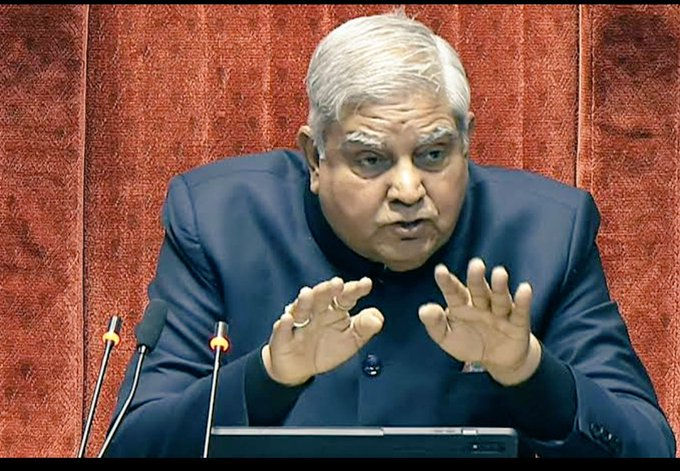
Jagdeep Dhankhar is Third VP to Not Complete His Full Form. Know Other Two Names

0

Dhankar Becomes Third Vice President in India’s History to Not Complete Full Term

In a surprising development, Vice President of India, Jagdeep Dhankhar, has resigned from his post with immediate effect, citing health reasons. His resignation comes under Article 67(a) of the Constitution, which allows the Vice President to step down by submitting a resignation to the President.

In his resignation letter, Dhankhar mentioned that he is stepping down based on medical advice due to deteriorating health. He also expressed gratitude to President Droupadi Murmu for her cooperation and the cordial working relationship they shared during his tenure.

With this, Jagdeep Dhankhar has become the third Vice President in Indian history who could not complete his full term. Before him, Krishna Kant, who assumed office in 1997, passed away in 2002 before completing his tenure. Varahagiri Venkata Giri had also resigned in 1969 to contest for the President’s post.

The resignation of Dhankhar marks a significant moment in Indian politics, raising questions about the timing and potential successors, even as the nation wishes him a speedy recovery.

The Influence of Social Media on Consumerist Culture: Are We Victims of Capitalism or TikTok Trends?

0

-By Prachita Kanjolia

Consumerism is a socio-cultural and economic phenomenon that primarily characterises industrialised
societies. It is defined by the continual acquisition of goods and services in ever-increasing quantities.

In modern consumer societies, the processes of purchasing and consuming products have transcended the
mere fulfilment of basic human needs, evolving into activities that are not only economic but also
cultural, social, and integral to personal identity formation. Despite its prevalence, consumerism has faced
criticism from advocates of alternative approaches to economic participation, such as simple living or
slow living, as well as from environmentalists concerned about its ecological impacts.


In recent years, particularly between 2020 and 2025, social media usage has proliferated, with user
engagement becoming a normative behaviour among various demographics. This surge in social media
interaction has significantly contributed to the popularisation of consumerist culture. The accessibility of
online browsing platforms and personalised advertisements perpetuates the notion of an insatiable need
for goods, influencing consumer behaviour in profound ways.


The Role of Social Media Platforms: How are you getting targeted?
The rise of platforms such as Instagram and TikTok has been instrumental in shaping contemporary
consumerist tendencies. These applications utilise sophisticated algorithms to deliver personalised
advertisements, thereby providing users with direct access to product information.

This immediacy facilitates interaction with brands and other consumers, allowing for a seamless purchasing experience that often occurs without the necessity of navigating away from the app. The mere click of a button, aided by the option to save payment information, has made transactions easier and a bit too convenient, significantly reducing the friction traditionally associated with shopping.


Moreover, social media platforms engage in extensive data collection practices, which serve to enhance the efficacy of targeted advertising. By analysing user behaviour and preferences, these platforms can tailor advertisements to align with individual interests, thereby increasing the likelihood of purchase. This strategic use of data not only reinforces consumerist behaviour but also perpetuates a cycle of
consumption that is increasingly difficult for individuals to resist.


In 2024, leading technology firms, including Google, Meta, and ByteDance, captured 54% of the global advertising market, largely due to creator-generated content that rivals traditional media. These platforms utilise hyper-personalised advertising strategies, leveraging extensive behavioural data analytics. TikTok’s Dynamic Showcase Ads, for example, customise product recommendations in real-time based on user interactions, thus converting passive consumption into active purchasing behaviour.


The Influence of Social Media Influencers
Social media influencers have emerged as pivotal figures in the promotion of consumerist culture. With the ability to reach vast audiences, influencers are often compensated by companies to endorse products through various means, including sponsored posts, reviews, and unboxing videos. Although such content is required to be labelled as advertising, the perceived authenticity of influencers can blur the lines
between genuine recommendations and commercial promotion. Recent studies found that 49% to 74% of consumers have bought a product because an influencer recommended it, which showcases how much of an impact an influencer has on the audience.


This dynamic fosters a culture of impulse buying, particularly among followers who may feel compelled to purchase products that are showcased, especially when promotional offers such as discounts are presented. Influencers create an aspirational narrative around products, engendering a sense of exclusivity and desirability that can lead to increased consumer spending. Consequently, this phenomenon
contributes significantly to the normalisation of materialism within society.


Psychological Implications
The psychological mechanisms employed by social media platforms further exacerbate consumerist
tendencies. The phenomenon of Fear Of Missing Out (FOMO) is prevalent among users, as curated
content often presents an idealised version of life that suggests certain products or experiences are
essential for happiness and social acceptance.

This FOMO can catalyse impulsive purchasing decisions, compelling individuals to acquire items that may not align with their personal needs or financial realities. Additionally, the addictive nature of social media platforms is worth noting. By employing algorithms designed to maximise user engagement, platforms trigger dopamine releases in the brain, creating a reward-like sensation when users interact with content. This cycle of engagement not only increases exposure to consumerist messages but also fosters a dependency that can lead to further consumption.

The Fast Fashion Phenomenon
Fast fashion exemplifies the detrimental impact of social media on consumer behaviour, thriving on the
desire for novelty and immediacy. The aggressive marketing strategies employed by fast fashion brands,
coupled with their low pricing structures, facilitate the rapid acquisition and disposal of clothing items,
often with little regard for sustainability or ethical considerations. Social media serves as a breeding
ground for fast fashion trends, with microtrends being disseminated and consumed at an unprecedented
rate, thereby perpetuating a culture of disposability and excess.


Engagement: Does Gender & Age play a role?
Social media significantly impacts consumer behaviour, especially among Generation Z and Millennials,
influencing their purchasing decisions through trends and influencer marketing. Women are more likely
than men to discover products via social media, though both genders increasingly use these channels for
shopping. This highlights the complex relationship between demographics and consumer behaviour in
social media.


Statistics claim that 50% of users have bought something after TikTok LIVE, 57% seek out purchase info
on products seen in TikTok videos, 49% have bought goods/services after seeing them discussed on
TikTok, 81% of users research products via Instagram out of which 50% purchase after seeing, while
79% say UGC strongly influences their buying decisions as brands using UGC see 28% more
engagement.


Between 2020 and 2025, consumer behaviour across social platforms has revealed not just what people
buy, but how and why they buy it. TikTok leads the way with impulsive, content-driven purchases,
especially among 18–34-year-olds, where 49% admit to buying something after seeing it on their feed,
perhaps a trend largely driven by quick, emotionally deep content. Instagram, also popular among Gen Z
and millennials, sees 44% of users shopping weekly, with over 130 million engaging with its shopping
features monthly.

Facebook, still dominant among users aged 35–65+, leans into trust-based buying
through peer recommendations and discovery rather than impulse. Pinterest stands out for its high
purchase intent, particularly among women (76%), driven by visually curated, aspiration-led shopping.
Meanwhile, Snapchat targets the 18–29 demographic with AR tools shaping beauty and fashion trends.
Across platforms, the act of shopping has become embedded into the scroll, not a separate decision, but
an emotional, aesthetic, and algorithmically influenced response.

The Business Side
TikTok Shop has transformed digital retail, achieving a Gross Merchandise Volume (GMV) of US$33.2
billion in 2024, surpassing its US$20 billion target, with over US$9 billion generated from the U.S. alone. The
platform’s live shopping feature effectively converts 50% of viewers into buyers, with live commerce revenue
reaching nearly US$919 million in 2023 and projected to triple by 2031.


The influencer affiliate marketing sector is thriving, with platforms like TikTok rewarding creators with direct
sales commissions. For instance, SHEIN generated US$964 million through TikTok Shop in 2024. The return
on investment for advertisers is a $2.60 ad spend yielding $88.94 in revenue, representing a 34-fold return.
More than 100,000 creators have monetised through TikTok Shop’s affiliate program, with top affiliates
earning over $10,000 monthly, peaking at $15,000 weekly during holidays.


TikTok has established a vibrant virtual economy, where users purchase “coins” that convert into virtual gifts
for creators during live streams, generating over US$6 billion in in-app purchases in 2024.
TikTok’s revenue structure comprises diverse streams: advertisements account for 60–70% of revenue, ecommerce via TikTok Shop contributes 15–20%, and virtual gifts/coins make up 10–15%. This diversified
model allows TikTok to monetise both content virality and user transactions effectively.

Why It Works: User Behaviour & Platform Design
TikTok’s success is rooted in its understanding of user behaviour and platform design. Approximately
74% of users discover products via TikTok, while 67% make purchases based on creator
recommendations. The platform’s seamless scroll-to-shop functionality facilitates impulse buying. Social
commerce is projected to reach US$2.9 trillion by 2026, with live commerce expected to drive 20% of
this figure. Micro- and nano-influencers, achieving around 10% engagement rates, outperform celebrity
endorsements in driving conversions. Instagram’s ad revenues stood at $28.1 billion in 2020, followed by
a further increase to approximately $59.6 billion in 2024, which represented a 17.9% growth compared to 2023

Instagram’s US ad revenue is projected to reach $37.13 billion, a 15.9% increase year-over-year.
This overall growth of approximately 2.5 times in five years can largely be attributed to the introduction
of shopping features, such as Reels and affiliate tools, highlighting the importance of enhanced shopping
functionalities in attracting advertisers. Users prefer user-generated content (UGC) over traditional ads,
with 78% of Millennials and 70% of Generation Z relying on peer content before purchasing. UGC is
estimated to be 85% more effective than polished brand campaigns in driving sales, highlighting the
evolving consumer engagement dynamics.


Disguised as humour, influencers have adopted a unique method of product promotion by frequently
expressing how they are “obsessed with it”, “can’t get enough of it”, and how they might buy 20 more of
them. Modern consumer culture, where every day is Black Friday and the only thing more inflated than
our shopping carts is our credit card debt.


Promotion of products has now been rebranded under the catchy term “haul”, a shopping term used to
show off a product in mass quantity online. TikTok’s latest sensation is the rise of the “consumerism final
boss” phenomenon, implying a destination of peak consumerism. This trend is akin to a cult initiation
where influencers flaunt their extravagant purchases, in a spirited competition to overshadow the previous
viral shopping hauls, PR packages, and unboxing escapades, which fuels the idea that financial well-being
is a side quest compared to the main mission of owning the latest trending products.


Users joke, but often truthfully, about their emotional attachment to purchases inspired by a single video:
“Not me buying a fifth lip gloss I don’t need because a girl in a robe said it gives ‘main character vibes’.”
The phrase “TikTok made me buy it” isn’t just a meme; it’s a digital-age admission of how desire is no
longer self-generated but algorithmically installed. Purchases are framed as self-care rituals or identity
statements, with posts like “I love romanticising my strawberry matcha, it’s so Pinterest IT girl core.”
Emotional spending is now dressed in aesthetics, with users admitting, “I buy things to feel something.
Capitalism wins again.” Even the irony is marketable: “Hot girls have impulse control issues and a saved
card on file.” There’s a collective awareness and exhaustion about the endless cycle of buying to belong,
seen in laments like “We’re all just trying to fix our lives one overpriced candle at a time”, what the
young audience calls retail therapy. In this landscape, the line between content and commerce blurs
entirely as shopping is no longer private; it’s a shared, performative habit reinforced by your feed.


Conclusion
In a world where trends evolve faster than we can scroll, distinguishing between wants and needs
becomes challenging, especially when products are presented as ‘must-haves’ on our feeds.
In our pursuit of self-expression, we often overlook the consequences of overconsumption. Instead of
curating our lives to reflect our identity, we risk subtly selling them out for the sake of aesthetics.
The feed never stops, and our For You Page is essentially for sale.
Therefore, the next time you click ‘Add to Cart’, pause to question yourself whether you require the
product or are merely being seduced by the algorithm.

‘Why The BRICS Bloc wants to De-Americanize the World’

0

Is the era of America’s centuries-old hegemony finally coming to an end? The United States — which has long dominated the world in nearly every aspect, whether military, technology, or culture — now appears to be gradually losing its grip, particularly with the rise of BRICS nations. BRICS has emerged as a significant platform that advocates for the Global South and challenges the dominance of the Western-led world order.

Following the recent BRICS summit, a concept that has gained notable attention is “De-Americanization” — the idea of reducing global dependency on the United States across major domains. This article explores why BRICS seeks to ‘De-Americanize’ the global system, how this shift holds the potential to redefine global power structures, challenge long-standing Western dominance, and offer a more multipolar vision for the future of international relations.

BRICS Bloc with 11 Member states (Brazil, Russia, India, China, South Africa, Iran, Indonesia, Others) now represent roughly 50% of the Global Population and 40% of Global GDP surpassing the G7. The main aim of these countries is to promote South-South cooperation, currency/resource independence, economic sovereignty and institutional reforms, which will create a more equitable world order that will reduce the economic and political dominance created by the US. This is the main reasons BRICS Nations considers De-Americanization as a Global Priority.

De-Americanization clearly means reducing America’s political, economic and cultural influence on the world, ending Western dominance and establishing a multipolar world order.

The BRICS bloc is now moving forward with this ideology and challenging the dominance of America through its expansion (BRICS+), policy of de-dollarization and Technological independence as collective voice of Global South. Although the BRICS Nations do not directly claim that they are promoting anti-American sentiment, they rather say that now the world does not need the domination of any single country. During the 2025 BRICS Summit in Rio, Brazilian President Luiz Inácio Lula da Silva criticized U.S. dominance, stating, “We don’t want an emperor,” in reference to Donald

Trump’s tariff threats, according to a report by The Times of India (2025).

The West’s response to BRICS’ growing momentum toward De-Americanization has been a complex mix of denial, strategic counterbalancing, and quiet concern. While BRICS openly promotes a multipolar world based on equality and sovereignty, Western powers; particularly the United States and its allies—view this agenda as a direct challenge to their post-World War II leadership model.According to Reuters ,NATO Secretary General Mark Rutte warned that countries such as Brazil, China and India could be “hit very hard by secondary sanctions” if they continued to expand economics ties with Russia under the BRICS Framework. Reuters. (2025, July 15). NATO says Brazil, China, India could be hit hard by sanctions. U.S President Donald Trump openly criticized the 2025 BRICS Summit, accusing its “Anti-American policies”.

As per reports of Times of India ,Trump warned the countries aligning with BRICS’ De-Americanization agenda would face “An additional 10% tariff with no exceptions.” Times of India. (2025, July 18).

‘Little group fading fast’: Donald Trump mocks BRICS; reiterates 10% tariff threat to protect US dollar dominance.

BRICS undoubtedly poses a significant challenge to American dominance. Given its steady expansion and growing influence, it appears poised to reshape the global balance of power.

In the years to come, we may witness not just the decline of unipolarity, but the emergence of a new, multipolar world order—one that reflects a broader spectrum of voices, values, and visions for the future.

'Why The BRICS Bloc wants to De-Americanize the World'

(The writer is Isha Singh Chouhan, pursuing M.A Political Science, student Kanoria P.G Mahila Mahavidyalaya)

Where Tradition Meets Transformation: Gaushalas Leading India Forward, From Cow Dung to Dignity..

0


By Journalist Govind Patidar | Dainik Bhaskar Group

From Cow Protection to Rural Innovation

In the heart of Madhya Pradesh, three gaushalas have become powerful symbols of self-reliant India. These aren’t just shelters for cows—they’re hubs of innovation, employment, and ecological preservation.

Hi-tech Veterinary Care with ICU Facilities

The Hands Bagh Gaushala in Mandsaur district offers ICU-level treatment for sick cows using advanced medical systems. It has become a sanctuary for the region’s injured and abandoned cattle.

Where Tradition Meets Transformation: Gaushalas Leading India Forward, From Cow Dung to Dignity..

Cow Dung Turned into Wealth

More than 50 eco-friendly products are being crafted using cow dung—ranging from decorative photo frames and idols to organic fertilizers worth lakhs of rupees. These products are boosting local economies and inspiring women toward self-employment.

Free Milk and Vocational Training

Over 1000 villagers have received free training in organic product manufacturing, while hundreds of children and underprivileged women are provided with free milk every year—fostering both health and skill development.

Where Tradition Meets Transformation: Gaushalas Leading India Forward, From Cow Dung to Dignity..

Inspiring 15 States Across India

The efforts of these gaushalas have drawn attention from across the country. Their blend of service, innovation, and effective management is turning them into models of sustainability and empowerment.

Not Just Tradition—Transformation

Gaushalas in Madhya Pradesh are not only preserving sacred traditions but actively shaping an Atmanirbhar Bharat through purpose-driven action and community upliftment.

How Modern Hospital Security Systems Are Enhancing Patient and Staff Safety

0

Image source

The healthcare industry is built on trust, privacy, and care. However, the safety of both patients and staff has become an increasingly complex challenge for hospitals and healthcare providers. From emergency rooms to administrative offices, modern hospitals are dynamic environments that require advanced security strategies to ensure safety without compromising care quality.

In recent years, hospital security systems have evolved beyond simple CCTV networks. Today’s solutions are built on intelligent surveillance technology, seamless integrations, and proactive alerting systems that help facilities respond faster and operate more securely. This article explores how modern hospital security systems are improving safety across healthcare campuses and what key features are making the biggest difference.

1. Real-Time Surveillance with IP-Integrated Cameras

One of the most significant upgrades in hospital security systems comes from the use of IP-integrated cameras. Unlike traditional analog setups, IP cameras offer high-definition footage, remote access, and centralized management through secure networks. Platforms like Coram are built to support this infrastructure by connecting with all IP camera brands and providing a unified dashboard for managing multiple feeds across a healthcare facility.

Learn how modern hospital security systems use intelligent surveillance, real-time alerts, and IP camera integration to improve safety for patients and staff.

With IP integration, hospitals can:

  • Monitor entrances, corridors, and restricted areas in real time
  • Access live feeds from any device with proper credentials
  • Easily scale camera coverage without major infrastructure changes

This level of visibility allows security teams and administrators to spot issues as they arise and take immediate action, whether it involves managing unauthorized entry or resolving a conflict between visitors and staff.

2. Intelligent Alerts for Faster Response

Modern hospital security systems are not just about recording—they are designed to detect and notify. Intelligent alerting features now enable real-time responses to incidents such as:

  • Unauthorized access attempts
  • Loitering in sensitive areas
  • Aggressive behavior or altercations
  • Door propping or forced entries

These alerts are sent instantly to security teams through mobile apps or control centers, allowing for fast intervention. This reduces the risk of escalation and provides peace of mind to healthcare professionals working in high-pressure environments.

3. Protecting Patients in High-Risk Areas

Certain hospital zones, such as psychiatric wards, emergency departments, and pediatric units require an extra layer of security. Advanced camera systems in these areas can:

  • Monitor patient movements and detect unusual behavior
  • Ensure staff are present and responsive during care
  • Record all activity for compliance and incident review

By keeping a close watch on these high-risk zones, hospitals can not only prevent harm but also support better patient outcomes through improved oversight.

4. Staff Safety and Workplace Violence Prevention

According to the Occupational Safety and Health Administration (OSHA), healthcare workers are five times more likely to suffer workplace violence than workers in other industries. Security systems play a vital role in preventing these incidents by:

  • Recording interactions between staff and visitors
  • Alerting teams when aggressive behavior is detected
  • Creating audit trails for reporting and investigations

Surveillance coverage in waiting areas, hallways, and treatment rooms helps reduce the risk of verbal or physical abuse while providing documentation when incidents occur.

5. Integration with Access Control Systems

Security systems become even more powerful when integrated with access control technologies. By linking surveillance to electronic badge systems, hospitals can:

  • Monitor who enters or exits specific zones
  • Restrict access to medication rooms, data centers, or labs
  • Cross-reference video footage with access logs for investigations

For example, if a staff badge is used outside of permitted hours, the system can trigger an alert and immediately record the incident. This helps prevent both external breaches and internal misuse.

6. Enhancing Emergency Response and Incident Management

Hospitals need to be prepared for emergencies ranging from active threats to fire evacuations. Security systems aid emergency response by:

  • Providing real-time visual confirmation of incidents
  • Coordinating with law enforcement via secure video sharing
  • Tracking movement across floors and departments

Having a live view of events as they unfold enables command staff to direct responders more efficiently and minimize risk to patients and personnel.

7. Maintaining HIPAA Compliance and Data Security

Privacy is at the heart of healthcare, and security systems must be designed to protect not only physical safety but also patient confidentiality. To comply with HIPAA and other regulations, modern hospital surveillance systems include:

  • Role-based access to footage
  • Encrypted video storage and transmission
  • Audit trails for all footage access and sharing

These features ensure that only authorized users can view or export video data, safeguarding sensitive patient information and maintaining compliance with legal standards.

8. Environmental Monitoring Integration

Modern security systems go beyond video surveillance. Integration with environmental sensors allows hospitals to monitor critical variables such as:

  • Smoke and gas leaks
  • Temperature and humidity in storage rooms
  • Water leaks or flooding

These sensors trigger alerts and link with nearby camera feeds, allowing security teams to verify threats visually and respond appropriately. This integration helps protect not just people, but also valuable equipment and pharmaceuticals.

9. Support for Remote Management

As hospital campuses expand and more healthcare systems move toward multi-facility networks, remote access to surveillance systems has become essential. Cloud-connected platforms now allow authorized personnel to:

  • View camera feeds from multiple locations
  • Manage user permissions and access rights
  • Search historical footage from any secure internet connection

This flexibility supports faster decision-making and allows for centralized oversight even when administrators are off-site or overseeing multiple hospitals.

10. Cost Efficiency and Scalable Deployment

Hospital budgets are often tight, but modern security systems are more cost-effective than ever. With IP-based and modular systems, hospitals can:

  • Use existing network infrastructure and wiring
  • Add cameras and features as needed without replacing the system
  • Reduce manpower costs through automation and AI

This scalability ensures that both small clinics and large medical centers can maintain high security standards within their financial limits.

FAQs

Q1: Are video surveillance systems legal in patient care areas?
Surveillance is generally allowed in public or common areas of hospitals but should be avoided in exam rooms or bathrooms unless medically necessary and with proper legal and ethical safeguards.

Q2: Can modern security systems detect weapons or physical threats?
Yes, some advanced systems use AI to detect visible weapons or aggressive behavior, alerting staff immediately to prevent escalation.

Q3: How long is video footage stored in hospitals?
Storage duration varies by facility policy and local regulations, but most hospitals retain footage for 30 to 90 days, with longer storage for critical incidents.

Q4: Can staff access security footage from their phones?
Authorized staff with secure login credentials can access camera feeds via mobile apps, provided the system includes mobile support and encrypted connections.

Q5: What kind of training is needed to use these systems?
Most modern platforms are designed with intuitive dashboards and require minimal training. However, security staff should be trained on response protocols, privacy policies, and incident documentation.

Conclusion

Modern hospital security systems are not just tools for recording—they are active, intelligent platforms that help protect lives and ensure smooth operations across healthcare facilities. By integrating IP cameras, access control systems, and real-time alerting features, hospitals can create a proactive, transparent, and compliant approach to safety.

As healthcare institutions continue to face complex challenges, from overcrowded ERs to rising workplace violence, investing in a smart, flexible, and responsive security system is no longer optional. It is a foundational part of delivering safe, effective, and trustworthy care in today’s healthcare environment.