Home Blog Page 222

Friendship Day 2025: Here Comes Wishes, Posters and WhatsApp Messages…

0

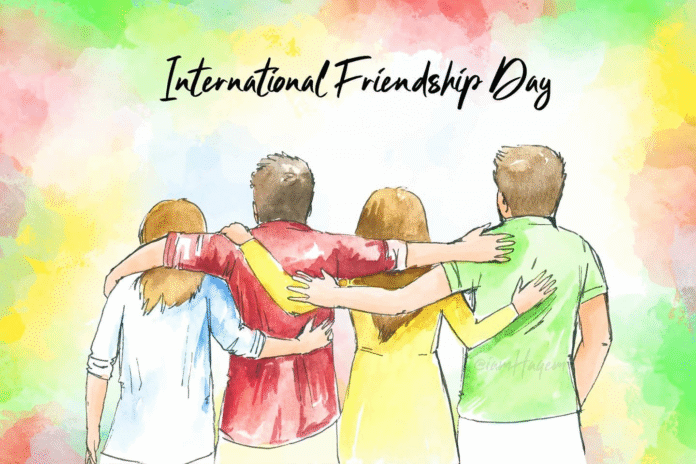
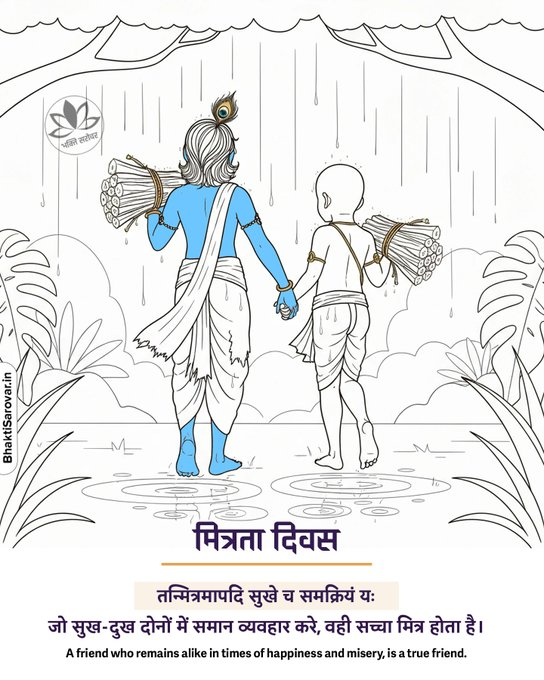
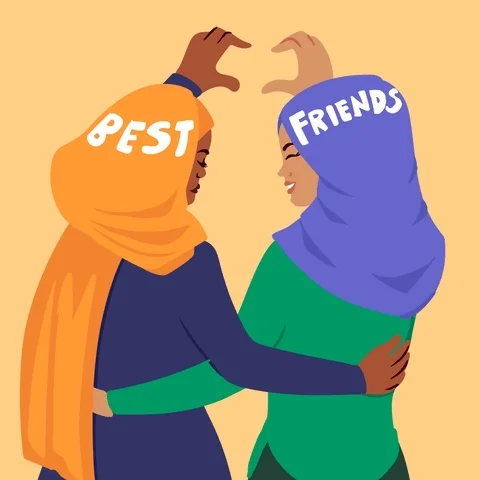
Happy Friendship Day 2025: Celebrate the special bond you share with your friends on August 3!. Send heartfelt wishes, messages, WhatsApp texts, images, and GIFs to make the day memorable. Here are 100+ Happy Friendship Day 2025 greetings to share and spread the joy of friendship!

Friendship Day 2025: Here Comes Wishes, Posters and WhatsApp Messages...

WhatsApp Messages

  1. Happy Friendship Day! I’m lucky to have a friend like you who makes life brighter.
  2. Cheers to the beautiful bond we share. Happy Friendship Day! 🫶
  3. A friend like you is rare and precious. I cherish every moment with you. 🤗
  4. You’re not just a friend, you’re family. Happy Friendship Day!
  5. Through thick and thin, you’ve always been there. Thank you. 💛
  6. You add so much joy to my life. Grateful for you always. 🌟
  7. You make my world better just by being in it. Happy Friendship Day! 💐
  8. Here’s to our endless talks, inside jokes, and crazy memories. 🥂
  9. Life’s better with true friends. Thanks for being mine. ❤️
  10. Your friendship is a blessing I count every day.
  11. Besties forever — because you’re stuck with me now 😉
  12. Your friendship is the best part of my story. 💖
  13. Blessed with the best. Happy Friendship Day! 🙌
  14. You make life feel lighter. ☀️
  15. You’re one in a million, and I’m lucky to call you mine. 🥹
  16. No fake vibes. Only real ones like you! 👑
  17. Thanks for loving me at my worst. 🫶
  18. Here’s to endless gossip and zero judgment 😇
  19. You’ve always been my safe space. Thank you.
  20. Real ones like you don’t come often — I’ll always hold you close.

Happy Friendship Day GIFs

Friendship Day 2025: Here Comes Wishes, Posters and WhatsApp Messages...

Messi in India: December 2025 Trip – From Football Legend to Batting Stand‑In

0

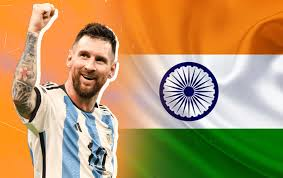
Lionel Messi is scheduled to visit India from December 13 to 15, 2025, marking his return to the country after a 14‑year hiatus, when he last played a friendly against Venezuela in Kolkata in 2011.

Confirmed stops include Kolkata, Mumbai, New Delhi, and – according to some reports – Ahmedabad. While itinerary details vary slightly across media outlets, most agree that the Wankhede Stadium event in Mumbai on December 14 is the tour’s centerpiece.

Live Events & Public Appearances

  • Kolkata (Dec 13): A GOAT Concert at Eden Gardens, the unveiling of a claimed 70‑foot statue of Messi, and a football masterclass with children are planned. State dignitaries such as Chief Minister Mamata Banerjee may attend.
  • Ahmedabad (late Dec 13): A private event at the Adani Foundation’s Shantigram campus is listed in some itineraries.
  • Mumbai (Dec 14): The star attraction is the Wankhede Stadium, where organisers have booked a ticketed event overseen by Wizcraft. The Mumbai Cricket Association has granted a stadium block, and the event is flagged as potentially cricket-centric.
  • New Delhi (Dec 15): A meet‑and‑greet with Prime Minister Narendra Modi and another GOAT concert are scheduled at a Feroz Shah Kotla venue, along with another youth outreach session.

Will Messi Actually Play Cricket?

What the Reports Say

Media across sources repeatedly suggest that Messi may participate in a seven-a-side exhibition cricket match at Wankhede Stadium on December 14. The reports specifically mention MS Dhoni, Virat Kohli, Rohit Sharma, and Sachin Tendulkar as likely participants alongside Messi in this celebrity charity match.

Mumbai Cricket Association officials reportedly confirmed that the venue has been blocked, and that match logistics are being discussed, though a final schedule hasn’t been finalized.

What Still Remains Unclear

Not every outlet endorses the cricket match narrative. Some insiders, including MCA sources, warn that no serious cricket match may happen – suggesting Messi could be restricted to soft‑ball or minimal‑contact demonstrations rather than a full-fledged batting appearance.

Messi’s handlers have not yet issued a public confirmation. Given his status as a retired footballer now playing on, there is no guarantee he will wield a real bat. Nothing official has been announced, and the claim remains a speculative but exciting fan-facing storyline.

Why It Matters: The Sports Crossover South Asia Has Been Dreaming Of

Imagine Messi, bat in hand, standing at the crease beside legends like Sachin Tendulkar and Virat Kohli, or facing a funny-style “bouncer” from Dhoni. It’s inspiring on multiple levels:

  • Cultural conversation across sports.
  • A powerful coalescence of Indian cricket fandom and global football stardom.
  • Brand impact: charitable activity, youth outreach, inspiration off-field.

How Fans Around the World Are Reacting

On platforms like X (formerly Twitter) and Instagram, fans are already buzzing. Memes about Messi vs. DK Wellington or “who will bowl – Rohit, Dhoni, or Messi?” are trending. Many posts playfully depict Messi hitting sixes and cricketers doing step-overs. The phrase “GOAT CUP” has become a shorthand for Messiverse nostalgia and inter-sport curiosity.

A Recap Table

DetailStatus & Notes
Visit dates13–15 December 2025
CitiesKolkata → Ahmedabad? → Mumbai → Delhi
Key venuesEden Gardens (Kolkata), Wankhede Stadium (Mumbai), Kotla (Delhi)
Match with Dhoni/Kohli/etcPossible, unconfirmed; may be soft-ball; planning-level only
Ticketing modelWankhede event likely paid, show-style, not official international match
Messi’s previous India appearanceArgentina vs Venezuela, Kolkata 2011
Athlete crossoversFootball meets cricket in celebration and fan-engagement context

Beyond Boundaries: Messi’s India Play‑inspired Mash‑Up

Ultimately, Messi’s India tour feels like a cultural crescendo – a series of football‑pitch symphonies meeting cricket‑field choruses. Even if he doesn’t face a real fast bowler, the idea of Messi embracing the bat is already stirring hearts. For fans of both cricket and football, it is more than a visit – it’s a spectacle of shared dreams.

No Sorry, No Thank You: The Bollywood Friendship Manifesto

0
  • In India, Friendship Day is celebrated each year on the first Sunday of August. In 2025, it falls on Sunday, August 3 - a day for tying friendship bands, exchanging notes, and sharing moments with friends.
  • Internationally, the United Nations recognizes July 30 as International Friendship Day, but in India the trend gained momentum in the early 1990s, largely thanks to Bollywood films that glorified friendship more than romance.

Bollywood’s Friendship Revolution:

Before Bollywood movies of the late ’80s and ’90s spotlighted love and college romance, Maine Pyar Kiya (1989) redefined the emotional core of friendship – especially among the youth.

Maine Pyar Kiya (1989): Friendship That Sparked a Generation

  • Directed by Sooraj R. Barjatya, Maine Pyar Kiya stars Salman Khan (as Prem) and Bhagyashree (as Suman). It begins with them as friends and only later evolves into romance. The film celebrates unconditional loyalty, selfless support, and emotional intimacy.
  • Prem delivers one of Bollywood’s most iconic friendship lines: “Dosti ka ek usool hai madam… no sorry, no thank you.” – emphasizing that true friendship needs no pretense or formalities. This became a generational catchphrase and a rite of Friendship Day gifting: caps, T‑shirts, and wristbands with the FRIEND label.
  • Suman’s reply also struck a chord:
    “Dosti ki hai, nibhani to padegi hi.”
    showcasing the sense of responsibility one owes in friendship.
  • The film created a cultural shift – friends began greeting each other with “Dosti ka ek usool,” friendship bands often echoed its quotes, and young people recycled its lines as modern maxims.

Kuch Kuch Hota Hai (1998): When Best Friends Learn to Love

  • Directed by Karan Johar, the blockbuster starred Shah Rukh Khan (Rahul), Kajol (Anjali), and Rani Mukerji (Tina). Set across college and later years, it dramatizes how unacknowledged affection between best friends can transform into eternal love – if timed right.
  • Its most quoted dialogue is Rahul’s declaration in class: “Pyaar dosti hai… agar woh meri sab se achchi dost nahin ban sakti, toh main usse kabhi pyar kar hi nahi sakta… kyunki dosti bina toh pyar hota hi nahi.”
    – linking love and friendship in one sweeping philosophy.
  • A repeated theme – “Pyaar ka pehla kadam dosti hai, aur aakhri bhi” – reinforced the message that deep friendship is the foundation and finale of true love.
  • Rahul and Anjali’s story continues to resonate with each new generation, especially around Friendship Day, as it modelled a friendship so large it grew into love.

How These Films Shaped Friendship Day Tradition

  • In India’s early ’90s pop culture, Maine Pyar Kiya was more than a movie – it was a trendsetting template for adolescence, friendship, and emotional candour. Young fans would print its quotes, watchfriendhood echoes, and adopt its mantra as personal creed.
  • When Kuch Kuch Hota Hai released in 1998, it cemented the college‑campus friend‑first romance theme. Its iconic dialogue was widely printed on greeting cards, WhatsApp statuses, and t‑shirts exchanged on Friendship Day.
  • Today, on Friendship Day, students still wear white T‑shirts with friendship quotes (many still lifted from these two films), and exchange friendship bands adorned with lines like “no sorry no thank you.” That pop‑cultural legacy gave Bollywood its faithful role in popularizing Friendship Day in India.

Celebrate the Bond

This Friendship Day (August 3, 2025), when you tie a band around your bestie’s wrist or send a nostalgic note, remember: Indian Bollywood didn’t just give you movies or songs – it gave you shared language for friendship.
Whether you write “no sorry, no thank you” or “pyaar dosti hai” on a card – or just say it out loud – it’s Bollywood’s emotional legacy meeting your everyday life.
Because in India, friendship isn’t just celebrated – it’s narrated, replayed, and cherished through movies that made us believe love begins and ends in friendship.

No Paparazzi, Just Power—Rani Mukerji’s Quiet Comeback Becomes the Loudest Victory

0

When Kuch Kuch Hota Hai rolled into cinemas, it was meant to be Shah Rukh’s charm and Kajol’s chaos that ruled hearts. But in just a handful of scenes, Rani Mukerji, draped in shimmering elegance and vulnerability, carved herself into Bollywood’s subconscious. Not with noise—but with nuance. That wasn’t her peak. It was just ignition. From fleeting fame to formidable force, she chose silence over spectacle, substance over stardom, and a path where her characters bled, broke, and burned for something greater. This is not just a tale of an actress—it’s the odyssey of a woman who defied rules, rewrote her chapters, and reclaimed the narrative in her own voice.

Stardom in Shadows

After KKHH, Rani could’ve coasted on glamour. Instead, she chose grit. She played a medical student in Saathiya, a blind and mute woman in Black, a battered wife in Yuva, and a fearless journalist in No One Killed Jessica. These weren’t roles for a diva—they were roles for a disruptor. She didn’t chase the spotlight; she bent it toward stories that mattered.

Love, Loss, and Reinvention

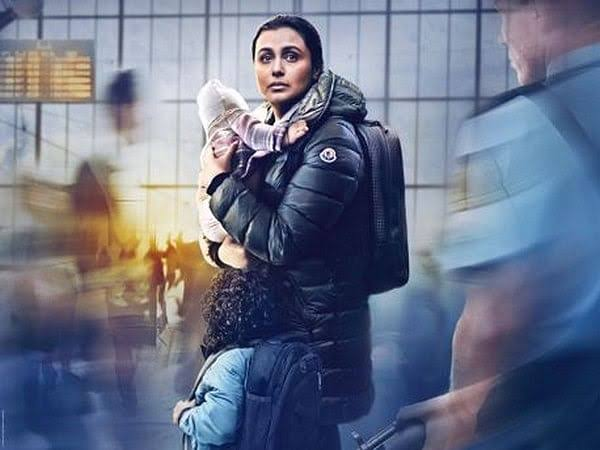
In 2014, she married filmmaker Aditya Chopra, a man as private as she was bold. Their union was quiet, sacred. Then came Adira, their daughter, and Rani’s world shifted. She stepped back from the arc lights, choosing motherhood over media frenzy. She shielded Adira from paparazzi, raising her not as a star kid, but as a child with roots. But life wasn’t all lullabies. In 2020, Rani suffered a personal heartbreak—losing her second child five months into pregnancy. Ten days later, she was offered Mrs. Chatterjee vs Norway. The timing was cruel. The story—of a mother fighting a foreign government for her children—was eerily close to her own pain.

The Mother Who Roared

Rani poured her grief, rage, and resilience into the role of Debika Chatterjee. The film wasn’t just a performance—it was a catharsis. And the world saw it. In 2025, Rani Mukerji won her first-ever National Film Award for Best Actress. After 30 years in cinema, the honor felt like destiny catching up. She didn’t just act. She bled. She roared. She reminded us that motherhood isn’t weakness—it’s warpaint.

No Paparazzi, Just Power—Rani Mukerji’s Quiet Comeback Becomes the Loudest Victory

Today, Rani Mukerji is more than an actress. She’s a storyteller, a mother, a survivor. She’s the woman who turned vulnerability into victory, who chose substance over stardom, and who taught us that the most powerful performances come not from scripts—but from scars.

From Delhi’s Dust to Bollywood’s Throne: Shah Rukh Khan’s 33-Year Odyssey to His First National Award

0


Born on November 2, 1965, in New Delhi, Shah Rukh Khan grew up in a multicultural environment. His father, Mir Taj Mohammed Khan, a Pathan and freedom fighter from Peshawar, was associated with the Indian National Congress, while his mother, Lateef Fatima, hailing from South India, was reportedly the adopted daughter of Major General Shah Nawaz Khan. Khan spent his early years in Mangalore before returning to Delhi. He graduated with a degree in Economics from Hans Raj College, Delhi University, in 1988 and briefly pursued a Master’s in Mass Communication at Jamia Millia Islamia before leaving academics to chase an acting career. Khan faced significant hardships, including poverty, especially after losing his father in 1981 and his mother in 1990, before his rise to Bollywood stardom. He openly acknowledges taking on less creative roles to escape financial struggles, accepting films rejected by bigger stars to avoid unemployment. Khan firmly believes that failure is an integral part of life, emphasizing that true success stems not just from the desire for achievement but from embracing and overcoming the fear of failure.

Rise to Stardom

Shah Rukh Khan’s career began on television with serials like Dil Dariya, Fauji, and Circus, where he made his mark. His Bollywood debut came with the 1992 film Deewana, which earned him the Filmfare Award for Best Male Debut and became a superhit, establishing him in the Hindi film industry. From there, Khan never looked back, steadily climbing the ladder of success. Known as the “King of Bollywood,” he gained fame not only as a romantic hero but also as a compelling villain in films like Baazigar, Darr, and Anjaam, where his performances as a negative character left audiences stunned.

A Glorious Career

With over 100 films and a career spanning more than three decades, Shah Rukh Khan has received numerous accolades, including 14 Filmfare Awards, 9 Screen Awards, 3 IIFA Awards, 8 Zee Cine Awards, 3 Bollywood Movie Awards, 2 Global Indian Film Awards, and many others. Additionally, he was honored with the Rajiv Gandhi Award in 2002 and the Padma Shri by the Government of India in 2005.

First National Award for Jawan

On Friday, August 1, 2025, the 71st National Awards were announced in Delhi, recognizing Shah Rukh Khan for his outstanding performance in Jawan. Sharing his joy with fans through a video on social media, Khan expressed gratitude and humility, stating, “Namaskar, adaab. I don’t need to say how I’m feeling right now because I’m filled with pride, gratitude, and humility.” He wholeheartedly thanked those who deemed him worthy of this prestigious award, marking his first-ever National Award.

“overwhelmed with gratitude, pride, and humility.” “To be honoured with a National Award is a moment I will cherish for a lifetime. Thank you so much to the jury, the chairman, the I&B ministry, and everyone who thought I was worthy of this honour,” Shahrukh khan

From “Yeh Dosti” to “Teri Meri Dosti”—Sing Your Heart Out and Share the Soundtrack of Your Bond This Friendship Day..

0

There are melodies that linger like memories, and lyrics that speak louder than words. This playlist isn’t just about tunes—it’s a celebration of filmy yaari, the kind that laughs louder, loves deeper, and always has your back.

To the Jai to your Veeru (Sholay), the Anjali to your Rahul (Kuch Kuch Hota Hai), the Rancho to your Farhan (3 Idiots)—this is for the friends who turn boring bus rides into epic adventures and heartbreaks into hilarious midnight calls. Whether it was Kabir’s gang in Zindagi Na Milegi Dobara diving into the unknown, or Rani finding herself through friendship in Queen, every moment screamed one truth: dosti is life’s best screenplay.

Absolutely, Anjali! Here’s a nostalgic playlist of timeless Hindi friendship songs that celebrate yaari, dosti, and those unforgettable bonds:

Top 10 Songs To Dedicate Your Yaar……

  1. Yeh Dosti Hum Nahi TodengeSholay
    Yeh Dost Hum Nahi Todenge | Happy Friendship Day – The ultimate anthem of friendship, sung by Kishore Kumar and Manna Dey.
  2. Diye Jalte Hai, Phool Khilte HaiNamak Haraam
    Friendship Day Special | Yari Hai Imaam Mera | Jahan Chaar … – A soulful tribute to enduring friendship.
  3. Ae Mere Dost Laut Ke AajaSwarg
    Dosti Ke Gaane: Full Playlist | Bollywood Dosti (Friendship … – A heartfelt call to a long-lost friend.
  4. Aaya Mausam Dosti KaMasti
    Friendship Day Special | Top Songs Playlist | Aaya Mausam … – A cheerful celebration of friendship season.
  5. Ehsan Mere Dil Pe Tumhara Hai DostoHaathi Mere Saathi
    Yeh Dost Hum Nahi Todenge | Happy Friendship Day – A song that expresses gratitude for true friends.
  6. Jahan Chaar Yaar Mil JayenJahan Chaar Yaar
    Friendship Day Special | Yari Hai Imaam Mera | Jahan Chaar … – A classic that celebrates the joy of togetherness.
  7. Humse Tum Dosti Kar LoHumse Hai Muqabala
    Friendship Day Special Songs | Bollywood Hit Songs | Hindi … – A playful invitation to friendship.
  8. Main Yaaron Ka Hoon YaarYaarana
    Yeh Dost Hum Nahi Todenge | Friendship Day Special | Main … – A proud declaration of being a friend to all.
  9. Teri Meri Dosti Ho GayeeDosti
    Yeh Dost Hum Nahi Todenge | Happy Friendship Day – A sweet melody marking the beginning of a bond.
  10. Ae Yaar Teri Yaari HumeYaarana
    Yeh Dost Hum Nahi Todenge | Friendship Day Special | Main … – A touching ode to the value of friendship.

No Maps Can Hold Them—Rajasthan’s Forgotten Corners Steal the Spotlight, Border Villages Rewrite India’s Tourism Script..

0

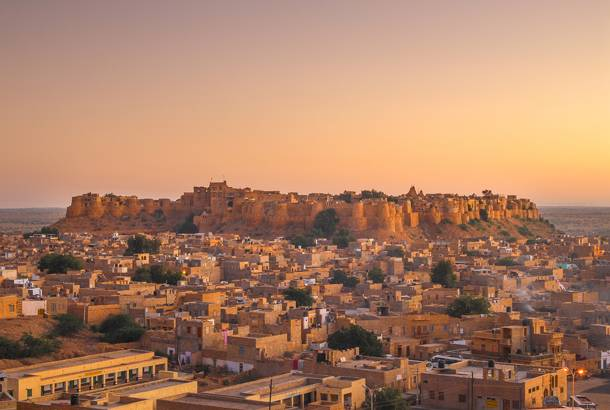
In the vast expanse of Western Rajasthan, where the desert meets the horizon and tradition dances with time, a quiet revolution is unfolding. Far from the bustling cities and iconic forts, small villages nestled in the border districts of Jodhpur, Barmer, Jaisalmer, and Bikaner are stepping into the spotlight. These rural gems are not just preserving Rajasthan’s cultural heritage—they’re redefining it for the world.

Mapping the Cultural Crown Jewels

According to Mr. Dalip Singh Rathore, Joint Director of the Tourism Department, these villages are the “crown jewels” of Rajasthan’s cultural tourism. Each one offers a unique flavor of desert life, artistry, and hospitality:

Jodhpur District

  • Salawas: Famous for dhurrie weaving, where artisans create vibrant rugs using age-old techniques.
  • Chopasni: A hub for pottery and traditional crafts.
  • Phalodi: Known for its heritage architecture and salt production, offering a blend of culture and industry.

Barmer District

  • Barnawa Jagir & Pataudi: Rich in folk music traditions, home to Langas and Manganiyars.
  • Shiv: A village that exemplifies desert resilience and warm hospitality.

Jaisalmer District

  • Jarana & Barna: Villages that echo with the rhythms of Kalbelia dance and puppet arts.
  • Pokhran: Not just a historical site, but a cultural hub with miniature painting and leatherwork.

Bikaner District

  • Rural belts around Bikaner are known for Usta art, camel breeding, and vibrant fairs that celebrate desert life. These villages are more than scenic stops—they are immersive experiences where tourists can live the culture, not just observe it.
No Maps Can Hold Them—Rajasthan’s Forgotten Corners Steal the Spotlight, Border Villages Rewrite India’s Tourism Script..

From Local to Global: The Rise of Rural Tourism

What makes these villages stand out is their authenticity. Unlike urban centers that often cater to commercial tourism, these rural destinations offer unfiltered glimpses into Rajasthan’s soul. Visitors can:

  • Stay in traditional mud houses or eco-lodges.
  • Participate in craft workshops and folk performances.
  • Share meals with local families and learn about desert farming.
  • Explore heritage walks guided by villagers themselves.

This grassroots approach to tourism is gaining international attention. Travelers today seek meaningful experiences, and these villages deliver just that—culture with connection.

No Maps Can Hold Them—Rajasthan’s Forgotten Corners Steal the Spotlight, Border Villages Rewrite India’s Tourism Script..

Infrastructure Meets Tradition

The Rajasthan government has been instrumental in transforming these villages into tourism-ready destinations. Roads, signage, homestay programs, and training for local guides have been introduced to ensure comfort without compromising authenticity. Mr. Rathore emphasizes that this development is not just about attracting tourists—it’s about empowering communities. Tourism here creates livelihoods, revives dying art forms, and fosters pride in local heritage.

Culture in Every Corner

From the rhythmic beats of desert drums to the intricate embroidery on camel leather, every corner of these villages tells a story. The artisans are not performers—they are custodians of centuries-old traditions. Tourists often leave not just with souvenirs, but with friendships and memories that last a lifetime.

No Maps Can Hold Them—Rajasthan’s Forgotten Corners Steal the Spotlight, Border Villages Rewrite India’s Tourism Script..

A Model for Sustainable Tourism

These border villages are setting an example for sustainable and inclusive tourism. By focusing on community participation, cultural preservation, and environmental sensitivity, Rajasthan is crafting a tourism model that others can emulate.

Where the Desert Meets the Heart

In the end, what makes these villages truly special is their spirit. Despite being located in harsh terrains and near international borders, they radiate warmth, resilience, and creativity. They remind us that sometimes, the most profound travel experiences come not from monuments, but from moments—shared over folk songs, handmade crafts, and desert sunsets. Western Rajasthan’s border districts are no longer just remote outposts—they are vibrant cultural tourism hubs, inviting the world to discover the magic of rural India.

Shah Rukh Khan Releases a Video on X After Winning National Award. See What He says Here…

0

Bollywood star Shah Rukh Khan has shared a video on X platform rendering an emotional thanks to his family members, film producer, director and government of India.

In the video, Shah Rukh Khan, seen wearing a cling, sling, “Thank you for honouring me with the National Award. Thanks to the jury, the I&B ministry… Iss samman ke liye Bharat Sarkar ka dhanyawaad. Overwhelmed with the love showered upon me. Half a hug to everyone today.”

NJIT Researchers Use AI to Accelerate Breakthrough in Next-Gen Battery Technology

0

Researchers at the New Jersey Institute of Technology (NJIT) have achieved a significant breakthrough in the search for sustainable alternatives to lithium-ion batteries by harnessing the power of artificial intelligence. In a study published in Cell Reports Physical Science, the team led by Professor Dibakar Datta used advanced generative AI techniques to identify new porous materials ideally suited for use in multivalent-ion batteries — a potential game-changer for the future of energy storage.

Multivalent-ion batteries, which utilize abundant and cost-effective elements such as magnesium, calcium, aluminum, and zinc, present a promising alternative to lithium-based systems. These ions carry multiple positive charges (unlike lithium’s single charge), enabling the batteries to store substantially more energy. However, the bulky size and higher charge of multivalent ions have historically posed major challenges in designing suitable battery materials.

“While promising chemistries have existed for some time, the real bottleneck was the overwhelming number of possible material combinations,” explained Prof. Datta. “Manually testing them all would be virtually impossible — that’s where AI came in.”

To tackle this, the NJIT team devised a dual-AI strategy: a Crystal Diffusion Variational Autoencoder (CDVAE) and a custom-tuned Large Language Model (LLM). The CDVAE, trained on extensive databases of known crystal structures, could generate entirely new porous material blueprints, while the LLM was used to identify those structures most likely to be thermodynamically stable and practically synthesizable.

The approach led to the discovery of five novel porous transition metal oxide structures with large, open channels — ideal for efficiently transporting multivalent ions. These AI-generated materials were validated through quantum mechanical simulations and stability testing, confirming their feasibility for real-world applications.

“This is a breakthrough not just in battery research but in how we approach material discovery as a whole,” said Datta. “By using AI, we’ve created a powerful and scalable way to accelerate innovation across multiple fields, from clean energy to electronics.”

Moving forward, the team intends to collaborate with experimental labs to synthesize and further test these materials, potentially paving the way for more affordable and sustainable energy storage solutions.

300 million people suffers from Asthma worldwide including America

0

By Dr Yash Goyal

 There are approximately 300 million people with asthma worldwide including America, a latest research paper in the International journal “Lancet” reports. Despite a current plateau, the burden of this disease is likely to increase due to population growth, urbanisation, and ageing. Disease onset is associated with low birth weight, preterm birth, viral infections, in-utero passive smoke exposure, urbanisation, and occupational exposures. 

      It is disclosed in a joint research paper, July 15 issue, titled “Asthma: epidemiology, risk factors, and opportunities for prevention and treatment”  by Asthma specialists across Europe, Asia (including India covering Jaipur), Africa, America, Middle East, and Oceania. Author cum researchers’ panel comprises Shamathi M Jayasooriya, Graham Devereux, Prof Joan B Soriano, Nishta Singh (Jaipur in India), Prof Refiloe Masekela, Prof Kevin Mortimer, and Prof Peter Burney. This is the second in a Series of four papers about the global epidemiology of chronic respiratory disease. 

       Asthma is characterised by variable airflow obstruction and is associated with symptoms of cough, wheeze, and dyspnoea, and with airway inflammation and hyper-responsiveness.

       Asthma prevalence (unadjusted for age) varies by country, ranging from 1% to 18%, with particularly high rates in the USA, the UK, and Portugal. In contrast, mortality rates from asthma are the highest in Nepal, India, Bangladesh, Myanmar, and Indonesia. Although mortality rates in sub-Saharan Africa are lower than in south and southeast Asia, they remain high relative to the region’s low prevalence rates. Differences in the within-country asthma prevalence distribution are even greater than the differences between countries.

      Obesity is associated with increased incidence and severity of asthma, whereas exposure to small allergen particles leads to severe disease. In adults and adolescents, inhaled corticosteroids in combination with formoterol (as anti-inflammatory reliever or as maintenance and anti-inflammatory reliever therapy) are widely recommended to control the symptoms of asthma.

  For children, low-dose inhaled corticosteroid is the preferred first-line treatment. Monotherapy with short-acting β-agonists is strongly discouraged.  The WHO Global Action Plan for the Prevention and Control of Non-communicable Diseases includes availability of affordable combination inhalers for asthma. Co-ordinated national asthma policies, ensuring access to inhalers, have resulted in fewer hospitalisations and school and work absences. Future asthma prevalence could be reduced by good maternal and infant care, with reduction in premature births and reduction in infant respiratory infections, and by reduction in obesity at all ages.

America

 The US Centers for Disease Control and Prevention reports that more than 27 million people in the USA have asthma.24 Although this figure has remained stable over the last decade, great statal and county disparities exist among different ethnic groups. African Americans and Hispanic populations have higher rates of asthma and asthma-related mortality compared with non-Hispanic white Americans. In Latin America, both in adults and children, a high burden of symptoms and use of health services have been identified by GAN and ISAAC, with prevalences of asthma ranging from 5% to 15% in different countries; Chile, Argentina, Cuba, and Costa Rica report some of the highest prevalence rates of the condition in the region. Socioeconomic disparities, urbanisation, and environmental pollution contribute to the high burden of asthma from Mexico to the tip of South America. Additionally, less than ideal access to health care and medications exacerbates the effect of asthma on quality of life and increases health-care costs.

Asia 

Asia presents a diverse picture of asthma prevalence. In countries such as Japan and South Korea, asthma prevalence is relatively low, at about 2–5%. In contrast, urban areas of China and India report very high prevalence rates, particularly among children. According to Nishtha Singh CeO of JAIPUR’s Asthma Bhawan, in India, between ISAAC (International Study of Asthma and Allergies in Childhood)  phase 3 and GAN (Global Asthma Network) phase 1, there was a substantial decrease in the prevalence of current wheeze among both children and adolescents between 2009 and 2022. Of people with current wheeze, 75–82% remained clinically undiagnosed. Among individuals with current wheeze who had no diagnosis, less than 1% took a daily inhaled corticosteroid. In people with current wheeze who were clinically diagnosed with asthma, use of daily inhaled corticosteroid increased to 2–8% in different age groups. 

        In South-East Asia, mortality rates have been consistently high at about 13 in 100 000 per year; this high rate might reflect low access to inhaled corticosteroids in some areas. Late Onset of Asthma arises due to increasing multimorbidity and people often developing multiple age-related conditions, the differential for breathlessness often broadens in later life. 

       Globally, approximately one in ten children and one in 20 adults have asthma. Between one in eight and one in ten adults and children have rhinoconjunctivitis or eczema. Approximately 300 million people worldwide have asthma—a burden that is expected to increase in the 21st century due to population growth, increased urbanisation, and ageing of the population.