Home Blog Page 221

Runway Meets Railway: Gisborne Airport’s One-of-a-Kind Wonder, Where Rails Meet Wings

0

For those with a hunger for the extraordinary, few places surprise quite like Gisborne Airport. Tucked along New Zealand’s eastern coastline, this airport breaks the mold — welcoming not just planes, but trains onto its runway. Yes, a railway track slices right through its airstrip, offering an experience so surreal it feels like a movie set.

Where Vintage Steam Meets Modern Sky: The Marvel of Gisborne Airport

For the thrill-seeking traveller and the culturally curious, Gisborne Airport in New Zealand offers more than just a boarding gate — it’s a stage where the past and present elegantly collide. Nestled in the Elgin neighbour hood and occupying 160 hectares, this unassuming airport hosts a phenomenon that feels straight out of a travel fantasy.

The Railway Runway Riddle

What sets Gisborne apart? A railway track bisects its main runway — not just any railway, but the charming Gisborne City Vintage Railway, where nostalgic steam locomotives journey between Muriwai and Gisborne. These graceful machines make about 15 crossings a year, mostly timed with cruise ship arrivals in the warmer months, turning each passage into a whimsical tourist moment.

Runway Meets Railway: Gisborne Airport’s One-of-a-Kind Wonder, Where Rails Meet Wings

Masterful Coordination

Behind the scenes, airport staff execute a delicate waltz. With over 1.5 lakh passengers annually and more than 60 domestic flights per week, the team choreographs a seamless ballet of air and rail traffic. Signals are controlled by the airport itself — pausing trains for planes and vice versa, with meticulous precision to avoid overlap.

A Symphony of Space and Speed

Beyond the main runway, Gisborne Airport boasts three additional subsidiary runways, adding flexibility to its operations and amplifying its status as one of New Zealand’s 62 airports. It’s not just an infrastructure feat — it’s a tribute to harmony between engineering and heritage.

Sunil Chhetri: The Relentless Rise of India’s Football Icon

0

From the dusty lanes of Secunderabad to the roaring stadiums of international football, Sunil Chhetri’s journey is a masterclass in grit, grace, and greatness.

Humble Beginnings, Fierce Dreams

Born on August 3, 1984, into a middle-class family with military roots, Sunil’s childhood was shaped by discipline and quiet resilience. His father, an army officer, and his mother, a former Nepal women’s footballer, unknowingly sowed the seeds of a sporting legend. With limited resources but unlimited passion, Sunil kicked makeshift balls in narrow alleys, dreaming of stadium lights.

Early Struggles and Breakthroughs

  • At just 17, he was signed by Mohun Bagan, one of India’s oldest football clubs. The contract came with a cheque of ₹90,000—a fortune for his family.
  • But fame didn’t come easy. He faced brutal criticism, public abuse, and even threats when matches didn’t go well. Fans hurled insults, some targeting his family. Yet, he never retaliated. He trained harder.
  • His first international match came at age 20—against Pakistan. India won. That moment, he said, was his “I’ve done it” moment.

The Rise of a Legend

  • Chhetri’s career soared as he played for clubs like JCT, East Bengal, and Bengaluru FC, and even had stints abroad with Kansas City Wizards and Sporting CP B.
  • He led India to victories in the Nehru Cup, SAFF Championship, and the AFC Challenge Cup, becoming the nation’s top scorer and most-capped player.
  • With 93 international goals, he ranks among the world’s top scorers, alongside legends like Messi and Ronaldo.

Philosophy of Perseverance

Sunil once said, “If I wanted to study only for 30 minutes, that was fine—as long as I did it wholeheartedly.” That mindset shaped his approach to football and life.

Legacy Beyond Goals

Sunil Chhetri isn’t just a footballer. He’s a symbol of what relentless effort, humility, and heart can achieve. His story reminds every young dreamer that even in a cricket-crazy nation, a footballer can rise, roar, and rewrite history.

Trump’s Presidency Marked by 34 Reversals in 194 Days: 28 on Tariffs Alone

0

Just 194 days into his presidency, Donald Trump’s tenure has been marked by a whirlwind of policy U-turns—most notably on trade tariffs. The U.S. President has reversed 34 of his own decisions, with 28 involving tariff announcements, sparking confusion across industries and weakening market confidence.

Daily Orders, Frequent Reversals

The Trump administration has issued a record 178 executive orders, averaging nearly one per day. Yet over 30 of these directives were later reversed or walked back by Trump himself.

  • The halt on research funding was reversed within 3 days.
  • A decision to withdraw energy sector relief was scrapped just two weeks later.
  • On issues like illegal immigration, LGBTQ rights, and environmental protections, Trump’s stance has frequently shifted.

Tariff Chaos: Announcements and U-turns

Trump announced tariffs on trade partners like Canada and China, but mounting market volatility and diplomatic backlash forced him to retreat repeatedly.

  • The tariff deadline shifted three times: first July 9, then August 1, and was postponed again.
  • Exemptions on key goods like pharmaceuticals and copper were added, removed, and re-added.

Mounting Legal Battles

The flurry of inconsistent policies has led to a surge of legal challenges. Over 200 executive actions have been stayed by U.S. federal courts, often citing constitutional concerns or lack of due process.

  • A notable example: Trump’s bid to revoke Birthright Citizenship was blocked as a violation of the 14th Amendment.
  • Even Trump-appointed judges have ruled against several of his directives, including those targeting equity contracts.

Shifting Positions on Key Global Issues

  • Ukraine: Aid was cut on July 9, then reinstated with Patriot missiles soon after.
  • Gaza War: Trump claimed he’d end the conflict in 24 hours. Six months later, the war continues. His statements about Gaza’s rehabilitation changed multiple times between February and March.
  • Deportation: A January 22 deportation order was scrapped under legal threat, only to be reissued with modifications.

Here are some of his most notable U-turns:

1. Abortion: From Pro-Choice to Pro-Life
In 1999, Trump declared, “I am very pro-choice,” opposing any abortion ban. But during the 2016 campaign, seeking support from evangelical Christians, he adopted a hardline anti-abortion stance—at one point suggesting “some form of punishment” for women who undergo the procedure. As president, he backed restrictions on abortion rights.

2. TikTok: From Ban to Embrace
Near the end of his first term, Trump sought to ban TikTok, citing national security concerns over its Chinese ownership. Fast forward to 2024—courting Gen Z voters—he declared, “I like TikTok,” and claimed he would “save” the platform. Trump now says he’s brokering a deal for a U.S.-based buyer to take over TikTok from ByteDance.

3. Russia: From Friendship to Frustration
In 2016, Trump campaigned on building closer ties with Moscow. However, that stance faded amid allegations of Russian interference in his favor. Since returning to the White House, he has again reached out to the Kremlin, including a call with Vladimir Putin in February aimed at resolving the Ukraine conflict. Yet recently, he expressed being “very angry” over Putin’s ceasefire tactics.

4. Appointments: Praise, Then Purge
Trump frequently praises his appointees—until he turns on them. Rex Tillerson, former ExxonMobil CEO, was lauded before being fired as Secretary of State in 2018. National Security Advisor John Bolton met a similar fate in 2019, later calling Trump “unfit” to lead.

5. China: The Trade War Whiplash
In 2016, Trump vowed to hold China accountable, branding it a “currency manipulator.” His administration launched a bruising trade war—only for him to shift rhetoric depending on political and economic calculations.

Conclusion
Trump’s rapid reversals and mixed messaging have created administrative uncertainty, market instability, and mounting pressure on U.S. courts, leaving experts questioning the sustainability of his leadership under the “Make America Great Again” banner.


Indian-Origin Lawyer Mathura Sridharan, Appointed Ohio’s Solicitor General, Is A Trained Dancer Too Who Loves Cooking. Know Her Qualification…

0

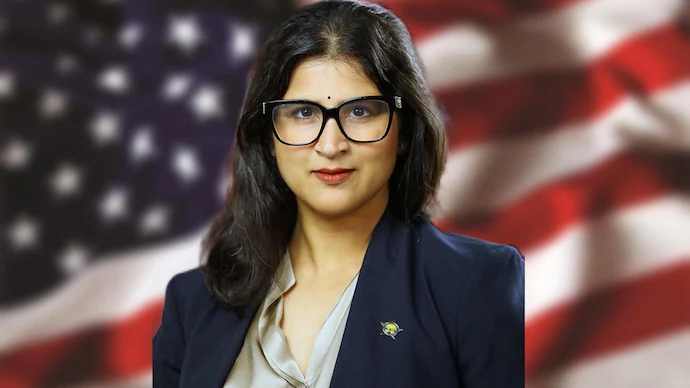
Indian-origin American lawyer Mathura Sridharan has been appointed as the Solicitor General of the U.S. state of Ohio. As Solicitor General, Mathura will represent the state of Ohio in the U.S. Supreme Court, advise the Attorney General on complex constitutional issues, develop legal strategies, and provide counsel in appellate matters. She will also review key legal documents and offer recommendations on high-stakes cases.

Mathura Sridharan Qualifications

Mathura holds a Bachelor of Science in Electrical Engineering, Computer Science, and Economics from the Massachusetts Institute of Technology (MIT). She later earned a master’s degree in Electrical Engineering and Computer Science, also from MIT, followed by a Juris Doctor (JD) from New York University School of Law in 2010.

Mathura Sridharan Hobbies

Outside her legal career, Mathura is passionate about travel and cooking. She regularly shares food recipes on social media and is also a trained classical singer. She married Ashwin Suresh in 2015.

However, following her appointment, Mathura faced a wave of online trolling, with some individuals questioning her Indian heritage and the presence of a bindi in her profile photo. Critics even asked why a “non-American” was appointed to such a high legal position.

Responding firmly to the backlash, Ohio Attorney General Dave Yost defended Mathura, stating:
“Some people are wrongly claiming that Mathura is not American. She is a U.S. citizen, married to a U.S. citizen, and both her parents are American citizens as well. If her name or skin color bothers you, the problem lies with you—not with her or her appointment.”

Yost praised Mathura’s legal acumen and performance, noting that she successfully argued a case before the U.S. Supreme Court last year. Her appointment was also backed by two former Solicitor Generals of Ohio, Benjamin Flowers and Elliot Gaiser.

“She’s incredibly smart, articulate, and confident in the courtroom. I told her I wanted a lawyer who argues, and she certainly delivers. I’m proud to appoint her,” said Yost.

Karkoot Nag’s Divine Secrets- 1400-Year-Old Shivlings Unearthed in Kashmir’s Sacred Spring

0

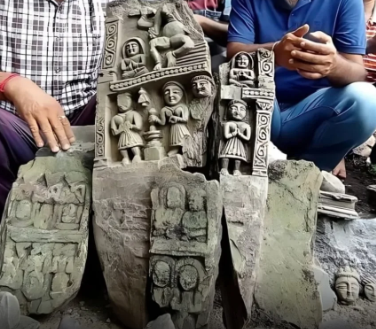
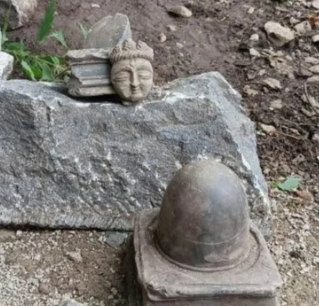
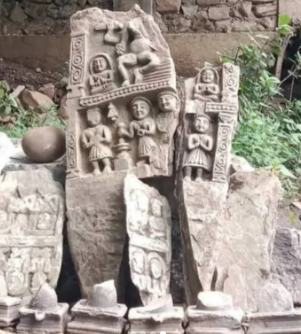
In a discovery that has stirred both reverence and curiosity, ancient Hindu relics—believed to be over 1400 years old—have been unearthed during a spring restoration project in Karkoot Nag, located in the Salia area of Aishmuqam, Anantnag district, Jammu and Kashmir.

A Glimpse into the Karkota Dynasty

The site is historically linked to the Karkota dynasty, which ruled Kashmir between 625 and 855 CE. Labourers working under the Public Works Department (PWD) stumbled upon multiple Shivlings, deity sculptures, and carved stone fragments—suggesting the remnants of a once-thriving temple.

Karkoot Nag’s Divine Secrets- 1400-Year-Old Shivlings Unearthed in Kashmir’s Sacred Spring

Archaeological Significance

Officials from the Department of Archives, Archaeology and Museums swiftly arrived at the site and took custody of the relics. These artifacts will be transferred to the SPS Museum in Srinagar for carbon dating and scholarly analysis to determine their precise age and historical context.

Local Sentiments and Cultural Reverence

For the Kashmiri Pandit community, the discovery is deeply emotional. Many locals believe the site was once a sacred pilgrimage center. A Kashmiri Pandit shared, “We’ve always heard that a temple stood here. Now that the idols have resurfaced, we hope a new temple will be built to honor them”.

Karkoot Nag’s Divine Secrets- 1400-Year-Old Shivlings Unearthed in Kashmir’s Sacred Spring

Preservation and Future Prospects

While no official plans for religious or heritage tourism have been announced, the discovery has sparked calls for conservation efforts and the reinstatement of the Shivlings at the original site. Heritage activists are urging authorities to recognize the location’s sanctity and historical value.

Nalanda Reborn: Ancient Wisdom Lighting the Path to a Sustainable Tomorrow

0

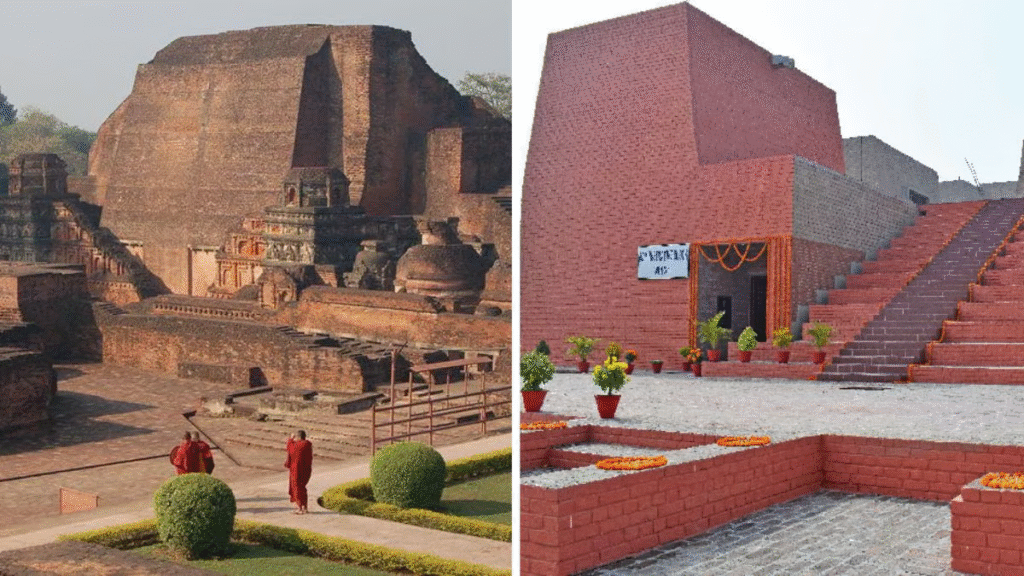
After 1600 years, the silent ruins stir once more. Nalanda—once reduced to ashes by tyranny—now rises as a phoenix of intellect and innovation. No longer just a citadel of ancient wisdom, it emerges as a beacon of sustainable living, zero-carbon ambitions, and global harmony. This isn’t history repeating—it’s history reinventing the future.
It’s a place where ancient wisdom meets modern sustainability, where tradition fuels innovation, and where the future is shaped by harmony—with nature, with knowledge, and with humanity Legacy of Nalanda The World’s First Residential University. Founded in 427 CE by Kumargupta I of the Gupta dynasty, Nalanda was more than a university—it was a beacon of intellectual brilliance.

Nalanda Reborn: Ancient Wisdom Lighting the Path to a Sustainable Tomorrow
  • Hosted 10,000 students and 2,000 teachers from across Asia.
  • Specialized in Buddhist philosophy, mathematics, astronomy, medicine, and logic.
  • Scholars like Xuanzang and Yijing documented its grandeur and carried hundreds of manuscripts to China.
  • Destroyed in 1193 CE by Bakhtiyar Khilji, leading to the loss of priceless knowledge and cultural heritage.

Revival of Nalanda: A Global Vision

The idea to resurrect Nalanda was proposed by Dr. A.P.J. Abdul Kalam in 2006 and endorsed by 16 East Asia Summit nations in 2007. Nalanda University Act, 2010 passed by Indian Parliament. First academic session began in September 2014. Supported by countries like Japan, China, Singapore, Australia, and more. Nobel Laureate Amartya Sen served as the first Chancellor.

Nalanda Reborn: Ancient Wisdom Lighting the Path to a Sustainable Tomorrow

Zero Carbon Campus: A Model for Sustainable Education

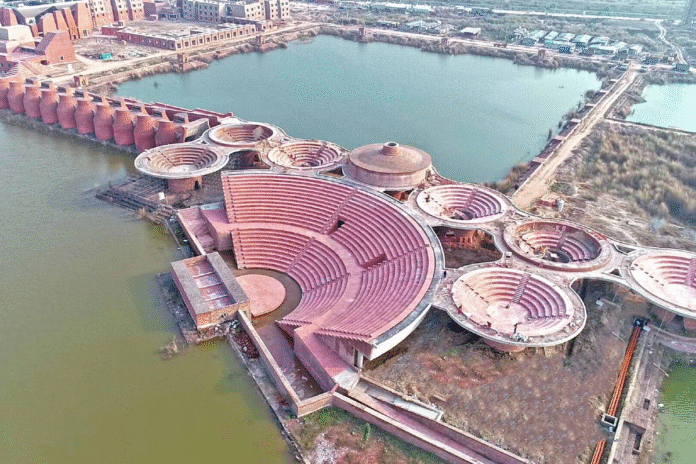
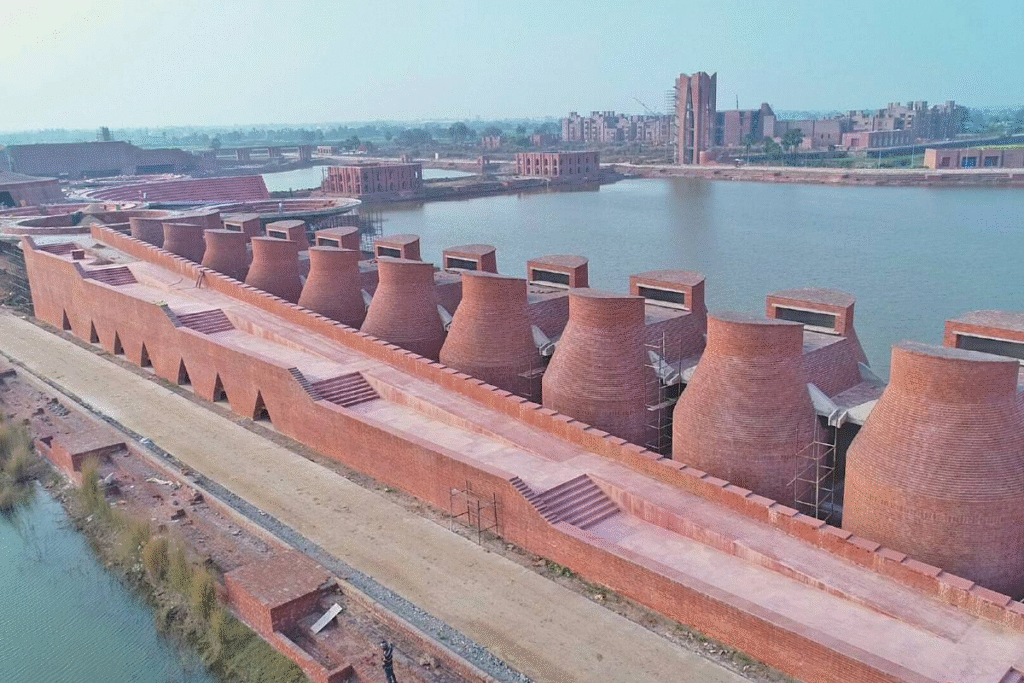
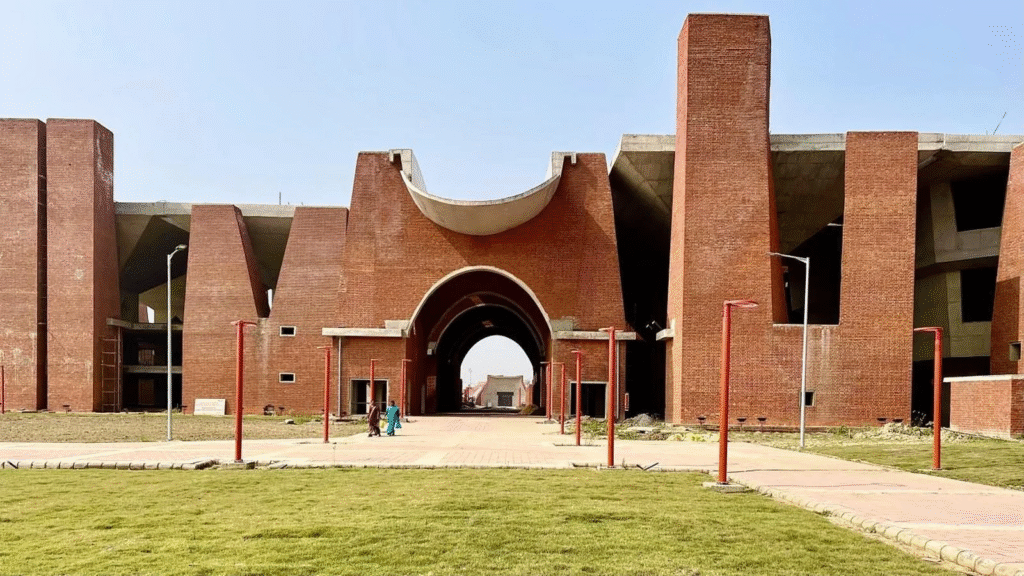
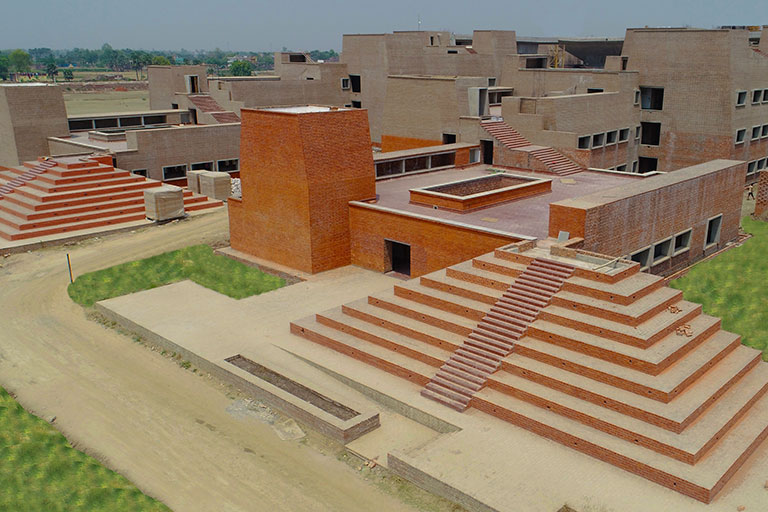
Located in Rajgir, Bihar, the new Nalanda campus spans 455 acres and is India’s first Net-Zero Energy, Water, and Waste university. 6.5 MW Solar Farm and 1.5 MW Biogas Plant power the campus sustainably.

No Air Conditioning– Uses Desiccant Evaporative (DEVAP) cooling technology.

Water Management- Indigenous Ahar-Pyne system and DeWAT waste treatment.

Eco-friendly Materials– Compressed Stabilized Earth Blocks (CSEB) instead of burnt bricks.

Recognized with GRIHA 5-Star Rating and multiple international awards.

Nalanda Reborn: Ancient Wisdom Lighting the Path to a Sustainable Tomorrow

Academic Excellence: Bridging Tradition and Innovation

Nalanda offers postgraduate and doctoral programs across diverse disciplines:

Programs Offered: Historical Studies | MA & PhD in Asian, Global & Comparative History | | Ecology & Environment | MSc & PhD in Sustainability & Climate Action | | Buddhist Studies & Comparative Religion | MA in Buddhist Philosophy & World Religions | | Management Studies | MBA in Sustainable Development | | Languages & Literature | MA in World Literature, Diplomas in Sanskrit, Pali, Korean, Japanese | | Hindu Studies | MA in Sanatana Dharma & Indian Knowledge Systems |

Students engage in interdisciplinary research, experiential learning, and global collaborations with institutions like Peking University, Deakin University, and Otani University.

Nalanda Reborn: Ancient Wisdom Lighting the Path to a Sustainable Tomorrow

Nalanda’s New Role: Guiding the Future

  • Aligns with UN Sustainable Development Goals (SDGs)—especially SDG 7, 12, and 13.
  • Promotes peacebuilding, conflict resolution, and Bay of Bengal cooperation through dedicated centers.
  • Embodies the spirit of inclusive learning, cultural revival, and ecological responsibility.

Apple Clocks The Best Quarter by Driving Record Smartphone Exports from India, Makes 82 % Jump

0

Apple Inc. exported $6 billion worth of iPhones from India in the April–June 2025 quarter, marking an impressive 82% jump compared to the same period last year, according to a report by Business Standard, citing data shared by vendors with the Indian government.

This surge makes Q1FY26 not only Apple’s best-performing quarter for Indian exports but also the highest-ever quarter for smartphone exports from the country. In comparison, exports in Q1FY25 stood at $3.2 billion, highlighting the rapid growth of India as a global smartphone manufacturing and export hub.

Smartphone Exports Hit a New High: $7.72 Billion

India’s total smartphone exports in Q1FY26 reached a record $7.72 billion, a 58% increase from $4.9 billion in the same quarter last year. Apple alone contributed nearly 78% of the total, underlining its dominant role in the sector and its deepening manufacturing footprint in India through its vendors, including Foxconn, Wistron, and Pegatron.

This performance marks a significant milestone for India’s electronics manufacturing ambitions under the Production-Linked Incentive (PLI) scheme, with Apple’s expansion widely seen as a validation of government efforts to attract high-end manufacturing.

Sustainability in Question Amid Global Trade Concerns

However, questions remain about the sustainability of this growth. The U.S. government is currently reviewing Section 232 of the Trade Expansion Act, which empowers the President to impose import tariffs on grounds of national security. A report is expected by August 14, and the outcome could have implications for Apple’s global supply chain, including its India-based operations.

Analysts note that while Apple’s export boom is a win for India’s electronics ecosystem, it remains vulnerable to geopolitical shifts and policy changes in its key markets, especially the U.S.

As India continues to position itself as a manufacturing alternative to China, the coming months will be crucial in determining whether this export momentum can be maintained amid evolving global trade dynamics.

Sri Lanka Mesmerizes 800,000 Indian Tourists in 2 Years with Its Five Sacred Shiva Temples..

0

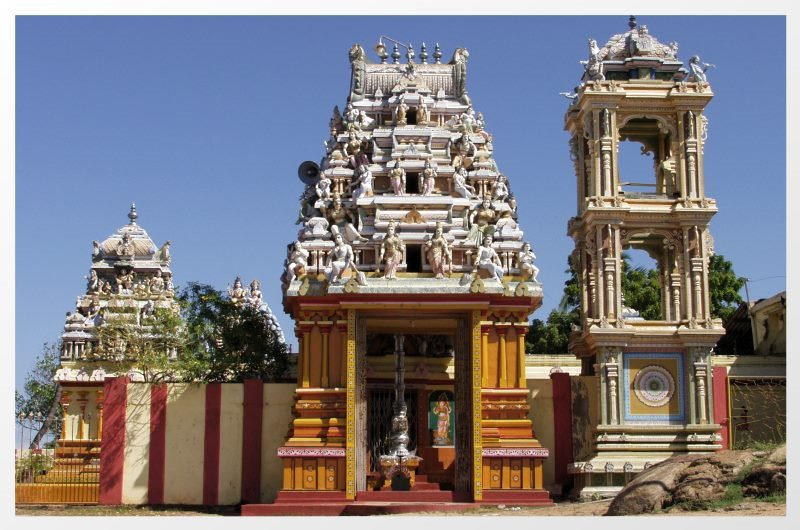
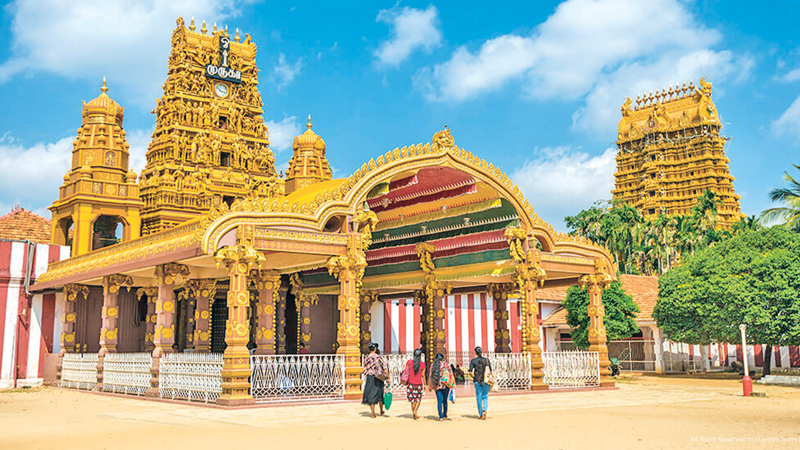
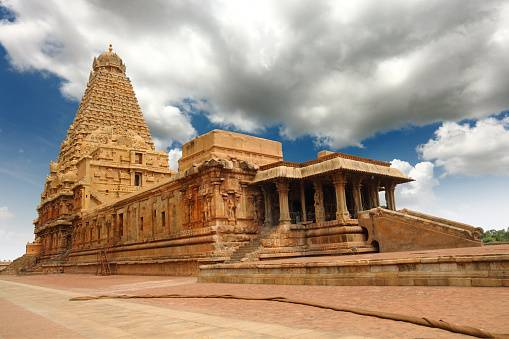
Over the past two years, nearly eight lakh Indian tourists have found their way to Sri Lanka, captivated not just by its coastal charm but by its ancient spiritual legacy. At the heart of this cultural magnetism lie five iconic Shiva temples, collectively known as the Pancha Ishwarams—sacred coastal shrines dedicated to Lord Shiva, whose mythological and architectural significance transcends borders.

Sri Lanka Mesmerizes 800,000 Indian Tourists in 2 Years with Its Five Sacred Shiva Temples..

1. Munneswaram Temple – Echoes of Eternity in Puttalam

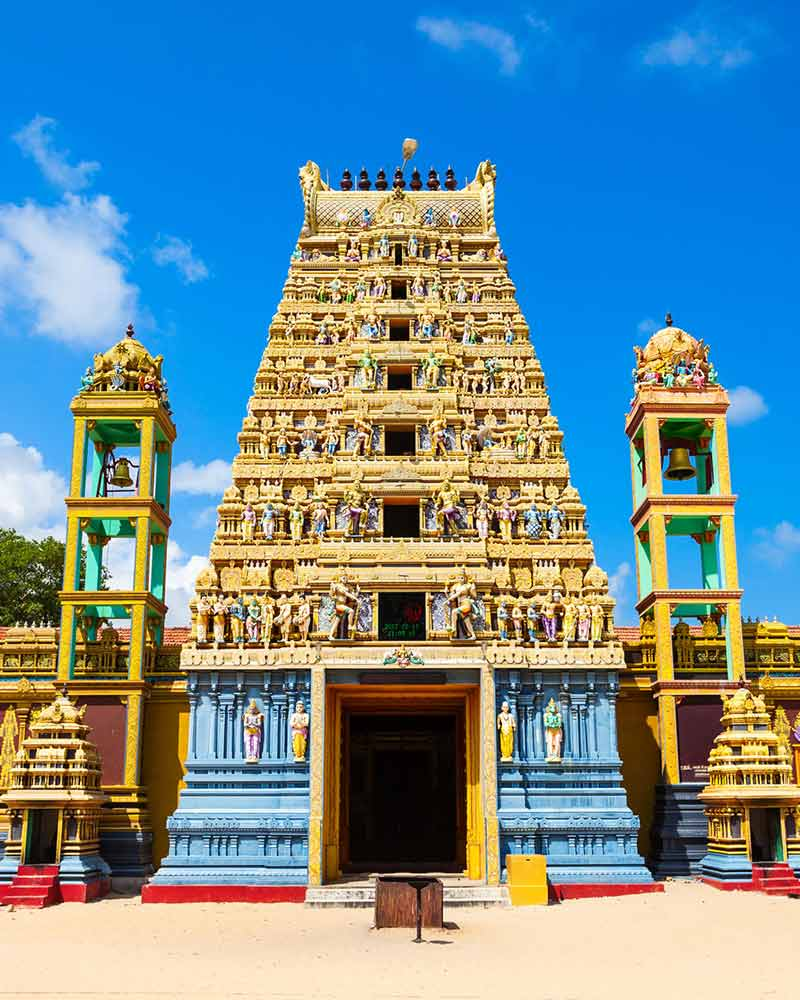
Located in Munneswaram village, this temple complex is over 1,000 years old, making it one of Sri Lanka’s oldest and most revered Shiva shrines. The site hosts five temples, including a Buddhist sanctuary, showcasing the island’s layered spiritual heritage. Munneswaram is one of the legendary Pancha Ishwarams—ancient coastal temples symbolizing Shiva’s omnipresence around the island.

Sri Lanka Mesmerizes 800,000 Indian Tourists in 2 Years with Its Five Sacred Shiva Temples..

2. Koneswaram Temple – Temple of Thousand Pillars Above the Sea

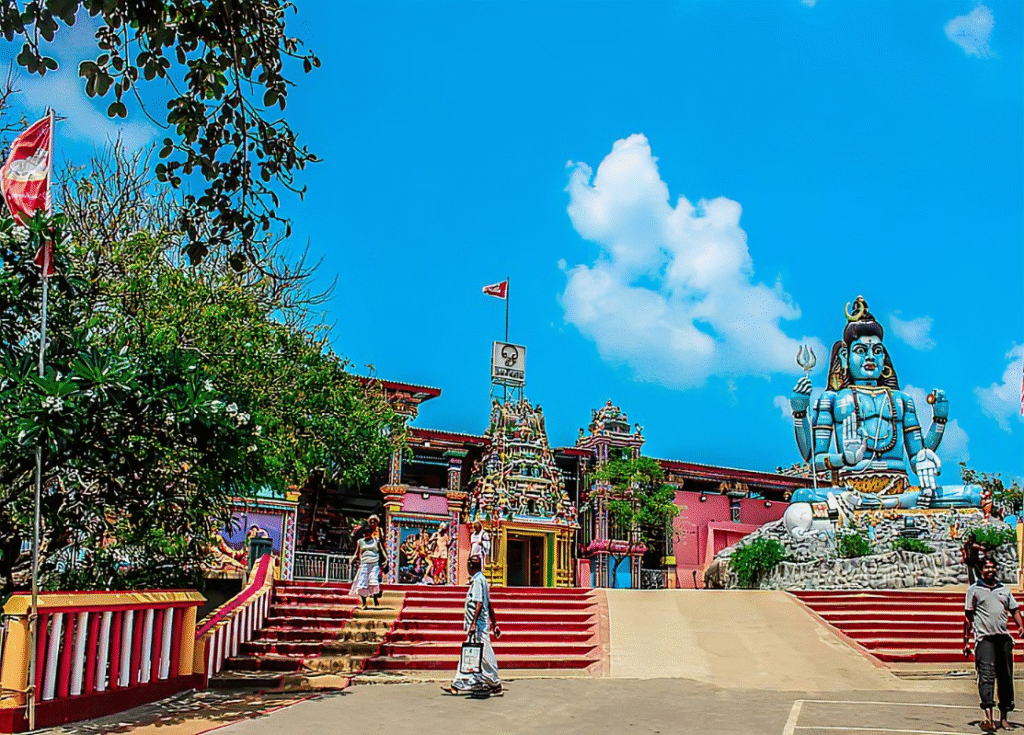
Perched atop Swami Rock in Trincomalee, the Koneswaram Temple is a classical Tamil structure believed to date back 2,500 years. Its restoration was championed by Chola King Kulakottan and later preserved by Sinhalese Buddhist monarchs. Though destroyed in 1622 by Portuguese invaders—who hurled its grandeur into the sea—the sacred Shiva lingam was heroically recovered by local divers. Remnants of the temple were repurposed for Fort Frederick, yet the spiritual soul of the site still pulses.

Sri Lanka Mesmerizes 800,000 Indian Tourists in 2 Years with Its Five Sacred Shiva Temples..

3. Thirukonamalai Konesar Temple – Southern Kailash of Devotion

Often regarded as the most sacred among the Pancha Ishwarams, this temple complex overlooks the Bay of Gokarna and the Indian Ocean, radiating serenity and divinity. It embodies the soul of “Dakshina Kailasam”—the Southern abode of Shiva. Visitors can witness intricate inscriptions near Swami Rock, including the double-fish emblem of Kulakottan, which legend says foretold Western colonial rule centuries before it happened.

Sri Lanka Mesmerizes 800,000 Indian Tourists in 2 Years with Its Five Sacred Shiva Temples..

Naguleswaram Temple – Healing Waters and Ancient Blessings

Nestled near Kirimale Springs in Jaffna, Naguleswaram is celebrated not only for its religious sanctity but also for the medicinal value of its natural springs. As one of the oldest temples in Sri Lanka, this site offers architectural beauty, a tranquil atmosphere, and spiritual cleansing, drawing pilgrims and tourists alike to bathe in its rejuvenating waters.

Sri Lanka Mesmerizes 800,000 Indian Tourists in 2 Years with Its Five Sacred Shiva Temples..

5. Thondeswaram Temple – The Southern Beacon of Shaivism

Also known as Tenavaram Monastery, this ancient temple near Dondra Head in the Southern Province stood as a southern sentinel of Shaivism. Though destroyed in colonial upheaval, efforts toward reconstruction have brought renewed reverence. French writer François Valentijn first documented its existence in his 1726 travelogue Oud en Nieuw Oost-Indiën, cementing its place in global spiritual chronicles

Friendship Day Special: How Friends Turn Foes in Politics and Bollywood

0

In both politics and Bollywood, friendships are often forged in the heat of ambition, shared goals, or mutual benefit. However, these bonds can be surprisingly fragile. Power struggles, ego clashes, ideological differences, or personal betrayals frequently turn allies into adversaries. Whether it’s political leaders who once stood shoulder to shoulder or film stars who shared the limelight as confidants, shifting loyalties and changing circumstances can quickly sour relationships. These transformations from friendship to rivalry offer a revealing glimpse into the high-stakes, high-pressure worlds of politics and entertainment—where yesterday’s friend can easily become today’s foe.

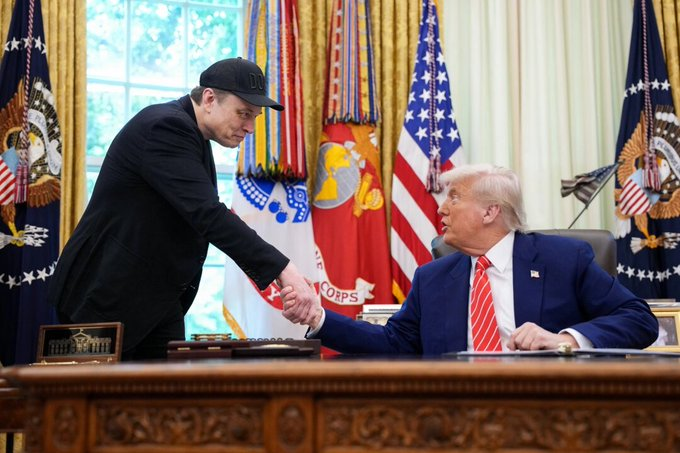
Donald Trump and Elon Musk: Once seen as allies, Donald Trump and Elon Musk’s relationship has soured over time. Initially, Musk served on Trump’s advisory councils during his presidency, signaling a cooperative stance. However, ideological differences—particularly on climate change and immigration—led Musk to distance himself, resigning from the councils after Trump withdrew from the Paris Agreement.

Their feud escalated post-presidency, with Trump mocking Musk for backing out of a Twitter deal (before Musk eventually acquired the platform) and labeling him a “bull artist.” Musk, in turn, criticized Trump’s leadership and age, suggesting the Republican Party move beyond him. What began as mutual interest turned into public jabs and political rivalry, showing how ambition and ideology can turn friends into foes.

In Bollywood

  1. Shah Rukh Khan and Salman Khan: Once close friends in the 1990s, their bond soured after an infamous fight at Katrina Kaif’s birthday party in 2008. Although they later reconciled publicly, their cold war lasted for years and impacted collaborations and industry dynamics.
  2. Karan Johar and Kajol: Kajol was a constant in Karan Johar’s films and inner circle, but their friendship broke down during the 2016 clash between Ae Dil Hai Mushkil (Karan’s film) and Shivaay (Ajay Devgn’s film). Karan claimed Kajol “killed every bit of faith” he had in their friendship. They later patched up, but the fallout was deeply personal.
  3. Akshay Kumar and Priyanka Chopra: They shared sizzling on-screen chemistry, but Akshay reportedly distanced himself from Priyanka due to his wife Twinkle Khanna’s disapproval. This professional fallout ended a promising collaboration streak.
  4. Govinda and David Dhawan: The actor-director duo created several hits together, but a lack of communication and feelings of being sidelined led to bitterness. Govinda later accused David of ignoring him after gaining success with newer stars.

Political Friends Turned Foes in India

Indian politics has seen several once-close allies part ways due to ideological differences, power struggles, or shifting political ambitions. Some notable examples include:

  1. Narendra Modi and Nitish Kumar: Once partners in the NDA, Nitish Kumar broke ties with Modi in 2013 over the BJP’s PM candidate announcement. Though they reunited in 2017, Nitish again exited the alliance in 2022, accusing the BJP of trying to split his party.
  2. Sharad Pawar and Sonia Gandhi: Sharad Pawar was once a senior Congress leader but left the party in 1999 after opposing Sonia Gandhi’s foreign origin, forming the NCP. Though they later allied in Maharashtra, deep-rooted differences remained.
  3. Mamata Banerjee and the Congress: Mamata began her political journey in the Congress and was a Union Minister. She eventually broke away to form the TMC in 1998, accusing the Congress of ignoring Bengal’s interests.
  4. Mulayam Singh Yadav and Amar Singh: Amar Singh was once Mulayam’s closest aide in the Samajwadi Party. Their fallout in the late 2000s was dramatic, with public accusations and eventual expulsion.
  5. Mayawati and Akhilesh Yadav: Their 2019 alliance (BSP-SP) against the BJP in Uttar Pradesh collapsed shortly after the elections, with Mayawati blaming Akhilesh’s party for the poor performance and ending the partnership.

These splits reflect how alliances in Indian politics are often driven more by convenience than by shared ideology—and how quickly friends can become rivals in the race for power.

From Sudama’s humble offering to Shyam’s royal embrace, from silent prayers to loud laughter—this isn’t just dosti, it’s a divine saga penned by destiny itself.

0

Friendship—an emotion, a bond, a quiet strength that shapes who we are. It’s the laughter that lingers after shared moments, the silence that feels comforting, and the presence that doesn’t demand but always delivers. Whether it’s an unbreakable childhood pact, a shoulder during stormy nights, or a soul we meet just once but remember forever—everyone sees friendship through a unique lens. In this heartwarming compilation, people from different walks of life offer their personal definition of friendship. From poetic reflections to playful analogies, let’s dive into the kaleidoscope of voices that remind us why friends truly are the family we choose.

From Sudama’s humble offering to Shyam’s royal embrace, from silent prayers to loud laughter—this isn’t just dosti, it’s a divine saga penned by destiny itself.

Priya Goud, Student, Journalism And Mass Com.)

Friendship, to me, is not about daily talks or constant messages—it’s about knowing someone is silently rooting for you, understanding you without words, and standing by even when the world moves on. You’re that kind of friend to me.

From Sudama’s humble offering to Shyam’s royal embrace, from silent prayers to loud laughter—this isn’t just dosti, it’s a divine saga penned by destiny itself.

(Sapna Shriwastva, writer, Superintendent)

In today’s whirlwind of responsibilities, where laughter has become a forgotten luxury, the thought of a true friend brings an instant smile to the face—along with memories of childhood, when friendship was pure and unfiltered joy.

From Sudama’s humble offering to Shyam’s royal embrace, from silent prayers to loud laughter—this isn’t just dosti, it’s a divine saga penned by destiny itself.

Prem Kumar, Student, Public relations

Friendship isn’t defined by daily meetings or endless conversations. It’s the freedom to be your unfiltered self—a space without judgments, pretenses, or boundaries. It’s teasing and laughing without fear, it’s silence that speaks volumes, and it’s never taking offence, even when months have passed without a word.
In life’s toughest moments, a true friend is the quiet strength, the comforting presence, the one you can turn to when words fall short. In a world too fast to pause and too digital to truly connect, a heartfelt message from a friend is no less than a warm hug.
Friendship doesn’t just fill life with joy—it completes it

From Sudama’s humble offering to Shyam’s royal embrace, from silent prayers to loud laughter—this isn’t just dosti, it’s a divine saga penned by destiny itself.

Mukul Singh Morawat, Journalist,PR.

For me, friendship is another form of God. Because In every act of selfless love, in every laugh shared through tears, God whispers through friendship—softly, eternally.

From Sudama’s humble offering to Shyam’s royal embrace, from silent prayers to loud laughter—this isn’t just dosti, it’s a divine saga penned by destiny itself.

Umair Goury, Student.

Wasn’t friendship it’s won miracle , the finding of another person who made the entire lonely world seem somehow less lonely