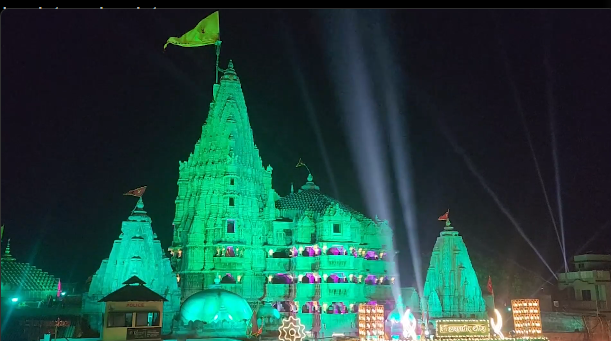
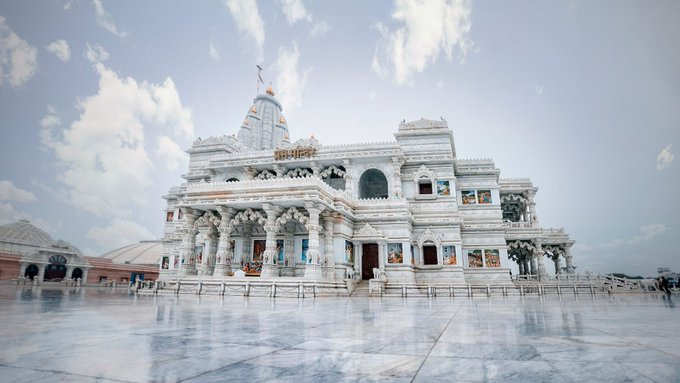
Janmashtami 2025: Temples across India have been beautifully decorated with lights, flowers, and vibrant decorations for the Janmashtami festival. Devotees are seen gathering in large numbers to celebrate, participate in midnight aartis, and offer prayers. Watch in pics how these temples are decked up to celebrate the birth of Kanha…
The Dwarkadhish Temple comes alive on Janmashtami, glowing with lights, echoing with chants and overflowing with devotion. A celebration where faith meets festivity, honouring the birth of Lord Krishna in all its divine glory.
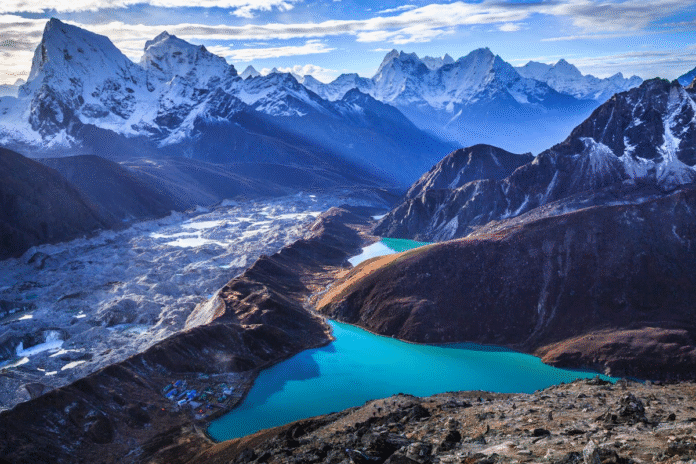
The Indian Himalayan region is witnessing an alarming increase in climatic and geological disasters, transforming once-rare events into frequent and devastating occurrences. From glacial lake outbursts and flash floods to landslides, avalanches, and cloudbursts, the Himalayan landscape is becoming increasingly unstable. The impact extends from Ladakh to Arunachal Pradesh, and beyond into Nepal, Bhutan, and Sikkim, raising serious concerns for infrastructure safety, local livelihoods, and national security.
Recent Disasters in the Himalayas: A Pattern Emerges
Since 2021, the Himalayas have experienced a series of destructive events:
February 2021 (Chamoli, Uttarakhand): A glacier fragment collapse triggered flash floods that destroyed a hydroelectric power project.
October 2023 (Sikkim): The South Lhonark glacial lake burst, severely damaging the Chungthang dam.
August 2025 (Harsil): Flash floods disrupted key military and civilian transit routes.
These disasters often set off chain reactions, such as secondary landslides, road collapses, and community isolation, compounding their impact and hampering emergency response.
Geographical and Geopolitical Fragility
The Himalayan region’s vulnerability spans both ecological and strategic dimensions:
Ladakh is grappling with glacier retreat and thawing permafrost.
Jammu & Kashmir face landslides that frequently block essential border highways.
Himachal Pradesh and Uttarakhand struggle with over-tourism and erratic weather patterns.
Nepal and Sikkim are exposed to cross-border glacial lake outburst floods (GLOFs).
Bhutan and Arunachal Pradesh endure flash floods exacerbated by limited early warning systems.
This regional fragility demands coordinated interstate and international collaboration to mitigate shared climate threats.
Development Pressures and Environmental Risks
Rapid infrastructure development often ignores the seismically active and geologically young nature of the Himalayas:
Roads, tunnels, and dams are sometimes built without thorough hazard assessments.
Construction destabilizes fragile slopes, increasing the risk of landslides and erosion.
For the Indian armed forces, disasters can disrupt supply chains and strategic connectivity along sensitive borders.
Balancing development with environmental safety is essential for long-term strategic and civilian resilience.
India’s Policy Shift Toward Climate Resilience
A key milestone was the 15th Finance Commission (2021–26), which embedded climate resilience into fiscal planning:
Introduced a Mitigation Fund under the State Disaster Risk Management Funds
Allocated ₹1.6 lakh crore for:
Hazard mapping
Early warning systems
Climate-proof infrastructure
States like Sikkim and Uttarakhand have already begun implementing these interventions.
The upcoming 16th Finance Commission (2026–31) is expected to further link fiscal transfers to resilience performance, incentivizing long-term disaster preparedness.
Empowering Local Governance and Innovation
Strengthening local governance is key to Himalayan resilience:
Direct access to mitigation funds by panchayats and municipalities is being considered.
Innovations include:
Green infrastructure incentives
Disaster insurance schemes
Climate-responsive budgeting
These tools aim to empower remote mountain communities to manage risks from glaciers, earthquakes, and monsoon floods.
Global Recognition and Cross-Border Cooperation
India’s G20 Presidency in 2023 elevated Disaster Risk Resilience as a global priority:
Advocated for financial tools like insurance pools
Emphasized cross-border data sharing
Proposed joint response drills and integrated early warning systems across national boundaries
Given the shared river basins and hazard zones, regional cooperation between India, Nepal, Bhutan, and China is critical to building a resilient Himalayan ecosystem.
Sustainable Development in the Himalayas: A Delicate Balance
Safeguarding the Himalayas requires an integrated approach that respects ecology, security, and cultural heritage:
Promote low-impact tourism and renewable energy
Mandate risk assessments before approving infrastructure
Strengthen community preparedness and scientific monitoring
The Himalayas are the source of major river systems, host to unique biodiversity, and crucial to regional stability. Protecting them is not only an environmental imperative but a strategic national priority.
The U.S. Supreme Court has allowed a controversial Mississippi social media age verification law to remain in effect. The law requires age checks and parental consent for minors on social media platforms, aiming to protect children from harmful online content.
This ruling is a major development in the growing national debate over social media regulation for minors, particularly regarding online safety, mental health, and privacy rights.
What Is the Mississippi Social Media Law?
The Mississippi law regulating minors on social media includes several key requirements:
Age verification for all users
Parental consent for users under 18
Preventative measures by platforms to block harmful content for minors
Tech companies that fail to comply may face fines up to $10,000 per violation. The law focuses on protecting minors from online sexual abuse, trafficking, exploitation, and exposure to inappropriate content.
Tech Industry Legal Challenge
The law was challenged in court by NetChoice, a coalition representing major tech firms like:
Google
Meta (Facebook, Instagram)
Snap Inc. (Snapchat)
Their argument: the law violates the First Amendment, restricts free speech, and threatens user privacy. A federal judge initially blocked the law, but the 5th U.S. Circuit Court of Appeals allowed it to take effect pending further litigation.
On appeal, the U.S. Supreme Court declined to intervene, meaning the Mississippi age verification law is currently enforceable.
Other States with Similar Laws
Mississippi is part of a growing trend among U.S. states aiming to regulate social media use among minors. States with similar age verification and parental consent laws include:
California
Florida
Georgia
Texas (recently upheld its own law restricting minors’ access to online pornography)
These laws reflect increasing concern about the mental health impact of social media on teens, as well as online safety risks.
Impact on Social Media Platforms and Minors
If upheld, the Mississippi law could lead to major changes in how minors use social media in the U.S. Platforms may be required to implement:
Stricter identity and age checks
Parental approval systems
Stronger content filters
Supporters believe these steps are crucial to protect children’s mental health and online safety. However, critics warn of:
Government censorship risks
User privacy violations
Reduced access to digital resources
Why This Matters: The Future of Online Child Safety Laws
This decision by the Supreme Court is likely to influence future legislation and court cases surrounding social media safety for minors. It signals growing judicial support for child-focused internet regulations, despite concerns from the tech industry.
As more states pursue similar laws, the balance between digital freedom and child protection will remain a key issue in U.S. policy and public debate.
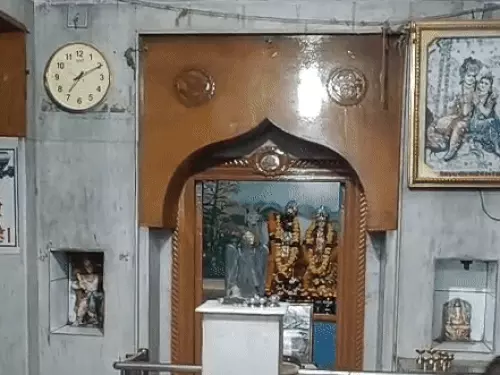
In the heart of Jalore lies a historic temple, believed to be around 750 years old, that has long served as a sacred center for social justice and unity. Located in Badi Pol area, the Radha-Krishna temple, also known as Thakur Dwara, is more than just a place of worship—it’s a pillar of tradition and collective decision-making for the Mali community of 48 villages.
A Temple That Decides Justice
For centuries, important social decisions affecting the community have been made here, with both parties in a dispute accepting the verdict given in the presence of the Radha-Krishna idol, considered a divine witness. Even today, many major societal issues and disputes are resolved within these temple premises, continuing a legacy of trust and consensus.
A Historic Legacy Without Documentation
While there are no inscriptions or documents detailing the temple’s origins, Bhomaram, President of the Mali Samaj Thakur Dwara Seva Sansthan Panch Patti, asserts that the temple dates back to the 15th century. The idol of Radha-Krishna housed within the temple is believed to be as old as the structure itself.
Despite the passage of time, the temple has retained its grandeur. Its thick 3.5-foot walls resemble those of the famed Jalore Fort, indicating its historical and architectural significance.
Center of Collective Identity
The temple serves as a central institution for the Mali community across 48 villages. In earlier times, any dispute within these villages was brought before a council of Panchs (elders), who deliberated and delivered verdicts inside the temple—always in front of the sacred idol. The decisions were binding and respected by all, reinforcing a strong sense of justice and accountability within the community.
Even though each of the 48 villages now has its own temple, collective decisions on matters of social policy, development, or major disputes are still taken at Thakur Dwara, preserving its role as the spiritual and social hub.
Janmashtami Celebrations
The temple takes on a particularly festive look during Krishna Janmashtami. The premises are beautifully decorated, and the celebrations include bhajan sandhyas (devotional music evenings) and a grand Janmotsav (celebration of Krishna’s birth). It’s a time when community members from all 48 villages come together in devotion and unity.
The Radha-Krishna temple of Jalore is not only a revered religious site but also a living testament to the community’s faith in tradition, justice, and collective wisdom. Its continued relevance across centuries makes it a unique example of how ancient institutions can still play a vital role in modern community life.
In a dramatic turn of global diplomacy, former U.S. President Donald Trump and Russian President Vladimir Putin met on Friday at a U.S. military base in Anchorage, Alaska, to discuss a potential ceasefire in the ongoing Russia-Ukraine war. The summit, held in one of America’s most remote and symbolic states, marks Putin’s first visit to U.S. soil in over a decade and the first face-to-face meeting between the two leaders since 2019.
Why Alaska?
Alaska’s selection as the summit venue is far from arbitrary. Geographically, it is the closest U.S. territory to Russia—just 55 miles across the Bering Strait. Historically, it was once a Russian colony before being sold to the United States in 1867. This layered past makes Alaska a poignant backdrop for a meeting aimed at resolving one of the most devastating conflicts of the 21st century.
Strategically, Alaska offers:
Neutral ground with deep historical ties to both nations.
Security advantages, given its remote location and military infrastructure.
Legal insulation, as Putin faces an ICC arrest warrant and cannot travel to most European countries.
The Stakes of the Summit
The summit was billed as a “feel-out meeting” by Trump, who has promised to broker peace within 24 hours of returning to office. However, the talks quickly hit a wall. Trump suggested Ukraine might need to cede territory to Russia—a proposal swiftly rejected by Ukrainian President Volodymyr Zelenskyy, who declared, “Ukrainians will not gift their land to the occupier”.
Putin, meanwhile, arrived in Alaska buoyed by recent battlefield gains and reiterated demands for international recognition of Russian control over Crimea and parts of eastern Ukraine.
Symbolism vs. Substance
While the summit carried immense symbolic weight, it yielded no concrete breakthroughs. Trump and Putin spoke for just over three hours, with Trump later admitting, “There’s no deal until there’s a deal.” A planned joint press conference was abruptly canceled, and both leaders departed without signing any formal agreement. Still, the meeting served as a potential reset in U.S.-Russia relations, with Trump stating he would consult NATO allies and Zelenskyy before any future negotiations.
What Comes Next?
A second summit may be held, possibly again in Alaska, depending on the outcome of follow-up diplomacy.
Ukraine remains excluded from direct talks, raising concerns among European leaders.
The international community watches closely, wary of any territorial concessions that could set dangerous precedents.
Alaska, once dismissed as “Seward’s Folly,” has become the unlikely stage for one of the most consequential diplomatic encounters in recent history. Whether it becomes the birthplace of peace or another frozen chapter in global tension remains to be seen.
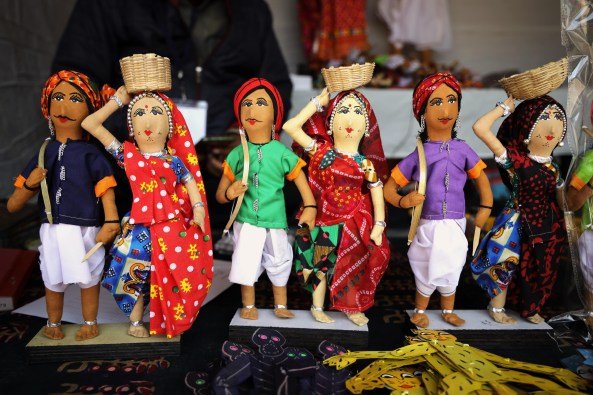
The Vibrant Bhil Culture of Jhabua district, nestled in Madhya Pradesh, is renowned for its rich Bhil tribal culture, vibrant art, and intricate handicrafts. Beyond its cultural heritage, the district is celebrated for its natural beauty and tourist attractions. However, one of its most distinctive claims to fame is its traditional art of crafting tribal dolls, locally known as Adivasi Gudiya Hastashilp (Tribal Doll Handicraft). This unique craft not only showcases the creativity of the region but also plays a significant role in supporting rural livelihoods through artistic expression.
The Art of Tribal Doll-Making
The dolls of Jhabua are more than mere handicrafts; they are cultural artifacts that reflect the identity and traditions of the tribal communities across the Indian subcontinent. Crafted from scraps of cloth and other affordable, locally sourced materials, these dolls are both decorative and functional, serving as souvenirs and reliable sources of income for artisans throughout the year. Ranging in size from 2 to 5 feet, they are adorned with vibrant colors and intricate designs, with prices typically ranging from ₹200 to ₹500.These dolls hold a special place in Indian traditions, often gifted to brides as tokens of goodwill in various parts of the country. For urban dwellers unfamiliar with tribal life, they serve as an informative window into India’s indigenous cultures. In educational settings, these dolls are valuable tools for teaching students about the intangible heritage of the Indian subcontinent, bridging the gap between modern and traditional worlds.
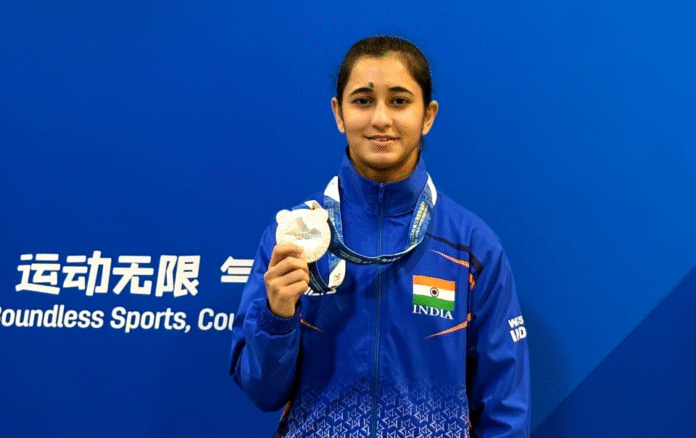
In the quiet lanes of Mohali, where dreams often dissolve into routine, a young girl once stood at the crossroads of indifference and destiny. Namrata Batra wasn’t born with a medal in her hand or a burning ambition in her heart. In fact, she was a teenager who didn’t care much for academics, drifting through school with little direction. But fate, as it often does, had other plans.
The Accidental Beginning
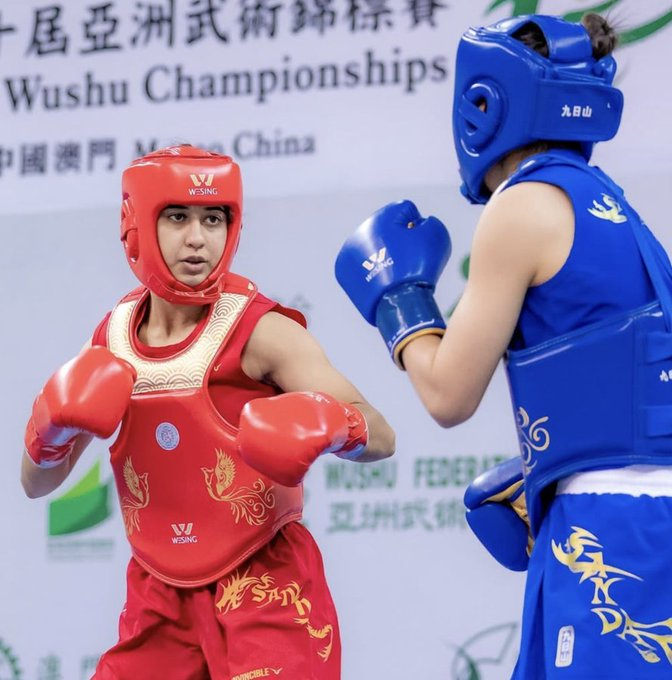
Namrata’s journey into Wushu—a full-contact martial art—began not with passion, but with parental concern. Worried about her lack of interest in studies, her father enrolled her in a local gym that offered a one-month Wushu training program. It was meant to be a distraction. Instead, it became her calling.
“I wasn’t really interested in academics back then,” Namrata recalls. “But my family stood by me and encouraged me to pursue sport.”
What started as a reluctant trial turned into a revelation. The rhythm of combat, the discipline of training, and the thrill of competition awakened something fierce within her.
From Mohali to Madhya Pradesh: A Fighter Finds Her Ground
Namrata’s first taste of victory came in 2015, when she won gold at the Junior Nationals. By 2017, she had clinched silver at the Junior Asian Championship. Her talent was undeniable, but her path was anything but smooth. She chose to represent Madhya Pradesh, a state known for nurturing grassroots talent. Training at the Sports Authority of India’s National Centre of Excellence in Itanagar, she honed her skills in the Sanda 52kg category, mastering the art of kicks, punches, and psychological warfare.
Her mantra? “Chadh ke khelna hai”—play with aggression so your opponent never finds their footing.
The Setback That Nearly Broke Her
In 2023, just as she was preparing for the Asian Games trials, Namrata suffered a serious injury. It was a crushing blow. The dream she had nurtured for years slipped through her fingers. For many athletes, such moments mark the end. But for Namrata, it was the beginning of a comeback. She returned stronger in 2024, winning silver at the Asian Championship. In 2025, she bagged bronze at the Moscow Star International Wushu Championship. Each medal was a testament to her resilience, each fight a battle against not just opponents, but self-doubt.
Making History at the World Games
Then came Chengdu, China. The World Games 2025. Namrata faced Krizan Faith Collado of the Philippines in the semifinals. With precision and power, she defeated her 2-0, becoming India’s first-ever Wushu medallist at the World Games. Her performance wasn’t just technical—it was poetic. Every move spoke of years of struggle, every strike echoed the sacrifices of a girl who once didn’t know what she wanted.
“I have to stand like a wall,” she said before the match. And she did.
Legacy Beyond Medals
Namrata Batra’s story is more than a sporting achievement. It’s a narrative of transformation—of how a girl from Mohali, unsure of her path, became a symbol of grit for an entire nation. Her journey has inspired countless young athletes, especially girls who are told to stay quiet, stay safe, stay small. She received the State Award from Madhya Pradesh, but her real reward lies in the hearts she’s ignited.
The Fighter Who Never Gave Up
Namrata’s life reminds us that greatness doesn’t always begin with a dream. Sometimes, it begins with a detour. A nudge. A one-month trial. And then, with courage, it becomes a legacy.
When we speak of Shri Krishna, our minds often drift to the vibrant lanes of Mathura, the divine pastures of Vrindavan, or the majestic shores of Dwarka. But nestled in the heart of India lies Madhya Pradesh—a land where Krishna’s presence is not loud, but profound. Here, the echoes of his leela are woven into the soil, the rivers, and the ancient stones that have witnessed centuries of devotion.
This is not just geography. It’s sacred memory.
1. Ujjain: The City Where Krishna Became a Disciple
Long before Shri Krishna became the divine strategist of Kurukshetra or the beloved flautist of Vrindavan, he walked the sacred streets of Ujjain—not as a god, but as a humble student.
Maharishi Sandipani Ashram: The Gurukul of the Divine
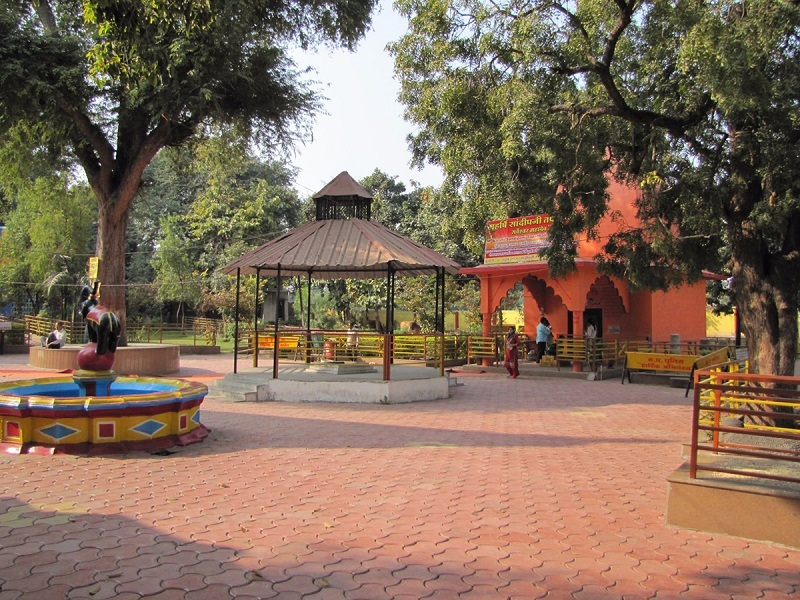
Nestled along the serene banks of the Shipra River, the Maharishi Sandipani Ashram is where Krishna, Balarama, and Sudama received their formal education. This ancient gurukul still stands today, radiating the quiet wisdom of Vedic learning. Guru Sandipani, a revered sage, taught Krishna the scriptures, warfare, mathematics, and spiritual philosophy. As guru dakshina, Krishna performed a miracle—he retrieved Sandipani’s lost son from the depths of the ocean, defeating the demon Panchajanya. This act wasn’t just divine—it was deeply human, reflecting Krishna’s devotion and gratitude.
2. Maheshwar: The Narmada’s Whisper of Krishna’s Visit
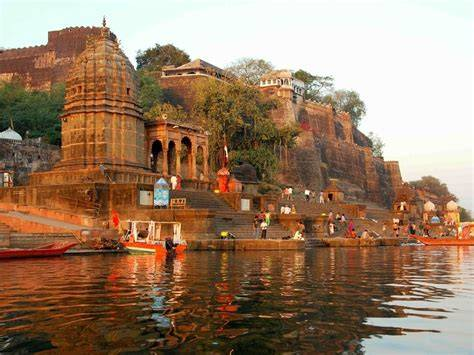
Maheshwar, known for its majestic ghats and Ahilyabai Holkar’s spiritual legacy, also holds a lesser-known connection to Krishna. While not a primary site of his leela, oral traditions and local lore suggest that Krishna passed through this region during his travels. Maheshwar may not be the stage of Krishna’s grand battles or romantic escapades, but it is a place of pause, prayer, and purity. It reminds us that even the divine takes moments to reflect, to honor nature, and to connect with the eternal
Sahastrarjun Ghat:
This ghat is named after King Sahastrarjun, who once defeated Ravana here. Krishna’s lineage, as an avatar of Vishnu, intersects with these tales of cosmic balance and dharma. The Narmada River here is seen as a silent witness to divine journeys, including Krishna’s.The spiritual energy of Maheshwar resonates with Krishna’s role as a restorer of dharma.
3. Mangalnath Temple, Ujjain: Krishna and the Cosmic Order
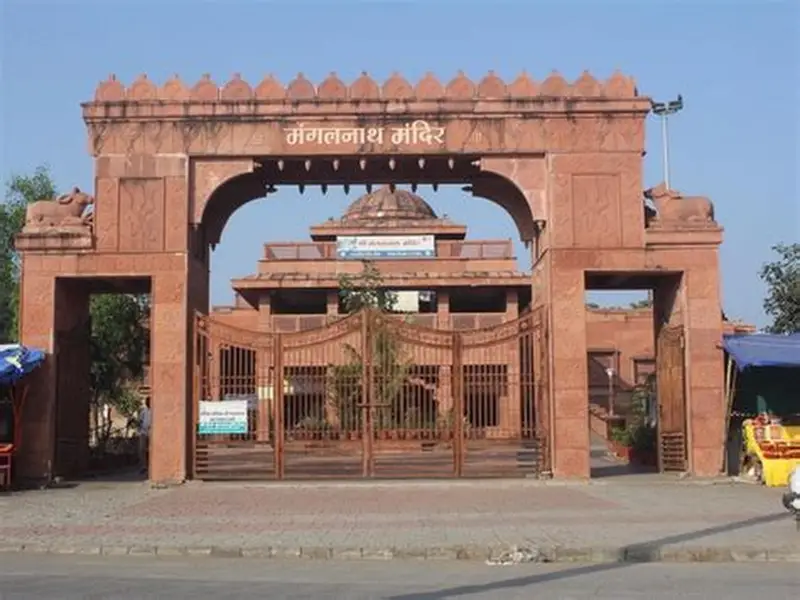
This temple, dedicated to Mars (Mangal), is believed to be the birthplace of the planet according to ancient texts. While not directly a Krishna temple, it holds astrological significance tied to Krishna’s divine role.
4. Vidisha: The Legacy of Bhakt Prahlad and Vishnu’s Promise
Vidisha, though more closely associated with Bhakt Prahlad and Vishnu’s earlier avatars, carries the spiritual lineage that culminates in Krishna. Temples here honor Vishnu in various forms, and Krishna’s presence is felt in the devotion that flows through the region.
Why These Places Matter Today
In a world rushing toward modernity, these sacred sites offer a pause—a moment to reconnect with dharma, devotion, and divine memory. They remind us that Krishna was not just a mythological figure, but a living presence in the cultural and spiritual landscape of Madhya Pradesh.
At a time when the Trump Tariff is being widely debated across the world, office bearers of FORHEX in Jaipur have termed it a “big shocker” and described it as a deliberate attempt to derail India’s dream of becoming a larger economy. While they accepted that they stand strong and will find newer markets being in New India, they also requested to handhold them in this crisis time to ensure they continue going ahead with workforce and work to explore new markets.
Sunit Jain, CEO Ratan Textiles and President Forhex called the tariff a “double-edged sword,” saying, “It’s not only going to hurt us but will also bleed American consumers. Once tariffs kick in, the cost of living in the U.S. will rise sharply, triggering backlash. The market players hence will also run for new markets triggerting competition. Eventually, many of us cannot handle this crisis alone — we need government handholding to protect employment and stability.”
Urging the government for immediate handholding, the officials said they are not sitting idle and have already started exploring newer markets. However, they cautioned that such an exercise will take time and requested the introduction of more business-friendly policies to help the export community survive this difficult period.
Ravi Utmani –CEO Laxmi Ideal , Secretary FORHEX , added, “It’s shocking and unjustified that India has been put under 50% tariff just because we are buying oil from Russia. China and Europe are doing the same, yet their tariffs are far lower. There is no logical reason; this looks political. It seems like an attempt to kill our ambition of becoming a major economy. We have already lost 52% share in isometrics, and finding new markets is not easy. Around 500,000 people may lose jobs. We need government assistance to help exporters survive.”
Atul Poddar, Founder, Partner Poddar Associates who is VP, Forhex, said, “First of all, it was shocking — we were not prepared for it. It is not justified. Earlier, 10% tariff was manageable, but 25% came as a shocker, and now another 25% makes it a double shocker. We are trying to figure out strategically how to survive in this scenario. Orders will not flow, and that is a dangerous condition unless the government gives full support. A tariff of 15–20% would be more reasonable.
We have learnt a lesson. Dont put all eggs in one basket. Now we will put eggs in different baskets in latin america, uk, gulf countries and so on, he concluded.
Rajat Mathur from Credence International also said that it is a par of geopolitics which has been deliberated on India. However, what we need is to stand strong intact to battle this crisis.
Karan Meel, Partner, Hasthkala: Forhex Young Brigade echoed similar concerns: “This looks more like a political tactic than economic logic. With 50% of exports impacted, nearly 1 million workers will suffer. It satisfies someone’s ego, but we need survival support from the government.”
Despite the challenges, exporters emphasized resilience. Poddar said, “This is a lesson for us — we will not put all eggs in one basket again. We must diversify into Europe, the UK, Japan, Australia, and the Gulf. Enhancing productivity and designing market-specific products is the way forward.”
Sunit also stressed, “Rhetoric aside, business runs on facts. We will rise to the occasion, explore new markets, and prove our strength through quality products. But this transition needs time. Right now, there is panic, but we must think strategically. The U.S. wants a bigger share of India’s market, but why shouldn’t we expand in our own domestic market as well?”
Ravi concluded, “It’s good to stay positive and see this as an opportunity. Latin America and other regions may open up, though economies of scale and ease of doing business differ. The ‘Make in India’ initiative has given us growth, but exporters with heavy loans need urgent relief. This could be a blessing in disguise in the long run, but survival in the short term requires government support. Innovation, cost easing, and compassionate policies are critical now.”
Exporters have already sent representations to the Rajasthan government seeking intervention. With September approaching, they warn that without immediate measures, the industry could face a severe crisis.
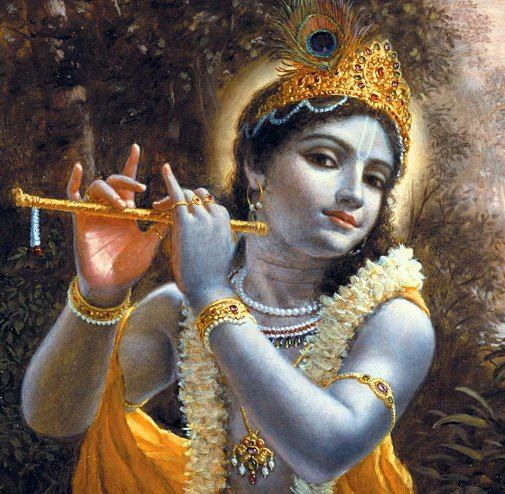
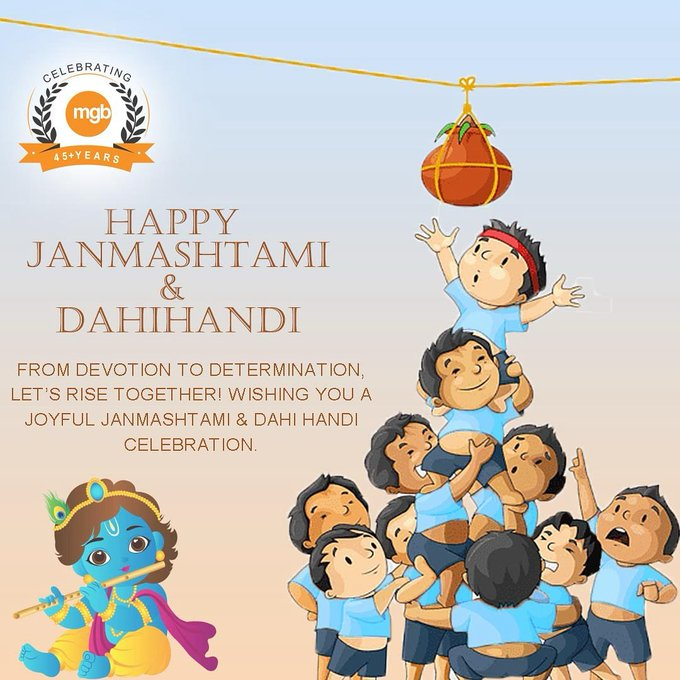
Krishna Janmashtami will be celebrated across India on Saturday, August 16, 2025, marking the birth of Lord Krishna, believed to be the eighth incarnation of Lord Vishnu. The festival also coincides with Dahi Handi celebrations this year.
According to tradition, Lord Krishna was born in Mathura, Uttar Pradesh. This year marks his 5,252nd birth anniversary. The festival is also known by names such as Krishnashtami, Gokulashtami, Ashtami Rohini, Srikrishna Jayanti, and Sree Jayanthi.
Devotees will observe the occasion with fasting, devotional singing, vibrant temple decorations, and cultural festivities. The highlight will be the midnight puja, symbolizing the divine moment of Krishna’s birth, followed by joyous community celebrations.
Wishes to Share on Janmashtami
On this auspicious occasion, here are heartfelt wishes to share with your loved ones:
May Lord Krishna’s flute fill your life with joy and harmony.
Wishing you a Janmashtami as sweet as Krishna’s butter and as colorful as his peacock feather.
May the blessings of Shri Krishna bring happiness and prosperity to your home.
Celebrate Janmashtami with the music of love, peace, and devotion.
Greetings to Mark the Occasion
Wishing you divine blessings, eternal joy, and peace on Janmashtami.
Let’s welcome Nandlal into our hearts with devotion and love.
May Lord Krishna’s presence bring light, hope, and happiness into your life.